
💻 Madrid for digital nomads: a complete guide
The absence of the sea does not in any way prevent Madrid from being one of the most visited cities in Europe. Majestic cathedrals, cafes, restaurants, nightclubs – all this harmoniously combines and creates a special atmosphere. And sunny days, about 250 days a year, give a good mood not only to residents, but also to tourists. This is partly why nomads choose Madrid for their temporary residence. We explored what the city offers digital nomads.
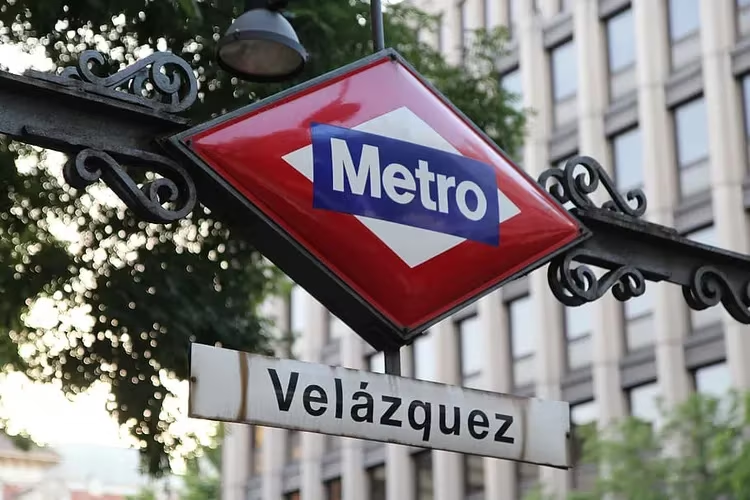
Public transport
Metro, light rail, trains, buses, funiculars, taxis and even scooters – all this is offered in Madrid.
To search and create a route, it is convenient to use the CRTM (Consorcio Regional de Transportes de Madrid) mobile application, which is available for iOS and Android.
The metro fare is about 1.50 € up to five stations. Then add 0.10 € for each additional station. Children under 4 years old travel free of charge.
The light rail costs about €1.30 per trip, and the bus ticket costs €1.50. A taxi will cost from 20 €, it all depends on the distance and time of ordering the car.
Housing
As in any other city in the world, in Madrid you can find housing that will not destroy all your finances at once. Renting a room will cost from 500 €, and renting an apartment – from 1,100 € per month. You need to check with the owners whether utilities are included in the price.
It is necessary to remember: the closer the apartments are to tourist places and the center, the more expensive the cost, even if the repairs and conditions are not very good.
We recommend using travelhub to search for accommodation. by, Airbn b or bookin g.

Nutrition
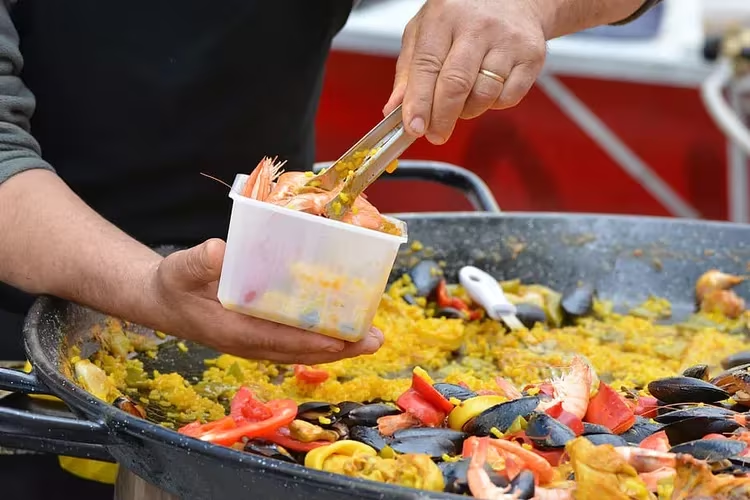
It's hard not to fall in love with Spanish cuisine. Gazpacho, paella, and jamon will certainly captivate you. After all, there are about 300 varieties of paella alone!
The price tag is different. And, of course, you can find a place where the cost will not shock you. You can have breakfast for less than 10 €. Lunch and dinner start from 15 €, and snacks are even less.
Places worth visiting in Madrid: Madrid Madriz , Lamiak , Sobrino de Botin. Sobrino de Botin is definitely worth paying attention to, as it is considered the oldest restaurant in Madrid. The way it was opened in 1725 is how it still works. Forbes magazine awarded it third place in the list of the 10 best classic restaurants in the world. Prices there range from 6 to 124 € per dish.
As for the cost of products, 1 kg of tomatoes will cost about 2 €, potatoes – 1.5 €, 12 eggs – approximately 1.4 €.
Bars
And for those who like to while away their time in bars, we can recommend a couple of places.
Stop Madrid Wine Bar has an excellent collection of Spanish wines. You can order a plate of local sausages with them. The atmosphere there is suitable for such a pastime: dusty bottles, wooden panels and barrels.
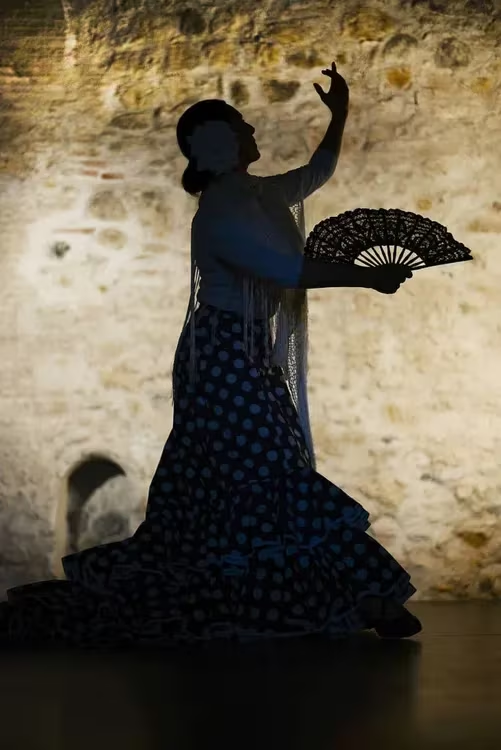
The flamenco bar Tablao La Quimera captivates locals and tourists with its passionate dance. It is the best bar in the city where you can enjoy art while trying Spanish wine or sangria. The live music bar M arula Cafe brings together artists and DJs almost every night, delighting with genres ranging from soul to electronica. Dance, enjoy and try various cocktails at the bar.
Safety
Madrid is a fairly safe city. But this does not mean that there is no crime here at all. In addition, those who have recently moved are more likely than others to be deceived in any country in the world. Basic precautions must be remembered. And just in case, have the address and telephone number of your consulate, so that in case of trouble they know where to turn.
Internet and communications
In the Spanish capital, as in other major cities in the world, finding Wi-Fi is not a problem. It is found almost everywhere. In our article about Barcelona you can familiarize yourself with mobile operators and choose what is most convenient for you. These are mainly Lebar a, Orange, Movista r, Vodafo ne and Yoig o.

Schools and kindergartens
Schools in Spain are Catholic, public and private. Public schools are free, but you will have to pay for textbooks. As for the school uniform, children can breathe easy – it is not mandatory. To send a child to such a school, you need to have a residence permit. Please note that lessons are taught in Spanish.
Private schools are fee-paying. P rome cost is from 500 € per month. The amount per year can be either 5,000 € or 20,000 €. All clubs and extra classes are paid. There are many private schools in Madrid. People specifically turn to specialists so that they can select the appropriate option for their child. The teaching load here is higher than in state schools.
Religious schools, as a rule, are also free, but there are mandatory monthly fees of 100 €. Other expenses are also paid separately. It all depends on the chosen school.
Advantages of studying in Spain:
- Low cost of training when compared with the USA and England.
- The child will be able to speak several languages at the same time.
- International diploma.
Now let's move on to preschool education. There are public, private and mixed gardens in Madrid. To get into the municipal garden, you need to have a residence permit; they may also require a certificate of income. But it’s not so simple: there are many more applicants than there are places. Preference is given to children from low-income families. Groups up to 20 people. Public gardens may also require payment, but it is much less than in private ones, from about 70 € per month.
Private and mixed ones take from 5 to 12 children per group, the conditions of stay there are also more comfortable. The daily routine is usually from 09-00 to 17-00. Payment from 350 € without additional costs.
Documents that may be required:
- Residence permit or Spanish ID card.
- Birth certificate (in Spanish or English).
- Certificate of vaccinations.

Animals
To bring your beloved pet with you to Spain, you need to follow a number of rules. The animal must have an international passport; this is done in any state veterinary clinic. The pet must be microchipped and vaccinated. Vaccinations must comply with the license of the country in which they were given. A veterinary certificate of absence of disease is also required. These documents will be needed regardless of the transport in which you arrive in the country.
Data that will be required:
- Owner's personal information.
- Animal details (breed, age, gender, color, etc.).
- Information about vaccinations.
- Chip.
- Disease free test results.
- Evidence that the pet does not have parasites.
- Information about surgical operations.
- Additional information (allergies or chronic diseases).
It is prohibited to import animals less than 12 weeks and 21 days old. You should also note that some companies will have to pay for an animal. Approximately from 70 €.
There is no tax on keeping pets in Spain. But you can get a fine for not cleaning up after your four-legged friend during a walk. To prevent your animal from experiencing severe stress during transportation, work with your veterinarian to find a sedative for him.

Medicine
Public healthcare in Spain is free for both local residents and foreigners. But there are nuances. For example, full medical services are available to those who have obtained a Spanish residence permit and who have insurance.
The rest will receive assistance only in emergency cases. Don't forget about the queues. You can wait several months for the right specialist.
Dentistry is only paid, the only thing they can do for free is to pull out a tooth.
It must be borne in mind that an ambulance will arrive if emergency medical care is needed or the person is not able to go to the doctor himself. If you have a fever or headache, then you will have to go to a medical facility yourself. The main task of the ambulance is to urgently deliver to the hospital, where doctors will already provide assistance.