

🍣 Gastronomic guide to Iceland: top 10 dishes
Fresh air whets your appetite, doesn't it? This means that in Iceland, a country that is as clean and environmentally friendly as possible, you will always feel hungry. Gorgeous natural views in themselves already cause profuse salivation. We will aggravate the situation and tell you in addition what Icelandic cuisine is worth trying while traveling, the idea of which we have already shared here.
Skyr
We will start not just with something tasty, but also with something healthy. Once you try Icelandic skyr, you'll be ready to reconsider your breakfast menu. And you will do it to the delight of your stomach. So what kind of gastronomic miracle deserves such compliments?
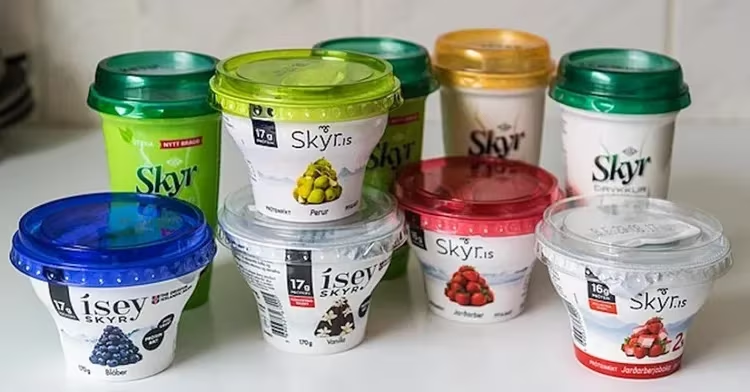
Skyr is Icelandic yogurt. Although technically it is a soft cheese. This fermented milk product is similar to its Greek counterpart, but the Icelandic one has a much softer and more pleasant taste. And classic skyr is always low-fat.
Having been a constant part of Icelandic cuisine for over a thousand years, skyr has gathered hundreds of recipes for dishes. It is eaten neat, mixed with milk, berries and cereal, and added to ice cream and pies. Common Icelandic yogurt-based dishes include hræringur (“mixed”), a mixture of equal parts yogurt and porridge, and skyrkaka, a local skyr-based cheesecake.
Volcanic bread rugbraud (Rúgbrauð)
Another product with the prefix “eco”. Although in Iceland in general it is difficult to find anything without this prefix. Local residents not only value their nature, but also actively involve it in “socially useful work.”
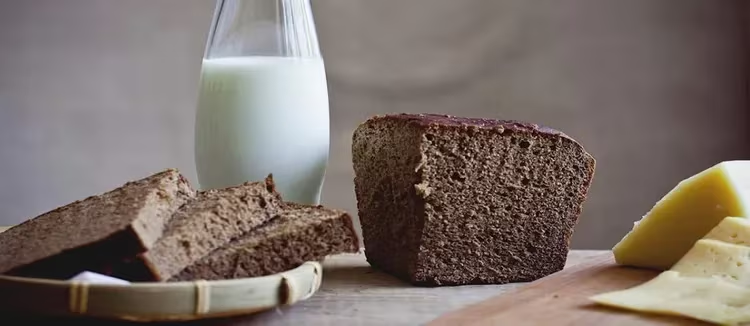
The geothermal energy of the island not only warms Icelandic homes. But he also prepares food for the islanders. Until now, in some places in this northern country, bread is prepared in natural ovens… in the ground. To do this, the baking mixture is placed in a bowl, a hole is dug in the ground next to a hot spring and the dough is placed there for a day. Demanding Icelanders remind us that a small mound should be erected over the baking bread. Either this is part of the baking technology, or a precaution against the loss of baked goods in a bare field.
Thanks to underground heat, volcanic bread has a soft, spongy texture and is similar to a sponge cake. There are fewer and fewer bakers who use this method of baking. So hurry up and try it!
Klein or Kleinur
We continue our search for the sweet life. And the next stop on this path is kleina or kleinyur (klenyater). The dish, which has a dozen names among the Kandi -Navian peoples, is closest in its confectionery essence to our sweet brushwood. Or dried donuts. The Swedish writer Selma Lagerlöf herself was a big fan of kleina, and she gave the children a story about Nils and the wild geese. In her stories you can often find characters enjoying kleinur. By the way, if you're traveling with kids, check out our selection of the best family restaurants around the world.

On the one hand, there is nothing surprising in kleinure. And you can actually prepare it at home yourself: flour, egg yolks, margarine, sugar – the recipe is simple. But the Icelanders have given the dish, which is Danish in nature, a national flavor: they sometimes add cinnamon, cardamom, the strong Icelandic drink brennivin or cognac to their baked goods.
By the way, it is quite possible that you will try kleina pieces without meaning to. When tourists are sold an entrance ticket to the volcanic lake Kerid (which is part of the “Golden Circle of Iceland”) for $3, the lucky ones usually receive a bonus: a portion of hot chocolate with kleinur. Such a hot treat can brighten up any bad weather on the island.
Gellur
It's time to pay tribute to the main breadwinner of Icelanders, the sea. It is quite expected that their cuisine is rich in seafood dishes. Fish will definitely be present on the menu of most establishments. And not all of it will surprise you. Yes, cod, haddock, salmon and herring will be prepared differently here. But not so much as to ignore much more interesting dishes for the sake of them. One of these is gelur or “cod tongues”.
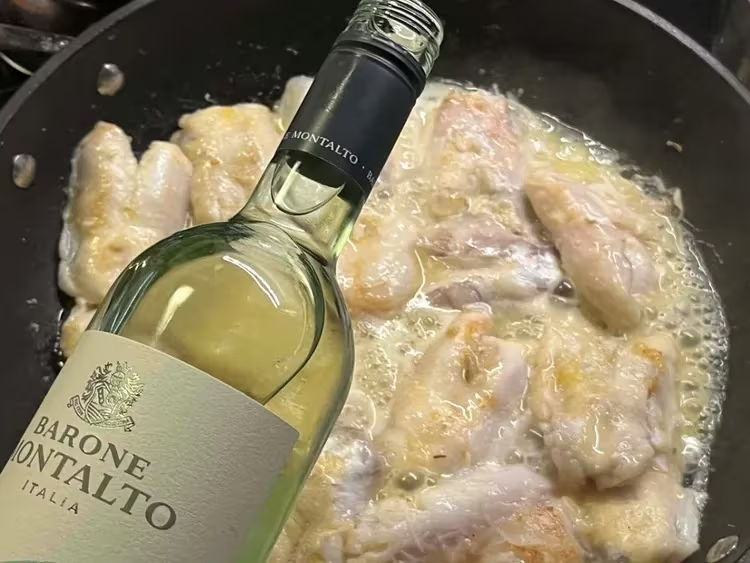
Strictly speaking, we are not talking about the tongues themselves, but about the muscles located under them. They became one of the local delicacies. But be careful when ordering: the boiled “tongues” often served in Icelandic establishments are nothing special. You can truly enjoy this dish only if it is baked in the oven with spices.
Sjávarréttasúpa
One of the best ideas born in bright Icelandic heads. And, in my opinion, the best use of marine resources. The soup with the unpronounceable name syauvarrehtasupa will be yours for the first, second, and compote. It is so nourishing, tasty and multifaceted.
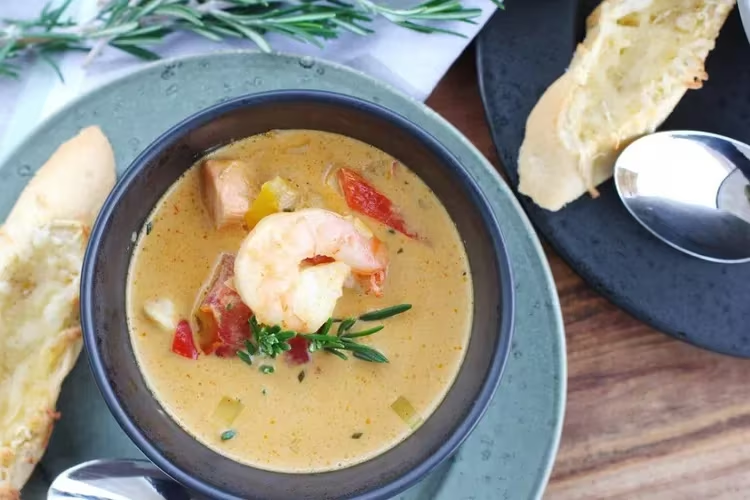
Shrimp, langoustines, mussels, fresh fish, spices and onions are added to this dish. All this is cooked on a creamy base. The king of northern soups is usually served with bread and butter.
And we wrote about other soups that every tourist should try here.
Hot Dog
Yes, yes, that same ordinary fast food! What is he doing on our list, where even the names of the dishes are unpronounceable? The thing is that Icelanders know how to add soulfulness and a special taste to even buns with sausages.
Icelandic hot dogs have long been an urban legend. Their recipe does have a few special features. For example, sausages are usually made from lamb. Ingredients include fried onions in buttermilk and flour, and, most often, a remoulade sauce made from Dijon mustard and wine vinegar.

If you want to be guaranteed to be satisfied with local fast food, then welcome to the Baejarins Beztu diner. This is Reykjavík's most famous “hot dog” and can be found in the historic center by its smell and endless queues. Rumor has it that conveyor production makes it possible to feed rolls and sausages to approximately 3,000 customers every day. If your “American dream” is not limited to just hot dogs, welcome to our guides to the most interesting locations in the USA.
Lambalæri
Icelanders' favorite and most common meat is lamb. The animals have adapted to the harsh island weather and chew melancholy on patches of grass in the rocky fields of Iceland. Every self-respecting Icelandic farmer keeps sheep herds that provide milk, wool and, to be honest, meat.
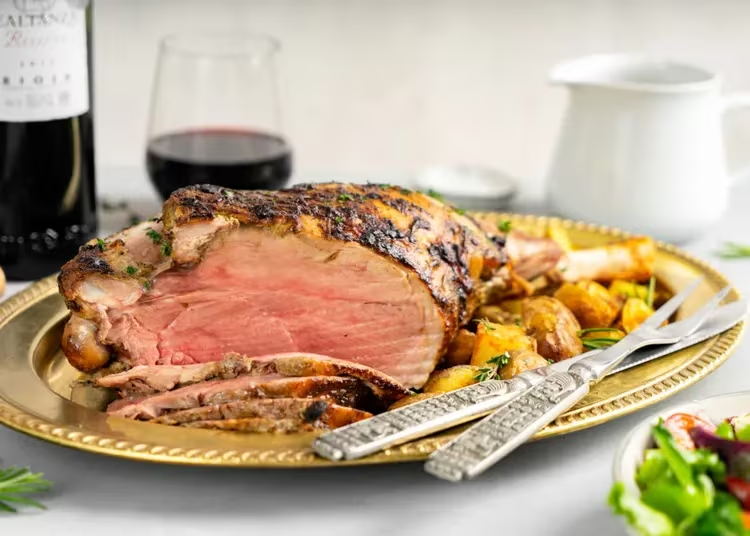
If you consider yourself anti-lamb, Iceland is the place to give it one last chance. The lamb dishes here have no specific smell and literally melt in your mouth. And among all these dishes, lambalairi is truly a royal treat. However, the recipe is simple: stewed lamb in butter and with vegetables.
The average cost of lambalairi is 30-40 euros. If you are not ready to spend so much on one serving, you can try lamb goulash, which is sold in many cafes and eateries.
By the way, if you are a fan of lamb, then you simply must get acquainted with the best dishes of Uzbek cuisine.
Hvalspæk
The ordinary menu is over, there are only dishes left that are not for the faint of heart. We'll start with the traditional Icelandic snack hvalspæk. Those who heard notes of “lard” in the name, that is, lard, are absolutely right. This is raw whale oil. Or fat.
This dish is consumed either in the Icelandic manner, after boiling it in lactic acid. Or in Greenlandic, when, according to Inuit customs, pieces of whale oil are consumed raw. Greenlanders sometimes still season their food with soy sauce.
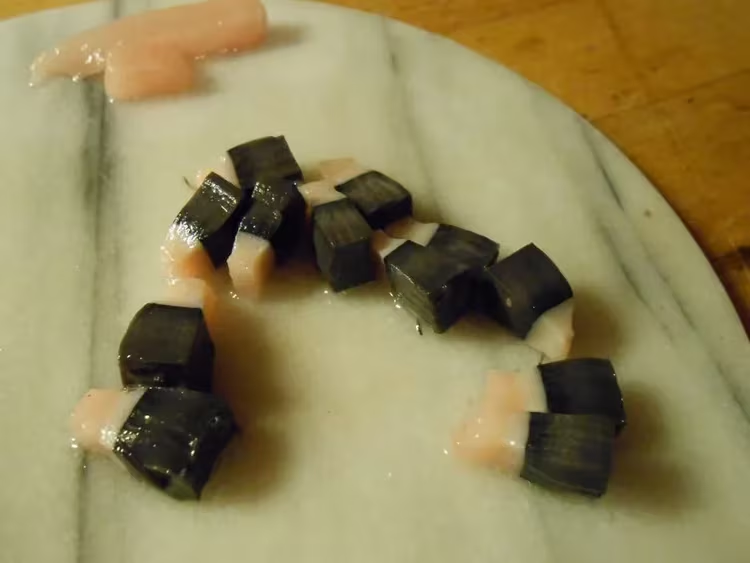
Today it is becoming increasingly difficult to encounter this dish in Iceland. Previously, during the times of active whaling, the islanders took a utilitarian approach to the caught whale and tried to adapt all its parts. Nowadays, few whales are caught, and the dish has almost gone out of use. But the more unique your experience will be. By the way, they say the taste is quite tolerable.
Hákarl
They scare naughty children. His recipe will cause anything but appetite. And its smell will be etched in your memory deeper than the images of Icelandic natural beauty. And yet, they willingly try it as the most unusual phenomenon of Icelandic cuisine. The name of this miracle is haukarl.
This product is essentially a relative of the Swedish surströming. Only the Swedes abused herring carcasses, and the Icelanders abused Greenland sharks. Not for the sake of delicacies, but only because in the harsh northern realities, you either turn your nose up and starve, or eat what nature gave.
The Greenland shark itself is inedible and even poisonous due to the high concentration of ammonia in the meat. But enterprising islanders found a way to save the product. Minus for minus gives a plus, you can’t spoil something inedible. Therefore, shark meat began to be buried in the ground for several months, weighed down with stones. This simple procedure helped remove urea from the shark. And also for the shark to become completely rotten, excuse me, leavened.
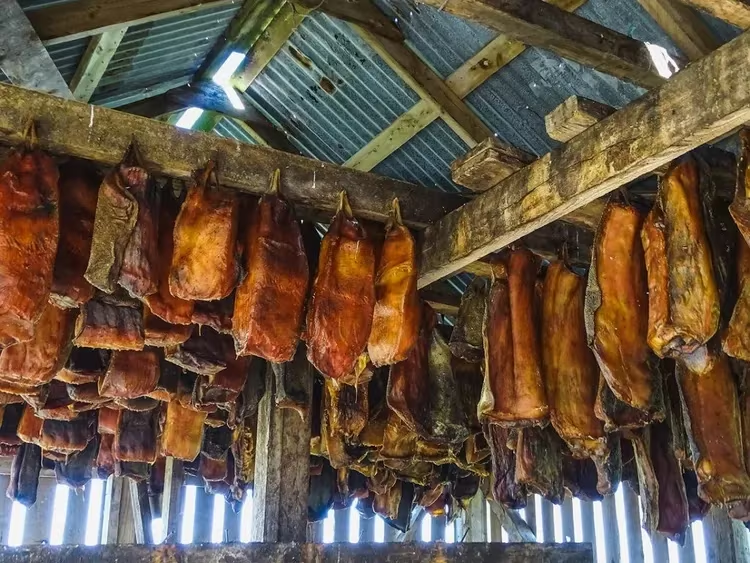
As a result, the shark is taken out of its earthly confinement and left to dry in the fresh air for several more months. For which it is slightly ventilated. Then the carcass is cut into small cubes and served. Most often in January, during the gastronomic festival “Torrablot”. Icelanders prefer to wash down this fragrant dish with brennivín, which I advise you to do as well.
We have dedicated a separate publication to other unusual dishes from Northern Europe.
Slatur
Another personification of the principle “nothing goes to waste” is slatur – a mixture of sheep fat, tripe and blood, stewed in a gastric bladder. The word “slatur” itself is translated as bloodshed. It comes in two types: completely consistent with its terrible name, blood sausage (the recipe is reminiscent of our blood sausage) and liver sausage, similar to the domestic saltison or liver sausage.
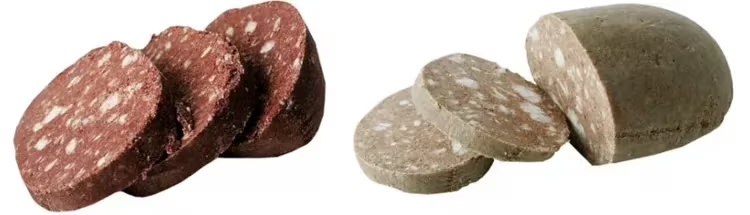
What’s interesting is that this dish, creepy both in name and in filling, is served with the most innocent side dish: sweet rice pudding. And sometimes the food is also seasoned with sugar, cinnamon and raisins.