
Caves of Nerja in Spain: photo, description, history, what to see
Nerja is located in the very south of Spain, in sunny Andalusia. This is a relatively small resort town where you can enjoy not only the gentle sea, golden sand, but also feel the delights of the colorful lifestyle of the Spaniards themselves. Wonderful narrow streets, white houses with terracotta roofs, decorated with flowers, small shops, the sounds of music… The local flamenco school is considered one of the best in the country. By the way, the local beaches have been awarded the “Blue Flag”, something like a “quality mark” from the European Commission for the Environment. This means that the water and the coast here are very clean, and they have been constantly tested for more than a dozen years.
The long age of these ancient places is rich in significant events, unfortunately, many of them were destructive. Therefore, not many historical and natural monuments have been preserved, but they all cause a storm of emotions and admiration.
Main local attraction
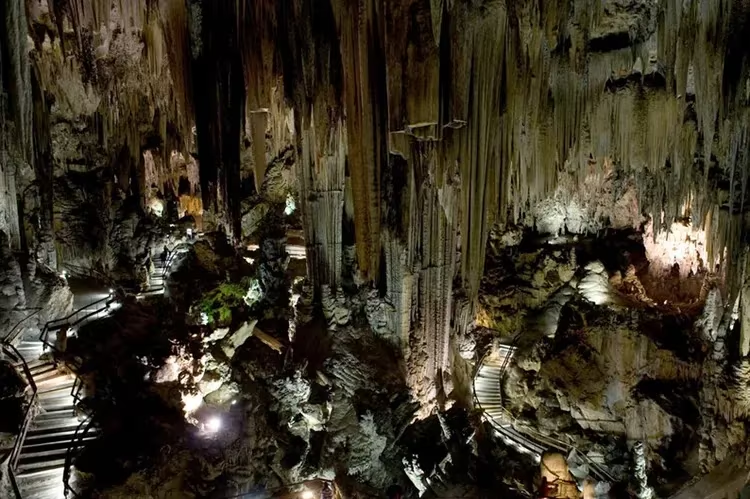
At a distance of about 5 km east of the city is the main local attraction. Spaniards are not surprised by caves, many of these creations of nature are scattered in mountain gorges, but this one is different from all. First of all, in size, the area of the three main galleries, of which it consists of 35.5 thousand m². This is about five football fields of the Camp Nou stadium in Barcelona. The view from the inside is amazing.
In 1959, five boys from the surrounding villages, hunting for bats, accidentally found the remains of skeletons and pottery. Of course, they immediately told adults about the find. Researchers, scientists, photographers poured into this place, and already in 1961 Cueva de Nerja was recognized as a historical and artistic monument. Today it is the third most visited tourist destination in Spain. Up to 500 thousand guests come here every year.
The winding road from Nerja to the cave enchants with picturesque mountain landscapes. At the end of the path, there is an amazing view of the famous Eagle Bridge, or Aqueduct of El Aguila. A grandiose four-level structure of 38 arches was erected in the 19th century to supply water to a sugar factory. The aqueduct is still functioning, irrigating nearby plantations.
Excursions
The cave itself consists of three galleries. Only the Lower is open for inspection, while archaeologists and various specialists work in the Middle and Upper. These voids formed five million years ago, during the Ice Age. Discovered rock paintings, traces of a hearth, stone tools indicate that people lived here. This place is fraught with many mysteries, it has not yet been fully explored. If you wish, of course, you can, accompanied by an instructor-speleologist, make a trip to the closed areas of this underground world. This requires certain skills, equipment, a separate fee and an advance agreement.
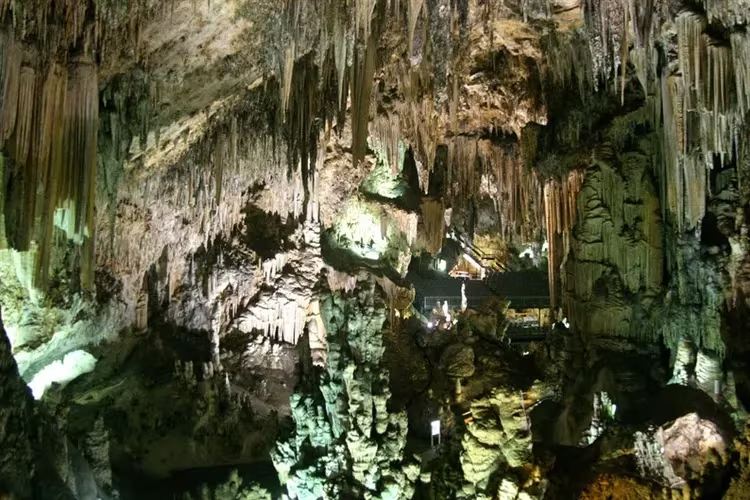
Regular tours take place in halls equipped with electric lighting and special paths. Impressive panoramas open from the observation decks. In several showcases you can see the local archaeological finds: fragments of ceramics, the skeleton of a man who lived in the Stone Age.
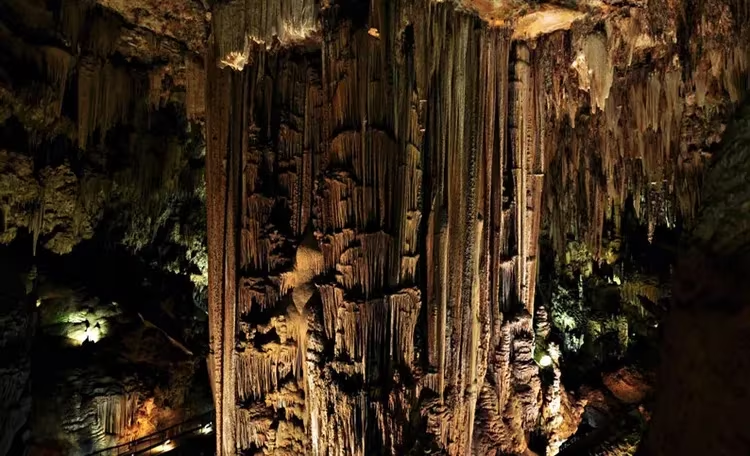
The atmosphere of these rooms is amazing. Their width reaches 100m, and their height is up to 30m. “Icicles” of various sizes hang between huge columns of unthinkable shape, in some places some of them have already fallen. Therefore, some sightseers (quite in vain) look up with apprehension. All this is illuminated by multi-colored lanterns, the light of which is reflected, but with a different shade. Stalactites and stalagmites create fantastic patterns. And all this beauty is accompanied by supernatural sounds. Somewhere water is dripping, or air is moving, underground any rustle is heard differently, but given the size of these rooms and the richness of “reflective elements” – the acoustics in Cueva de Nerja are simply magnificent.
Cave halls
Every year, in June, the Cascade Hall gathers lovers of music and dance. Festivals are held here, where world stars of opera and ballet perform. More than a hundred metal seats and stage are carefully arranged for such concerts.
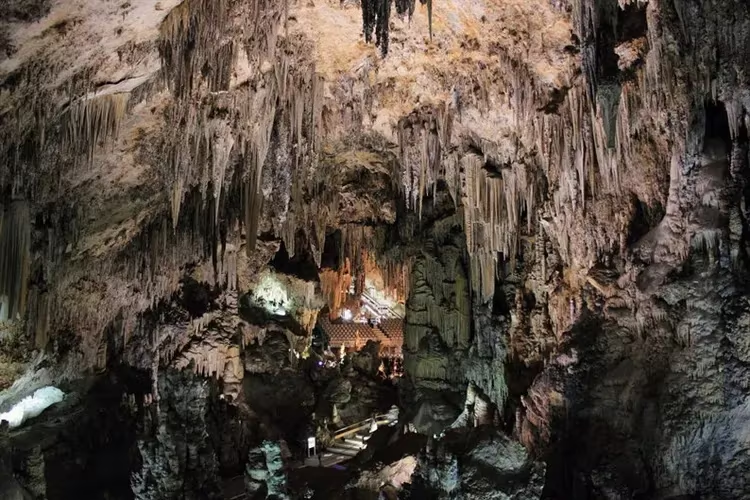
In the Phantom Hall there is an unusual stalagmite. Its refined outlines and extraordinary patterns on the surface resemble a castle. The giant speleotheme in the Cataclysm Hall is listed in the Guinness Book of Records. Height 32m, width at the base 13/7m. The name of the Elephant Tusk Hall comes from the original formation in the form of a tusk frozen in its center.
It is impossible to describe in words the emotions that accompany visitors to this amazing realm of shadows, sounds, amazing figures and ornaments. It is true that they say that the best artist is nature. With the help of water penetrating into the cracks between the rock, she created a unique creation, which is now considered by many scientists to be the most significant in all of Europe. Layer by layer, developing over thousands of years, these bizarre sculptures store information that allows you to establish the climate of those times, the approximate dates of earthquakes…. Therefore, they are of significant geological interest to experts.
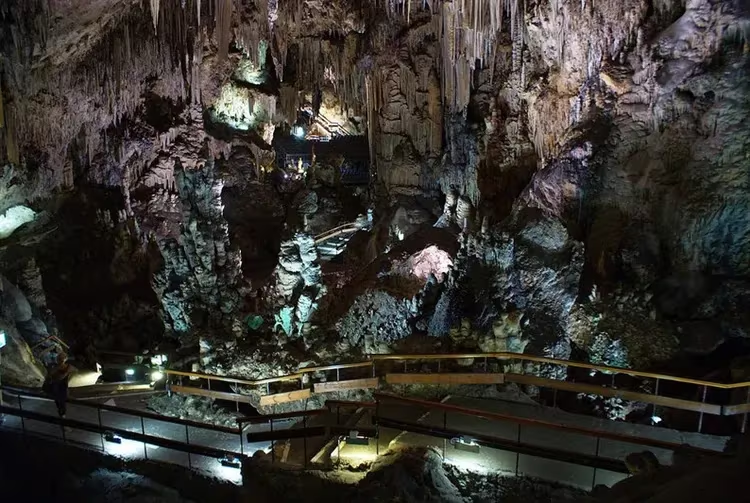
It is amazing how such a large monument of the history of mankind has survived untouched to this day and is so close to the civilized world.
Balcony of Europe
In addition to Cueva de Nerja, there are other wonderful places in the town that are loved by tourists. The “Balcony of Europe” is a wide area on a ledge of a rock, 25m high. Near the fence there is a monument to King Alfonso XII, who did a lot of good for the country. And in 1885 he visited Nerja to support its inhabitants after the earthquake, which destroyed most of the dwellings, including the watchtower that once protected the city from pirate attacks. On its ruins, the king delivered a speech that was remembered by the townspeople for a long time. It was on this spot that the “Balcon di Europa” was built. It offers a magnificent view of the entire Costa del Sol.
The Church of El Salvador is also worth seeing, with amazing 12th-century frescoes and artistic paintings by the contemporary artist Francisco Hernandez Diaz. The 17th century Chapel of Sorrow with a spectacular dome, decorated by the Granadian master Alonso Cano.
Nerja is a real pearl of tourism in Spain, characterized by a bright originality and at the same time low prices.
Recommended reading Altamira Cave, Spain.