
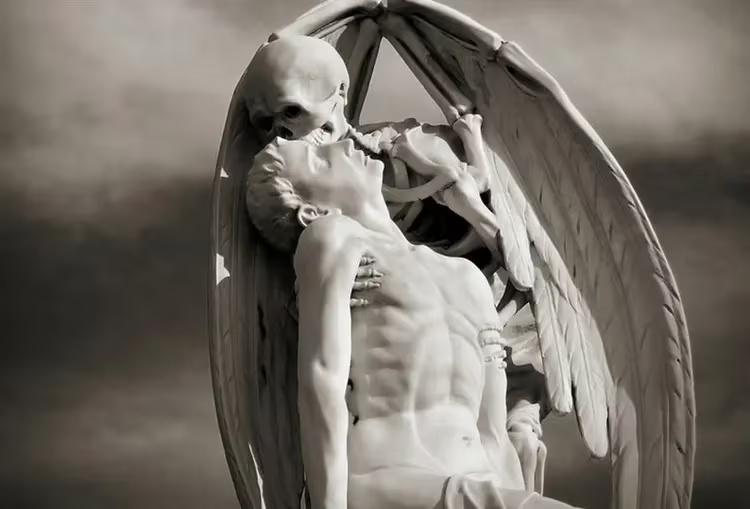
Sculpture Kiss of Death in Barcelona (Spain): photo, description, history
Every experienced tourist is well aware that in European countries there are cemeteries where some tombstones are protected by the state as a valuable historical heritage. Therefore, such tombstones are one of the main attractions of any European country. Almost every urban cemetery in Europe is an open-air museum filled with sculptures by great masters. One of these is the very first cemetery of Poblenou, located in the old days outside the walls surrounding Barcelona. This new place for the departed citizens was opened in 1775 and consecrated by the Bishop of Barcelona.
Poblenou Cemetery
Napoleonic troops in 1813 completely destroyed this cemetery, and only after the end of the war in 1819 it was restored. The cemetery was rebuilt in the neoclassical style by the Italian architect Antonio Ginesi.
It is believed that death equalizes everyone, but this statement has little to do with the Poblenou cemetery. Initially, its territory was divided into two zones. In one part, the poor were buried, using concrete niches for their mortal bodies, and in the other, wealthy residents of Barcelona were buried with family crypts. The graves of the deceased rich people were decorated with tombstones and statues, on which the best masters and sculptors of that time worked.
With the growth of the population in Barcelona, there was a need to expand the boundaries of the cemetery, and in 1849 the city authorities carried out a number of works on its territory related to the modification and increase in area. The reconstruction did not affect the external appearance of the old tombstones and crypts, reflecting the architectural styles of different periods. Thanks to a careful attitude to the past, monuments have been preserved in the Poblenou cemetery, which are real works of art of the Gothic style and the Renaissance.
History of the Kiss of Death monument
One of these monuments is the famous “Kiss of Death”, installed at the tombstone of the only son of the Spanish manufacturer Josep Llaudet Soler. From what the young man died at such an early age, no one knows. Some argue that the mystery of the young man's death is caused by a “bad disease” associated with the dissolute lifestyle of a wealthy young rake. Perhaps because of this, his grave is located in the most secluded place of the cemetery.
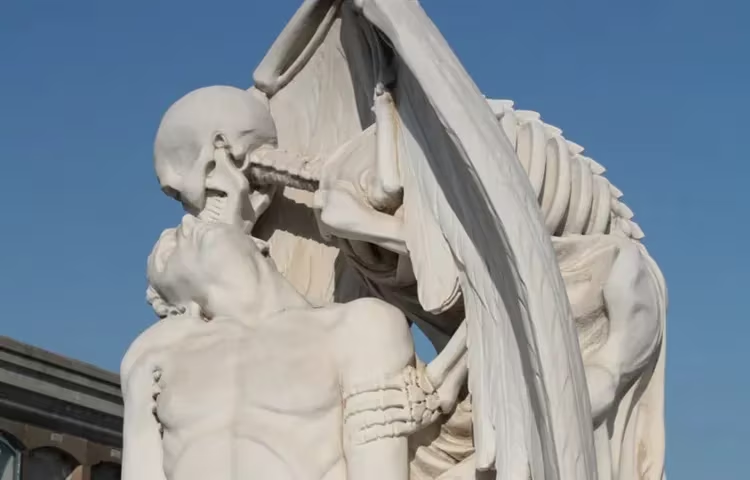
The heartbroken father could not come to terms with the irreparable loss. To perpetuate the image of his son, he turned to the best sculptor in Spain. Until now, there is no unequivocal answer to the question of who created this mystical monument. Some consider the Kiss of Death to be the work of Joan Fonbernat, while others argue that this work of art was created by Jaum Barba. Information has been preserved that the inconsolable father, having seen the finished monument, could not recover from the excess of conflicting feelings surging over him, and sat at the grave of his son for about three days. After that, he could not find the strength to visit his deceased offspring again and never again came to his grave.
Description of the sculpture
This sculpture really evokes a storm of emotions associated with horror, some kind of ridiculous tenderness and an incomprehensible state of ecstasy. Mixed feelings are caused by a young man with a strong muscular body and a bony, winged figure of Death clinging to him. It seems that the young man voluntarily surrenders to the desire of a bony mistress. He helplessly lowered his arms along the body, obediently throwing back his head, with his whole appearance demonstrating a complete lack of will and unwillingness to resist death as such. Perhaps the sculptor was trying to convey the mood of some of the youth of that time, who, having everything, did not see the point in their own lives.
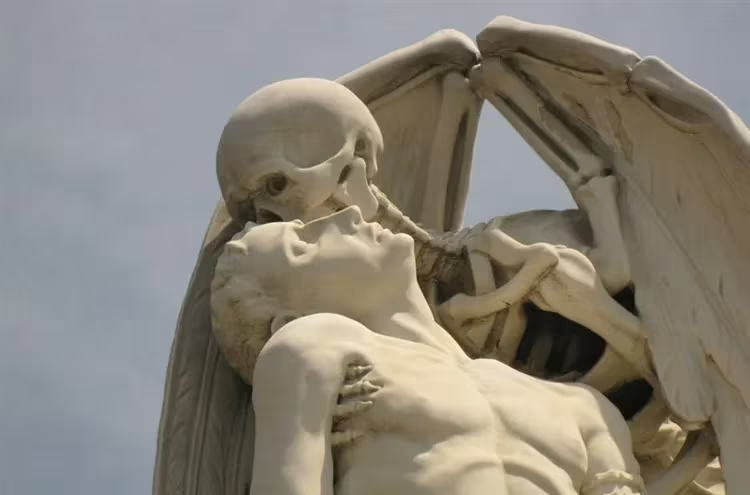
The image of a terrible death in this sculpture looks completely unconventional. Death gently touches the youth's temple, carefully supporting his body with bony hands. She did not bite into him rapaciously and ruthlessly, as artists usually portray. Here it's the other way around. Even Death uses wings to protect the young man, gently shielding him from everything that surrounds the young man.
Image of death
The figure of Death and the young man can be interpreted in different ways. The image of Death can also look insidious. The vile, bony ruler of the underworld gradually crept up to the young man and, together with a kiss, takes away his youth and strength. It is no coincidence that the young man sank to his knees in exhaustion. Death leaned over him so that he could never rise again.
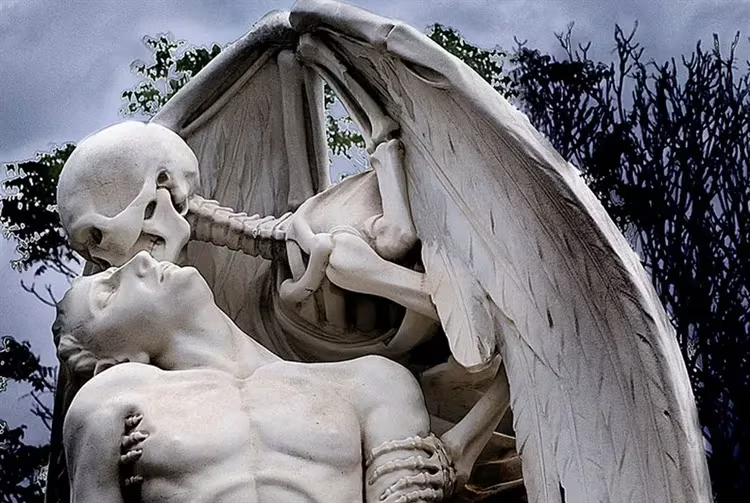
The epitaph on the headstone of the deceased young man to some extent reflects the hopelessness of the moment when a person falls into the arms of death. Everyone who happens to visit this sculpture will be able to read on the grave that the young heart of a young man stopped beating forever, and the blood stopped flowing through his veins. His strength left him, and he became wholly owned by Death.
It is believed that it was thanks to this peculiar sculpture that the mystical film “The Seventh Seal” was released on the screens. The idea of creating it came from the film director Bergman just after he visited the Poblenou cemetery in Barcelona and saw the legendary Kiss of Death.
This amazing sculpture is fraught with mysticism, and many believe that touching it, you can feel a slight tingling sensation as if from electricity.
Among the beautiful cathedrals, the noisy narrow streets of the old city and the famous football club in Barcelona, there are places quiet and secluded, keeping beautiful works of masters where eternal peace reigns. Perhaps the beautiful sculptures towering over the tombstones of the deceased residents of Barcelona are a reflection of the main meaning of the transience of life. That is, everyone living on Earth needs to remember that the same fate awaits him, which means that you need to appreciate every moment you live.
Recommended reading Caves of Nerja, Spain.