
City of Lucca in Italy – photo, description, history, attractions, prices in cafes, map
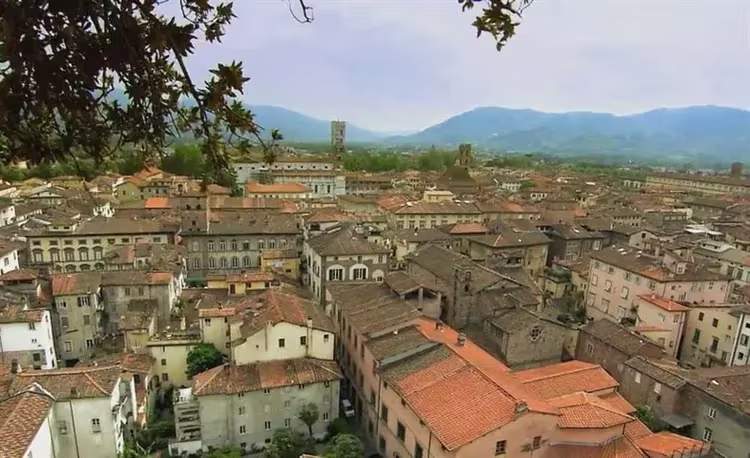
When visiting Italy, one cannot miss a city called Lucca, located on the Serchio River in the province of Tuscany. It is completely surrounded by a fortress wall, 4.2 km long, built back in the 16th-17th centuries. She protected the city not only from enemies, but also from floods, which often threatened to destroy many buildings. The architecture of Lucca is dominated by old buildings, churches and towers. Locals are proud to say that great composers like Giacomo Puccini and Luigi Boccherini were born in Lucca. The centuries-old history has left its mark on all spheres of life of the citizens, so Lucca will be of interest to all tourists who wish to get acquainted with the customs of the country.
The city's attractions
City gate Porta san Pietro
But first things first. The journey begins with the entrance to the city through the Porta san Pietro, built in 1565-1566. Previously, only they were open to foreigners who wanted to get to Lucca. The layout of the city has remained unchanged since the 3rd century AD, when the Romans ruled here. The city is divided into four parts by two streets, one of which runs from north to south (cardo), and the other – from east to west (decumanus). They intersect in the center, and the rest of the streets run parallel to them and divide the entire territory into small squares.
Piazza San Michele in Foro
Piazza San Michele in Foro is located almost in the very center of the city. In the 12th century, a church of the same name was erected on it, famous for its unique architecture, which has survived to this day. The shape of the building resembles a huge majestic ship. On the outer side of the facade there is a statue of the Archangel Michael.
It is said that the saint's hand is adorned with a ring with real diamonds, which was presented to the church as a gift by a grateful parishioner. Many people wait for the evening hour, when twilight is just beginning to envelop the city, in order to see a bright sparkling dot on the saint's hand. Near the church there is a house that became a mute witness to the birth of the baby Giacomo Puccini, who later became a great composer, whose operas are still admired by the whole world.
Mercy Square
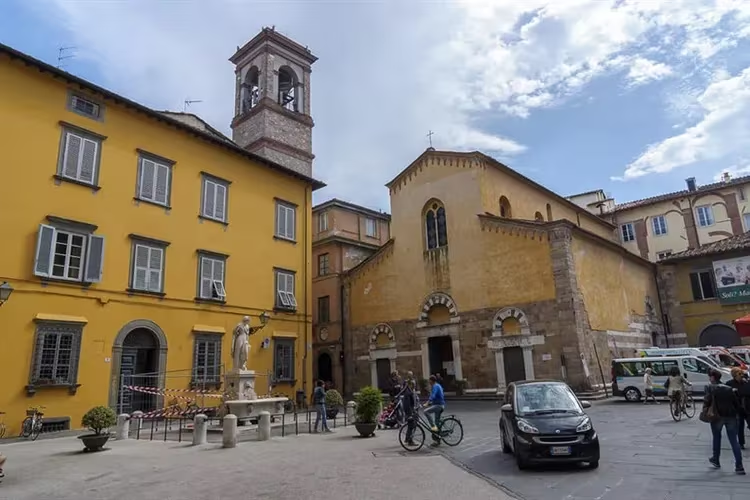
There are many squares in Lucca. It is worth quite a bit to move away from one, as soon as you get to another. So, not far from San Michele there is a square called piazza di San Salvatore, which is popularly called Mercy Square. The church of the same name, built in the 12th century, has strict classical forms.
Market Square
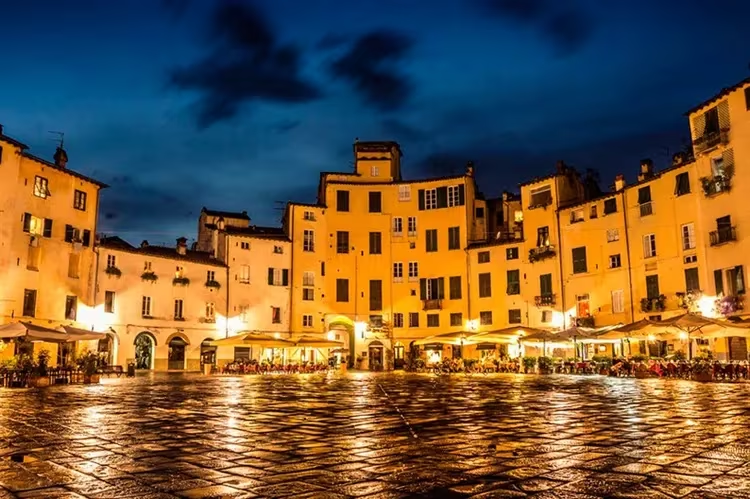
Following further along the street Roma, and then Fallungo, you get to the Market Square, built in the shape of an oval. Crowds of people always gathered here. But before, people came to stare at the brave gladiators who fought in the arena of the majestic amphitheater that used to stand on this site.
This explains the shape of the square and the presence of arched passages, through which once animals and people came out to entertain the public with their bloody fights. The presence of this building suggests that Lucca was quite rich, since not many even large cities could afford such a luxury.
Basilica of San Fridiano
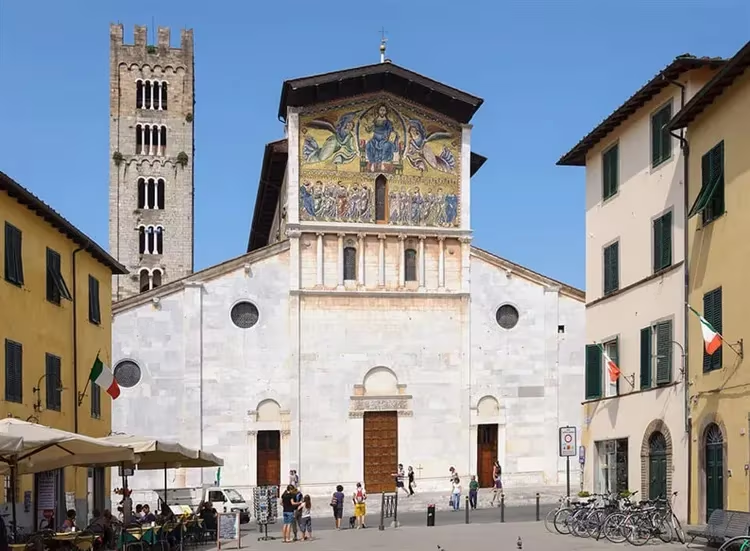
Basilica di San Frediano deserves special attention. The fact is that this is the only religious building erected in the Romanesque style in the period from 1112 to 1147. If you go inside the church, you can see its attraction – the baptismal font, made and placed here in XII by the architect Roberto.
It has a somewhat irregular geometric shape with biblical scenes painted on it from marble. Under the altar is the tomb of the founder of the church of San Frediano, and a little to the right is the glass coffin of St. Zita, revered in Italy by the common people and servants.
Torre delle Ore Clock Tower
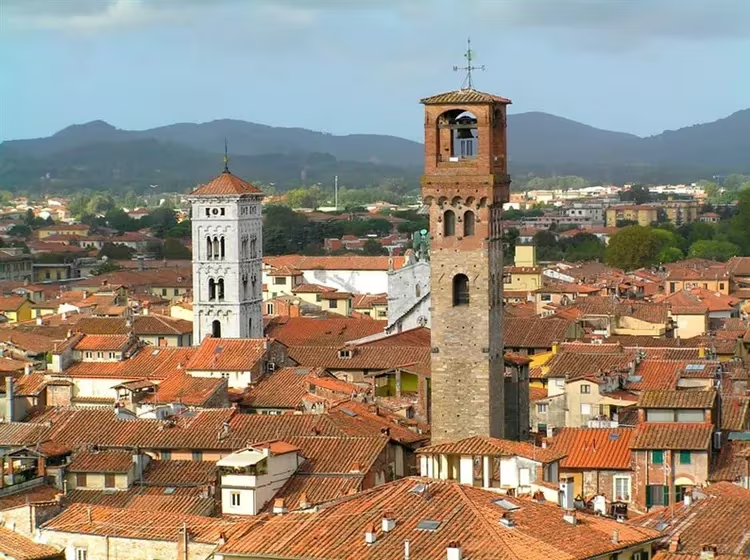
Leaving the marble vaults of the church, and moving further, you run into the Torre delle Ore Clock tower. It was the first building in Lucca to have a clock installed in the 14th century. They differed from their modern counterparts in that they did not show the time and did not even have a dial. Their duty was only to notify the inhabitants of the onset of midnight.
Guinigi Tower
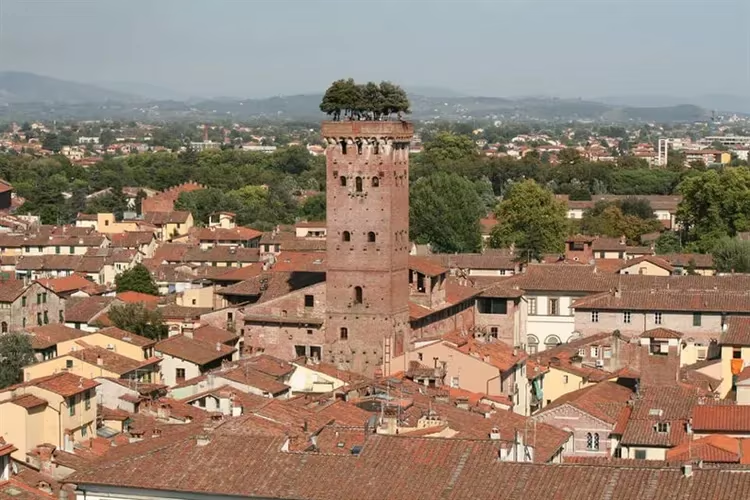
It is simply impossible to visit Lucca and not see Guinigi, which is one of the symbols of the city of Lucca. The tower is visible from afar and is a masterpiece of architecture. The palace itself is not made in the form of one separate building, but is a small town. Small buildings, decorated with intricate turrets, were built for members of the large Guinigi family. The founder of this dynasty ruled Lucca at the beginning of the 15th century.
All tourists are advised to climb this famous tower, where from a height of 44 meters an amazing view of the city and its surroundings opens. This tour costs only three euros, but the magnificence of the panorama that opens up can amaze those who have been here for the first time. It is also surprising that centuries-old huge trees grow on the terrace of the tower, among which there are oaks that are more than five hundred years old.
Cathedral of San Martino
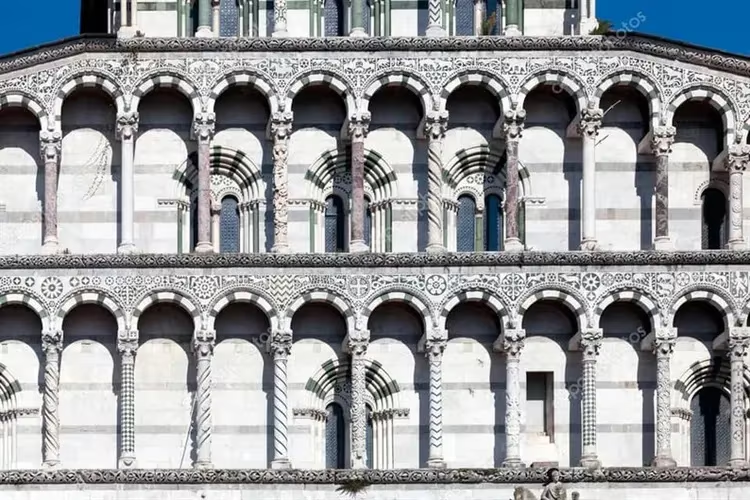
We descend from the Guinigi tower and move on, because in front of us is the main church and the landmark of the city of Lucca, the Cathedral of San Martino, built in the 6th century, but after that it was rebuilt several times, and has come down to us in the form that it was given already in the 15th century. He begins to surprise and delight already at the entrance. On all sides of the front door there are images that tell the story of the life of St. Martin. Passing further, the eye already begins to search inquisitively for a wall drawing depicting the Labyrinth. Ancient writings claim that this is the plan of the very labyrinth through which Theseus passed, guided by the thread of Aridna.
In the sacristy you can see the sarcophagus in which the wife of Paolo Guinigi Ilaria rests. At the time of her death, she was only twenty-six years old, so her heartbroken husband asked the famous master Jacopo Della Quercia to create a worthy haven for her beautiful young body. And the master created a real masterpiece, putting all his passion and skill into this ingenious creation, which is still admired by millions of people from all over the world.
But Jacopo Della Querch did not stop there and created a magnificent statue of John the Baptist for the Cathedral of St. Martin. Further, the attention of visitors will definitely be attracted by the wooden crucifix and the legend that is associated with it. They say that it was carved by Nicodemus from the Lebanese cedar, and the image of Christ was suggested to him by angels. Leaving Lucca, many citizens take a copy of the Volto Santo crucifix with them, confident that it will protect them from troubles and misfortunes on a long journey.
Napoleon Square
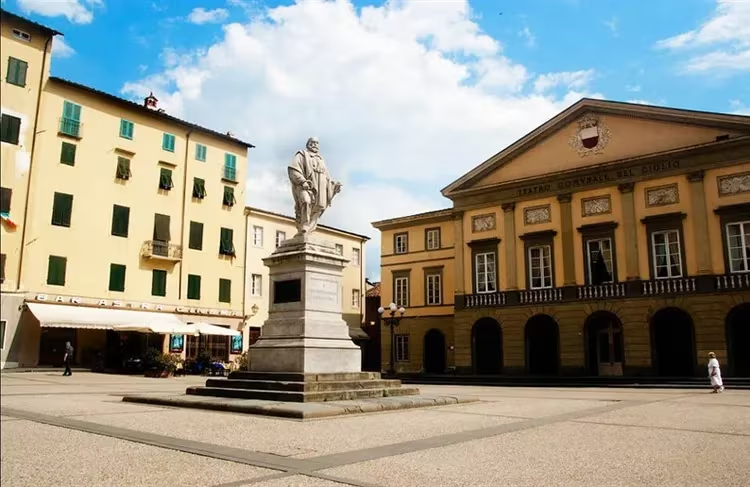
At the end of the journey, we find ourselves on Napoleone Square piazza Napoleone, so named due to the fact that in the palace, which is located on this place, Eliza, the sister of Napoleon Bonaparte, once lived with her husband. Now the palace is open to numerous guests who can visit the art gallery and the city library, which contains rare old books and manuscripts. Another collection of paintings is located in the neighboring building Manzi palace.
As for the best time of year to visit Lucca, there is no clear answer. In summer, the city is quite hot and dry, but in winter it is moderately humid and warm.
To learn more about the sights of the city, it would be best to book a city tour. It lasts about three hours, it is conducted by a Russian-speaking guide, and the cost is about 180 euros. This tour includes a visit to the Guinigi Tower, Piazza Napoleon, Giacomo Puccini's house and other sights described above.
How to get around the city
Having reached the city by car, it is better to leave your own transport outside the city walls in specially designated parking spaces. The city of Lucca is ideal for hiking or cycling.
Residents of the city most often choose city buses, tickets for which can be purchased at any tobacconist. Once at the railway station, you can easily get to the center with the help of electric buses.
Prices in cafes and restaurants
Walking around such a wonderful city, you can not help but visit small cozy cafes or restaurants. Lunch in them for one person will cost about 30 euros. We add here that a bottle of water with a capacity of 0.33 liters costs about two euros, local beer will cost almost 6 euros per half liter, and a cup of coffee or cappuccino – 1.5-2 euros.
Of course, in expensive restaurants designed for tourists, these prices are several orders of magnitude higher.
Discover the city of Lucca, and you will certainly want to return to it again.