
Museum-Reserve Gatchina
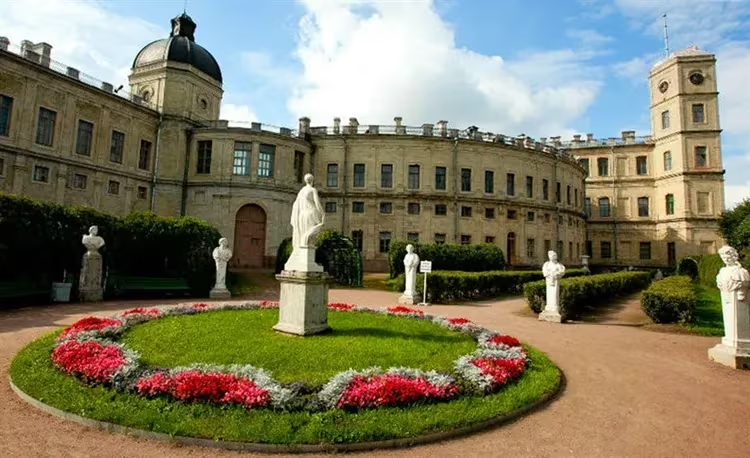
Gatchina Museum-Reserve – Suburban Hermitage or Russian Hamlet's Castle. Such names were given to the complex at the beginning of the 20th century. The palace at various times was the estate of a nobleman and the residence of the Romanov family. It was in its heyday and decline, was loved and was in oblivion, was built and lay in ruins. And today the center is experiencing a rebirth. The restoration of the Grand Palace and the park has been completed. Unforgettable hours spent on the territory of the reserve await guests.
Story
In cadastral books, the first mention of Gatchina occurs in the 15th century. Then these lands belonged to Novgorod. Then they were handed over to the Swedish king, who owned them until 1702. Peter's victory in the Northern War ensured the return of the lands to the Russian crown. In 1765, Grigory Orlov received Gatchina as a gift from Empress Catherine II.
He began to build the palace almost a year later. The project was created by Rinaldi. At the request of the owner, the building was supposed to resemble an English castle. Initially, the building had 3 floors and a square shape. The building was connected to Silver Lake by an underground passage. The palace was crowned with 10 towers, and the facades were finished with local (Gatchina) limestone.
Gatchina after the death of Grigory Orlov
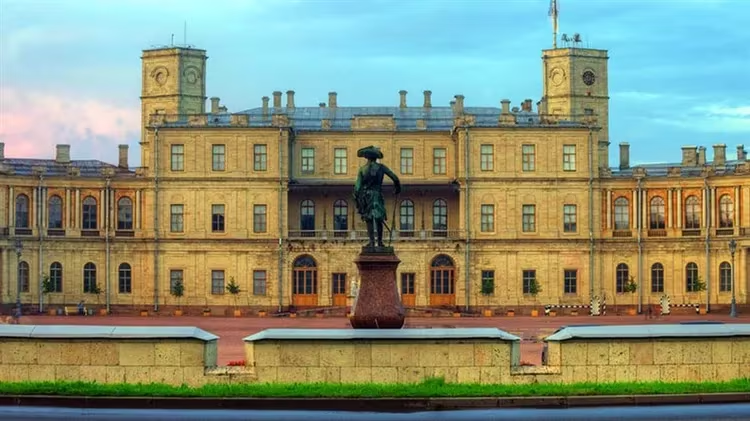
Grigory Orlov died in 1783, and Gatchina returned to the royal family. Now its owner is the future Emperor Paul I. He is not satisfied with the palace, and the Grand Duke begins perestroika. The architect Brenna was invited to carry out this task.
Now the ensemble changes:
- The galleries become closed, the walls of the square are completed to the level of the galleries.
- The yard has been converted into a square. A ditch was dug on it, bridges were built and cannons were installed.
Such changes lead to the fact that the building becomes identical to English castles. Since 1801, Dowager Empress Maria Feodorovna has owned Gatchina. During this period, Voronikhin rebuilt the palace again, but the changes affected mainly the interiors. Significant changes awaited the palace during the reign of Nicholas I.
Invited architect Kuzmin:
Alexander III was a supporter of technical innovations: he introduced heaters instead of stoves, equipped the palace with plumbing and sewerage.
Gatchina after the October Revolution
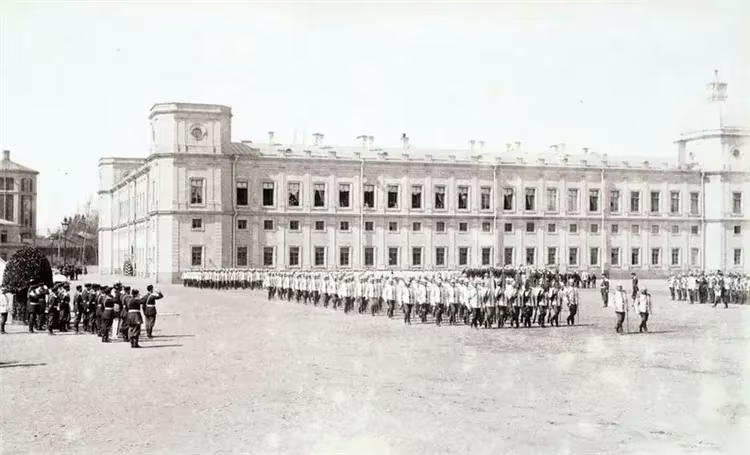
After the revolution, the complex became the largest museum in the region. His collection contained priceless artifacts, and anyone could see them. Thematic exhibitions were held in specially designated buildings. The advance of the German troops to the east was too fast, the employees of Gatchina did not have time to carry out a complete evacuation of the artifacts: they saved the main funds and the archive.
In January 1944, during the retreat, the Nazis almost completely destroyed the Grand Palace. In the surviving buildings after World War II, the Naval School and the All-Russian Research Institute Elektrostandart were alternately located. Restoration of damaged buildings began in the 60s, and the first visitors saw the exposition only in 1985.
What to see
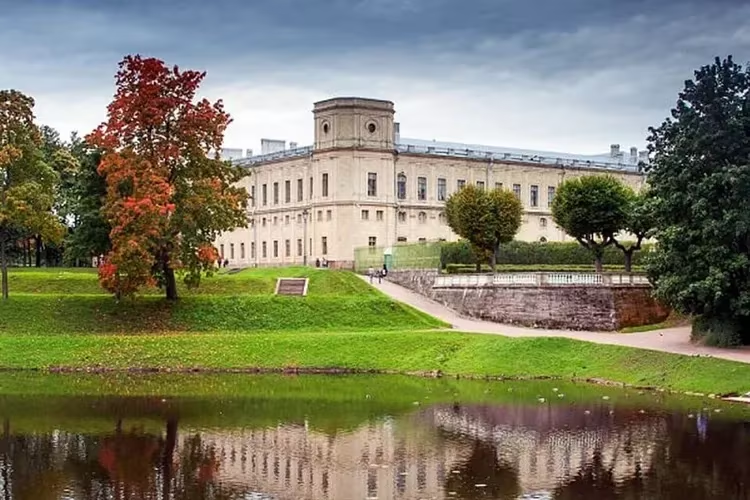
The complex consists of several thematically related buildings:
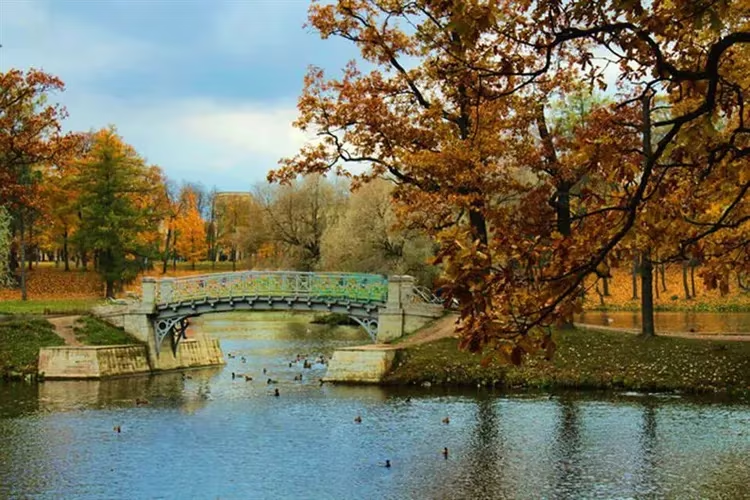
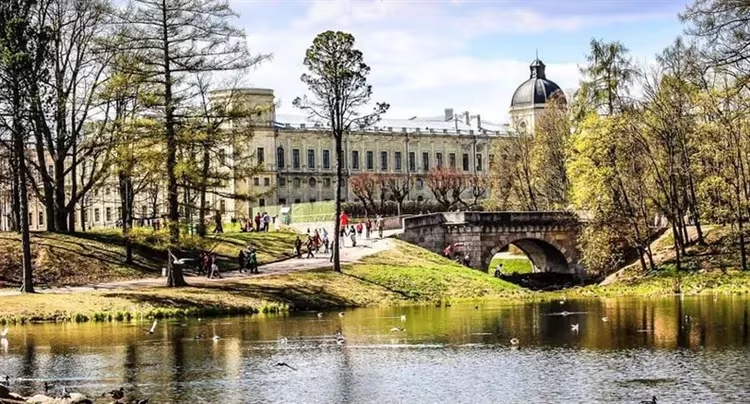
- Great Palace. The historic building is surrounded by a park, which in itself is a unique exposition of landscape design. The Humpback Bridge is especially popular with tourists. You get great photos here.
- Priory Palace. The stand-alone building is also surrounded by an unusual park.
- St Paul's Cathedral. It was built in the Byzantine style. The temple is the cultural heritage of Russia.
- Intercession Cathedral. This is a significant church for all Orthodox.
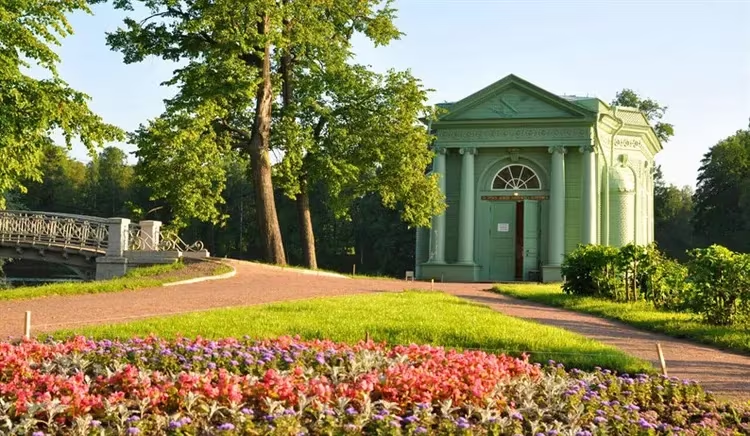
On the territory of the former estate of Grigory Orlov, there are small but interesting expositions that you should see: Own garden, Signal Tower, Venus Pavilion, Birch House.
Gatchina Palace
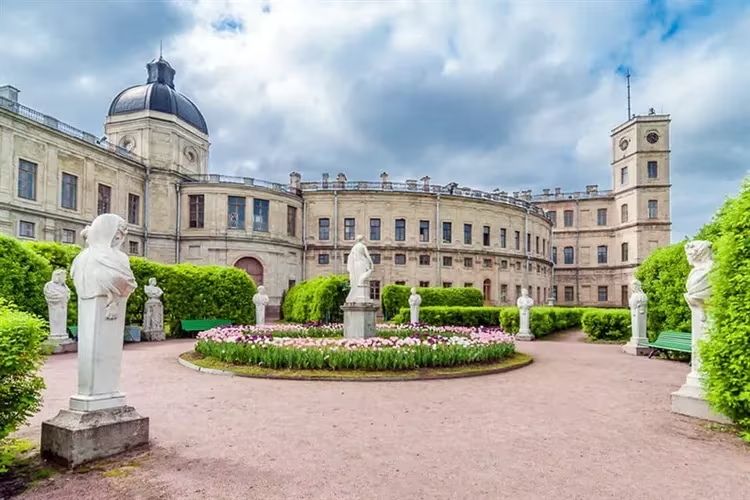
The Grand Palace is the pearl of the reserve. It is located in the suburbs of St. Petersburg. Currently, the restoration, which began in the 60s of the last century, has been completed, and the complex receives visitors. The interiors have been completely restored. The surviving watercolors of different years helped in the work.
The castle of the Russian Hamlet consists of 3 main parts:
The center has permanent exhibitions: weapons, furniture, items that were used by members of the royal family at different times. In addition, the administration offers to visit thematic exhibitions and lectures. Upon prior request, guests can come to the ball, which takes place in the palace. They will be met by Paul I with his wife, Maria Fedorovna. Poetic and musical evenings, concerts are held in historical premises. When holding events, information and 3D technologies are used. We can say that today the Suburban Hermitage lives an active life. The Grand Palace is included in the list of UNESCO sites.
Priory Palace
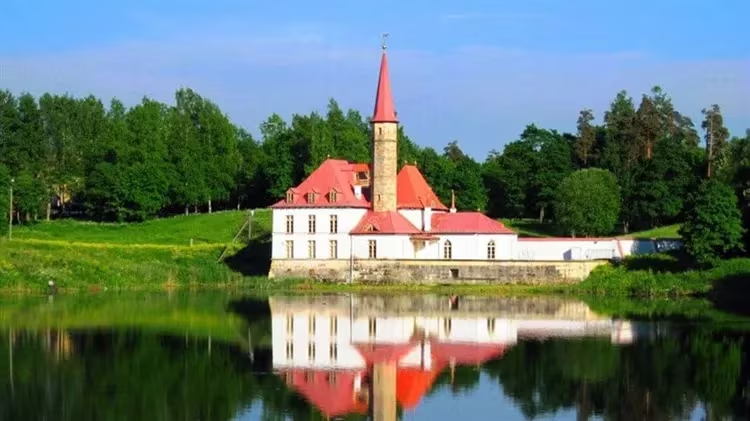
At the end of the 18th century, Emperor Pavel Petrovich was actually the Grand Master of the Order of Malta. And he built the palace as his own residence, where knights who came to Russia could stay. The architect Lvov chose the location of the mansion with meaning: it seems that a light building grows out of the Black Lake. The red roof and tower are beautifully reflected in the water. All together creates the illusion that there is a Catholic monastery on the shore.
The building is low: only 2 floors. And at the bottom the width of the walls is 13 cm more than at the top. As a support, the architect used pudost stone masonry (durable and resistant to frost, which was mined near Gatchina). So Lvov ensured the stability of the building. After the death of Pavel Petrovich, Emperor Alexander I, who became the successor of the Grand Master, returned the Priory Palace to the treasury. For some time there was a Lutheran church here. Later, the royal residence was modernized: sewerage was installed, steam heating was installed. Before the revolution, the retinue was housed here.
After the October Revolution, the palace was converted into a recreation center for Leningrad workers. After the war (and the building practically did not suffer from the bombing, Lviv built for centuries) there was a house of pioneers, a military unit, and a local history museum. In the 80s, it was decided to carry out a large-scale restoration, which ended in 2004. From that moment on, the palace again welcomes guests.
palace park
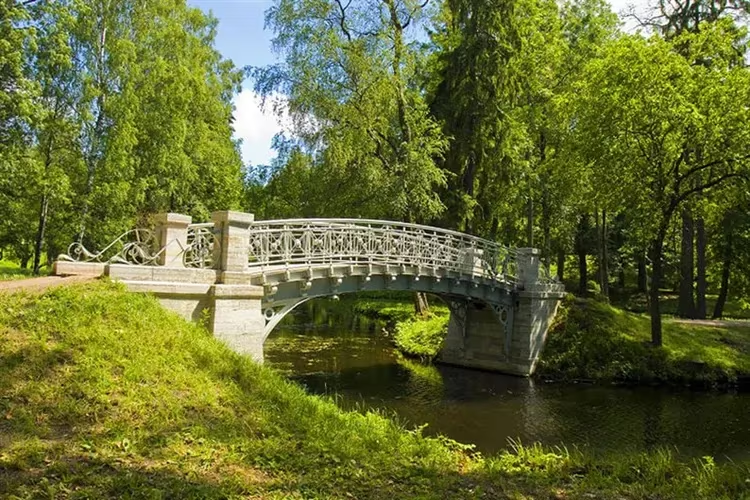
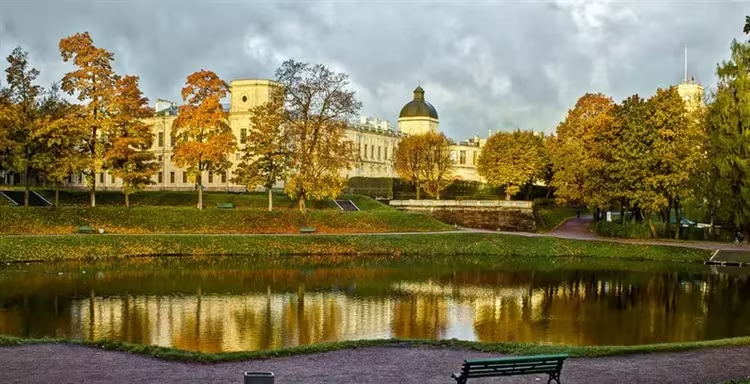
The park was laid out during the first owner of Gatchina, Grigory Orlov. Special attention was paid to its planning. The territory was divided into sections with viewing platforms and small pavilions. In the park, a quarter of the area is occupied by water: 2 lakes, rivers, ponds, canals. Today they are cleared and landscaped. Here you can go boating and feed the carp. And in the park, tame squirrels come up to people and eat nuts and seeds from the palm of their hand.
Gatchina Park is divided into zones:
- English garden. This territory unites Silver and White lakes, Pikhtovy, Zakharov and Long islands. In this part of the park there are the Birch House, the pavilion and the Eagle's column, the Humpbacked Bridge.
- Own garden is closely adjacent to the Gatchina Palace. In this part, covered green alleys are remarkable, the supporting parts of which have balustrades. There are sculptures here.
- The Lower Holland Garden is adjacent to the Upper Garden. They are distinguished by picturesque alleys.
- Paths are laid in the Linden Garden and lawns are laid out. It adjoins the Upper Garden.
- There are ponds in the Upper and Lower Botanical Gardens. In each of the gardens there is an apothecary's garden and a flower hill.
- The alleys of the Forest Labyrinth converge at one point, from which a view of the Water Labyrinth opens (a system of 4 islands with channels and straits).
- Love Island is a garden located on an artificial island of the White Lake. Here you can visit the Venus Pavilion.
The paths in the gardens are made of tiles, the steps of the stairs connecting the upper and lower parts of the park are made of granite. The alleys are well-groomed and cleared: it is pleasant to walk here. But the park became accessible to everyone only after the October Revolution. Until 1917, only the imperial family walked in it.
Collections
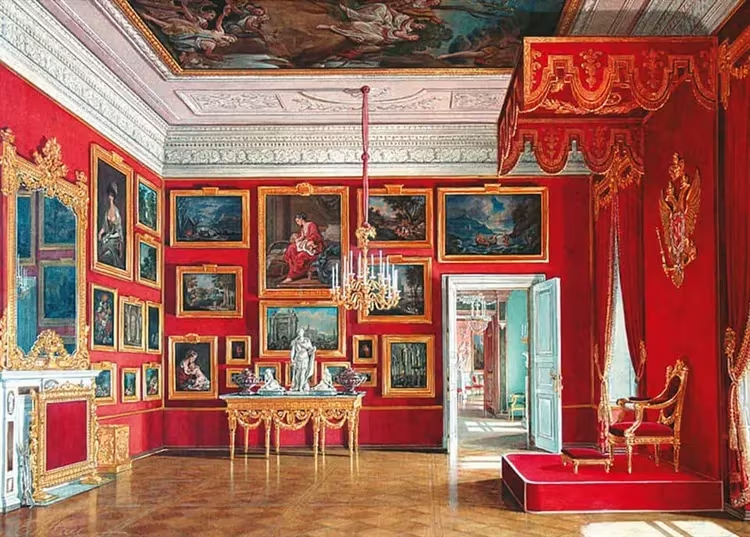
The complex provides an opportunity to get acquainted with an extensive collection of artifacts:
- Sculptures and stone products. This exposition includes marble busts, medallions of foreign statesmen and members of the Russian imperial family.
- Lithographs and engravings. The number of exhibits exceeds 600 items. The works of Utkin, Chemesov, Wortman, James, Klauber are presented.
- Metal products. Guests will see clocks, bronze candlesticks.
- Items of furniture. During the time of the Romanovs, the palace had 25,000 unique items. The main part of the collection has been lost or looted, so only 25 can be seen now.
- Weapons. Even Grigory Orlov began to collect artifacts. This tradition was continued by all the owners of the palace.
- Fabrics and suits. Much of it was lost during World War II. Today guests will see unique tapestries and embroideries.
- Numismatics. This is a small exposition, the owners of Gatchina were not engaged in systematic collecting.
- Drawings. This part of the collection was evacuated in 1941, it has been completely preserved. This made it possible to restore the palace with maximum accuracy.
- household collection. It is based on inkwells, ashtrays, caskets. The main part was lost from 1941 to 1944.
- Decorative and applied arts. These are products of porcelain factories in Russia, which were used by the Romanovs.
- Photos. The collection was based on photographs of the last Romanov's family members. But even after the coup, the collection was replenished.
- Archive. This part of the exposition was evacuated and completely preserved. Here are references, documents, plans related to the estate.
- Watercolors and drawings. Today, guests will see more than 500 well-preserved units.
It is clear that it is impossible to present all the artifacts for inspection at the same time. The administration periodically updates permanent exhibitions, organizes thematic ones.
Interesting Facts
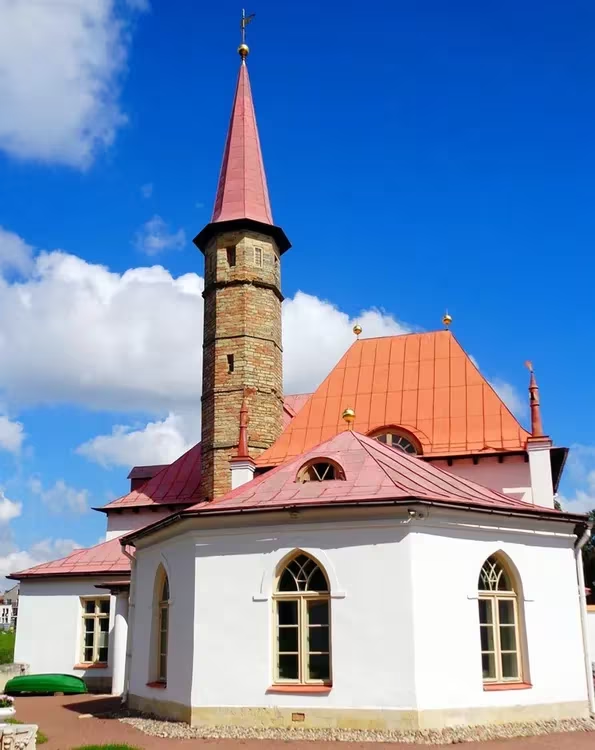
The reserve is surrounded by legends. Each building conceals the events that accompanied its construction.
Beginning of adobe construction in Russia
Emperor Pavel Petrovich, in a conversation with the Russian Leonardo da Vinci, the architect Lvov, said that he had seen how houses were built in Europe from a mixture of earth, lime and sand. And those buildings are pretty solid. The tsar ordered the architect to build a corner of the hut with a roof in Gatchina using the same technology.
Lvov discharged two men and began to erect the building. Pavel Petrovich regularly came with his son Alexander and his daughter-in-law to see how things were progressing. Once the princess tried to dig a hole in the wall with the sharp end of her umbrella. She did not succeed: thus, the strength of the prototype was proved. Today, the Priory Palace is the only building in Russia built using the technology of earthen construction.
How the site for the Priory Palace was chosen
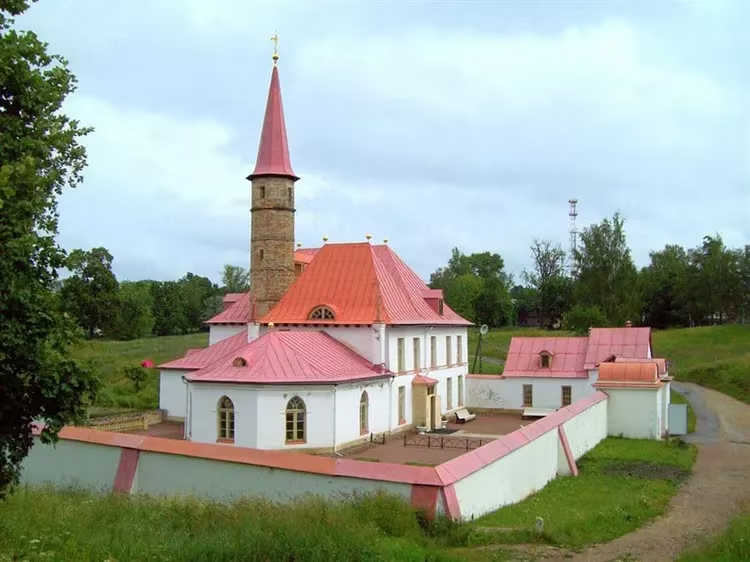
Emperor Pavel Petrovich, after approving the plan presented by Lvov, instructed the architect to choose a place for the Priory Palace at his own discretion. But Obolyaninov, who at that time managed the park, denied all the places indicated by the architects. In the end, Lvov said that he would build a building where the capricious general indicated.
Obolyaninov singled out a place so swampy that the dog bogged down. But Lvov said that he would build a palace here too, but the estimate would be too high, because the swamp would have to be drained. Obolyaninov resigned himself and allowed the architect to choose the place himself. As a result, the construction cost Pavel Petrovich 27,000 rubles, of which the actual construction of the palace and walls from the earth cost 2,000 rubles, and the remaining 25,000 went to stone construction, roofing, joinery and carpentry work.
Symbol of Gatchina
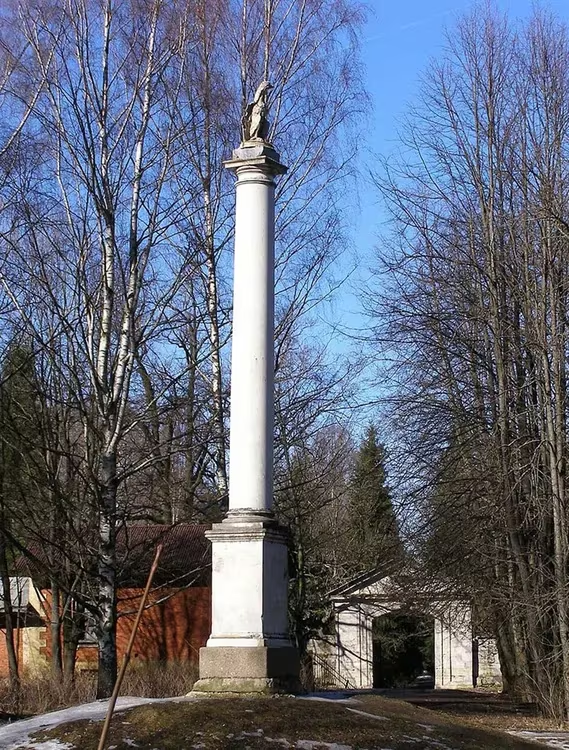
The symbol of the palace and park ensemble is the eagle. According to legend, Emperor Pavel Petrovich shot an eagle from a gun. The proud bird fell to the ground in the park. In this place, the emperor ordered the construction of a column, and in the place where he himself stood at the time of the shot, a pavilion. But there is some understatement here: the pavilion was built under Pavel Petrovich, and the column under the first owner, Grigory Orlov. But the fact that the pavilion depicts an eagle holding the monogram of Paul in its paws is obvious. And why two structures erected at different times make up an ensemble, it is impossible to say for sure.
Grotto Echo
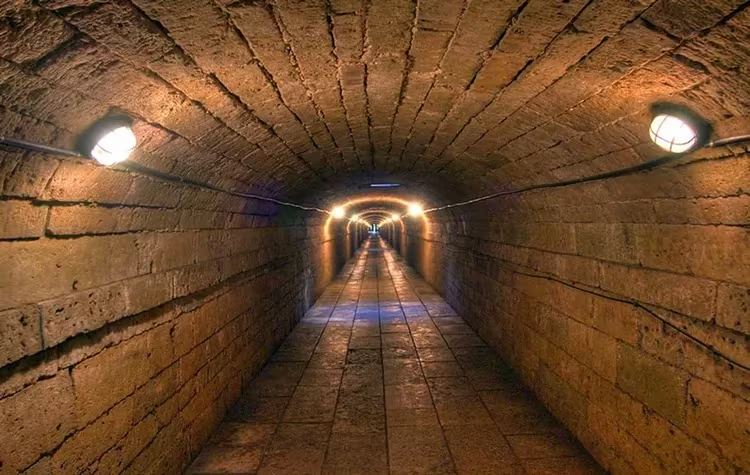
The underground passage from the palace ends on the shore of Lake Beloe. And it is stylized as a grotto. But the architectural features of the building make it possible for an echo of several syllables to appear. For example, if you shout into the tunnel: who ruled for a short time, then the echo returns the answer: Pavel.
The mystery of Kerensky's escape
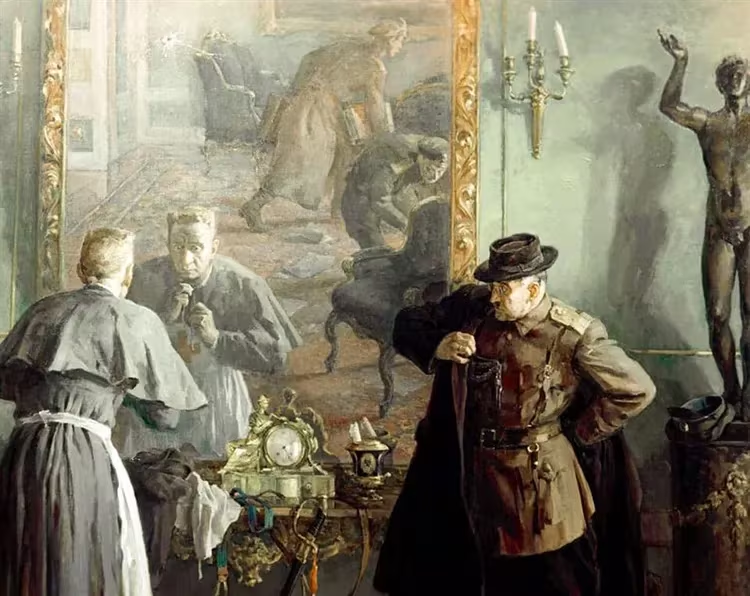
Kerensky in his memoirs describes his flight from the Gatchina Palace in 1917 through an underground passage. In these difficult days, soldiers and sailors occupied the only exit from the royal residence. After waiting for darkness, the politician went out through the dungeon. But he does not specify, through the passage that ends with the grotto of Echo, or through some other.
Visiting Rules
In order for the tour to leave only pleasant impressions, you should follow the recommendations:
Tours are recommended to choose according to your own tastes and preferences.
Opening hours and ticket prices
The Gatchina Reserve welcomes guests every day from 10 am to 6 pm. It is important to remember: you can buy tickets until 5 pm. An adult ticket costs 400 rubles (on Christmas holidays – 500 rubles). For students, a visit will cost 200 rubles. Elderly people (over 65) will also pay 200 rubles. A family subscription is offered: 2 adults and children – 1000 rubles. The bearer of the St. Petersburg Guest Card visits the museum free of charge (during the entire validity period of the document).
Excursions
Gatchina is a great place for self-examination. But more vivid impressions will leave, of course, walks with a guide:
- The castle of the Russian Hamlet will amaze tourists. An unusual layout, colorful interiors, a combination of knightly traditions with the homeliness of the Romanov family, the guide's story about the ghosts of the underground passage, who also live in the castle, will make time fly by.
- You can study the history of the Romanov family from the history of the Gatchina Palace. A tour of the Priratsky Castle will reveal the secrets of the Masonic movement in Russia (Pavel Petrovich was also the master of the Order), a visit to the Island of Love and the pavilion of Venus will add a romantic touch to the tour.
- It is impossible to get an idea of the Suburban Hermitage without walking around the unique park with its shady alleys. Guests will definitely take a walk with a guide after visiting the exposition of the Grand Palace. And the stories told by the guide will leave an unforgettable impression.
The service includes a transfer from the city of St. Petersburg. But booking is required in advance.
Where is it located and how to get there

The reserve is located at the address: Krasnoarmeisky Prospekt 1, Leningrad Region, the city of Gatchina. Getting here is easy:
From the stop to the complex is a few minutes walk.