
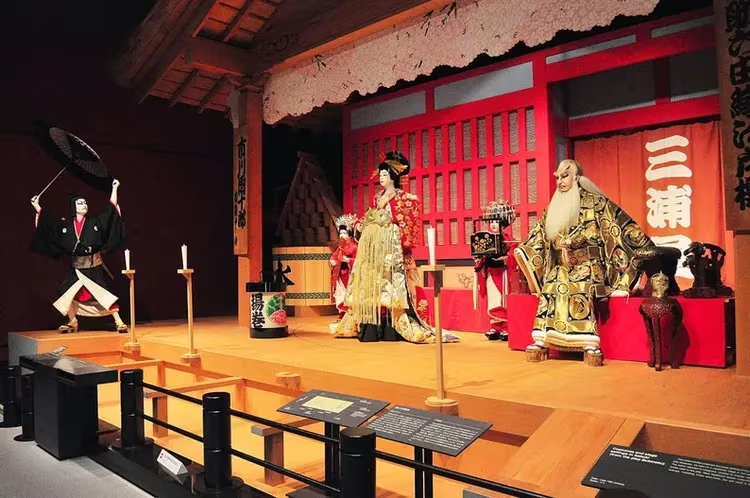
20 best museums in Tokyo – list, prices 2021, opening hours, map
The museums of Tokyo are a bizarre combination of ancient traditions and the achievements of modern science and technology. But it is this unexpected mixture that allows you to feel the oriental flavor more fully, to understand the soul of our most eastern neighbor. The expositions are chosen in such a way that it is impossible to simply walk through the halls: you will want to study the artifacts in detail and delve into their very essence.
Edo-Tokyo Museum
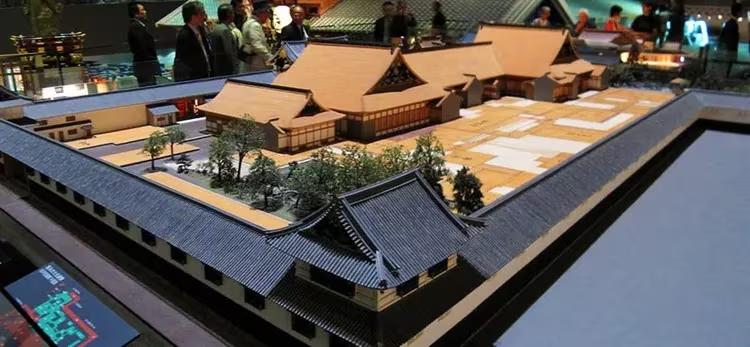
This is a relatively new exposition: it was opened in 1993. It is noteworthy that there is no specific topic that is presented in the center. Coming here, tourists get acquainted with the past, present and future of Japan in all its manifestations.
Visitors will see:
Some of the exhibits have a scale of 1:1, for example, the Edo Bridge. At the same time, tourists are invited to get acquainted with the customs of the Japanese. The exposition is housed in an interesting building built in a futuristic style. It covers an area of more than 30 square meters. You can visit the exhibition from Monday to Friday from half past ten in the morning until half past six in the evening. On Saturday, the center closes at half past seven in the evening. On Sunday, guests are met according to the schedule of weekdays.
Digital Art Museum
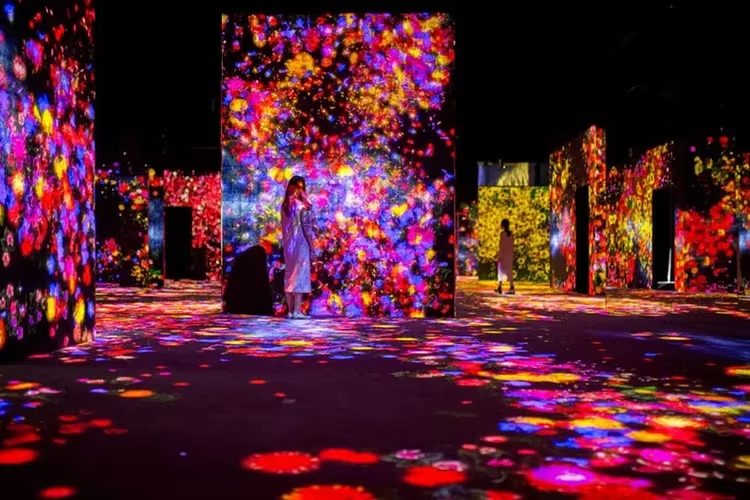
It is no coincidence that this center was opened on the island of Odaiba: it is planned to create a special city of the future here. And the appearance of the exposition, where tourists are immersed in virtual reality, comes in handy. A technician helps to organize the process: 470 projectors and 520 computers. They serve 50 digital works. The staff consists of more than 500 people: artists, animators, programmers.
The purpose of the exhibition is to convey the picture to the visitor through his own feelings. And the staff of the center succeeded:
All paintings are interconnected, one follows the other. The center is completely new: it began to receive guests in June 2018, but has already become a popular entertainment for Tokyo residents and tourists. Tickets must be booked in advance. And you can view the exposition from 10 am to 9 pm.
Tokyo National Museum
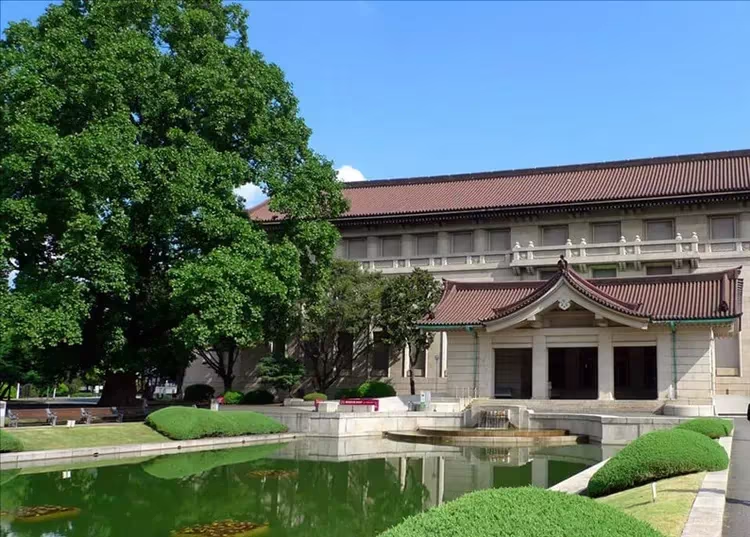
This museum received its first guests in 1872. And today the exposition of the center consists of 120,000 items of storage, which are presented on 100,000 square meters. The whole complex consists of 5 buildings:
During the week, you can study the exposition every day, but not see all the artifacts. Employees are not limited only to the demonstration of existing antiquities: they regularly arrange thematic exhibitions. Installations on the theme of Ancient Egypt and modern anime are popular.
European tourists study the Honkan Gallery for a long time. Here are samurai swords, scrolls of ancient books, sculptures. And as a souvenir, you can buy a souvenir in one of the shops located on the territory of the center. The complex is open from half past ten in the morning to 5 in the evening from October to December, from half past ten in the morning to 6 in the evening from April to September. On Friday the center is open until 8 pm.
Madame Tussauds museum
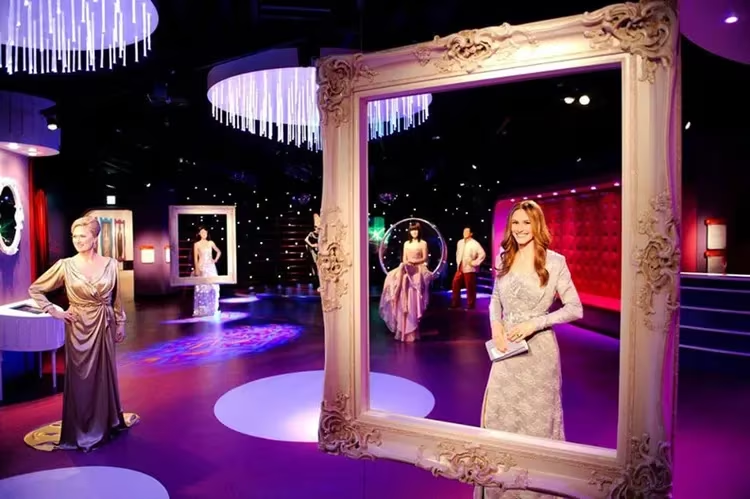
It is a branch of the London Centre, founded in 1835. The difference between Tokyo is an unusual combination of exhibits. All famous people from different eras are traditionally represented here:
But at the same time, visitors see Einstein next to Jobs, the Terminator and Spider-Man. A separate room is allocated for the figures of famous athletes. Here, the Japanese Mao Asada is depicted on the rink, and the Russian tennis player Sharapova is depicted on the court with a racket in her hands. You can take pictures with the exhibits, you are allowed to come closer to them. In special halls, visitors are invited to transform into vocalists and perform a hit with their favorite singers on stage.
And those who wish can visit the workshop where the figures are made. The entire process is presented here: from casting and painting to dressing up and installing on pedestals. True, this process can cause negative emotions: the eyes and other elements look too similar, which then become parts of the exhibits. You can visit from 9 am to 7 pm.
National Museum of Modern Art
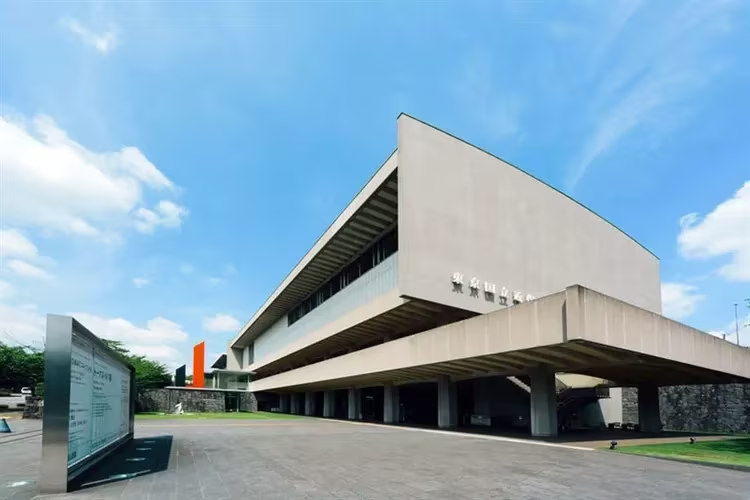
The complex has been welcoming visitors since 1952. The first building in which it was located was designed by the architect Kunio Maekawa, a student of Le Corbusier. Subsequently, the government purchased 2 more buildings for the center, located in the neighborhood. The basis of the collection was the collection of values of Matsukata Kojiro, who spent his whole life looking for artifacts around the world. He donated 1,925 items to the center.
The modern complex consists of:
- Exhibition halls. They feature a unique collection of Japanese umike-e prints. The number of storage units is more than 8,000. Paintings by Japanese painters are divided into periods, starting from Meiji. But here you can also see the paintings of world celebrities: Chagall, Gauguin, Kandinsky, Picasso, Modigliani.
- Own art library. It has a reading room where you can get acquainted with unique publications in Japanese and European languages.
- National Film Center. The fund consists of 40,000 items. These are feature and documentary films and photographs.
- Craft galleries. Ceramics, fabrics and metal products are presented here not only by Japanese masters, but also by artisans from other countries and continents. The branch has been operating since 1977.
MOMAT (this is the abbreviation of the name of the center) receives visitors from 10 am to 5 pm.
National Museum of Nature and Science
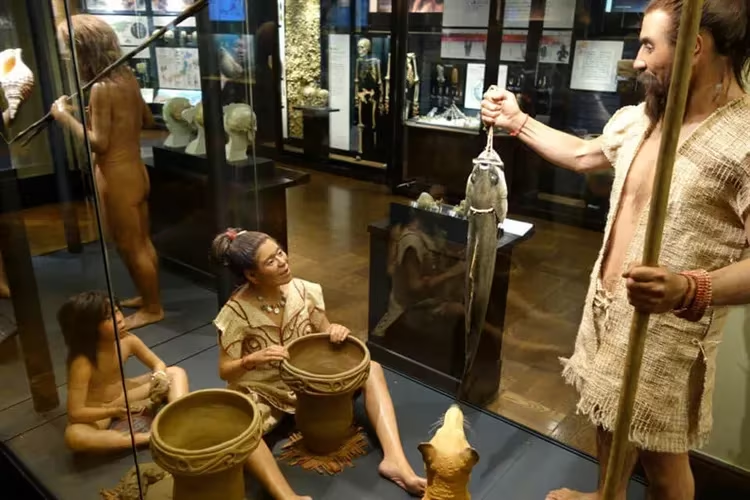
The exposition began to receive guests in 1871. Today it is one of the most visited city centers. All exhibitions are devoted to the development of natural sciences. The complex is divided into 2 galleries:
- World. Here the exhibits tell about the development of world science and technology and the impact of changes on the environment. A garden with the main medicinal plants used by people has been created on the roof. There are more than 160 species in total.
- Japanese. The exhibits explain everything related to the problems of the country. In this part of the complex there is a 3D cinema. Popular science and documentary films are shown here. A effigy of the devotee Hachiko is installed in the hall.
Terminals are installed throughout the center, with the help of which tourists can expand the knowledge gained during the inspection of the exhibition. An audio guide is available for a fee. Languages used: Japanese, English, Korean, Chinese. The center welcomes visitors from Tuesday to Sunday from 9 am to 5 pm, on Friday – from 9 am to 8 pm. On Monday, the complex is closed for viewing the exposition.
City Art Museum
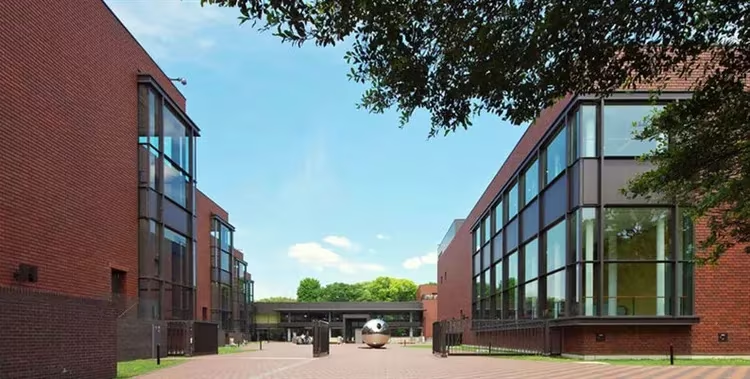
The center began operating in March 1995. All exhibitions, both permanent and thematic, are funded by the municipality of the city. Today you can see paintings, photographs, calligraphy and sculptures not only by Japanese, but also by foreign artists and sculptors. The center occupies more than 1.5 thousand square meters. The ground floor houses the permanent exhibitions. Thematic exhibitions of various directions are held above.
The complex hosts seminars and lectures on art. Separate rooms are designed for performances on an artistic theme. Here you can look at the dancers, listen to the performance of the vocalists. The center does everything to make the visit memorable for a long time. The exposition is open on all days of the week from half past ten in the morning until half past five in the evening. On Friday, the center welcomes guests until 8 pm.
Sitamati Museum
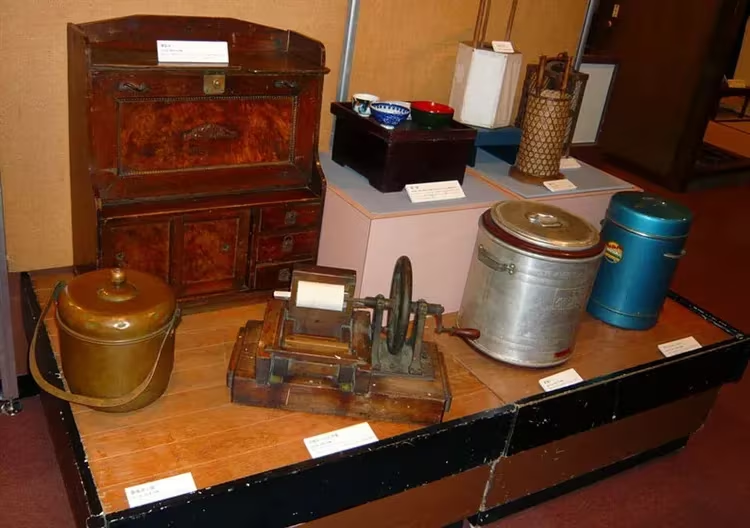
The exposition presents a life-sized part of the Lower City. In ancient times, when the city of Edo was actively built up, poor artisans settled in the Lower part. The buildings were one-story, because of the limited space closely pressed against each other. Such a city was subject to destruction: fires and earthquakes. The earthquake of 1923 almost completely destroyed the buildings, and the Second World War marked the beginning of the multi-storey building of the Lower City. Now you can see the life of poor Tokyo residents of the 19th and 20th centuries only in the center of Shitamachi.
The complex received its first visitors in 1980. Artifacts for the exhibition were searched all over Japan. But now tourists can see a part of the history of Tokyo: a butcher's shop, potter's and coppersmith's workshops, a blacksmith shop, merchants' varnishes. It is noteworthy that the center is alive: in winter and summer, visitors see a different Lower Town.
The complex is open from Tuesday to Sunday from half past ten in the morning until half past five in the evening. Monday is a day off.
National Center for the Arts
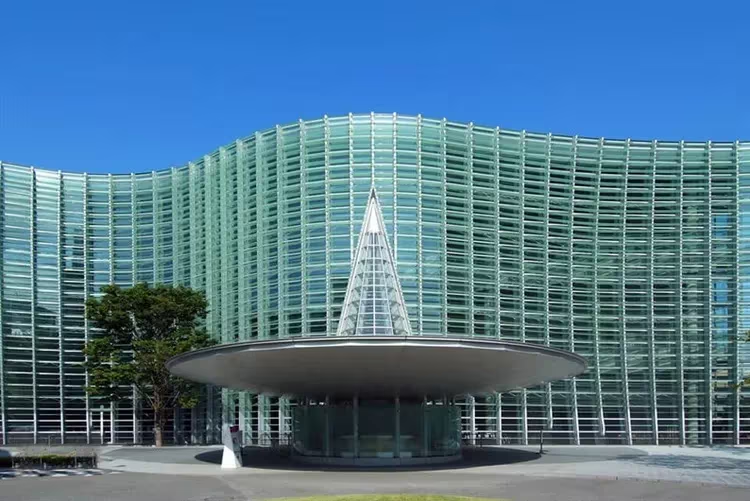
The center is one of the large-scale projects of Kise Kurokawa. The author conceived to design such a building where any exposition can be held. He believed that architecture, like any art form, should not be understood until the very end. The visitor will have to think about what he saw, reflect and draw conclusions after some time. The building is called the glass wave. It is located in the fashionable district of Roppongi, next to boutiques, high-end restaurants and representative offices of foreign companies.
And it is easy to see the center: its height is 21 meters. Inside, the space gives the impression of a constantly changing volume. This is due to moving elevators penetrating it from top to bottom. There is no permanent exhibition in the center, but there are regular exhibitions on any topic related to art. The 3rd floor offers library services to guests, where you can get acquainted with materials on artistic topics for free. Lectures are also held here.
The building has a developed infrastructure: a souvenir shop, a play area for kids, a cafe. The center is open to visitors on all days except Tuesday, from 10 am to 6 pm, on the days of thematic exhibitions – until 8 pm. On Friday the complex is open until 8 pm.
Metro Museum
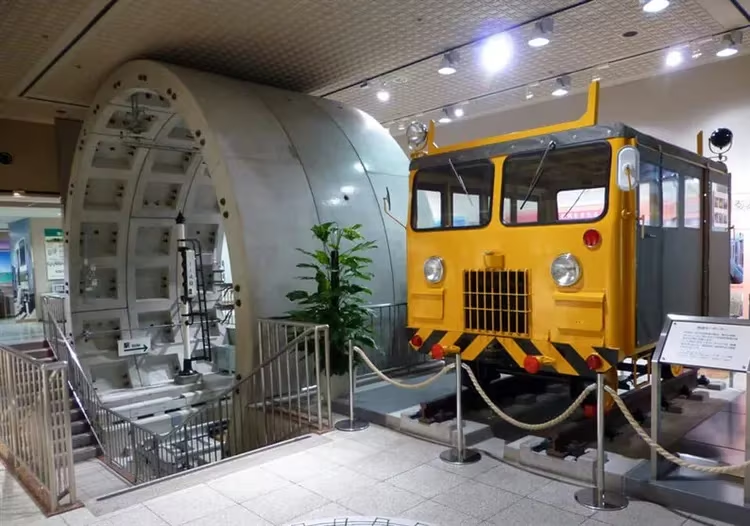
This exposition was opened in 1986. Conventionally, it can be divided into sections:
- History of the Tokyo subway. The first subway cars are presented here, the Ueno station in 1927 (the year the first line was launched) was reconstructed.
- Subway construction. This section shows the technology and equipment used for tunneling.
- Subway Passenger Service. The stands feature exhibits that sell entrance tokens, models of escalators, ventilation of tunnels and stations.
- Safety. Tourists are invited to familiarize themselves with the systems for preventing terrorist acts and emergency situations.
- Construction of subway trains. The exposition tells about modern and ancient locomotives and wagons.
- The role of the subway in Japan and in the world.
- Area for small visitors. Here guests are invited to get acquainted with the Tokyo subway in a playful way.
The exposition is open from 10 am to 5 pm.
Toy Museum
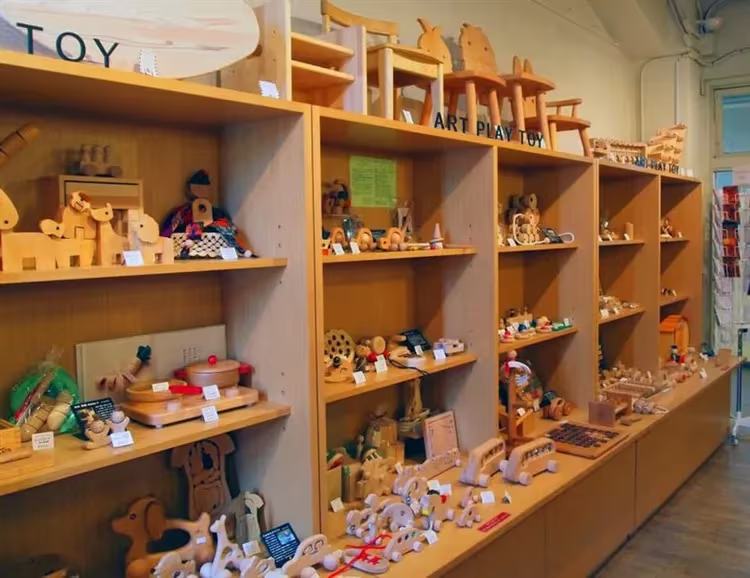
The basis of the modern exhibition was a private collection. Its owner, Nakano, handed it over to the city in 1984. And in 2008, his son placed the increased funds in a pre-World War II school building. Today the collection is more than 10,000 items. The most valuable exhibits occupy a little more than 1 room: you can only look at them. And the rest of the toys serve their intended purpose: they are played.
Guests of all ages do not remain indifferent at the sight of:
- haunted houses
- Toy forest. The floor in this room is made of cypress planks.
- plastic lake. Instead of water, it contains plastic beads. You can dive into the lake.
- Apollo ship
There are also quiet games: table football, cards. In the shop at the museum, packages with sweets are sold, small wooden toys are placed in bags. The center warms the hearts of children and adults. The complex is ready to receive guests on all days of the week, except Thursday, from 10 am to 4 pm.
Miraikan Museum
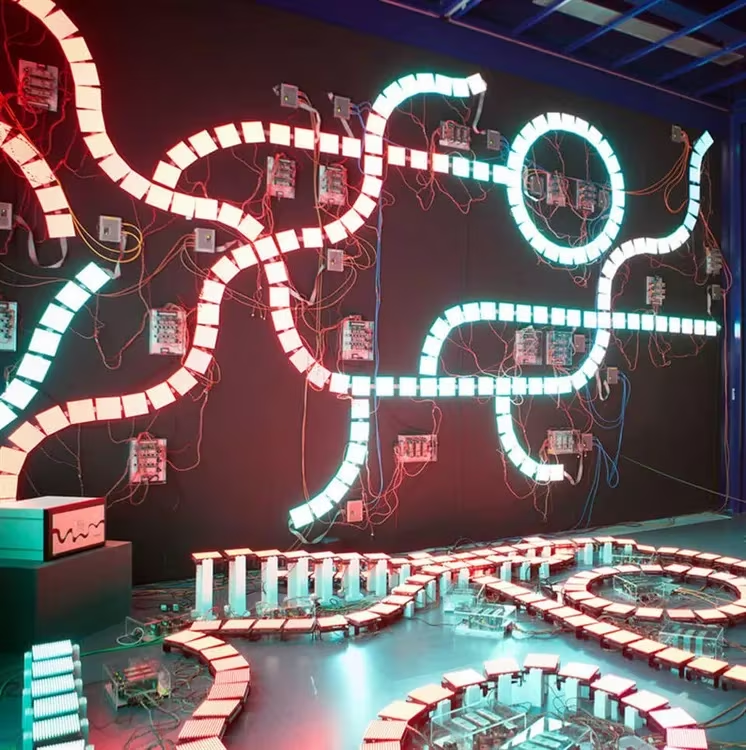
Miraikan is a place where all the advanced achievements of science and technology are concentrated. And yet you can touch everything! Guides answer all questions, tell and show what, how and why it works. Guests in a playful way get acquainted with the novelties in:
It will take several days to inspect, at least briefly, all 6 floors. And those hours that the tour continues, fly by unnoticed. The complex is open daily from 10 am to 5 pm.
Mori Art Museum
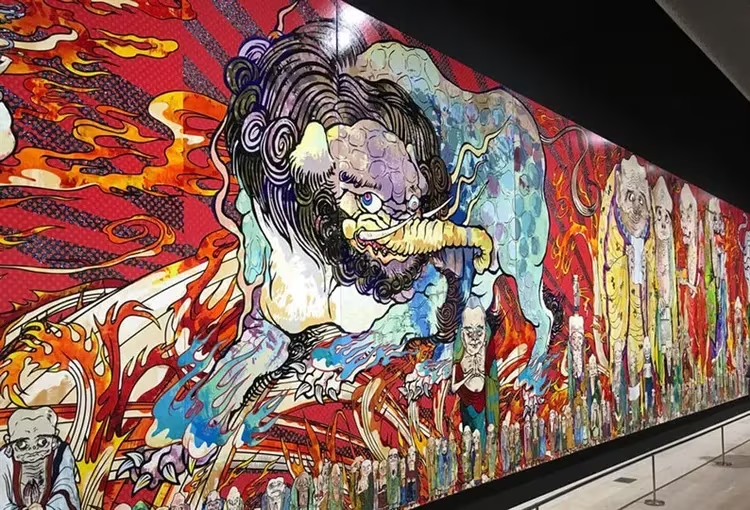
Mori Center is located on the 53rd and 54th floors of the skyscraper. This is the highest (in the truest sense of the word) museum in Japan. Inspection of the exposition can be combined with the study of the sights of the Japanese capital. The first director of the center intended not only to place paintings by famous artists, but also to arrange thematic exhibitions, supporting young Japanese painters. But Mr. Maury, the owner of the tower, believes that his complex should become as significant as the Louvre, the Hermitage, the Uffizi Gallery.
You can visit the center daily from 10 am to 10 pm.
Nezu Fine Arts Museum
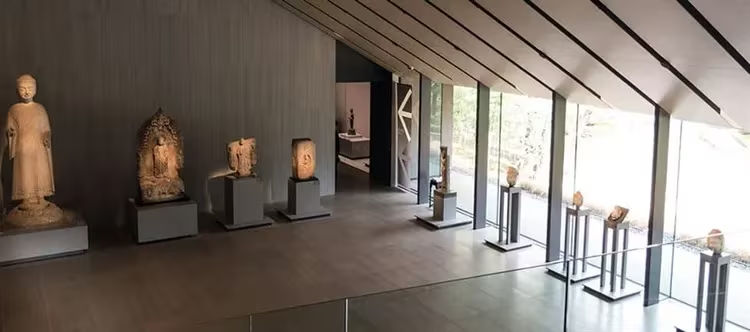
The complex began to work in 1940 after the death of Nezu Kochiru, who bequeathed his collection of antiquities to the museum. But in 1945, the center was damaged during air raids on Tokyo. After restoration and reconstruction, it reopened only in 2006. This is a corner of Buddhist harmony. Here, ancient sculptures are surrounded by graceful plants. The pavilions of the center offer to see bronze utensils, calligraphy, and drawings. The center receives guests from half past ten in the morning until half past five in the evening.
Sony Explora Science Museum
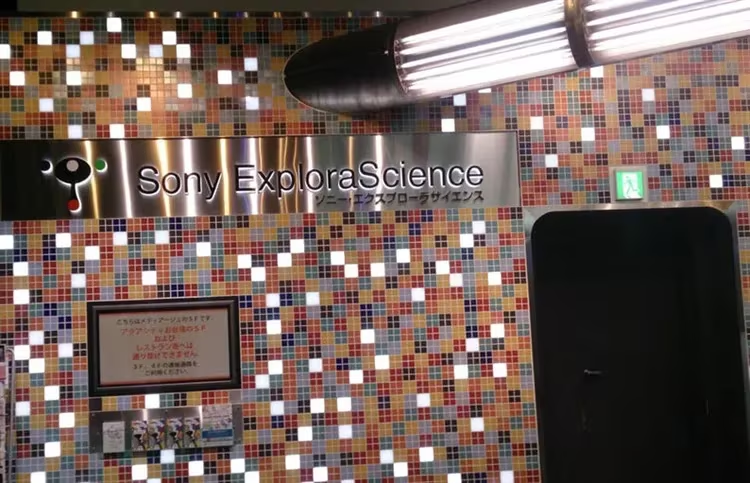
This exposition is presented by Sony concern. The purpose of the exhibition is to show the unity of the company's technical developments and applied processes. The concern is currently developing digital technology. Exposition is another additional way to advertise your products.
Guests of the exhibition are invited to familiarize themselves with:
It is interesting for adults and children to visit the hall of optical illusions and the hall of sound. You can even make a cartoon with yourself in the title role. Several times a day, performances with optical and sound effects are shown to guests. The concern has created equipment for a unique planetarium. Through a super-powerful telescope, guests can admire 2 million stars. No observatory in the world can boast of similar equipment. But shooting with a camera or phone in the center is not allowed.
The center is open Monday through Friday from 10:30 am to 5:30 pm. Saturday and Sunday – from 9 am to half past six in the evening.
Panasonic Shiodome Museum
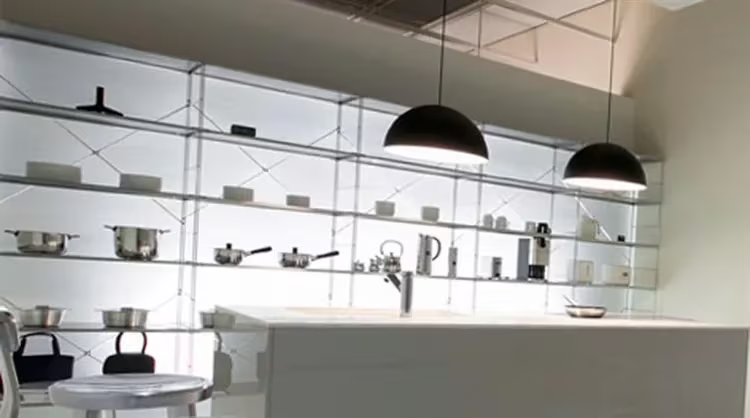
This is a new museum, it started working in 2003. The center presents two expositions at the same time:
Unfortunately, the comments under the exhibits are exclusively in Japanese. It seems that the center is a tracing paper from the Sony concern museum. Open daily from 10 am to 6 pm.
Origami Museum
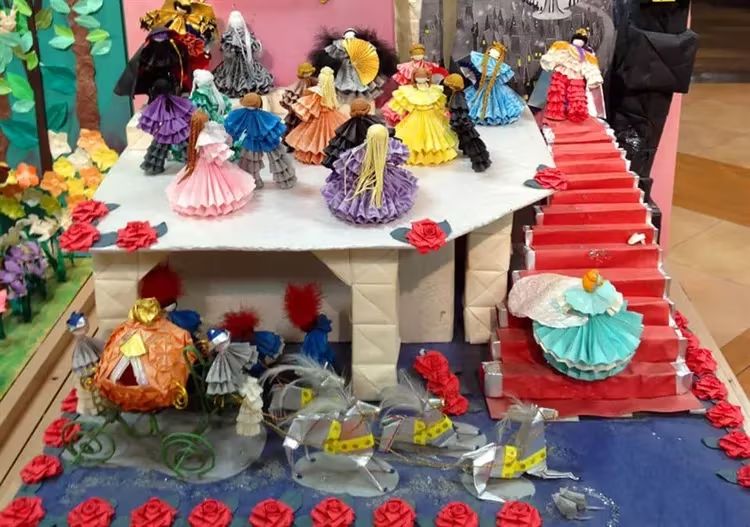
Visiting exhibitions in Tokyo is an expensive pleasure. But the origami museum accepts guests for free. True, you will have to pay for the master classes. But this is strictly at the request of the tourist.
The origami center occupies several floors:
- The exposition itself is located on the 1st and 2nd floors. Here guests can get acquainted with unusual figurines made of paper of different colors. These are special works of art!
- The 4th floor is given over to the offices of the origami center.
- The 5th and 6th floors have rooms where origami masters teach visitors the art of creating figurines.
The center also has a small shop where you can buy literature on origami, a finished figurine, as well as everything you need for this exciting activity. There is a tiny paper production in the basement. Glasses are provided free of charge for visually impaired guests. It is very nice. Tokyo Center is a family business founded in 1858. Its current director, Kazuo Kobayashi, claims that origami is a useful thing: figurines can always be made from everything and immediately used for their intended purpose. For example, make a stand for sticks or a napkin holder. Ready to receive guests on all days of the week, except Sunday, from 10 am to 5 pm.
Museum of Marine Science and Shipbuilding
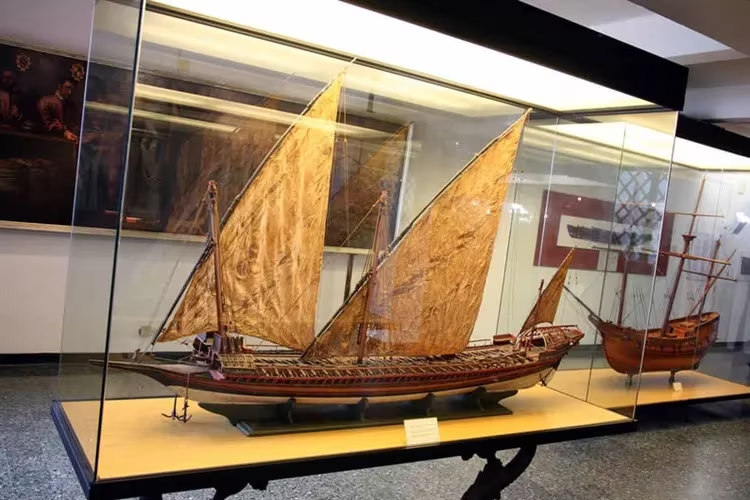
The building itself, in which the exposition is located, is interesting: it depicts a ship. And inside there is an interesting stuffing: interactive bridges, steering wheels, devices. And you can touch everything! Children of all ages are very interested in such a tour. The exposition tells about the history of Japanese shipbuilding, guests will get acquainted with the peculiarities of the fishing of the island state, the creation and collapse of the country's colonies.
And next to it, the famous icebreaker Soya is moored in the eternal parking lot.
He got up here only in 1979, and before that the ship had a busy life:
- Initially, the icebreaker was called Volochaevets and was built at the shipyards of Japan for the Soviet Union. But diplomatic relations were severed in 1938, the ship remained in Japan and became known as Soya.
- During the Second World War, he did not participate in the hostilities: he only brought food and ammunition, and practically did not suffer.
- After the war, Soya was converted into a civilian ship. In 1950 he participated in the Antarctic expedition.
- In 1958 he rescued polar explorers. The operation was only partially successful: the dogs had to be abandoned on an ice floe. But in the spring, Soya returned and took the 2 surviving huskies. This plot became the basis of the film.
- Soya himself was squeezed by ice, he was rescued by the Soviet icebreaker Ob.
The interiors of the ship correspond to 1958. Visitors can imagine how the crew of the legendary ship lived. All devices are allowed to be touched: they are in good condition. You can get on the icebreaker for free: if you wish, you should make a voluntary donation. Nearby on the site you can see a deep-sea bathyscaphe, guns won from Russian sailors during the Battle of Tsushima, a sailboat. The complex is waiting for visitors from 10 am to 5 pm.
photography museum
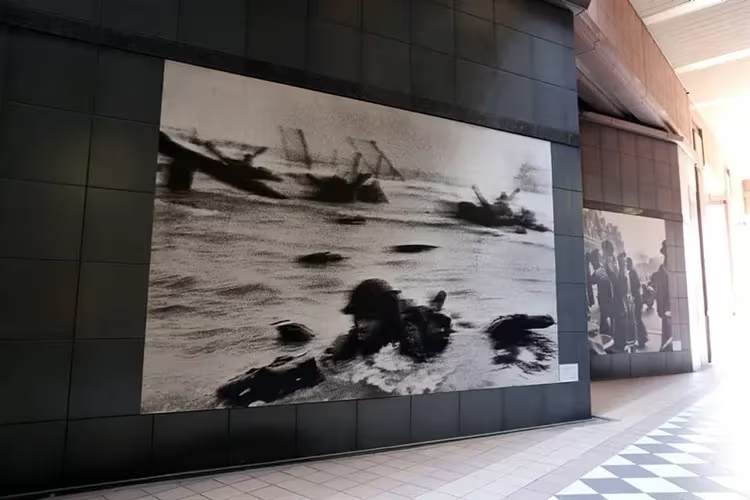
The center was organized in 1990, and moved into the building it occupies today 5 years later: in 1995. There are permanent exhibitions here. But they are few. But the thematic ones are amazingly interesting. Japanese photographers present their chosen subjects from an unexpected angle. Under each photo is a high-quality English translation. The space occupied by the exposition is small, but everything is located successfully and compactly.
Exhibitions are held to support emerging Japanese and Oriental artists. For them, competitions of skill are held. The works of the winners in various categories are then exhibited in a separate hall. The complex has a shop with special literature on photography. You can visit the center on Thursday and Friday from 10 am to 8 pm, on other days – from 10 am to 6 pm.
Advertising Museum
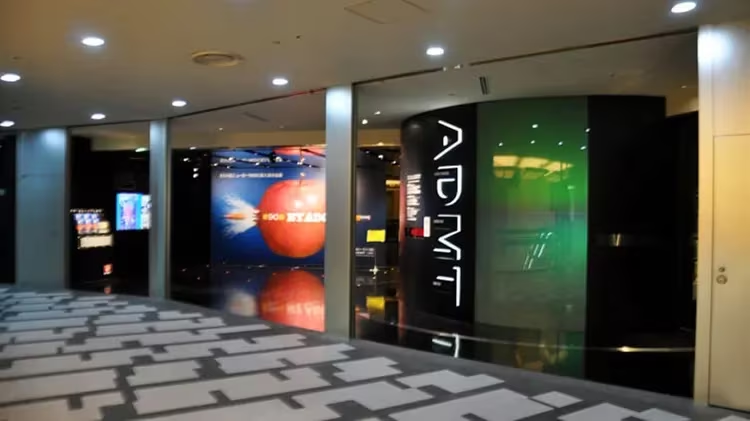
The exposition has been open since 2002. It represents the entire history of the country's advertising, from the inception of Edo to the present day. Here you can see the advertising texts that received prizes. The complex has permanent exhibitions, but 12 thematic ones are held throughout the year. The center has a library where visitors can get acquainted with the literature on advertising. Open daily from 11 am to 6 pm.