
St. Vitus Cathedral in Prague – what tourists need to know
At the top of the Hradcany hill rises a monumental building, personifying the spiritual symbol of the Czech state – the Cathedral of St. Vitus. This largest Prague temple, which is a Gothic masterpiece, impresses with its grandeur and beauty. Czech monarchs were crowned in the cathedral for a long time. Most of them rest in the magnificent chapels of the cathedral, decorated with precious wall frescoes with stones.
Construction history
Initially, on the site where the basilica is now located, there was a temple dedicated to the god of fertility, Sventovit. The ancient Slavs brought wine, roosters and rolls here to appease the idol. Significant changes in the minds of the people occurred after the accession to the throne of Prince Vaclav, who was brought up in the Christian faith.
In 925, the ruler of the Czech principality Vaclav built a rotunda on the site of a pagan temple, in which the remains of St. Vitus of Rome were placed, brought as a gift by the German monarch Henry I. The fame of the church increased over time, which led to an increase in the flow of pilgrims wishing to bow to the relics. A small building with a diameter of 13.5 meters could no longer accommodate a large number of believers. In 1060, the rotunda was rebuilt into a rectangular building with three naves, separated from each other by columns. The building was significantly damaged during a devastating fire that engulfed the territory of Prague Castle at the beginning of the 14th century.
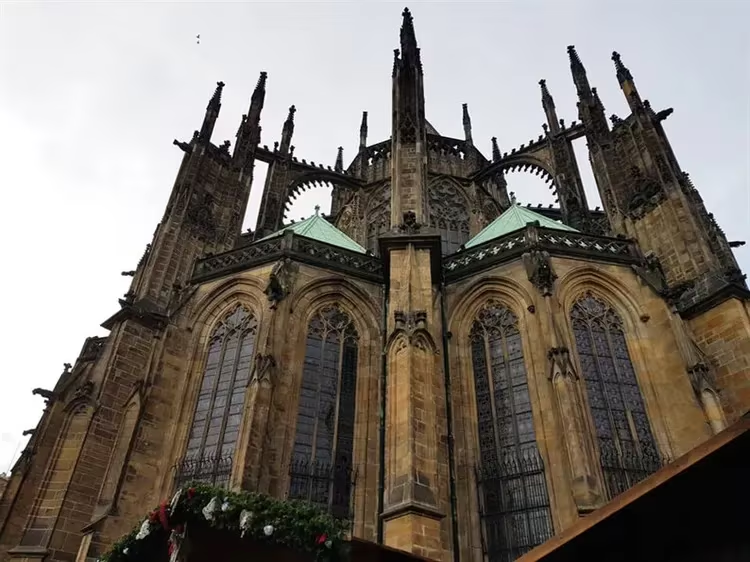
The construction of the cathedral began in 1344, when the Castle was already the seat of the archbishopric. The main concept of the construction of the new basilica was to create the main temple of Prague. Emperor Charles IV, who reigned at that time, laid the first stone of the future church. For the construction of a large-scale structure, considerable funds were required.
Charles IV increased taxes on silver mining and organized the sale of letters of absolution to believers. The French talented architect Mathieu was appointed responsible for the construction of the Gothic basilica. Under his leadership, the cathedral expanded in breadth and acquired eight new chapels. The architect was unable to complete the project, because he suddenly died.
The next architect of the construction site is a young sculptor and wood carver Peter Parler from the Duchy of Swabia (south Germany). He built the cathedral all his life until 1399. Under him, the ceiling of the temple was decorated with mesh arches, the main altar, the Golden Gate, the chapel were installed, and the construction of the main tower of the cathedral with a clock began. The sons of Parlerge continued the execution of their father's project, but the outbreak of the Hussite war and the strife of the medieval feudal lords suspended the construction of the cathedral for a long time. Only the decoration of some chapels continued.
The second half of the 16th century was marked by the completion of the clock tower and the installation of the largest bell in Europe. In 1673, Emperor Leopold I laid the foundation for new naves, which significantly increased the size of the basilica. Then a series of disasters followed again, suspending the construction of the temple – fires, lightning strikes and the invasion of the Prussian army. In 1770, the Italian architect Nicholas Pacassi gave the Gothic cathedral a baroque look, and crowned the tower with a dome. After the reconstruction, the basilica remained unfinished for about a hundred years.
In 1861, a special committee was organized to complete the construction of the cathedral. Under the leadership of the architect Josef Moker, work on the unfinished buildings of the temple was resumed. Two western towers appeared. At the beginning of the 20th century, the famous artist Alphonse Mucha decorated the window openings of the cathedral with stained-glass windows. The final construction of the basilica took place in 1929.
South facade
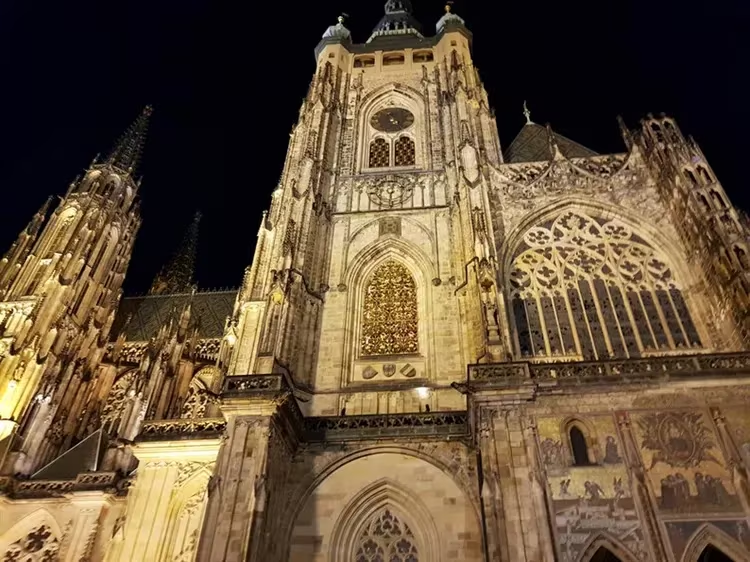
The southern facade of the basilica has a pompous and magnificent view. It is decorated with massive lancet windows, decorated with ornate lattices, carved stone ornaments and protruding vertical ribs with small pyramidal pillars. In the lower tier are the main gates, which consist of three arches.
The dominant structure of this part of the basilica is the clock tower crowned with a Baroque dome. Its height reaches 96 meters. The gilded clockwork has two dials stacked one above the other and separated by arched windows. The tower has four bells, one of which is the largest weighing 18 tons. A narrow medieval spiral staircase, consisting of 287 steps, leads to the observation deck, which offers stunning views of the entire city.
West facade
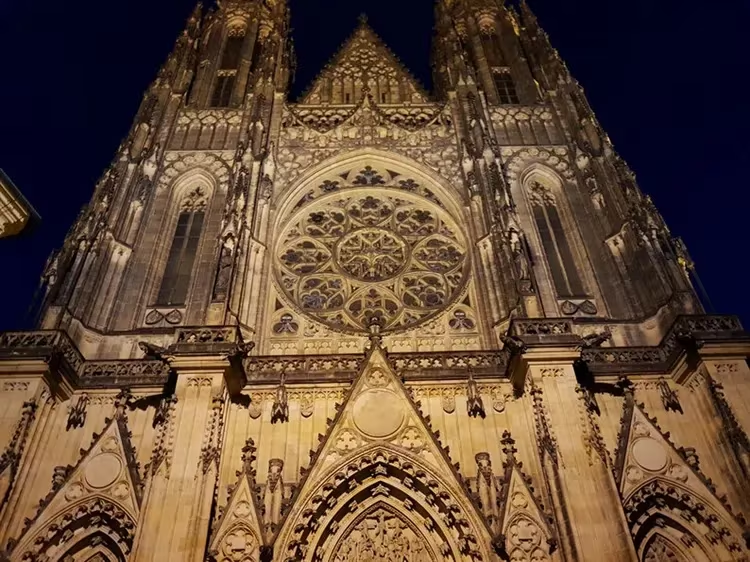
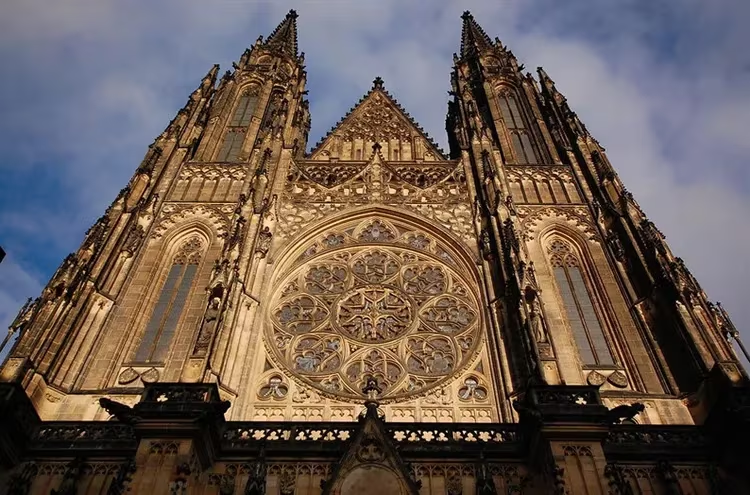
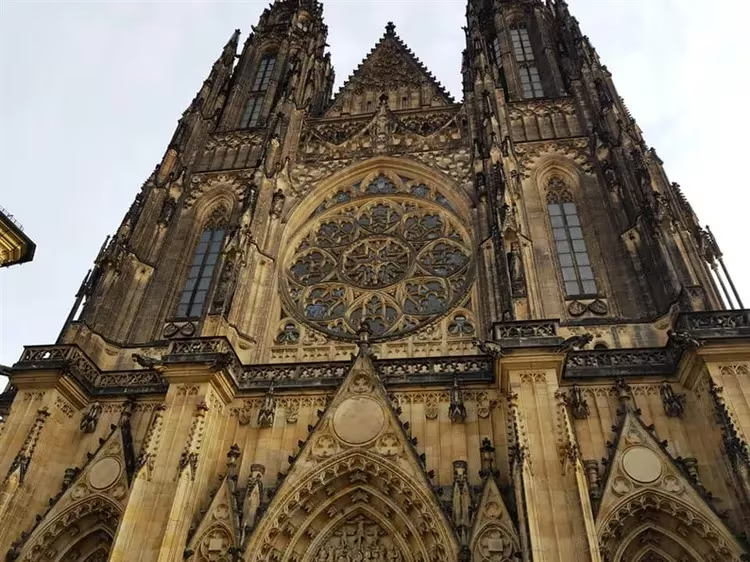
The neo-Gothic western facade of the basilica, lined with lancet windows, cornices and openwork stone carvings, was built from 1873 to 1929. There are three Bronze portals here, each of which is framed by pilasters and crowned with patterned pediments. The gate panels are decorated with relief images representing scenes of the construction of the temple, as well as episodes from the life of Prince Wenceslas.
The western part of the cathedral ends with two Gothic pointed spiers. They are directed up to 80 meters and are decorated with intricate jagged turrets. The pearl of the western façade is the Rose, a round window ten meters in diameter. It is decorated with stone patterns in the form of flower petals.
Golden Gate
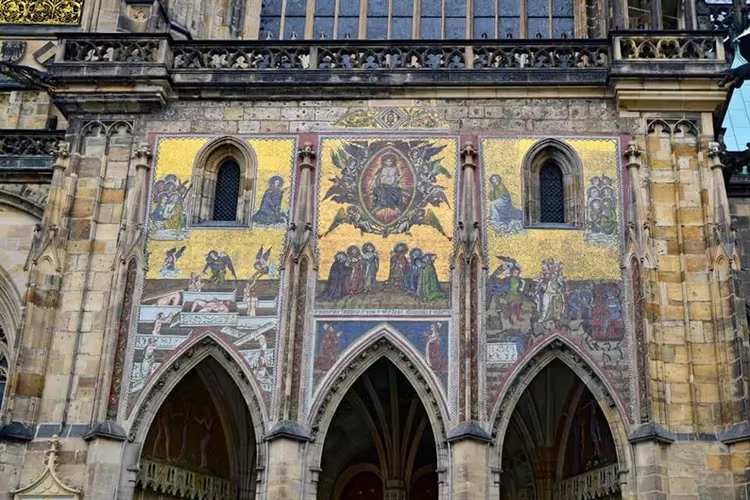
The golden gate with three arches on the south facade of St. Vitus Cathedral originally served as the main entrance to the basilica for the crowned persons. The portal is decorated with a magnificent unique mosaic consisting of one million glass fragments. All stones were specially carved in Venice. Against the background of gilded glass cubes, a multi-colored drawing is created that describes the biblical theme – the Last Judgment.
In the center of the composition is depicted Christ surrounded by the apostles. The left side of the mosaic shows saved believers ascending from their graves to heaven. On the right side, sinners are depicted, leaving for hellish flames to demons. On the mosaic you can also see images of Charles IV and his wife. They are dressed in royal robes and kneel.
The gates are closed with a bronze decorative lattice. It has small allegorical sculptures of zodiac signs. Figures of people are depicted in the process of various activities. They hunt, craft, harvest, plant a tree, and so on.
Interesting Facts
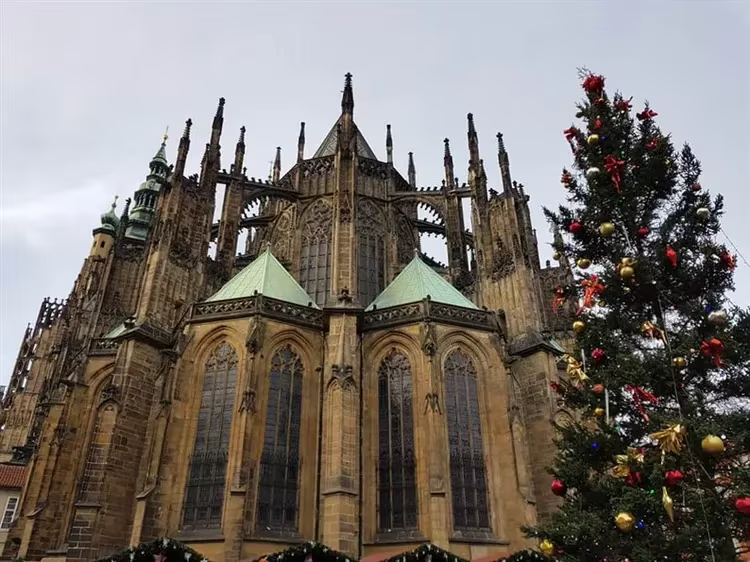
St. Vitus Cathedral was built intermittently for almost 600 years. During the long construction, the temple was repeatedly transformed. The exterior and interior of the basilica embody a variety of architectural styles – from Gothic to Art Nouveau. Today, the cathedral is considered a popular tourist attraction in Prague.
On the facade of the basilica you can see all sorts of monsters, chimeras, demons, throwing malicious glances. It is believed that they drive away evil spirits with their terrible appearance. In Gothic architecture, such statues are at the same time drainpipes.
In the most significant chapel dedicated to St. Wenceslas, there is the Royal Treasury, which contains a golden crown adorned with precious stones, a scepter, an orb, a ring and a sword. The jewels are hidden in a secret room, locked with seven locks, the keys to which were distributed to various influential people of the Czech Republic. There is a legend that whoever illegally takes possession of the crown will be forever damned.
Under the cathedral there is a crypt, where the remains of Czech rulers from the Přemyslid dynasty, Luxembourg, as well as some representatives of the Habsburg family are buried in granite and tin sarcophagi.
Opening hours and ticket prices
St. Vitus Cathedral is open to tourists daily. You can visit the temple from 9:00 (Sunday from 12:00) to 17:00 (April-October), to 16:00 (November-March). In order to see in detail the luxurious decoration of the basilica, you need to purchase a complex ticket for all the sights of Prague Castle for 350 kroons. There is no separate ticket to enter the cathedral.
Where is it located and how to get there
The temple is located on a rocky hill in Prague Castle. Tram number 22 approaches the sights. You should get to the Pražský hrad stop and walk 300 meters down the street. You can also use the subway. Malostranská station is located 400 meters from the basilica.