
Vysehrad in Prague – history, photo, description, how to get there, prices 2021, map
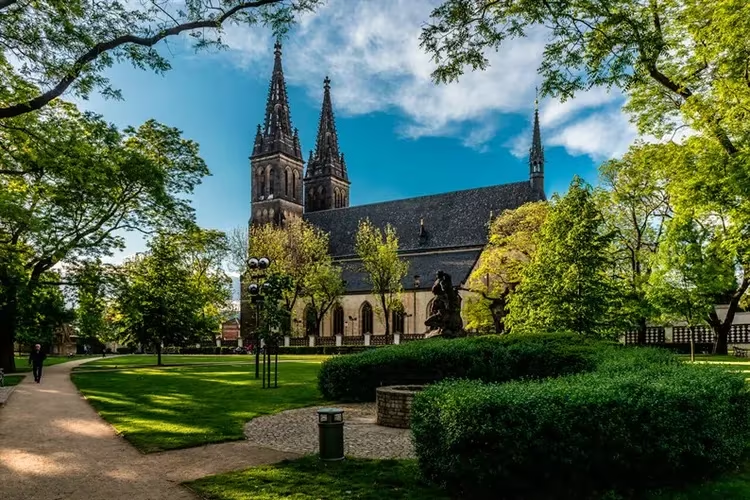
Vysehrad is an ancient settlement from where the famous city of Prague began to emerge. The vast area is located on a rocky hill above the Vltava River. The first residence of the Czech princes was built here. Today, Vysehrad is one of the most significant cultural monuments of the Czech Republic. The cape offers a wonderful panoramic view of Prague. Among the fragrant gardens rises a wonderful architectural ensemble of the medieval Czech capital.
Story
According to ancient legend, one of the Slavic tribes, headed by a warrior named Czech, set off on a long journey across Europe in the hope of finding their new home. After several weeks of travel, the tribe settled on a mountainous area washed by a river. Since then, the inhabitants of the new settlement began to call each other in honor of their leader – Czechs.
After Cech's death, his son Krok becomes the new leader of the tribe. He had three daughters, the youngest of whom, Libushe, later became the ruler of the settlement. She ordered the construction of a fortress called Vyshegrad on the banks of the Vltava River and declared it her residence. In addition to fulfilling the duties of managing her tribe, Libuse was engaged in clairvoyance.
After one of the prophetic predictions, she ordered her subjects to go through the forest and find a man equipping his dwelling in the valley. Libuše's servants found the plowman Přemysl in the floodplain of the river, who soon became the chosen one of the ruler. From the marriage union of young people, the dynasty of the great Czech princes Přemyslids was born, who ruled the country for four centuries in a row.
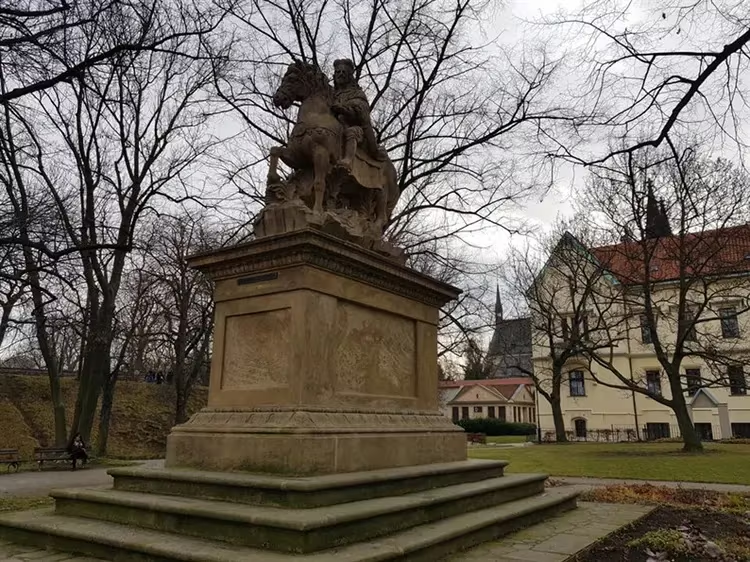
The first written mention of Vysehrad dates back to the 10th century AD. Settlements gradually grew around the fortress, which later formed the city of Prague. Vyshegrad becomes the patrimony of royal persons. Here, in 1085, the Czech prince Vladislav arranged his residence, where his coronation and ascension to the throne took place.
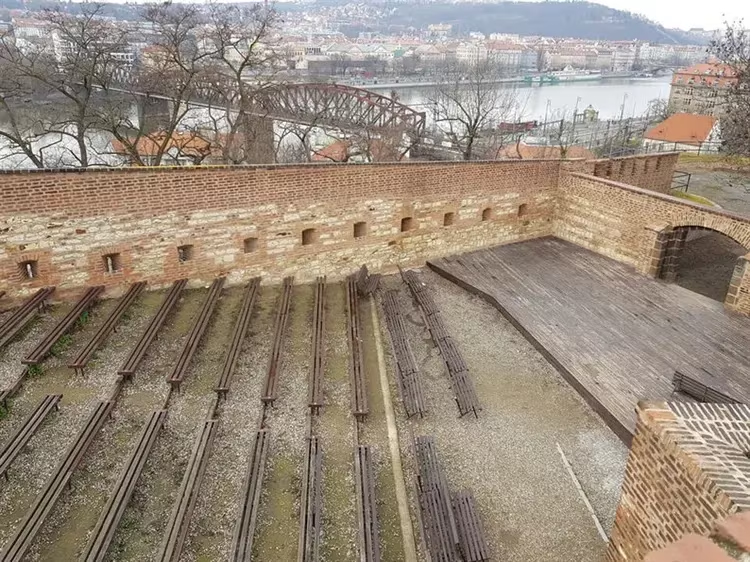
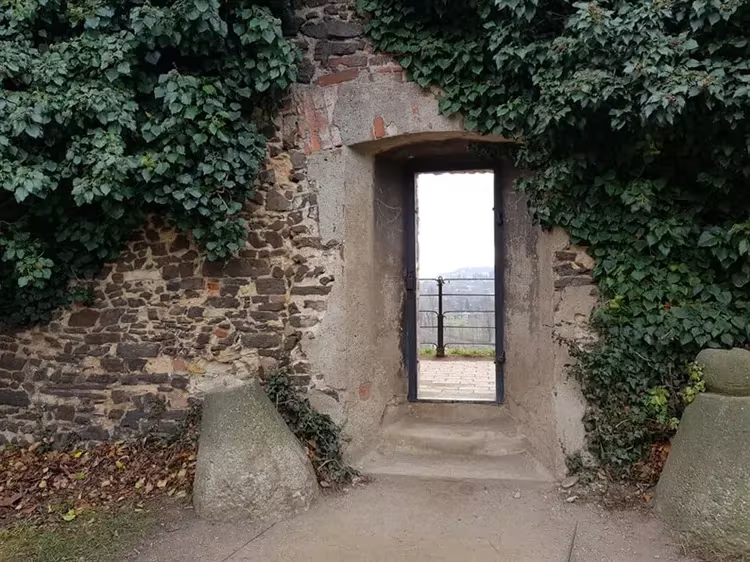
The territory was framed by a defensive stone wall with watchtowers and loopholes. A whole complex of buildings was erected, including the princely palace, several churches and various government buildings. After some time, the royal court moved to Prague Castle, which led to several centuries of oblivion of Vysehrad.
The reign of the ruler of the Holy Roman Empire, Charles IV, who founded the New Town in 1348, was marked by the transformation of Vysehrad. For the emperor, this territory was a sacred place, personifying the symbol of the foundation of Czech history and the Přemyslid dynasty. In honor of the memory of his mother's ancestors, the emperor issues a decree according to which all subsequent rulers must undergo a coronation ceremony in Vysehrad.
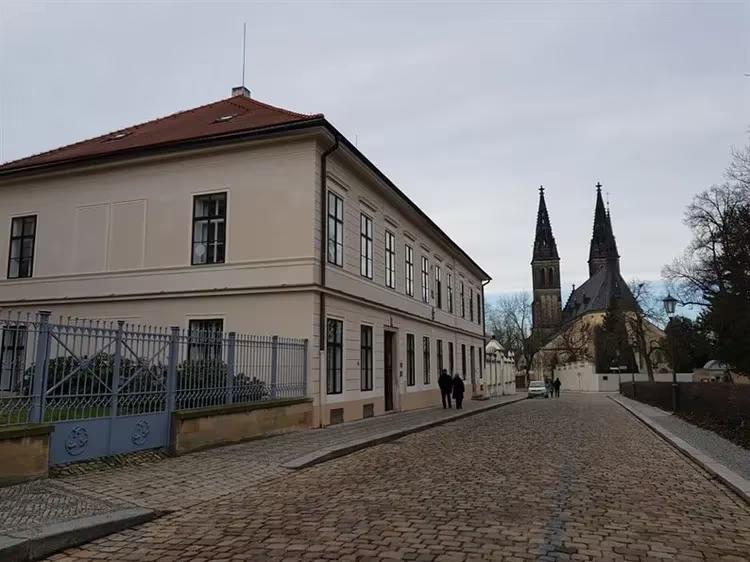
At the initiative of Charles IV, the territory was expanded and strengthened with fortifications. A Gothic castle, staff houses and nine new cathedrals were erected. The area has gained strategic importance. It was supposed to serve as a flank cover for the New City from enemy troops. The prospective development of Vyšehrad stopped in 1420 due to an internal religious conflict (the Hussite War). During the confrontation, the royal residence and other ancient buildings were destroyed and looted.
After a series of feudal wars that regularly ravaged medieval Europe, Vysehrad became the main defensive object of Prague. The construction of a new fortress was started. The massive brick building, erected in 1727, had the shape of a pentagon, the corners of which were reinforced with bastions.
In the second half of the 19th century, Vyshegrad, as a military-strategic object, lost its significance. This time was marked by a sharp rise in Czech patriotism. A group of enthusiasts took up the restoration of the buildings of the ancient area. Thanks to their efforts, Vysehrad acquired its original charming appearance, attracting the attention of numerous tourists.
Attraction
On the territory there is a complex of unique sights of historical value of the medieval Czech Republic. Impressive architectural structures rise in this quiet and peaceful area of Prague. Visitors can enjoy a pleasant walk in the garden and admire the wonderful view of the Vltava River.
Rotunda of St. Martin
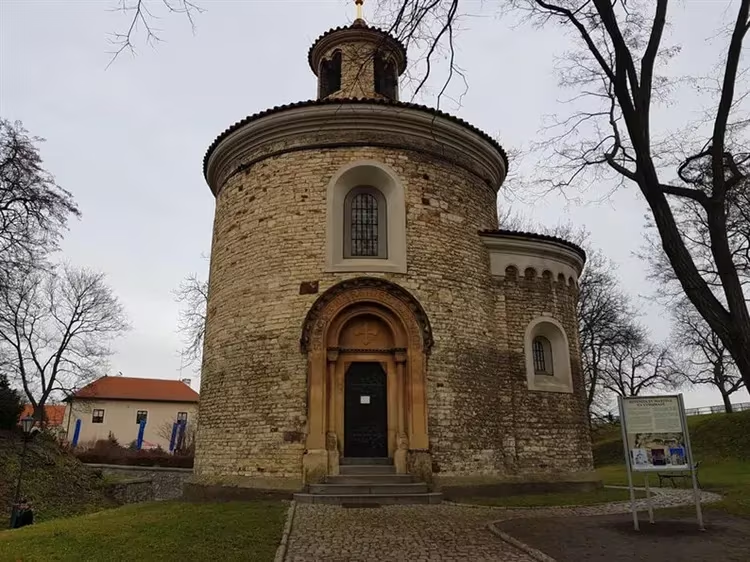
In the park area of Visegrad, there is a tower structure with a horseshoe-shaped apse topped with a small dome – the Rotunda of St. Martin. This ancient building bears the name of the patron saint of the poor, shepherds and soldiers. It was erected in the middle of the 11th century during the reign of King Vratislav and was then a parish church. The inner diameter of the temple area is 650 cm, and the thickness of the walls is 97 cm. The facade of the building is a brickwork, in which arched windows with bars are built.
During the religious war, the rotunda was looted. When Vysehrad became a military fortress, gunpowder was stored in a small basilica. During the years of its long existence, the rotunda of St. Martin was repeatedly subjected to shelling and fires. Only strong walls saved the basilica from complete destruction. In 1878, the restorers returned the rotunda to its true purpose.
Chapel of the Virgin Mary
Behind the rotunda of St. Martin is the chapel of the Virgin Mary. The basilica, built in the 18th century, is an exquisite building in the Baroque style. The snow-white facade of the square-shaped church is crowned with an octagonal dome with arched windows. The carved door is decorated with a gilded ornate ornament. The interior of the chapel is decorated with artistic panels describing the life of the Virgin Mary.
Initially, the chapel was intended for pilgrims wishing to bow to the sculptural statue of the Virgin Mary, standing in the basilica. When the statue was transferred to the Cathedral of Peter and Paul, the chapel was used as a shelter for the poor. Soon the building fell into disrepair and served as a stable. In 1882, a small chapel was restored, and the rooms were painted with frescoes.
Cathedral of Saints Peter and Paul
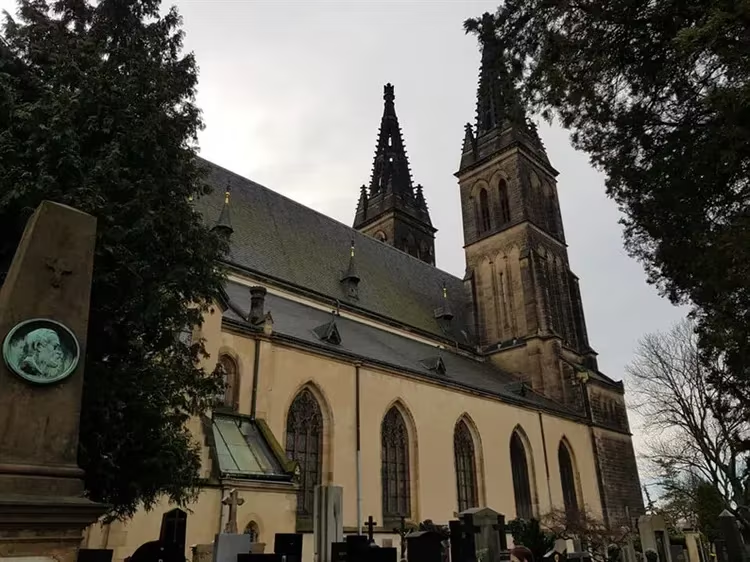
The main attraction of Visegrad is the massive cathedral dedicated to the apostles Peter and Paul. The basilica was founded in the 11th century. According to legend, the king of the Czech Principality Vladislav sent his ambassadors to Rome to receive a blessing for the construction of the temple. The Pope approved the construction of the basilica and sent a bishop to Prague to lay the first stone of the new church. According to the plan of Czech architects, the temple was to become a copy of the Roman cathedral of the same name. However, a fire in 1249 completely destroyed the shrine. Restoration work was carried out in a different architectural style.
Initially, the church consisted of three naves, but over the course of several centuries, the appearance of the temple was repeatedly transformed. In accordance with the changing tastes of the monarchs, outbuildings and chapels were attached to the basilica. Only at the end of the 19th century, the Cathedral of Saints Peter and Paul acquired its final appearance. The facade of the building is crowned with two Gothic spiers, the height of which is 60 meters. The towers are decorated with cornices and arched window openings. The pediment between the spiers is decorated with sculptural figures of the patrons of the temple.
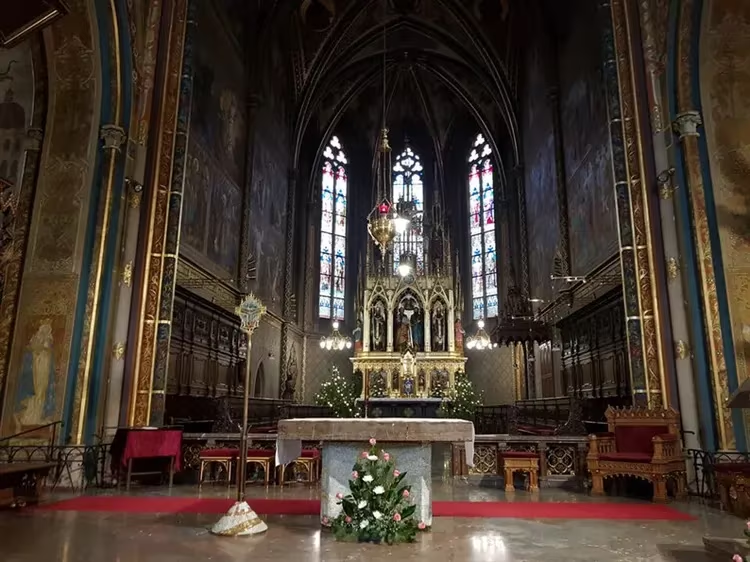
The interior of the cathedral is striking in its pomposity. The halls of the temple are divided by arched vaults. The walls and ceilings are painted with frescoes and bas-reliefs depicting scenes from the life of the apostles Peter and Paul, Old Testament scenes, and landscapes of Vysehrad. The church houses an icon of the Virgin Mary, painted in 1355.
Devil's column
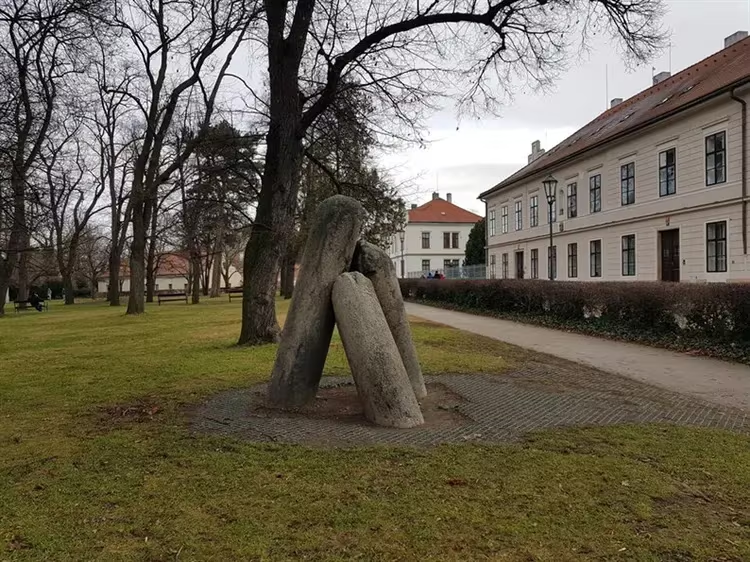
Since 1888, a rather mysterious object called the Devil's Pillars has been installed in the Visegrad Garden not far from the cathedral. This interesting monument is a pyramidal folded three stone columns. Their length is about 2 meters. There is an assumption that the pillars were originally part of an ancient basilica or were intended to measure solar time by the first Slavs in Vysehrad.
According to legend, the devil threw these pillars in anger when he lost a bet made with a local priest. The minister of the church boasted to the devil that he would celebrate mass faster than he would bring the column from Rome. Saint Peter helped the priest to win the dispute, who detained the unclean on the way.
Kazemats
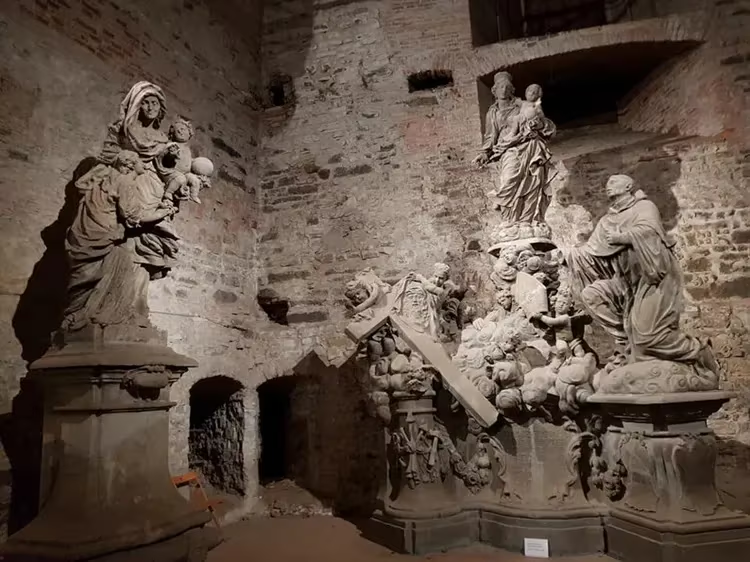
In the 18th century, underground passages and premises were dug on the territory of the Visegrad fortress, which were necessary for the rapid movement of troops under the entire fortification, the storage of food and ammunition. The length of the casemate corridors is more than 1 km. One of the largest underground halls is called Turtle Dove. In this room, with an area of 300 m2 and a height of 15 meters, there are six sculptural compositions. These are marble statues of Saints Anne, Augustine, Mikulosh, Madonna, Vojtech and Lyudmila with the infant Wenceslas. Since 1992, the underground complex has been available for tourists to visit.
Cemetery “Slavin”
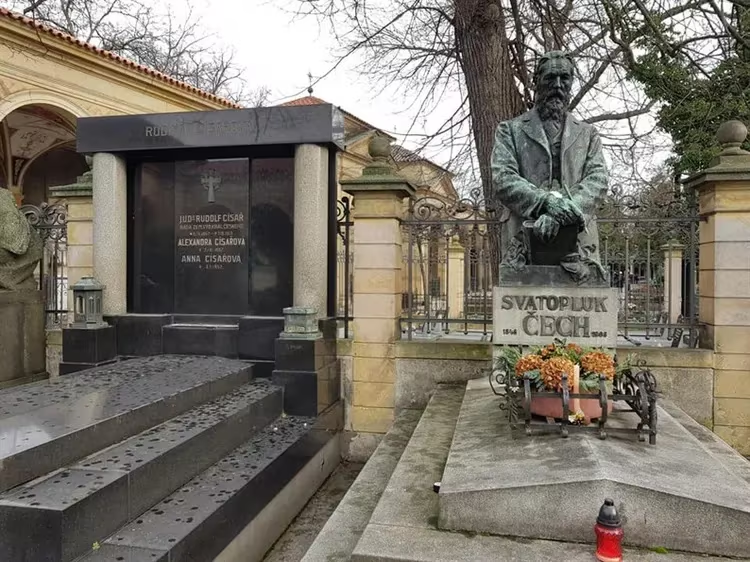
The cemetery adjoins the Cathedral of Saints Peter and Paul, which has gained fame as a national necropolis. Here rest outstanding personalities who have made an invaluable contribution to the revival of Czech statehood. These are famous writers, artists, artists, politicians, scientists and many other public figures.
The Slavin Pantheon, erected in 1890, is part of the cemetery. It is a complex of tombstones, which are decorated with sculptures and busts. Luxurious monuments reflect respect for eminent personalities. The Pantheon is framed by an arched gallery. In front of the entrance to the cemetery there is a monument “The Winged Genius of the Motherland”.
Church of the Beheading of John the Baptist
The mysterious basilica of Prague is the Church of the Beheading of John the Baptist, which is located in Vyshhorod. The mystery lies in the fact that the shrine is invisible. The church, built in the 14th century, was built into the system of fortifications surrounding Vysehrad. The temple was a weak point of a massive fortification and a conspicuous target for enemy artillery. Military engineers in the 17th century decided to hide the shrine. The height of the fortress walls was increased, which made it possible to form a high protective rampart. Fortifications covered the church. The basilica is devoid of a facade, roof and domes, which gives it an unusual look. To date, the main entrance to the church is blocked by the chapel of the Virgin Mary.
Observation deck
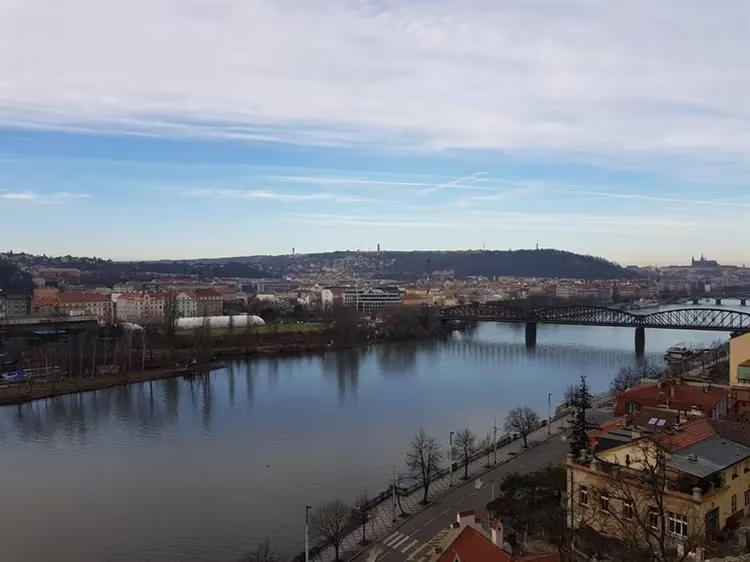
Among the numerous observation platforms in Prague, a worthy place is occupied by an observation terrace located on the Visegrad slope. It offers a picturesque panoramic view of the Vltava River, bridges, city roads and tiled roofs of the architectural ensemble of several districts of the Czech capital. This is a great place for tourists to spend time and relax. Here you can drink a cup of aromatic coffee while enjoying the wonderful scenery of the surroundings.
Where is it located and how to get there
Prague's Vysehrad district rises on a rocky promontory above the Vltava River. The historic site can be reached by metro. Vysehrad station is located a few minutes from the Visegrad complex. Also, the sights can be reached by tram routes No. 3, No. 7, No. 8, No. 17. The nearest public transport stops are Vyton and Albertov. After getting off at the stop, you should go under the railway bridge to the information sign Vysehrad. A steep staircase leads up to the fortress. The two Gothic towers of the Cathedral of Saints Peter and Paul serve as an excellent landmark.
The territory of the complex is available for visitors around the clock. The basilicas and chapels of Vysehrad are open to tourists from 9:00 to 18:00 (October to April) and until 17:00 (November to March). Entrance to the territory is free. For a fee, it is possible to use the services of a guide. The cost of one excursion is 120 kroons.