🗿 Top 8 most unusual monuments in the world
Every traveler knows the Eiffel Tower, the Statue of Liberty and the Egyptian sphinxes. Photos from these locations will not surprise either friends or followers on social networks. Where to look for those very monuments that can cause a wow effect even in the most experienced travelers? We have compiled a selection of the most unusual monuments in the world.
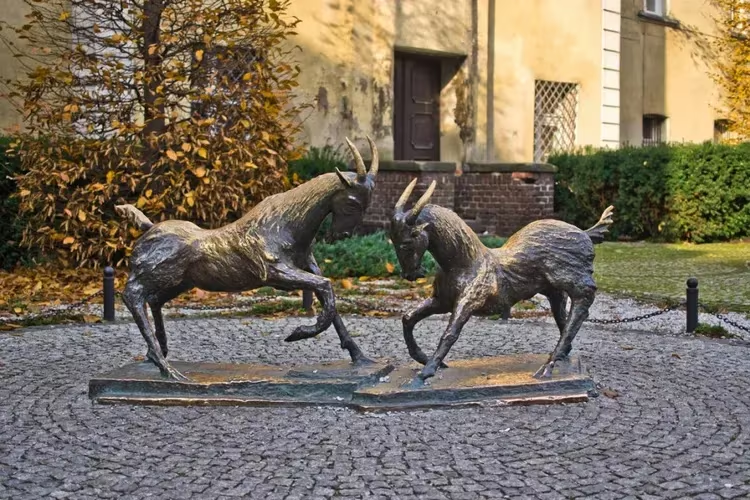
Monument to goats (Poznan, Poland)
If the Capitoline wolf is the main symbol of Rome, then in the Polish city of Poznan this role is played by goats. They are the ones who decorate one of the streets of the city. In 2013, the authorities announced a competition for the best name for animals, and after some time they recognized the best option as Pyrek and Tyrek.
The story of the fight between two goats goes back centuries. According to legend, the cook burned the meat of a roe deer before an important feast and ordered his subordinates to steal two goats to serve that same dish. They carried out his instructions, but the cook was briefly distracted by the Town Hall building. The animals did not waste a minute and, having climbed the tower, began to butt heads with all their might. This plot was immortalized in the clock mechanism of the City Hall: at exactly 12:00 two goats appear and begin to butt each other. The streets of the city did not go unnoticed and acquired their own monument.
Travelers (Marseille, France)
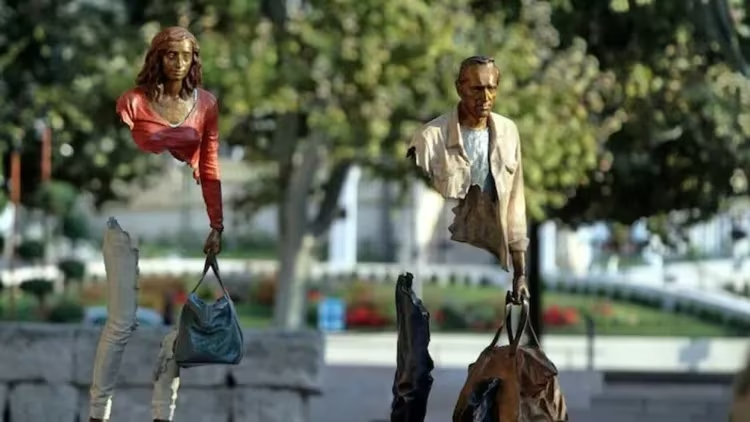
A series of sculptures “ Travelers” by Bruno Catallano adorns the streets of Marseille. Figures of people of different ages, genders and nationalities are holding a travel bag in their hands and seem to be frozen in time. They are united by the absence of one of the body parts, for which the sculptures are often called “torn.” By the way, among the travelers you can meet Vincent Van Gogh.
Catallano did not answer what the emptiness in the sculptures symbolizes. We can only assume that this is the emptiness inside each person, openness to new experiences or loss of meaning in the race of life.
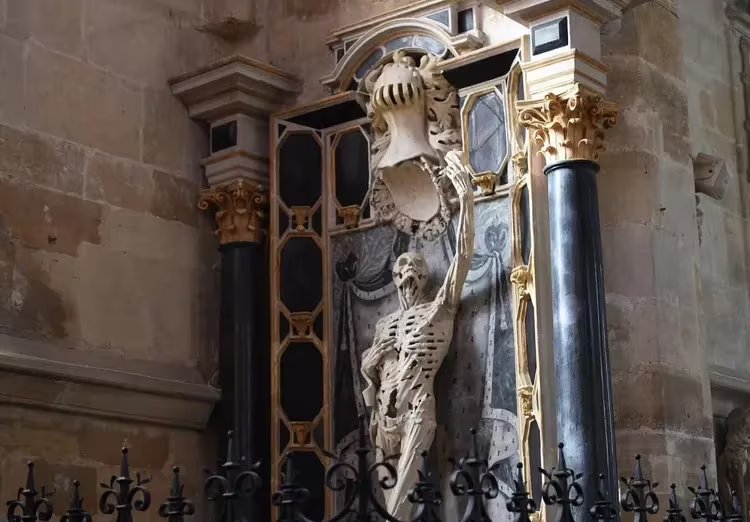
Monument to the heart of René de Chalon (Bar-le-Duc, France)
René de Chalon died in 1544 at the age of 25. Before his death, the Prince of Orange ordered the appearance of the tombstone. He ordered to depict himself as his body would look a few years after death. The sculptor Ligier Richier depicted in every detail a half-decayed human body with a heart in his raised left hand. You can see it in the Church of Saint-Etienne in Bar-le-Duc.
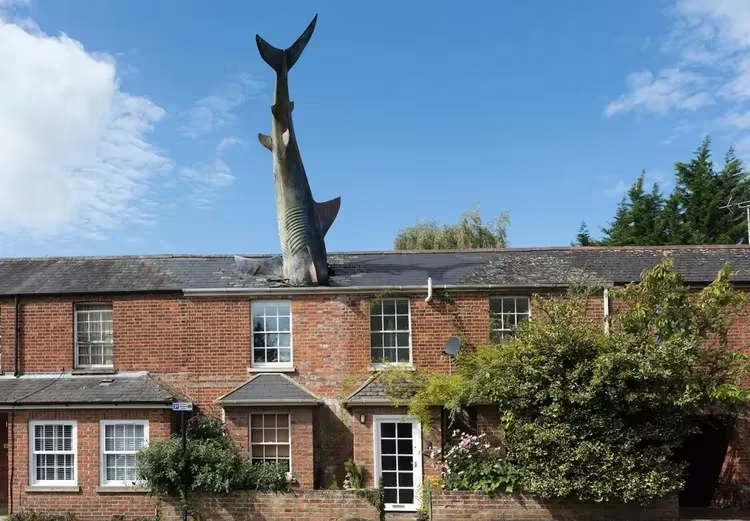
Headington shark (Oxford, UK)
The official title for this house-piercing shark is “Untitled 1986.” It symbolizes the fight against the nuclear race and reminds us of its consequences. Bill Heine erected a monument on the roof of his own house four months after the Chernobyl disaster on the anniversary of the bombing of Nagasaki.
For several years, residents of nearby houses have asked city authorities to remove the shark that threatens safety. After much investigation, Heine proved that the sculpture did not cause any damage. And she remained in the same place.
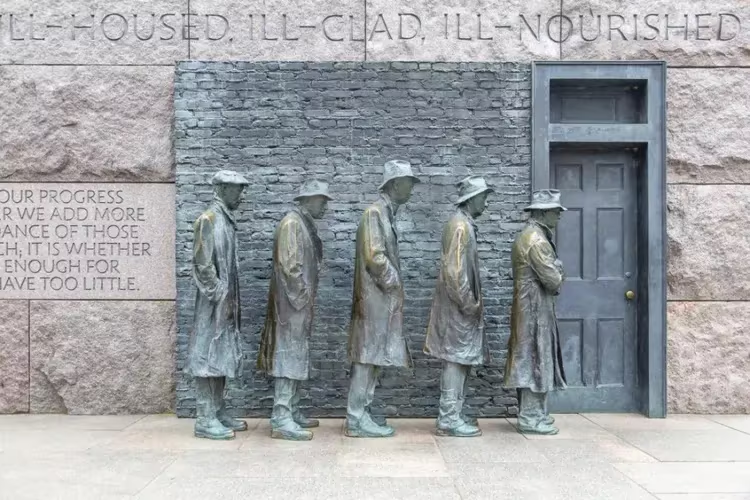
Great Depression Monument (Washington, USA)
During the Great Depression, millions of Americans lost their jobs and a roof over their heads. Lines for bread and stew were a common sight of that period. George Segal portrayed five men dutifully waiting for their opportunity to get food and survive the crisis.
This monument is very popular among tourists who join the queue and take photos as a souvenir.
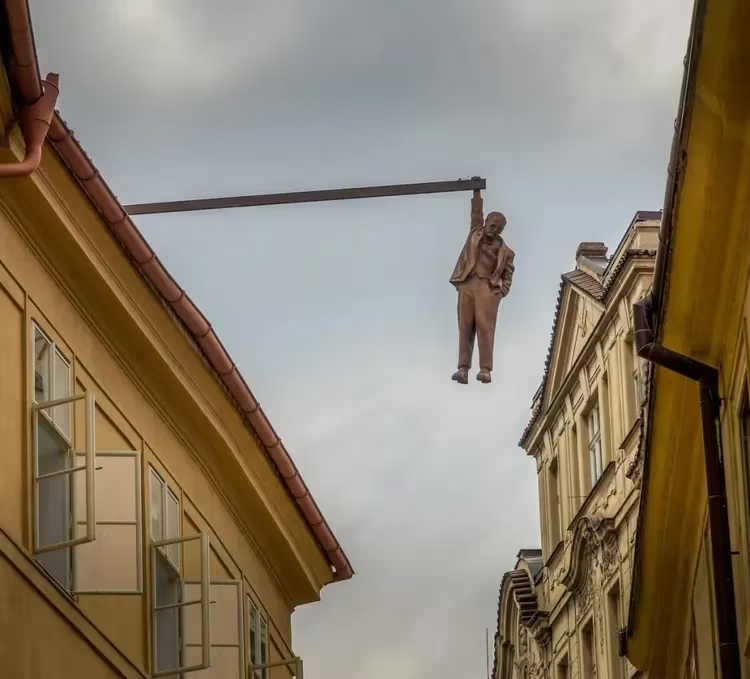
Hanging Man (Prague, Czech Republic)
At the sight of this sculpture, many begin to call an ambulance and the police. Don't panic: you won't have to save a man hanging from a two-meter height from suicide. This is another creation by David Cerny.
The author convinces that he “raised to the heights” the master of psychoanalysis Sigmund Freud. Cherny shows how far the intelligentsia is from the needs and thoughts of the common people.
“The Hanging Man” visited several international exhibitions, and in Chicago the police launched an operation to rescue a suicide.
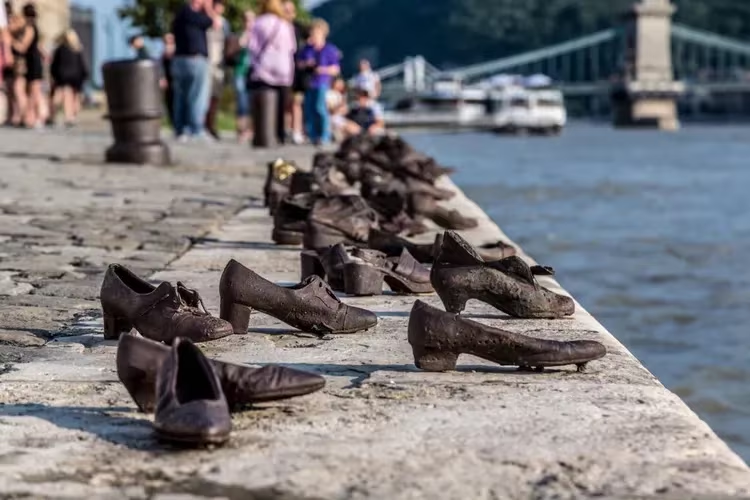
Shoes on the Danube embankment (Budapest, Hungary)
At a distance of 300 meters from the Hungarian National Parliament there are 60 pairs of worn out old shoes. The memorial appeared in 2005 in memory of the persecution and genocide of Jews in Buda -Pest during the Second World War. The Nazis brought Jews en masse to the Danube embankment and shot them. Beforehand, the soldiers forced all victims to take off their shoes in order to take them for themselves or sell them at a profit.
The bodies of many victims will never be found, and in 2014 Hungary officially admitted responsibility for the genocide of Jews during World War II.
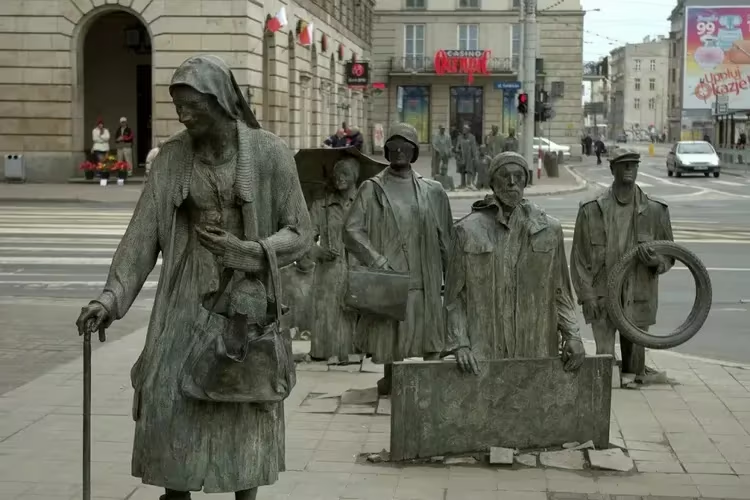
Monument to Unknown Passers-by (Wroclaw, Poland)
The author of the sculpture, Jerzy Kalina, depicted people descending underground on one side of the street, and rising from under it on the other. The details deserve special attention: a baby stroller, a string bag, an old cane.
Some believe that these 14 gray figures reflect victims of Stalinist repression, fighters against communism, or Jews forcibly moved into ghettos. The main idea of the monument is different. Kalina showed life during the period of martial law and a time when constant underground life, horror and understatement went away.