🖤 ”Dark tourism”: top 10 places for extreme travelers
Halloween has already passed, but the dark tour ism remains. This recent trend is about sightseeing from the least happy places on Earth: the epicenters of tragedy, war, imprisonment, disaster and death.
Dark tourism is a type of historical tourism. However, the nuance is that the locations to visit are places associated with death, accidents and tragedies. Dark tourism is quite difficult to market because people often think it is terrible.
But dark tourism is a very ancient practice. As far back as ancient Rome, there were gladiatorial fights, and many religious practices involved people making pilgrimages to see the remains of religious figures, sometimes traveling hundreds or thousands of miles. Also one of the most striking examples is Salem, where the witch hunt happened. This is one of the most popular tourist spots, which has been turned into a museum.
There are also dark tourism spots that are just for fun without the horror story. For example, haunted houses, hellfire clubs and Jack the Ripper tours all involve tragedy but are presented in a more enjoyable way. For example, Savannah and New Orleans have created an entire industry for voodoo and ghost tours. And some of these tours include real locations.
Ghost Walks in Gosnells, Western Australia
The tour received a Western Australian Heritage Award and a National Award in the Creative and Culture category. For nearly 30 years, Ghost Walks has been bringing the rich local history of Gosnells to life. Hundreds of people gather each year to explore heritage sites by moonlight, where the “ghosts” of local historical figures are encountered.
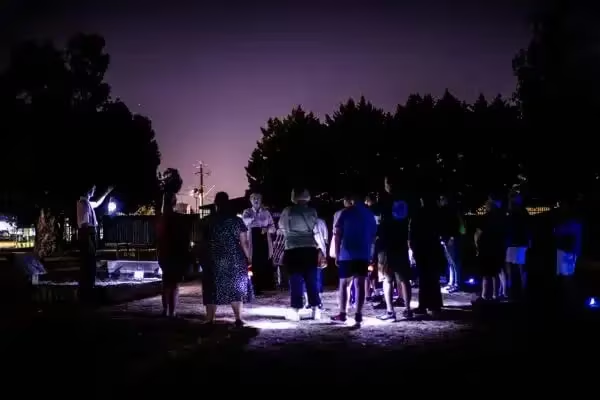
Haunted Walks take place on Fridays closest to the full moon in January, February and March. Each evening there are four rounds, each with 300 participants.
Tickets are released every year around Halloween, but usually sell out months in advance. Find tickets here!
Aberdeenshire Historic Churches Trail
The authorities in Aberdeenshire in Scotland are actively encouraging people to visit local historic ruined churches and associated cemeteries. The Historic Churches Trail takes visitors to 12 sites across Aberdeenshire. In this way, visitors are invited to learn the stories of parishes, people and events.
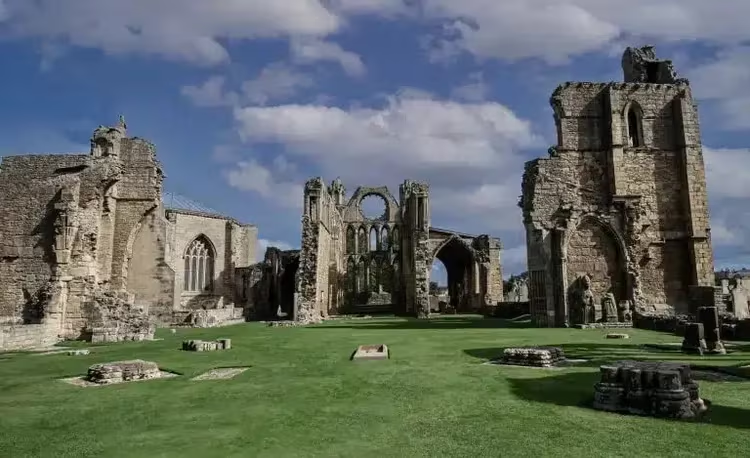
Cemeteries also have interpretation boards that explain what the various memento mori symbols on the headstones mean, as well as explaining the stories of some of those buried. The guides also talk about the phenomenon of body snatching, where cemeteries have burial houses and safes.
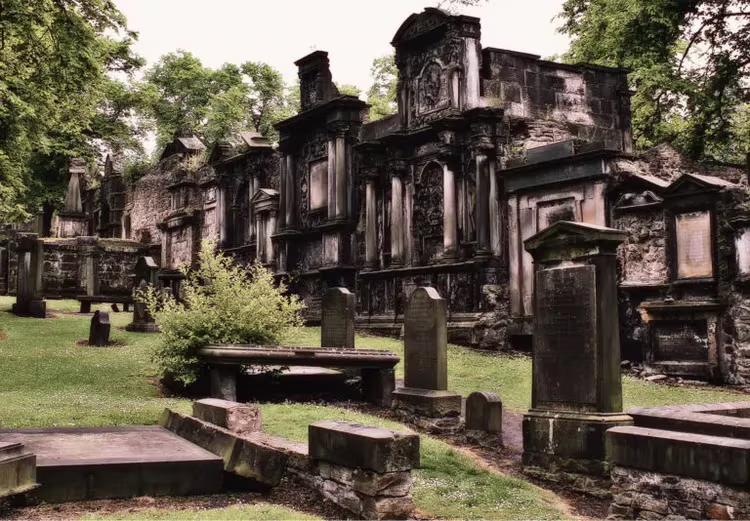
Greyfriars Kirkyard in Edinburgh
Edinburgh authorities recommend visiting Greyfriars Cemetery. It is supposedly the most haunted cemetery in the world. Fans of Harry Potter will especially like it here. After all, many tombstones served as a source of inspiration for the creation of characters such as Minerva McGonagall, Alastor Moody and even Tom Riddle – one of the most famous villains of modern literature.
Wicklow Prison
The historic Wicklow Gaol is located in the county of the same name. And it is called “Ireland’s best interactive prison museum.” Wicklow Gaol offers a tour of the preserved building. During the tour, guests are told the stories of the men, women and children imprisoned here for two centuries.
Hell's Gate at Wicklow Gaol is the best use of virtual reality in Ireland. Guests are transported back in time and immersed in events from the history of the prison, which take place in the cells of the building.
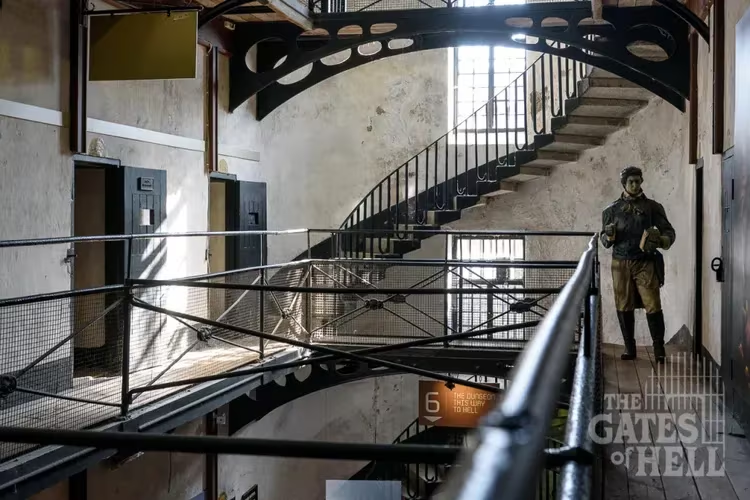
Paranormal activity at the prison has earned the building a reputation as one of the most haunted places in Ireland. Wicklow Prison was the site of horrific atrocities for many years, with prisoners subjected to torture, starvation and death. Many believe that a place with such a dark history may well be inhabited by the souls of those who used to be here.
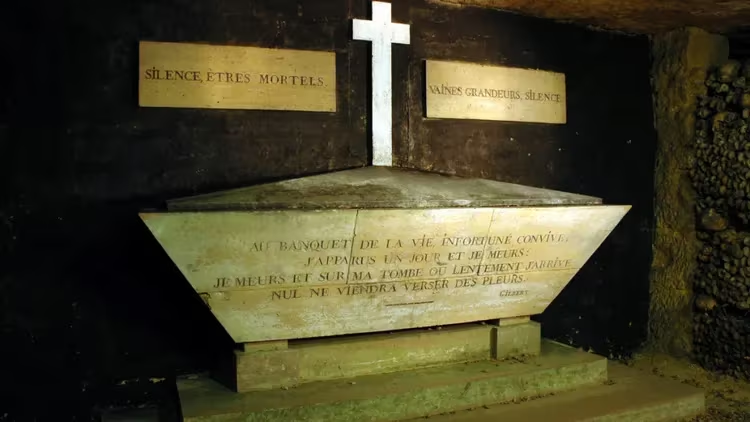
Paris catacombs
The Parisian Catacombs are an underground network twenty meters underground and believed to be about 300 km long, containing the remains of several million Parisians. The municipal crypt of the Catacombs is one of the largest in the world and one of the few underground.
Leap Castle in County Offaly
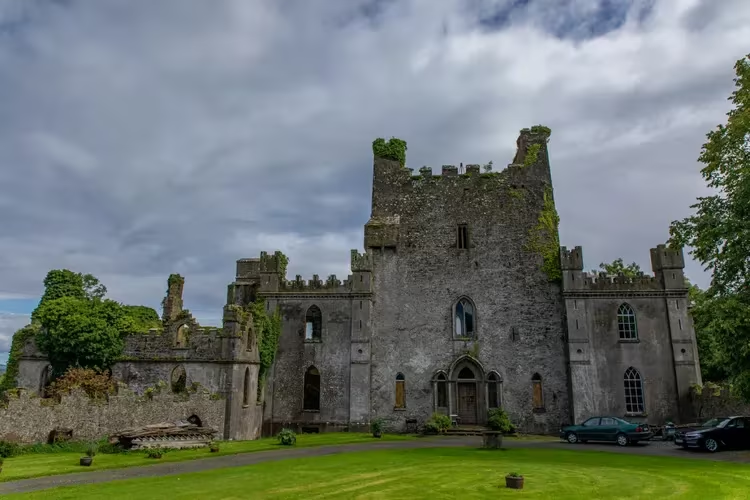
Leap Castle in County Offaly is possibly the most haunted castle in the world. It was built in the early 1500s under the leadership of the powerful O'Carroll clan, which has a turbulent and bloody history. Although Leap Castle is a private residence, it is open to visitors from 10:00 to 17:00 from Monday to Saturday. Owner Sean Ryan, a legendary tin whistler, will show around and maybe even play a tune or two.
Louth Festival of Lights, Drogheda, Ireland
The Lu Light Festival takes place in Drogheda with free shows. Lú Festival is a spectacular show retelling the stories of Irish myths and legends. Viewers will be able to explore the mythological past through audio storytelling accompanied by breathtaking visuals.
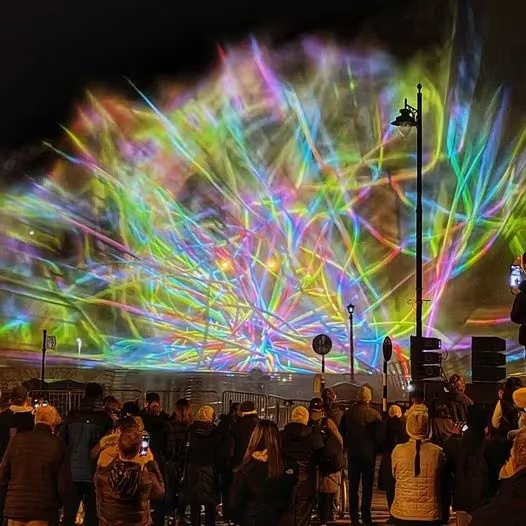
In addition, the festival features many street performances. And cafes, bars and restaurants in this area are open until late. A family recreation area with a Viking camp is being organized in the Old Abbey parking lot.
Sedlec Ossuary, Kutna Hora, Czech Republic
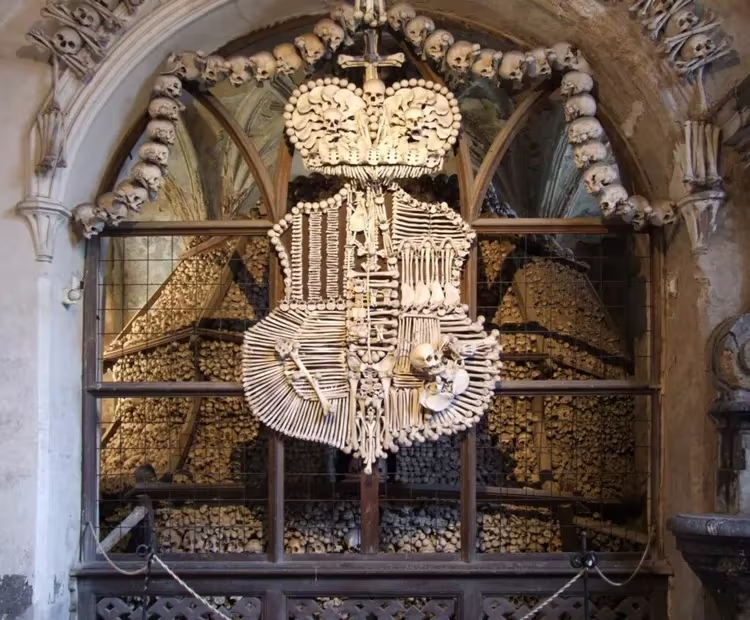
The Sedlec Ossuary is located near Prague, in the suburb of Kutná Hora. This is a small church that does not stand out from the outside. But it is decorated with more than 40 thousand human skeletons.
For example, one of the artistic works is a large chandelier made of bones in the center of the Bone Church. The huge chandelier contains at least one human bone. There is also the coat of arms of the Schwarzenberg family, also made of human bones. This looks creepy and beautiful at the same time.
Pere Lachaise, Paris
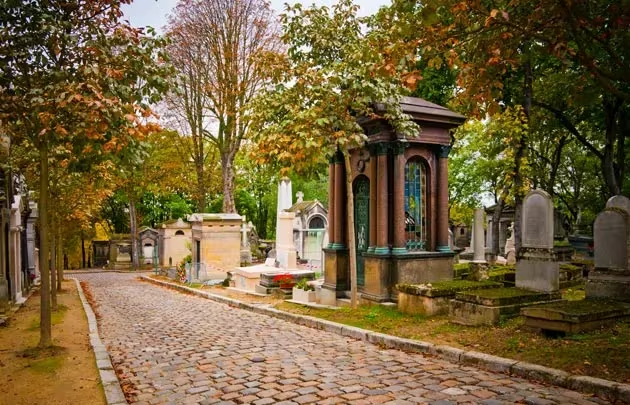
Père Lachaise in Paris is the most visited necropolis in the world. This cemetery has about 70 thousand grave plots. The cemetery is a mixture of a park and a temple. There are Gothic graves, Ottoman burial chambers, and ancient mausoleums. Many famous people found their last home here. Honoré de Balzac, Frédéric Chopin, Molière, Edith Piaf, Camille Pissarro and Oscar Wilde are just a few.
Excursions are held here on Saturdays and Sundays. Admission is free for all visitors. Read more here.
Cemeteries London a
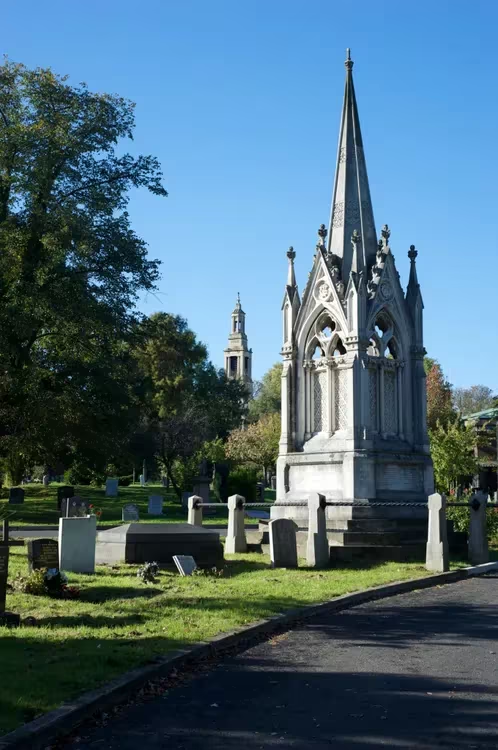
Abney Park in London appeared in 1840. The park areas became a non-denominational cemetery. Nowadays, the area retains an atmosphere of rebellion: tiny winding streets leading to dead ends, haphazard monuments and graves so weather-beaten that the names are illegible.
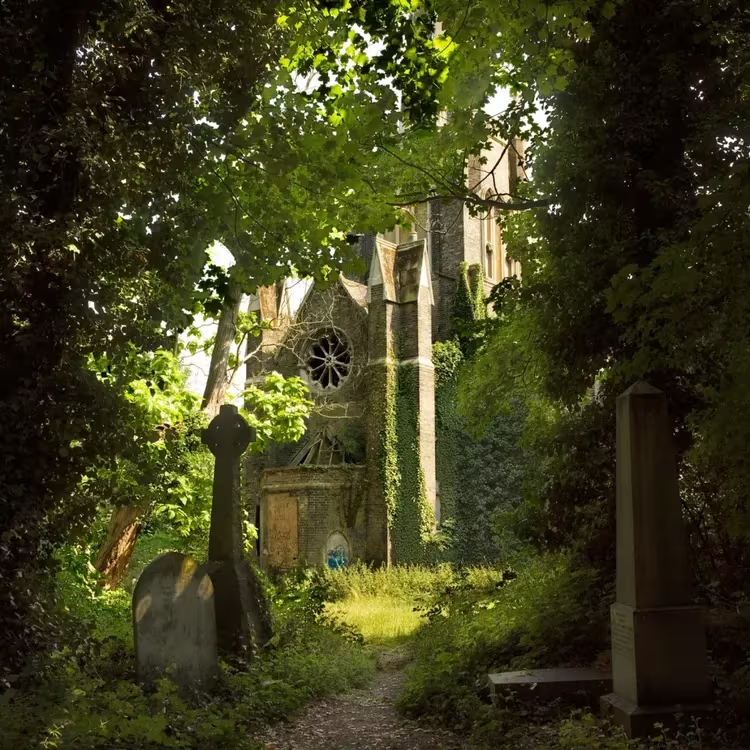
Tower Hamlets is a cemetery in the East End that has been bombed on numerous occasions. The chapels were so badly damaged that they were demolished, and many of the graves are now almost hidden by undergrowth.
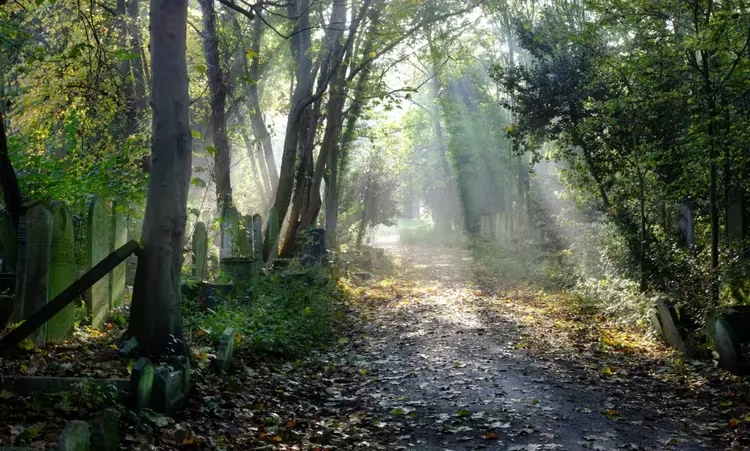
West Norwood is a cemetery of contrasts. Recent burials are mixed with older sites. Here, wild growth competes for space with floral arrangements and grave offerings. There is a beautiful rose garden in the center of the cemetery, but the most notable feature is the Greek Orthodox necropolis. There, beautiful gold-flecked mosaics and tombs surround the Doric-style Chapel of St. Stephen.