
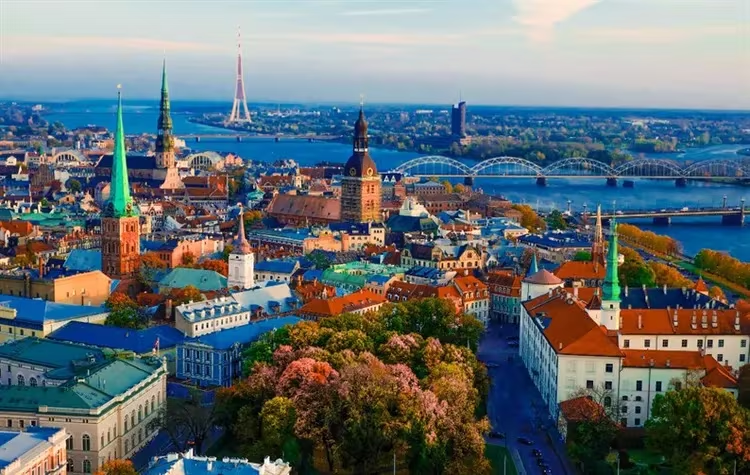
What to see in Riga in 1 day on your own – route, photo, description, map
Today we are waiting for a fascinating and informative tour of the capital of Latvia. As part of a one-day trip, we will try to get acquainted with all its sights and look into the darkest corners of the history of this city. We will tell you what you can see in Riga in one day on your own.
Freedom Monument
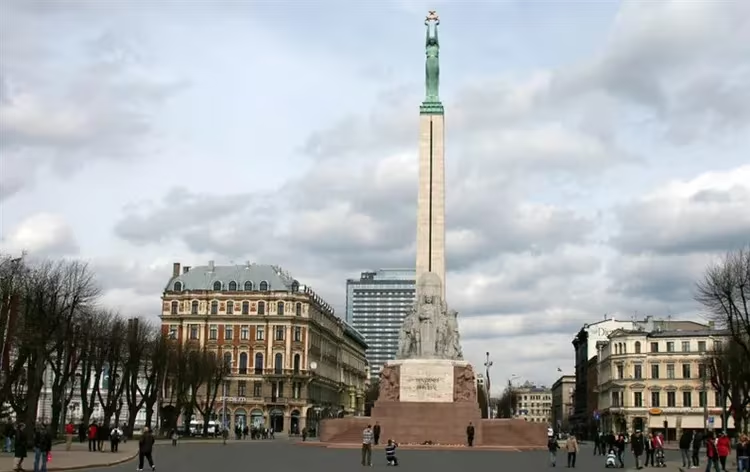
According to a good tradition, acquaintance with Riga begins with a visit to the Freedom Monument. The memorial is dedicated to those residents who heroically defended the right to independence of the state in the 20s of the last century. The monument is located on Brivibas Avenue, in the central part of Riga. The monument reaches a height of 42 meters and is presented in the form of a woman holding three symbolic stars in her hands. A separate part of the exposition is a group of additional figures at the foot of the pedestal, each of which reflects the culture, history and values of the Latvians. By the way, according to rumors, a certain Milda caused the sculptor to pose, in whose honor the monument got its second name.
The famous Lime clock
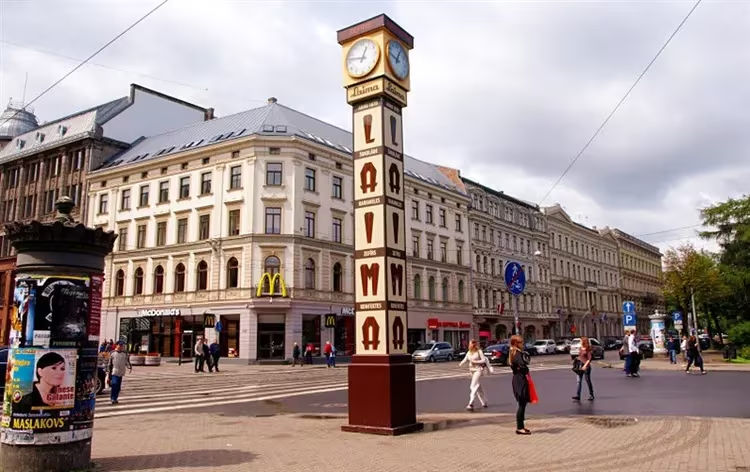
Laima Clock has a special place in the hearts of the citizens and is located in a high tower on one of the central squares of Riga. This is a favorite place for appointments and appointments. Although today the tower is decorated with the recognizable logos of a local sweets manufacturer, it did not always look like this. Initially, there was an ordinary tram stop at this place, in which, for the convenience of residents of Riga, hurrying to work, a clock was installed.
In 1924, the first tower appeared on this site, in which there was also a place for a clock. The tower was dotted with socialist and communist slogans for a long time, and it was returned to its original appearance only in 1999. If you are in Riga for the first time, then the best place to make an appointment, which every city dweller knows, will be the Laima clock.
Fountain of the Nymph
This architectural delight is located at the entrance to the famous Opera and Ballet Theatre. It was created in 1887 by the brilliant master of his time A. Foltz.
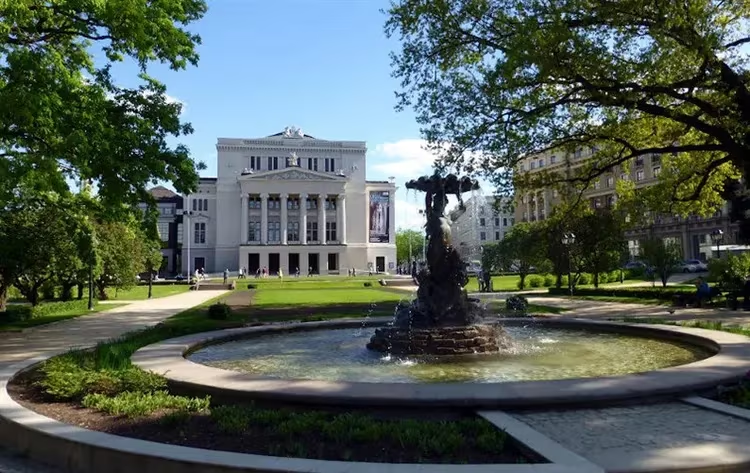
The history of the creation of the fountain is no less unique than the end product itself. According to legend, the author of the fountain, in the process of creating the figure of a naked girl, fell in love with his model. Suddenly, his feelings haunted him, and the completion of the construction was constantly delayed. As a result, the beloved nevertheless reciprocated and agreed to become the wife of a brilliant architect, and the fountain, to the great joy of the inhabitants of Riga, was completed.
Today it is a statue of a naked girl with a shell in her hands, from which a jet of water escapes. Next to the nymph are figures of children, a turtle and a dolphin. Each element of this sculpture is created in great detail. Therefore, this attraction is highly recommended to be included in the excursion program.
Monument to the Bremen Town Musicians
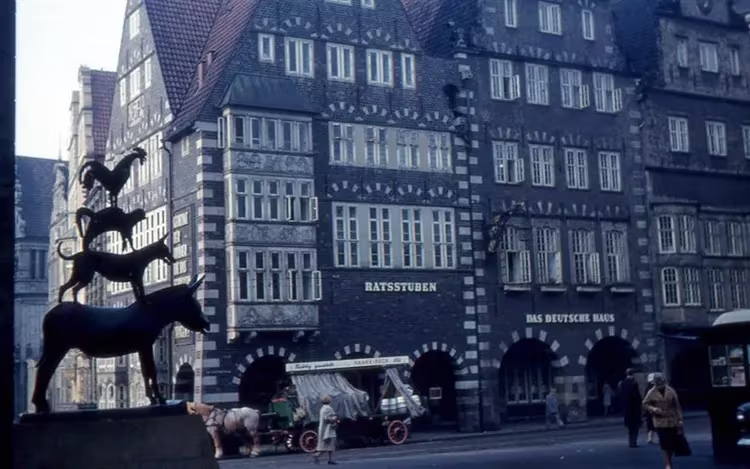
All of us in childhood watched with interest the adventures of the Bremen town musicians and sincerely cheered for them, sitting in front of the TV screens. It seems that in Riga there is a special attitude towards the heroes of this fairy tale, because a real monument has been erected to them on one of the streets. On the pedestal, one on top of the other, there are four recognizable characters – a donkey, a dog, a cat and a rooster. Do not be surprised that the author of the monument was a German sculptor from Bremen. After all, this city is considered twinned with Riga.
By the way, according to the sculptor's idea, the monument bears a deep historical and philosophical thought and is dedicated to the end of the Cold War between East and West. Of course, modern residents of Riga and guests of the city do not think about such “high matters”. They prefer to believe that if you rub the nose of a donkey or the beak of a rooster, the most secret desires will surely come true.
House of the Blackheads
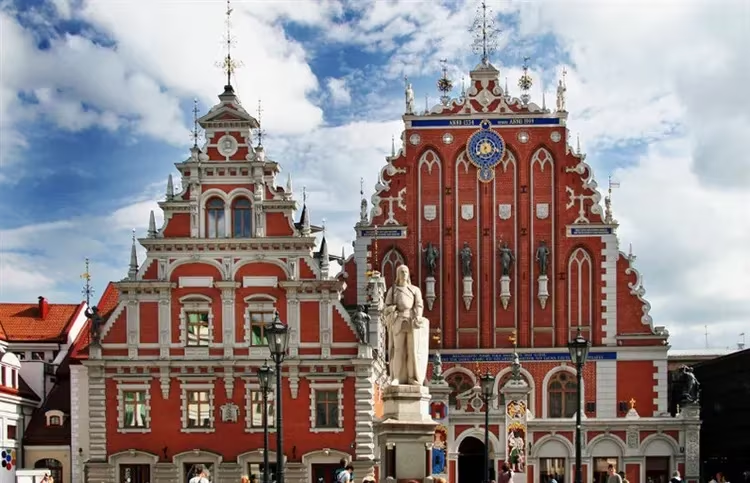
This historic building was restored after the military devastation only in the 90s and became a kind of gift to the city for the 800th anniversary. Today, this house attracts tourists not only with its unique appearance, but also with its luxurious interior. It hosts exhibitions and private events for high-ranking guests. According to historical information, the house was created in the 14th century and belonged to the famous merchant guild of the Blackheads. By the way, the name is not at all connected with the surname of the merchants. The coat of arms of the house depicted St. Mauritius with a black head. Unfortunately, it is not possible to verify the conformity of the current appearance of the building with the historical prototype.
Occupation Museum
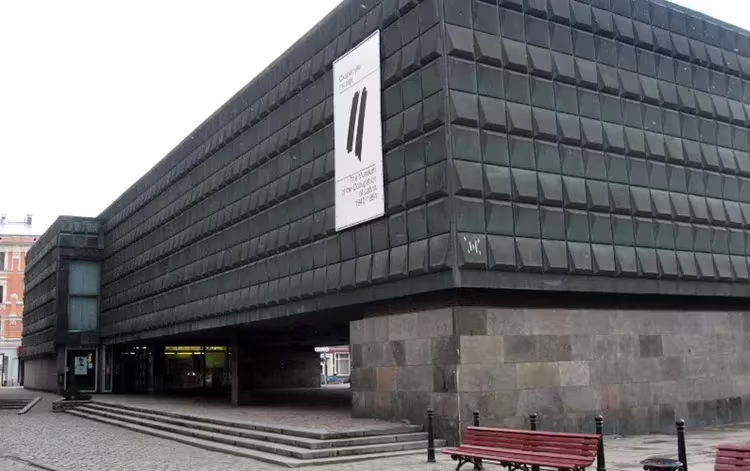
In 1993, the Museum of the Occupation opened its doors, which from its very creation to the present time stands out for its political and financial independence. Its collection is replenished exclusively at the expense of sponsors. The main idea of the exposition is to convey to modern society the life of Latvians who suffered from the terror of the Nazis during the war years, and were also persecuted by representatives of the Soviet regime. For the convenience of visitors, the collection is divided into several sections, each of which is dedicated to a separate historical period of the country. Many Russians have a controversial attitude towards the gallery, because its creators actually equated Stalin with Hitler.
The Dome Cathedral
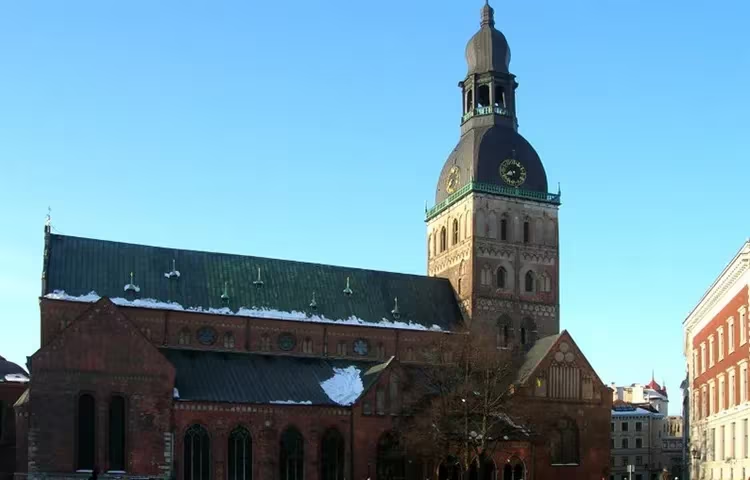
A decorative carving acts as an ornament of a musical instrument, and when a tearing sound escapes from its seven thousandth army of pipes, the heart begins to pound furiously in the chest. Even today, this instrument is considered the largest in the territory of the former USSR. And in 1883, when it was installed, there were no analogues in the whole world.
Art Museum
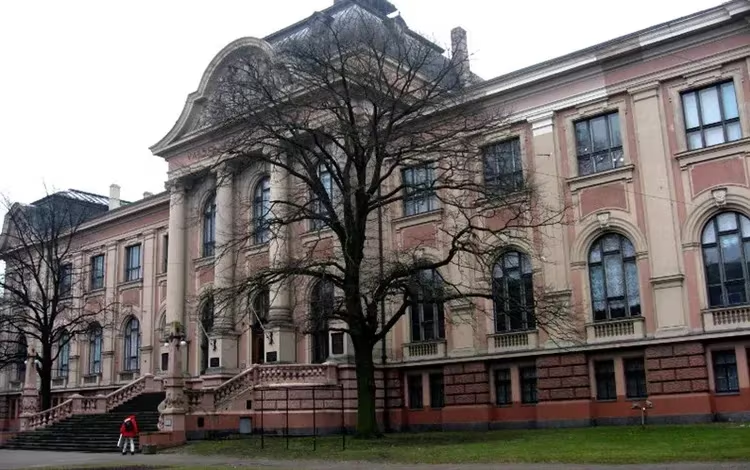
The gallery called “Riga Stock Exchange” includes a huge collection of the best examples of European, Oriental and Ancient Egyptian art. The oldest exhibit dates back to the fifth century BC. A huge collection of works and contemporary artists is presented. The gallery with works by Northern European authors is especially popular among connoisseurs of art. Near the Western Gallery is the Silver Cabinet, where you can enjoy an impressive collection of products made from this noble metal, which came to Riga not only from Europe, but also from the Asian region.
government castle
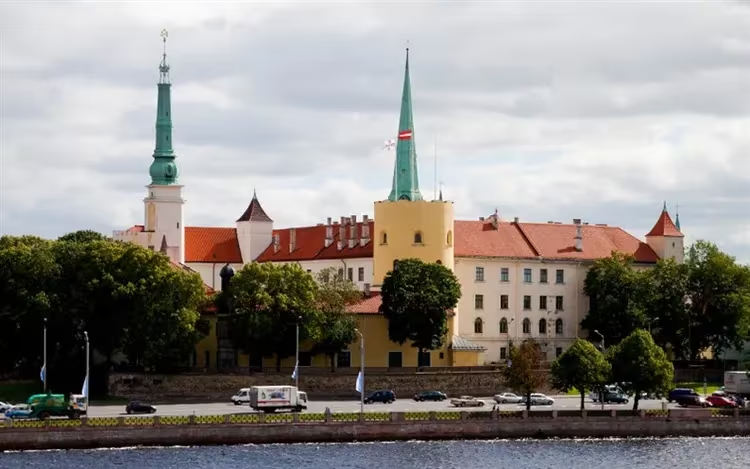
This ancient complex deserves to take its rightful place in the excursion program. Tourists will be amazed by its unique appearance and rich history that dates back several centuries. At one time, it was in his offices that the historic decisions of numerous “occupation” governments of the country were made.
Since each new owners of the castle adapted it to their needs, we can contemplate a rather interesting interpretation of its exterior and interior decoration. Today this building is the residence of the head of the Latvian state. But there was a place for several museum galleries.
Bar Black Magic
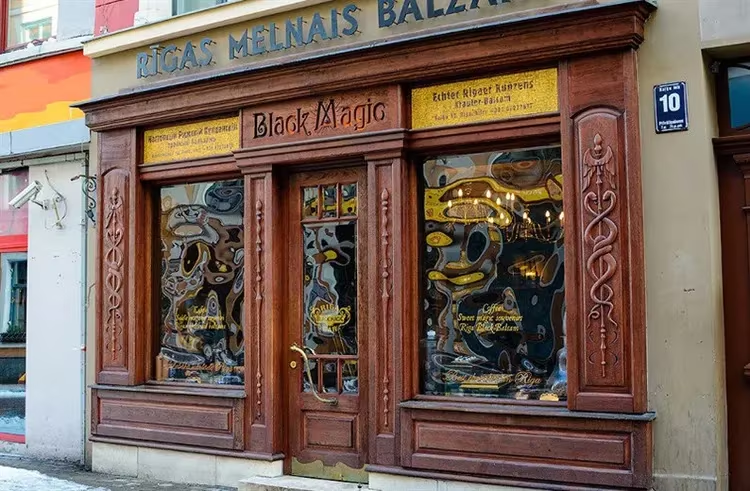
We advise you to finish the day program at the Black Magic bar on Kalku Street. It was here that the legendary Riga Balsam was invented, the author of which is considered to be the alchemist A.Kunze. By the way, this drink owes its popularity to Empress Catherine II, who not only appreciated its refined taste, but also made it possible to establish a full-fledged production of herbal tinctures.
Even today, the bar has a safe that holds the 24 herbs needed to create the drink. And for 20 euros, each visitor can see how it is actually created. The interior of the bar is also attractive – ancient lamps sway under the stone vaults, and the furniture is made exclusively of wood.