
15 main palaces of Istanbul – history, photo, description, map
One of the most populous cities in Europe, Istanbul embodies the former imperial grandeur of the Romans, Byzantines, Latins and Ottomans. Byzantium, Tsargrad, Constantinople – this was the name of the city in different eras. Each of them has left its own unique mark in the centuries-old architecture of buildings that amaze with their majestic beauty and intricacy. In general, the whole city is an open-air museum, the inspection of which is an exciting journey. The city is divided by the Golden Horn Bay into European and Asian parts. The unique palaces of Istanbul are the main objects of great interest to tourists.
Topkapy
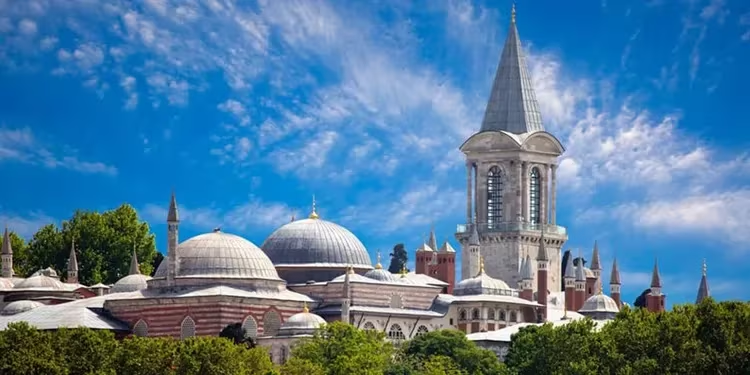
The large-scale Topkapi palace complex, erected during the reign of Sultan Mehmed II in 1479, became a symbol of the victory of the Ottomans who captured Constantinople. The former palace symbol of Byzantine power was demolished, like many other buildings. The name Topkapi hides the “cannon gate”: each departure of the Sultan was accompanied by a cannon shot. In fact, it was a mini-city located on an area of 700 thousand square meters. m with 4 separate courtyards with various office and residential buildings.
The external appearance of the luxurious palace buildings reflected a mixture of various architectural styles. For centuries, they have been subjected to spontaneous destruction as a result of earthquakes and fires. Each new reconstruction added new elements in the spirit of the time. Topkapi today is the world of the past life of 25 Turkish sultans within the museum. Upon entering the main “cannon gate”, you will see a magnificent fountain (1728).
The yards are connected by monumental gates, each of which is an architectural masterpiece. Luxurious cypress garden, prison tower, palace kitchens with a huge collection of porcelain utensils (7-19th century) make an indelible impression. The exposition of precious jewelry and jewelry cannot but delight. The caftans of the sultans, the clothes of the sultan's wives, prayer carpets and many other attributes of luxury are impressive.
Dolmahbahche
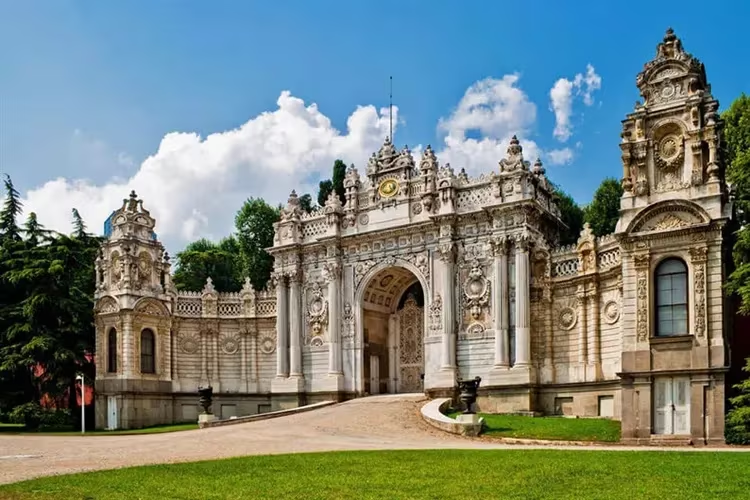
One of the most picturesque areas of the city of Beksiktas is decorated with a true architectural marvel – the Dolmabahce Palace. Built over 13 years for 5 million gold pounds, the architectural masterpiece became the record holder for the amount of gold (14 tons) and silver (40 tons) invested in its design. Until 1924, the palace was the residence of the sultans. From 1924 to 1938 it was used by Atatürk (the founder of the Republic of Turkey) as a summer residence where important political meetings were held.
A tour of the halls of Dolmahbahce is an immersion in the world of incredible oriental luxury and splendor of decoration. In the hall, a chandelier of extraordinary beauty and design strikes, in the exhibition hall there is a stunning collection of jewelry, porcelain and crystal, including the Crystal Staircase. In the most chic room – the hall of Sufer, a huge handmade Iranian carpet (9×10 m.), Lying on the floor, attracts attention. Of interest is the bear skin – a gift from the Russian Emperor Nicholas II.
56 royal columns support the ceiling of the hall, to which is attached a unique massive chandelier – a gift from Queen Victoria. There are 40 paintings by Aivazovsky, whose painting was appreciated by Sultan Abdul-Aziz. (The artist, who received the diamond Order of Osman from the hands of the Sultan, later threw the award into the sea as a sign of protest against the Armenian genocide) The design of the harem and the bedroom of Abdul-Aziz is impressive.
The star
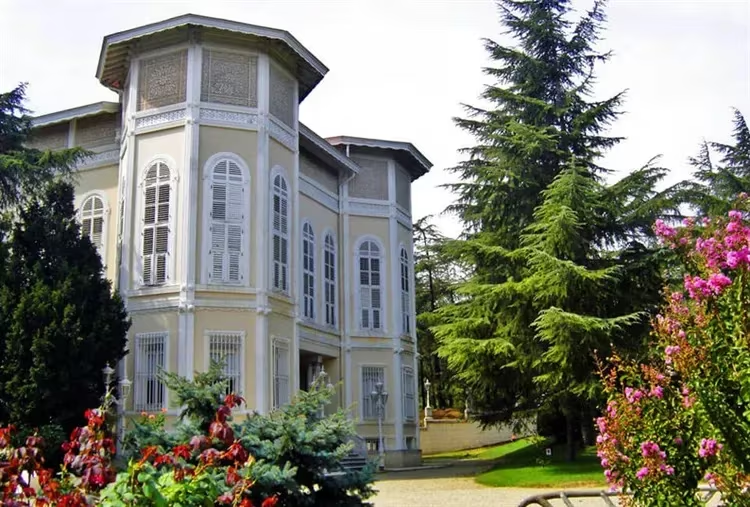
The favorite place for walks of residents and tourists is the Yildiz park and palace complex, located on the Bosphorus embankment. Tropical flora, exotic flowers, wonderful alleys, palaces and pavilions delight visitors. The pearl of the complex is the eponymous Yildiz Palace (Star) – the pride and one of the visiting cards of the city. Separated from the rest of the park by an ornate fence, the palace amazes with its brilliant beauty. The synthesis of several architectural styles made this magnificent building a real masterpiece of palace construction.
The interior decoration of the rooms and halls is just as delightful as the exterior design. The Ceremonial Hall is distinguished by a special luxurious beauty of the arrangement. The shining stars of the ceiling, the floor, covered with an exclusive carpet woven from silk threads, arouse the admiration of visitors. It is impossible not to admire the Mother-of-Pearl Salon, the magnificent door of which is decorated with mother-of-pearl patterns. Yildiz is not divided into male and female parts, like other Sultan's residences.
View prices for tours to Istanbul
Maslak
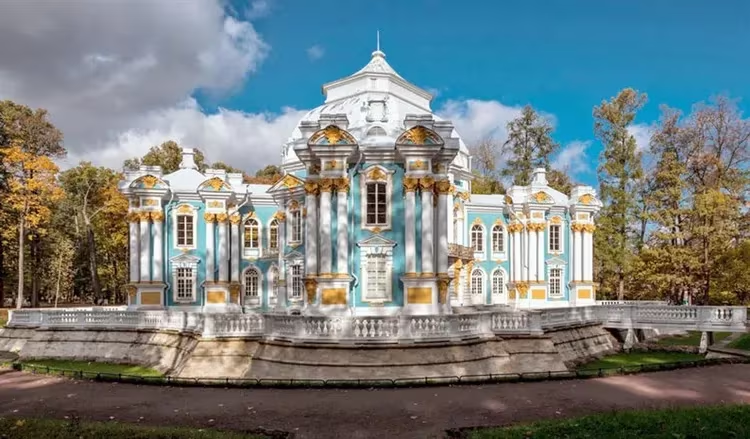
The unique architectural complex of palace pavilions Maslak was erected on the banks of the Bosphorus at the end of the 19th century. Until now, only 4 pavilions (the name of the mansions) have survived, captivating the eye with the Ottoman style of architecture and decor. They are located in a large forest park, the former hunting residence of the Ottoman sultans.
Qasr Humayun's Palace – a 2-storey building with an attic and a balcony impresses with its appearance. The interior decoration cannot but delight: numerous frescoes adorn the walls and ceilings of all rooms. Here was the office of the Sultan, his sleeping quarters. Today it is a museum, visiting which you can feel the spirit of past eras. Ceadir Köshku (Tent Pavilion) at the edge of the forest park, made of wood, is a 2-storey 8-coal mansion.
Its architecture is an example of Ottoman wooden architecture. Pashalar Dairesi (Generals' Quarters) is a 1-storey building, noteworthy for its Turkish baths with richly decorated interiors. Mabein-i Humayun (Private quarters) served as a summer residence.
Chiragan
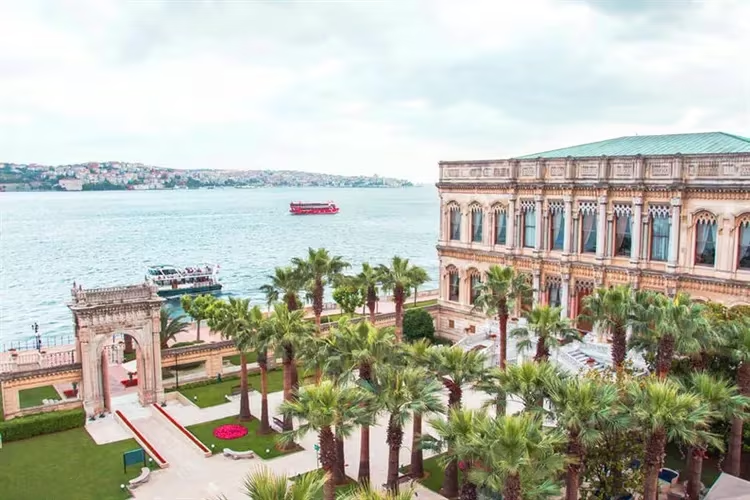
On the European side of the Bosphorus (Beshiktash district) there is a luxurious grandiose building – the fashionable 5-star hotel “Chiragan Palace Kempinski” or Chiragan (torch) Saray. It offers guests the most expensive apartments in the world ($15,000). Each room is a royal chamber of the 21st century. The hotel-palace impresses with the level of service and the range of services, the beauty of the design, the uniqueness of the design. But the history of the creation of Chiragan is especially interesting. During the reign of Abdul-Aziz, the palace of his dreams was built (1876).
The architect Balyan, who visited the Arab countries and Spain, got acquainted with the Moorish style of architecture and embodied it in the project of a magnificent palace. It was connected by a marble bridge with another palace – Yildiz. Chiragan became for a short time the summer residence of Abdul-Aziz: soon the Sultan was found dead. In 1910, the palace was almost destroyed by a severe fire. And only in 1991 the skeleton of the building was restored, turning it into an elite hotel and an architectural landmark.
Beylerbey
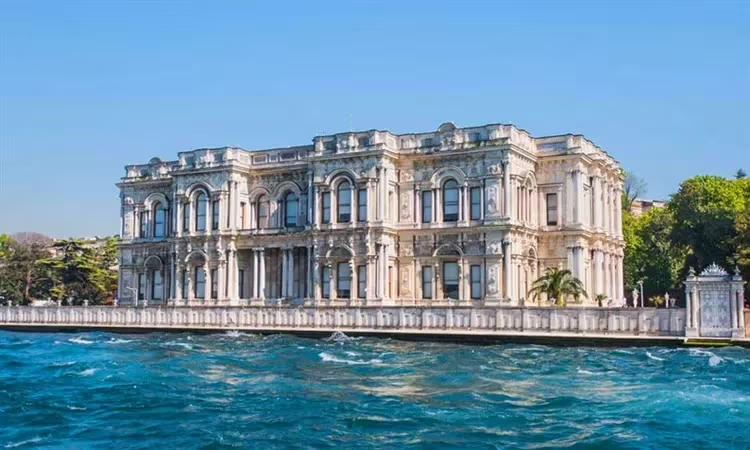
A real miracle of classical baroque architecture – Beylerbey Palace is located on the Asian side of the Bosphorus in the district of the same name. An unusually picturesque area with blooming magnolias, chestnuts, laurels, flower lawns surrounds the white marble building of the palace. Above all this beauty, an air pedestrian bridge to the Bosphorus is laid.
Among the greenery of the park, the blue mirror of the large pool shines, graceful sculptures are installed in different corners. A magnificent neo-baroque building was erected under Abdul-Aziz (1861-1865) as a summer residence of the Sultan, where meetings with foreign guests took place. A long stone tunnel with a vaulted ceiling leads to the palace. The interior design of 6 ceremonial halls and 26 rooms features European and Oriental décor.
It is impossible not to admire the luxurious Bohemian chandeliers, huge handmade carpets, beautiful floor vases, and original clocks. In some rooms, the floor is covered with Egyptian reed mats. In one of the main halls there is a chic fountain that acts as an air conditioner.
Кючюксу
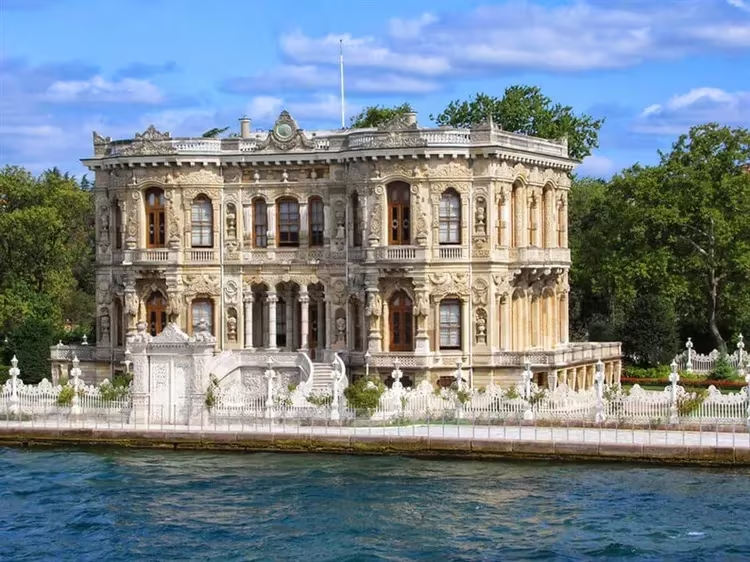
On the banks of the small river Goksu, which flows into the Bosphorus, there is a small palace of Gyoksa Kasra (Palace of Heavenly Water). It can be figuratively called the “younger brother” of Dolmahbakhce – both palaces were built according to the project of Turkish Armenian architects Balyans. Common features are guessed in the appearance of Kyuchuksu, ranging from the architectural style to small details of decor. In general, the castle is a striking example of Ottoman baroque with elements of rococo, built in 1856-57. The facade of the 3-storey building (basement, 1st and 2nd floors) delights with the beauty of the exterior decoration – ornate wooden carvings.
The surrounding garden features a baroque fountain and pool. The interior of the castle is also beautiful: a baroque staircase, a rare table, Iranian, Persian and Turkish carpets, huge mirrors in picturesque frames. Massive Czech glass chandeliers reflected in the mirrors and a gold-painted ceiling create a sparkling backdrop. Priceless masterpieces by Aivazovsky adorn the walls of the halls. A unique exhibit of the museum is an unusually beautiful table made of wood by the hands of the Sultan without a single nail.
Tecfur
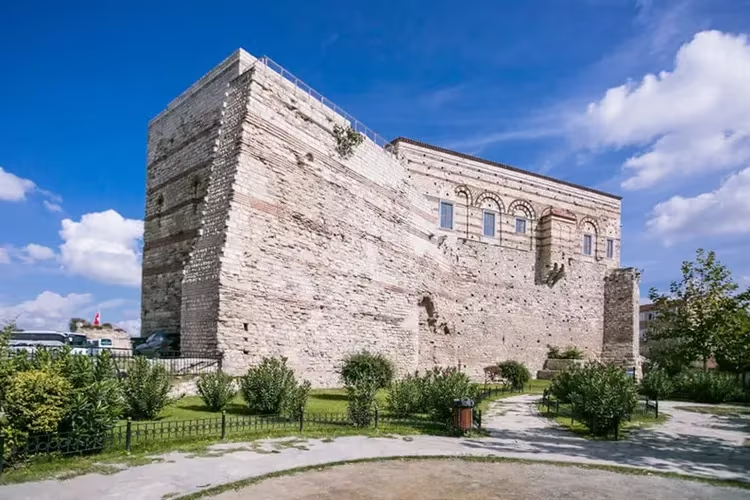
Among the architectural monuments of the Byzantine era in Istanbul is the Tekfur Palace. In fact, these are just the remains of the once grandiose complex of administrative buildings of the 13th century – Blachernae. Of these, Tekfur is the best preserved, the architecture of which gives an idea of the Byzantine style of construction. After the conquest of Constantinople by the Ottomans, they plundered this palace, giving it the name Tekfur (king). It was in it that the residence of the emperor was located.
As a sign of disdain for the defeated emperor, a menagerie was set up in his apartments. African predators (lions, cheetahs, hyenas) occupied the imperial halls. Then there were workshops for the manufacture of pottery, a shelter for the homeless. Today, the walls remain of the once magnificent building of white and red brick. High arched openings, skillfully lined architraves, intricate ornaments testify that Tekfur was an architectural masterpiece.
Ihlamur
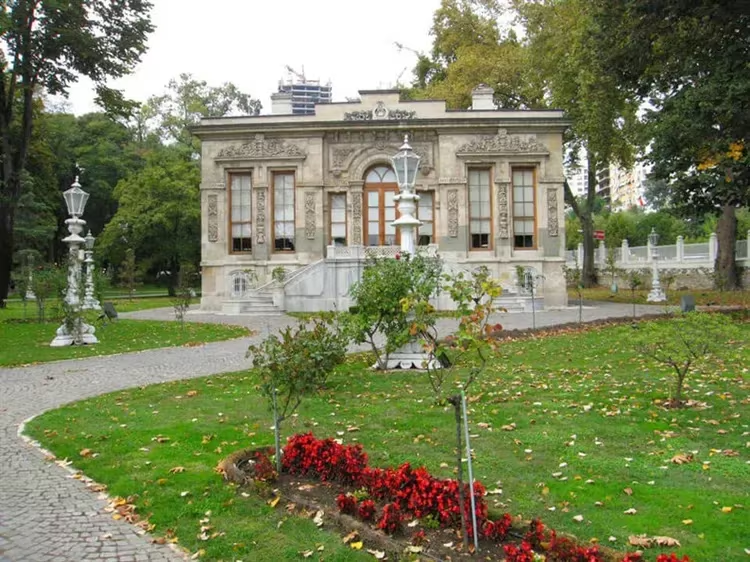
In a picturesque park with century-old lindens, there are two beautiful buildings – the Yhlamur palace complex (Palace under lindens). They were built in the middle of the 19th century as the residence of the Sultan Abdulmecid according to the project of N. Balyan – the author of Dolmahbakhche. Merasim pavilion served as a venue for various ceremonial meetings of high-ranking guests from Europe. The 1-story building rests on a high plinth of white sandstone and marble. The European style of architecture in its design is combined with the oriental splendor of decorations on the facade.
European motifs also prevail in the interior decoration, except for oriental carpets. The second pavilion Mayet, consisting of 4 rooms, was occupied by the Sultan with his concubines and courtiers. Mayet's interiors are decorated in Turkish style with typical oriental luxury. Now both palaces, after a large-scale reconstruction of the 80s, are museums with interesting expositions.
Palace of Ibrahim Pasha
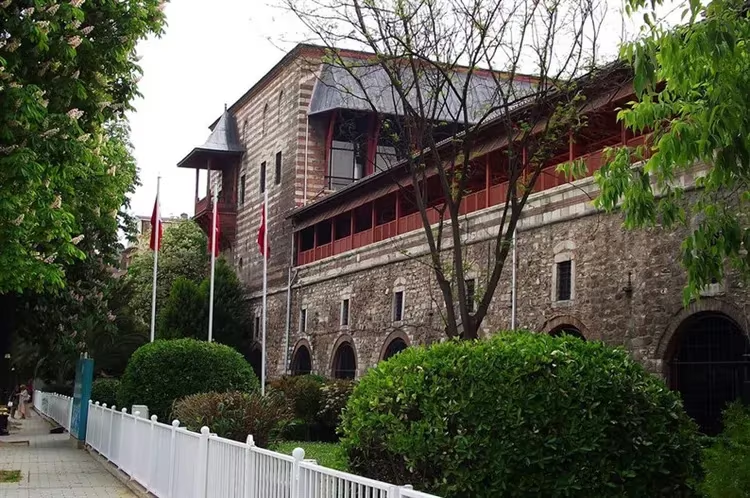
Ibrahim Pasha's palace is located on the central square of Sultanahmet – a symbol of recognition and respect by the Sultan of his colleague. The grandiose building of Ottoman architecture was presented by Suleiman the Magnificent to the vizier and friend Ibrahim Pasha as a token of gratitude for his devoted public service.
The colossal building was erected according to the design of the famous architect Sinan (Mikhrinah Sultan Mosque) at the beginning of the 16th century. Suleiman the Magnificent, as a sign of special respect, intermarried with a friend, giving his sister Hatice to him as his wife, presenting a magnificent palace-residence as a gift.
Various social events and solemn ceremonies began to be held here. Today (since 1938) the palace of Ibrahim Pasha has been turned into the Museum of Turkish and Islamic Art. Museum exhibits are so unique and valuable that they have been awarded prizes by the European Council and UNESCO. Ancient manuscripts (8-19th century) gold, platinum, silver jewelry, rare precious stones, ancient ceramics, etc. The flow of tourists here is inexhaustible.
Adile Sultan
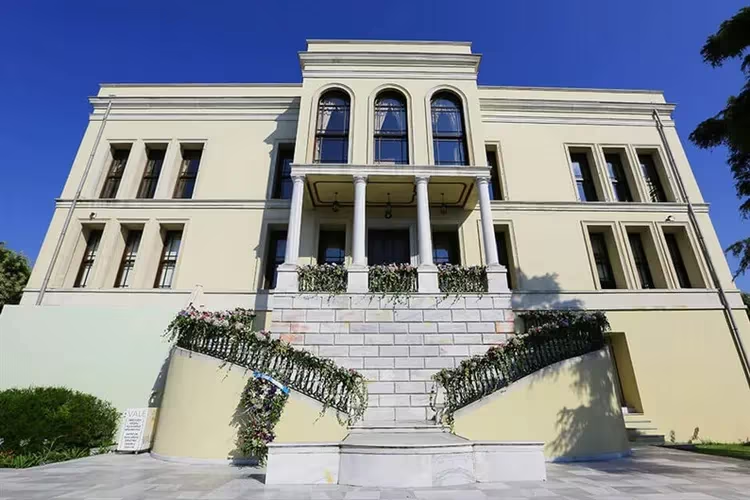
In the Asian region of Kandilli, there is another architectural brainchild from a series of projects by the Balanyanov brothers – the Adile Sultan Palace. It was built for the beloved sister of Sultan Abdul-Aziz on the site of the former pavilion, presented to Adila by his elder brother Abdul-Mejid. The new palace surpassed the former pavilion in beauty of appearance and scale (area 5625 sq. m, more than 60 rooms). The Ottoman princess Adile, a recognized poetess, the wife of the vizier Mehmed Ali Pasha, enjoyed a special location in the family. Only she had her own residence, which she bequeathed to donate to the lyceum for girls.
After a fire in 1986, the building was badly damaged, and was restored only in 2006 with the financial support of the billionaire philanthropist Sabanji and the Lyceum Alumni Foundation. Now in Adil-Sultan there is a cultural and educational center named after. Sabanci, conferences, seminars, solemn events are held. Well-known movie stars celebrate their marriage here, films are shot (“Ezel”, “Kyrymly”, “Syla”).
Palace of Esma Sultan
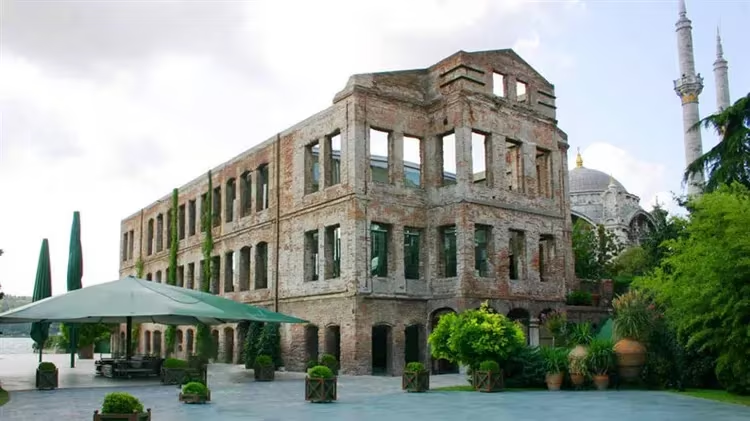
Each Sultan's palace in Istanbul is covered with various rumors and legends about their former owners. The palace of Esma Sultan, one of the 9 daughters of Abdul-Hamid I Esma, did not escape such a fate. The history of this 3-storey building still excites Istanbulites and tourists. The image of a charming sultana is captured in feature films, in literature. She is presented as a very emancipated, extravagant woman, free from prejudice.
At the end of the 18th century a 3-storey palace was added to its residences, the architecture of which embodied the “golden age” of Istanbul. Today, the appearance of the building has been completely restored according to the original design. The interior is made of steel and glass in a modern style. The former residence of Esma, the property of the Marmara hotel chain, serves as a venue for solemn events and official political meetings in the famous district of the city of Besiktas.
Mirror Kavak
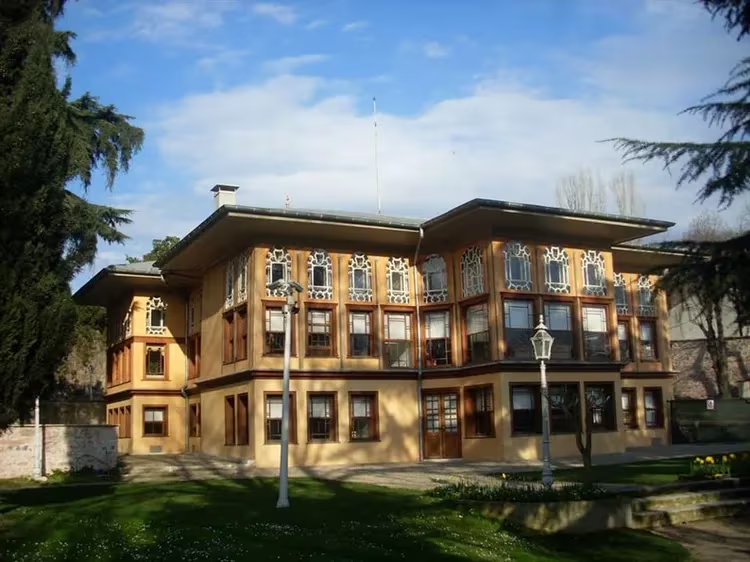
The palace building of Aynaly Kavak reminds of the former grandeur and extraordinary luxury of the life of the Ottoman sultans today. It is located on the shores of the Golden Horn Bay (Haskey quarter). This is the only pavilion left from the former summer residence of the Ottoman sultans – a complex of palace buildings (17-19 centuries) Ainali Kavak. The luxurious flower garden, laid out in front of the palace, harmonizes with its beauty with a wonderful monument of classical Ottoman architecture.
In 1985, a museum was opened here. Tall Venetian mirrors decorating the halls assigned another name to the former name of Terzane – Aynaly Kavak (mirror poplars). National musical instruments are presented in the basement of the palace. This is a tribute to the memory of Selim III, a talented composer-sultan who made a great contribution to Turkish musical culture.
Blachernae Palace
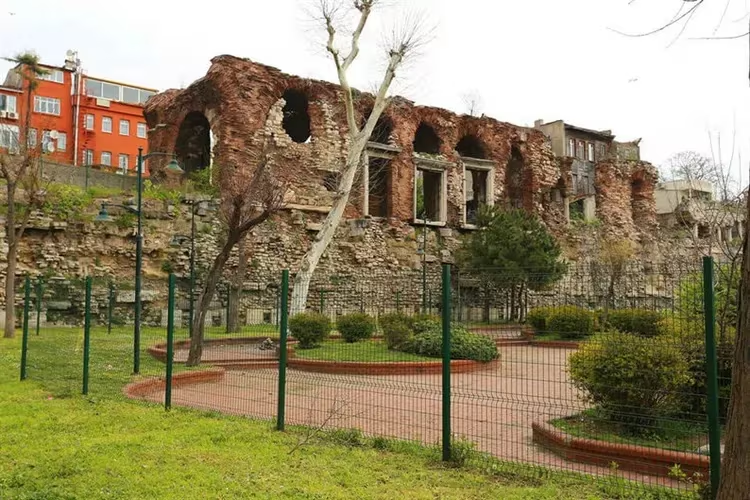
The Blachernae Palace, a unique monument of the Byzantine era, is located in the quarter of the same name near the Golden Horn Bay. Erected under the emperor Anastas (491-518), it was used as a country residence. But later it began to serve as a place of permanent residence of the Byzantine rulers in it, so every year the territory of the residence expanded and strengthened. More and more new buildings for various purposes appeared, occupying a whole block called the Golden-Domed Palace.
Everyone who came here for the first time was amazed at the unheard-of luxury, wealth and magnificence of everything that he saw here. The crusaders, who arrived in Blachernae on an aggressive visit in 1204, were amazed by the shining gold utensils, scatterings of jewelry, magnificent clothes, and marble slabs.
After the fall of Byzantium, the once prosperous region fell into complete disrepair. According to the remaining ruins, lost today among residential buildings, it is difficult to judge the former grandeur of the Blachernae Palace. But visiting these places awakens the imagination, resurrecting majestic pages of imperial history before the mind's eye.
Bucoleon
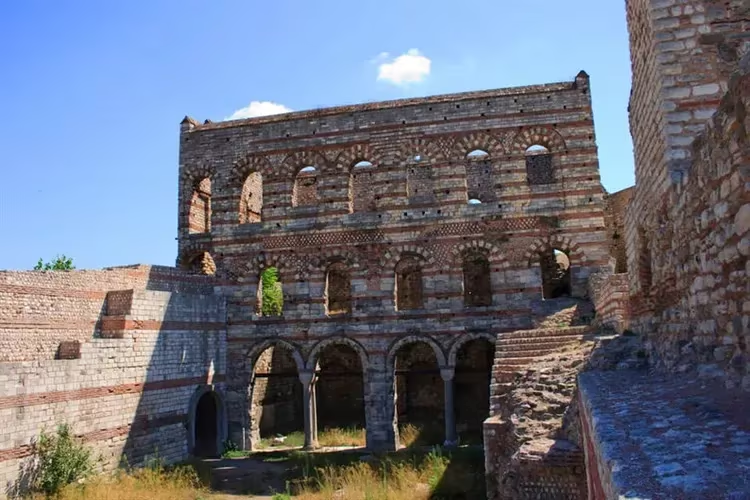
On the shores of the Sea of Marmara in the Sultanahmet region, on a low hill overgrown with climbing plants, one can see another reminder of the Byzantine period in Turkey. This is the surviving part of the wall, left over from the Bukoleon (bull and lion) palace built under Emperor Theodosius II (5th century).
Historians believe that this name was given to the palace by the sculptures of a bull and a lion erected on the shore. Today they have found their place in the Historical City Museum. During the reign of Emperor Theophon, a terrace was equipped and a summer playground was decorated. After the attack of the crusaders, Boukoleon was plundered, and after the victory over them, the palace was forgotten, and it began to collapse.
During the laying of the railway, the castle structures were partially dismantled, much was stolen by local residents. Today, only the remains of a wall with window openings are evidence of the Byzantine era in Istanbul. Tourists usually come here as part of an organized group after visiting Beylerbey Castle.