
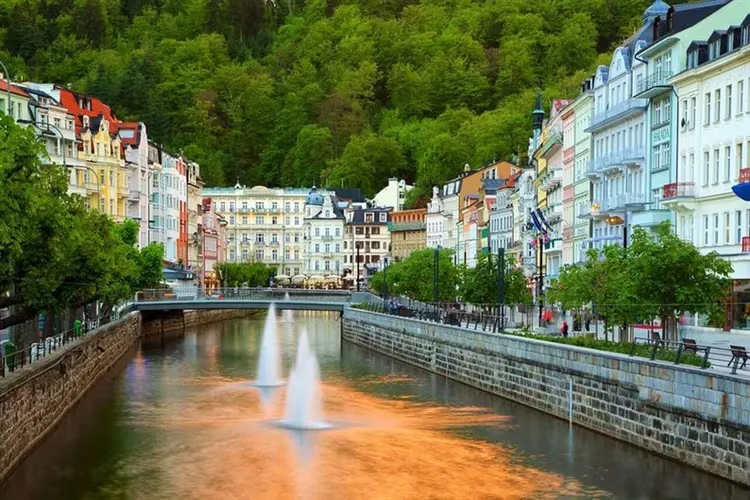
17 best colonnades and springs of Karlovy Vary – photo, description, map
An old legend says that the Czech king Charles loved to hunt in these places. Once he wounded a deer, which, having gathered all his strength, jumped from a cliff into a hot spring. The animal instantly got rid of the wounds and ran away. Another legend claims that the king himself accidentally stepped with his injured foot into an amazing hot water stream. Carl was surprised to see that his leg no longer hurt. Next to the stream, he ordered the construction of a hunting castle. This event served as the foundation of the city, which was named after the famous king. The second part of the name – Vary – says that the water in the springs is hot, and at first people literally “boiled” in it. Only in 1522, a doctor named Payen suggested not only taking baths, but also drinking medicinal water. Over time, the colonnades and springs of Karlovy Vary gained popularity among wealthy and famous people. Representatives of the royal and royal families, many aristocrats were treated there. In Russia, the city gained fame after Peter I came to these places twice.
mill colonnade
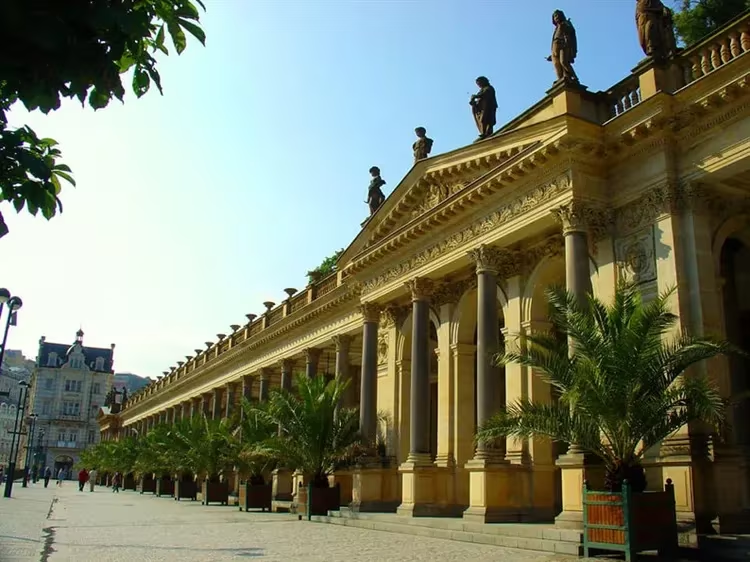
In this place, in 1792-1973, a wooden building was erected for the first time in Karlovy Vary. Visitors could take refuge here from bad weather and take exercise, which is necessary after drinking the healing water. That is why the popularity of the keys under the structure has increased dramatically. A few years later, in 1811, the Dresden architect Gisel built a new Empire-style promenade, and in 1811 it was replaced by a pseudo-Renaissance stone colonnade. The author of the project was the architect who changed the face of the city – Josef Zitek.
In early June 1811, it was solemnly opened to visitors. Twenty years later, part of Bernard's rock was demolished and the northern pavilion was built on this site. This is the largest colonnade, which contains five springs – Mill, Mermaid, Prince Wenceslas, Libuše and Rocky. The attic is decorated with sandstone sculptures. These are symbolic images of the months. Alfred Schreiber and Karl Wilfert worked on the sculptures. A bright accent is the orchestra shell, which is overshadowed by a bas-relief by Vaclav Lokvents.
Забронируйте индивидуальный трансфер от аэропорта до вашего отеля за 1 900 RUB
garden colonnade
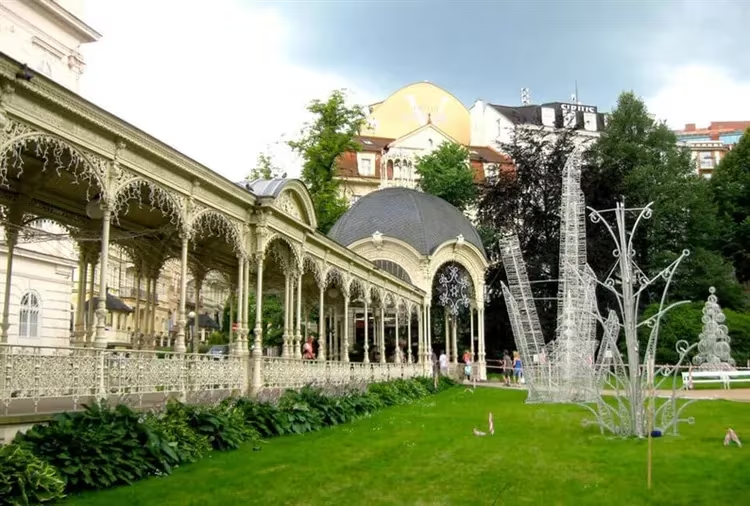
Once there was a concert restaurant built in 1880-1881. It was created from cast iron elements that were cast at the Blanensky metallurgical plant. The structure was built according to the design of the architects Felner and Gelmer by the builder Waldert. The complex was inaugurated in early June 1881. Over time, the pavilion fell into disrepair, and it, along with part of the veranda, was demolished in 1965.
Until our time, only the eastern part, which is called the Garden Colonnade, has survived. This graceful building was reconstructed in 200-2002. On the one hand, the Serpent Spring was brought into it, and on the other, they made a transition to the Garden Spring, which is located in the basement of the Military Sanatorium.
Karlovy Vary is recommended for people suffering from diseases of the gastrointestinal tract. For each patient, doctors create an individual schedule according to which medicinal water should be taken. It must be consumed fresh and exactly the temperature that the water has when it comes to the surface. To comply with these conditions, special mugs are sold in the city, a characteristic feature of which is a narrow neck, so the water temperature remains longer. They say that water poured into a bottle loses some of its healing properties after a while.
Market Colonnade
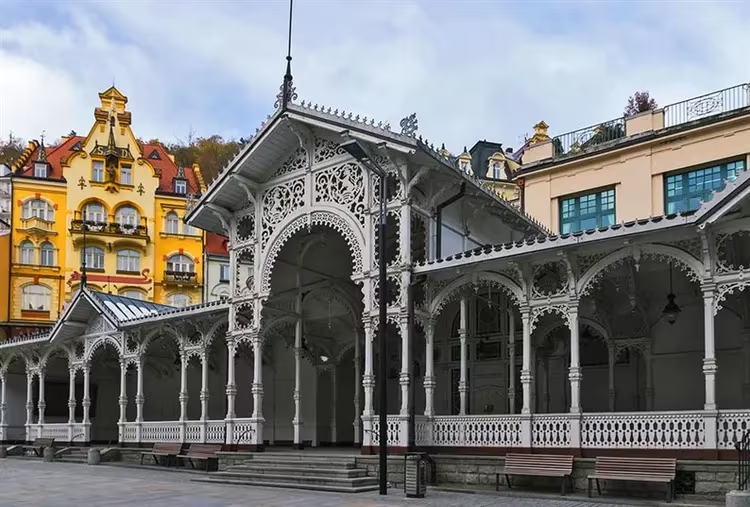
Here, in the heart of the city, once stood an old bathhouse. After the healing waters helped Charles IV to recover, the place gained popularity. A small gazebo and a walking veranda were built over the springs. In 1883, an elegant Swiss-style carved promenade was built on the site of the town hall. At the beginning of the 20th century, it was brought to the Market Spring. Now visitors can use the water from three springs at once – the Market, the Lower Castle and the Charles IV spring. The openwork structure is one of the main attractions of the city.
Drinking mineral water is recommended under medical supervision. Of course, a tourist who came to the city for a few days and tried a little from each source will not cause harm to health. But if within 2-3 weeks you thoughtlessly use mineral water from one spring, then from another, you can worsen your well-being. It should be remembered that not only the temperature differs, but also the composition of the water, and all elements have their effect on the body. Therefore, an obligatory condition for treatment is the consultation of a doctor – a specialist in balneology.
castle colonnade
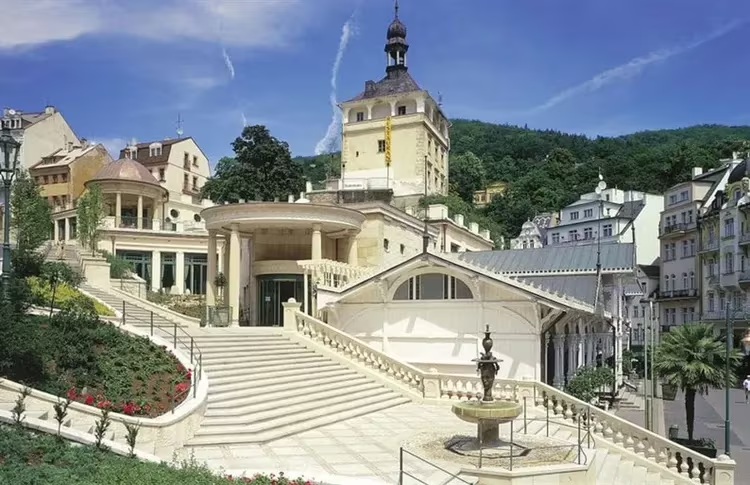
In 1769, for the first time, they were able to catch the famous Castle Spring. The famous doctor Becher proved the healing properties of water. A gazebo was built over the key in 1797, and in 1830 it was replaced by a promenade designed by Josef Esch. After 80 years, a new colonnade was built. Its author was the architect Johann Friedrich Oman. It was supposed to connect the Castle Spring and the Market Colonnade, turning them into a single space. This building was decorated with a bas-relief in the Art Nouveau style.
Over time, the building fell into disrepair, and in 2000 it was rebuilt. At this place, a complex hospital “Castle Lazne” was erected. The project was created by the architect Mikolash. Visiting is available only to customers of the institution. Spas include the Lower and Upper castle springs.
Lower Castle Spring
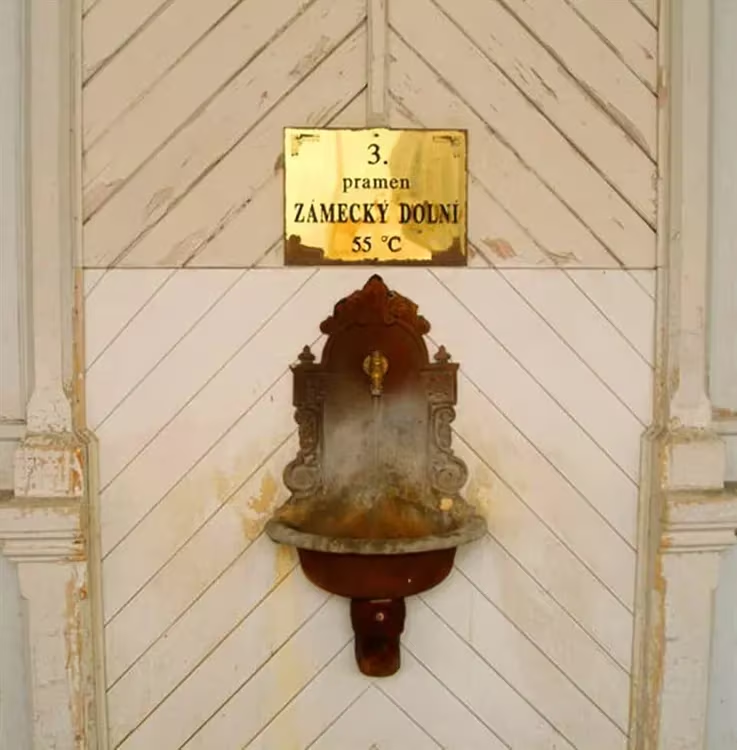
In the historical center of the city on the left bank of the Tepla River, the lower Castle Spring is open to the public. The water temperature there is 55.6 degrees, the flow rate is 2.5 liters per minute. Saturation with carbon dioxide – 600 mg / l. It was first captured in 1769. In 1784 there was a very cold winter and the townspeople were left without water. It was from there that it was delivered to public fountains.
At the same time, doctor David Becher, after analyzing the water, found that the composition was the same as in the Geyser. The first gazebo was erected in 1797, but 12 years later the source went underground. Again, he appeared on the surface only in 1823. The first colonnade was created there in 1830, and after 80 years it was rebuilt in the Art Nouveau style. In this form, it existed for about 100 years, later it was converted into the Castle Lane, and the source was taken to the Market Colonnade.
Upper Castle Spring
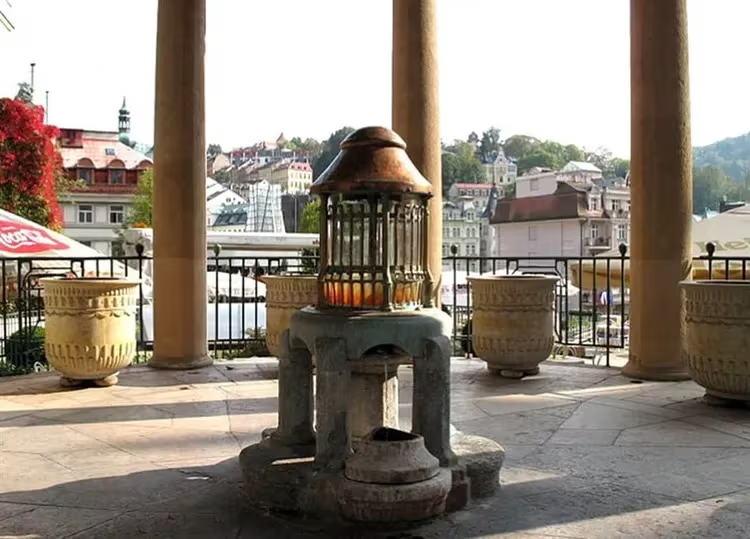
The water has the same origin as in the Lower Castle Spring, just the stream is divided into two parts and is fed into two different vases. But there are also some differences. The upper spring is located higher above sea level, therefore it differs in temperature (49.8 degrees). And also contains a little more carbon dioxide – 763 mg / l. It is overshadowed by a magnificent pavilion built in the Art Nouveau style. The water content is rather weak – only 1.5 liters per minute. The spring is usually covered with glass, and only clients of the Castle Lane have access to it.
Serpent Spring
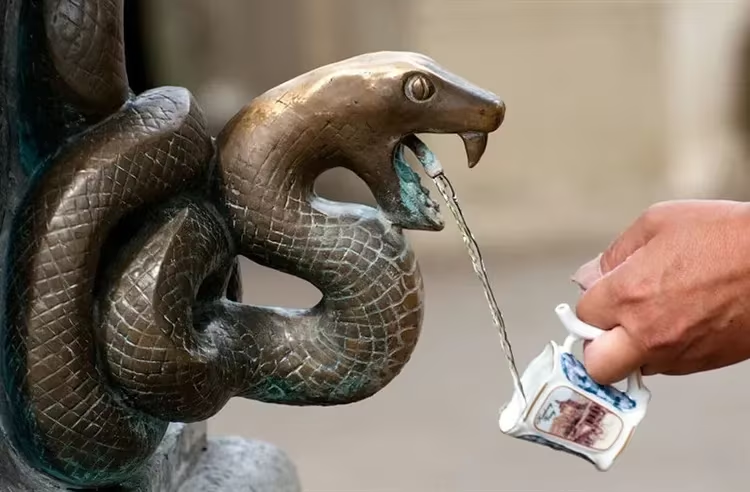
It can be found in the resort area of the city, in the Garden Colonnade. It was brought out recently, in 2001, this is the most recent source. It gives 1.8 liters per minute, the water temperature is 30 degrees. Carbon dioxide is 1.6 g/l. The source received such an original name due to the snakes, which were found in large numbers not far from the colonnades. This is also reflected in the design – a low column is decorated with the image of a snake with water flowing from its head. This building is crowned with a decorative vase, the handles of which are made in the form of snakes. You can get there on foot in just 15 minutes if you walk from the Geyser.
mill source
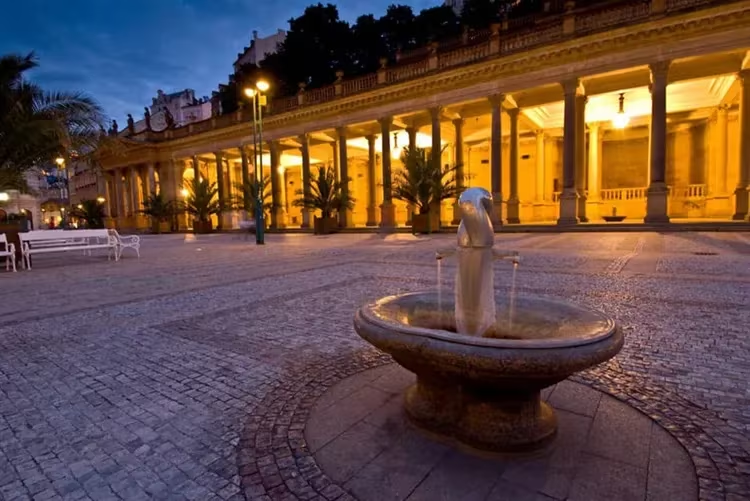
Residents of the city knew about it in the XVI century. It got its name from a mill that operated on the Teplya River until the end of the 18th century. The healing properties of water have been known for a long time, and already in 1705, doctors prescribed it to their patients for treatment. Its popularity was so wide that even a special Mill Hospital built in the Baroque style was erected. This happened in 1711. Water was not only drunk, but also used for healing baths.
In 1827, the Mill embankment was improved. The area has changed beyond recognition. The colonnade of the New Spring was completed, the hospital was demolished. Instead, a new beautiful pavilion was erected. But he did not stay long either. The project of the architect Zitek provided for the construction of the Mill Colonnade, which still pleases the eyes of residents and visitors of the city.
The water produced here was so popular all over the world due to its medicinal properties that it was even bottled and shipped to other countries. Its temperature is 56.6 degrees, water content – 4.5 liters per minute, carbon dioxide saturation – 0.6 g / l. The distance from the Geyser is half a kilometer, the road will take about 10 minutes on foot.
Dorotka spring
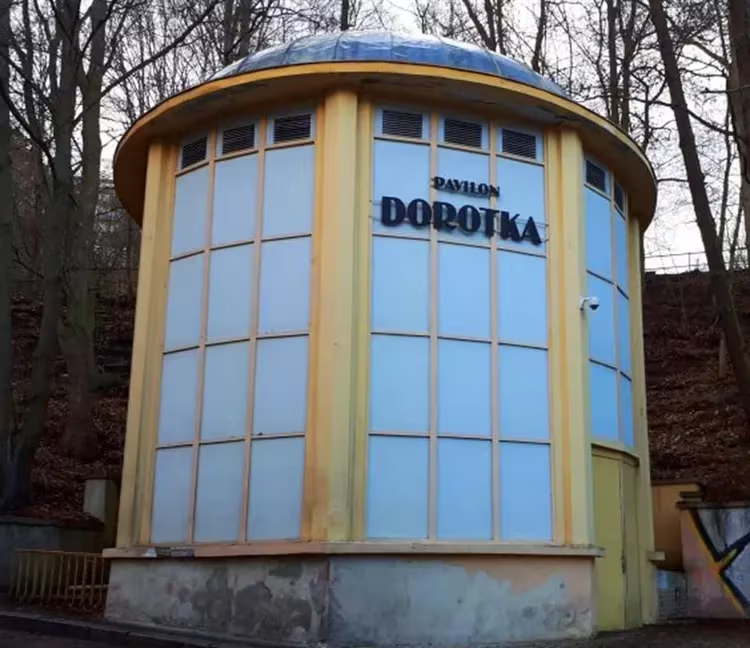
In the southern part of the city, on a slope rising above the right bank of the Teplá, the Dorotka spring, discovered in the 18th century, comes to the surface. A pavilion was erected above it. It has not been accessible to visitors since 2012, it is used only for observation purposes. This is one of the stations that is designed to track the amount of carbon dioxide in the water.
In one minute, Dorotka produces only half a liter of water and 45 liters of gas. A small stream of low-mineralized water flows into the Teplá near the Charles IV bridge. Previously, he was taken to the arbor of Dorothea, built in the Empire style, and only then he was brought into a small stone pavilion. From the city center on foot it can be reached in half an hour.
Spring of Charles IV
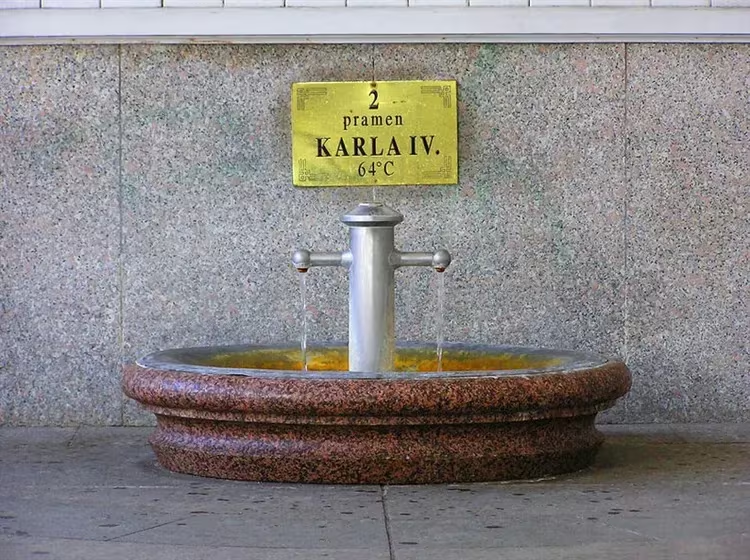
Even in the Middle Ages, healing water came to the surface of the earth near the Market Square. In those days, this spring was called Obzhora (Zhrout). There is an old legend that says that it was there that Emperor Charles IV cured his feet, affected by the disease. This event was immortalized by the blacksmith Adolf Tserkel in the bas-relief “The discovery of hot springs by Charles IV.” In 1883, a Swiss-style wooden colonnade was built over the water outlet to the surface. Its authors were architects from Vienna Felner and Gelmer.
The water there is quite hot – 64 degrees. 4.8 liters per minute. It is rich in carbon dioxide — 250-450 mg/l. Located in the historical center of the city. The road from the Geyser takes only five minutes on foot.
Spring of Prince Wenceslas
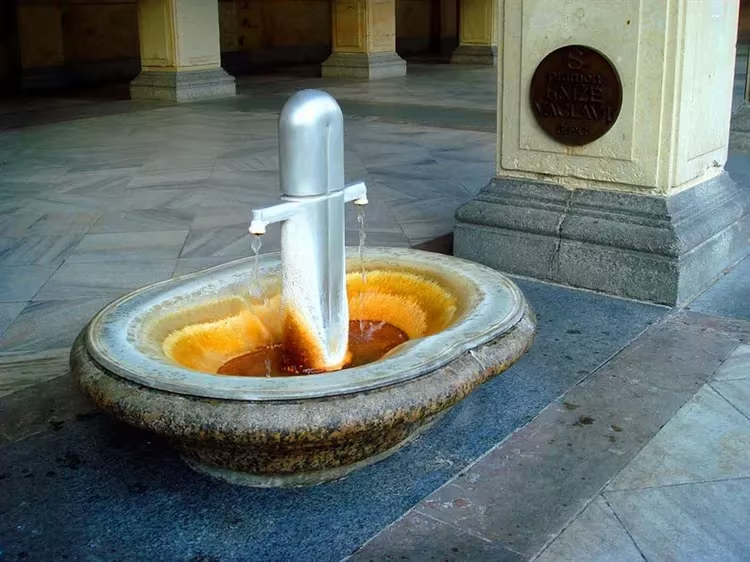
For the first time he revealed himself to people in 1784, when he fought his way out from under the rock of Bernard, with which his first name was associated. Then a powerful fountain of water rose to 4 meters. It was from here that water was extracted, from which the famous mineral salts were then produced. In 1870, the architect Zitek proposed a project for a colonnade, which was later built over it.
The stream of water was divided into two parts and brought into different vases. In one of them, the flow rate is 4 liters per minute, the temperature is 65.6 degrees. The second gives half as much water, the temperature is -64.3 degrees. One liter contains 0.5 grams of carbon dioxide. It is located in the resort area of the city, half a kilometer from the Geyser.
Libuse spring
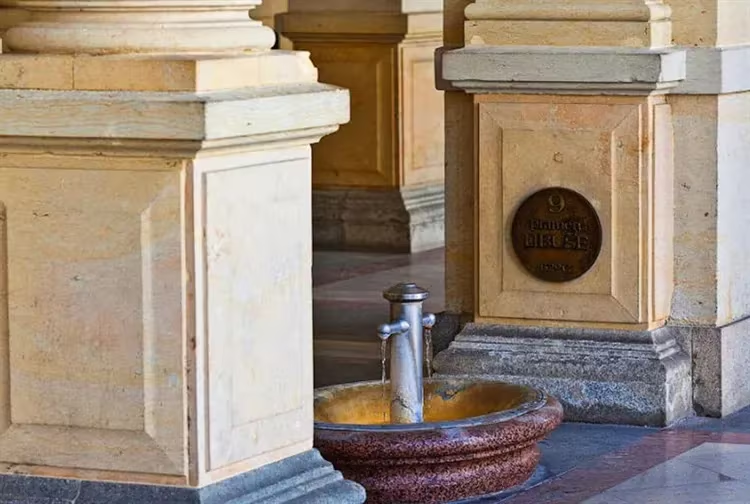
When a new mill colonnade designed by the architect Zitek was being built, another water outlet was discovered. Four small sources combined into one stream and made their way out in place of the orchestral shell. At first it was called “Elizabeth's Rose Spring”. Only in the middle of the 20th century, in 1947, did it get its modern name. Its successful location in the largest colonnade has brought fame to everyone who comes to the resort. Its water content is from 3 to 5 liters per minute, the temperature is 62 degrees. One liter contains 0.55 grams of carbon dioxide.
Source Mermaid
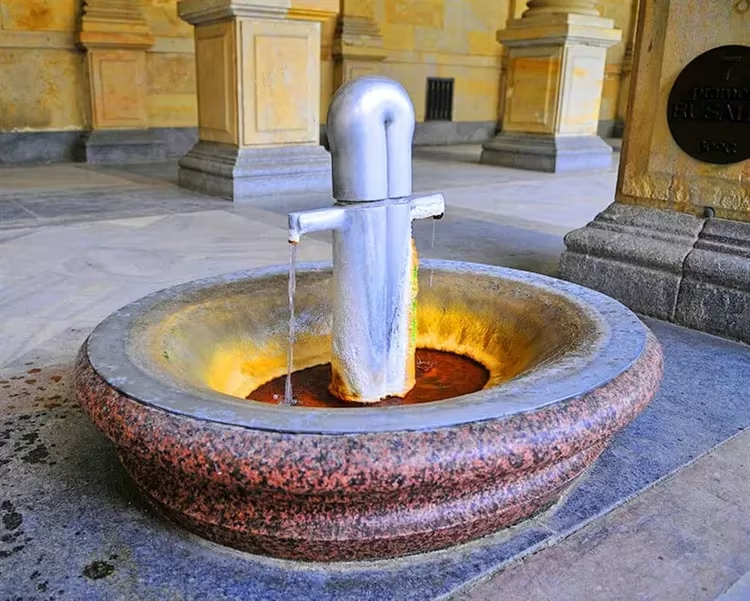
It was known as early as the 16th century, but its popularity especially grew in the middle of the 18th century, at the same time the name “New Source” took root. It was located next to the Mill Hospital and was originally located under a simple wooden canopy. Later, at the end of the 18th century, a place for walking was built after taking the healing water. Even bad weather now could not interfere with the healing process. A reception was also organized there with doctors who prescribed water treatment to patients.
At the beginning of the 19th century, this part of the resort was the most popular. In 1811, the former building was demolished, and a new colonnade was built over the outlet of water to the surface, which stood for 60 years. Subsequently, a stone promenade was erected in its place. The water here has a temperature of 60.2 degrees, flows from 4 to 7 liters per minute, and one liter contains 600 mg of carbon dioxide. The road from the Geyser takes about 10 minutes.
Stepanka spring
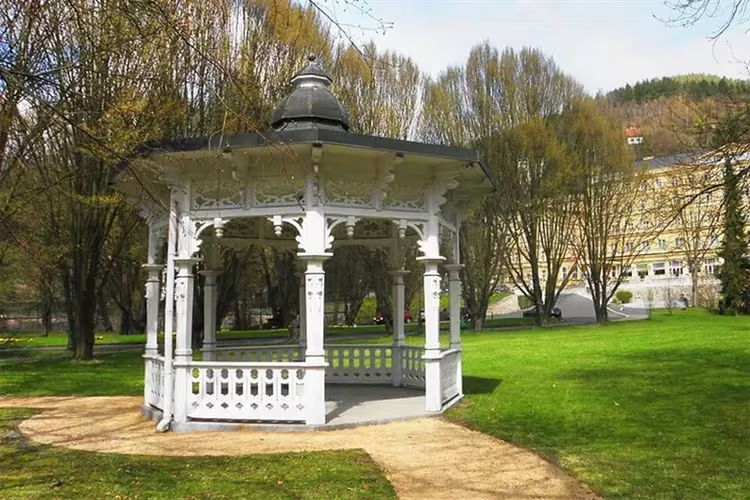
The Richmond Hotel is located on the southern outskirts of the city. In the park in front of it, you can find a cozy octagonal wooden gazebo by Alois Klein, into which the fourteenth mineral spring is led. It was known as early as the 18th century, and was only caught in 1884. The name of this spring was in honor of Stephanie, the Austrian Archduchess. The water was immediately recognized as curative due to its ferruginous composition and acidic properties. But people did not have long to use this opportunity. The source went underground at the beginning of the 20th century. They searched for it for almost a hundred years and were able to catch it again only in 1997. At the same time, they erected a beautiful gazebo in the Swiss style.
You can draw 2.5 liters of cool water per minute (temperature is only 13 degrees). It contains more than 1.2 grams of carbon dioxide per liter. The water in this spring is rich in iron ions, which is why it is popular with patients diagnosed with anemia. One and a half kilometers separate it from the Geyser, this is half an hour of a pleasant walk through the old resort town. Stepanka has not yet been registered as a natural healing resource.
Source Freedom
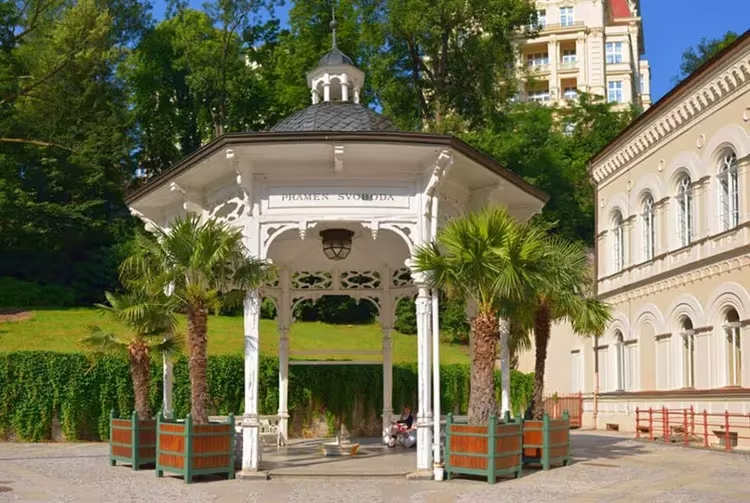
This is a relatively new water outlet to the surface. It was discovered in the sixties of the XIX century. At that time, the Spa Lazne III was being built, and when the foundation was laid, a trickle of water emerged. The source was brought out between two hospitals – New and St. Bernard's Hospital, which was located under the rock of the same name. Previously, there was also a Hospital spring, which subsequently went underground. In 1865, a beautiful decorative pavilion was erected.
The octagonal wooden structure harmoniously fits into the landscape. The name changed several times – at first it was the Spa Spring, then it was named after Emperor Franz Josef I, and in 1946 it received the name “Freedom”. You can find it by walking 600 meters from the Geyser to Lázně III. It produces 5 liters of hot water per minute (temperature 62.4 degrees). The content of carbon dioxide is 0.55 g/l.
garden source
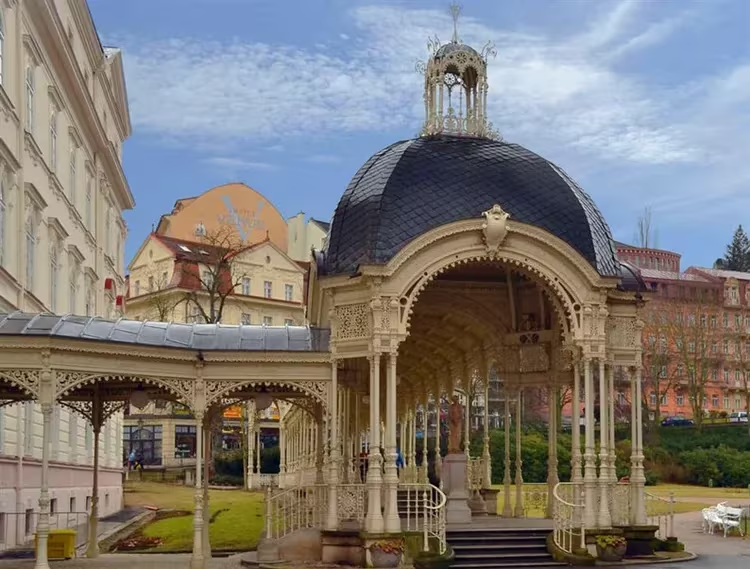
In 1852, a military sanatorium was founded in Karlovy Vary. During the construction of the foundation, a water outlet was discovered. The source was originally called Imperial. Its water was used for the patients of the sanatorium. The water flow is divided in two – one part is led to the hall, the second – to the basement. From 6 am to 6.30 pm, guests of the city can taste this water, which has an unobtrusive sour taste. To get to it, you need to walk from the Geyser towards the Garden Colonnade, located in the gardens of Dvorak, about 800 meters, this is a 15-minute leisurely walk. Water has a temperature of almost 42 degrees, you can draw 1.5 liters per minute. One liter contains 0.75 grams of carbon dioxide.
rock spring
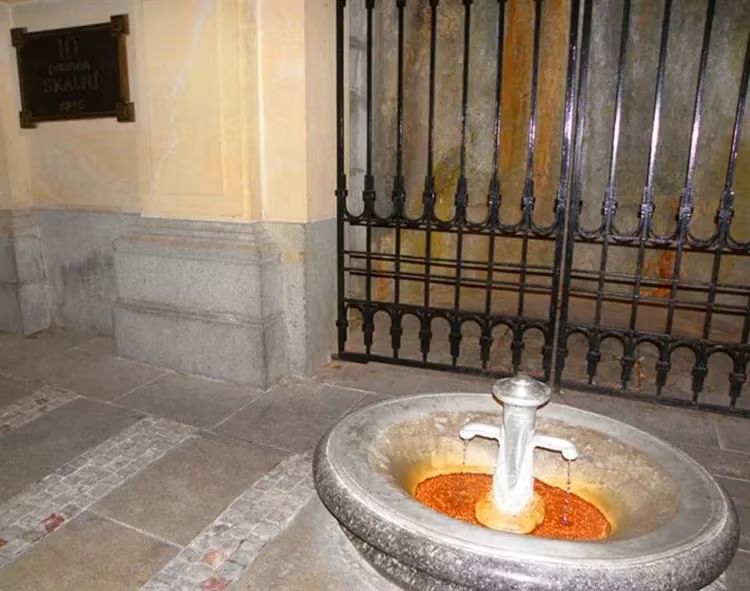
Previously, under the rock of Bernard there was a rather damp and swampy place. Horses were taken there to bathe, and the people called it the Horse Clinic. A thin trickle of water made its way to the surface of the earth near the Teplaya River. This was the future Rock Spring. They caught him in 1845, then part of the rock was broken off. A wooden canopy, built without architectural intricacies, protected visitors from bad weather.
In 1892, the famous Mill Colonnade was completed according to the project of the talented architect Zitek, and the Rock Spring received a beautiful new pavilion. Water is brought there from a depth of 30 meters, passing through several wells. It has a pleasant temperature (48 degrees), the water capacity is 2.2 liters per minute. One liter contains 0.65 g of carbon dioxide. You can find it by walking half a kilometer from the Geyser, under the Bernard Rock, which is located at the very end of the Mill Colonnade.
market source
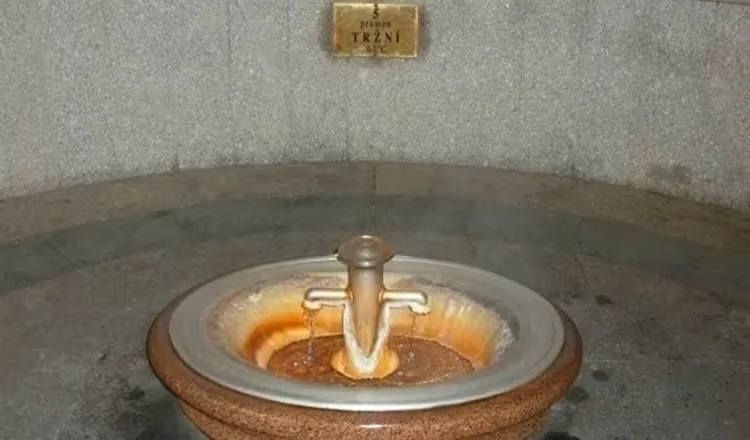
In 1838, construction work was carried out in the center of the city – on the Market Square. During the work, another water outlet to the surface was discovered. From the very beginning, the source had an unstable character, then disappeared, then appeared. I had to drill more than one rather deep well before we managed to make the flow of water constant. The water was then taken out to the Marktbrunn house, on the ground floor. Even then, there were several such spa houses near the square.
The building was demolished in 1904, and in its place was erected a wooden Market Colonnade, which was built in the Swiss style, like many other buildings in Karlovy Vary. Of particular interest is the place where the water flows. This is a semicircular apse with amazing acoustics. Concerts are often held here. The distance from the Geyser is only 200 meters. Water has a temperature of 62 degrees, almost 5 liters are collected per minute. It contains 0.5 g/l of carbon dioxide.
This resort was glorified by the famous doctor Becher. He developed a method for extracting salt, which gained immense popularity as a laxative. The famous herbal tincture Becherovka also bears his name. The sale of mineral salt and famous visitors to the resort played a role in the development of the city, and it began to grow rapidly. Unfortunately, during this period, a huge part of the city was destroyed by fire. For example, only one tower remained from the royal castle. Most of the buildings were rebuilt, as they could not be restored.
Karlovy Vary experienced its heyday in the 19th century, even the Napoleonic wars that thundered throughout Europe did not prevent this. Every day on the embankments one could see noble patients walking from one spring to another. Many grand dukes and heads of state came here incognito. After the end of World War II, the resort town was nationalized and began to develop rapidly. It is only 118 km from Prague, and it is easy to get to the city. You can go there with a tour. This is the most comfortable way, including the services of a guide. Another option is that special yellow buses leave every hour from Florenc Station in Prague. The journey will take two hours.
The most famous attraction is the hot thermal springs. Finding them is easy, almost all of them are located one after another. The higher the water temperature, the greater the amount of mineral salts dissolved in water, but the amount of carbon dioxide in this case is small. Conversely, in cool springs there is more carbon dioxide, and mineralization is weaker.
The symbol of the resort can be called the most popular spring – Geyser. Water erupts from a great depth – two kilometers. The height of the fountain is up to 12 meters. The water in it is very hot and reaches a temperature of 72-73 degrees. In the 70s of the XX century, colonnades and sheds were built around it. The geyser is able to provide mineral water to all the hospitals of the city.
Entrance to the pavilion is free, it is open from 9 am to 7 pm. The water is cooled to three different temperatures and fed into several pump rooms. There you can also visit an interesting excursion “Dungeon of the Geyser”. Tourists are shown underground keys and petrification, thanks to which unique jewelry and various souvenirs are made. You can go on excursions from late spring to early autumn on any day. Tickets are sold in the lobby.
The least visited by tourists source is Zhelezisty. This is the coldest key in the resort. The water temperature reaches no more than 12 degrees. The water is rich in iron and arsenic compounds. The amount of this element is quite small, so that it does not cause harm to health. Nevertheless, tourists visit this spring infrequently. Baths are also very popular. They strengthen the immune system, have a beneficial effect on the joints, improve the functioning of the nervous system, and relax the muscles. This opportunity can be obtained in hotels, and in ancient hospitals.
In addition to health benefits, the resort offers visitors a large number of attractions, enchanting natural scenery, an interesting and rich cultural life. Representatives of the European aristocracy still meet there (usually such meetings are held in April of each year), international festivals dedicated to ancient, modern and classical music are held. There are also film festivals. Concerts are often held.