
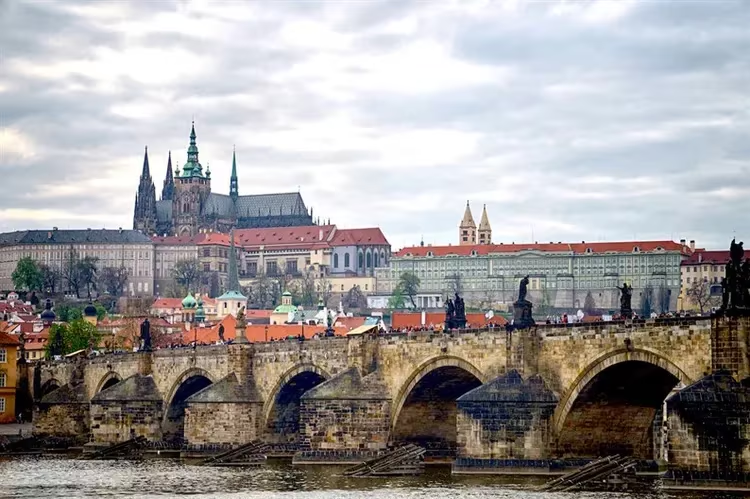
Sights of Prague – 35 most interesting places
Most recently, to deep regret, the “golden voice of the Czech Republic” Karel Got died, who sang the extraordinary beauty of the Czech capital. She is, indeed, a true beauty, shining with the golden domes of temples, the splendor of architectural masterpieces, the charm of gardens and parks. You can't look at it enough, the environment can never get bored. No matter how long you live here, its streets, buildings, ancient monuments are perceived in a fresh new way. Past eras have accumulated a lot of interesting and unexpected things in this open-air museum. For hundreds of years, new generations of tourists will have something to see in it. But the city does not stand still, it continues to develop, and modern objects appear next to authenticity. In order to calmly get acquainted with interesting sights and not adapt to the excursion regulations, It is worth walking through the city streets and squares yourself. This article recommends what to see from the sights of Prague on your own in the first place.
Wenceslas Square
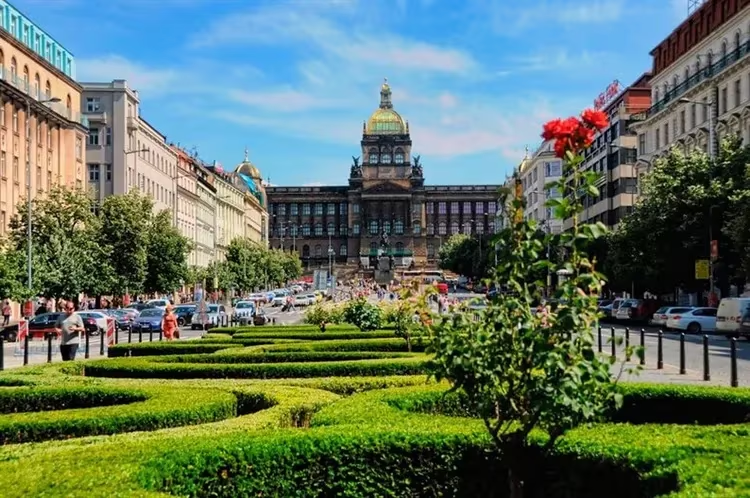
A popular tourist destination is the world-famous and beloved by the townspeople Wenceslas Square. The pedestrian and car boulevard, 750 meters long, attracts guests of the Czech capital with a magnificent architectural ensemble, the beauty of which is breathtaking. Historical buildings were erected in various styles of architecture.
They are home to shopping centers, financial institutions, famous boutiques, prestigious stores, luxury hotels, expensive restaurants and exhibition grounds. An atmosphere of celebration and fun reigns on the square around the clock. The famous street got its modern name in honor of the patron of the Czech Republic – Prince Vaclav Přemyslids. His equestrian statue, surrounded by other highly revered saints, serves as the main landmark for meeting tourists and locals.
🏨 🚕 Individual transfer from the airport to the hotel and more
Troy Summer Palace
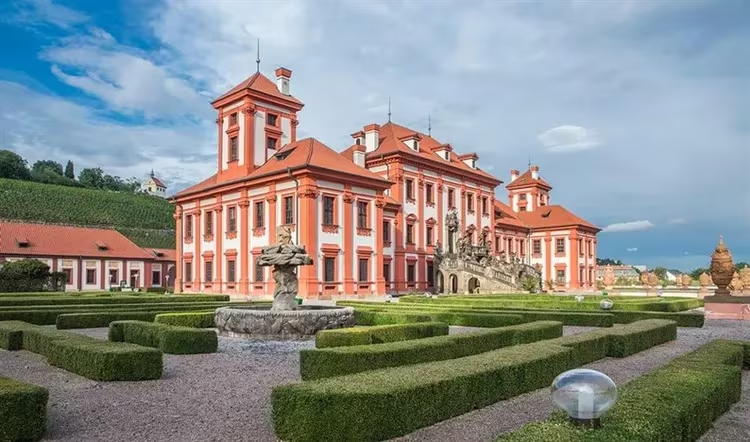
On the northern outskirts along the Vltava River rises the elegant baroque summer palace of Troy. The majestic building was erected at the end of the 17th century for representatives of the aristocratic Sternberg dynasty. The architecture of the magnificent building embodies the idea of an Italian country villa. The appearance of the estate evokes a feeling of admiration among tourists.
The dark red and white facade of the castle is crowned with high roofs. The walls of the palace are decorated with pilasters with beautifully decorated capitals and large window openings with architraves. The luxurious two-flight staircase with sculptures representing images of Greek mythology attracts attention. Around the castle there is a French-style park with natural labyrinths of alleys, fountains and numerous trees.
Address: U Trojského zámku 4/1, 171 00 Prague 7
National Theater
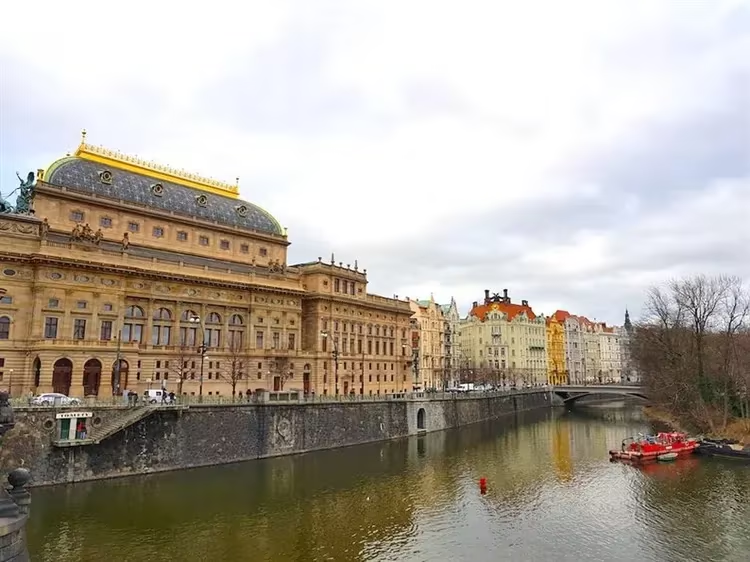
The Prague National Theater is the pride and decoration of the Czech capital. The monumental building impresses with its beauty and grandeur. The theater symbolizes the cultural renaissance of the Czech Republic, which for a long time was under the influence of the Austrian Empire. The laying of the first stone of the structure took place in 1868. Construction was carried out at the expense of donations from aristocrats and ordinary citizens.
The starry blue oval domed roof topped with a golden crown gives the building a unique identity. On the facade of the theater complex, you can see a group of sculptural compositions. This is a statue of Apollo, the patron of art, surrounded by nine muses, as well as a statue of the goddess of victory, Nike, driving a chariot. Bas-relief images, columns, arcade galleries, balustrade embody solemnity and high cultural significance in the exterior of the building.
Address: Národní 2, 110 00 Nové Město
Franz Kafka Museum
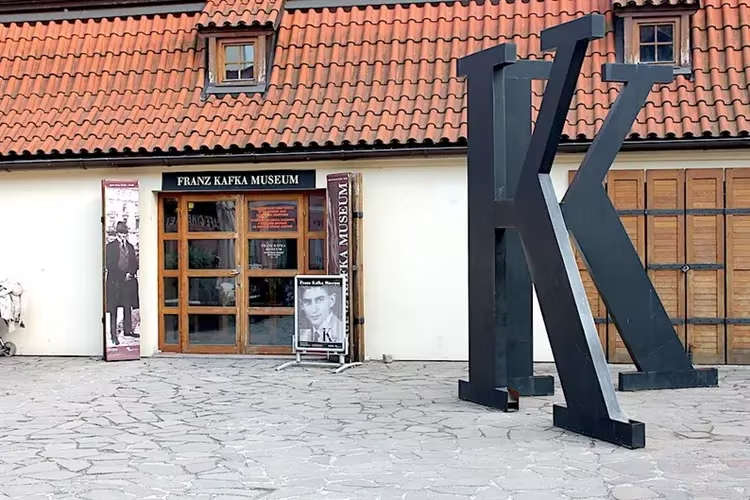
The Franz Kafka Museum is housed in a former brick factory near the Charles Bridge. The complex is intended for connoisseurs of absurd and psychedelic novels by the writer, known for his extraordinary perceptions of reality. The gloomy exhibition halls convey the atmosphere of inner spiritual brokenness, the hopelessness of being and the mystery of the writer. The expositions are devoted to the life path and creativity of F. Kafka.
Here you can see numerous photographs, manuscripts, documents and book editions, as well as showcases with illustrations for the works of the great writer. The walls of gloomy rooms with miniature windows are covered with quotes from Kafka's diaries. When viewing the exhibits, visitors are accompanied by a string of various sounds – rustling, whispering, ominous laughter, piercing violin playing and the rustling of book pages.
Address: Cihelná 635, 118 00 Malá Strana
Zizkov TV tower
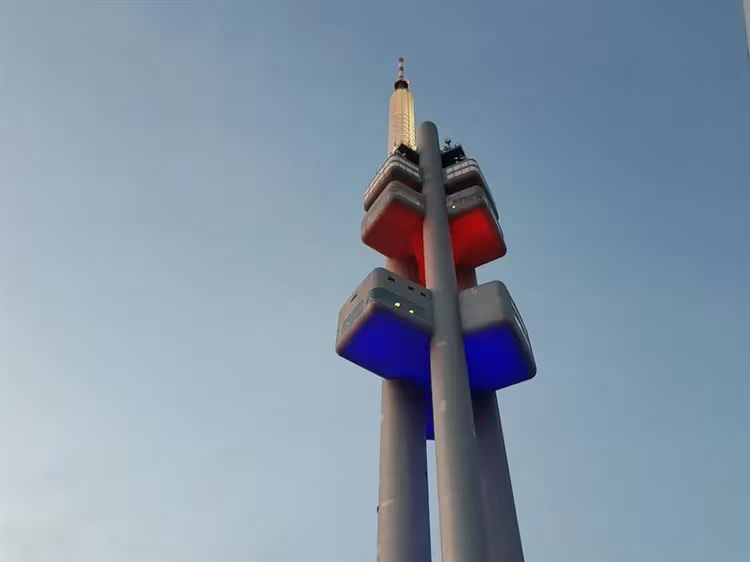
In addition to the amazingly beautiful medieval architectural ensemble, cobbled squares and streets, a modern extraordinary technical structure rushes up in the capital of the Czech Republic. This is the current Zizkov TV Tower, which is the tallest building in the city. It was erected in 1992. The tower looks like a pointed rocket, which rushes up to 216 meters.
Three reinforced concrete pillars are fastened together at different heights by original cubic platforms. They housed viewing platforms, television and radio equipment, as well as restaurants. On the tower you can see the figures of black crawling babies. The statues symbolize the protest against abortion.
Havel market
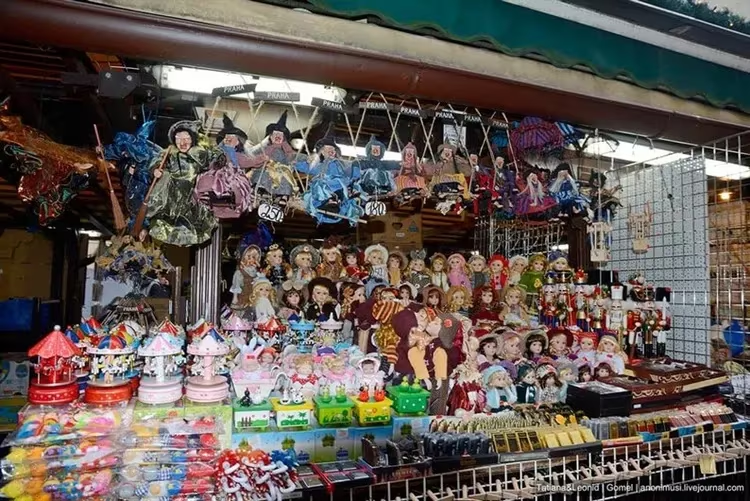
In one of the ancient districts, a medieval marketplace has been preserved, filled with souvenir and confectionery stalls. The Havel market is saturated with a wide range of goods for every taste and budget. Here you can buy original gifts that will leave warm memories of your stay in this magical city. Puppets, painted ceramic objects, souvenir magnets, local sweets in beautiful tin boxes, as well as paintings and postcards of urban landscapes are very popular among buyers.
The Havel market arose at the beginning of the 13th century on the site of an old settlement of wealthy Germans who were engaged in handicraft activities. Enlisting the support of local authorities, the artisans set up a bazaar, where they sold various goods produced by them.
Address: Havelská 13, 110 00 Staré Město
Zoo

One of the best and largest zoos in the world is located in the capital of the Czech Republic. On a picturesque area of 50 hectares, animals brought from different parts of the world have been created as close to natural conditions as possible. Natural landscapes harmoniously combine meadows, forests, deserts, caves, reservoirs, rocks and tropical jungles. The zoo is famous for breeding rare and endangered species of animals listed in the Red Book.
The Prague Zoo consists of numerous thematic areas with climatic features characteristic of each animal species. Mammals, birds, amphibians, fish and insects happily live in closed and open spacious pavilions. In total, there are more than 5,000 individuals of the animal kingdom. These are leopards, tigers, elephants, giraffes, bears, monkeys, hippos, flamingos, penguins and many other representatives of the fauna.
John Lennon Wall
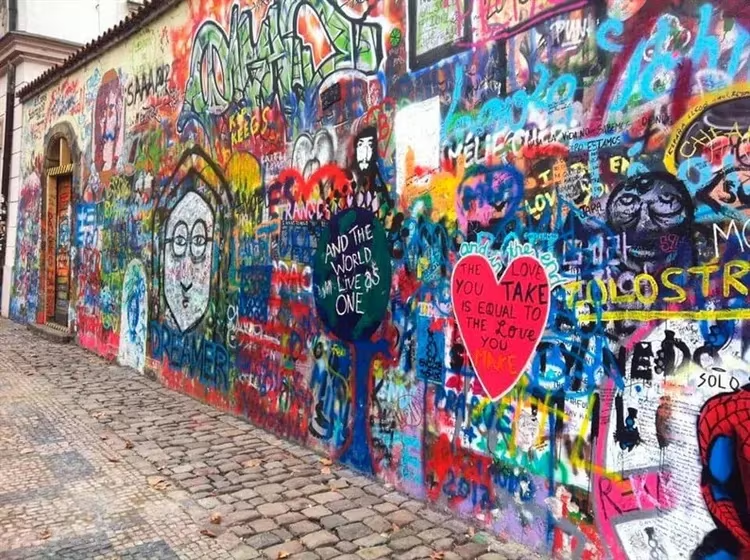
The legendary musician of the British group The Beatles has never visited Prague with concerts. However, this did not prevent the Czechs from filling one of the city walls of the Mala Strana region with colorful drawings, dedicating their creations to John Winston Lennon. The first inscriptions appeared in 1980 spontaneously after the murder of the idol of millions of admirers of his talent. The local authorities repeatedly tried to paint over the wall, but the freedom-loving Czechs did not allow the memory of the musician to be erased.
They organized rallies, demonstrations and protests. The French ambassador, whose residence is located opposite the wall, spoke in defense of the people's initiative. On the wall of John Lennon you can see numerous bright drawings, graffiti, memorable phrases from the songs and statements of the musician.
Toy Museum

Offers its visitors to plunge into childhood dreams. These are eleven halls with numerous showcases, which present a huge collection of old and modern toys. There are more than two thousand exhibits. The museum occupies the premises of one of the historical buildings of the Prague Castle, which creates a special magical and fabulous atmosphere.
Enthusiastic feelings are caused by an abundance of porcelain dolls, teddy bears, robots, houses, steam locomotives, wooden handicrafts and cars. It is interesting to consider small figurines of different celebrities and popular characters. One of the floors of the institution is dedicated to the famous Barbie doll. It clearly demonstrates how the most famous toy in the world developed and “became better”.
Gradchanskaya Square
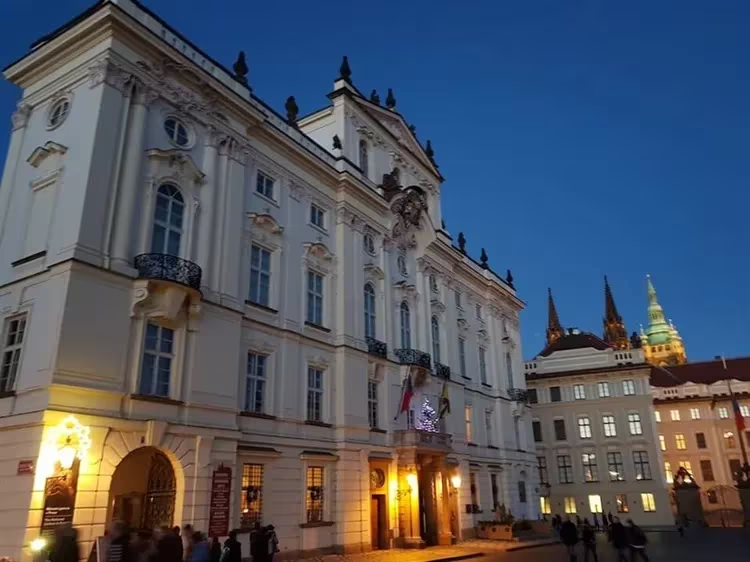
To feel the spirit of the old aristocratic Czech Republic, you should definitely visit Hradcany Square. From all sides it has luxurious palaces, which are architectural monuments and deserve attention. The center of the square is the Marian Column. It was installed in 1726 and marks gratitude for getting rid of the plague. The column is crowned with a two-meter sculpture of the Virgin Mary.
In the place where this monument is now located, there were previously constant worship services. Seven centuries ago, palace servants settled in these places, but gradually the territory turned into an aristocratic mini-city. Interesting traditions have been preserved here. Every day at noon, the guard of honor changes solemnly here, the action is accompanied by music. It is from here that the central entrance to the presidential residence goes.
St. Vitus Cathedral
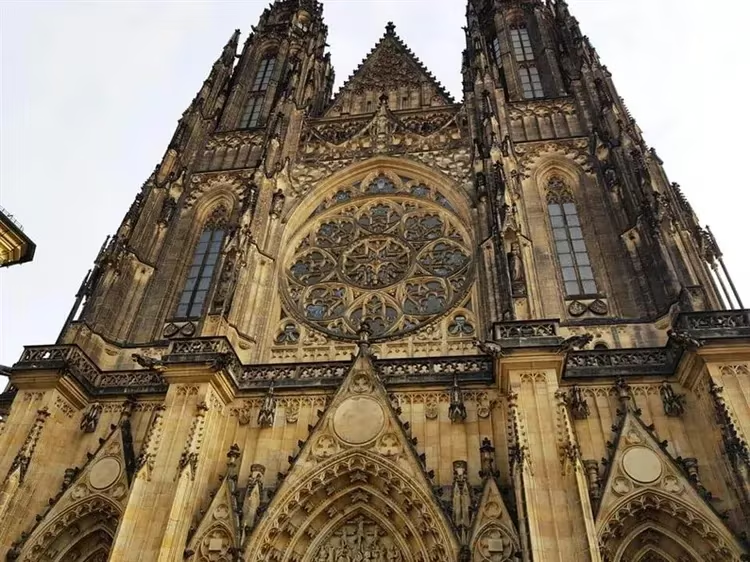
An outstanding architectural masterpiece is St. Vitus Cathedral. A unique Gothic cathedral dominates Prague Castle. The erection of a monumental creation was carried out intermittently for six centuries. This is not only one of the best examples of medieval architecture, but also the main national church of the Czech Republic. Czech kings are buried in it, and historical regalia of power are also kept. The majestic dimensions of the sanctuary leave an indelible impression on tourists. The length of the main nave is 120 meters. Two pointed towers rush up to 90 meters.
The bizarre Gothic decorations on the facades of the cathedral amaze guests. The stone walls are covered with lacy openwork ornaments. A lot of spiers and pinnacles give the structure the rigor and precision of geometric lines. Long lancet windows, elements of openwork carving, high arches, portals, mosaic frescoes and stained-glass windows amaze with their luxury.
Royal Palace
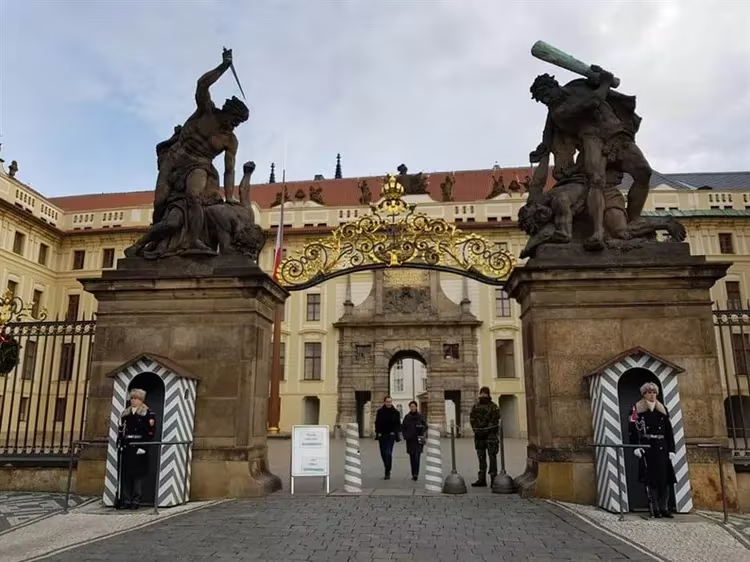
Among the unsurpassed architectural ensemble of Prague Castle, the Royal Palace is of particular historical value. The building was erected in the XII century and served as the main residence of the Czech princes. The palace has undergone many renovations. Each new ruler considered it his duty to change something in the appearance of the structure. Today, tourists can contemplate the complex of majestic and chaotically built buildings, reflecting the era of the Renaissance style.
The pearl of the Royal Palace is the grandiose Vladislav Hall, where especially solemn events were held. Monarchs were crowned here, feasts raged and even equestrian jousting tournaments were held. The highlight of the interior is an openwork Gothic ceiling. The courts and the government sat in the palace, as well as the state chancellery.
Strahov Monastery
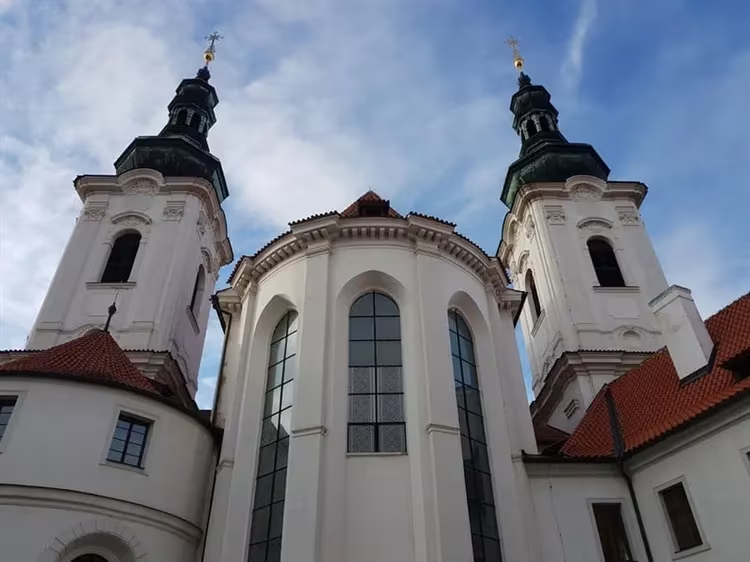
In one of the historical districts, there is the oldest monastery complex, founded in 1140 by King Vladislav II for the monks of the Premonstratensian order. From time immemorial, generations of novices of the monastery devote their lives to serving God. They reject wealth, and also observe a vow of celibacy and silence. A complex of buildings was erected on the territory of the monastery, creating a single architectural ensemble.
These are the Basilica of the Assumption of the Virgin Mary with baroque high towers, the Gothic church of St. Roch, as well as buildings built in the neoclassical style. The Strahov Monastery is famous for its unique library. It contains more than 100 thousand copies of books, manuscripts and various written documents of the 9th-17th centuries. The halls of the library attract attention, the ceilings of which are decorated with picturesque frescoes and intricate stucco work.
Summer Palace of Queen Anne
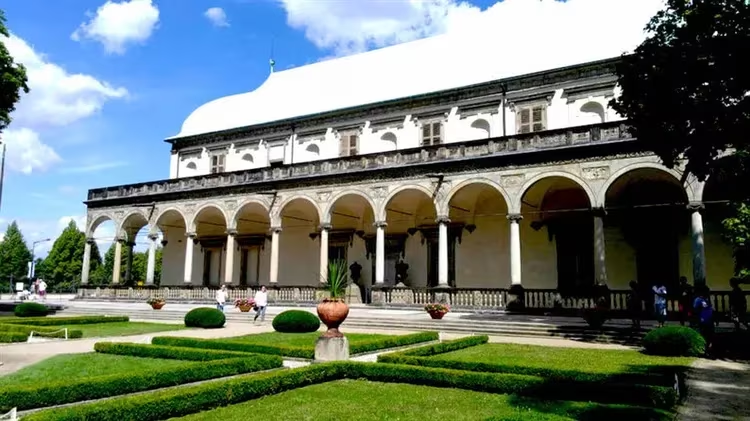
Next to the Prague Castle there is a magnificent park, where a beautiful building rises among well-groomed alleys and flower beds. A small building, resembling a precious box, is one of the first buildings in Eastern Europe of the Renaissance. In 1538, Emperor Ferdinand I decided to build a magnificent summer palace for his beloved wife Anna. For this, the best Italian architects were invited. The construction of an architectural masterpiece took as much as 25 years. Queen Anne did not wait for the completion of construction.
The facade of the elegant palace is framed on all sides by Tuscan columns. The cornice of the arcade gallery is decorated with a relief frieze. The building is crowned with a green roof, which is designed in the form of an inverted keel of a ship. Numerous bas-reliefs on the facade of the palace depict mythological motifs symbolizing the unquenchable love between Anna and Ferdinand.
The Charles Bridge
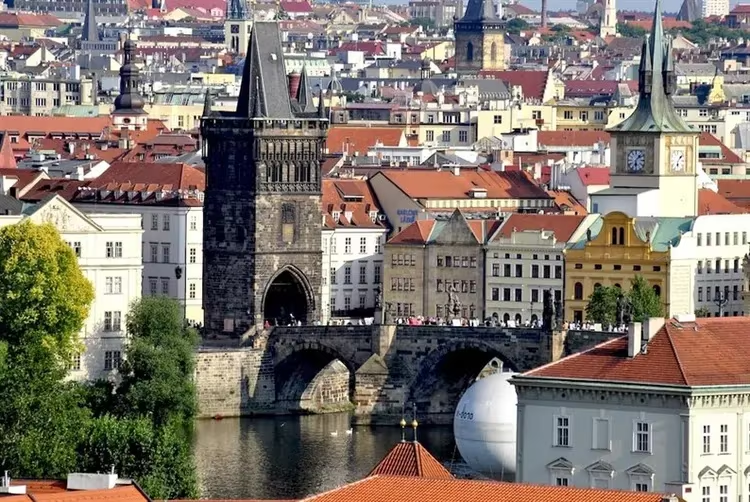
The most significant attraction is the Charles Bridge. This is a very old bridge, the construction of which began in the XIV century. Its construction was completed 50 years later. This is an unusually beautiful, textured and powerful bridge 516 meters long. Along the bridge there are various sculptures (30 in total) dedicated to the face of saints. There is an opinion that if you make a wish and touch the copper images on the statue of St. John of Nepomuk, it will certainly come true. This bridge connects the main attractions – the Old Town and the Lesser Country. Like all ancient structures, the bridge keeps a fascinating and ironic legend.
Tyn temple
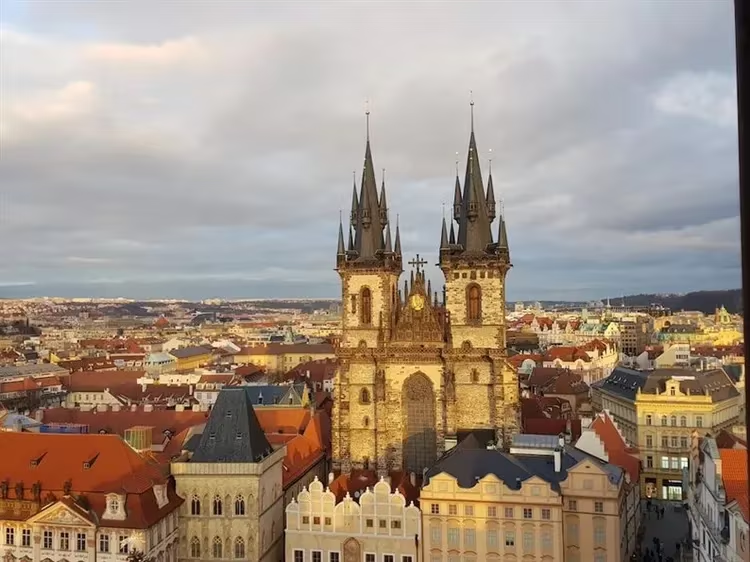
If you arrived at the main Prague railway station, you can walk to the Old Town Square. Walking along the cobbled streets past the unique buildings will bring only pleasure. If you want to save time, you can take a tram (2, 14, 17, 18) or metro line A. When you go out to the old square, you will immediately see 2 towers with crown-shaped roofs towering over all the buildings. This is the Tyn Church, which was built in the 2nd century (late 14th – early 16th) – a symbol of the city and the state. Golden balls crown the spiers of the towers of Eve and Adam. The columns of the towers are connected by a massive pediment, decorated with a gilded sculpture of the Mother of God with a baby in her arms.
The “golden radiance” surrounds the figure of the Virgin Mary as a bright spot against the dark background of the walls. An amazing monument of “high Gothic” impresses to the depths of the soul with both external and internal beauty. The artistic design of the facades cannot but amaze. The bas-relief “The Passion of Christ and His Crucifixion”, the main altar of the early Baroque style, the sculptural image of Golgotha, etc. are examples of high art. The admiration that the contemplation of the Tyn Church will cause will not leave you throughout the entire journey.
Address: Staroměstské nám., 110 00 Staré Město
Old Town Square
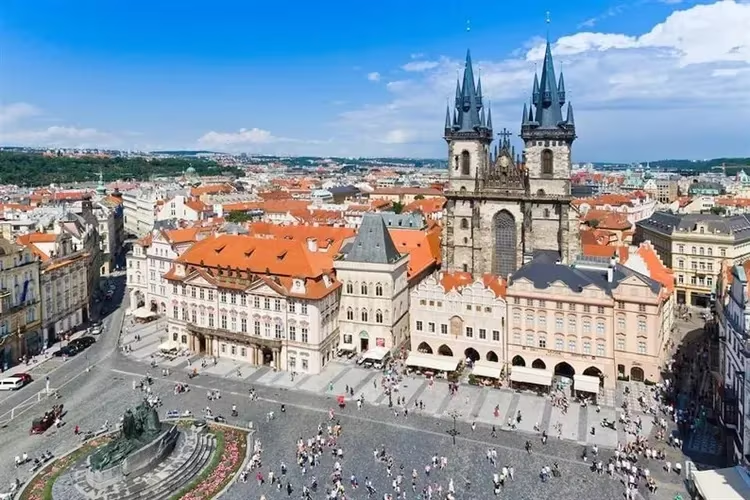
Formed in the 10th century as a city market, the Old Town Square is the “heart” of the historical center. From it, “arteries-streets” diverge in all directions, enchanting with their authenticity. All significant events took place in this place in the Middle Ages – from the executions of rebels to coronation processions. It was here that the Tyn Church, one of the main religious symbols of the country, was erected.
Today, the square, surrounded by beautiful buildings, is always filled with tourists who have something to see on it. In the middle of the square there is a monument to the national hero Jan Hus. The majestic building of the City Hall, which causes a surge of aesthetic feelings, will not be left without attention. In fact, this is a whole complex consisting of several buildings combined into one architectural masterpiece.
You can endlessly admire the numerous sculptures, ornate decorations on each of the buildings. Chimes with puppet characters are installed on the town hall tower. Opposite the Town Hall, you will see a number of the most beautiful buildings with interesting names: “At the Golden Angel”, “At the Ox”, “At the Red Fox”, “At the Golden Horse”, etc. Nearby rise the green domes of the baroque church of St. Nicholas worthy of your attention.
Prague chimes
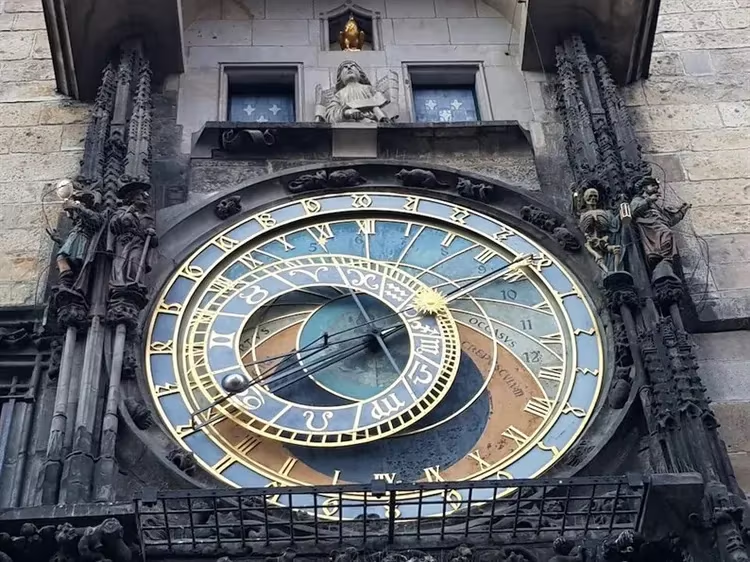
The astronomical chiming clock installed on the town hall tower is a very intriguing attraction that attracts crowds of tourists. They were designed by the royal watchmaker Mikulash in collaboration with the astronomer J. Shindel. A creative tandem of talented people created a real mechanical miracle, later supplemented by other masters.
As a result, Orloi became the first unique mechanism of its kind in Europe. The allegorical wooden figures “Avarice”, “Dude”, “Voluptuousness” symbolize human vices. The sculpture of Archangel Michael with a fiery sword and shield personifies Justice as an important virtue. The astronomical clock consists of 3 separate parts arranged vertically: the procession of the Apostles, the dial and the calendar. The earth is depicted on the astronomical dial in the spirit of geocentrism. The 3 golden circles symbolize the constellations Cancer, Capricorn and the equator.
The symbols of the daily change of time are depicted: morning, afternoon, evening and night. The calendar is presented in the form of a copper circle with 2 rings. The inner ring is filled with 12 medallions depicting scenes from peasant life and figurines of the signs of the Zodiac. Every hour a bell in the form of a skeleton (Death) rings, setting in motion the figures of Vices, after them the 12 Apostles begin to move. Try to get to the chimes by the end of the hour, when a huge crowd of tourists gathers, and you will see an incredibly interesting sight.
Jewish Quarter
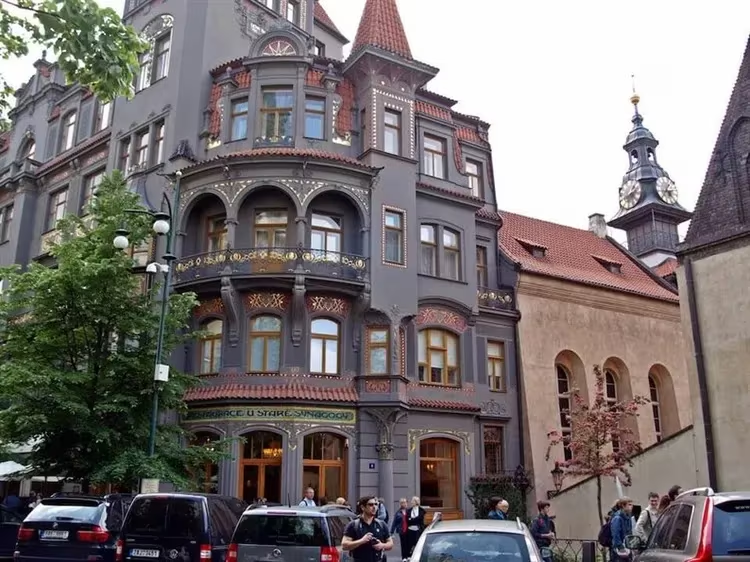
Josefov – the Jewish Quarter is located 450 meters from the Town Hall, a 5-minute walk from it. This is a mini-town, formed here in the 11th century. on the outskirts of the city (today the center) due to the resettlement of Jews. The Jews were forbidden to settle freely, they were assigned a special place, enclosing it with a high stone wall. Generations of Jews were born, lived, studied and died here, until gradual assimilation began, enshrined in the decree of Emperor Joseph II.
After a thorough reconstruction (1883-1913), beautiful mansions appeared here, wide streets instead of dark alleys. On the territory of the quarter there is a monument to F. Kafka, one of the most “gloomy” writers in the world. Today, the open-air museum preserves the attributes of almost 10 centuries of Jewish residence. For tourists, it has a lot of interesting and unusual things. The main religious symbol of the Jews – synagogues enjoy the constant attention of foreigners.
The oldest of the churches, the Old New Synagogue, is still active and receives parishioners. In Klausova there is an exhibition illustrating the life of the inhabitants of the quarter. The Spanish Synagogue arouses admiration, the interiors of which are decorated in Arabic style with Moorish motifs. It is worth visiting the Jewish Museum, the Town Hall, the Old Cemetery.
This will end the journey through the Old City, and Mala Strana will open its expanses for tourists.
castle stairs
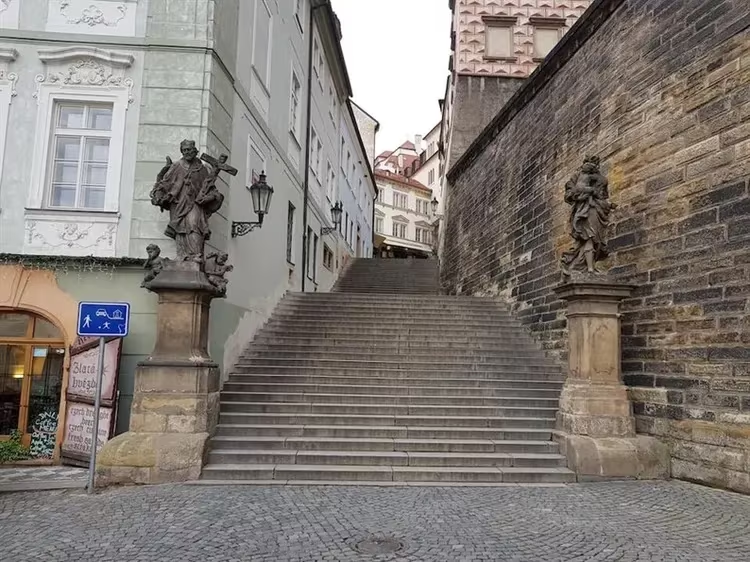
If your time is limited, you can get to the Old Castle Stairs from the Jewish Quarter by buses 2, 17, 18, 194. In 15 minutes you will find yourself at the stairs connecting Mala Strana with Hradchany. It was built in the 17th century, later reconstructed, and in this form it has survived to this day. Wide steps are laid between high walls. On the south side behind the wall are gardens, the Indian Embassy. Behind the northern wall is a legendary place associated with St. Wenceslas – his vineyards. Wenceslas guarded them, harvested grapes, crushed them, making wine.
On one of the landings there is a monument to Karel Haschler, whose multifaceted talent manifested itself in almost all types of art. He composed songs and performed them himself, wrote poetry, plays, music, staged performances and participated in them as an actor. Prague residents take care of the old staircase: in 2009, the stonework, steps and drains were restored. The length of the structure is 230 meters. The 121 steps offer stunning views of the Furstenberg Garden and the entire city.
Prague Castle
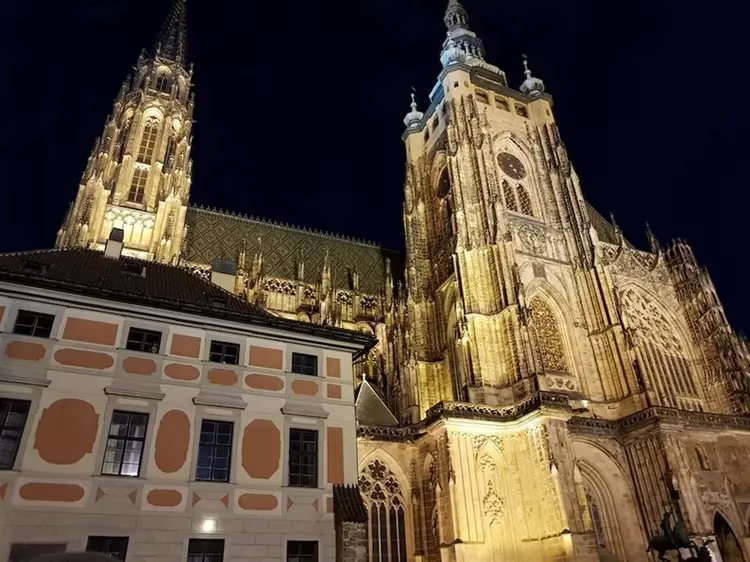
The symbol of Prague grandeur, brilliant luxury and wealth is the unique architectural complex Prague Castle, a UNESCO World Heritage Site. The palace and park ensemble, surrounded by a high wall, spreads out on a hill on the left bank of the Vltava. Behind the high wall are 3 courtyards, surrounded by a necklace of magnificent buildings of various architectural styles. Each of them captivates with its unique beauty and perfection. The central entrance, where you can observe the solemn changing of the guard, is guarded by the military.
Of particular admiration for tourists are the Old Royal Palace, the Cathedral of St. Witta, the Rožmberk Palace, the Basilica of St. George, Lobkovitsky Palace, etc. In the Cathedral of St.. Witt there are tombs with the ashes of Czech rulers. Climbing its bell tower, you can see an irresistible picture of the Old City. A walk along the Golden Lane with its lovely “toy” houses will bring great pleasure. It will be pleasant to visit the local gardens, amazing beauty and well-groomed. Inspection of the Prague Castle is worth devoting more time to.
Cola Fountain
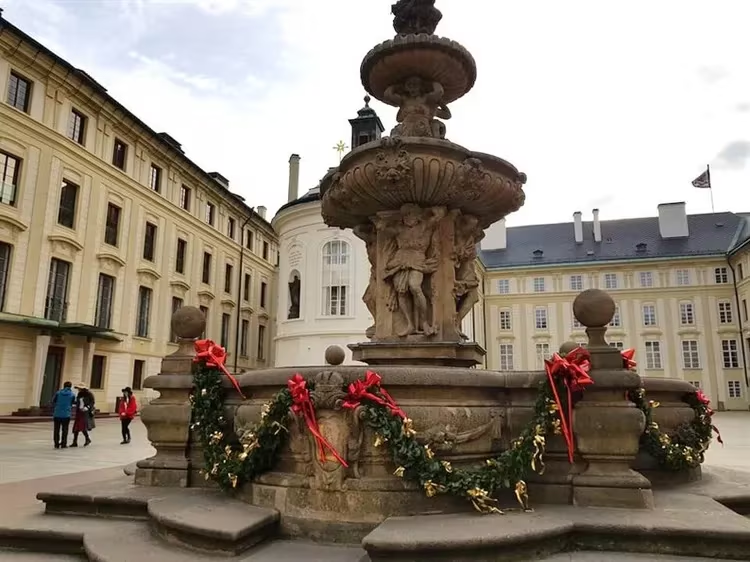
In the 2nd courtyard of Prague Castle there is another fountain that has 3 names: Kola, the fountain of Lions and Leopold. The first name came to him from the author, the second – because of the figures of lions, and the third – from the king, in whose era this magnificent building was created. It appeared in 1686, causing general admiration for its unusually expressive appearance. Sculptor Hieronymus Cola created an architectural and artistic masterpiece from sandstone. The bowl of the fountain is surrounded by 3 rows of steps, decorated with stucco molding in the form of lion and human heads, a scroll with the letter “L”.
The 1st tier is a composition of sculptures of 4 main Roman gods holding a huge vase on their shoulders. Neptune is a symbol of the water bodies of the Czech Republic; Mercury is the patron of Czech trade; Hercules is the personification of the courage and stamina of the Czechs; The volcano is the embodiment of crafts developing in the country. The 2nd tier depicts divine sea newts holding the figures of 3 lions located on the upper tier. The fountain is crowned with a ball held by lions. Water comes here from an old drain from the river. Lingonberry that feeds castles. Nearby is an authentic well, covered with an openwork cap, successfully complementing the general view of the fountain.
Prague Loreta
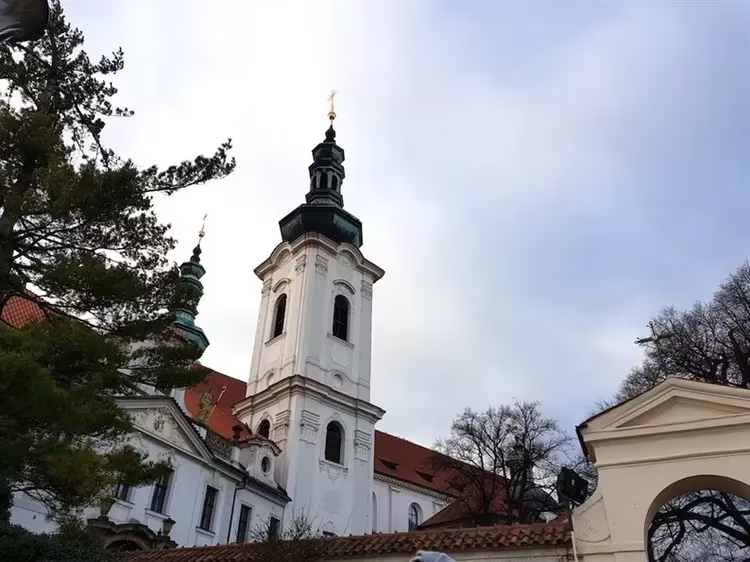
The world-famous religious object Prague Loreta is located on the square of the same name on the district of Hradcany. This undeniable architectural masterpiece, extraordinarily beautiful, has a long history with a legendary basis. According to legend, during the Turkish invasion of the Holy Land (12th century), savior angels moved the hut of Our Lady to Italy, in the city of Loreta.
The legend received real confirmation when “huts” of the Virgin Mary began to appear throughout Europe. In 1626, by order of Countess E. Lobkowicz, the construction of the Prague Loreta began – a luxurious architectural complex, on which the best architects of Europe worked. Until the 30s of the 18th century. 6 chapels were built around the house (Holy Hut) of Mary, the Church of the Nativity of the Lord, 2 fountains were built. Until the 20th century, work continued on improving the interiors of the monastery complex.
Everything here, from baroque facades to interior decoration, is amazing. Many sculptures of saints, gilded baroque decorations, a majestic clock tower adorn the main building. The interiors of the church, decorated with great luxury, are very beautiful. Worthy of admiration are the ceiling frescoes in the Rococo style, graceful sculptures, gilded openwork lattices. The exhibits of the Treasury are impressive – authentic examples of jewelry art.
Address: Loretánské nám. 7, 118 00 Prague 1-Hradčany
Visegrad
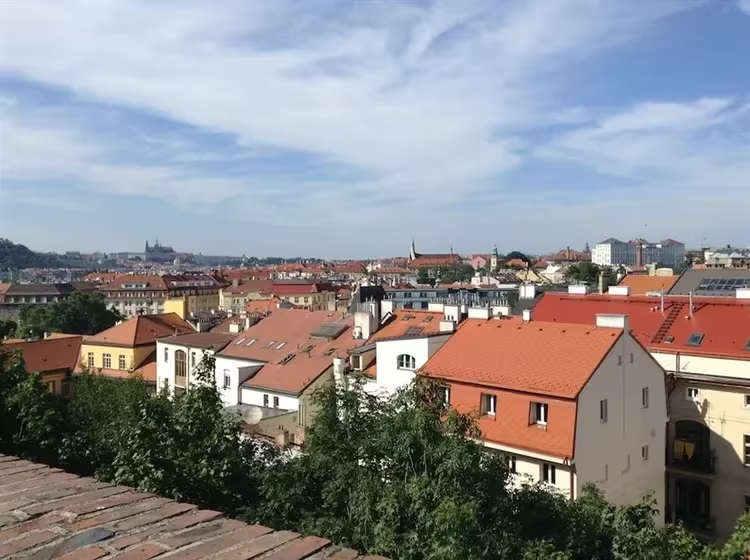
A visit to the ancient (10th century) Vysehrad fortress will allow you to feel the spirit of Czech antiquity, the special romantic atmosphere of knightly times. It is spread out on the rocky bank of the Vltava, delighting the eye with its outlines. This is the center of the historical district of the same name and an open-air museum, where there are more than 40 interesting objects. The oldest building in Vysehrad is the Rotunda of St. Martina, a Romanesque round tower with a Gothic spire.
The former parish church was built under King Vratislav. The Chapel of the Virgin Mary (18th century), which captivates with the appearance of exquisite baroque decorations, enjoys constant popularity. In front of it is a Plague Column, symbolizing sadness for those who died from the plague. The main object and visiting card of Visegrad is the Cathedral of Saints Peter and Paul (11th century). It was built according to the then fashionable model of Roman temples and with the blessing of the Pope. Over the past centuries, the temple has been reconstructed several times, but, in general, has retained its original appearance.
The external majestic beauty of the cathedral is in harmony with the splendor of the interior decoration. Visitors do not bypass the Devil's Column (3 pieces of a broken column), which arose here on the basis of a legend. A popular tourist attraction is the Visegrad casemates, formed in the middle of the 18th century. as a military facility. A walk through the Slavin (Pantheon) cemetery, where prominent Czech figures from art and politics are buried, will impress you to the core.
Petrin Tower
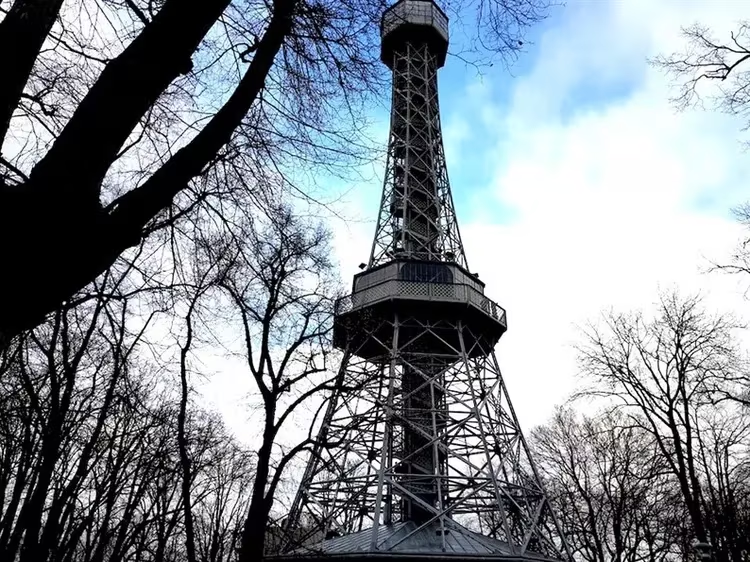
The Prague analogue of the Eiffel Tower is located on the Petrin Hill of the same name, surrounded by a picturesque garden. You can get to the nearest point from the tower – the tram stop “Entrance” by tram of 13 routes (1, 5, 7, 9, 3.15, etc.). From the stop, if you wish, you can climb up on foot or by funicular. Members of the Czech tourist club, having visited Paris in 1889, were so fascinated by the Eiffel Tower that they wanted to have the same building in Prague. Inspired by the idea, the public raised funds, and in 1891 the Petřín Tower rose above the city.
In the 20th century it performed 2 functions for 45 years – an observation deck and a television repeater. At an altitude of 374 m (324 m hill height + 50 m tower) there is an observation deck, to which 299 steps lead. But there are elevators, rapidly moving up. No one will remain indifferent, seeing from a height a bewitchingly beautiful panorama of the Prague Castle with its unique buildings, Vysehrad, Charles Bridge, the Vltava and other places in the capital. Unlike the Eiffel Tower, the Petrin Tower has an octagonal rather than a square section, which makes the structure more airy.
Address: Petřínské sady 633, 118 00 Prague 1-Malá Strana
dancing House
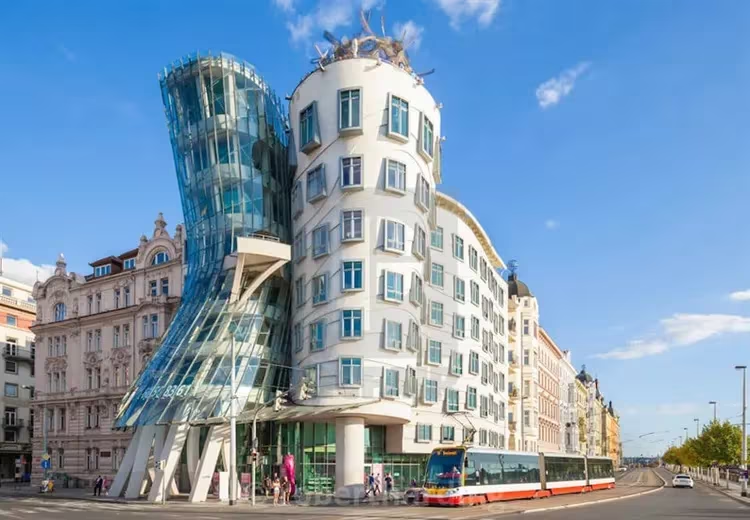
Along with rare architectural monuments in the Czech capital, there are a la modern buildings that impress with their unusual design. This is the “Dancing House” or in the common people “Drunken House”. There is also a more romantic name “Ginger and Fred” in honor of the famous dance couple. The building, located in the city center, consists of 2 towers. One of them is a cylinder, slightly expanding upwards and symbolizing the masculine principle (Fred). The second in shape resembles a female figure (Ginger), curved at the “waist”.
This architectural miracle arose on the site of the building destroyed by the American bombing. The ruins lay here next to the house where Vaclav Havel lived until the 60s. Having become the president of the Czech Republic, Havel ordered to build something extraordinary on this site. Invited architects Croatian Milunich and Canadian Gehry created a deconstructivist masterpiece, which was ambiguously perceived by Prague residents. Some admired him, others criticized or ironically called the building “Drunken House”. But the symbol of a new era in the life of the Czech Republic took root and became an indispensable attribute of the city and a popular tourist attraction.
Apple Museum
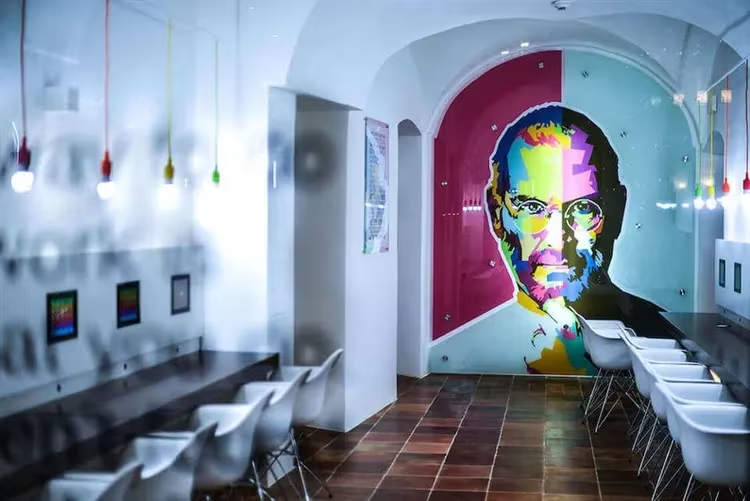
In 2015, a new museum appeared next to the Charles Bridge, which immediately aroused interest. 472 exhibits tell visitors about the history of the brand. The minimalistic style of the interior does not distract from immersion in the world of computers. In addition to devices, you can also trace the history of Steve Jobs, feel the life of the man who created the most famous brand. The entire exposition is divided into several halls, each of which is dedicated to a specific topic.
Jobs Hall allows you to get into the period of his life when he created the first computer in his parents' garage with a friend. There you can also see his school diary, old contracts, graduation album. The “grocery” hall demonstrates the gradual development of technology. It is very interesting to trace how it all started and where it came from. A separate room is dedicated to iPods. There you can see both common models and exclusive devices from limited editions.
Address: Husova 21, 110 00 Old Town
Memorial to the Victims of Communism
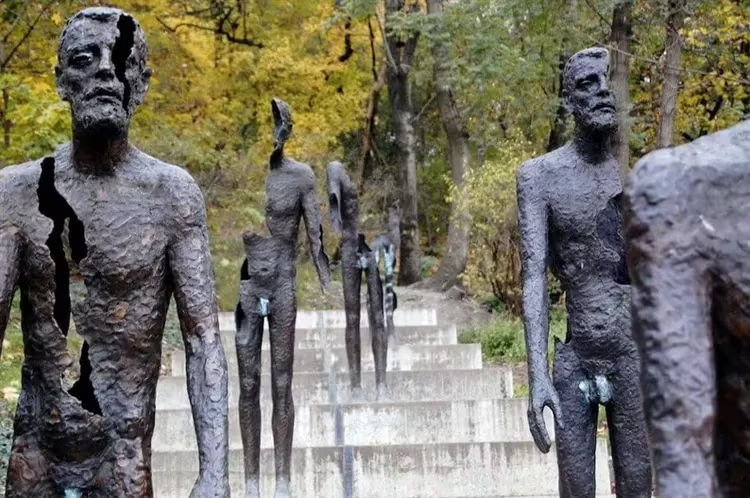
This attraction is still controversial, but it is a must-see for people with critical thinking. The memorial was opened relatively recently, in 2002. By this time, twelve years had passed since the destruction of the communist regime. The appearance of the monument is quite depressing – seven human figures go down the stairs. The figure closest to the viewer is an emaciated person, but the farther from the observer, the more “destroyed” the statues.
Cracks appear in them, some parts of the body are missing. The authors of this memorial tried to convey the idea of how political prisoners suffer from a totalitarian regime. The center of the composition is marked by a bronze tablet with an inscription indicating the number of victims. The figures of those arrested, deported, died in prisons, executed are given. There are many opinions regarding the memorial, from enthusiastic to negative, but this part of the story cannot be ignored.
Address: Újezd 420, 118 00 Malá Strana
Head of Franz Kafka
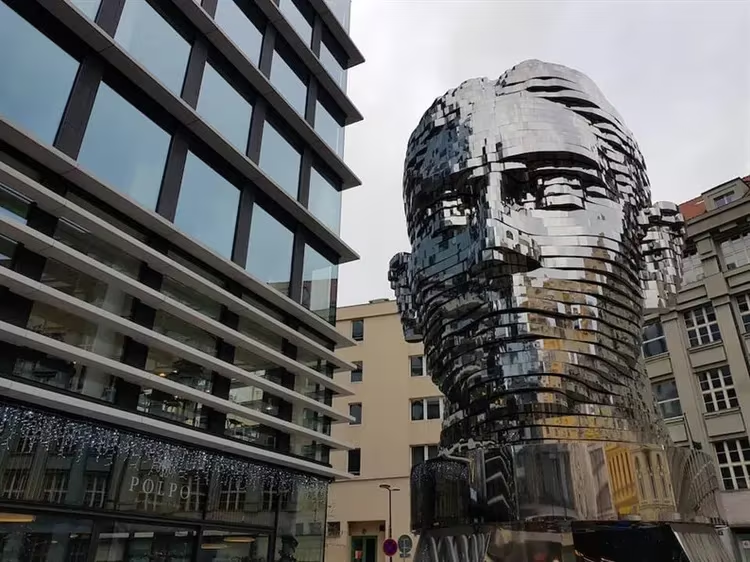
The famous writer founded a new literary direction. Since Kafka is of Czech origin, the country could not fail to perpetuate his merits. Quite a few places are associated with the name of Kafka, but one of the most charming and surprising is an unusual sculpture installed in 2014, authored by David Cherny. A huge revolving head made of mirror plates has become the hallmark of the city in a short time.
It does not just rotate, but, as it were, gradually transforms, referring the viewer to one of the most famous stories of the writer, “The Metamorphosis”. Probably every tourist must find time to visit this place. This peculiar attraction has already blended into the urban landscape. Surprisingly, the rotation is completely silent, despite its gigantic size. For the viewer, the head of Franz Kafka leaves a feeling of lightness, which appears due to the carefully polished metal plates.
Address: Charvátova, 110 00 Nové Město
National Museum
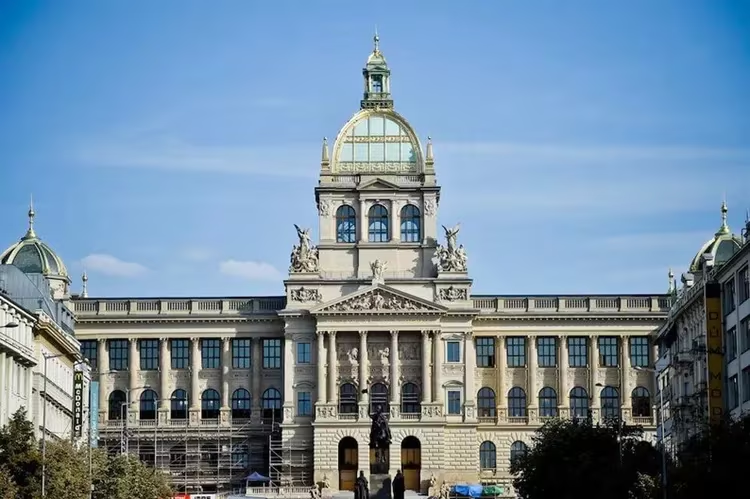
The building, which is a real treasury of national culture, is located on Wenceslas Square and involuntarily catches the eye. Its facade stretches for 100 meters, and the height is more than 70 meters. The collection presented here began to be assembled in the first half of the 19th century. In the 20th century, the number of exhibits increased greatly, so they were divided into several fairly large collections. Now they are located in different buildings. On Wenceslas Square, visitors can get acquainted with the exhibits of the Museum of Natural History and History.
The historical exposition is very interesting, the pearl of which is the objects obtained during archaeological research. She is located on the second floor. The third floor is completely occupied by the paleontological collection. Also in the building on Wenceslas Square is a colossal library with 1.3 million volumes. Other exhibition spaces invite you to view the ethnographic collection, the museum of musical instruments, the museum of physical culture and sports.
Address: Václavské nám. 68, 110 00 New Town
Waldstein Palace
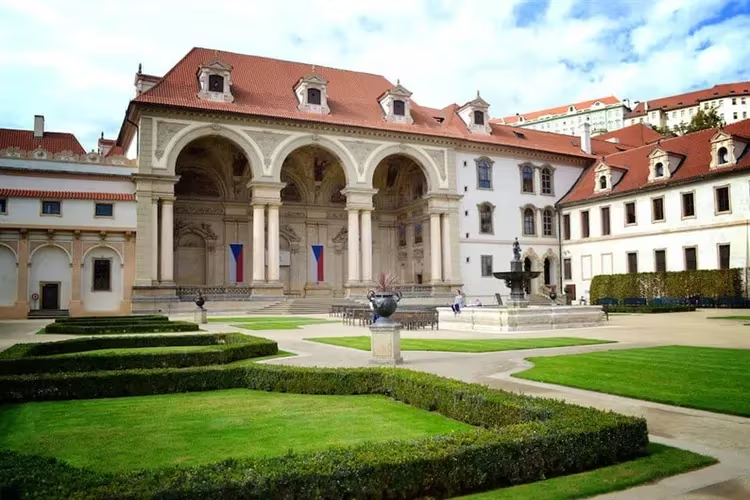
In the 17th century, on the site of the largest Prague palace, there were 26 mansions, interspersed with 6 gardens. So it was until Field Marshal Albrecht von Wallenstein wanted to build his residence here. The architects of the monumental building were Italians – Andrea Spezia and a student of Galileo Galilei Giovanni Pieroni. The palace was built in the late Renaissance style. Of particular interest is the Knights' Hall, which occupies two floors and shows the customer in the form of Mars, the god of war.
The frescoes and the palace chapel dedicated to St. Wenceslas and decorated with scenes from his life are also interesting. An extensive garden with interesting sculptural groups adjoins the palace. The originals were once taken to Sweden and still remain there. Today there are copies in the garden. The building remained in the possession of the family until the end of World War II, after which it was restored and passed to the state. Now the Senate of the Czech Republic is located there.
Address: Valdštejnské nám. 4, 118 00 Malá Strana
Alphonse Mucha Museum
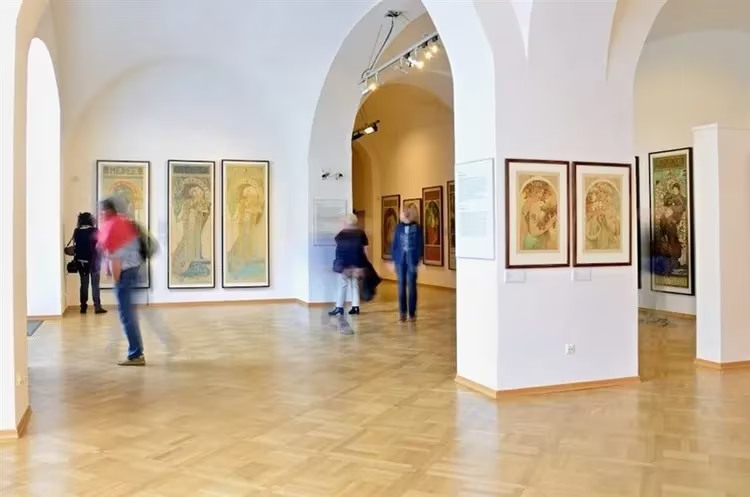
The famous Art Nouveau artist Alphonse Mucha left a significant mark on the world heritage. He lived in 1860-1939. You can get acquainted with his life and work in the museum. This is the only place in the world where the milestones of his creative path are most fully reflected. The entire exposition is divided into seven parts. After viewing the exhibition, visitors can watch a documentary that details the life of Alphonse Mucha. The first section is decorative panels. Graphic image is organically combined with traditional motifs.
The panels are very poetic and are a recognized masterpiece. The second section reflects Mucha's life in Paris at the end of the 19th century. At this time, the artistic life in the French capital flourished, and Alphonse Mucha had many reasons for inspiration. The rest of the pieces are decorative papers in pencil, an excellent collection of Czech posters, paintings, drawings and pastels. Particular attention is paid to photographs and the workshop.
Address: Panská 7, 110 00 Nové Město
Prague Metronome
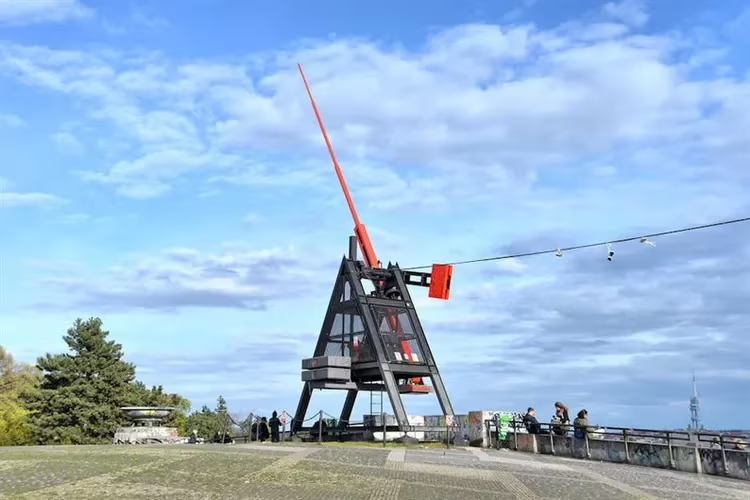
It is one of the most striking and conceptual attractions. A giant metronome counts down certain intervals of time, and its 20-meter metal rod moves majestically and measuredly over the panorama of the city. The metronome, authored by Vratislav Karel Novak, has a very great symbolic meaning. He tells us about the inexorable passage of time, about the inevitable changes, but at the same time is a symbol of stability.
The movement of the metronome reminds viewers of real life, filled with both ups and downs. Local residents have an original belief – a person weighed down by problems should come here, spend time in meditation near this sculpture, and then the burden will fall from the soul, and the problems will be easier to solve. Everyone who comes here feels peace and tranquility.
public house
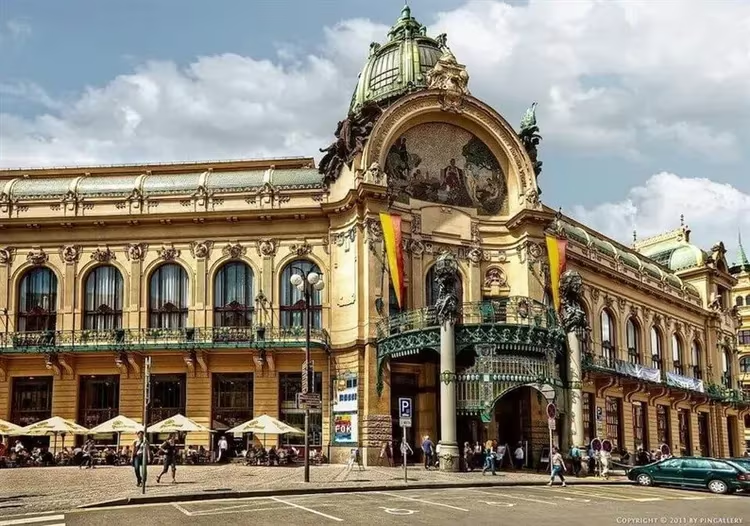
The city amazes tourists with its architectural masterpieces. One of them can definitely be called a magnificent building – the Public House. Once upon a time there was a royal palace on this place, which eventually dilapidated and collapsed. It was decided to build a multifunctional building here for various events. The external appearance harmoniously combines several architectural styles – neo-baroque, Czech modern, neo-renaissance.
30 best sculptors and artists worked on decorative elements. The interior decoration is also amazing. The house was the focus of all the technical innovations designed to provide convenience. An elevator, a ventilation system, heating, water supply and so on were thought out here. All communications are in excellent condition and still work. The rooms are decorated with intricate ornaments, paintings, frescoes, sculptures. Exhibitions, concerts, meetings of various clubs, seasonal balls are held here.
Address: nám. Republiky 5, 111 21 Old Town
Rudolfinum
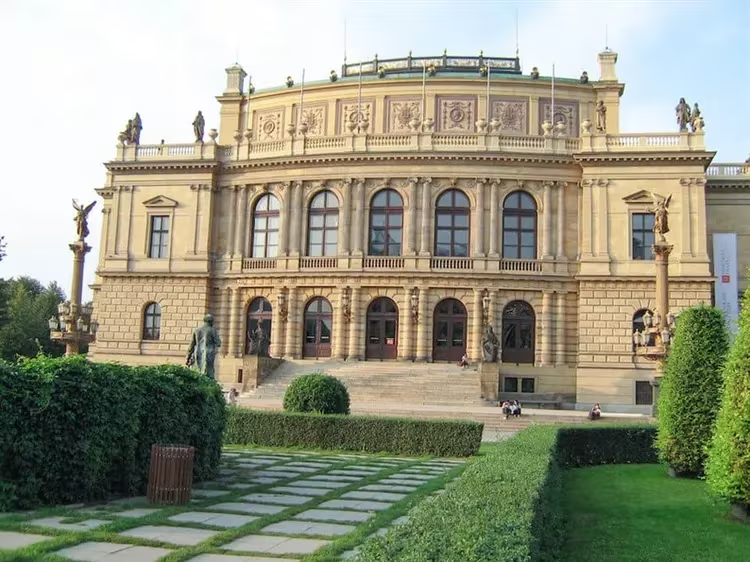
The majestic building on Jan Palach Square, which attracts attention with its solemn and elegant appearance in the Neo-Renaissance style, is the center of the musical life of the Czech Republic. This temple of art was built in 1855 and was a gift to the city from a Czech bank celebrating its anniversary. It received its name from Prince Rudolf. The cultural center stopped its activities in 1919, when the government of the country chose this building.
Meetings were held here that required a truly ruthless reconstruction. The original appearance of the interior decoration was partially lost, much of the building was rebuilt. After the end of World War II, the building was returned to the Philharmonic, and now various concerts and exhibitions are held there. Inside, the perfect combination of neo-Renaissance and classicism dominates. Symmetrical layout, solemn decoration, many sculptures make Rudolfinum one of the most beautiful buildings in the city.
Address: Alšovo nábř. 12, 110 00 Josefov