
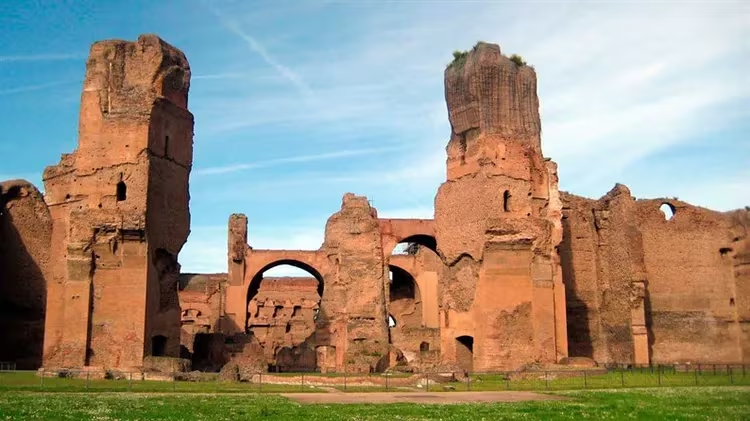
Baths of Caracalla – history, photo, description, opening hours, prices 2021, map
Even after two thousand years, countless tourists strive to get to the amazing place of Rome. Among the majestic ruins of millennia, the sounds of flowing water from aqueducts and fountains are not heard, the calm expanse of artificial lakes is not visible, there is no heat from the floor covered with ancient mosaics. And only the live music of orchestras, the performance of musical works by famous masters reminds of the former life of the sights of the city.
Construction history
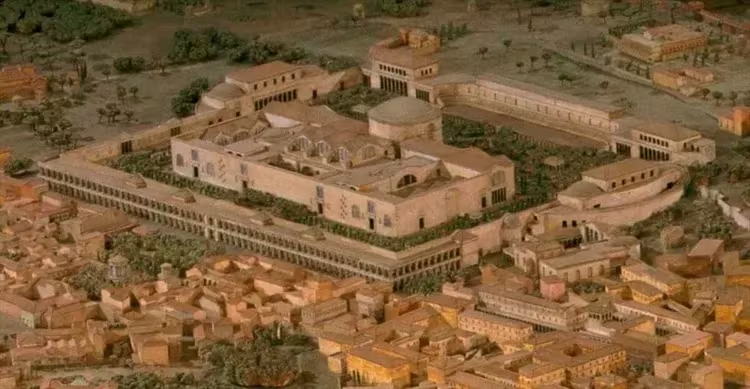
The genius of the engineering thought of the ancient city still amazes the minds of ordinary people, specialists. The eternal city growing on the hills was crossed by several giant arcades, along which pure, life-giving moisture ran from mountain springs. The availability of water allowed the Roman emperors to make the most expensive gift to all segments of the population in the form of public baths.
The idea of building baths was taken by the Romans from the Greeks. These are not just ablution zones, places of hygiene procedures. The Baths of Rome have turned into unique health centers, leisure, recreation and entertainment centers. By the way, 800 medium and 5 large centers functioned in the ancient city, which could be used by residents who did not have their own pools.
The final construction of the Baths of Caracalla is determined by 217 AD. Life was breathed into them by the flow of water from the Aqua Antoniniana aqueduct, built from the current ancient Aqua Marcia device. A section of the rocky Aventine Hill with an area of about 12 hectares was allocated for the new terms. The bath building is located in a park surrounded by beautiful trees and flowers.
A complex of 64 vaulted premises was built nearby, designed to accommodate swimming pools, stadiums, concert and gymnastic halls, and a library. The arrangement of all rooms was distinguished by an original way of lighting. Artfully located halls almost all the time was in the rays of the sun. The walls of the term buildings were decorated with colored marble, glass, precious stones, metals, complex, bright mosaics, and fabric coverings.
The Baths were considered a miracle of Rome in the 5th century. At the same time, 1600 people could rest in the complex. Baths worked until the end of the VI century. Then the invasion of the Ostrogoths destroyed the main property of the term, the flow of water. The earthquake of 847 added to the brutal destruction of the buildings. The thermal heating system was in working order by the 19th century. Its main part was a huge stove, located under the common plane of all the bathing rooms.
Through numerous chimneys, the heat rose up, heated the stones with which the sunbeds and walls were equipped. They kept, distributed heat for a long time. New tremors in 2006, 2009 dealt another serious blow to the ruins of buildings. The great desire of the inhabitants of the country to preserve their archaeological heritage helps to restore the famous landmark. So, for example, it became possible to admire the amazing polychrome mosaic of the floor of the western wing of the term.
Device principle
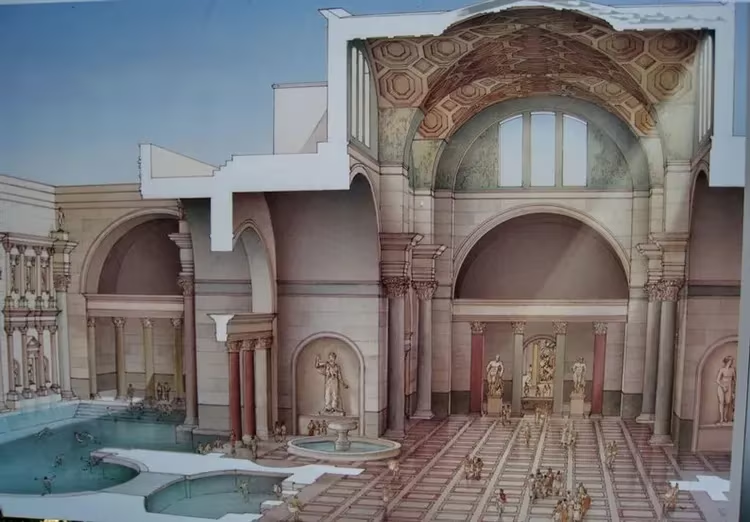
The premises, the working conditions of all bath services were thought out, built, decorated with special skill and skill. The main buildings of the term are the following elements:
1 Main hall. It is located in the center of the building. A powerful staircase led to a very high room. It is said that the real pyramid of Egypt could fit in the hall. The huge vault was held up by granite columns. In the walls of the hall there were two niches with statues of Hercules. It was possible to enter the hall along curved corridors, which retained heat for a long time. Windows were made in the walls of the hall. Instead of glass, they contained thin plates carved from the bones of elephants. The temperature here was always high, the air was dry.
2 Frigidarium. Otherwise, “cold bath”. Passing through the central arch, the man found himself in the hall, where the slaves took his clothes. Next was a spacious room with an open-air swimming pool. The ancient Romans considered it harmful to bathe in running water under the roofs of houses. Therefore, the central pool was equipped in the open air.
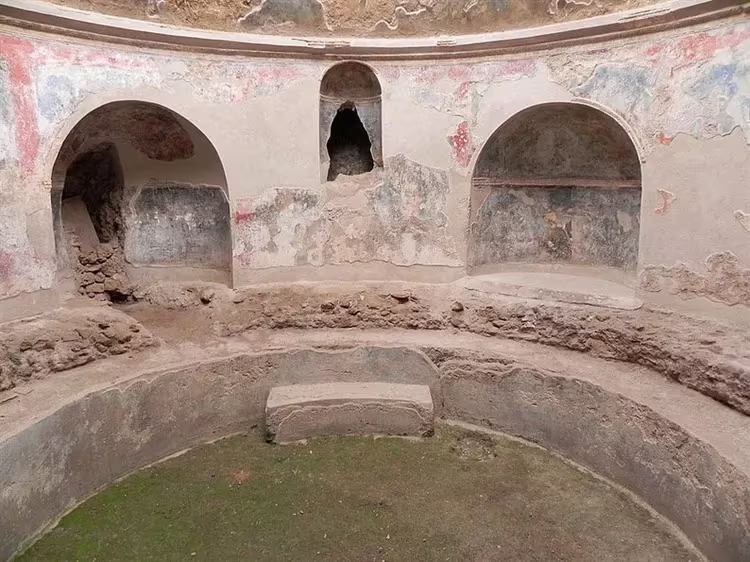
3 Dome. This is one of the most unusual elements of the term. A column of sunlight entered the hall through the central opening of the dome. Waste water vapor escaped through it. During the movement of the sun, the beam formed fantastic lighting effects. The surface of the dome consisted of deep square caissons, decreasing at the bottom. This gave the dome a special shape in the form of an egg. Shiny rosettes were mounted inside the caissons, looking like big stars. The original elements gave the dome an unusual lightness and created the impression of a starry sky.
4 Caldarium. This is a hot bath. It looks like a round hall in which hot tubs are placed around the pool. Colored marble loungers are distributed along the walls. Here you could have a massage, rub yourself with incense, oil, and relax.
Next to the hot bath were small rooms that looked like horseshoes. The temperature in the rooms was lower. The Romans simply rested here, admiring the interesting bas-reliefs, mosaics, and sculptures decorating the premises. They were created by the famous masters of Italy, brought from different countries. The floor was decorated with mosaics depicting images of fantastic animals, fish and birds.
5 Library. The complex included cozy beautiful courtyards, where the Romans had philosophical conversations and disputes for hours. They confirmed their thoughts with the works of ancient scientists in the library. It occupied the entire corner of the main building. Here were the riches that were previously placed in the library on the Troyan forum.
6 Stadium. The green gymnastic carpet was located behind the thermal building. The tribunes, arranged on the slopes of the hill, made it possible to comfortably admire the competitions of athletes. It was possible to do this while lying in the buildings of the complex.
Substructures, palestras, ablution halls, cloakrooms, steam rooms, vestibules were comfortable, thought out to the last detail.
Thermae today
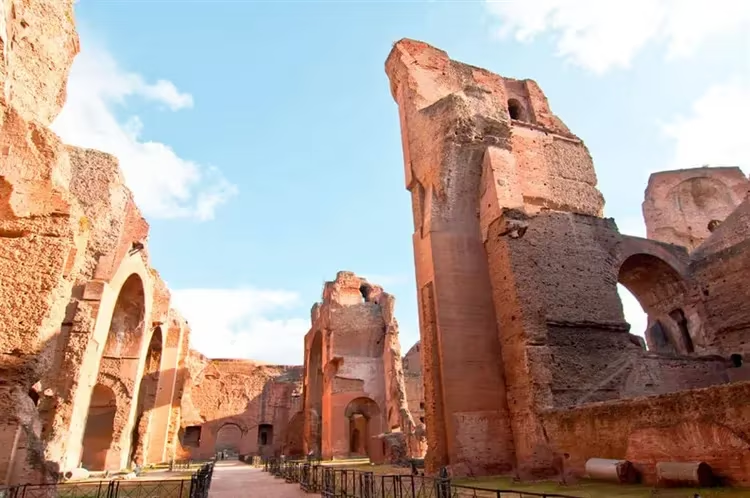
The fate of the architectural masterpieces of Rome was difficult. Cruel historical events have saved us only the ruins of an ancient masterpiece. Gradually they are restored, filled with new life. This is not a shelter for homeless people in dilapidated buildings. Not a quarry where building materials were mined. Ancient architectural forms are gradually removed from the soil layer. Antique statues, mosaics that decorated them, become open to tourists, residents of the city.
Thanks to the amazing acoustics, the Opera House of Rome holds performances and concerts here in the summer. Since 1937, a concert venue has been equipped here with a stage of 1800 sq. m. Even Verdi's opera “Aida” was staged among the majestic ruins. Elephants, camels, horses moved importantly around the stage. Among the walls of the term sounded the voices of Luciano Pavarotti, José Carreras, Placido Domingo.
The Baths of Caracalla became the venue for the competitions of gymnasts at the 17th Olympiad in 1960. An interesting moment was the discovery of a sanctuary in a natural cave located in the dungeons of the term in 1912, called the mithreum.
Opening hours and ticket prices
You can see the attraction from 9 am until the end of daylight hours. The cost of tickets for opera, ballet is up to 100 €. A visit to the thermal baths is 6€ for adults, 3€ reduced.
Where are the baths and how to get to them
The attraction is located at Viale delle Terme di Caracalla. You can get to it by metro line B. Get off at a stop called Circo Massimo. Take shuttle bus number 160, taxi, rent a car. A visit to the ruins of the term, modern musical performances taking place here will fill a person with new strength, good mood, touching the atmosphere of ancient times.