
Bird and reptile park in Bali – history, photo, description, opening hours, map
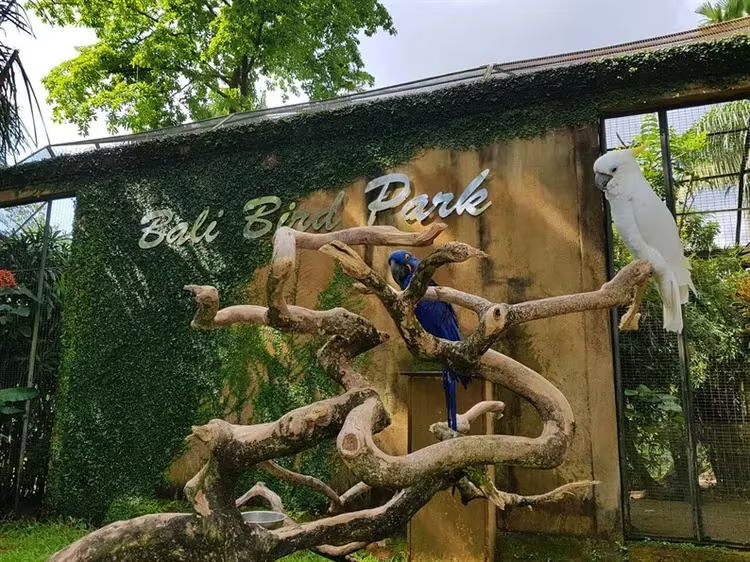
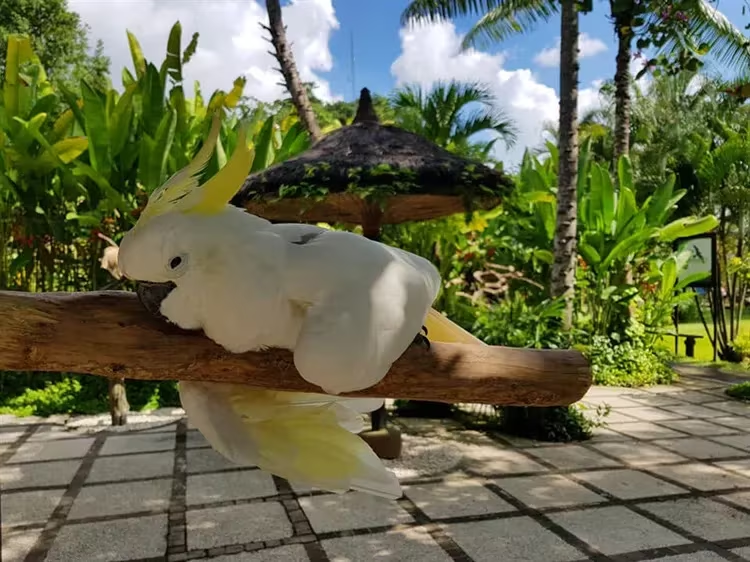
Bird and Reptile Park (Bali Bird Park) in Bali is a unique place where feathered and cold-blooded animals live side by side in a small area. Tourists will also observe both the frequently encountered and the inhabitants listed in the Red Book. The advantage of the park is that animals, in addition to aggressive and poisonous ones, roam freely. They even freely enter the cafe, allow themselves to be touched and stroked.
Territory description
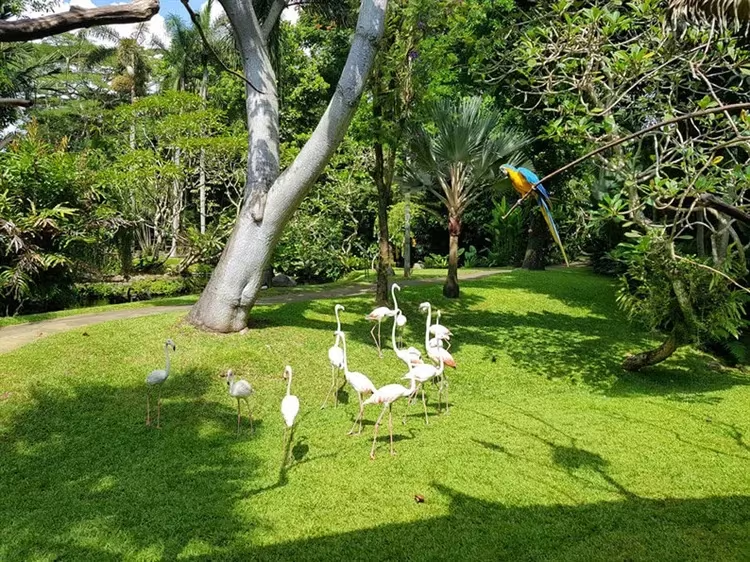
The park takes up very little space: about 20 thousand square meters. But at the same time, more than 250 thousand species of birds live here. In order for the birds and cold-blooded animals to feel comfortable, about 2,000 plants have been planted on the territory. In areas where animals roam, trees and grasses have a natural look. In places for tourists to walk, the lawns along the paths are neatly trimmed, flowers are planted for beauty.
The organizers of the park have collected a rich collection of unique and common animals. Not all of them get along well with each other, and some are dangerous for humans. Therefore, predators are behind a reliable wire fence: you can watch them while remaining safe. Some rooms on the territory resemble houses for staff, but the inhabitants of the park live there. In each you can go and get acquainted with the tenants.
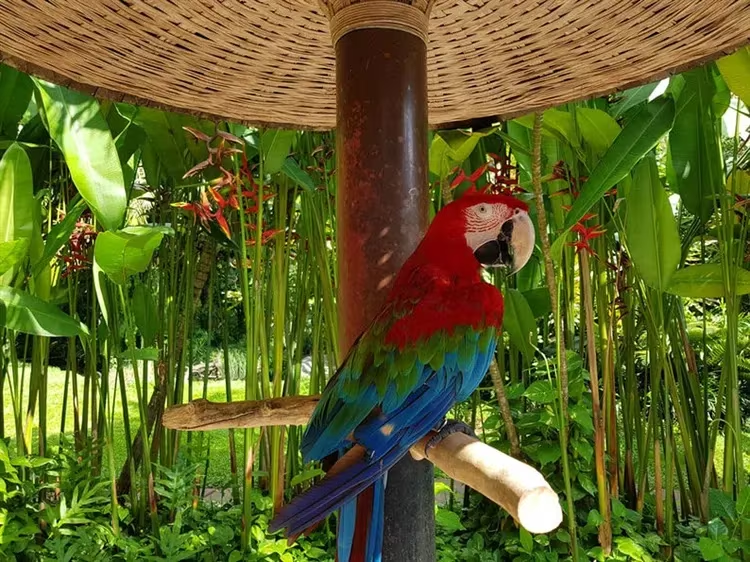
For each species, the owners of the park create the conditions that are required for normal life and reproduction. Plants are planted, slides made of stones, pools are arranged. Owls do not tolerate bright light and noise: an owl house has been built for them in a secluded place. Tourists can watch adult birds and their young. Hungry guests are given the opportunity to have a bite to eat without leaving the park. There is a small cafe here serving local and European cuisine.
The room does not have walls, so the inhabitants of the park freely roam between the tables. By prior order, in the cafe you can celebrate a birthday or other celebration: such an event will be remembered for a long time by the kids and their parents. The main purpose of the reserve is to show tourists rare and endangered species of animals. But at the same time, serious scientific work is being carried out in the park of birds and reptiles: specialists from all over the world come to conduct research at the ornithological center.
bird park inhabitants
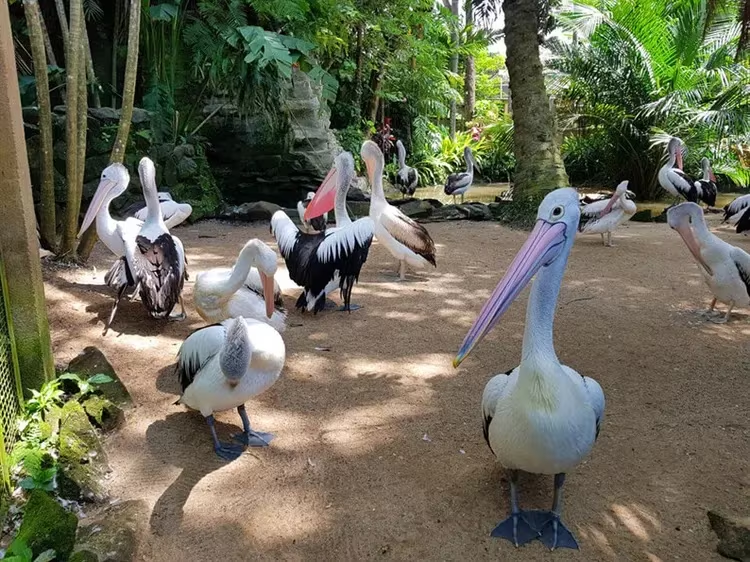
A small area of the reserve is inhabited by more than 1 thousand feathered inhabitants. At the same time, the sector is divided into 7 unequal parts, in each of which the residents are provided with conditions that are as close to natural as possible:
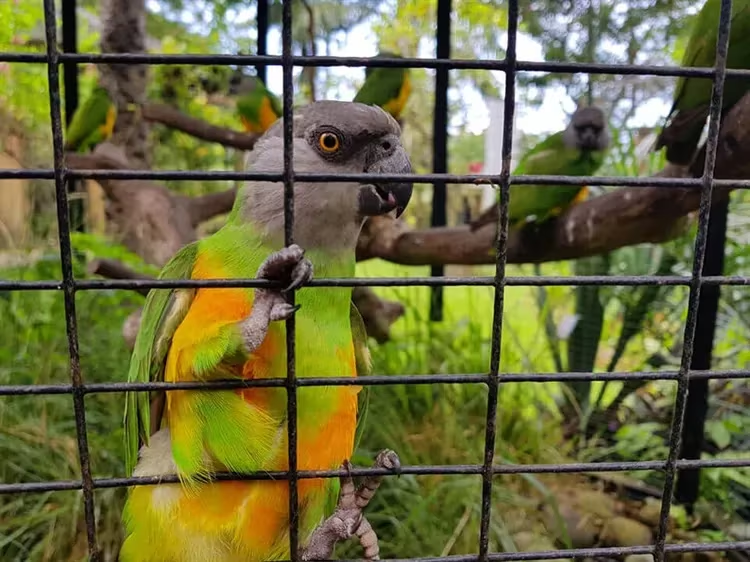
The entrance to the territory is impressive: here tourists are welcomed by colorful parrots. They are almost tame, they are not afraid of people. For the safety of residents and visitors, most residents are placed in mesh cages. Each has a plate with information about the name of the bird, what are the conditions of its habitat in the wild. Unfortunately, almost all feathered residents of the park are rare or endangered species.
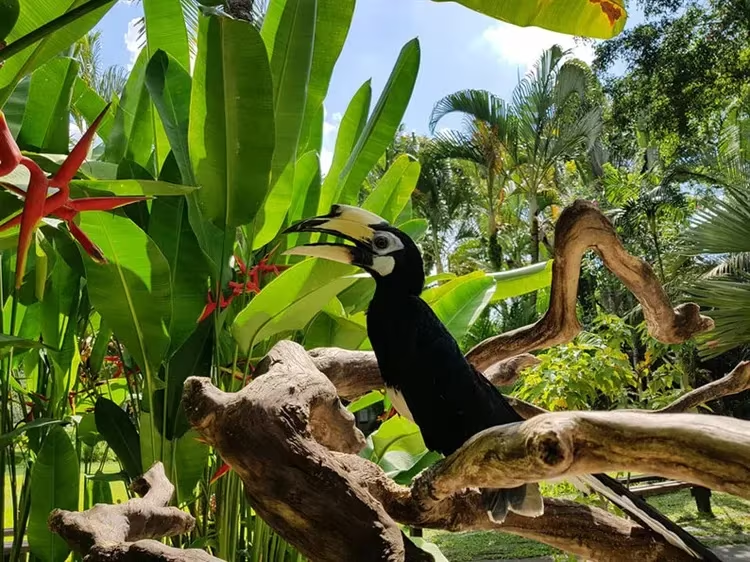
They are listed in the Red Book:
- Maina, or Balinese starling. It lives exclusively in the northwest of the island in the Barat reserve. Leads a secretive life. Refers to species that are under threat of extinction.
- An inhabitant of the wetlands of rivers and lakes in South America is the red ibis. Its feathers have a rich scarlet color, because the bird naturally feeds on shrimp and crustaceans. Today, the ibis population has begun to increase, but it has not been excluded from the Red Book.
- Venezuelan orange-winged Amazon. This is a parrot with green plumage with bright orange stripes on the wings. The bird is endangered due to its love of grains. Thus, because of her addictions, she devastated the fields of farmers.
- Turao is an inhabitant of the wet banks of rivers and streams in South Africa. It has purple plumage, which it uses to intimidate enemies. This bright feathered one is the relatives of our green cuckoo.
- The crowned crane in the park moves freely. This is a peaceful animal, absolutely not afraid of people. In the natural habitat, he did not get along with the farmers due to the fact that he easily switches from an animal to a vegetable diet.
- Kaffir horned raven. It is easily recognizable by the red leathery growths on its head. This is a very strong and aggressive bird that does not get along with other inhabitants of the park. Easily destroys enclosures and cages and flies out into the wild.
- A laughing kookaburra screams so that people around hear human laughter. The bird is brightly colored.
- The clawed cuckoo has a horizontally protruding claw on its foot. And her eyes are red. This bird is distinguished by the fact that it itself hatches chicks. It is easy to recognize the cuckoo by its bright orange-blue plumage.
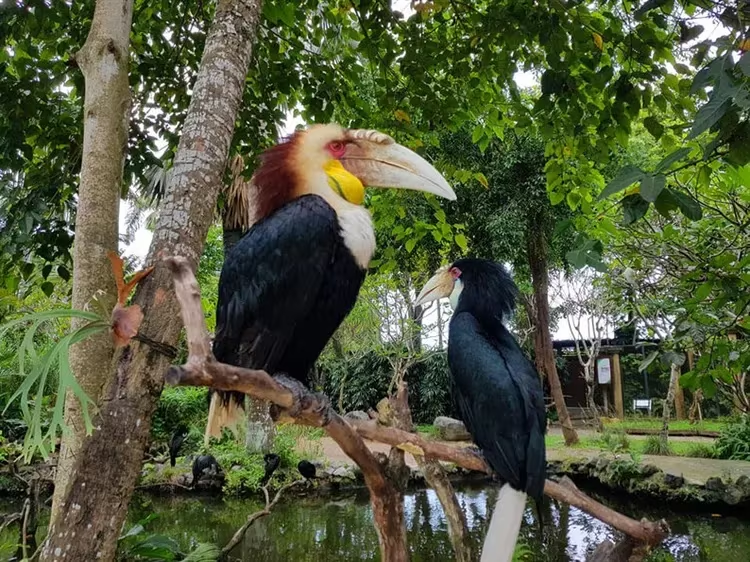
Juveniles of rare birds are reared in incubators. You can also go here to watch the behavior of the birds. Then the chicks are transferred to a permanent place in the enclosures.
reptile park inhabitants
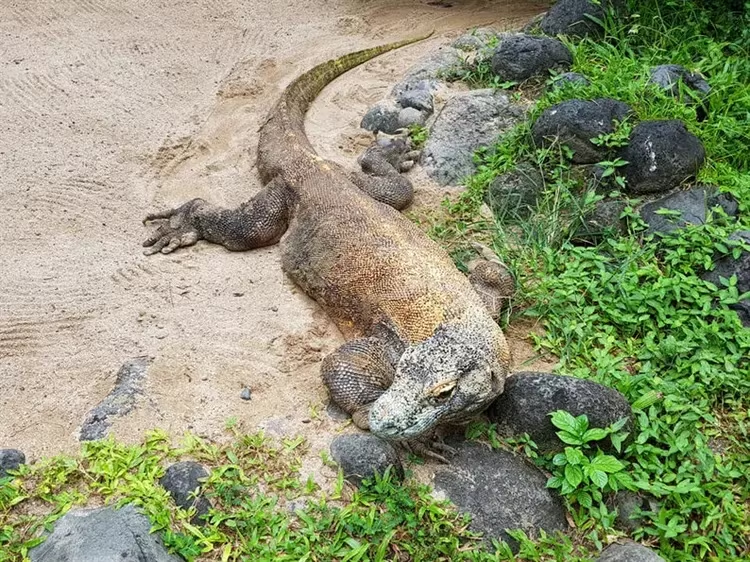
When you get tired of listening to the chirping of birds, you should move to the next sector – the reptile park. It's quiet and dark here. More than 200 cold-blooded animals are represented in this part. And for each inhabitant, the conditions of the region where he was brought from are created. Tourists move from the savannah to the jungle, walk among artificial swamps and man-made caves. Many inhabitants, lizards and iguanas, roam freely. You should look under your feet so as not to accidentally crush someone.
But for dangerous and aggressive, special rooms have been created:
The special pride of the park is the Komodo dragon. This is a giant monitor lizard, whose body length is more than 2 meters. The lizard weighs about 60 kg. The animal existed in the prehistoric period, walked the Earth at the same time as the dinosaurs. The modern climate has led the dragon to almost complete extinction. But the park has created favorable conditions for the growth of its population.
Entertainment and shows
You can just walk around the park, watching the inhabitants and studying their habits. But for discerning tourists, the administration came up with a whole entertainment program:
- Cock-fights. True, the organizers of the tournaments do not allow strong bloodshed, the battle stops.
- Feeding crocodiles. To participate in this event, you should buy a live chicken (price is about 200,000 rupees). The bird is put on a fishing rod, which is handed to the tourist. Then it is proposed to watch how the reptile tears and absorbs the animal.
- Feeding birds by zoo staff. During the event, people throw food and animals catch it in flight. You should be careful: bird food sometimes gets into tourists.
- Excursion to visit the Komodo dragons. It is held 2 times a week, the schedule should be specified in advance at the park administration.
- Demonstration of films from the life of the feathered inhabitants of the park in a 4D cinema.
- A visit to a restaurant serving delicious food. It's nice that a portion of cola is served as a gift when ordering.
- In the souvenir shop you can order a T-shirt with a photo print with the inhabitants of the park. You can take pictures with your own device or phone for free, and the services of a local photographer should be paid separately. When photographing with the inhabitants of the park, care must be taken: animals have sharp claws or beaks, so even minor scratches can lead to subsequent festering.
- Tired kids can play on the playground. It is shady, cozy and quiet here.
Payment for entertainment 1-4 is included in the price of the entrance ticket, except for the purchase of live chicken. Other activities are paid extra.
Opening hours and ticket prices
For tourists, the park is open from 9 am to half past five in the evening. A ticket to enter both sectors costs $29. Children visit the reserve for 50% of the price. It is important to remember: shiny jewelry attracts birds. In order not to be subjected to a sudden attack, you should remove all objects that reflect light.
Where is it located and how to get there
The park is located in the vicinity of Denpasar: it is 13 km from the city. On a rented car or bike, it is easy to get there in 30-40 minutes. Fans of extreme movement can try to get to the park from Denpasar on passing transport. But it should be remembered: the intensity of car traffic on the island is negligible.