
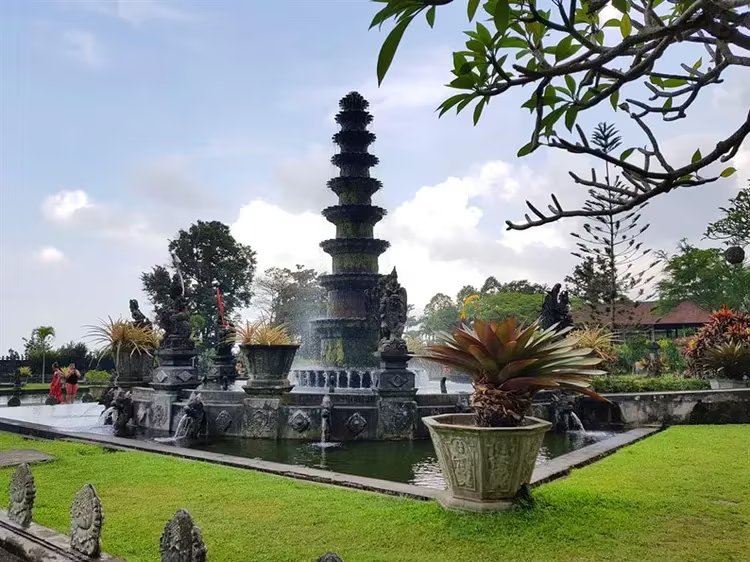
Tirta Ganga Water Palace – history, photo, description, map
Tirta Gangga Water Palace in Bali is a place that will appeal to both children and adults. Here you can not only relax and swim, but also watch the colorful Hindu rituals. The park is recommended to be visited when a beach holiday is boring: a walk will distract you from the ocean and give you a lot of impressions. And the kids will be happy to feed the tame goldfish.
Construction history
Fresh water in Bali is rare. Therefore, when the last Raja of Ketut discovered a large spring, which, in addition, made its way through the roots of a sacred tree, he immediately declared the spring to be healing. Raja Agung was an educated person: he studied the profession of an architect in Holland. In addition, he cared about the well-being of his subjects (a rarity for those in power in those days), so the enlightened monarch decided to build a residence for the rest of his family, and for the people – to ensure regular irrigation of the land.
Large-scale work began in 1946. By 1948, construction was mostly completed. The ruler's family received a new place to rest, the surrounding peasants – water for planting rice. Even the city of Amlapura was supplied with fresh water. Unfortunately, the idyll did not last long: in 1963, the eruption of the Agung volcano, which (intermittently) lasted 10 months, almost completely destroyed the ensemble. And what resisted the onslaught of the elements was plundered by “grateful” local residents.
Raja Ketut tried to rebuild the unique complex, but by that time he was short of funds. Work progressed slowly. And in 1966, the last monarch of the island died, and the restoration stopped. Only by the beginning of the 80s of the XX century it was decided to continue the restoration. It was already carried out on voluntary donations. By 1990, the main restoration measures were carried out, but work continues today.
Architecture
The architect of Tirta Ganga was the last Raja of Ketut, so the complex is characterized by a mixed style: traditional Balinese and Chinese. Tourists see the temple as a composition of:
The temple complex is made in the traditional Hindu style: it has 3 terraces:
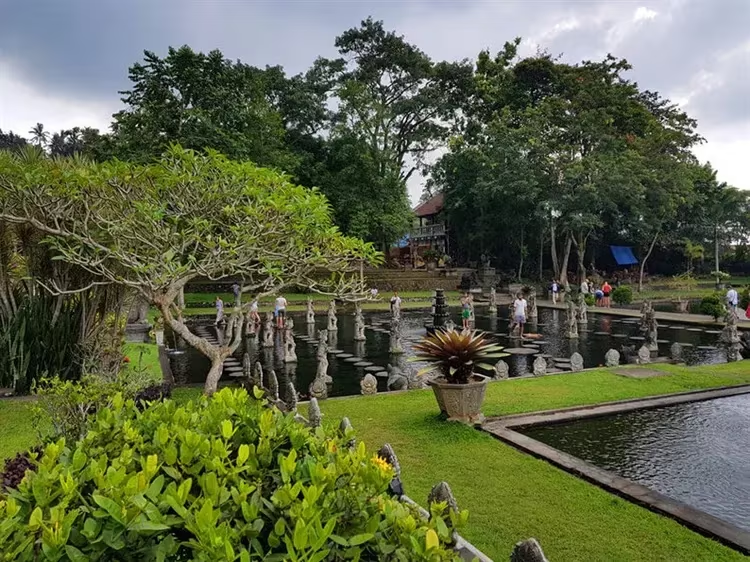
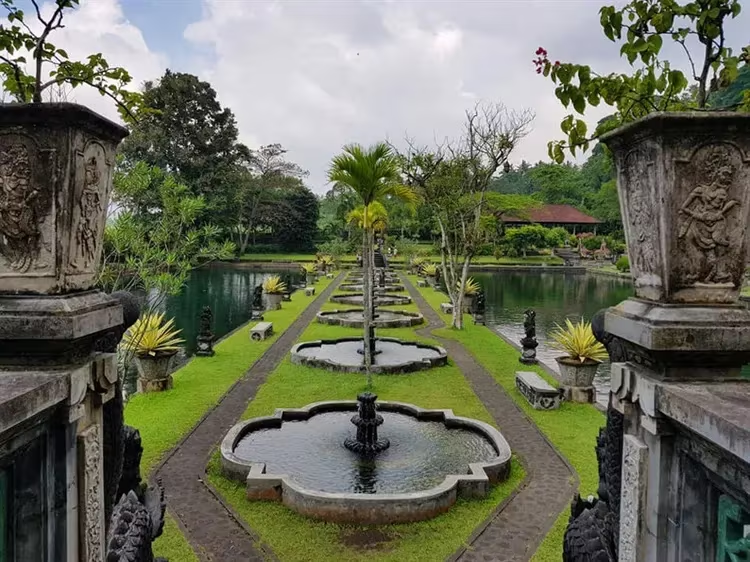
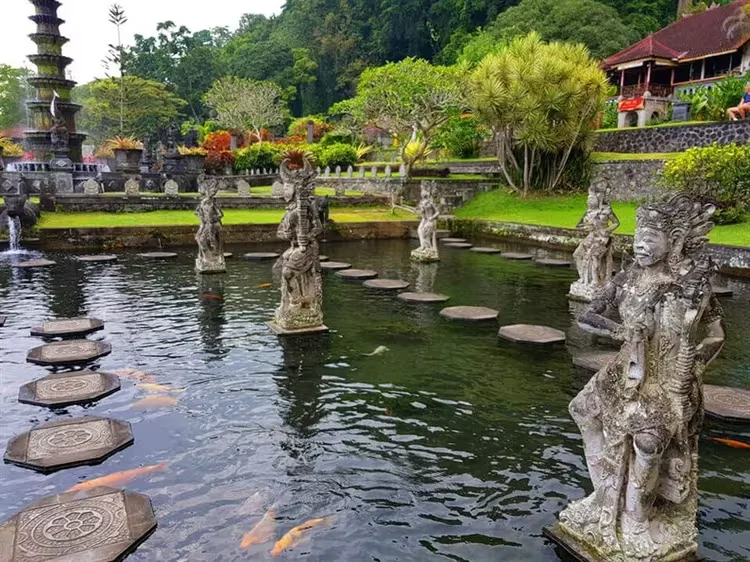
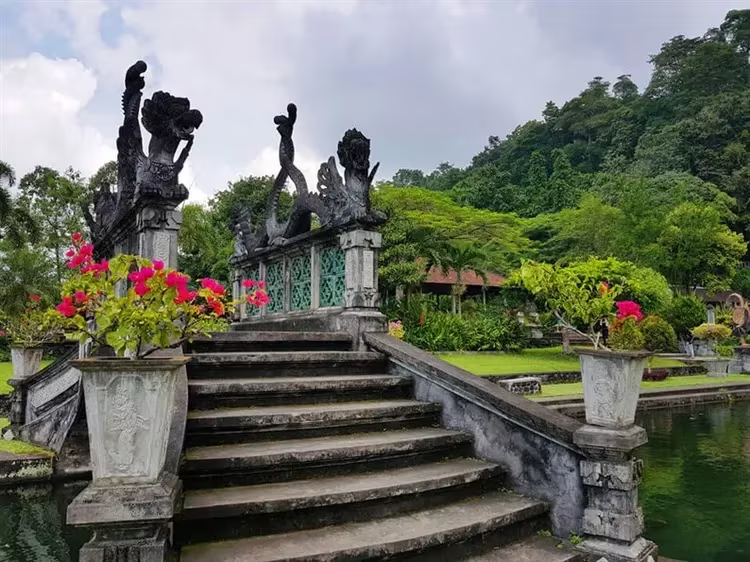
- Demons live on the lowest terrace: this is their world. In order for the entities to live in comfort, a garden was laid out for them and pools were built. The ponds are inhabited by fish, it is easy to cross the ponds on the bridges. There are statues of demons and animals everywhere. Of the outbuildings there is a water tower.
- The next terrace is given to people. Here the ponds are for swimming. True, water procedures require an additional fee. But the locals say that the water in the pools is healing, because it flows from a sacred source. Some tourists claim that the water is cloudy.
- On the upper terrace is the palace of the ruler and a platform for performing rituals. The place is dedicated to Shiva, Brahma and Vishnu. There are sacrificial platforms and rooms for prayer.
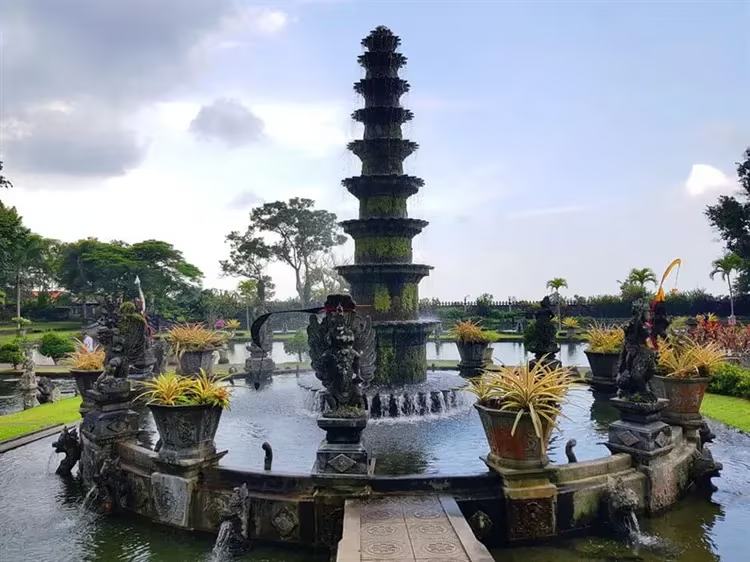
Interesting interpretation of the title. Tirta means “sacred water”, and Ganga is the embodiment of the heavenly river, which the god Shiva brought to earth. Thus, the sacred waters of the heavenly river are given to believers for a happy life. It is noteworthy that the complex leaves a feeling of an ancient building: everything is covered with soft emerald moss. Therefore, it seems that there was a journey in a time machine thousands of years ago.
What to see
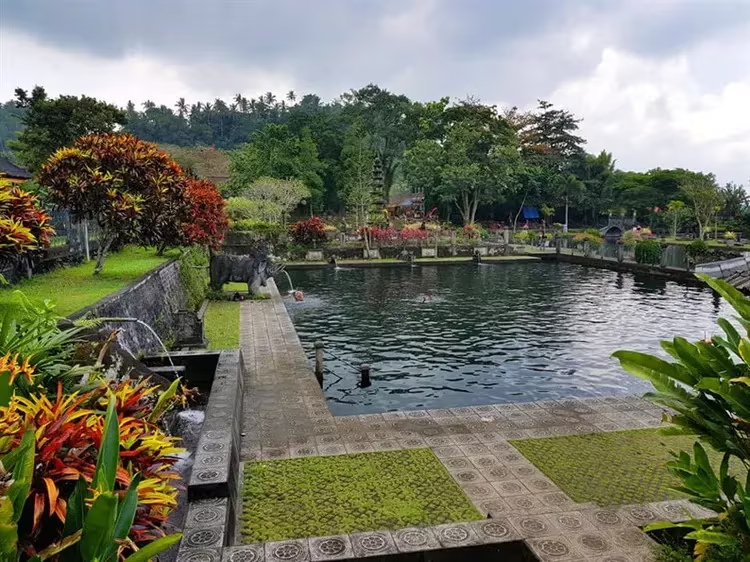
It is pleasant to just walk around the complex: the systems of paths and bridges allow you to move from place to place endlessly. And the shady garden with outlandish trees beckons with coolness. But the following deserve special attention:
- Colored fish in the pools on the first level. These are Koe carp brought from Japan. The length of an adult fish is 0.9 m, and it can cost thousands of dollars. The fish are always hungry and almost tame: they swim up and snatch food from their hands. In order to please the animals, you should buy bread, which is sold at the entrance. You can also prepare ahead of time and bring your own food.
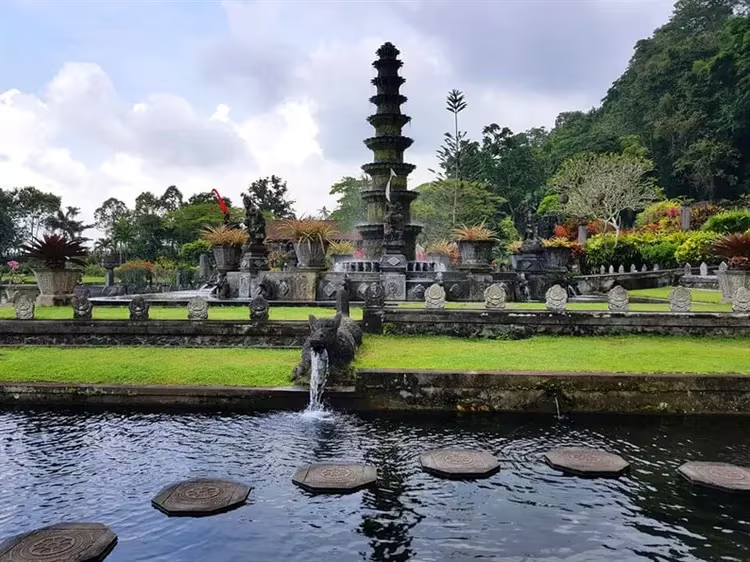
- Paths of stones laid flush with the water. It gives the impression that you are walking on the surface of the pool. Coe carps curl almost underfoot. Locals say that if you walk in a strictly defined sequence, then all desires come true. True, in which one, they do not say.
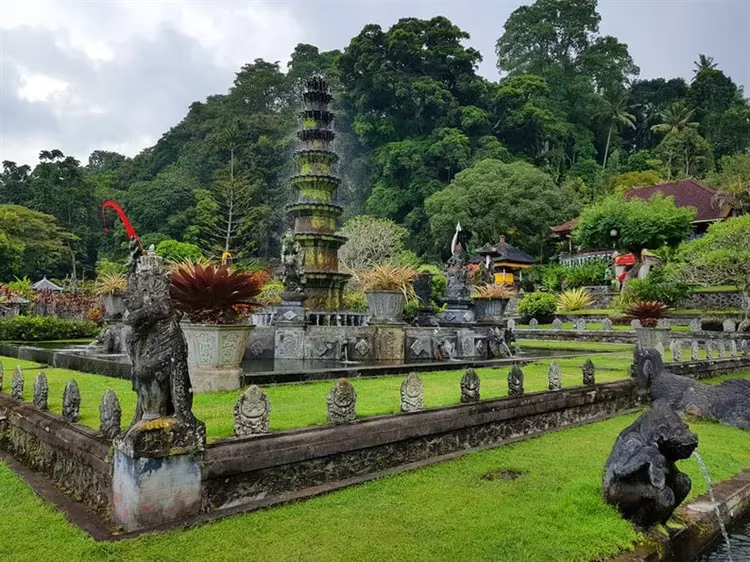
- Fountain Nava Sanga. The structure has 10 bowls, which rise one above the other. It is dedicated to the god Sangu Hyang Vidi, the keeper of the sacred water. The fountain is the center of the composition, made in the traditions of the Ramayana. Around the central figure of the guardian are gods of a lower rank.
- Another fountain, which is made in the form of a boar, is the earthly incarnation of the cannibal demon Rakshasa. It seems that not water, but saliva flows from his mouth. An intimidating figure guards precious water: the gods created such a monster to protect sacred moisture from thieves.
- Swimming pools. It is especially pleasant to visit them during the hot time of the day. But it is important to remember: it is still cold to plunge in the early morning. By the way, bathing on the full moon will give you eternal youth. But technically this is hardly feasible: it is forbidden to be on the territory after closing.
- Nearby rice fields. There is an opportunity to observe how a well-known plant is cultivated. There are few tourists here, so the walk will be calm.
- It is interesting to evaluate the water supply system of the complex as a whole. The main part goes to the city of Amlapura: this is drinking water for residents. Then the pools with fish and those used for swimming are filled. The contents of the baths are regularly updated: dirty water is supplied to the rice fields. For competent water supply, a system of towers and underground drainpipes was built.
The complex has a restaurant with a hotel. It is the property of the heirs of the last ruler. If you wish, you can have a bite to eat and stay overnight. The descendants of the raja work in good faith: the reputation of the institution is expensive.
Tips for tourists before visiting
Basically, the complex is visited by local residents: they perform rituals, pray; few tourists. There are no special rules to follow. However, too defiant behavior of the guests causes rejection of the natives. In addition, you should take into account that:
Due to the remoteness of Tirta Gagna from the main excursion routes, it is recommended to combine the trip with additional sightseeing, for example, Tirta Lempuyang.
Opening hours and ticket prices
The complex is open for tourists from 8 am to 6 pm. An adult will need to purchase a ticket for 30 thousand rupees. A walk around the temple for a child will cost 15,000 rupees. Swimming in the pool is also paid: 20 thousand rupees.
Where is it located and how to get there
Tirta Ganga is a complex remote from the visited places. It is closest to the city of Amlapura: it is only 8 km away. You can try to take a bus from the resort village to Candidas, and from there by bus to Ampalura. True, due to the small flow of passengers, there is no regular bus service to Ampalura. Therefore, it is recommended to specify the day and time of departure in advance. And the last 8 km to the temple will have to be walked or try to catch a ride. Traveling on a rented bike or car is considered more comfortable. When plotting a route, you need to use a navigator. You can park in a paid parking lot at the complex (1 thousand rupees).