
Sights of Nice – 25 most interesting places
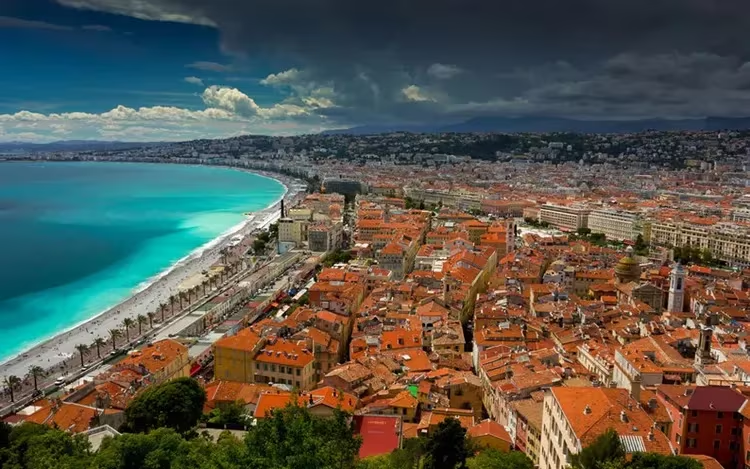
The heart of the French Riviera is, of course, Nice. The seaside town has long been famous among tourists. Travelers explore the sights of Nice with interest. The list of popular objects includes museums, ancient buildings, temple complexes, etc. It is difficult to see the whole city in 1 day, therefore, for curious tourists, a list of the most interesting sights of Nice was compiled. It will help you navigate the area and choose the most attractive objects for yourself.
Promenade des Anglais
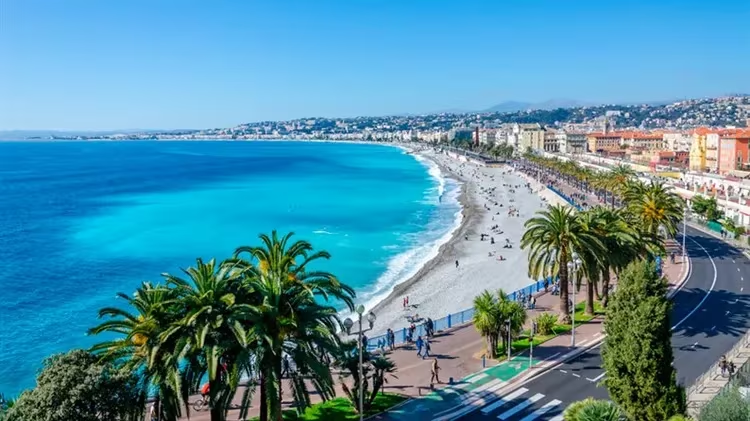
A street that runs along the coast, back in the 19th century. loved by the British. Residents of foggy Albion built luxurious villas overlooking the sea and in the evenings made a promenade along the road. Therefore, the street began to be called the “Way of the English”, and later the Promenade des Anglais. Now it is the most popular place for walking tourists and residents of the city.
The dimensions of the boulevard (length – 5 km, width 8 m) allow you to enjoy the view of the sea and ancient architecture. Among the most memorable ensembles is the Mediterranean Palace. It houses a theatre, a casino and a hotel. The Promenade des Anglais has long become not only a symbol of the city, but of the entire French Riviera. Walking along it will give you the opportunity to get acquainted with the history of the city, and have a good time.
Book a private transfer from the airport to your hotel for 2 674 RUB
Hotel Negresco
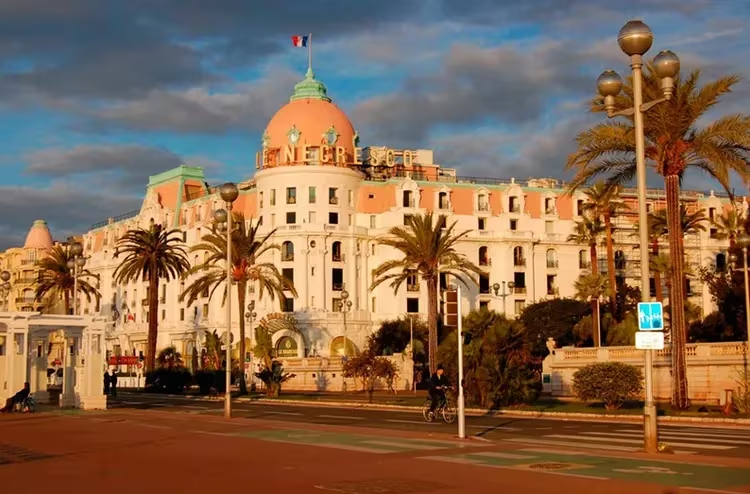
For more than 100 years, the Negresco Hotel has served as a decoration of the Promenade des Anglais. The building in the Renaissance style was commissioned by the Hungarian magnate and named after him. Since its inception, the hotel has been a destination for the rich and famous. The following people stayed in it during their stay on the Riviera: J. Cocteau, E. Hemingway, S. Dali, M. Dietrich, K. Chanel, musicians of the Beatles group.
It offers guests 145 luxurious rooms, each of which has a unique design. The interior is striking with luxurious decoration. The hall is illuminated by a huge crystal chandelier (2 m in diameter). The floor is covered with a precious 17th century carpet created for the French Queen Marie de Medici. The majestic pink dome of the 6-storey building distinguishes the building from other buildings on the embankment.
roman hill
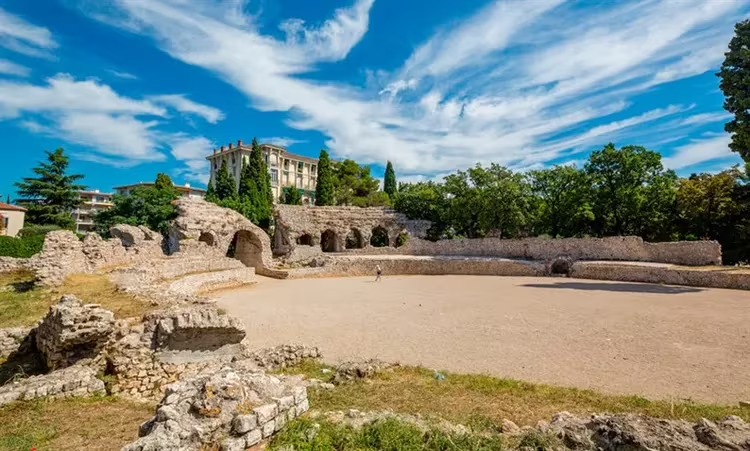
Archaeological excavations have proved that in ancient times there was an ancient Roman settlement on the site of modern Nice. It was founded by people from the Apennine Peninsula in the 1st century BC. BC e and received the name Cemenelum. The settlement was the main stronghold of the Romans on the Riviera. However, the Romans did not manage to gain a foothold on the coast for a long time. Already in the 5th c. The village fell into disrepair and was abandoned by people.
Archaeologists managed to unearth several ancient buildings that have been well preserved to our time. On the so-called “Roman Hill” history lovers can see the remains of residential buildings, an amphitheater, baths. All kinds of household items found at the excavation site were transferred to the Archaeological Museum of the city. Surveys on the territory of the Cimiez quarter, begun in the middle of the last century, continue.
Castle Hill
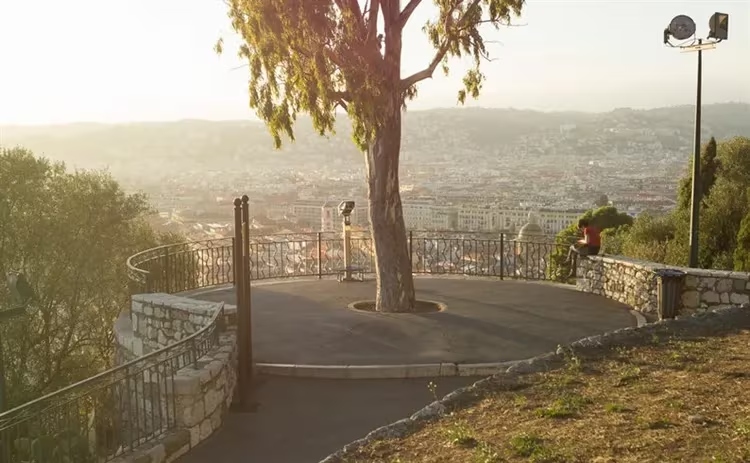
You can enjoy a panoramic view of the city from the platform on the top of the Castle Hill, otherwise called Chateau Hill. It rises above the city, and in ancient times it was of great strategic importance. In the Middle Ages, a feudal castle was located on the mountain, the owners of which controlled the adjacent territory and the sea coast. Few fragments survived from the ancient citadel. Every hour a cannon fires on the mountain.
Of interest to tourists are the Bellanda Tower and the Basilica of St. Mary. The tower was used as a hotel for a long time, and then was converted into a Maritime Museum. In addition to architectural sights, travelers enjoy exploring the city park. It presents a variety of plants of the Mediterranean flora, as well as species imported from other continents.
Chateau Park
At the top of the Castle Hill is the Chateau Park. From its observation decks, a breathtaking view of the city and the sea area opens up. To climb the mountain (90 m), stairs were built, as well as a special elevator. The park was laid out at the beginning of the 19th century. city authorities at the behest of the Duke of Savoy. The recreation area successfully combines numerous alleys and lawns with artificial reservoirs. For the convenience of visitors, playgrounds and snack bars are equipped.
The lower terrace of the Castle Hill is occupied by an ancient necropolis. It became a resting place not only for citizens, but also for foreign citizens: A. Herzen, G. Leroux, E. Jellinek and others. The cemetery is open to the public daily from 8 a.m. to 6 p.m.
Chateau Park is open daily for free visits. Opening hours:
Old city
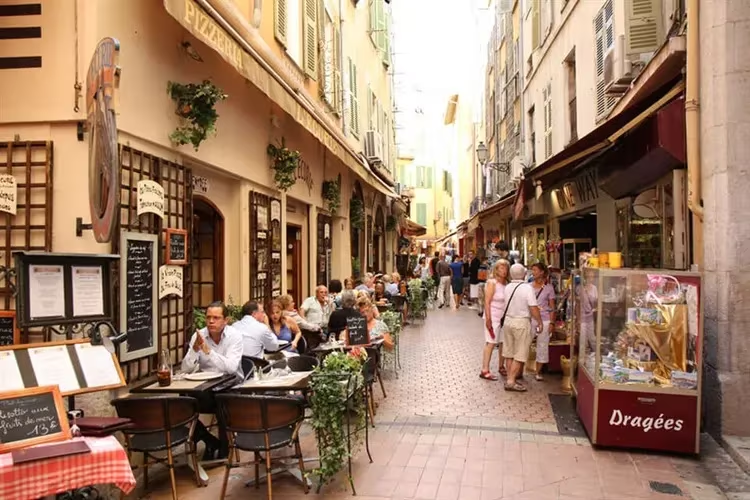
Vieux Nis is rightfully considered the most picturesque area of the city. Urban planning began in its streets in the 16th – 19th centuries. Winding sidewalks rise to the top of the hill, then go down. Numerous small shops, bistros, cafes nestled along the narrow paths. The atmosphere of the Old City is imbued with the spirit of bygone eras. Most of the buildings were built by order of aristocrats. Their architectural delights attract the eye and remain in memory for a long time. In order to preserve the heritage of the past for future generations, the Vieux Nis quarter was taken under the protection of the UNESCO world organization. The main “highlights” of the Old City are the Chapel of Mercy and the Palace of Justice. The chapel was built in the middle of the 18th century. according to B. Vittone's sketches. It belonged to an order that helps those in need.
Port of Lympia
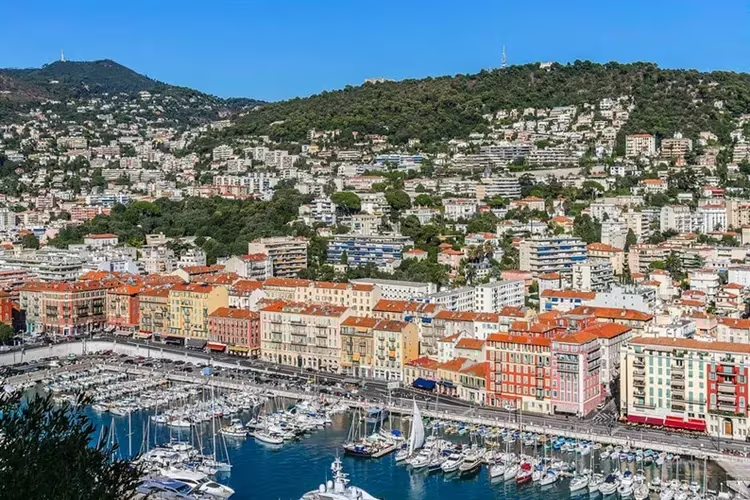
The geographical location on the seashore necessitated the creation of a reliable harbor that could meet the needs of the city. By order of King Charles Emmanuel III, it was decided to lay the port in the eastern part of the Bay of Angels. To provide access for large-sized vessels, the bottom was deepened, and the water area was expanded. The port of Limpia began full-fledged operation in the middle of the 19th century. It is able to receive both huge cruise liners and small yachts.
Ferries depart daily from the pier, linking mainland France with Corsica. The most famous landmark of Lympia is the old lighthouse. A stone tower appeared at the end of the pier at the end of the 19th century. During the 2nd World War it was destroyed and then rebuilt. The height of the lighthouse (21 m) allows you to see its light at a distance of 40 km.
Place Massena
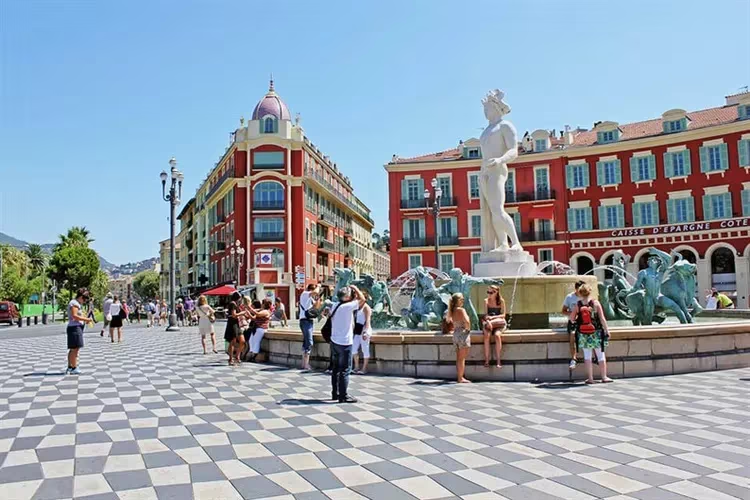
An unusual combination of antiquity and futurism distinguishes the parade ground near the Promenade des Anglais. Until the middle of the 19th century. the square was called Prigorodnaya until it was renamed in honor of the Napoleonic marshal A. Massen. In the east and west, park recreation areas adjoin the forum. The northern and southern parts are bordered by buildings from the 19th century. The central position is occupied by the fountain of the Sun. Its design was developed by A. Zhanyo in 1956.
According to the author's idea, the bowl of water is surrounded by bronze figures of ancient Greek deities. In the middle rises Apollo – the god of the Sun. No less interesting is the modern installation, invented by the sculptor from Catalonia, Jaum Plens. It represents 7 seated rubber men, which are designed to personify the earth's continents. The composition is called “Conversation in Nice”.
Garibaldi Square
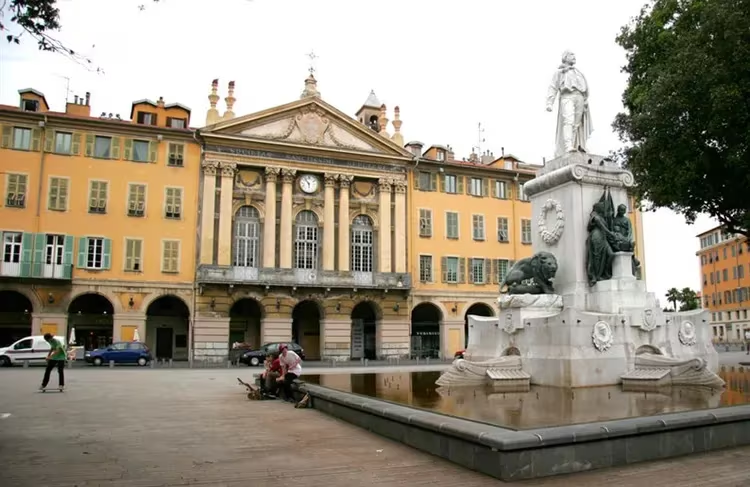
Piazza Garibaldi is recognized as the official center of the city. It is located in the northern part of the Ville-Nys quarter. The open space has long been an abandoned wasteland. However, at the end of the 18th century. area has been transformed. By order of the king, the Swiss architect A. Spinelli took up the arrangement of the parade ground. He designed Italianate-style buildings for the perimeter development.
The chapel of the Holy Sepulcher appeared at the southern end of the forum. Her balcony served as a place for a solemn reception of distinguished guests. At the end of the 19th century the name of Giuseppe Garibaldi, a native of Nice, a famous fighter for the freedom of the Apennines, was officially assigned to the square. His monument is one of the main attractions, along with the Museum of Natural History, the houses of J.-B. Barla and the Avigdor family. The area is famous for catering establishments serving delicious seafood dishes.
Marc Chagall Museum
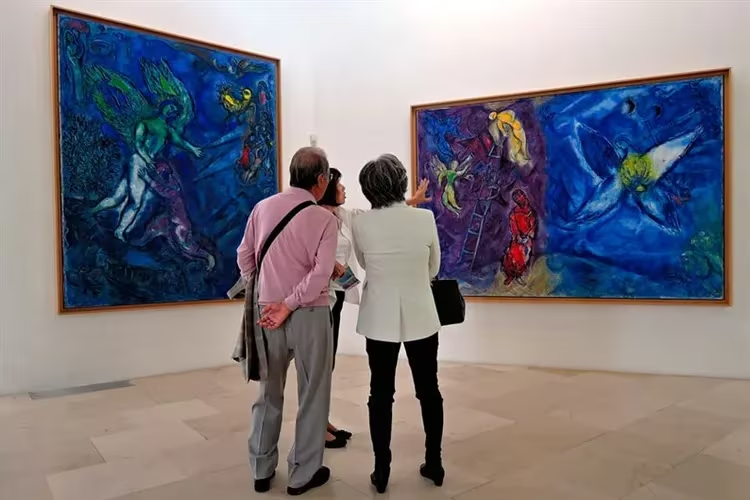
A native of Vitebsk, Marc Chagall, left his mark on the shores of the French Riviera. The famous avant-garde artist donated a cycle of 17 paintings covering biblical stories. The source of inspiration was the Old Testament. Author's canvases became the core for the creation of a separate museum. Chagall actively contributed to the arrangement of the exposition. In addition to paintings, the collection was replenished with mosaics, tapestries, stained-glass windows, and sculptures. The M. Chagall Museum is deservedly proud of the most complete collection of the creative heritage of the great master (more than 700). In addition to the exhibition halls, the museum has its own stage area. It regularly hosts concerts.
The museum is open daily:
The subscription price is 7.5 €, for beneficiaries – 5.5 €.
Matisse Museum
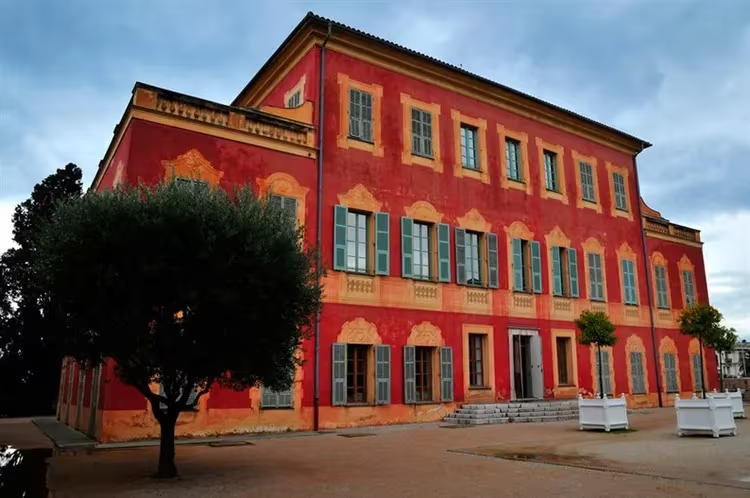
A noticeable imprint on the work of the outstanding French painter A. Matisse left a stay in Nice in the 20s. 20th century In his house on the Cote d'Azur, he created stage costumes and scenery for the ballet “The Nightingale” by I. Stravinsky. The elegant cycle “Odalisques” depicting women in oriental style belongs to the same period. The city authorities decided to fix the memory of the famous compatriot and established a museum named after him. An 18th-century villa was allocated to accommodate the exposition.
Visitors can enjoy the original work of the author and follow the path of his artistic development. One of the 18 halls of the museum is dedicated to paper figurines. Their creation was a kind of hobby for Matisse. The museum is open every day, except Tuesday (10-18 hours). To enter, it is enough to present a single museum ticket for 10 €.
Archaeological Museum
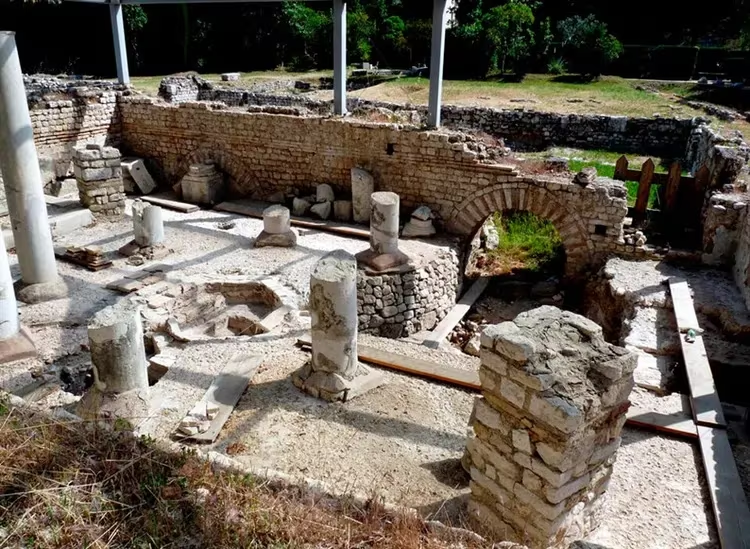
Artifacts telling about the ancient history of the region are collected in the Archaeological Museum. The excavations carried out on the Cimiez hill have shed light on the distant past. Scientists have established that the predecessor of Nice was the Roman settlement of Cemenelum. 10 thousand people lived in it at the same time. During the excavations, various items were found: tools, dishes, jewelry, money, works of art, etc.
The finds became the basis for the formation of the museum exposition. It opened to the public in 1960. In the late 80s. The museum moved to a separate building. Now the institution consists of 2 buildings dedicated to ancient history. The museum has a shop selling copies of exhibits. Open daily (except Tuesday) from 10 am to 6 pm. The ticket costs 6 €.
Museum of Contemporary Art MAMAC
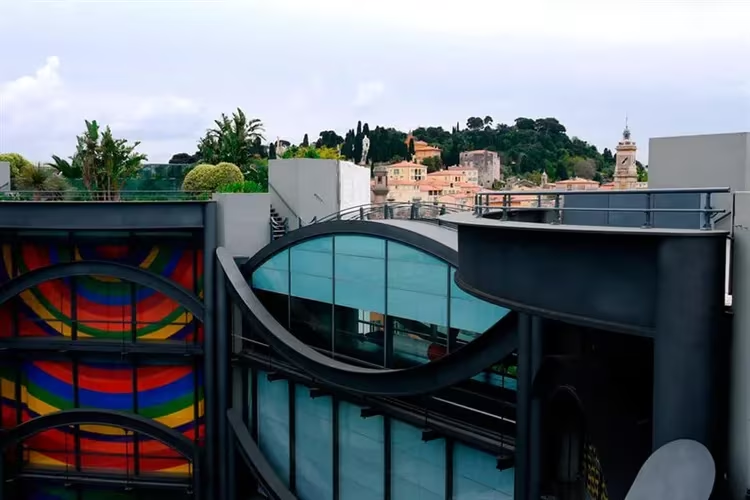
In 1990, an unusual art object appeared in the center. It is a pair of glass skyscrapers connected by passages. This is what the Museum of Modern Art looks like. The project was developed by French architects I.Bayar and A.Vidal. The interior space is divided into 3 levels. Two were given away for permanent exhibition. The third is reserved for temporary art exhibitions. There is a garden on the glass roof.
The museum's collection is very diverse. It coexists with the works of recognized world art gurus (Warhol, Liechtenstein) and local authors (Klein, Saint Phalle). The funds include St. 400 items. The core of the exposition is made up of avant-garde paintings made by European and American painters. Opening hours every day (except Monday) from 10 a.m. to 6 p.m.
Museum of Fine Arts
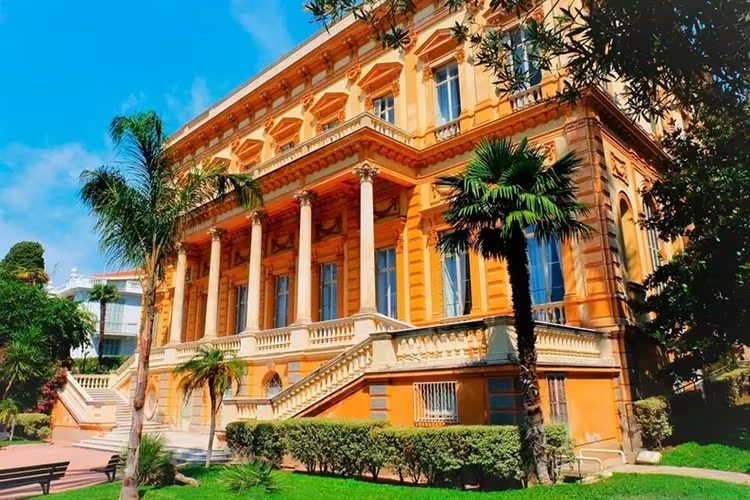
Palace of Prince Kochubey in the 20s. 20th century passed into the ownership of the city. The local authorities ordered the villa to be converted into a Museum of Fine Arts. The work was carried out under the guidance of the artist J. Cheret. The collection was selected very carefully. In terms of the number of masterpieces placed per unit area, the museum can compete with the recognized leaders – the Louvre and the Hermitage.
The public can see the works of different historical eras and artistic movements: primitivism, classicism, impressionism. Part of the exposition is represented by paintings by artists whose work was associated with Nice. In the halls of the museum, visitors can see paintings by the Van Loo dynasty, J. Fragonard, C. Monet, F. Ryud and others. The museum is open from 10 am to 6 pm daily. The ticket price is 10 €.
Museum of Asian Art
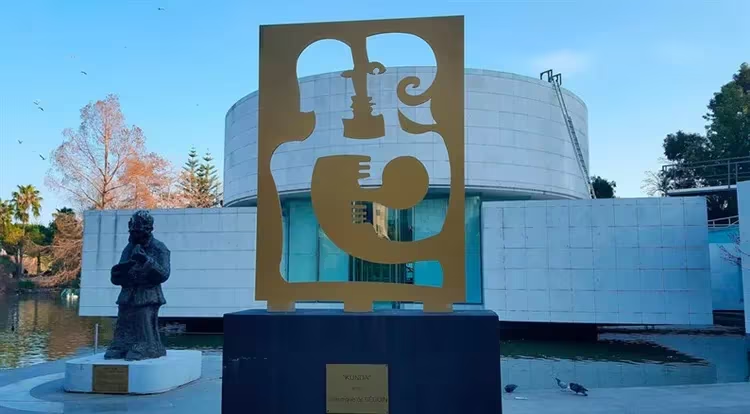
At the end of the last century, another interesting museum appeared. It is dedicated to the cultural heritage of the peoples of Asia. The complex of 4 cubic buildings is located in Phoenix Park. The author of the project was an architect from Japan K. Tange. According to his plan, the building should be as open to the light as possible. Therefore, during the construction, huge glass panels were used, enclosed in walls of snow-white marble. Natural lighting allows you to reveal the beauty of the collected exhibits.
The museum is divided into 4 parts: Japanese, Chinese, Indian, Cambodian. The funds contain over 200 artifacts. In order to penetrate deeper into Asian culture, employees conduct seminars, master classes (ikebana, calligraphy).
Working hours:
Day off – Tuesday. Free admission.
Muséna Museum
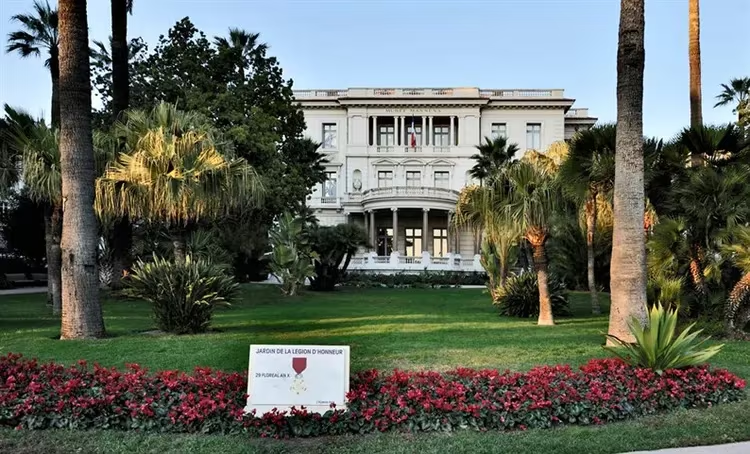
The former residence of the Marshal of the Napoleonic troops A. Massena in the 20th century. has been turned into a museum. It bears the name of the famous commander and is dedicated to the historical past of the city. The basis of the exposition was the personal collection of V. Massen. The philanthropist bequeathed his collection as a gift to his native city. At present, many valuable rarities are stored in the museum funds: personal belongings of Emperor Bonaparte, porcelain items (9th-12th centuries), art nouveau posters, old photographs. Visitors can consistently trace the development of Nice from ancient times to the middle of the last century. The museum is open daily (10-18 hours). Day off – Tuesday. The subscription costs 6 €.
Palace of Justice
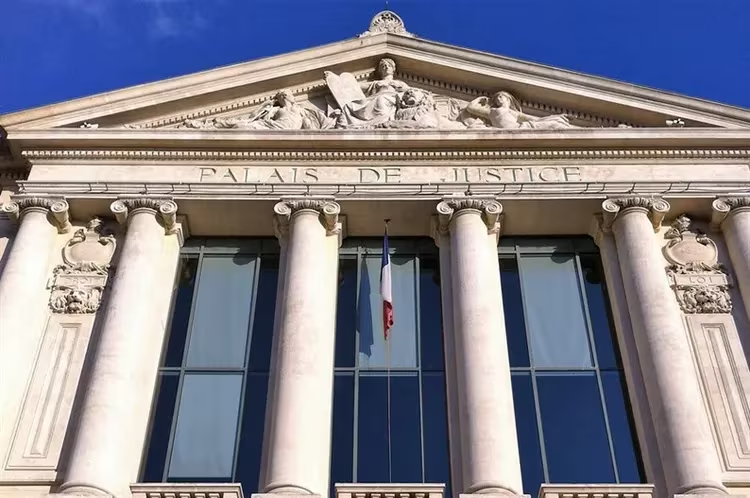
The strict classical architecture of the Palace of Justice attracts the attention of many tourists. The building is located in the central part of the city. The square in front of the façade often becomes a venue for performances by troupes of street performers and musicians. Spectators are comfortably seated on the steps of a large staircase. There are many eateries and bistros nearby. On Saturdays, collectors of books, works of art, and postcards gather in the square.
The Palace of Justice was built at the end of the 19th century. on the site of the Dominican monastery destroyed during the French Revolution. A new building for lawyers and lawyers was erected in just 2 years (1883 -1885). The mirror pair of the Palace of Justice is the house opposite – the Ruska Palace. It houses the highest court. Outsiders are not allowed inside the premises.
Opera theatre
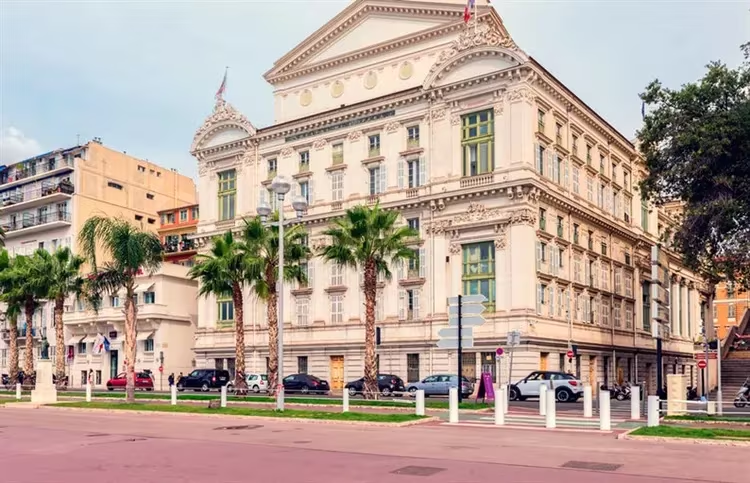
The first building for the opera house appeared at the end of the 18th century. It was made in the Italian style and successfully combined the luxury of the auditorium with the powerful acoustics of the stage. Construction work was carried out under the guidance of the Italian architect B. Brunati. However, in 1881 the building was completely burned out during a terrible fire. The creation of a new project was entrusted to Eiffel's student, F. On, who proposed to give the case a classicist look and strengthen it with a metal frame.
The interior decoration was done by the artist E. Costa. His frescoes on the theme of ancient mythology became a true decoration of the temple of Melpomene. Stars of the first magnitude in the genre of classical music have repeatedly performed on the stage. Tours are held on Mondays at 2 pm (duration 1.5 hours).
Cathedral of Saint Nicholas
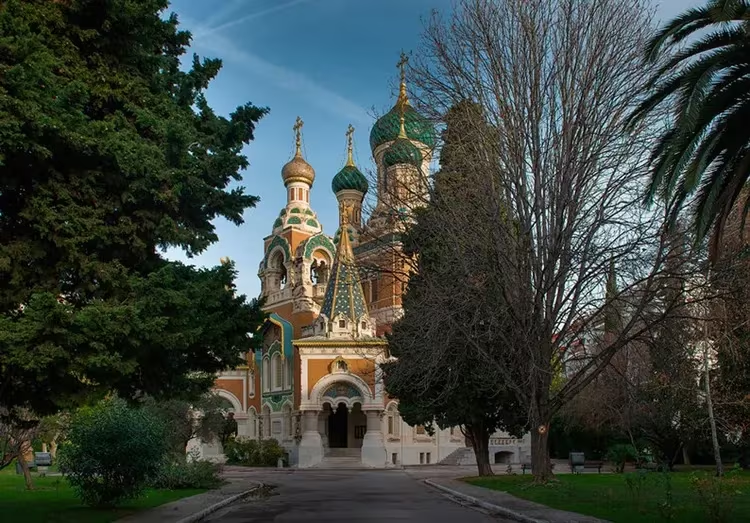
Nicholas Cathedral is the largest religious building owned by the Russian Orthodox Church Abroad. The gilded domes of church domes are clearly visible from a distance and remind Russians of their distant homeland. In 1865, the future heir to the Romanov dynasty, the son of Emperor Alexander II, died in Nice. At the place of his death, it was decided to build a temple. Nicholas Cathedral was laid in 1902. Construction lasted 10 years. During the construction of the building, the highest quality materials were used.
To decorate the interior, some of the icons were donated by the royal family. A place of honor is occupied by the face of Nicholas the Wonderworker. For almost 100 years, the church belonged to the Orthodox Association, and since 2011 it has been transferred to the possession of the Russian Federation. The temple is open daily (9 am – 6 pm). Break from 12:00 to 14:00. Admission is free.
Cathedral of Saint Reparata
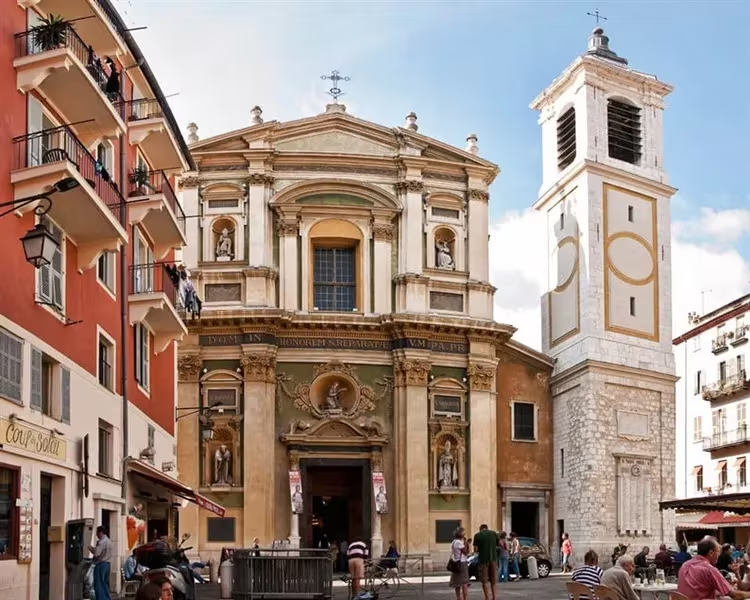
One of the most ancient religious buildings within the city is the church. St. Reparates. The building resembles the Cathedral of St. Susanna in Rome. It has a traditional building plan – in the form of a cross. The central part is crowned with a dome covered with tiles. The facade is made in the Baroque style. The interior space is divided into 10 chapels. Altar 17th century surrounded by frescoes with the faces of the first bishops of Nice.
Above the altar there is a picture depicting the patroness of Nice – Saint Reparata. According to legend, she was martyred. The angels took her body and transported it in a boat to the shores of the Riviera. Every year (1st Sunday in October) a solemn procession is held with a statue of the saint from the church of Francis to the church of Reparata.
Visiting times:
The entrance is free.
Notre Dame Basilica
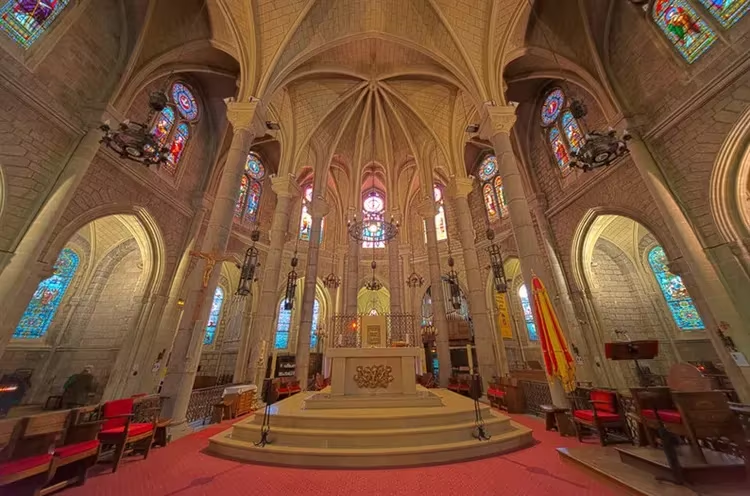
From any part of the city you can see the dome of the largest church on the coast (height 65 m), consecrated in memory of the Virgin Mary. Notre Dame was built in the 60s. 19th century The architects gave the cathedral a look in the Gothic style, because it partly resembles the metropolitan counterpart. The central part of the facade is decorated with a glass rose. Its stained-glass windows are dedicated to the history of the Assumption of the Blessed Virgin Mary. Inside, visitors can see a copy of the famous painting “The Holy Family” by B. Murillo, stained glass windows of the 19th century, wooden statues of the Virgin Mary.
The luxurious decoration of Notre Dame de Nis gave him the right to be considered the most beautiful Catholic cathedral on the Cote d'Azur. The church is also a cultural institution. It often hosts classical music concerts. The Basilica is open every day from 8.30 to 12.00 and from 14.00 to 19.00. Admission is free.
Observatory
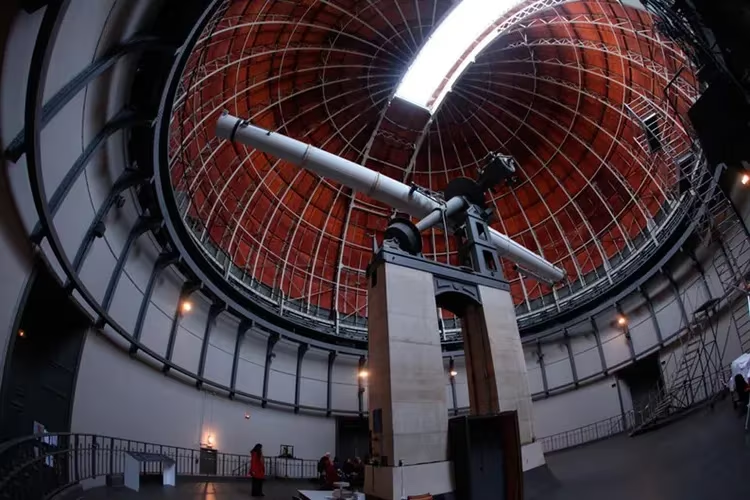
The observatory has been operating for almost 150 years. The initiator of its creation was the French financier R. Bischofsheim. He allocated funds for the construction of the building and equipping it with optical equipment. The co-authors of the project were G. Eiffel and C. Garnier. The architectural feature of the observatory is a huge (diameter 24 m) rotating dome. A powerful telescope is installed inside. Thanks to him, many new celestial bodies were discovered.
During its existence, the observatory has repeatedly changed owners. In the late 80s of the 20th century. She became part of the Côte d'Azur Observatory. Three times a week (Wednesday, Saturday, Sunday) at 14.45 there are guided tours. Ticket price for adults is 6 €, for children – 3 €. On specially agreed days, visitors are given the opportunity to look at the sky through a telescope.
Fort Alban
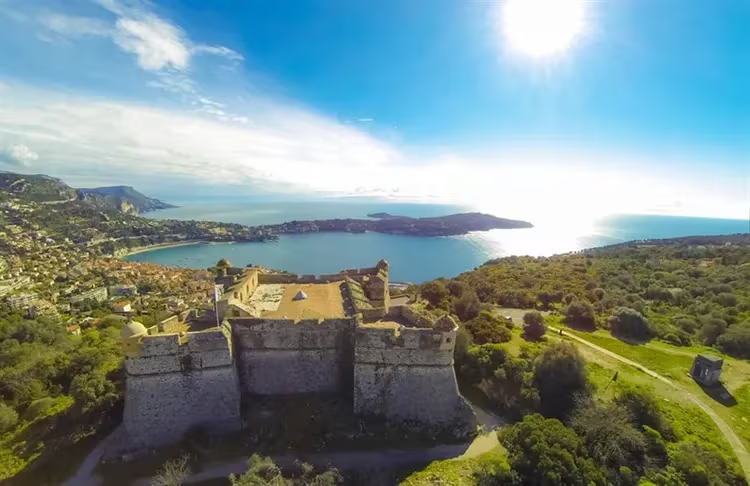
In the Middle Ages, the Mediterranean coast suffered from the attacks of the Turkish fleet. To protect the settlements on the hills along the coast, defensive fortifications were erected. A similar fortification was built on the Mont Alban hill. White (“alba”) rocks gave the name not only to the mountain, but also to the fortress. The citadel has been well preserved to this day.
Tourists have the opportunity to bypass the fort along the perimeter, and then proceed to the observation deck at the top of Mont Alban. It offers a beautiful view of the eastern part and the sea coast. Of interest is also the guardroom with wall frescoes. From the foot of the hill to the top there is a special lift. For a trip to the fort with a guide, you need to pay 7 – 10 €. Access to the territory is free.
Monument to the fallen in 1914-1918
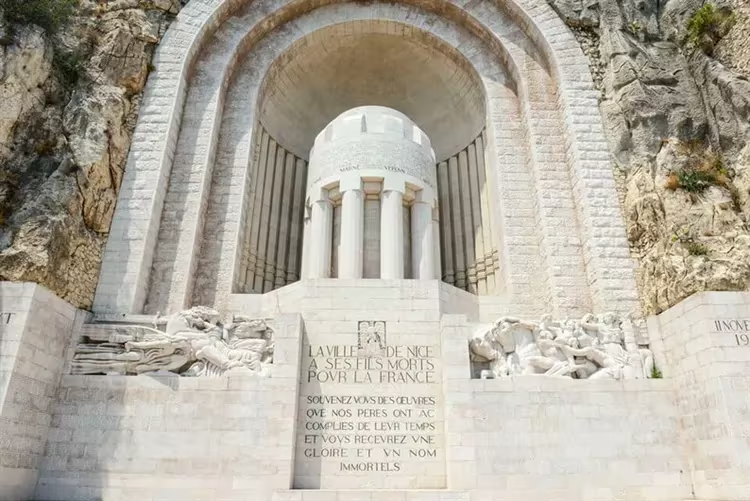
A monument erected in front of the Castle Hill is dedicated to the memory of the natives who died during the 1st World War. In this way, the city authorities wanted to honor the feat of 4 thousand people who fell on the battlefields from 1914 to 1918. The project of the monument was approved in 1918, but its construction began only in 1924. Subsequently, the list was replenished with the names of the military killed during the 2nd World War, in armed confrontations involving France (Algeria, Indochina).
The memorial is covered with bas-reliefs depicting soldiers from different branches of the military – infantrymen, sailors, pilots, engineers. The height of the stele is 32 meters. The place where the monument is erected is very symbolic, since the Castle Hill towers over the entire city. The lower part of the mountain is occupied by an old memorial cemetery.
Phoenix Park
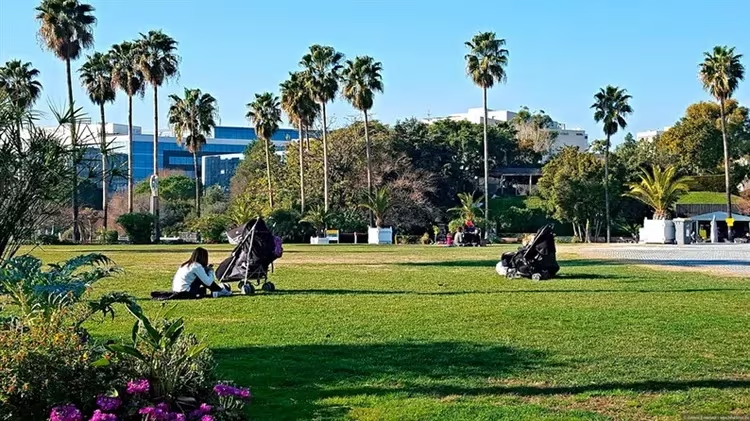
Initially, the park was conceived as a botanical garden, where a large collection of rare plants was collected. Gradually, the green zone was settled by representatives of the exotic fauna. At present, visitors to Phoenix can see 2.5 thousand plant species, as well as observe the life of fish, amphibians, birds, and mammals from different parts of the globe. The park is divided into 12 zones.
Europe's largest greenhouse and an island with prehistoric flora are very popular. The onset of each hour is marked by a musical fountain. Its jets dynamically change to the sounds of classical works.
The park is open all year round. Visiting times:
The park recreation area is located in the west of the city.