
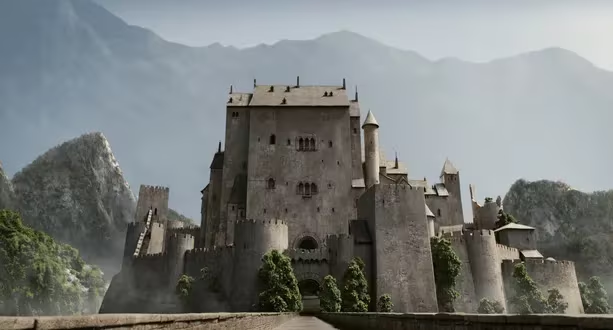
Bran Castle (Castle of Count Dracula) in Romania: photo, description, history, map
Transylvania. This word immediately gives rise to the image of a fantastic corner of the earth with stunningly beautiful landscapes. Clouds and fog, enveloping seemingly sleeping mountains, beckons our thoughts into a mysterious fairy tale with magical castles, cobbled streets of ancient cities and singing gypsies. Reality, bordering on fantasy, has been transferred from the depths of centuries to the present day.
Transylvania – the birthplace of Count Dracula
Our centuries-old imagination considers this place to be the birthplace of the greatest of literary characters, Count Dracula. A vampire who changes his appearance and thirsts for human blood has been living in the legends of many European peoples for several centuries, and the mysterious forests of Transylvania are considered to be the abode of evil and chilling horror.
In the late 19th century, an old Saxon pamphlet recounting the bloody atrocities of the Prince of Wallachia caught the attention of the Irish writer Bram Stoker, who was writing horror novels at the time. Trying to find a name for this evil, he went to Transylvania – a place of terrible secrets. The novel “Dracula”, which appeared from the pen of Stoker in 1897, became “confirmation” of the existence of vampires and ghouls. He only reinforced this myth in the minds of people. To his friend, a Hungarian scientist who gave Stoker material about the cruelty of Prince Vlad, the writer assigned the role of a fighter against vampires in the book and gave him the name Van Helsing. The story of the Prince of Darkness has undeniably become the prototype for all books, plays and films about the mysterious vampires.
While vampire legends sprang up all over eastern Europe, Stoker could hardly have chosen a better place for his prince of darkness. He chose Transylvania, because in those days it was practically unknown and mysterious to anyone. And Dracula's castle is located in a remote mountainous corner on the Borgo Pass. Of course, much in the book is changed and invented. In reality, Dracula had a princely title, and was not a count, and he ruled in Wallachia. The only portrait of the prince, painted during his lifetime and that has come down to us, proves that his appearance is far from a fanged vampire.
Now there are already millions of fans of stories about Dracula. Vampire societies sprang up all over the world. People are drawn to the mystical life force of human blood and the very idea that it allows them to live forever.
Story
Medieval Wallachia is a small principality on the border with Transylvania. Small towns that appeared several centuries ago are torn off by giant mountains and the fog surrounding them. It seems that just such a place should become the abode of vampires, but in Romanian legends and horror stories no one scares you with bloodthirstiness.
Prince Vlad Dracula was actually a scary character. He is one of the clearest examples of human cruelty. This terrible portrait began to be “drawn” during the life of the prince, and artificially, out of revenge. The Saxon boyars, who were punished by the ruler for not complying with his strict laws, gave rise to rumors about the bloodthirstiness of Vlad III Tepes. It was at this time that the future image of the prince of darkness was born. There was a statement that the prince is the Devil! He ruthlessly destroys his people, burns crowds of captives, tortures even babies and feasts among the numerous corpses of the executed. There seemed to be no end to the gossip about these horrors.
Today there are millions of fans of the story about Dracula. “Vampire societies” have sprung up all over the world. The main route of their regular pilgrimage to Romania usually starts from the small medieval town of Sighisoara. The world congress of the Dracula Society meets here four times a year. It honors the memory of an ancestor: they study the details of his life, discuss and separate truth from fiction. Tourists from all over the world are attracted by a modest medieval building on one of the narrow streets of this city. The house where Count Dracula was born.
Vlad III's birthday was the day his father was accepted into the Order of the Dragon. Members of the secret society swore on blood to defend the Christian faith and save their people from the Turks – the invaders. The black long cloak that the members of the order were supposed to wear was subsequently worn by the book Count Dracula.
In addition to Vlad, the ruler of Wallachia had two more sons, but later fate was not favorable to all. The elder Mircea will be buried alive, the younger Radu will become a hostage in the captivity of the Turkish Sultan and turn out to be a traitor, and Vlad will gain the notoriety of a bloodthirsty tyrant.
In the house where the little prince saw the light, today a small restaurant is open to visitors. Tourists are attracted by the interior stylized as a vampire's dwelling. And the menu will certainly include meat with blood and huge plates with Dracula's family crest. They also managed to save a fresco depicting Vlad Dracula's father here. It is over five centuries old.
Tourism development
The appearance of the image of Dracula marked the beginning of the rapid development of tourism in Romania. Thousands of people from different countries want to visit the castle of Count Dracula, and Romanian tour operators are happy to show these places. Here you can walk along the historical and film roads of the vampire of all time, try baked rats and visit the rooms of fear. You will be shown dozens of castles, the history of which allegedly came into contact with the name of Prince Tepes. And what you won't know is that Dracula has never been to most of them. They were built later.
The coronation of Vlad Tepes took place in Targovishte, the capital of Wallachia and the residence of the heirs of Mercia the Great. In the throne room of the castle, Vlad Dracula received the title of Prince of Wallachia. The coronation took place on a grand scale, and it is from the family castle of Targovishte that Vlad will rule the country most of the time. But the tourist brand of Dracula's castle is focused on a different historical site. This is Bran Castle, located an hour's drive from the city of Brasov, the medieval heart of Transylvania.
You can find other attractions in Romania in our article.
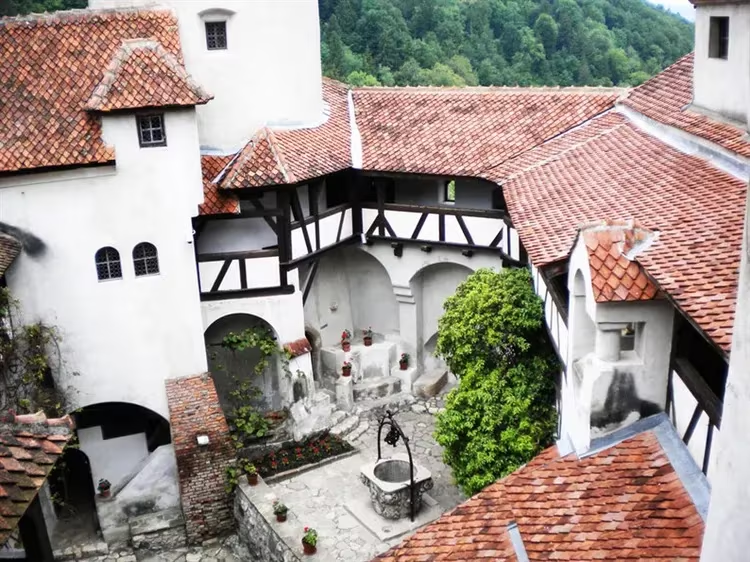
Castle several centuries ago
Brasov in those troubled times was a key city. All routes between Europe and Asia Minor passed through it. In 1395, the grandfather of Vlad Mercia gave Brasov the authority to collect tax on all goods passing through the city. Bran Castle was used to collect the toll and protect the trade route. It was built as a Crusader fortress in the 12th century and served to prevent Muslim invaders from using Brasov to invade Europe.
The decoration of the castle was simple and at the same time majestic. The castle consisted of four towers located around an irregularly shaped courtyard. The slope of the roof of the internal buildings of the castle was calculated so that in the event of a projectile hit, it passed along a tangent, and did not pierce the roof through. The random arrangement of the towers and battlements at different levels are the result of the fact that the castle stands on a rock. The eye cannot distinguish the border where the rock ends and where the building itself begins.
Excursions to the castle
The rivers of tourists and pilgrims rising up the mountain will not let anyone go astray and will lead straight to the chambers of the castle. It is in the chambers of the castle, and not Dracula, as the imagination draws. Here the prince never lived, and even the time of the ruler's stay in this place, the legends differ. But the entourage preserved in the castle draws a gloomy illustration of life in those distant times. Knightly armor and ammunition, ancient carved furniture, skins of trophy animals, silver and gold utensils, massive oak doors that hold centuries-old secrets, bottomless wells and torture chambers of the castle will take you back to the times of smoky torches and groans of dungeon captives. The emotional climax for tourists is the panic rooms, a kind of entertainment that obviously quickens the heartbeat of visitors.
Enticing the flow of tourists, Romanian guides attribute the presence of Prince Dracula to almost every castle along the route of the tour. But we must pay tribute to history and say that the main residence for the ruler of Wallachia was the fortress of Poenari. Back in the 13th century, Tepes' grandfather Mircea the Old laid the foundation of this castle. And Vlad, using his nobles instead of slaves, completed and strengthened it. During the construction, more than 200 nobles were impaled, died from the heat or crashed in the mountains. During the reign of the bloody prince, Poenari was his refuge. The garrison of the castle was measured in hundreds of soldiers. The three-meter walls were reinforced with bricks to withstand enemy cannon fire in the event of a possible siege.
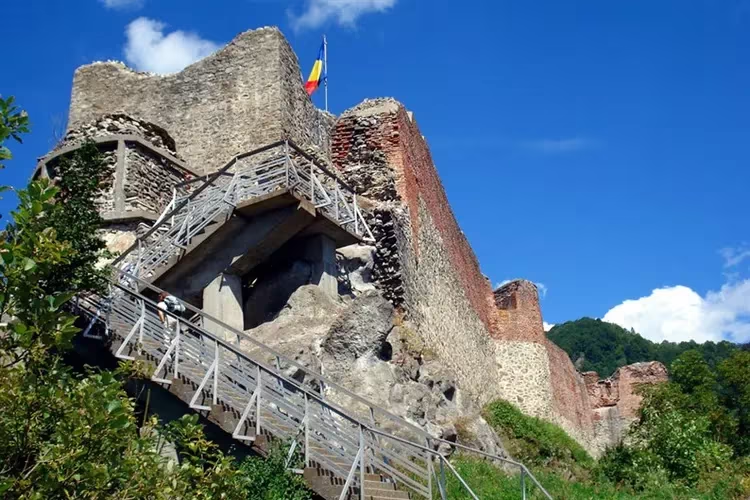
Ruins of Poenari
A narrow winding road leads to the ruins of Poenari, all around there are mysterious mountains and fog. The fortress is located on a high impregnable peak, and to get there, you need to overcome 1500 steps. Each step of this dizzying ascent brings pilgrims closer to that terrible time when human life had no price. Creepy mannequins on stakes that accompany climbing the stairs carry the imagination in times of fierce battles, secret conspiracies and fearless defenders of Orthodoxy.
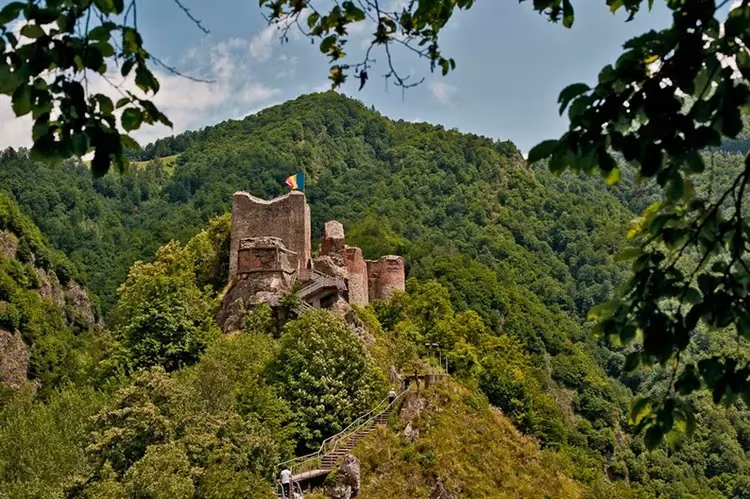
Saving the beloved
The fortress held the hardships of the state of siege for several months. And it was here that the prince was secretly able to smuggle his beloved Lydia, saving her from the massacre of local boyars. But the forces in this war were unequal, and the end is inevitable. Clearly realizing that Turkish captivity is tantamount to death, Lydia saved her honor and freedom by stepping into the abyss from a cliff. In Romanian legends about his legendary warrior-prince, there are suggestions that it was after the loss of his beloved that the prince sold his soul to Satan. It was the day when the time of victories and successes ended for him. He escaped from the castle through an underground passage, but his life was destroyed. Death did not look for Vlad for long, and got to him in a fair fight.
The last shelter for Vlad III Tepes was the Snagovsky Monastery, previously founded by him. The monks buried him. But many could not believe in the death of the prince, and the desire to open the grave tormented the minds of the curious for several years. When they did open the grave, it was empty. Rumors about the immortality of the prince spread again. No one then could have imagined that it was the monks who took care of the last rest of the prince. They reburied the body of the ruler, hiding it under a stone slab at the entrance to the church. This is an ancient Orthodox custom: the deceased will atone for his earthly sins if his ashes are “trampled” by the parishioners.
Several centuries have passed, and time is the best judge. And now the damned prince has regained the status of a national hero and a just ruler of his country. The only ones who always remembered him with nostalgia were the Romanian peasants. At all times, they retold legends that in the time of Prince Dracula, porridge from hominy was cooked not in water, but in milk. It was cheaper than water!
If you are interested in the history of unusual castles, we recommend reading the article – Frankenstein Castle.