
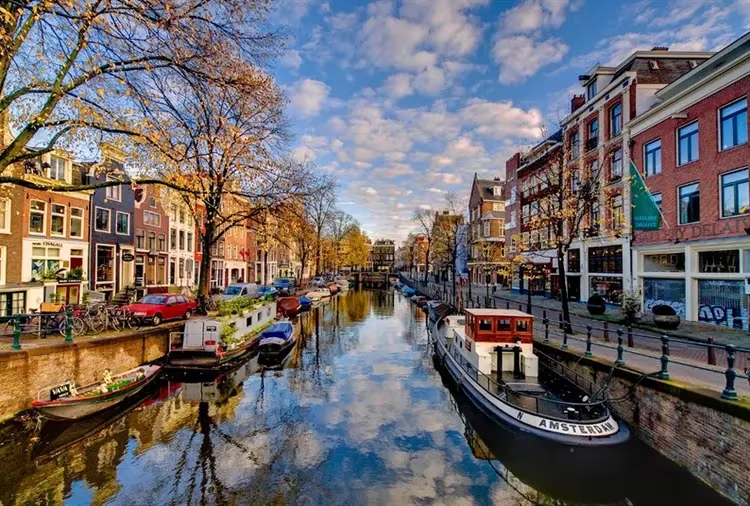
Center of Amsterdam: what to see in the center, photo, description, map 2021
Modern Amsterdam, which perfectly preserved the appearance of the Middle Ages, is the largest financial and industrial center in Europe. It houses the offices of many international organizations, banks and corporations. The industrial power of the capital, represented by aviation and shipbuilding, chemical, wood and oil refining industries, provides the city and the country with financial well-being. In addition, the city is considered the European center of high-quality diamond cutting and trade, which brings him considerable income.
We also recommend:
Amsterdam is a popular tourist capital of Europe, where hundreds of thousands of tourists come every year who have something to see here.
The building of the main railway station
An independent tour around the center of such a monument city is not only very interesting in terms of learning, but also brings a lot of aesthetic pleasure. The starting point of the journey is the magnificent building of the main railway station of the capital, built according to the project of two prominent architects Kuipers and Adolf van Gendt in the 80s of the 19th century.
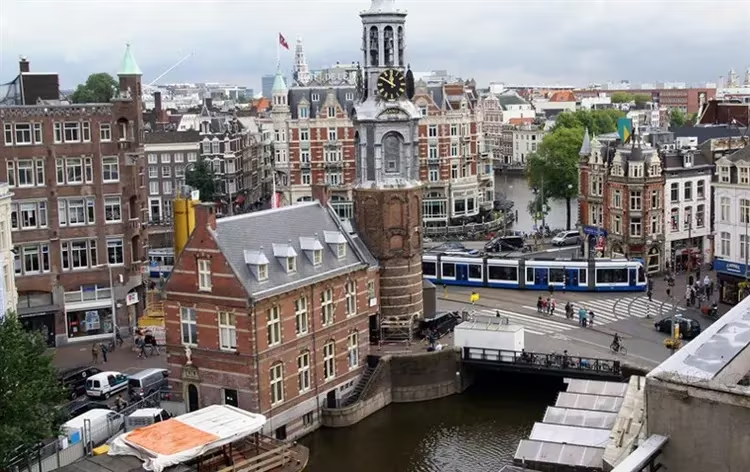
This huge building is a real neo-Renaissance castle, combining a work of architectural art and a universal transport facility of the city. From here you can go to anywhere in the world by long-distance trains; tram and bus routes start here; close to metro station and taxi stand. Those wishing to take a water cruise along the canals also depart from here. Station Square is a place of impromptu concerts by various musicians and not only: there are all sorts of scammers and pickpockets here, which you need to beware of.
The majestic building of the railway station, crowned with pointed spiers of clock towers, rows of arched windows, arouses the sincere admiration of everyone who arrives here.
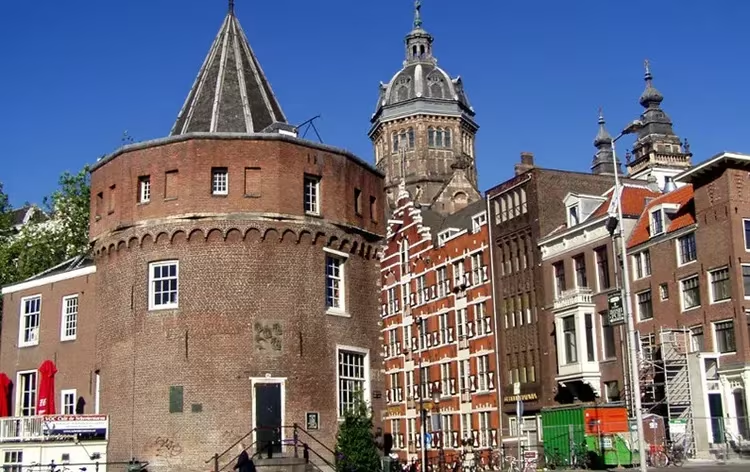
Schreyerstoren tower
The next object that deserves the attention of tourists is the Schreyerstoren tower, built in 1487 as a fortress. It was installed in the place where the wall protecting the city turned at a sharp (schray) angle, hence the name of the tower. There is another, more sentimental version about this: here the wives saw off their husbands who were sailing and cried, so the tower got its name from the word “schreien” – to cry. During the period of hostilities, it served as a reliable defensive outpost of the city.
Now the Strayerstoren tower is a unique monument of medieval architecture, on the walls of which there are commemorative plaques with the names of famous explorers-discoverers, the Englishman Hudson and the Dutchman Barents. The first discovered the Hudson River and Manhattan Island, the second organized an expedition to India along the northern seas.
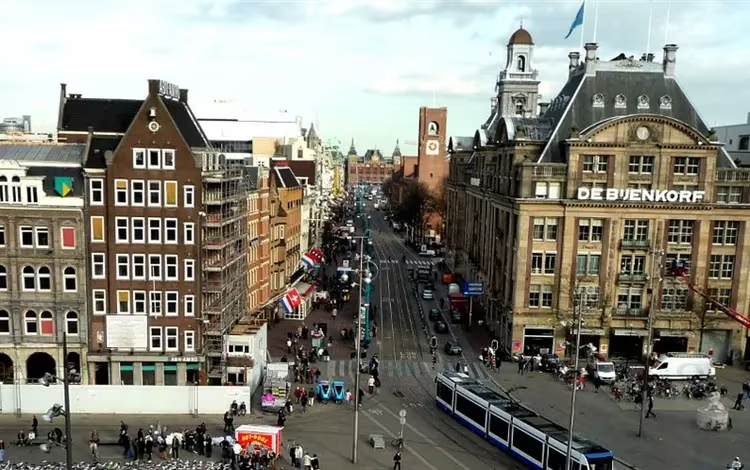
Church of St. Nicholas
The entire central street of the capital of the Netherlands, along which the tour takes place, is a kind of landmark, where literally every building is a memorable evidence of the distant and near past. St. Nicholas Church – a religious symbol of Amsterdam, a temple of the Catholic faith, a place of pilgrimage for city residents and tourists, is located in the very center of the main Damrak street. The main entrance leads from the street, and from the side of the temple there is a beautiful panorama of the canal with a picturesque bridge over it, from which tourists view the church and the buildings adjacent to it.
Erected in 1885-87. the architectural shrine embodied the features of two styles of that era – neo-renaissance and neo-baroque. Three spiers of the church are crowned with crosses, two of them are located on the facade towers, between which there is a round rose window. The third is on a massive octagonal tower in the background. The statue of St. Nicholas is placed in the upper niche of the pediment. In a round stained glass window below is a bas-relief depicting Christ and the four evangelists.
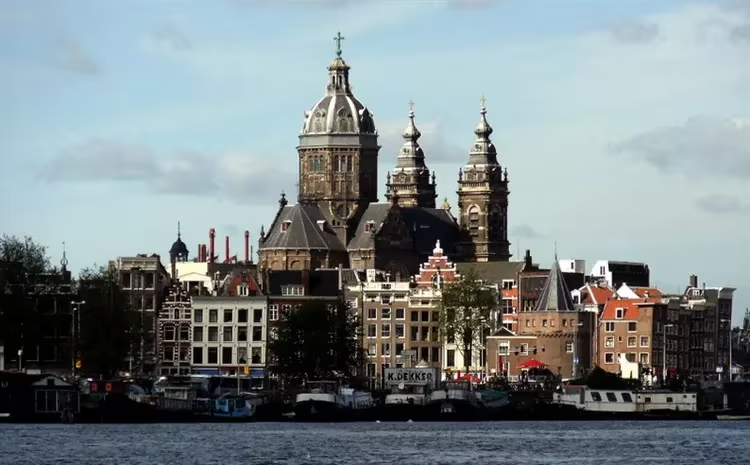
The recent restoration “refreshed” the interior of the temple, decorated with sculptures of saints, stucco, wall paintings, illuminated by huge stained-glass windows. The restored organ of the 19th century makes it possible to hold concerts of organ music here, which makes a deep impression on those present. Chapels of Mary and Joseph are equipped in the corner niches as a sign of respect and veneration for the parents of the Savior.
Dam Square
If you walk along Damrak to the intersection with Roki Street, you can find yourself on Dam Square – the most significant historical site in Amsterdam, because this rectangular parade ground was formed on the site of a former dam that gave rise to the city. Over time, its (dam) territory expanded, compacted and gradually became a flat place, surrounded by buildings under construction of the future capital.
The dam has become its “heart” – the central Dam Square, where historical buildings and other attractions are located. On the western side of the square are the Royal Palace, the New Church – an example of the Gothic of the XV century. To the southeast is the famous, infamous Red Light District. In the northern part, everyone sees a symbol of grateful memory – the Stele in honor of the Dutch who died in the war of the 40s. Here you can also admire the splendor of the architecture of the Krasnopolsky Grand Hotel and the huge Benkorf supermarket. During the day and in the evening, the square is always filled with people looking at architectural monuments and feeding flocks of pigeons.
Berlage stock exchange building
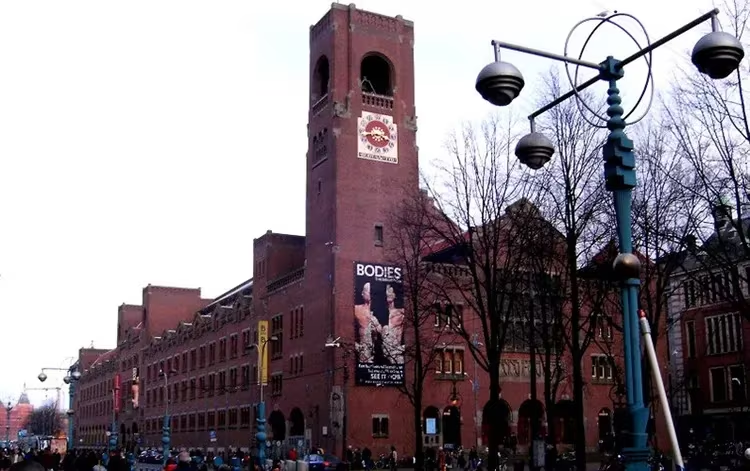
A popular tourist attraction is the Berlage stock exchange building. The long red brick building embodied the Art Deco style. The author of the project was a native of Amsterdam, whose name the exchange bears, who in his brainchild reflected the principle of rationalism in architecture: rigor, conciseness of lines, a minimum of designer decorations, and the natural beauty of bricks. The monotony of the brick walls is broken by decorative seams painted with white paint, giving them a festive look.
This style has become very common in the world; similar decor can be seen in Russia, France and other European countries. Three arched facade entrances, a bas-relief above them, rows of narrow windows make the building look like an architectural object of medieval Gothic. One of the corners of the building is marked by a monument to the defender of Amsterdam, the national hero of the Dutch – the valiant knight Geisbrecht, sung in Vondel's drama “Geisbrecht van Amstel”.

Monument to Jan Kun
The second corner of the Stock Exchange is occupied by a monument to another national hero of the Netherlands – Jan Kun, the admiral who established the Dutch colonial rule in Indonesia, which played an important role in the economic prosperity of the state. In the niche of the facade, the memory of the author of historical books about the state, a famous lawyer who played a big role in legitimizing the wars of conquest by the Netherlands, Grotius Hugo, is immortalized.
Statue of a charging bull
On the square in front of the stock exchange, there is an expressive statue of the “Attacking Bull”, made in black. It was created by a talented American sculptor, Italian Arturo Di Modica, who became famous for his “sculptural bulls” standing in 5 cities of the world. Full of furious strength, the mighty figure of a bull made of black bronze is a symbol of the significance and energetic unpredictability of the stock market.
Currently, the building of the former stock exchange houses various entertainment venues, the Berlage Stock Exchange thematic museum. Significant celebrations and receptions are held there. An important marriage ceremony between Prince Willem of the Netherlands and Maxima, a citizen of Argentina, took place here.
An independent tour of the center of Amsterdam allows you to fully experience the flavor of the ancient streets of the ancient city, feel the spirit of the Middle Ages, and see the beautiful modernity of a prosperous European capital.