
Český Šternberk Castle – Travel Tips Before You Visit
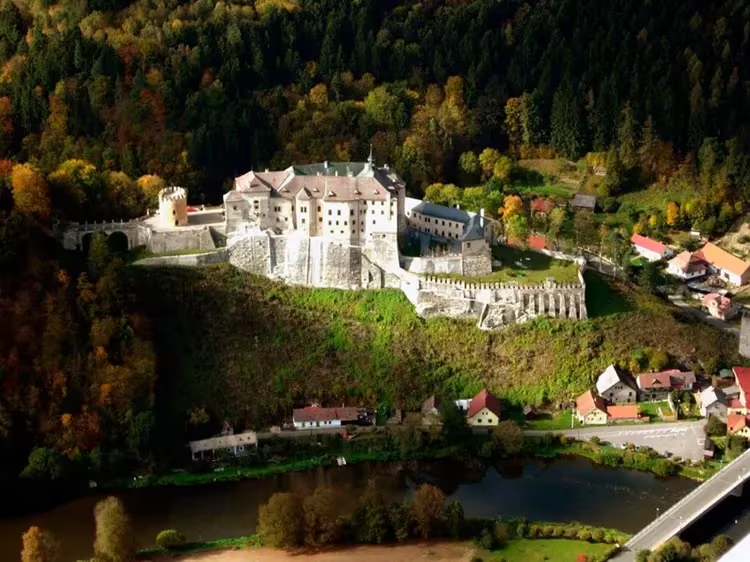
Majestic medieval fortresses take pride of place among the popular attractions of the Czech Republic, and are also a national cultural heritage of the republic. One of these structures rises on a high cliff in the valley of the Sazava River, which is not far from the Benesov district. This grandiose castle is called Český Šternberk. For eight centuries of its existence, the fortress belongs to the old noble family of Sternbergs, whose descendants still live in it. Today, several halls of the family estate are open to the public.
History and description
At the beginning of the 13th century, Ottokar II, King of the Czech Republic from the Přemyslid dynasty, ordered the construction of a fortress designed to protect the southeastern borders of Prague. The construction was entrusted to the young nobleman Zdeslav Divisovets, who, by the good will of the monarch, became the first owner of the castle. As befits an ancient tradition, each noble family had its own coat of arms. The symbol of Prince Zdeslav was an eight-pointed star, which in German sounds like “stern”.
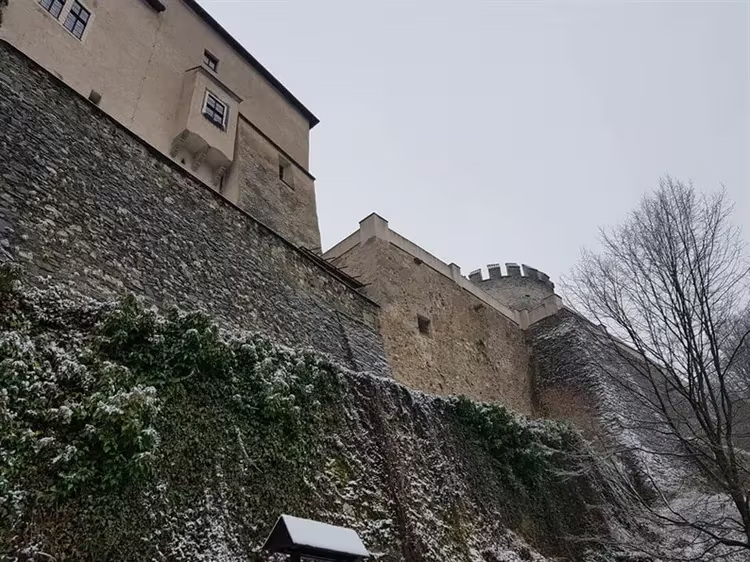
Since the fortification was erected on a mountain (“berg”), it received the name Sternberg – a star on the mountain. Soon, representatives of the Divishovets family began to be called Sternbergs in honor of their family estate. The word “Czech” was added to the name of the fortress later, when the princes became the owners of other estates in other provinces. The first building of the Gothic castle dates back to 1241. The building, protected by powerful towers with loopholes, was an impregnable fortress, which was surrounded by a deep gorge and a river. The appearance of large-caliber cannons, throwing cannonballs over long distances, revealed flaws in the fortification of the castle.
During the Hussite Wars, the then owner of the estate opposed the monarch of the Czech Republic, which led to the artillery shelling of the fortress by the royal troops. The firearms caused serious damage to the fortifications. A long era of wall restoration began. Gradually, the castle lost its military strategic importance.
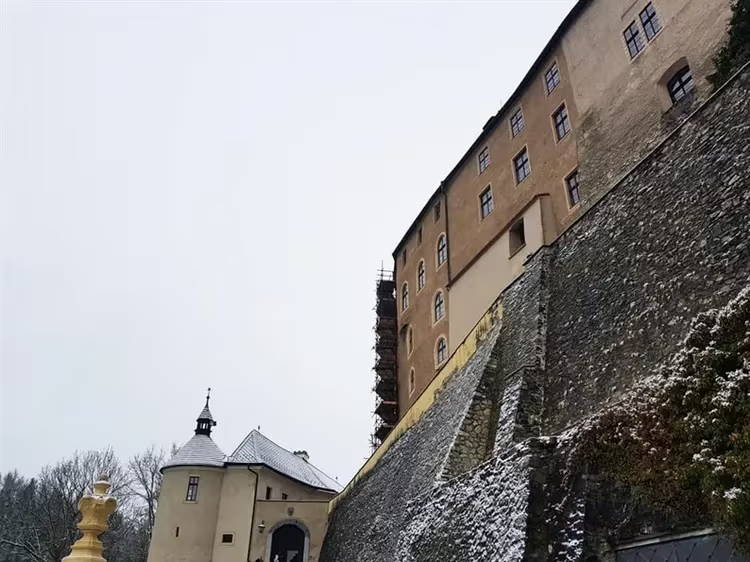
In the 17th century, Český Sternberg was rebuilt into a baroque palace with luxurious interiors. The Italian artist Carlo Brentano decorated the vast premises of the castle with pompous stucco and murals. The middle of the 19th century was marked by the next and final transformation of the appearance of the fortress. According to the project of the Viennese architect Kaiser, the castle was reconstructed in the Romanesque architectural style with a massive and austere facade. Today, the four-story fortress with thick walls is an elongated gray building, the curves of which follow the contours of the rock.
After the end of World War II, the castle was nationalized by the government of Czechoslovakia. The Sternbergs were invited to stay on the estate and manage the museum, which was set up in the palace. According to the law on restitution, in 1992 the confiscated fortress was returned to its present owner. The current owner of the castle, Zdenek Sternberg, is a direct descendant of a noble family and still lives there.
What to see
The historical interiors of the castle impress with their richness. Fifteen rooms located on the first floor are available for visitors. The glazed arched gallery, which in the Middle Ages was an open-air courtyard, leads to the luxurious large apartments of the fortress.
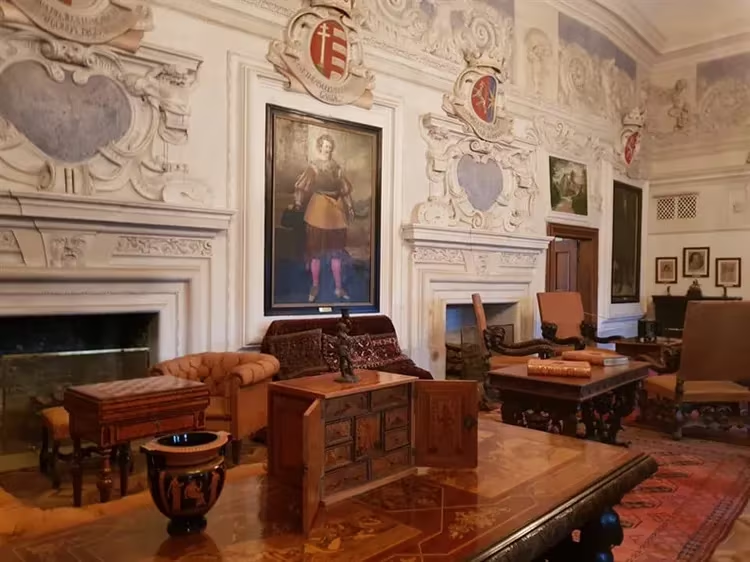
The most spacious room of the castle is the Knight's Hall. The walls and ceilings of the room are decorated with bas-reliefs created by Italian craftsmen. Antique carved furniture, a tiled fireplace, candelabra in the form of elegant figurines and caskets give the hall the spirit of the Middle Ages. Portraits of notable figures of Bohemia and representatives of the Sternberg family are hung on the walls. Crystal chandeliers, weighing more than 300 kilograms, illuminate the room.
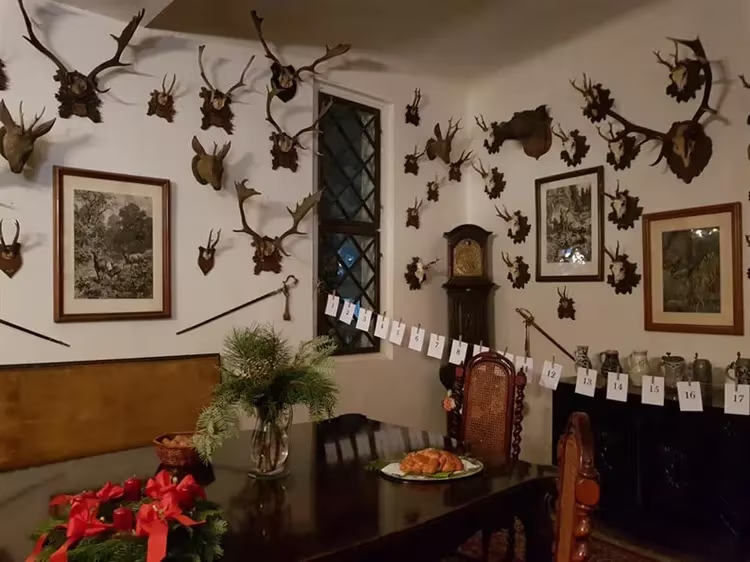
The hunting hall demonstrates the traditional passion of the nobles – hunting. Here you can also see a collection of guns, muskets and daggers, as well as trophies obtained by the owners of the castle over many centuries. Crocodile skin spread on the floor is considered an exotic exhibit. The ladies' quarters are furnished with elegant furniture on curved legs. On the wall of the room hangs an old mirror associated with the legend. If a woman looks into it, she will not age for ten years. But in these years the lady should not use other mirrors.
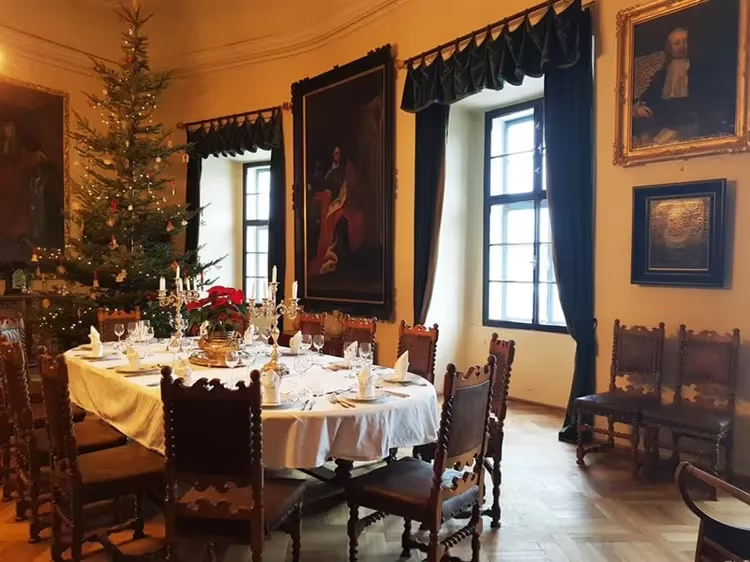
The spacious dining room impresses with numerous fine china and silver cutlery lined with antique cabinets and chests of drawers. In the center of the room is a long table set for dinner.
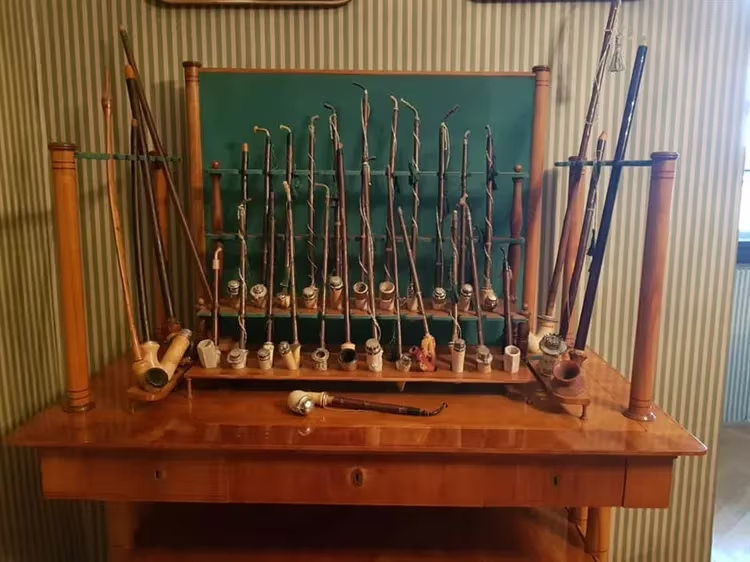
In other aristocratic halls of the castle, furnished with antique furniture, you can see the library, collections of engravings, smoking pipes, clocks and children‘s toys.
Legend of the Lost Treasure
An interesting legend is connected with the medieval castle. The noble family of the Sternbergs had a rich fortune. Once, after a profitable sale of one of the many palaces, the prince returned to the family estate with a large amount of money and gave it to his faithful assistant to hide the treasure. The time was restless – the castle could be attacked by robbers. The servant responsibly fulfilled the task, but unsuccessfully fell off the horse and died without informing anyone about the place where the treasure was stored.
Opening hours and ticket prices
The castle is open to the public every day except Mondays. In April and October, Český Sternberg welcomes its guests only on Saturdays and Sundays. Tours around the fortress begin from 9:00 to 18:00 (summer), until 16:00 (winter). The entrance ticket costs 150 CZK.
Where is it located and how to get there
The castle is located near the town of Vlašim (Benešov district), a 40-minute drive from Prague. It is recommended to use the bus from the Roztyly Prague bus station. Intercity transport will take you to Vlašim, and there you should transfer to a local bus going to the castle.