
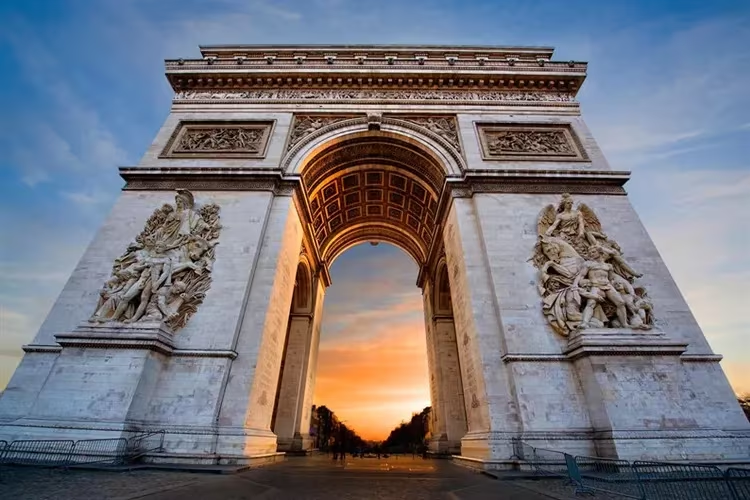
The reign of the Roman Empire left behind many discoveries, traditions, and architectural sights. Among them stands out the invaluable reward to the commanders who won a quick victory with minimal losses, called a triumphal procession. The famous Gaius Julius Caesar was named the great emperor after entering Rome in triumph under a special arch of triumph. Since then, majestic buildings began to appear in different places on the planet.
Construction history
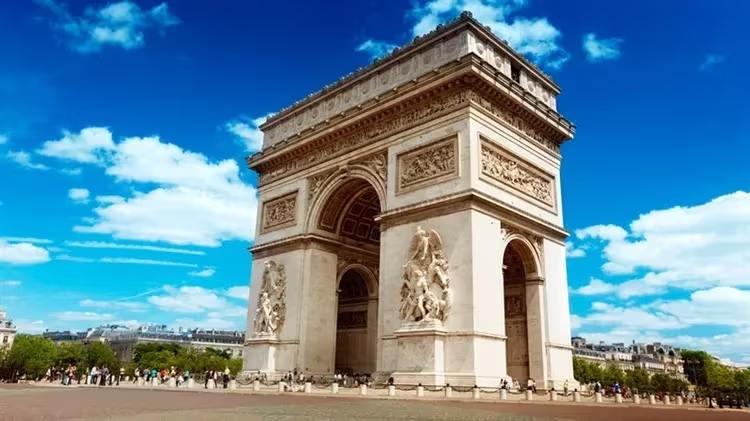
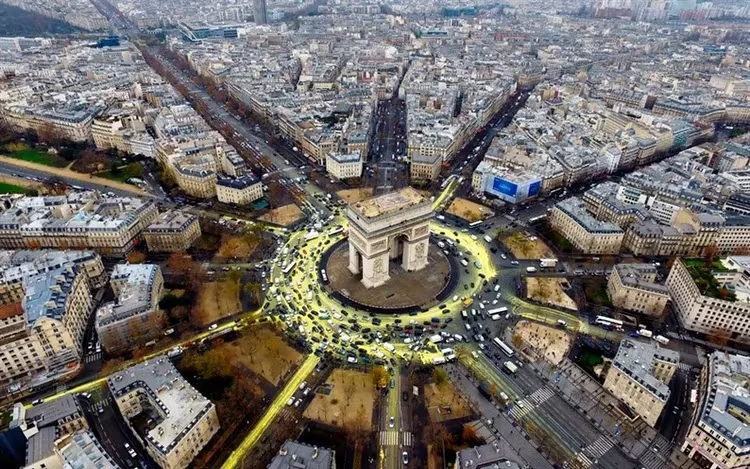
It is located in the center of the famous Place Charles de Gaulle. The life story of the great commander during the Second World War can be heard during excursions, standing next to the solemn building. Other names for the place are Etoile Square, “Square of the Star”. In different directions from the square, as if from the Arc de Triomphe, 12 avenues diverge in strict rays.
Each of them is considered a landmark of the city. It seems that the arch still invites strong people, not only the soldiers of Napoleon's army, but also those famous for their achievements in different directions, to celebrate their victory and triumph here.
Napoleon's order to start the construction of the Arc de Triomphe began to be implemented after the Battle of Austerlitz. The site for the future landmark of Paris was originally chosen to be a section of Rue Antoine. The walls of the gloomy Bastille used to stand here. However, the building could complicate traffic, and the construction site was moved to the old star-shaped crossroads of Chaillot, Ternes. In former times, on the orders of Pompadour's brother, the Marquis de Marigny, the soil was completely removed from a high hill, opening a direct passage to the Champs Elysees.
The place has become a favorite for hiking residents. The triumphal arch complemented the magnificent view from the imperial palace of the Tuileries, located on the top of the Chaillot hill. The main facade of the building is directed towards the palace, meeting the passing emperor. The first foundation stone was laid on August 15, the emperor's birthday. The basis of the construction project was the Arch of Constantine in Rome. The architect increased its size, making the building the largest of the existing Arc de Triomphe.
The construction of the foundation took about two years. An interesting event happened at this time. It is connected with the passage of Marie-Louise along the Champs Elysees in Paris. On the finished foundation, decorations in the form of the Arc de Triomphe were quickly erected from wood and fabrics. Only in 1836, under the reign of Louis Philippe, the construction was completed. The walls of the arch are decorated with an interesting ensemble of bas-reliefs related to the events of the victories of Emperor Napoleon, whose ashes since 1821 rested on the Pacific island of St. Helena.
The coffin with the body of the emperor passed in a funeral cortege under the arches of the architectural creation he had born in December 1840. The Paris landmark became the site of the farewell procession of the country's greats, for example, Victor Hugo, Lazar Carnot, etc. Unfortunately, the fascist army of the evil dictator Hitler during the Second World War defiantly passed under it.
Description
The height of the arch is almost 50 m, the width is about 45 m, the height of the vault reaches 29.19 m. The sculptures of beautiful women with wings blowing fanfares symbolize the triumph of the winners passing under the Arc de Triomphe in Paris. The architectural structure is decorated with interesting sculptural groups:
Inside the building there is a museum with artifacts in the form of photographs, documents, printed publications telling about the history of creation, a description of all the events that took place here. Under the arched vaults there is a grave with the ashes of the Unknown Soldier, who participated in the battles of the First World War.
Arc de Triomphe now
Currently, the attraction is still a symbol of the military power of France. Under it is heard the military music of parades with tanks, modern weapons, taking place during celebrations, for example, on Bastille Day. At this time, the national flag of the country victoriously flutters over its walls. Every day at 6:30 p.m., an exciting ceremony takes place here when war veterans light a memorial fire at the Tomb of the Unknown Soldier.
Observation deck
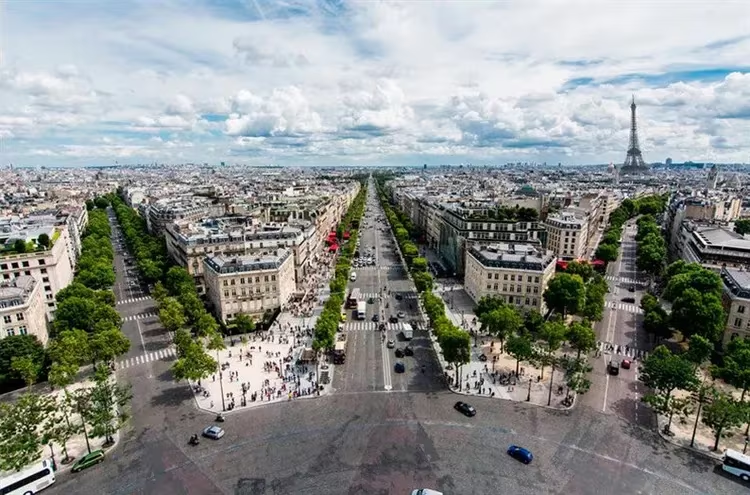
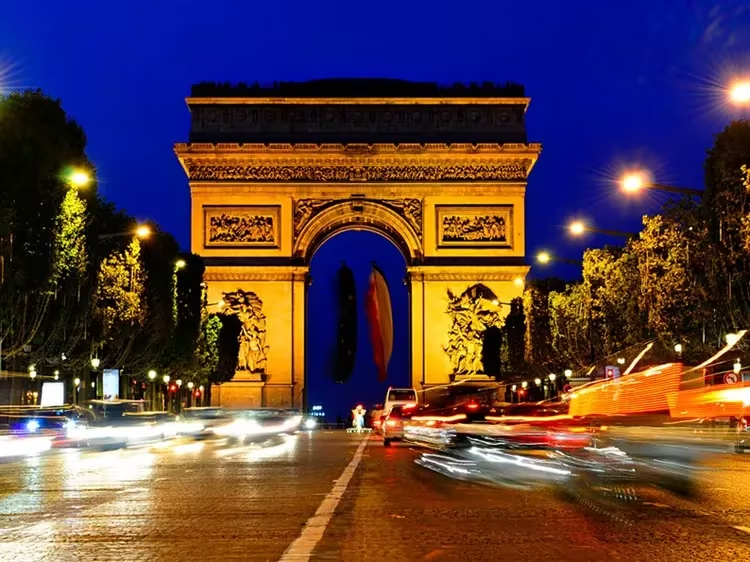
Only 280 steps leading to the observation deck, organized at the top of the architectural structure, will be easy, simple to remember from the beautiful view received on it. Especially if you overcome them at dusk. The last rays of the setting sun illuminate the surroundings, play on the marble walls of the adjacent attractions with an unusual light. A night journey along the illuminated arch allows you to make amazing shots of the sparkling lights of the buildings of Paris, the Eiffel Tower, leaving the horizon, the beautiful avenues of the city.
Where is it located and how to get there
You can come to Star Square by bus or metro. Get off at the Charles de Gaulle Square stop. It is proposed to inspect the arch daily from April to the end of October from 10 am to 11 pm. In the period October-March, the opening hours of the attraction last from 10 to 22.30. The price of the entrance ticket is 8€, reduced 5€.