
Grand Opera in Paris: photo, description, history, interior, architecture, map 2021
It is impossible to pass by this building without admiring the architecture and not being interested in history. Built in the Neo-Baroque style by Charles Garnier, it has graced the Place de l'Opera in Paris since 1875 with its majesty. He is known to all connoisseurs of theatrical art all over the world. Yes, we are talking about the famous Grand Opera in Paris, which since 1989 has been called the Palais Garnier. It will not be difficult for tourists to get to it. This can be done by metro, taking the metro to the Opera station, or by taxi. Just a kilometer south of the square is the famous Louvre Palace, and to the southwest is Place de la Concorde.
History of the Grand Opera
The history of this building is inextricably linked with the name of Napoleon III. It was his superstition that served as the reason for the start of the construction of the Paris Opera.
It happened in 1858, when the emperor was not far from the Le Peletier theater, where an unsuccessful attempt was made on him, as a result of which several people from his entourage died. After that, this theater earned a bad reputation in the eyes of Napoleon, and he ordered the construction of a new opera house, as he was reputed to be a subtle sign of this art form.
The perfection of Paris, Georges-Eugène Haussmann, who was a favorite of the emperor and wishing to please him, enthusiastically seized on this idea. He announced a competition for the best design of the Opera building, in which more than one hundred and fifty architects took part. Having carefully studied each of them, Osman chose a sketch by the then still practically unknown Charles Garnier, who struck him with its scope and luxury. Moreover, the architect showed not only his professional gift, but also the talent of a wise politician, having enlisted the support of the emperor's wife.
Garnier described his creation as a building built in the style of Napoleon III. A woman could not resist such a “weighty” argument.
The foundation stone was laid in 1860. But the swampiness of the area and the presence of a large amount of groundwater delayed it for eight months, during which the drainage took place. But still, the foundation was laid and reinforced with a layer of bitumen that protects the basement from moisture penetration. This foundation to this day holds the thick walls and heavy floors of the building, not shrinking and maintaining its integrity.
The genius of the architect was that he used the existing reservoir, which is located under the Grand Opera, to strengthen the foundation. Water clogged small cracks with sand and silt, preventing subsequent penetration of moisture into them. And in the event of a fire, this tank could be used as a source of water for extinguishing.
Even the unstable political situation could not prevent the construction of this grandiose structure. She, of course, increased the time of its construction, but in 1875 the Parisians saw the wonderful creation of the great master, who by that time had served as a prison and a place of executions during the fall of the Paris Commune.
Louvre: Timed Entrance Ticket 1-
Hour Lights of Paris Cruise Skip-the
-line tickets to the roof of the Arc de Triomphe
Eiffel Tower: 2nd floor access
Versailles and Gardens: Skip-the-line ticket with audio guide
Hop-on Hop-off bus tour. Class., Prem. or Suite
Paris Museum Pass: 2, 4 or 6 days
Tickets: Montparnasse: 56th floor rooftop terrace
Show at the Moulin Rouge with champagne
The architecture of the Grand Opera building
For the construction of the building, stones were brought from all over Europe and the colonial countries of Africa. This can be seen in the variety of their shades, which have retained the colors until now. As conceived by Garnier, the building was to be decorated with numerous statues.
For this, such famous sculptors as Gyumeri, who created the winged goddesses of harmony and poetry, were involved; Lexan, who became the author of pegasi on the sides of the pediment; Millais, who carved Apollo holding a lyre in his raised hand. Between the columns are now busts of great composers, made of bronze. These include Beethoven, Bach, Rossini, Mozart, Meyerbeer and others.
The interior of the Grand Opera
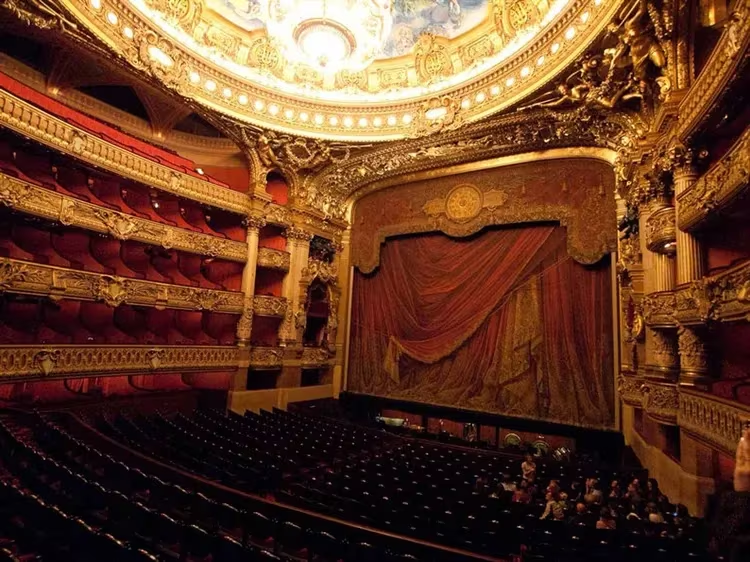
Inside the theater is also beautiful and majestic. Occupying an area of eleven square meters, it can accommodate 2,200 people in its halls, and 450 artists on stage.
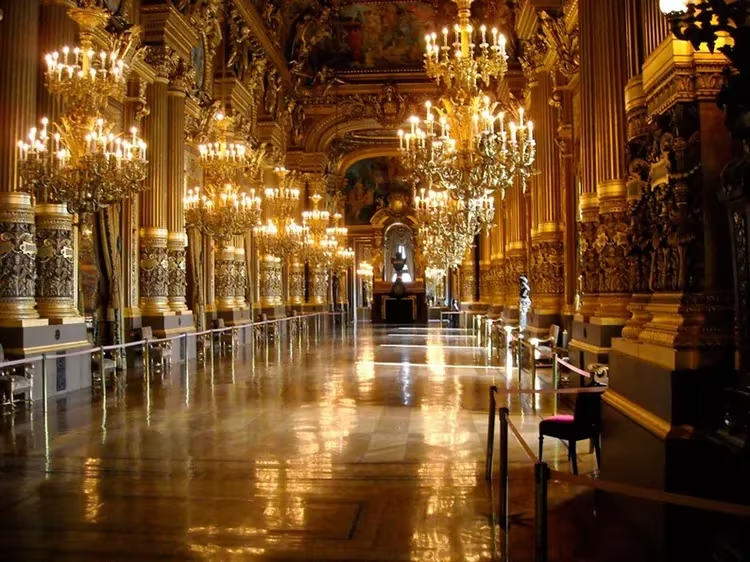
The building is decorated with multiple columns and sculptures of the gods of Ancient Greece, nymphs and chubby Cupids. The walls and ceilings are decorated with intricate marble friezes. Also, when creating the interior, gold leaf, velvet, and baroque stucco were used. A huge chandelier, weighing more than six tons, deserves special attention. Around it, the ceiling was previously decorated with ancient frescoes, which began to crumble over time.
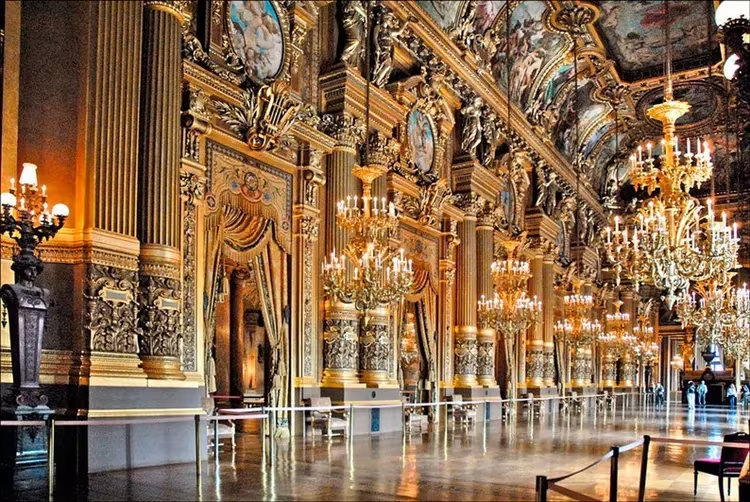
Since 1964, the ceiling has been decorated with paintings by Marc Chagall. On the walls there are also paintings by famous artists, mirrors in gilded frames, bas-reliefs of composers.
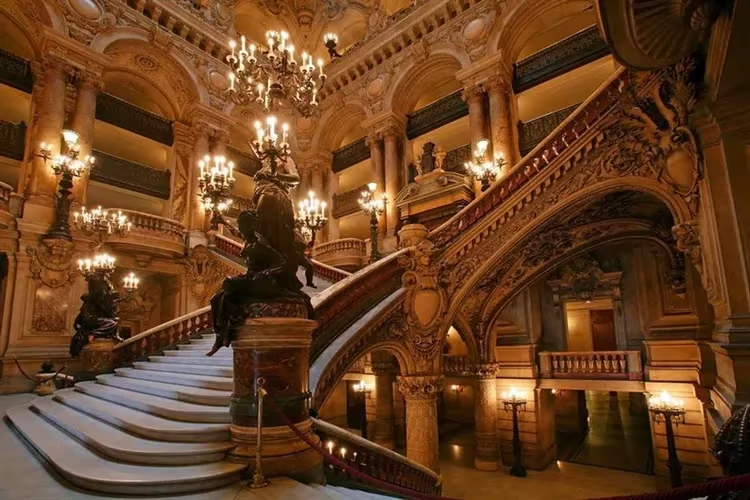
The internal architecture of the building is represented by a huge front staircase, a luxurious auditorium and a foyer with a fountain. It also has its own library and two ballet schools. At a time when there are no performances in the theater, numerous excursions take place in it.
Guided tours and performances at the Grand Opera
Since 1875, opera and ballet dancers, whose names are known throughout the world, have ascended this stage. The price of tickets is from one hundred to five hundred euros, despite the fact that it is not easy to get them.
The cost of excursions, which are held daily from ten in the morning to five in the evening, ranges from 4 to 9 euros. Guide services are paid separately and are equal to an average of 35 euros.
Here you can also buy small souvenirs in memory of visiting this luxurious palace.
We also recommend visiting the parks of Paris and the Parisian catacombs.
Use the services of kiwitaxi and at the airport, at the specified time, the driver will be waiting for you, help with luggage and promptly take you to the hotel. Several classes of cars are available – from economy to Minibus with 19 seats. The price is fixed and does not depend on the number of passengers and the address within Paris. Taxi from / to the airport is a convenient and comfortable way to get to the right place.