
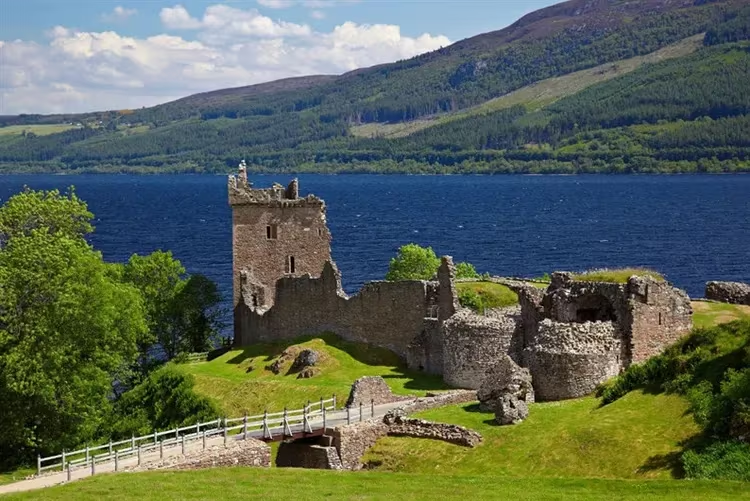
Loch Ness, Scotland
Scottish expanses… The combination of unique nature, rich history and interesting facts make this country very popular in terms of tourism. Of course, the prospect of getting to know the local traditions and quirks, and getting plenty of breath in the dizzy air are good reasons to visit this amazing country. But most tourists go to these parts not for this. The main purpose of their trip is to visit the mysterious reservoir of Loch Ness, about which there are so many legends and many documentaries have been shot.
Where is
Perhaps there is not a single person who has not heard chilling stories about a certain creature of unimaginable size that has been living in a Scottish lake since time immemorial. And the locals, it seems, decided to finally convince the visitors of this, vying with each other presenting photographs and video clips in which the “monster” either shows its tail or sticks its head out of the water…
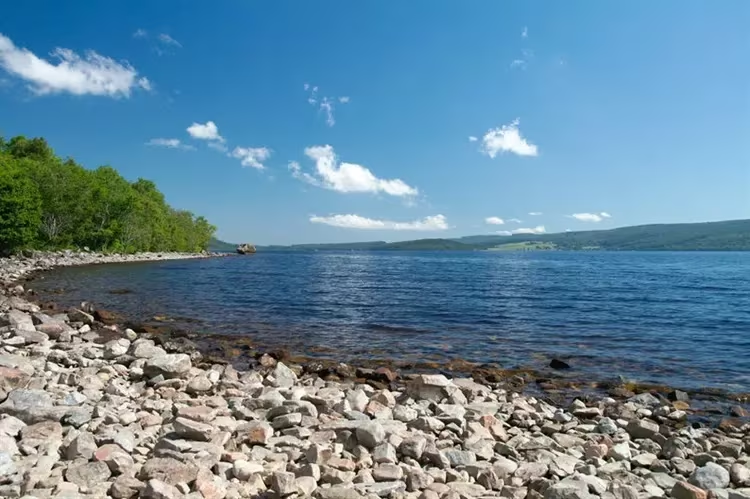
An impressive freshwater reservoir located in the heart of Scotland. The easiest way to get to these parts is from the small port city of Inverness, from which you need to move to the southwest.
Lake features
In addition to interesting legends and beliefs, the mystery of which is shrouded in Loch Ness, it boasts other natural features. For example, despite the relatively small width of the water surface (only 2 km), the reservoir has a huge length – as much as 37 km! In addition, here is the greatest depth, which in some places exceeds 200 meters. The lake has become part of the state water system and plays an important role in providing the energy needs of local residents.
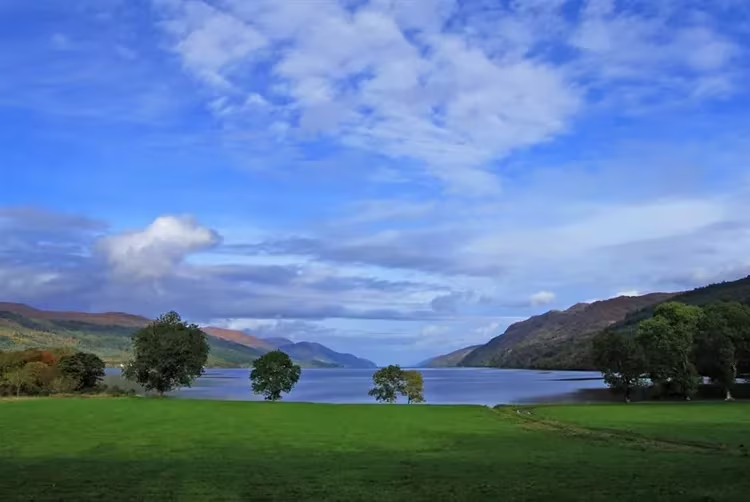
There is another feature that only acted as an additional catalyst for the emergence of chilling stories about the lake. If you look closely, you can see that the water here is muddy, although it is clean. This is due to the high content of peat in the bottom soil. Therefore, the surface seems even more gloomy, even in the clearest weather.
Legends of the Monster Nessie
Of course, there are a great many such reservoirs on our planet. Therefore, it is not worth linking the wide popularity of Loch Ness with its size and role in ensuring the life of the country. The lake became famous thanks to either a fictional or a real monster that settled in the local depths. The locals nicknamed him Nessie, and the legends about his bloodthirsty nature only stir up the interest of visitors and force them to “gobble up” another portion of fiction with their mouths open.
For the first time, the mention of the amazing and mysterious inhabitant of the lake appeared several centuries ago. In those distant times, when a person did not yet have instruments and equipment at his disposal that made it possible to capture the phenomenon on film, analyze or conduct a study of the entire reservoir, and marvelous animals that have occurred since the Paleolithic times were sometimes still found in the vastness of our amazing planet, such legends had a good basis for the emergence. It is quite logical that they tried to explain the stories of eyewitness sailors as hallucinations or even called them fiction.
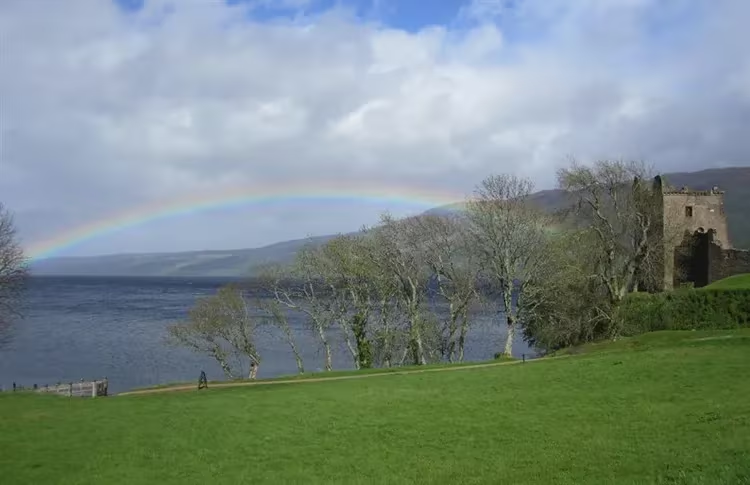
The monster appears before us in the form of a huge seal with a disproportionately long neck, which inspires awe and horror in the many fishermen who daily risk their lives and go fishing. There are also mentions of Nessie in Roman historical references. Allegedly, even the most daring legionnaires were put to flight at the sight of a huge animal of unknown origin. All the fishermen and swimmers who disappeared without a trace were also attributed to the tricks of the monster, without even considering the more plausible versions of their possible death.
Today, Nessie is the modern mascot of the valley, and his image is actively used by local merchants who made a good fortune selling souvenirs with the image of the legendary monster.
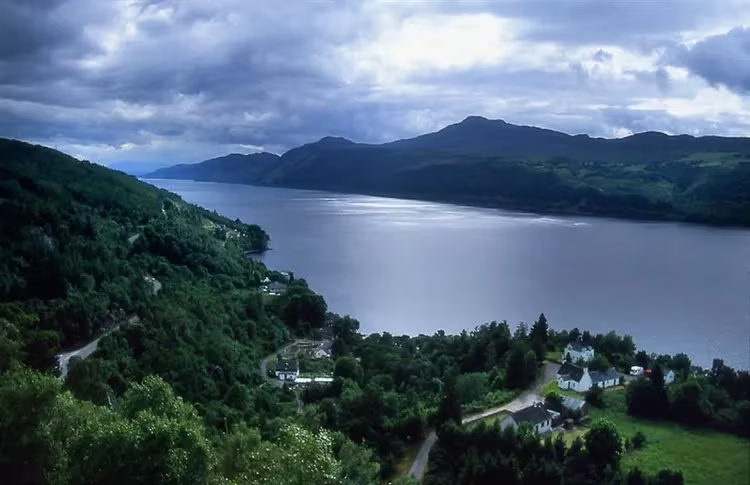
But the peak of the popularity of the deep dweller and the mission to capture him came in 1933 after the publication in a local newspaper of the story of an eyewitness who personally encountered a monster and was able to survive.
Even today, when a large-scale study of the reservoir has been carried out, there is no consensus among scientists. There is a theory among supporters that the monster exists and belongs to the ancient species of plesiosaurs. Opponents of the theory cite the conclusions of researchers of lake depths and bottom to confirm their correctness. We can only wait for the outcome of these protracted disputes.
sights
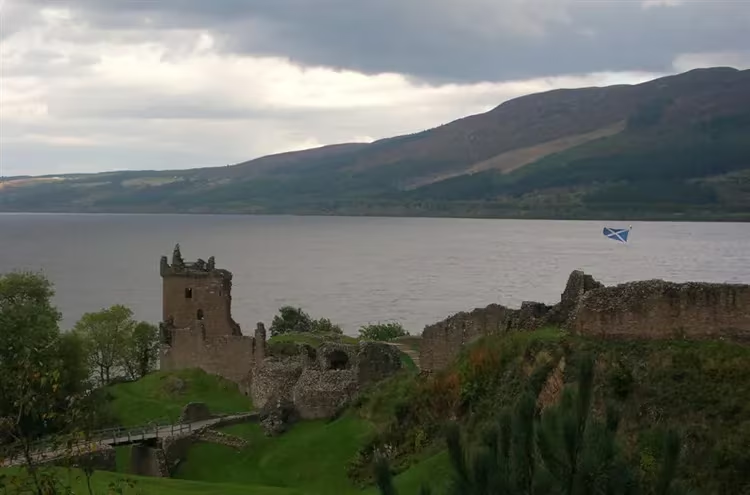
But the Great Glen valley, in which the lake is located, boasts other attractions. For example, on the banks of Loch Ness there are many ancient settlements in which special traditions and customs have been preserved even today. The life of the inhabitants of the coastal settlements is of genuine interest to tourists who enthusiastically listen to the legends about the mythical Nessie first hand.
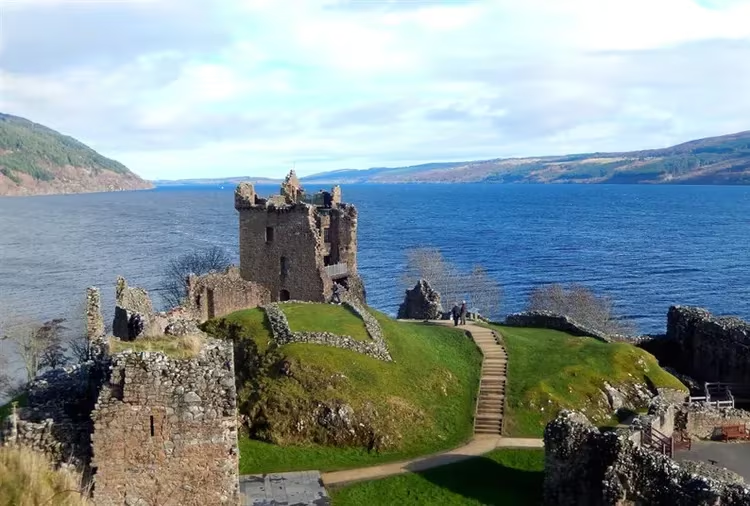
But it is especially crowded in the vicinity of the Scottish castle. The building has a long history. According to historical sources, military fortifications existed in this place as early as the 6th century. The castle has a long history and during its entire existence it managed to change many owners. There is evidence that even representatives of the English Comin family lived here. The impregnable walls of the fortification made it possible to keep the siege for many months, and only a couple of hundred people could cope with this difficult task. Today, the castle is visited annually by more than 300 thousand tourists, which makes it one of the main historical attractions in Scotland.
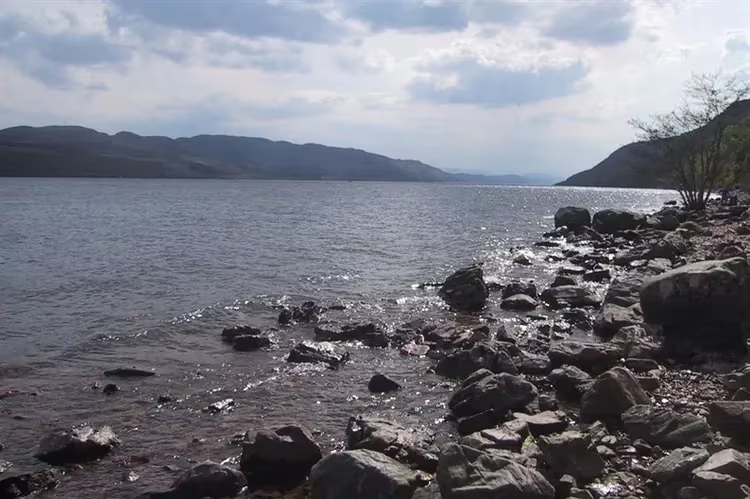
There are also artificial parts of land on the lake – small island formations, which are called crannogs in the country. During one of the many excursions, you can visit any of them and look at the huge lake from a different angle.
Even if you do not believe in the myths about ancient monsters, it is worth visiting these lands at least for the sights. Without a doubt, every tourist will find something interesting for themselves!
We recommend reading Fingal's Cave in Scotland.