
🏰 Mangualde: Portugal’s hidden gem
Small towns in Portugal are not at all similar to the regional centers of post-Soviet countries. I got the impression that the locals live according to the proverb “ where you’re born, you’re useful there,” so they create the maximum level of comfort in their native places.
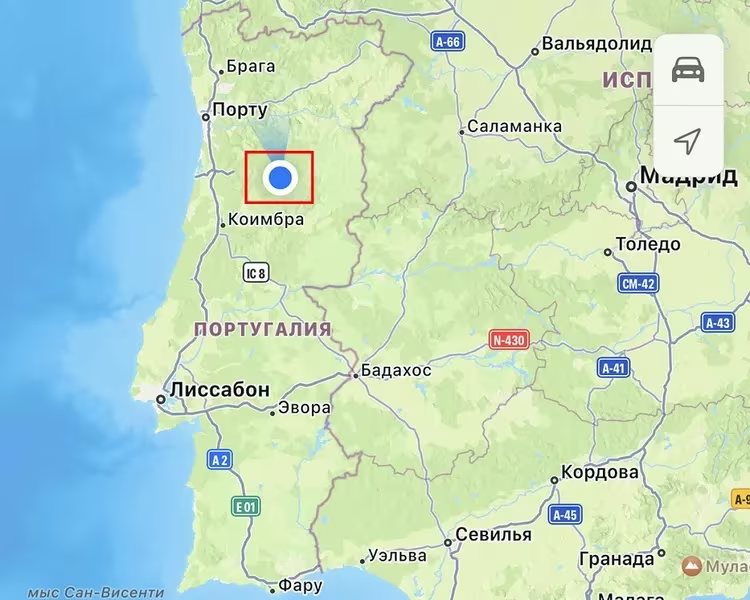
More than a year ago, from Kiev, a population of four million, fate took me to Mangualde, a municipal town of ten thousand in the central part of Portugal. To Lisbon and from here – 300 km, to Porto – 150, to the ocean – 100. Is there life in such a wilderness? This is what I decided to tell you about.
Is it beautiful in small towns?
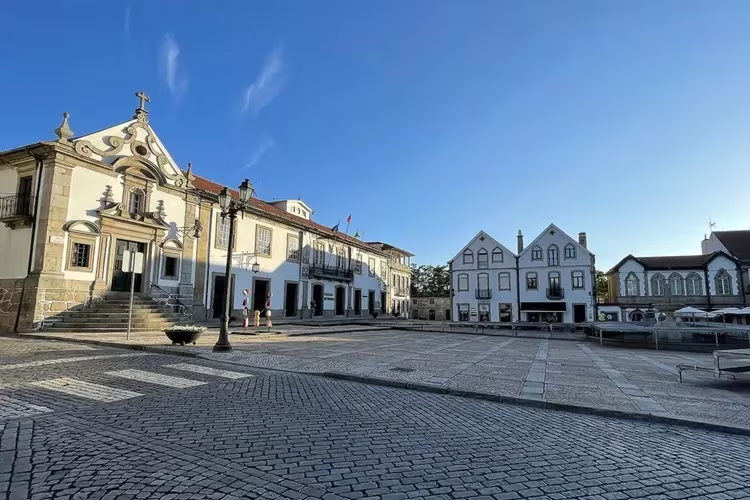
Definitely beautiful! I have visited more than three dozen small settlements – and I never cease to be amazed at their well-groomed infrastructure and infrastructure . I’ll tell you what a typical Portuguese municipal center of 5-10 thousand inhabitants looks like using the example of Mangualde.
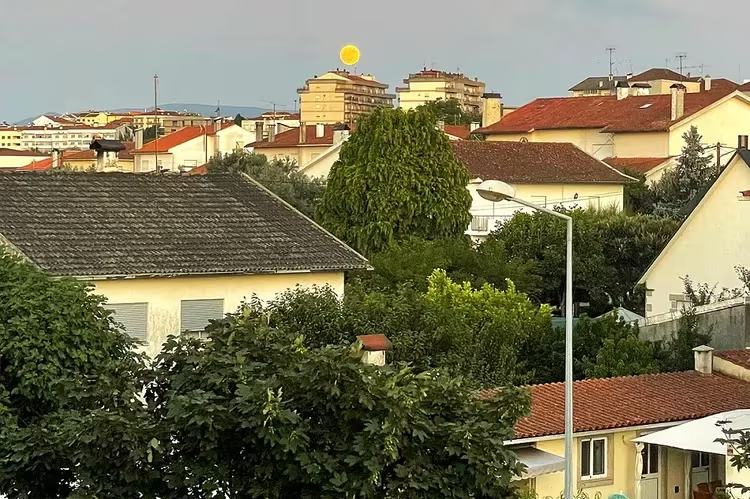
The city center consists of low-rise stone houses, tiled in bright colors or plastered and painted in light colors. The roofs of the houses are certainly terracotta – I really like this feature.
The main square is usually located near the city hall. Major city events take place here. Banks, shops and restaurants are located nearby.
In the city there will certainly be several churches from the 17th and 18th centuries, reminiscent of gingerbread houses. One of them in Mangualda was previously visited by a monastery, where they created a recipe for their own pasta – with beans. They are still being prepared today. In my opinion, pasteis de feijao are tastier than the classic ones.
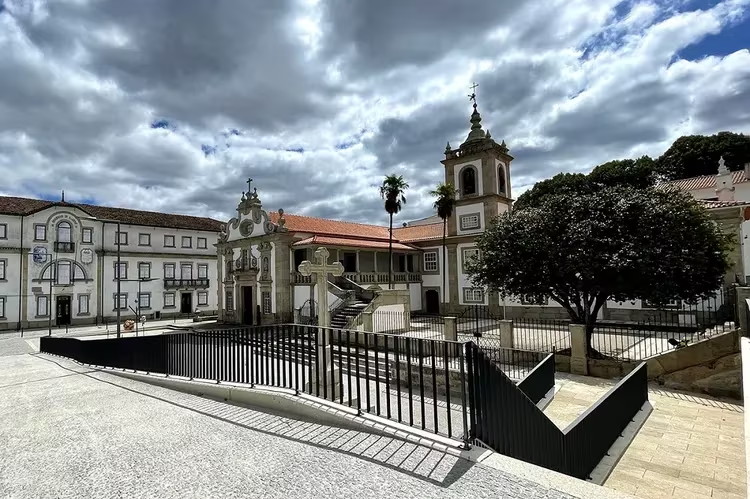
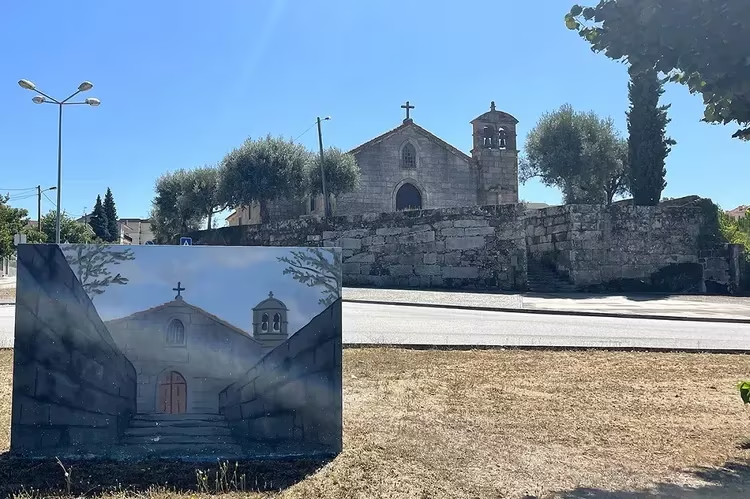
Some temples in Portugal have been preserved since the Middle Ages. Near my house, for example, there is a church from the 13th century.
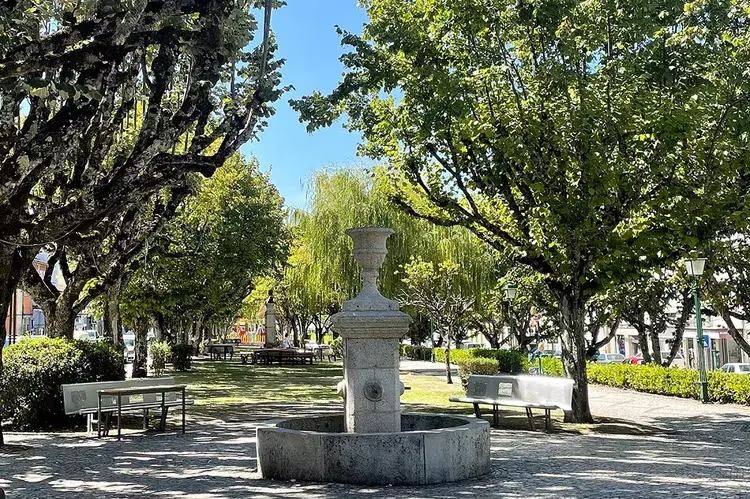
Alleys with amelia and plane trees and small public gardens with greenery are usually called parks or gardens in Portugal. You will see such recreation areas in every city.
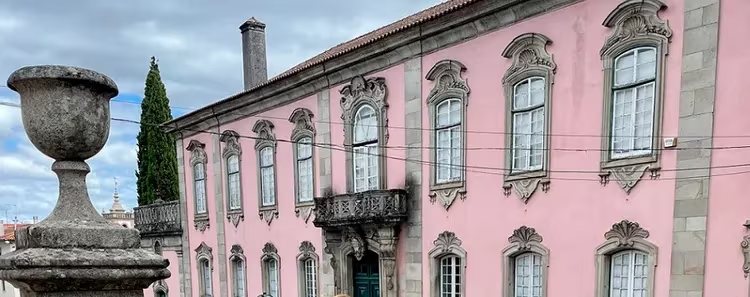
There is also a full-fledged park in Mangualda, but it is private. Belongs to the owner of a manor dating from the second half of the 18th century. Entrance to the “pink” palace and the adjacent garden is paid – 10 and 5 euros, respectively. Neighboring towns have beautiful, large, free parks.
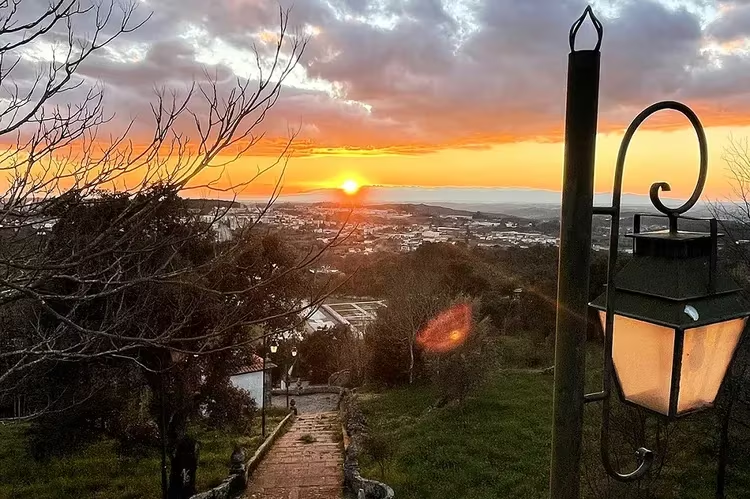
Mangualde is located on a hill and, if you climb to the highest point, you can admire the sunset over the rolling valleys.
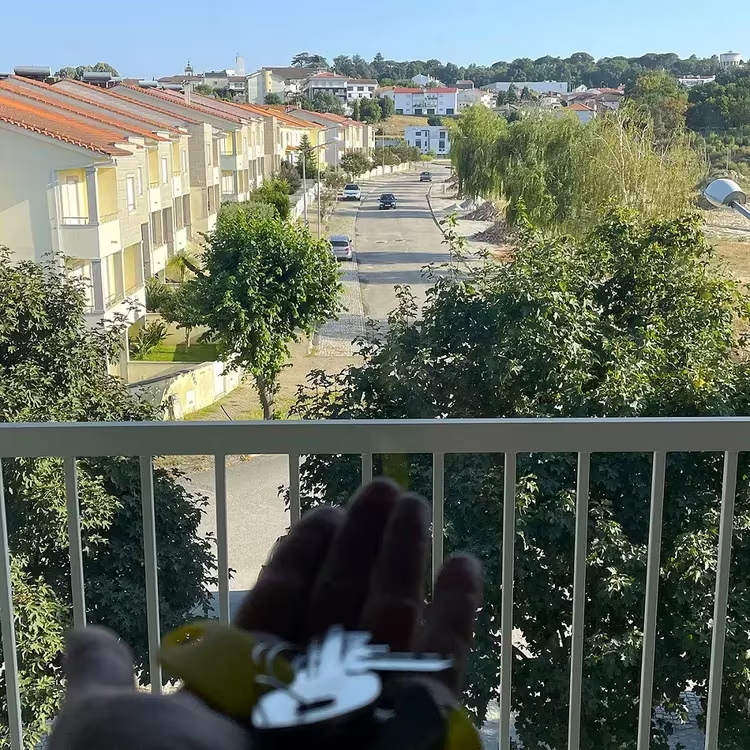
In municipal centers there are areas with more modern high-rise buildings. But mainly, villas and townhouses stretch in different directions from the historical heart of the city. Almost all the buildings are made with local flavor, which creates some kind of resort atmosphere.
Although I sometimes miss the excitement of the big city, the beauty of the current small city cannot be denied.
What about rent?
Portugal is considered one of the most inexpensive countries in Europe. There are also relatively low wages here. It would seem that, given these two factors, rental prices should be affordable. But no! Brazilians and residents of other former Portuguese colonies began to come to the country en masse – a wave of rising rental prices began. And recently there has been an influx of IT specialists and businessmen – the situation in the real estate market has become even more difficult.
So that you understand the price range: you can rent a T1 (apartment with one bedroom and a kitchen-living room) in the center of Lisbon for about 2,500 euros, and this price often does not include utilities. Heating, if there is any in the house at all, is not cheap. Friends told me that in winter they decided to at least constantly warm up the bathroom with a heated towel rail – the next month they received a bill of 500 euros.
It is also important to consider that when renting a home for a long time, you need to leave a deposit in case of damage to the property – usually it is equal to one or two months of rent. And in addition to all of the above, prepay for accommodation – most often three to six months in advance. That is, at the start you need to shell out at least 10K, or even twice as much.

Prices for renting real estate in municipal towns are not so steep. This is one of the important reasons why migrants do not shy away from the outback. The same T1, for example, in Mangualda will cost 350-400 euros. Although finding a free apartment or house far from a large city is also not always easy. What surprises me a little: quite a few villas are empty, but not for rent.
What about the infrastructure?
Transport
In towns like mine, it takes 40 minutes to walk from the outskirts to the outskirts, so public transport is not needed here. Although mothers who have to take their children to school from one end to the other will not agree with me – we should come up with something here, because from the villages the delivery of children to the educational institution is organized.
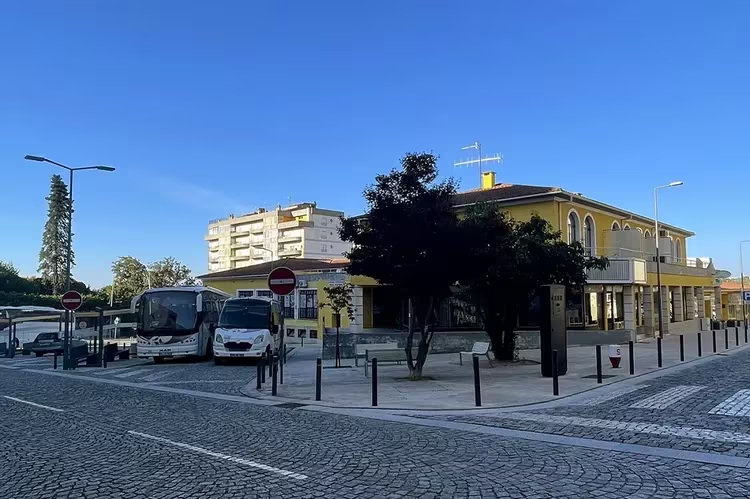
There is a bus connection with other settlements, but its frequency leaves much to be desired. Some cities also have railway connections. We had it too, but now the hardware is not working – they are changing the paths. As a result: it’s difficult to imagine your life in a small town without a car.
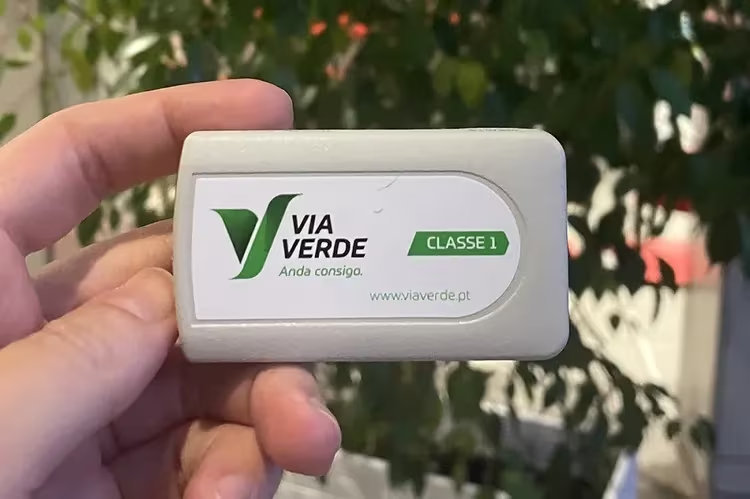
As for the roads themselves, they are in excellent condition. Expressways are toll roads, but they are faster. We rented the ” Via Verde ” system (about 5 euros per year) and drive around the country with it – the money is debited from the card automatically. There are highways that cannot be accessed without such a device – there are only electronic gates. Cost: from me to Lisbon (which, let me remind you, is 300 km) is about 15 euros one way.
Gasoline prices, like everywhere else, fluctuate a little. Now liter 95 costs about 1.90 euros.
Healthcare
During my year of living in Portugal, I still haven’t figured out the state system. I definitely have my own free therapist, I even visited him once – I wanted to see a specialist, but did not receive a referral. “Come back if it gets worse,” the doctor told me.
The Portuguese themselves actively use free healthcare, although they complain that they have to wait a long time to see a doctor, not to mention coupons for some examinations and queues for planned operations. But in government institutions of post-Soviet countries the story is the same.
With private medicine, everything is simpler and clearer. You pay from 70 euros and get an appointment in the coming days. If you have insurance, it will be cheaper. Yes, yes, insurance will not always be free – read the conditions, as they say.
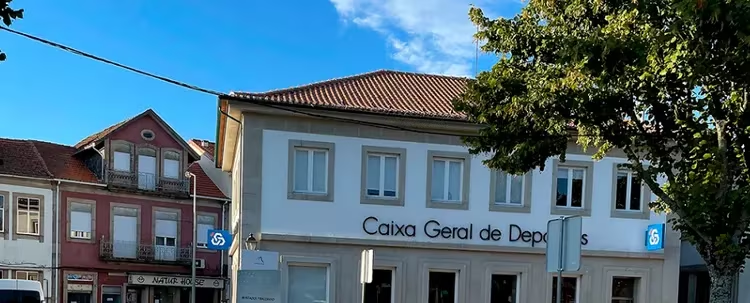
It is worth considering that small towns may not have their own clinic. There is one in Mangualda, but to see some specialists you need to go to the district center (something like a regional center), which is 20 km away. The nearest hospital is also located in Viseu.
Issues with acute pain need to be resolved in the emergency department, but you should not count on emergency care. Patients are given ribbons of different colors. If you get a green one (the very last level of urgency), you can spend 12 hours in the clinic (it’s better to take food with you, because there may be nowhere to buy it there).
Food and manufactured goods
Municipal centers usually have several large supermarkets. There are four of them in mine, as well as a bunch of shops, a market on Saturdays and a couple of large stores with all sorts of things.
The average bill when going grocery shopping for my husband and I is usually about 100 euros – there is enough food for five days. The cost of goods in different networks is slightly different: if you follow prices and promotions, it may turn out cheaper.
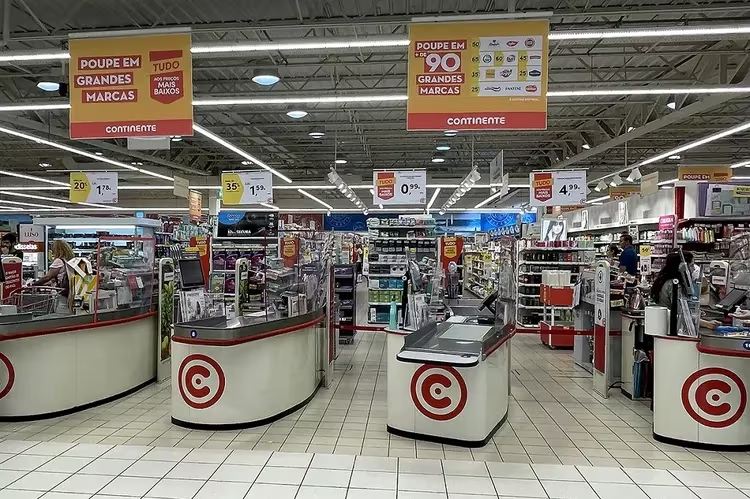
I am satisfied with the quality of the products and their variety. If you don’t want store-bought meat and eggs or vegetables and fruits, you can find farm products.
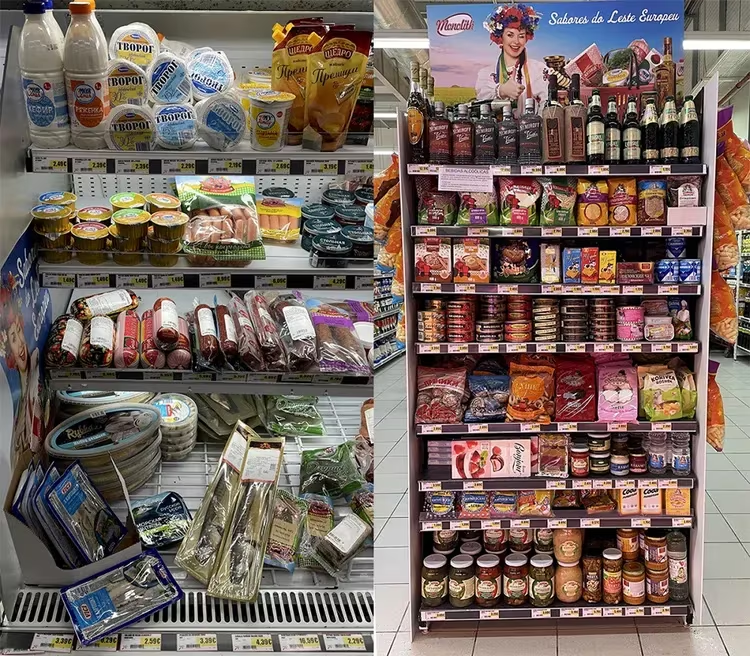
And when you miss your native ones – buckwheat, herring, lard – one of the supermarkets has shelves with Slavic products. But not all municipal centers have such luxury!
Entertainment
The Portuguese love festas. Administrations of small towns often organize holidays for their residents. The marathon of parties begins in June and ends in November. Either a food festival, or a saint’s day, or a parade, or a concert, or a theatrical performance – in general, they are having fun as best they can.
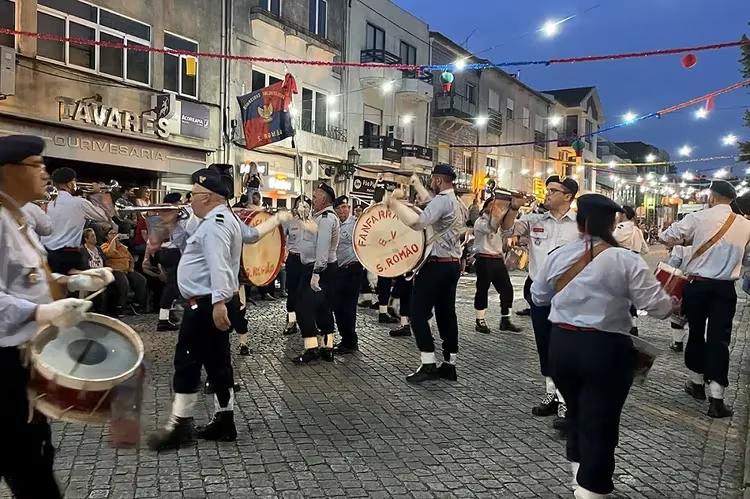
If there are no holidays, the city is quiet. But cafes are always popular. The locals, it seems to me, don’t really like to cook. They usually eat in restaurants, more like our canteens.
The cost of food in small towns, as well as the portion sizes, are pleasantly pleasing. You can have breakfast for 3 euros per person, lunch for 8, dinner for 15. In Lisbon or Porto, these figures will have to be multiplied by two.
It is important to take into account the peculiarities of the work of local establishments – I talked about them in a separate publication. Otherwise, you will leave an empty restaurant with an empty stomach.
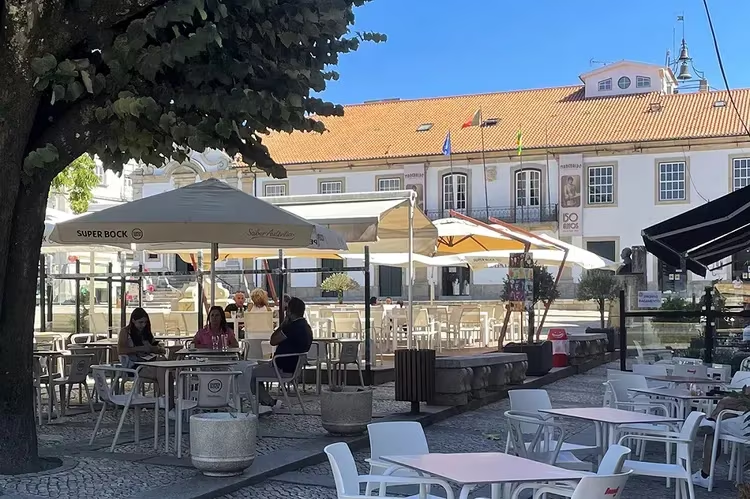
What else can you do in a small town? In Mangualda, for example, two outdoor swimming pools are open in the summer. The city has simple gyms, billiards and ping-pong tables, football and basketball courts. Do you want to dance until the morning? You can look into a modest nightclub. Need more service – go to Viseu.
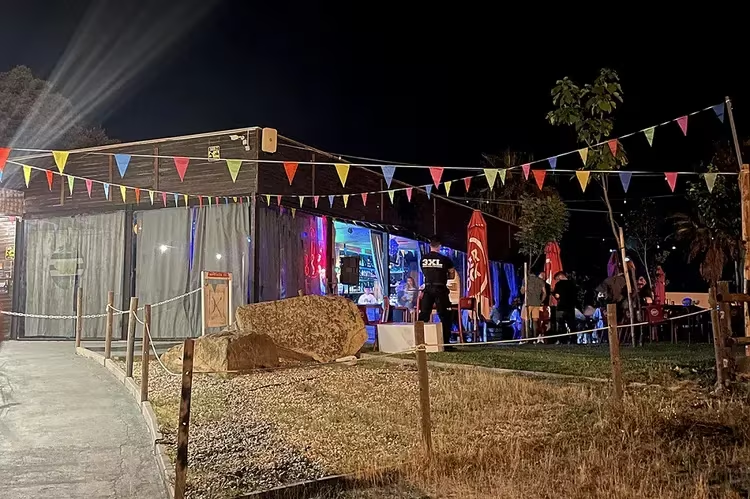
To be honest, this infrastructure is not enough for me, but I travel constantly, so I don’t have time to fade away.
Is it possible to find a job?
Locals work mainly in the service sector, manufacturing and agriculture. The more successful ones are in municipal bodies. The salaries of ordinary workers are low – not even 1000 euros are always available.
It is difficult for migrants without a language to find work. Unless in a restaurant you cut food, wash dishes and wash floors – for 700 euros per month.
It’s good that they came up with remote work!
My conclusions
The Portuguese love their small homelands very much and do everything possible to make it comfortable to live, work and relax in their small towns. And neither the state system nor the level of salaries prevents people from creating beauty around themselves, enjoying communication and enjoying every day.
If you like a relaxed lifestyle, you don’t need glamorous establishments and daily noisy traffic, the municipal center may be to your liking.