
Murano Island in Italy – history, photo, description, how to get there, map
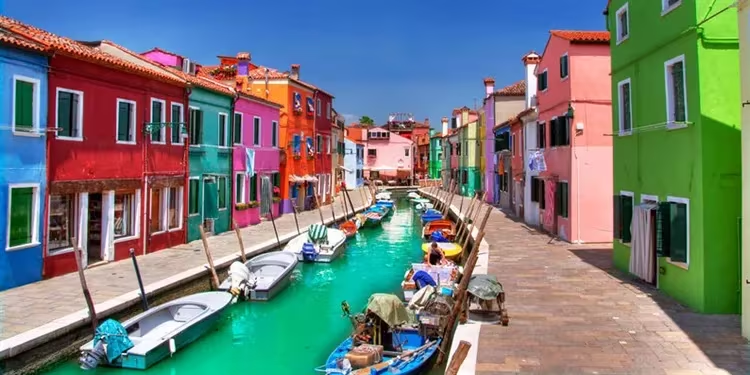
Murano Island is an integral part of the Venetian Lagoon. Its area is 1.5 square kilometers, with a population of over 4,000 people. This is a quiet and peaceful place with narrow streets and dense buildings of colorful houses. It is home to the world-famous Venetian glass factory. The locals are skilled craftsmen who have inherited the secrets of creating glass masterpieces from their ancestors.
History of the island of Murano in Italy
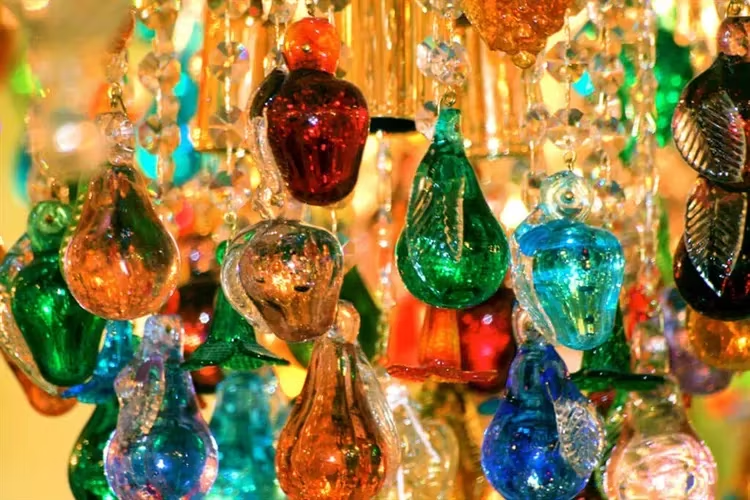
In the 13th century, unusual glass objects were brought to Venice from Constantinople, distinguished by their lightness, subtlety and transparency. For the Venetians, craft was a vital occupation, because the island settlement needed to master the production of goods. Entrepreneurial residents mastered the secret recipe for making glass, which gave rise to the emergence of small glass-blowing workshops. The high temperature of the heated stoves threatened the wooden buildings of the city with fire. This circumstance forced the government of Venice to issue a decree according to which all glassblowers had to move to the island of Murano.
Murano creates its own administration headed by the mayor. The active construction of factories leads to the intensive development of the glass industry. The period of the XIV-XV centuries was marked by the highest flourishing of the industry. The population of Murano has risen to 50,000. There are about 300 workshops, factories and schools. For the economy of the Venetian Republic, glass production was one of the most profitable enterprises. The Treasury vault is constantly replenished with gold through the sale of glasses, mirrors and glasses throughout Europe. Such products were valued and seemed to be items of high demand. Murano Island flourished. The well-being of people directly depended on the glass craft.
Glassblowers were equated in their privileges to the nobility. The high social status allowed artisans to wear a sword, their children were allowed to enter into a marriage alliance with members of the aristocratic families of the republic. The masters had the right to the indulgence and mercy of the authorities, and also had immunity from unjustified arrest. There were two indisputable laws – glassblowers were not allowed to leave the Venetian islands, and they were not allowed to disclose the secret of glass production. For violation of these laws, the masters were sentenced to death.
In the 15th-16th centuries, the professionalism of glassblowers reached unsurpassed heights. Murano Island is gaining worldwide fame as a center for the production of unique glass. Craftsmen improved the technological process to such an extent that they began to produce crystal, gilded and colored glass. Products have become more diverse and decorated with rich colors. Foreign merchants bought large quantities of bowls, vases, figurines in the form of animals, birds and flowers.
Murano becomes a favorite place for visiting Venetian aristocrats. Luxurious palaces are being erected on the island for rich people who wish to move away from noisy and fussy Venice. The villas were decorated with sculptures, fountains and paintings. In the 17th century, the popularity of Murano glass staggered – a powerful competitor appeared in Bohemia. Demand for local products has fallen markedly. However, chandeliers and mirrors were still a hot commodity throughout Europe.
A tangible blow to the economy of the island was inflicted by the French during the fall of the Venetian Republic in 1797. Napoleon ordered the destruction of all glass factories. The subsequent occupation by Austria did not promise any hopes for the restoration of production. The Habsburgs preferred to develop and patronize Bohemian glass factories.
In 1854 there was a revival of the craft. It was no longer possible for local craftsmen to achieve their former glory. But a new factory was built to produce household glass for domestic consumption. A few years later, another workshop was opened to create glass tiles, which were needed for the restoration of Venetian palaces and sanctuaries. The inhabitants of Murano again felt the taste of work, like their ancestors in ancient times. After the emergence of a new state – the Italian kingdom, handicraft traditions of past eras are being revived on the island of Murano. Workshops resume full production capacity. Gradually, the demand for Murano glass began to increase and does not fade today.
Sights of the island – what to see?
In addition to glass shops and workshops, the island of Murano is home to cathedrals, several dilapidated palaces, and a museum. These sights deserve the attention of tourists.
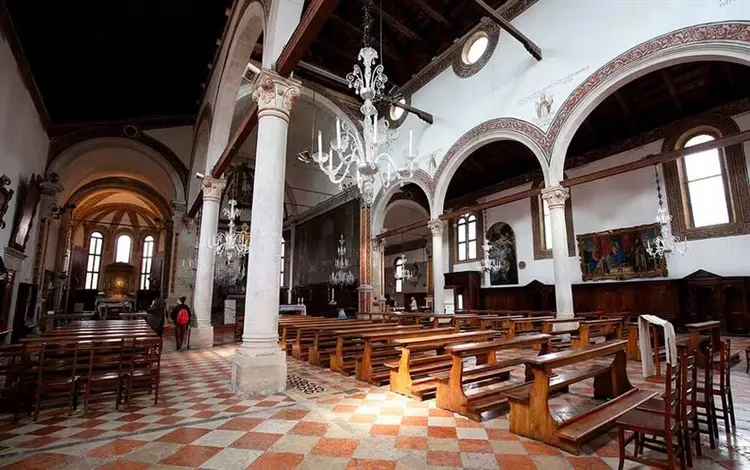
The Catholic Church of San Pietro Mortire, founded in 1348, has a fairly simple appearance compared to other Venetian sanctuaries. The brick basilica is decorated on one side with an extension of arcades, and on the other side with stained-glass windows. The main entrance is framed by an ornament with two columns on the sides. The inner hall of the cathedral impresses visitors with a rich interior. Graceful Murano glass chandeliers perfectly harmonize with ancient art frescoes and religious sculptures. The room is divided by rows of tall colonnades. There are amazing paintings on the walls. Of particular interest are the works of the Venetian artist G. Bellini “Assumption of the Blessed Virgin Mary” and “The Virgin and Child”.
The second shrine of the island of Murano is the Cathedral of Santa Maria e Donato. The main façade of the basilica looks like a polygonal cylinder with delicate arches. The inner hall is bordered by an openwork colonnade. The floor, walls and ceiling are decorated with mosaic panels depicting floral ornaments and mythological animals.
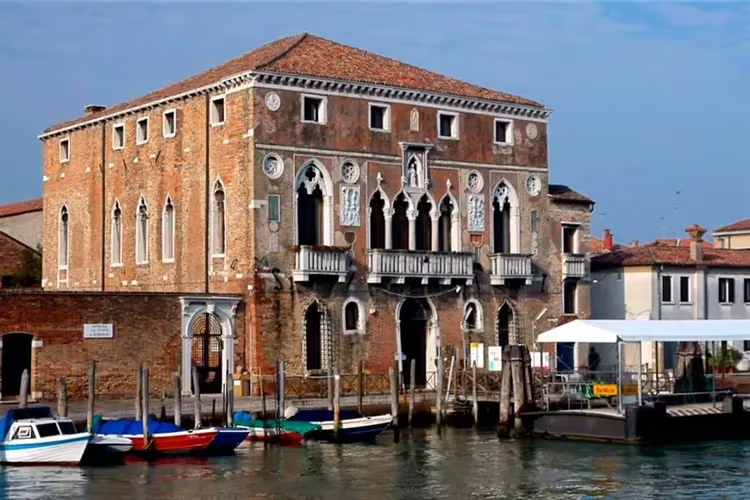
Along the canal of the island there are a large number of beautiful houses. Among them stands out the oldest architectural building – the Palazzo di Mula. The red brick palace in the Gothic style was erected in the 12th century and has retained its appearance to this day. The facade of the building is decorated with lancet windows and marble ornamental elements. The castle has its own pier.
Curious guests of the island of Murano can visit the glass art museum. Here are unique exhibits recovered during archaeological excavations from around the world. Here you can see the collection of the museum, revealing the history of the development of glass art from different eras.
Venetian glass island
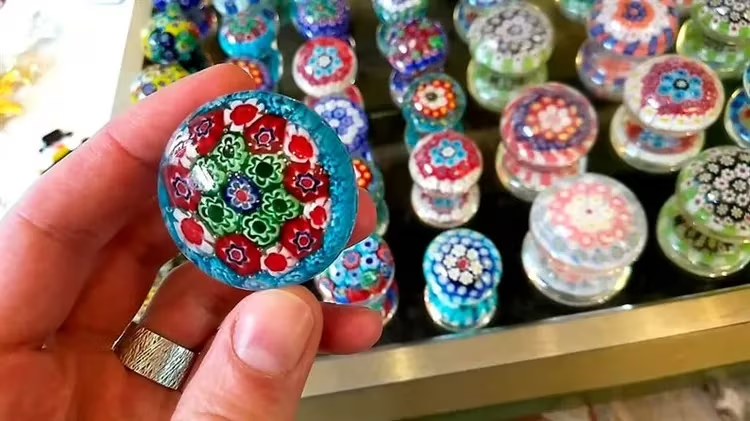
In Murano, craftsmen successfully work in the manufacture of Venetian glass, which is considered the most amazing in the world. This is hard work. The main feature of the production process is manual work, as was bequeathed by the ancestors.
The craft of Murano glassblowers is still relevant today. Amazing colorful products can be used as traditional household items, as well as for imitation of precious stones. In the manufacture of Murano glass, craftsmen use original technologies: copper crumbs, thin colored threads or metal oxides are added to the glass mass. As a result, glass products acquire intricate patterns and interesting shapes. Luxurious glass jewelry surprises with its variety. Glassblowers create exquisite earrings, rings, bracelets, animal figurines, vases, glasses and even watches.
On the island of Murano, next to each workshop, there are various shops: simple shops and high-end boutiques. Each tourist can purchase delightful examples of glass art to his taste.
How to get to Murano island?
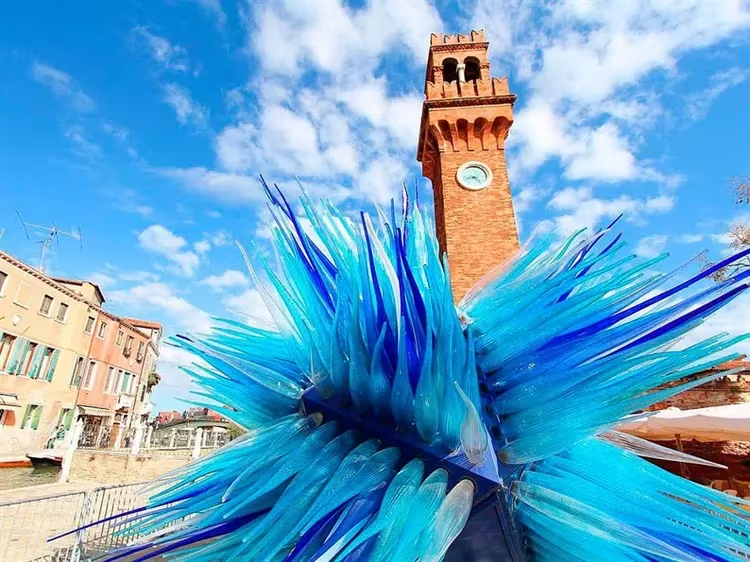
From Venice to Murano, local water buses – vaporettos run. The distance between the points is no more than 2 km. River minibuses moor to the lighthouse of the island or to a stop called Collona, where tourists are greeted by a glass composition – a woman in a cube looking at pigeons.