
Palatine Hill in Rome – history, photo, description, how to get there, map
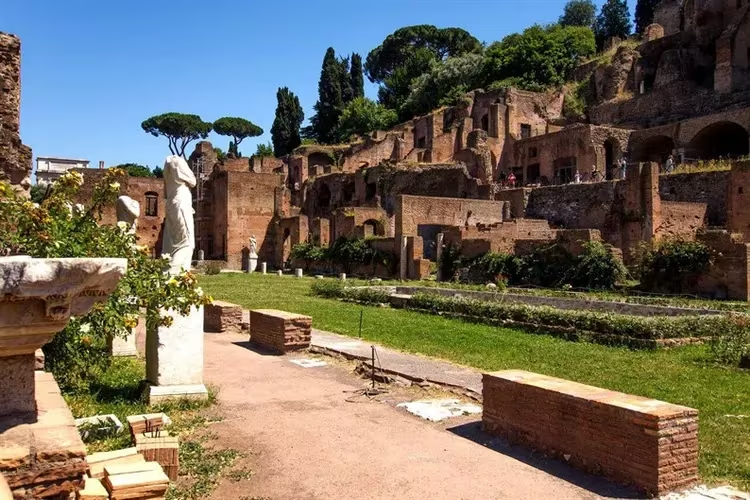
The Palatine Hill is one of the seven hills of the Italian capital, the oldest part of the city and the place where it, in fact, was founded. The name comes from the Latin word “palus”, which literally means “swamp”. It rises forty meters and was once home to the ruling elite. Now the Palatine is a huge open-air museum. Not to visit it means not to feel the spirit of the Eternal City.
Story
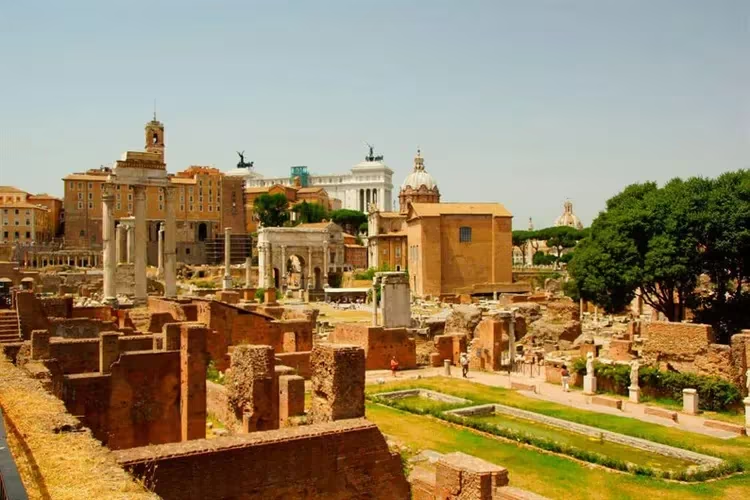
Archaeological excavations indicate that the first settlements on the Palatine arose as early as the thirteenth century BC. Historians are inclined to believe that local shepherds grazed cattle for a long time on the hill. Hence the name, since the goddess Pales was their patroness, and in her honor the shepherds arranged sacrifices.
According to the mythology of the ancient Romans, it was on the Palatine hill that there was a cave called “Lupercal”, where the she-wolf brought the two twin brothers Romulus and Remus. While they were babies, the animal nursed them, and after the brothers were found by the shepherd Faustul. By that time, fate had treated him and his wife cruelly – Akka had lost a child. In order to give shelter to newborns and drown out the pain of loss, the husband and wife took the twins for themselves.
When the brothers got older, they decided to found a city, but argued long and hard about where to start. During their quarrel, Romulus killed Remus, and later, repentant, founded Rome on the Palatine Hill, proclaiming himself its king. He ordered to surround the hill with a wall in order to protect his fiefdom. Subsequently, the hill was recognized by the Romans as the most iconic and prestigious place in the city.
The Italian rich dreamed of living in its vicinity, but only the royal nobility could afford such a thing. Many buildings on the Palatine Hill were destroyed during the invasion of the Goths. Only in the seventeenth century, representatives of the noble family of Farnese decided to restore part of the buildings.
In addition, there are several well-known facts from the history and legends regarding the Palatine Hill:
Archaeological excavations on the hill began in the eighteenth century and continue to this day.
Description
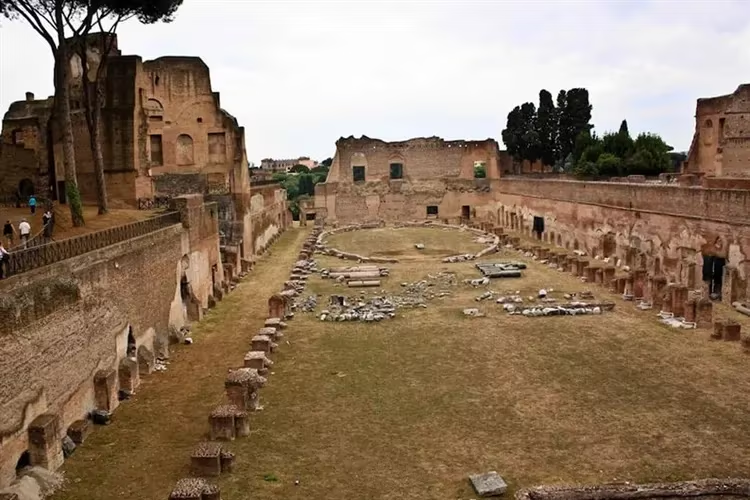
Today, the Palatine Hill is a popular tourist attraction, the custodian of the cultural and historical heritage of the Roman Empire. Here you can see the ruins of the Flavian Palace and the Stadium of Dominician, as well as the legendary hut of Romulus. Recently, the houses of Augustus and Livia have been opened to visitors, where you can admire beautiful ancient Roman frescoes.
Without visiting the Palatine Hill, one cannot understand the history of Rome. In addition, the hill itself is a kind of green harbor. Wild flowers grow among the ancient ruins, and it is not even an hour, a fluffy rabbit will run nearby. This is an ideal place for a picnic, because you can sit in the shade of the plants of the Farnese gardens. Even at the height of the tourist season, there are no suffocating crowds and human hubbub. Going around it from all sides, you can easily see other outstanding sights of the Italian capital. For example, the famous Colosseum, the Aventine Hill or the Circus Maximus.
sights
Without a suitable guidebook at hand, it is not so easy to navigate the ruins of the Palatine. Some places even look like a pile of bricks, but there are also buildings that have survived to this day in surprisingly good condition.
- Saint Anastasia
Titular church built at the turn of the third and fourth centuries. It is possible that a certain Roman woman named Anastasia was involved in the construction, but this information is not accurate. What is known for sure is that the patroness of the basilica is St. Anastasia the Martyr of Sirmia.
- Museum Antiquarium
The small two-story museum contains ancient Roman sculptures and bas-reliefs, many of which have miraculously survived since the founding of the city. The collection is updated annually.
- Dominican Stadium
An impressive structure, which, according to some archaeologists and historians, could have been the emperor's private garden.
- House of Libya
A small antique building, which most likely belonged to the wife of Emperor Augustus – Livia. The house was discovered at the end of the 19th century, and the name of the owner was established thanks to the engraving on the pipes. The condition of the building indicated that it was erected in the first century BC.
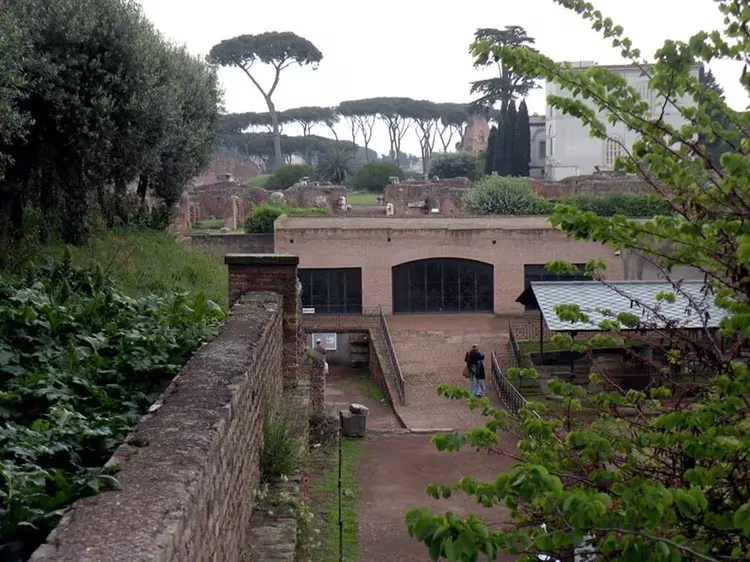
- Farnese gardens
Picturesque place at the foot of the hill. Thanks to the natural source of water, plants are especially comfortable here. Visitors to the gardens will be greeted by a riot of colors and scents of roses, daffodils and other beautiful flowers.
palaces
Palatine Hill attracted the ruling nobility for many reasons: rich mythological heritage, central location, stunning views of the Eternal City, clean air and cool winds in the summer heat. It is not surprising that emperors erected palaces in such a wonderful place in order to once again emphasize their power in the eyes of ordinary citizens. Now tourists can visit the following of the buildings of the rulers:
- House of Augustus
It was built back in the thirty-sixth year BC, nine years before Augustus was proclaimed emperor. It is curious that the personal rooms of the ruler are small in size and even modest, while the guest part of the house is distinguished by spacious rooms with high ceilings. The palace itself was built of marble, and next to it was the majestic temple of Apollo.
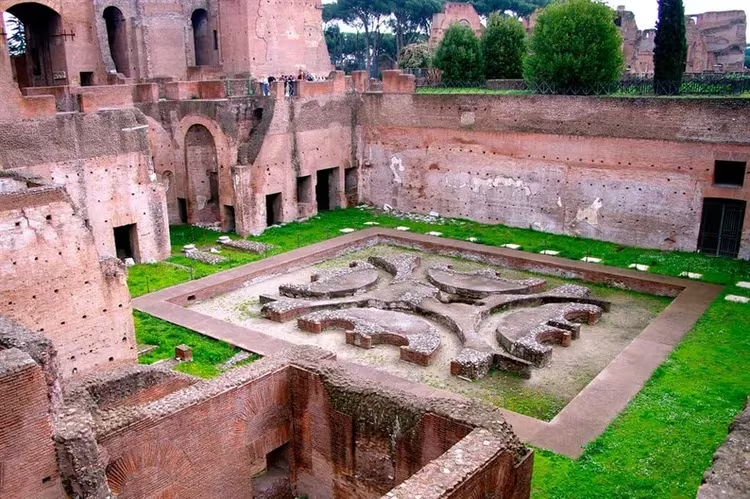
- Palace of Tiberius
Unfortunately, the building has not survived to this day, but tourists can still visit what is left of it. It is located in the northwestern part of the hill, next to the Farnese gardens.
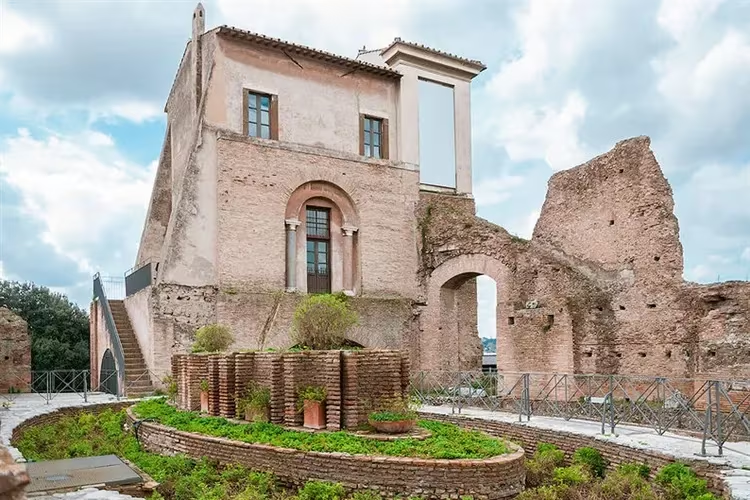
- Flavian Palace
It was built during the reign of Emperor Domitian in 92 AD. This imposing building looks especially good from the Circus Maximus. It is known that at one time there were large halls inside the palace, in one of which trials were held, and in the other – imperial receptions. Behind the throne room was a small room that served as a sanctuary for the gods – the guardians of the ruling family.
Where is it located and how to get there
The Palatine Hill is the heart of Rome and is located not far from the equally famous Colosseum. You can get to both historical monuments, as well as to the Roman Forum, with a single ticket worth 12 euros. The surest way to get to your destination is by metro (Colosseo station, line B). You can also take buses number 75 and 87. If you decide to take a taxi, then keep in mind that on Saturdays and Sundays the central streets are filled with cars, and it may be easier and more pleasant to walk.