
















Austria in one trip: 10 places from Vienna to Liechtensteinklamm gorge
Austria is small, but it packs enough impressions for a whole trip. In a week you can see imperial Vienna, listen to an opera, and head up into the Alps. Yet many people still think of the country only as a ski destination.
We have put together ten places and reasons that make it worth planning a trip here.
Austria is compact: Vienna and Salzburg sit on the same high-speed route, and the mountains begin less than an hour from the city. Below you will find a practical tip for each place, so you can plan your trip in advance.
What to see in Austria: a short plan
💡 In short:
- Vienna gives you palaces, opera, and coffeehouses within walking distance.
- Salzburg and the Alps are connected by train, and a car adds freedom for stops at viewpoints.
- On the autobahns you need a vignette, and in Liechtensteinklamm gorge waterproof shoes will come in handy.
- Liechtensteinklamm is closed in winter, and the Schwarzenegger museum runs on a seasonal schedule.
Place | Region | Who it's for |
|---|---|---|
Vienna | eastern Austria | lovers of music, palaces, and coffeehouses |
Vienna State Opera | Vienna | fans of opera and ballet |
The Alps | west and center of the country | those coming for landscapes and winding mountain roads |
Swarovski Kristallwelten | Tyrol | families and design lovers |
Hallstatt | Salzkammergut | those who want a postcard view |
Thal | Styria | fans of cinema and Arnold Schwarzenegger |
Mozart's birthplace museum | Salzburg | first-time visitors to the city |
Liechtensteinklamm | state of Salzburg | fans of active walks |
Narrenturm | Vienna | those looking for an unusual museum |
Hundertwasser House | Vienna | lovers of modern architecture |
1. Vienna: palaces, opera, and coffeehouses
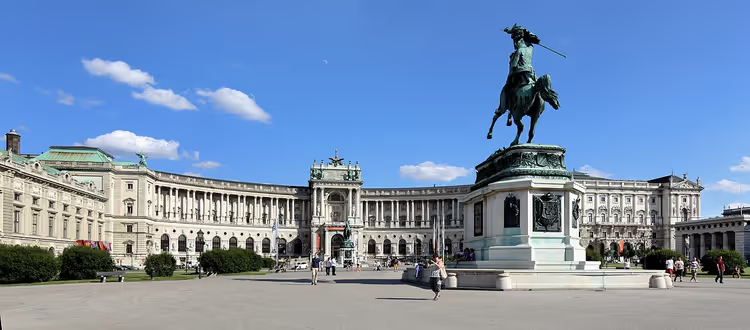
The center of Vienna is compact, and that is the capital's main convenience. Hofburg, St. Stephen's Cathedral, and the old coffeehouses can all be covered on foot in one day. The imperial architecture of the Ringstrasse runs in a ring, so it is easy to build your route as a loop.
 © C.Stadler/Bwag · CC BY-SAPhoto: C.Stadler/Bwag, CC BY-SA (https://creativecommons.org/licenses/by-sa/3.0/at/deed.en), Wikimedia Commons
- How to get there: from the airport to the center, take the S7 train or the City Airport Train; buy your ticket from the machine before boarding.
- Who it's for: those who want to see as much as possible without long transfers.
2. Vienna State Opera
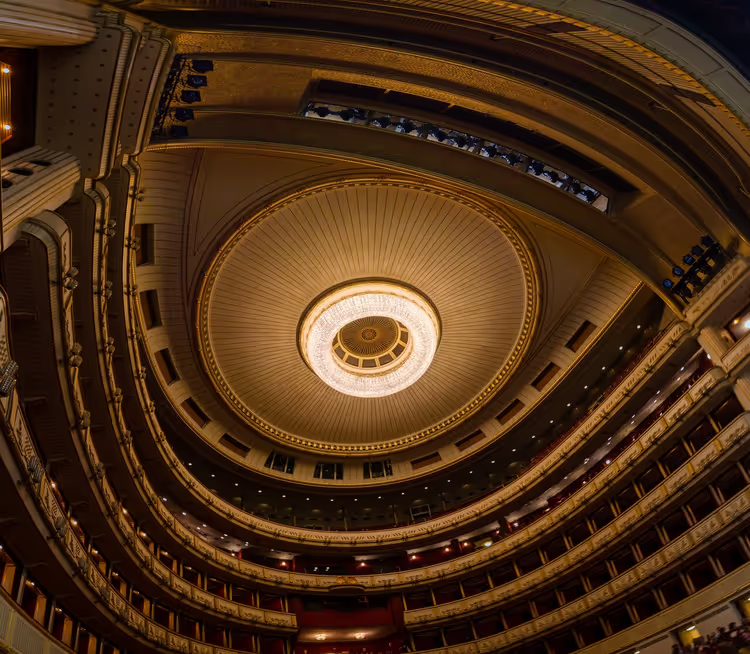
The first performance on the new stage took place on May 25, 1869, when Mozart's "Don Giovanni" was played in honor of the opening (as of 09/2026, Vienna State Opera archive). Today dozens of opera and ballet productions run here each season.
 © Luca Mauri · CC BY-SAPhoto: Luca Mauri, CC BY-SA (https://creativecommons.org/licenses/by-sa/4.0), Wikimedia Commons
The hall impresses with its decor, but you can get inside on relatively cheap tickets too. Standing places are sold on the day of the performance before it starts, so arrive when the box office opens.
- How to get in: look for inexpensive seats on the theater's official website or at the box office on the day of the performance.
- Who it's for: lovers of classical music and ballet.
3. The Alps and viewpoints
The Alps cover most of the country, and the best way to get to know them is behind the wheel. You can stop right along the autobahn, where rest and photo areas are set up. If you want to see more, allow time for secondary roads over the passes.
Important: all autobahns in Austria are toll roads. Buy a vignette for your car in advance at a gas station or online from ASFINAG; without one you will be fined. If you are planning several trips in a year, it is more convenient to get an annual vignette right away.
 © Uoaei1 · CC BY-SAPhoto: Uoaei1, CC BY-SA (https://creativecommons.org/licenses/by-sa/4.0), Wikimedia Commons
- How to get there: pick up your rental car at the airport so you don't have to fight your way through the city center.
- Who it's for: those who value freedom and stops along the way.
4. Swarovski Museum in Wattens
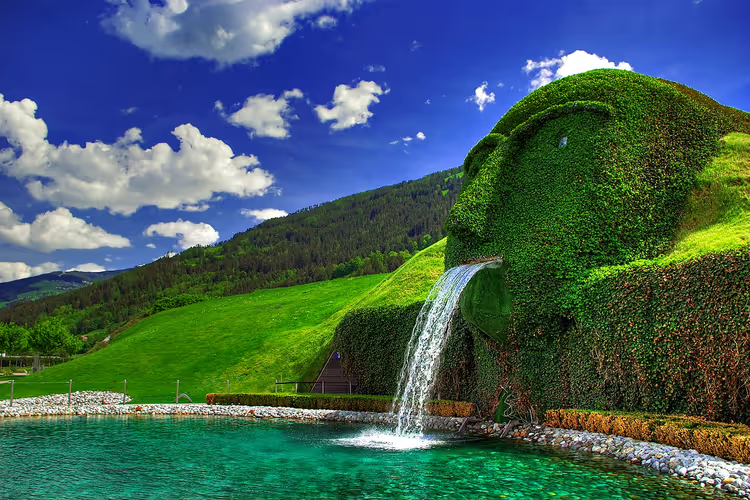
Wattens, near Innsbruck, hides an entire crystal gallery underground. The Swarovski Kristallwelten museum begins with a giant head with water pouring out of it, and inside you enter underground halls filled with mirrors and light. The exhibition is designed for both children and adults.
- How to get there: a bus runs from Innsbruck to Wattens, and the ride is short.
- Who it's for: families with children and those interested in design.
5. Hallstatt by a mountain lake
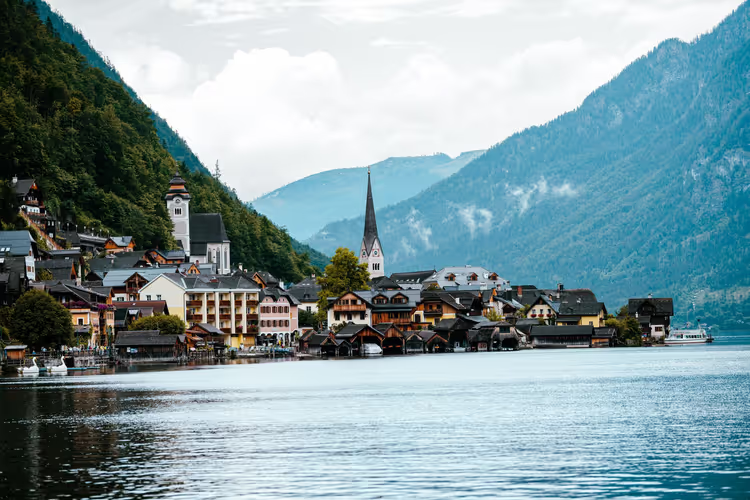
Hallstatt is squeezed against the lake between steep slopes, and it is this view that has made the village recognizable around the world. You can go out on the water by rowboat or motorboat, and the terraces offer the best angles over the valley. The streets here are narrow, and seeing everything takes a full day.
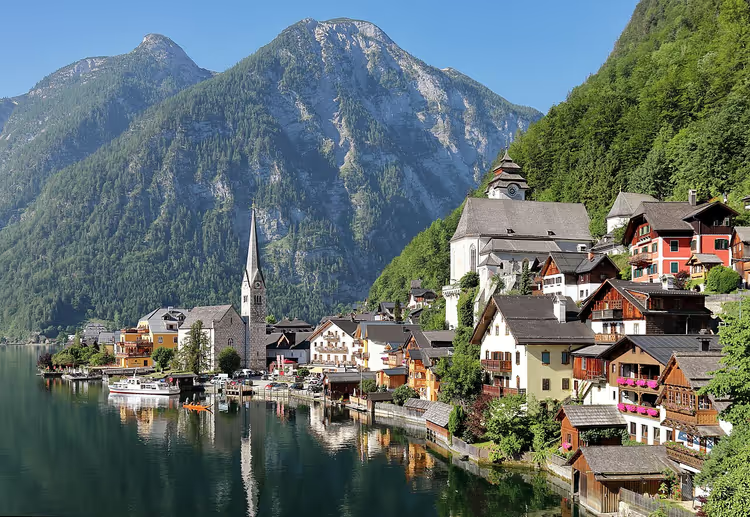 © C.Stadler/Bwag · CC BY-SAPhoto: C.Stadler/Bwag, CC BY-SA (https://creativecommons.org/licenses/by-sa/4.0), Wikimedia Commons
- How to get there: from Salzburg you can get here by bus or by train with a transfer.
- The catch: in summer and on weekends the lanes are very crowded, so come early in the morning.
- Who it's for: those who want to see a postcard view with their own eyes.
6. Thal and the Arnold Schwarzenegger Museum
Thal, near Graz, is known as Arnold Schwarzenegger's hometown. A museum is open in the house where he was born: it holds childhood photos, awards, and items from his films. In front of the entrance stands a statue of the actor as a bodybuilder.
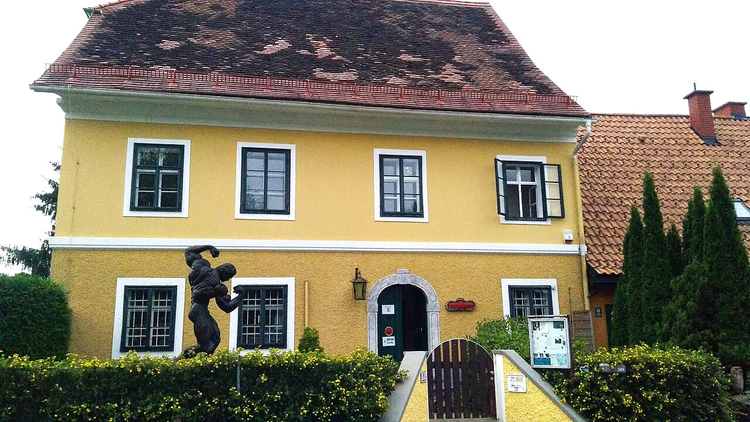 © Danuše21 · CC BY-SAPhoto: Danuše21, CC BY-SA (https://creativecommons.org/licenses/by-sa/4.0), Wikimedia Commons
- Opening hours: the schedule is seasonal: from November to January the museum is open on Fridays, Saturdays, and Sundays, and longer during the rest of the year (as of 09/2026, stadt-graz.at).
- Who it's for: fans of the actor and movie lovers.
7. Mozart's birthplace museum in Salzburg
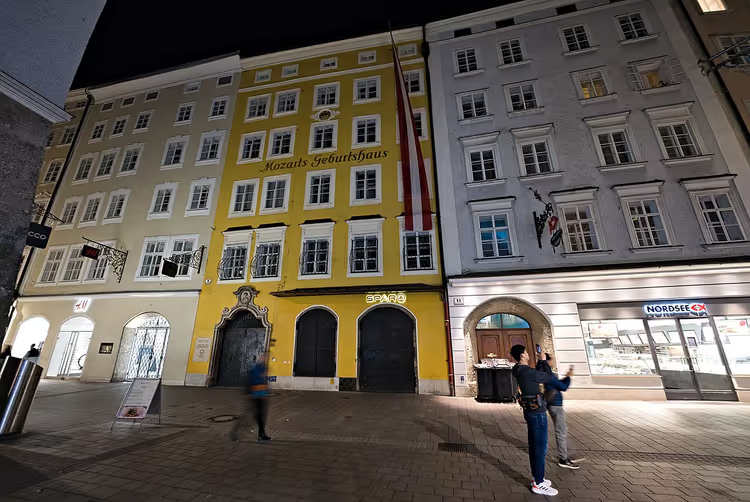
In Salzburg, a museum operates in the house where Mozart was born. Each floor tells the story of a different period in the composer's life, and his music plays constantly in the rooms. Personal belongings and instruments connected to his work are also on display here.
- How to get in: tickets are sold online; in summer the line is longer, so arrive at opening time.
- Who it's for: first-time visitors to Salzburg.
8. Liechtensteinklamm gorge
Liechtensteinklamm lies not far from St. Johann im Pongau. The trail through the gorge runs along wooden bridges and tunnels between sheer rock walls, and at the end a powerful waterfall awaits you. According to Wikipedia, about 227,000 people visit here each year.
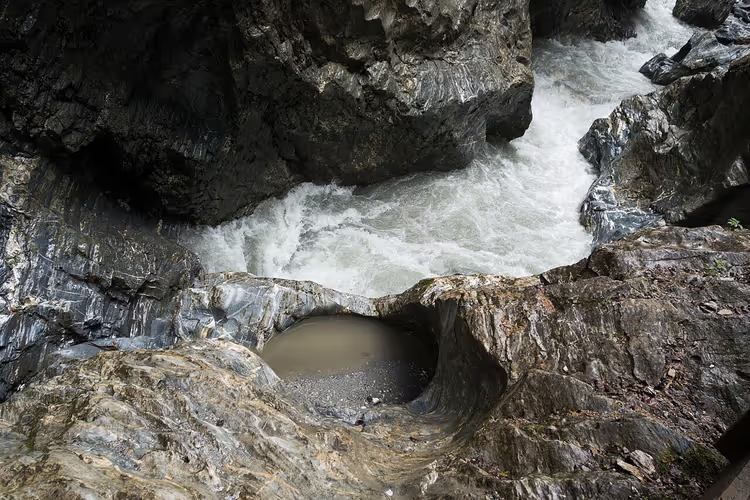 © Thomas Quine · CC BYPhoto: Thomas Quine, CC BY (https://creativecommons.org/licenses/by/2.0), Wikimedia Commons
- How to get there: a local road leads from St. Johann im Pongau to the gorge entrance.
- The catch: in the winter months the gorge is closed to visitors.
- Who it's for: fans of active walks and wild nature.
9. Narrenturm: an unusual museum in Vienna
Narrenturm was built as a hospital for people with mental disorders, and it is one of the oldest buildings of its kind in Europe. Today it houses a pathological-anatomical museum with unusual exhibits. A visit is not for everyone.
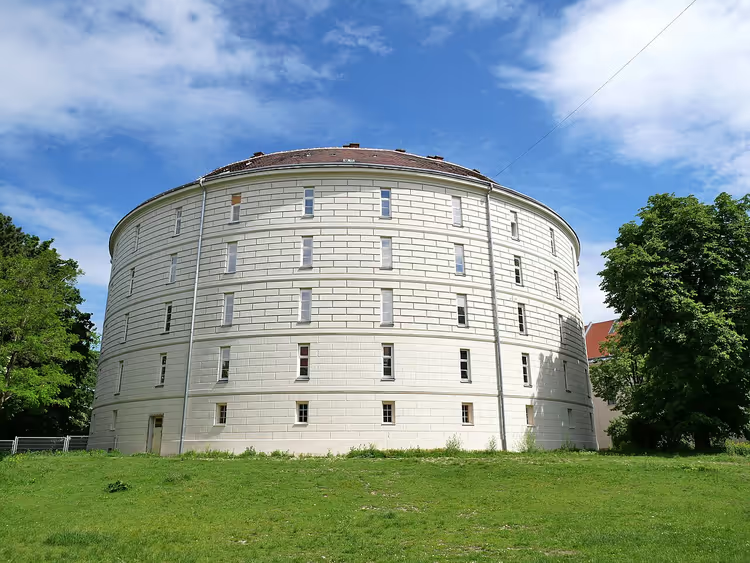 © Herbert Ortner · CC BYPhoto: Herbert Ortner, CC BY (https://creativecommons.org/licenses/by/4.0), Wikimedia Commons
- How to get there: the tower stands in Vienna's 9th district (Alsergrund), outside the historic center.
- Who it's for: those looking for a museum outside the classic itinerary.
10. Hundertwasser House in Vienna
Hundertwasser built a residential building with a mosaic facade, trees inside, and windows of different shapes. The architect waived his fee for the project. The building remains residential, so tourists are not allowed inside, but the facade is clearly visible from the street.
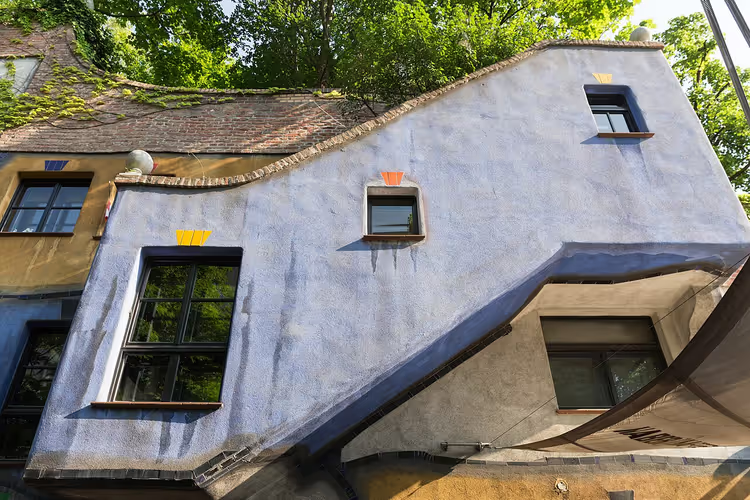 © Pymouss · CC BY-SAPhoto: Pymouss, CC BY-SA (https://creativecommons.org/licenses/by-sa/4.0), Wikimedia Commons
- How to find it: the building stands in the eastern part of the center, not far from the canal.
- Who it's for: lovers of architecture and bright facades.
⁉️🤔 Frequently asked questions
How many days should you allow for Austria?
For a first trip, a week works well: a few days in Vienna, then Salzburg, Hallstatt, and the Alps. If you plan to drive across the country, add time for travel between regions. A route covering all the places in this selection fits comfortably into a longer vacation.
Do you need a vignette if you are only driving in the city?
Inside Vienna you do not need a vignette; it is required only on autobahns and expressways. Without one, cameras record the violation automatically, and the fine arrives later.
When is the best time to go to the Alps?
In summer you can hike trails and gorges on foot; in winter the Alps turn into one big ski resort. The shoulder season offers fewer tourists and softer prices, but some lifts may not be running. For cities and Hallstatt, choose spring and early autumn.
Is Hallstatt worth a day trip?
Hallstatt is small: walking through the village, visiting the viewpoints, and boating on the lake takes a full day. It makes more sense to arrive early in the morning, before the tour groups show up. If you want peace and quiet, stay overnight here.
How do you get into the Vienna Opera cheaply?
The cheapest seats are sold on the day of the performance; these are standing places near the gallery. Look for balcony tickets through the theater's official website, where you can also see available seats for a specific date.
In short: what to book
If you have a short vacation, take Vienna and Salzburg: they are connected by train, and the distance between them is short. If you are coming for nature, add Hallstatt, Liechtensteinklamm, and the passes of Tyrol. If you are traveling with children, plan for Swarovski Kristallwelten and one of Vienna's coffeehouses.
It is more convenient to book a hotel in the center or near the station so you don't waste time on travel. Check the opening hours of the museums and gorges before you set off, and you will see more without unnecessary stops.

A small editorial team writing guides for independent travel. We travel ourselves, but we haven’t been everywhere, so we check prices, opening hours and how to get there against official sources.