
Piazza Navona in Rome – history, photo, description, how to get there, map
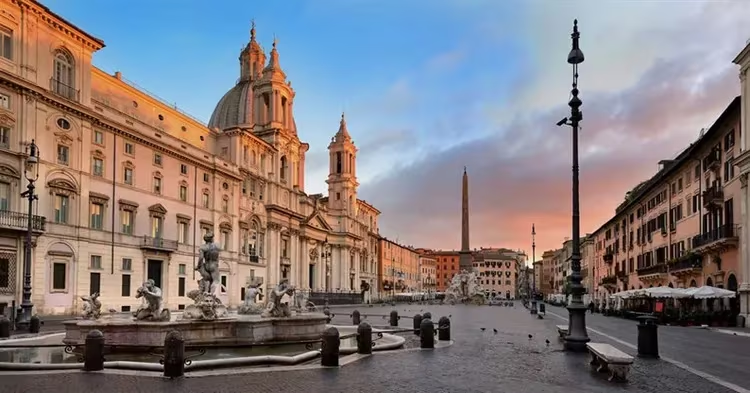
The streets and squares of historic Rome took shape in the Baroque era. Churches, palaces, fountains in this architectural style are present everywhere. One of the most famous and beautiful places in the capital of Italy, Piazza Navona, convinces of this. The colorful, front and cozy square has an unusual shape. It is elongated and repeats exactly the contours of the ancient stadium. The place contributes to a pleasant pastime in the open air. Here, street actors show funny pantomimes, musicians play and sing, artists put up their paintings for sale. The square is lined with elegant baroque mansions, a temple, and restaurants. Piazza Navona is decorated with three magnificent fountains, which are very popular among tourists.
Story
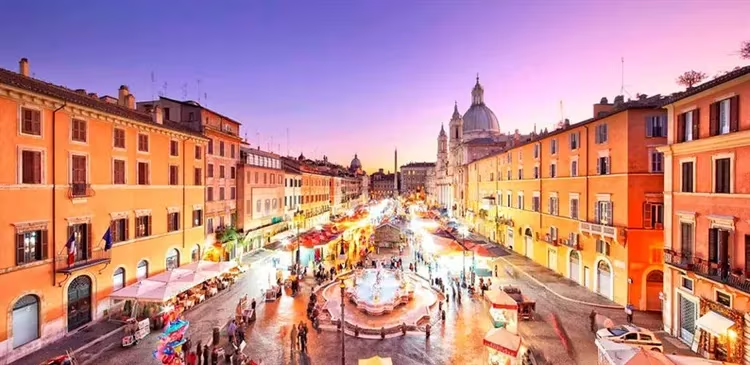
Piazza Navona has absorbed the image and character of ancient Rome. In the middle of the 1st century AD, a stadium stood on this area, expanded on the initiative of the emperor Domitian in 85. The arena was a favorite building of the Romans, who honored spectacular spectacles. The stands could seat over 15,000 people. The stadium occupied a plot of land measuring 275 × 106 meters. From the outside, the monumental building was surrounded by arched arcades made of travertine, in which merchants' shops were located. The stadium was intended for sporting events without bloody and fierce gladiator fights. Here Domitian instituted athletic competitions.
The main disciplines held in the arena were running, javelin throwing, discus throwing, fisticuffs and horse racing. After the fall of the Roman Empire, the stands of the stadium were significantly dilapidated. During the period of medieval civil strife, poor and desperate Romans took away travertine stones for their own buildings. Many residents preferred to erect houses right on the ruins of the stadium. The foundations literally consisted of fragments of monuments, structures of the arena. The dwellings were built in such a way that the boundaries of the settlement resembled the contours of a stadium. A vegetable and fruit market was formed in the vast open space, and various festivals and carnival processions were held here.
In the 17th century, an event occurred that radically changed the appearance of the square. Pope Innocent X started a global restructuring of the area. His successful career as head of the Papal States contributed to the creation of a pompous architectural ensemble. Innocent X wanted to leave behind a cultural heritage on the square, so he did not skimp on allocating significant amounts of money from the papal treasury to implement his idea. The talented Francesco Borromini became the architect of the buildings, and the master Gian Lorenzo Bernini was hired to build the fountains.
Both architects were the best in the city and at the same time bitter rivals, which as a result only benefited Rome. Competitive struggle of sculptors gave rise to unique masterpieces. The residence of the Pope, luxurious palaces, churches and fountains were built in the Baroque style. The square acquired a luxurious appearance and became known as Navona, which in Greek means competition.
Fountains
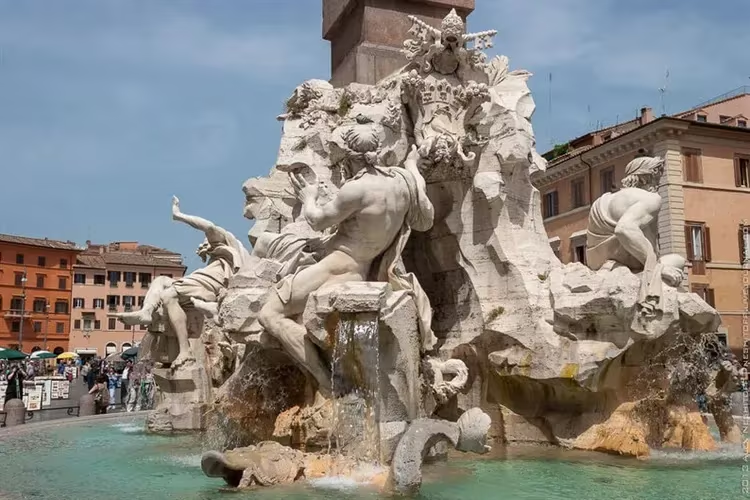
The main decorations of Piazza Navona are three fountains at once, which are filled with clean drinking water. In the middle of the square stands the famous Fountain of the Four Rivers, erected by Bernini in 1651. Innocent X set the task for the architect to create a majestic sculptural work, which must certainly amaze everyone. After a long and hard work of the architect, a pool appeared on the square with a towering huge rock and four holes in it, from where water flows inexhaustibly.
The grandiose ensemble is crowned with an ancient Egyptian obelisk, on top of which there are a dove and an olive branch. Hieroglyphs are carved on the obelisk, denoting words of thanks to Emperor Domitian. Athletes are seated at the corners of the marble stone, personifying in allegorical form the main four rivers of the Middle Ages: the Nile (Africa), the Ganges (India), the Danube (Europe) and the Rio de la Plata (South America).
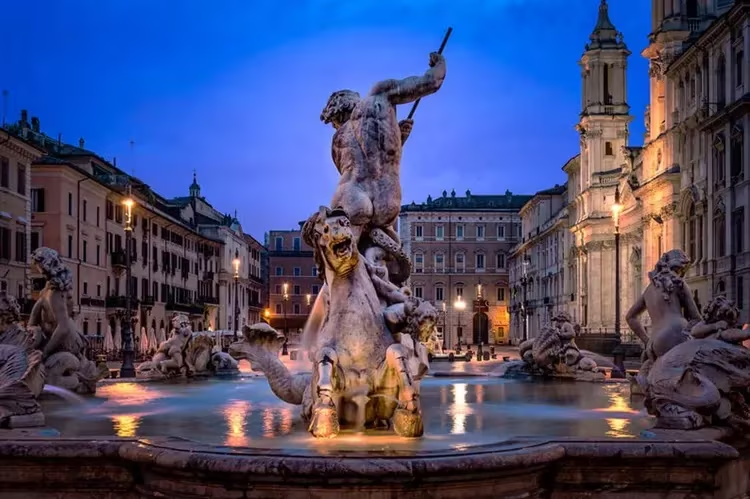
On the south side of the piazza is the fountain of the Moor. The architect skillfully depicted the muscular figure of a man standing on a huge shell. The central part of this composition is the Moor fighting with a dolphin. In the 19th century, a number of sculptural elements were added to the pool. These are the so-called tritons (divine beings in the form of a half-man, half-fish), crawling out of the shell and blowing their horns. In the northern part of the square is the fountain of Neptune, fighting with the octopus under the approval of sea creatures.
The pool with sculptures, which today pleases the eye, was built only at the end of the 19th century. The central composition of the fountain is a mythological hero holding a trident in his hands. The marble muscular figure is saturated with powerful energy. The sculptor depicted Neptune at the moment of delivering a fatal blow to an octopus. The pool is surrounded by sculptures of sea nymphs, dolphins, horses and cherubs.
Interesting Facts
Several funny and tragic stories are connected with Piazza Navona. In 1652, in the piazza, during hot and stuffy days, the Romans closed the fountains. Water gradually filled the area to a certain depth. In the light of lights and melodies of serenades, wealthy people, being in chariots, floated around the square and enjoyed the life-giving coolness. When designing the Fountain of the Four Rivers, Bernini made a mistake in the calculations – the water did not enter the pool.
The sworn “friend” of the architect Borromini made his own calculations, according to which an inaccuracy was found in the design of the pool. Bernini learned that his competitor figured out how to fix the fountain. He decides to seduce his rival's maid and steal the correct calculations, which was perfectly executed. As a result, Bernini corrected everything, and the water poured solemnly to the delight of the public and to the chagrin of Borromini.
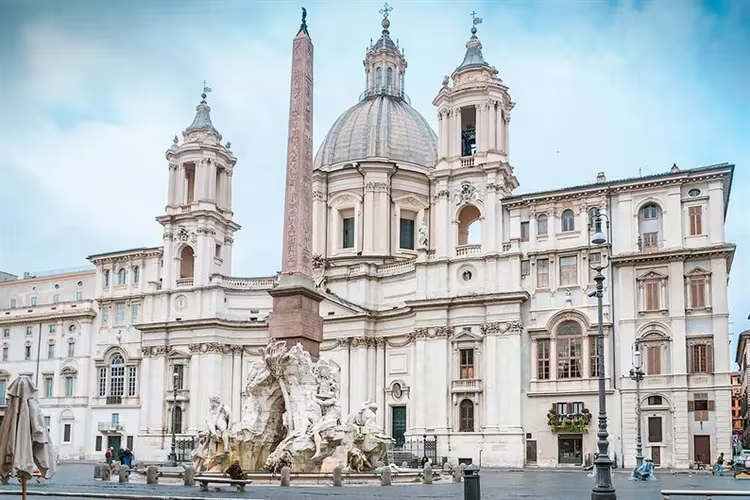
Not far from the palace of Pope Innocent X, in 1668, the church of Sant'Agnese in Agone, dedicated to Saint Agnes, was erected. In 304 AD, a young Christian woman was executed in Piazza Navona (then still in the stadium). Tradition says that the son of the Roman prefect fell in love with the girl. Agnes could not marry a pagan due to her religious beliefs and rejected the young man. For this, the Roman soldiers put the girl naked in the square for general ridicule.
Miraculously, her hair grew so much that it covered her body with a dense veil. The servants of the pagan temples accused Agnes of witchcraft and cut off her head. Since then, the young Christian has been revered by the church. Her relics are still kept in the current Catholic church of Sant'Agnese in Agone on Piazza Navona.
Where is it located and how to get there
Piazza is located in the center of Rome close to the main attractions. Nearby is the Pantheon, the Colosseum and the Forum. You can get to the square by metro, reaching the Barberini station, as well as by numerous bus and tram routes. The place is very popular and crowded, so it is impossible to get lost.