
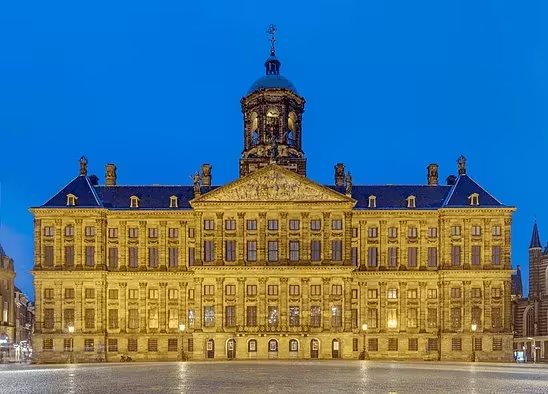
Royal Palace (Koninklijk Paleis) in Amsterdam: photo, description, history
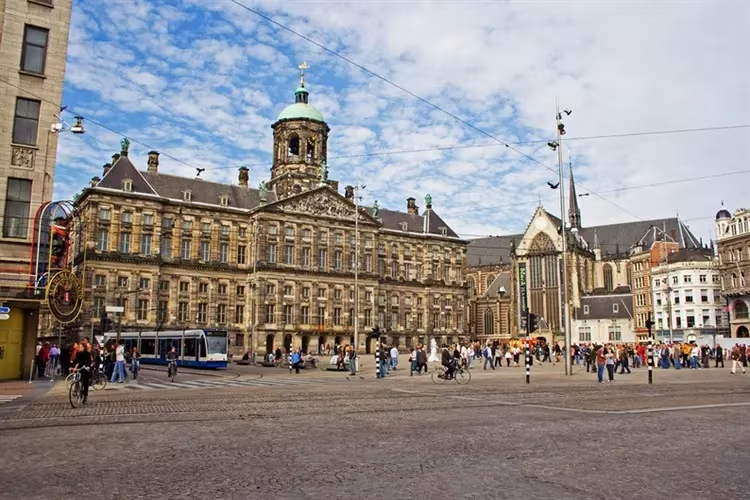
The Royal Palace is one of the most visited and popular places not only in Amsterdam, but in all of the Netherlands. The palace is located in the very center of the capital, not far from the main railway station, on the most important and famous square of the city, Dam Square.
How to get from the airport to the center of Amsterdam – read our article.
The largest secular building in Europe
Dam Square takes its name from a dam that was built on the Amstel River in the 13th century. It was formed from two squares – Platse and Middeldam. On both sides of the palace are the Nieuwekerk church, built in the 15th century and the world-famous Madame Tussauds wax museum. Initially, the palace was built as the main building for the city hall, as well as for administrative and judicial sessions.
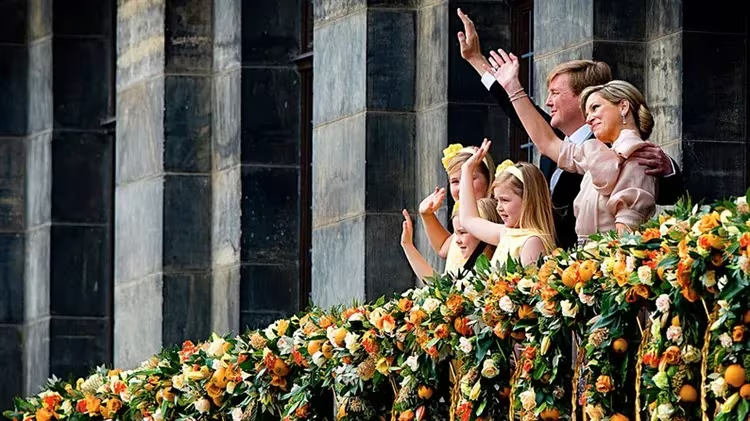
In the 17th century it was the largest secular building in Europe. At the moment, the palace is used as a residence for receiving foreign delegations and heads of foreign states during their visits to the Netherlands, the royal family itself does not live here. In addition, ceremonies for the transfer of the throne and weddings of the monarchs of the Kingdom of the Netherlands are held. The Royal Palace at Dam Square is one of several palaces at the disposal of Queen Beatrix, in accordance with an act of the Dutch Parliament.
What else to see in Amsterdam read in our life hack.
Construction history
The building was built according to the project of the architect Jacob Van Kampen in 1665 on 13,659 piles made of wood, each of which is up to 12 meters long. He faced the difficult task of building a royal palace in one of the most influential countries of the time. Amsterdam was one of the largest trading centers in Europe in the 17th century.
More useful and interesting articles about Amsterdam:
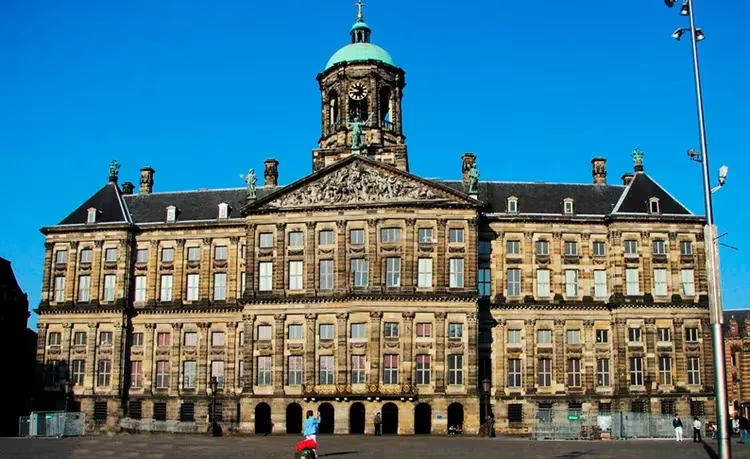
The population of the city was constantly increasing, and trade and economic relations were expanding more and more. That is why the architect Jacob Van Kampen expressed the idea to build a building in the style of classicism, so that it reflects the power of the whole country, and in appearance would resemble the architectural structures of Ancient Greece and Rome. As a result, the style in which the palace was built came to bear the name of the style of classical Dutch architecture, and the palace, in turn, is its main example. It was intended to show how powerful and wealthy the city of Amsterdam was during the Golden Age.
The eighth wonder of the world
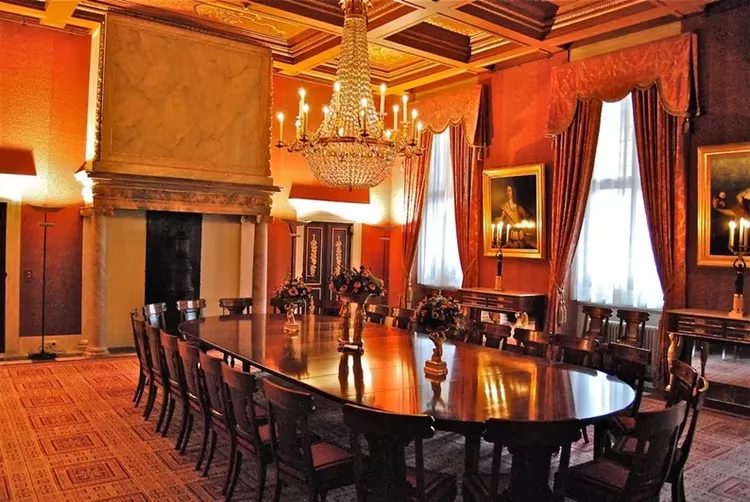
The Royal Palace in Amsterdam is often referred to as the eighth wonder of the world. It was built literally on a swamp, and it is supported by numerous piles and a platform standing on them. The walls of the palace were erected directly on the platform, which at that time was considered unusual and new. Inside the palace there is a huge spacious hall (Civil Hall) almost 27 meters high, 37 long and 19 wide, which symbolizes the cosmos. On the floor of the hall are maps of the world depicting the celestial spheres. They were drawn in the 18th century and are easily visible in the Western and Eastern hemispheres, where the places of Amsterdam's successful colonial policy are marked in detail.
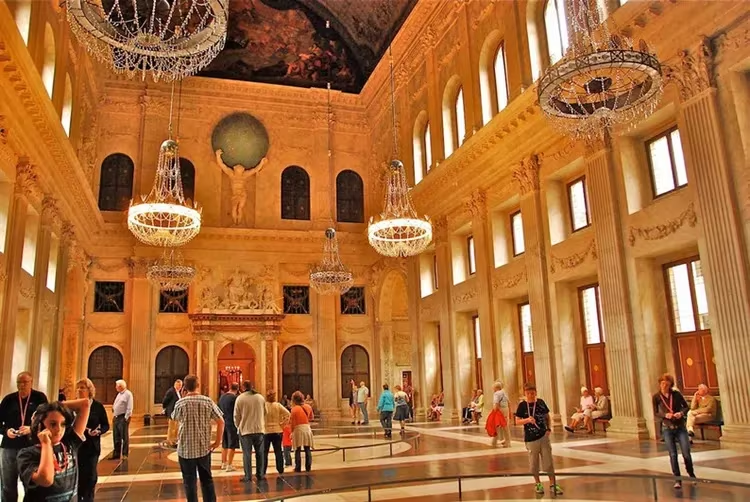
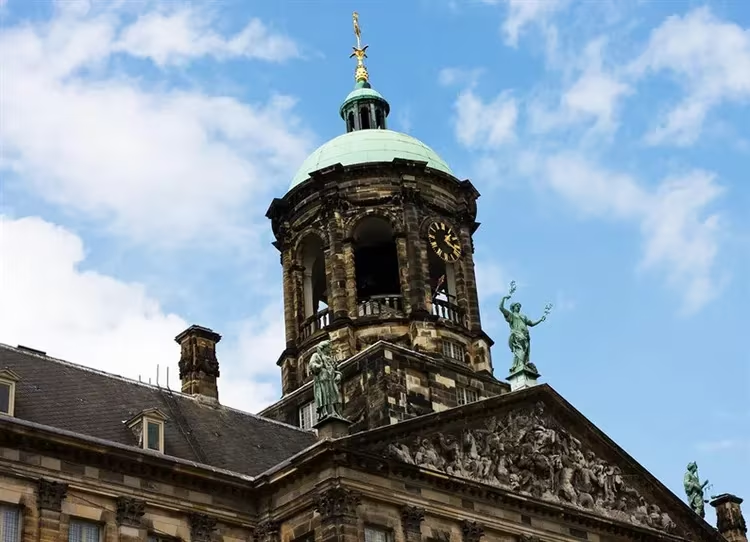
One of the walls has a sculpture of the mythological titan Atlanta, who holds the globe on his shoulders. The main decoration of the palace is its huge dome. At the very top of the dome is a weather vane in the shape of an old Kogg ship, the symbol of the city of Amsterdam. Through its small windows, they used to watch how ships came and went from the city port. All rooms of the building have a marble and gilded finish. One of the most famous Dutch poets, Jost van den Vondel, perhaps managed to describe the pride of the people of Amsterdam with amazing accuracy when he called the palace building “the bride who is in the center of attention on her wedding day.”
First City Hall
In 1400, in a small settlement called Amsterdam, on the square that today bears the name of Dam Square, the first town hall was built. In 1452, the town hall was destroyed by a great fire, and then rebuilt again, but with a special place reserved for court cases. From here the chief judge of the city administered his affairs. In 1652 there was another fire. This time the building remained abandoned for some time. The construction of a new building on the site of the old one was constantly interfered with by someone or something.
The mayor's office was going to demolish residential buildings in the city center to build a palace, but the locals were categorically against it. When the issue with civilians was nevertheless resolved, it turned out that because of the war with Spain there was no money in the country, and construction was impossible. A few years later, it was decided to build an administrative building on the same site, but already several times larger.
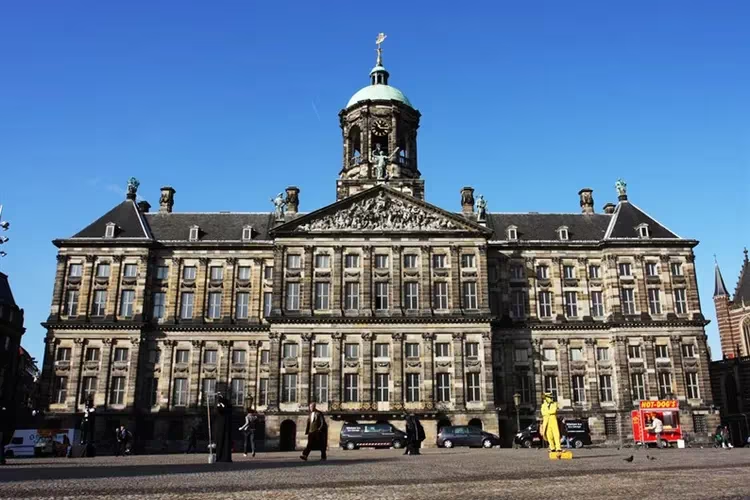
The government of the country had been arguing for a long time about the budget and the size of the future town hall. In the end, the town hall was built in the style of strictly classicism and light colors. In addition, numerous allegories and references to deep philosophical ideas were used in the planning and construction of the building. This is what helped to carry out the town hall project. Since the majority did not want to spend large amounts of money on the interior decoration of the town hall and decorations, however, the supporters of the project said that all the decorations, reliefs and paintings are designed to show people the decoration of the world. As a result, they agreed with this idea, and the town hall was built according to the ideas and proportions that were used by God when creating the world.
For several years, the town hall was considered the largest town hall in all of Europe. When the brother of Napoleon Bonaparte, Louis Bonaparte, came to power in the early 19th century, he made a personal residence out of the town hall, and since then the building has been considered a palace. Louis Bonaparte was 27 years old when he arrived in a poor and devastated country, which was Holland at that time. Even despite the fact that the older brother forbade all trade with England, which he wanted to completely isolate from the rest of Europe, Louis still allowed the inhabitants of the Netherlands to trade with them.
Especially for the arrival of Louis Bonaparte, the entire government was evicted from the town hall, but the bank had to be left, given the not very favorable situation in the country at that time. In fact, this is the only moment in history when the bank was located directly in the building of the royal palace. Also, especially for Louis, a unique collection of furniture made in the Empire style was ordered to the palace, including wooden armchairs covered with expensive fabric, brass lamps and tapestries.
All this can still be seen by visiting the palace. In 1813, at that time, still the future king Wilhelm, handed over the royal palace to the city. However, soon after the coronation, he realized that he still needed his own residence in the city. Therefore, the city government, at his request, nevertheless gave the former town hall at the disposal of the king. In 1936, the former town hall was sold by the Amsterdam City Hall to the Dutch government.
After long discussions, the city government nevertheless admitted that the building was no longer suitable for the role of the town hall of the capital of the Netherlands, and besides, the building needed a very serious restoration in order to restore it to its former beauty and grandeur. In 1938, the building was the venue for a ceremony in honor of the fortieth anniversary of the reign of Queen Wilhelmina.
Palace reconstruction
In 2009, a large-scale reconstruction was carried out in the palace and the palace became open to the general public. Visiting the museum located in the palace, you can get acquainted with the history of Amsterdam and the Netherlands. In addition, there is a huge collection of works by Rembrandt, Flinck and Bol. The ideal time to visit the palace is summer and autumn, when numerous exhibitions are held here. In the summer, works from the Golden Age are exhibited here, dedicated to the history of the building. In autumn, the works of young talented artists are exhibited here, and a competition is held for the Royal Prize in the field of contemporary painting.
Don't know what to bring from Amsterdam? Read our review.