
🏖️ Top 10 European resorts with the cleanest Blue Flag beaches 🏊♂️
Every year, millions of tourists go on vacation to warm countries to lie on the beach and swim in the sea. Turkey, Egypt, Spain, Greece, Portugal – the list of countries with first-class resorts can be continued almost endlessly. If you look at a map of Europe, you will see many different beaches. In one place, raging waves await you, in another there is complete calm with clear water, in a third your feet are buried in snow-white sand, in a fourth everything is strewn with multi-colored pebbles – and this is only a small part of the options. Which beaches are the best and why is this high title awarded? Read on to find out the answers to these questions. And then all that remains is to choose a tour.
What is the Blue Flag?
The Foundation for Environmental Education professionally assesses the quality of beaches around the world. This is a non-profit, non-governmental and independent organization that provides objective assessments. For almost 30 years, experts have been awarding the Blue Flag award to the best beaches, piers and harbors on the eve of the holiday season.
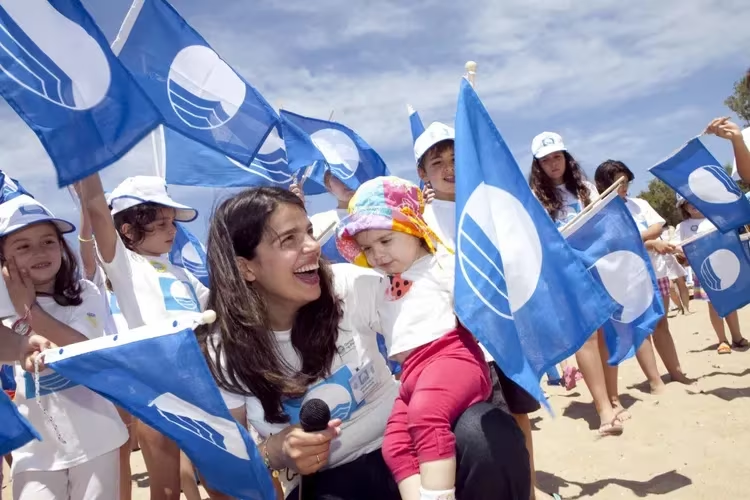
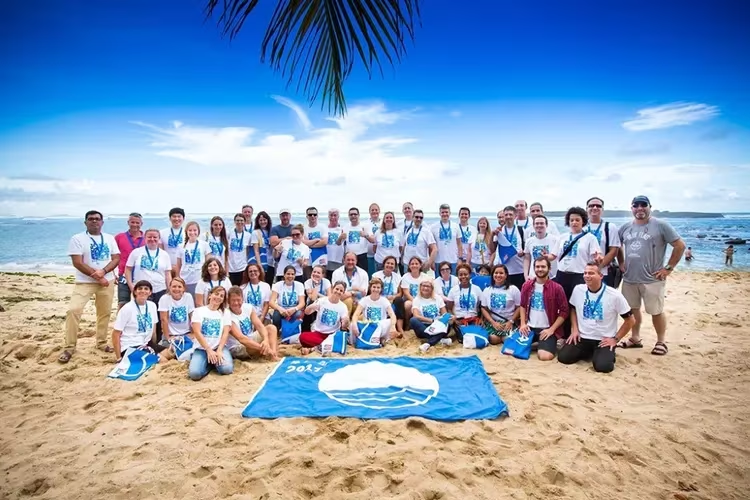
It is both a symbol and a title. It is difficult to obtain – the place must meet 33 criteria. The status is assigned only for a year. In the new season, the beach needs to be certified again. The jury consists of representatives of 48 states, members of the UN Environment Program and the International Union for Conservation of Nature. Over the years, more than 5,000 thousand places have received this award. You can see them all on the map on the official website of the foundation.
Why do beaches receive the Blue Flag?
Just a well-kept area is not enough for a beach to receive a blue flag. The 33 evaluation criteria are divided into four conditional groups: environmental education, water quality, environmental management, safety and services.
Environmental education is given special attention. Thus, points for it are awarded to those beaches where they conduct educational events and teach vacationers to treat the environment with care and attention. Priority is given to programs that highlight the features of local ecosystems. Water quality must meet all international standards. These include physical parameters and the number of bacteria. They also carefully monitor the absence of nearby industrial production or places with wastewater disposal.
Environmental management means taking care of the comfort of vacationers. Assess the presence of garbage containers for separate waste collection and clean restrooms, as well as any traces of human activity. In the safety category, the main criteria are quick access to a first aid kit, drinking water and the level of convenience for people with disabilities.
What do the other colors of flags mean?
The blue flag on the beach is a symbol of its appreciation, but there are also options in other colors. Each of them has a special meaning.
Red flag – danger: strong currents, whirlpools or quicksand. It is better not to go into the water on this day. Black – aggressive sharks nearby. Purple – active underwater life: sharks, stingrays, jellyfish and others.
Orange or brown – high level of pollution. You can swim, but there is a risk of contracting some skin disease or getting injured.
Yellow – swim, but remain careful. Green – everything is fine. The level, of course, does not reach blue, but there is no danger.
Blue Flag beaches in Europe
Spain has the most beaches marked with a blue flag (628). The top five also includes Greece (596), Turkey (551), Italy (457), France (403). We talk about the most interesting of them.
Las Arenas, Tenerife (Spain)
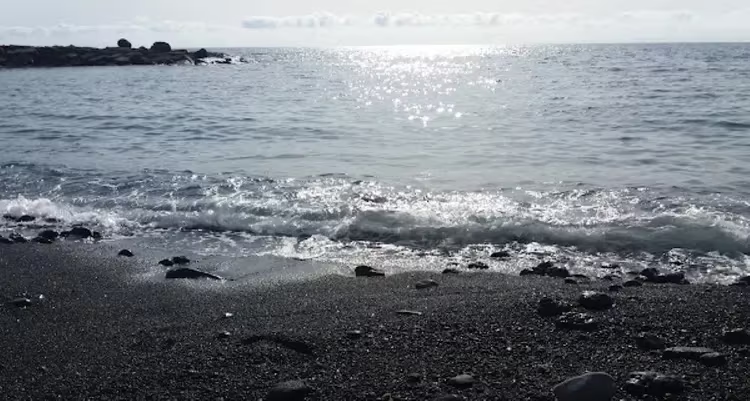
Let's start with the trump card. This beach will surprise you at first glance – it has black sand, you can see it in the photo below. The coast is covered with volcanic rock, which experts say even has healing properties. And the picturesque view of the high cliffs framing the coast makes this place surprisingly attractive.
South and North beaches, Sunny Beach (Bulgaria)
These two beaches are located close to each other and cover a total of 8 kilometers. The main feature is the variety of infrastructure. On the coast there are areas for dancing, bars and cafes, areas for active recreation and water sports, as well as quiet and secluded areas where vacationers will not be disturbed. And for those who are interested in Bulgaria, we advise you to also visit Plovdiv. Digital nomads will especially like it.
Kaputas, Kas (Türkiye)
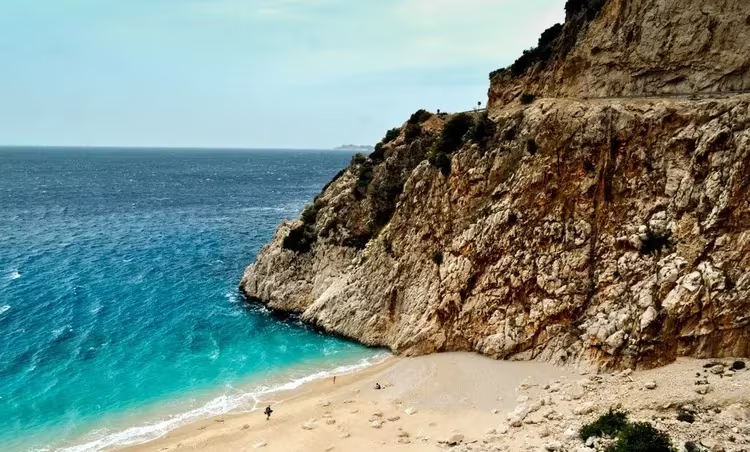
Do you want to have a romantic evening? Go right here! 20 km from the town of Kas there is an incredibly picturesque beach: a shore of small pebbles and sand, an azure sea and beige rocks. Both locals and tourists come here to watch the sunset, so be sure to grab a seat early.
Vai Beach, Crete (Greece)
The main feature of this beach is its lush vegetation. The coast is framed by the largest palm forest in Europe. Just imagine, there are more than 6,000 trees growing here. Under their crowns it is very pleasant to bask on sun loungers or walk along special paths. The water also deserves attention – locals consider it the cleanest on the island. We talk about other equally interesting resorts in Greece here.
Jumeirah Beach Park, Dubai (UAE)
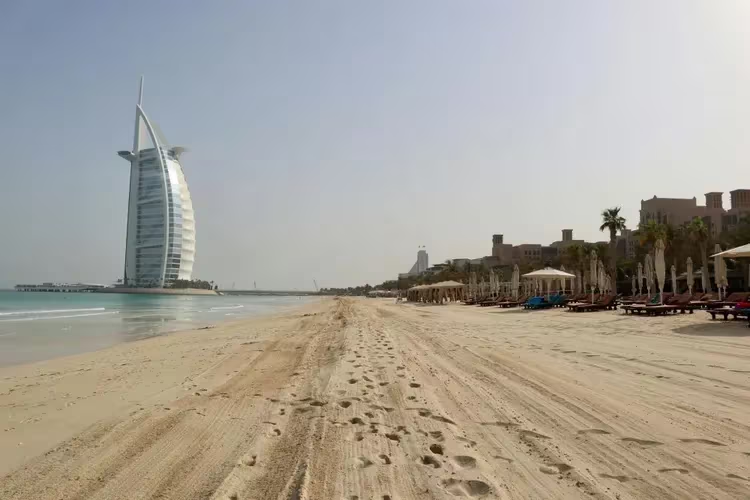
Another amazing place in our selection is an artificially created oasis in the middle of Dubai. The length of the beach is about a kilometer. In such a short distance everything fits: a park with flower beds, fountains, a Japanese rock garden, bars and cafes, areas for active games and areas with sun loungers. The coastal area is quite wide, but there are often a lot of people here.
Ayia Thekla, Ayia Napa (Cyprus)
And this beach will appeal to those who like a secluded holiday – even at the height of the season there are few people here. Convenient entry into the water is not only conducive to sunbathing – not far from the shore there is a small island that is easy to wade to. Another interesting place near the beach is the elegant blue and white chapel dedicated to St. Thecla. It is in her honor that the coast is named. In just a few minutes you will be able to walk to the building to take a close look at the interesting architecture and drink water from the healing spring.
Tropea Beach, Tropea (Italy)
The best view of this beach opens from a small town located on the mountain above it. A picturesque staircase leads down. The coast is sandy, the water is warm and calm. But be prepared for a lot of people – the beach has been repeatedly recognized as the best in Europe, so it is usually crowded with tourists. And don't forget to apply for a tourist visa!
Beach de l'Espiguet, Le Grau-du-Roi (France)
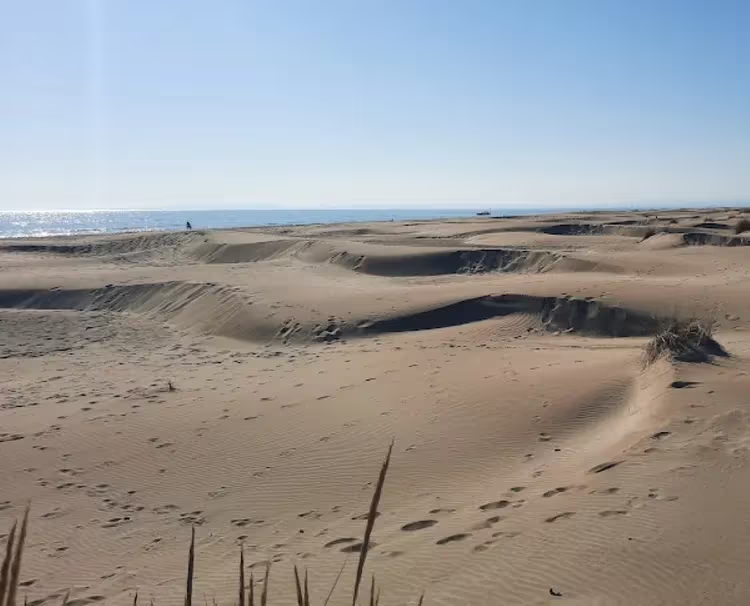
To get to this beach, you need to overcome real sand dunes, we show them in the photo below. These beige waves smoothly meet the sea, creating a surprisingly picturesque picture. There is enough space here to sunbathe and play with children – they will especially enjoy building sand castles. The only thing that is important to consider is that the sea here is cool.
Praia do Guincho, Cascais (Portugal)
This beach is called the windiest in Portugal. This is why all local surfers come here – high waves, a refreshing breeze and clear water make surfing incredibly interesting and enjoyable. But those who just want to swim will also like it here. The rather long coastline is framed by rocks and boulders; a bonus are fish restaurants that serve the freshest seafood. Even more good surfing spots in this country have been collected in a separate article.
Karteminde North Beach, Kerteminde (Denmark)
This is the most picturesque beach on the island of Funen. White sand and blue water attract not only tourists, but also local residents. The coast provides everything for active recreation: windsurfing, kitesurfing and beach volleyball. In addition, a holiday there will provide an immersion into the life of the Danes. Fishermen come ashore every day, and there are many cafes around, a museum dedicated to the sea, and other interesting places. We talk about another interesting island in Denmark here.
Banna Strand, Tralee (Ireland)
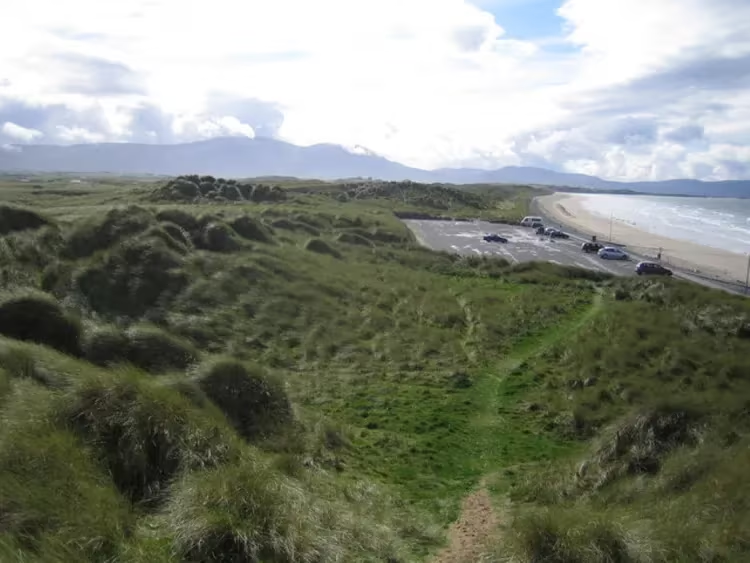
This spacious sandy beach is perfect for long walks – the coast offers beautiful views of the green hills. In addition, the entrance to the water is gentle, which allows you to safely swim with your children. You can also go surfing – there are several schools and equipment rentals in the area.
Frinton-on-Sea beach, Essex (England)
This beach is located in the quiet and peaceful town of Frinton-on-Sea. The main feature is the interesting huts on stilts built on the coast. On the other side there are green lawns and cafes. The sand is light, with some pebbles. There are separate areas for swimming, sailing and windsurfing. This place is perfect for lovers of quiet walks and a relaxing holiday. And if you have 24 hours to spare and don't know where else to go other than the beach, spend it in Liverpool!