
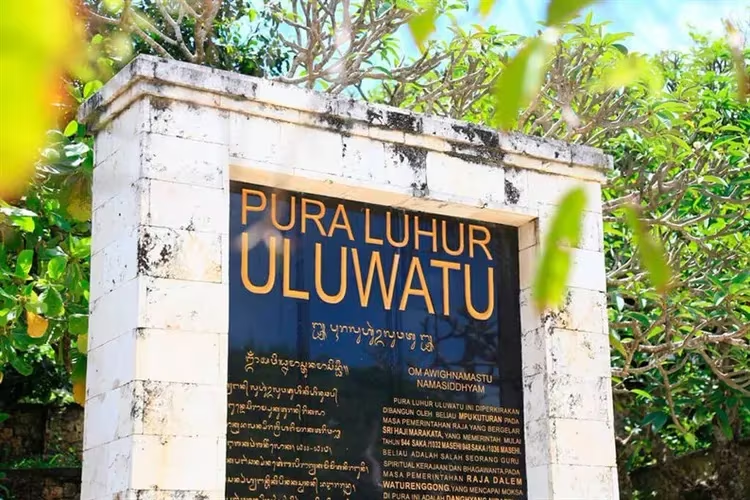
Uluwatu Temple in Bali – history, photo, description, how to get there, map
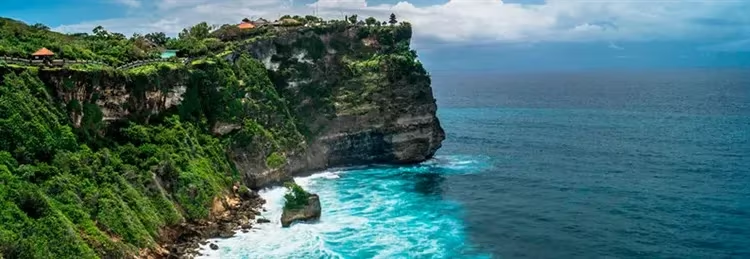
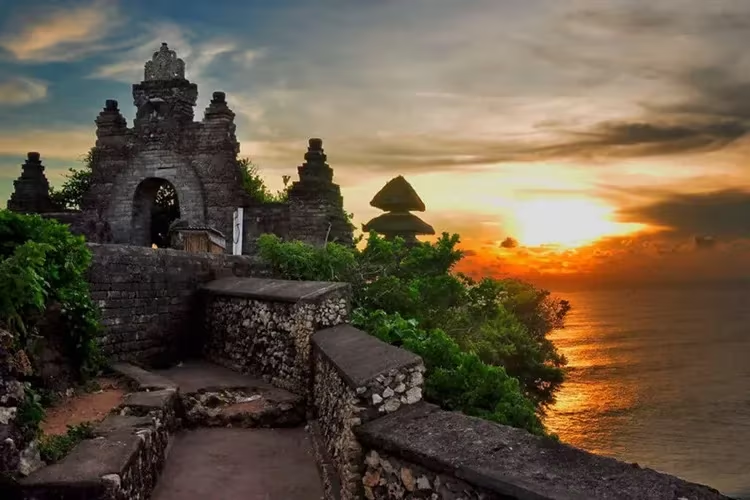
Uluwatu Temple (Pura Luhur Uluwatu) in Bali is one of the six famous Balinese temples, jealously guarded and revered by the locals, but open to foreign tourists. And there is something to see here, because the temple complex is located on the edge of a sheer cliff more than 80 meters high above sea level. The view from the cliff is magical, especially in the evening, before sunset.
History and description
There are many legends about the origin of the building. Most researchers agree that it was founded over a thousand years ago. Some believe that it was built by the same monk who is responsible for the existence of other sanctuaries of the island, for example, Sakenan. Others are of the opinion that Dwijendra, the most holy monk of the past, was the founder of Uluwatu. Supporters of the first version, by the way, mention that, although he was not the founder of the temple, he chose it as the last point of his pilgrimage and, having reached enlightenment, disappeared with a lightning strike. Lightning, by the way, really struck the temple in 1999. Part of the building was destroyed, but it was able to reconstruct.
What to see
Christians and Muslims, whose churches and mosques shine with luxury, may not be struck by the architectural ensemble of the Balinese sanctuary, but having been here it is impossible not to be imbued with the special spirit of local beliefs. The necessary mood is already set by the path to construction. Wandering along a rocky cliff, listening to the sound of the ocean and admiring the breathtaking view, it's hard not to hold your breath in anticipation of something completely new, unfamiliar and interesting.
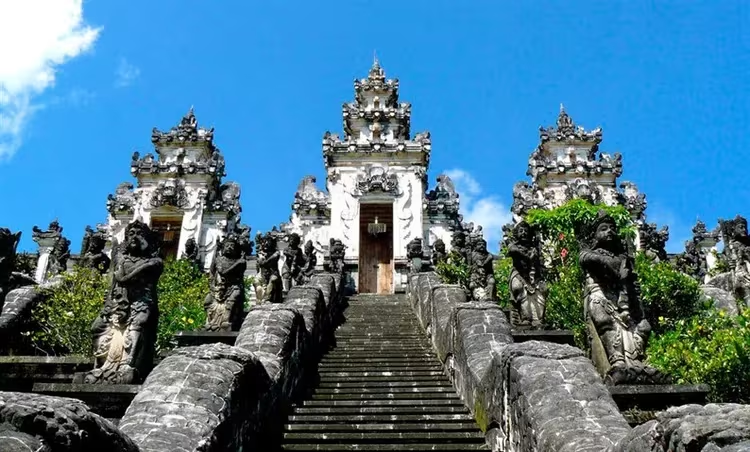
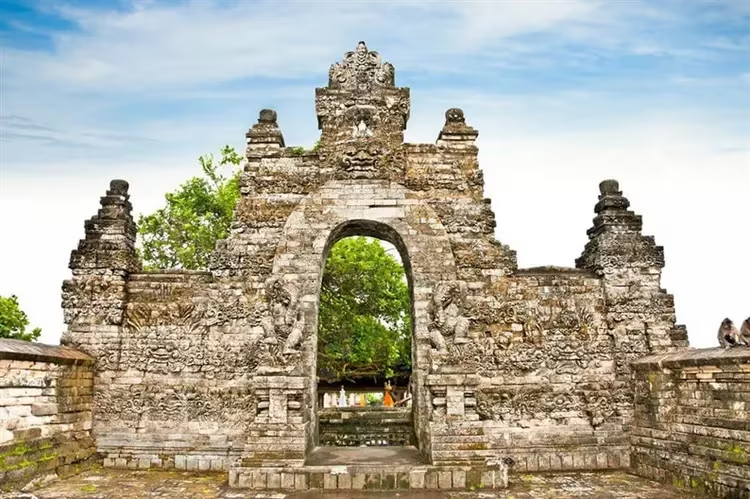
The temple complex itself consists of three buildings made of dark stone, the walls of which are decorated with outlandish carvings. There are stone gates in front of each entrance, and statues with elephant heads rise next to them. The main gate is distinguished by carvings depicting leaves and flowers; behind them, stone steps stretched to the center of the temple. Small trees grow on the sides, which regularly give visitors a saving shade from the scorching sun.
The courtyard itself is an open space with a stone floor. An ancient wooden building is located near the northern entrance, and another gate is located in the west. They lead to the next courtyard, at the beginning of which there is a statue in the form of a huge head, and at the edge there is a wooden building that opens up an amazing view of the ocean. Another attraction worth the attention of a tourist is the monkey forest.
The inhabitants of the local fauna have notably settled in the vicinity of the sanctuary and are not at all afraid of people. You can even feed them if you wish, but only if you are not afraid to part with some valuable thing. Not only do these pranksters covet everything shiny, but they can even steal slate!
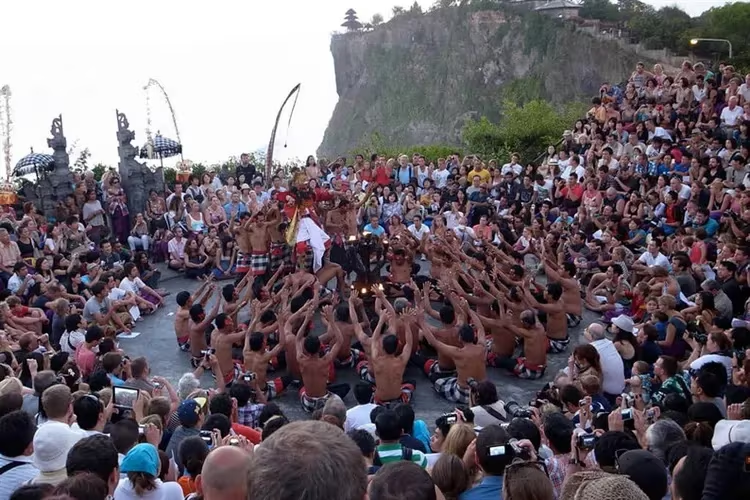
In the evenings, a real performance unfolds in front of the guests of the temple complex with the performance of the national dance Kechak. Before the start of the performance, the audience who managed to take their seats are given small brochures describing what is happening. Kecak himself looks impressive, like an old relative of ballet. It is based on an ancient prayer ritual combined with a dramatic performance. What is also curious is that the performers are not professional actors and dancers, they are all residents of the surrounding villages.
Tips for tourists before visiting
It is important to remember that during religious ceremonies, tourists are not allowed to enter the temple. Avoid wearing accessories. Around Uluwatu stretched a forest inhabited by monkeys, who are very eager for shiny trinkets, scarves or panama hats. The employees caring for them are always ready to help and return the missing thing, but it's still not worth the risk.
You can feed the monkeys, but you should do it in the presence of the temple workers and only with food specially purchased on the territory. It is best to get to the temple in the late afternoon: the weather conditions are more comfortable, the sunset is incredibly beautiful, and in the evening you will find a performance with Balinese folk dances.
Often, upon arrival, Balinese boys jump up to ignorant tourists, wanting to suggest the way or drive away the monkeys, and this would be just an amazing display of hospitality if, after the services rendered, they did not demand money. Keep this in mind and always check the price if you meet local “guides”. If you stay at the temple until late in the evening, call a taxi in advance. Public transport no longer runs after sunset, and you can wait more than an hour for a car “on call”.
The prices of local taxi drivers are fabulous. Since the temple complex is located in an incredibly beautiful place, it is highly recommended to stock up on food, water and a cozy blanket. There is nothing better than to sit almost on the very edge of the cliff and have a picnic. A lot of pleasant impressions and beautiful photos will be provided!
At the entrance, wide cotton belts (sarongs) are issued. Be sure to put it on – this will not only allow you to join the culture, but also show your respect for local traditions.
Where is it located and how to get there
Uluwatu Temple is located on a sheer cliff about twenty-five kilometers from the resort town of Kuta. Directly next to it is the village of Pecatu. Open for visits from 9 am to 6 pm. At six, the dance performance begins.
There are several ways to get to the area:
- Rent a car or scooter. Simple transport can be taken for 20-25 dollars a day, and only international rights will be asked from you. As a rule, they don't take any deposits – where will the tourist run away from the island? True, you should be careful – insurance is often not included in the price, it must be paid separately. From Kuta to Uluwatu by car, it will take approximately 40 minutes, you just need to follow the appropriate signs
- Taxi. As mentioned above, it is better to call the car in advance when you return.
- Public transport