
What to see in Salzburg in 1 day on your own – route, photo, description, map
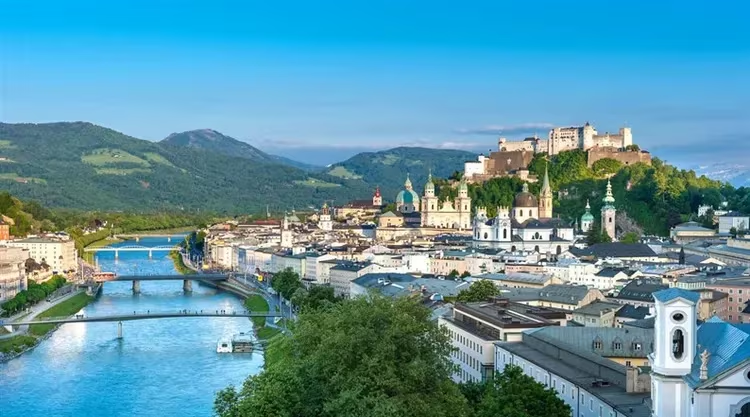
The ancient Austrian city of Salzburg can offer tourists a rich excursion program. Fortifications, beautiful Catholic churches, monasteries, museums, palaces and parks simply enchant. And yet – Mozart was born in this city, and many places associated with the life and work of the legendary composer have been preserved here. For those who came to Austria for a long time, there are no questions, you can have time to get acquainted with all the sights. But what to advise those who do not have a margin of time? What to see in Salzburg in 1 day on your own – make your choice.
How to get from the airport to the center
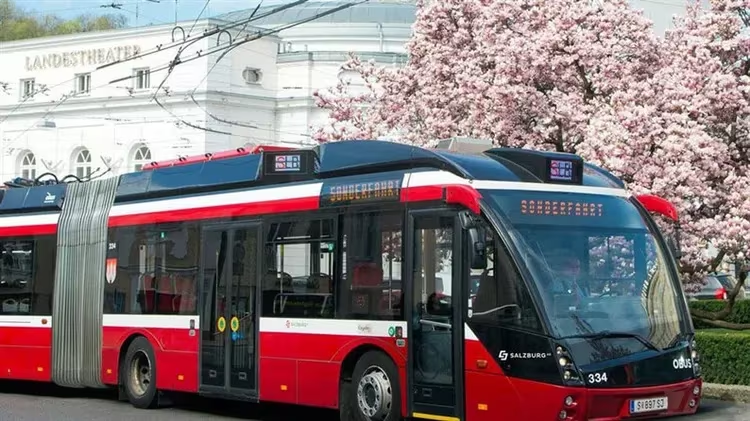
It will not be difficult to get from the airport to the city center using public transport. The most convenient way is to take trolleybus number 2, which departs from the central exit every 10 minutes. The journey will take no more than half an hour. It is even more comfortable to take a taxi – especially if you are traveling with large luggage. Of course, you can take a car right at the airport building.
But now most tourists order a transfer online. In this case, you will be expected at the specified time, and the taxi will be exactly what you need – for example, with a large trunk. And, finally, you can rent a car, drive yourself, and go to get acquainted with Salzburg on your own.
🏨 🚕 Individual transfer from the airport to the hotel and more
Capuchin Mountain
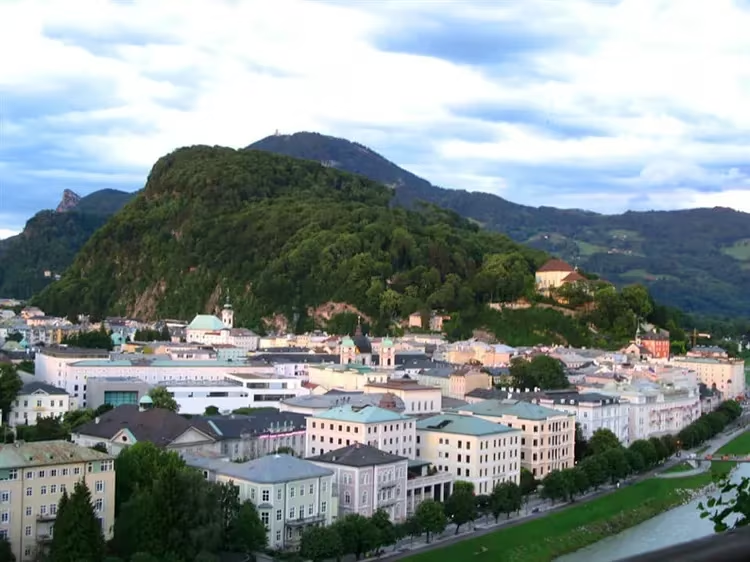
Mount Kapuzinerberg is not that big. Its height reaches 640 m, and it will not be difficult for tourists to climb up. There are two ways to do this: a staircase leads up from the embankment, and a serpentine road from Stefan Zweig Street. The effort you put in will definitely pay off. At the top you will see an ancient monastery, which belongs to the order of the Capuchin monks. It was built at the end of the 16th century.
You won't be able to see the monastery itself: the monks don’t let tourists through. You can only visit the church. During the reign of Adolf Hitler, they wanted to close the monastery and build a stadium here. But in 1945 the monks returned to their former place, and life went on as before. Also on top of the mountain you can see the fortress wall. Nearby is the house where the famous writer Stefan Zweig once lived.
Fortress Hohensalzburg
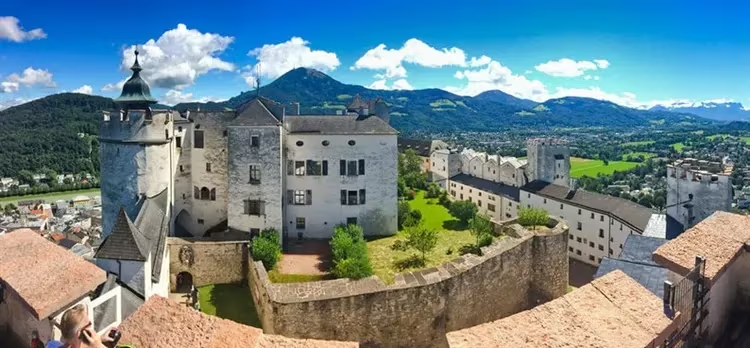
This is a very picturesque place, it is not for nothing that artists have chosen it. The fortress is located on the top of Mount Festung. There is no other such ancient citadel in such good condition in Europe. The main part of the buildings was erected in 1077 at the direction of Bishop Gebhardt. But then numerous reconstructions followed, the fortress acquired towers and a bastion. And in the 16th century, additional rooms were built inside, where the nobles could accommodate comfortably.
Since there were always a lot of people on the territory of the fortress, it was necessary to deliver food and various things here. For this purpose, a funicular was built on the border of the 15th and 16th centuries. It is worth noting that he was the first in the world. When in 1525 an uprising took place on these lands, and the people tried to overthrow Prince Matthäus Lang, he managed to hide behind thick fortress walls. During the offensive of Napoleon's troops, the citadel was surrendered without a fight. At the beginning of the 20th century, there was a prison on the territory of the fortress.
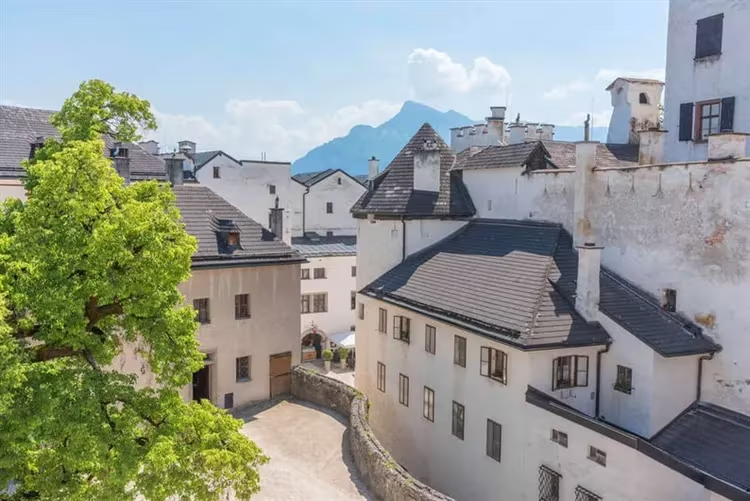
Today, tourists come here to admire the panorama of the city and look at ancient objects. Here are the Church of St. George, the Archbishop's Palace, various buildings, a fire tower, a prison and much more. You can admire the 16th century organ and visit the torture chamber. The Golden Hall, trimmed with gold-embossed leather, is very beautiful. You can even see what the latrine looked like in the Middle Ages. There is also a museum on the territory of the fortress, which contains a wonderful collection of ancient weapons, as well as numerous gizmos of that era. There are always a lot of artists here during the summer months.
nonnberg abbey
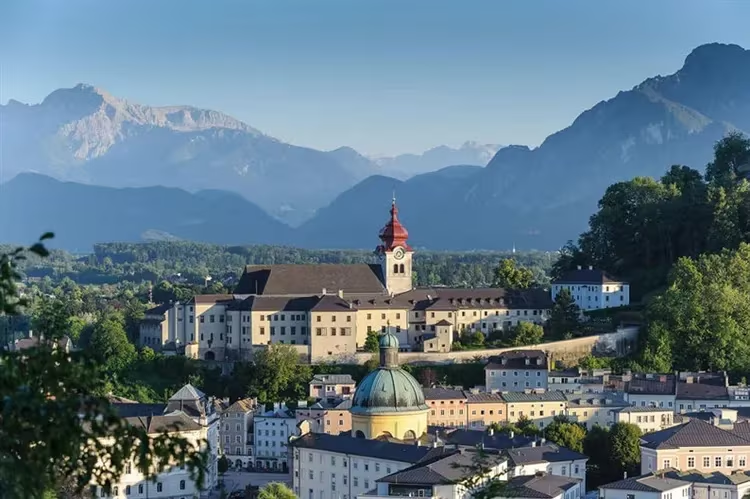
One of the oldest sights in the city. The monastery was founded at the beginning of the 8th century, thanks to Bishop Rupert, later recognized as a saint. The monastery was led by the sister of Bishop Erentrud, and girls from noble families were accepted here. At the beginning of the 15th century, there was a strong fire here, and restoration work continued for more than a quarter of a century. After that, poor girls also got the opportunity to become nuns.
At the beginning of the 16th century, a funicular connected the abbey and Hohensalzburg, and chapels were built in the 17th century. Today the monastery operates, but tourists do not have free access to its territory. You can only visit the Nativity Church and listen to the singing of the nuns. In the vicinity of the monastery there is a good restaurant serving vegetarian food. Nonnberg Abbey gained particular popularity after the release of the film “The Sound of Music”, the plot of which is associated with this Benedictine monastery.
Abbey of Saint Peter
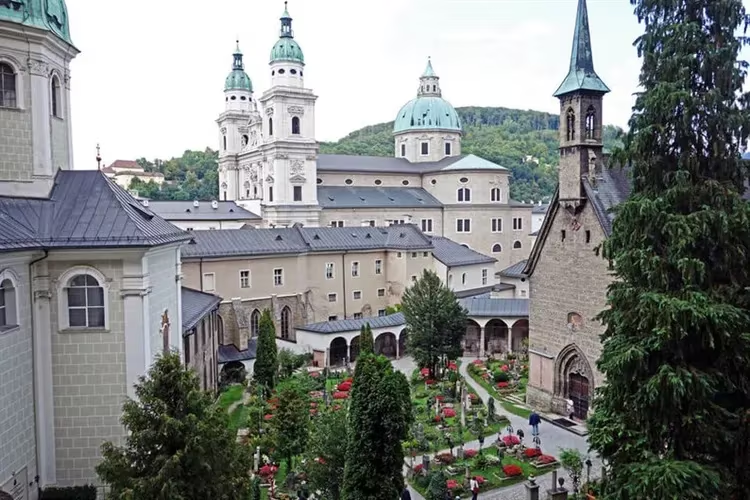
Another old and very interesting abbey, this time for men, which was founded by Bishop Rupert in 696. By the way, he is buried here – more precisely, here are his relics. The monastery is located near the Mönchsberg mountain. This is a whole complex, which includes the church of St. Peter of the 12th century, buildings of the 17th-18th centuries, a unique – without exaggeration – library, where even the scores of Haydn and Mozart are stored, as well as a cemetery.
At the entrance to the temple you can see the statue of St. Rupert, at his feet – a barrel of salt, because he is the spiritual patron of the “salt city” of Salzburg. The moldings in the church date back to the 18th century, and the statue of the Virgin Mary to the 15th. The ancient cemetery is also interesting – noble people were buried here, starting from the 9th century, and many outstanding personalities still find their last shelter here. The grave of Mozart's sister Nannerl has been preserved.
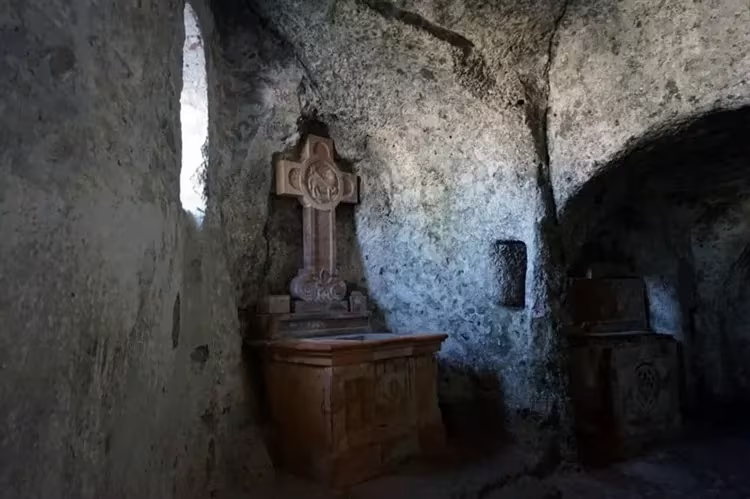
You can visit the catacombs carved into the rock, where hermit monks lived, and here they were buried and buried. Another interesting place related to the abbey is the Long Gallery, which exhibits paintings. Also, delicious rye bread is baked in the abbey, and there is also a restaurant nearby that serves monastery wine and dishes prepared according to recipes that have been passed down from generation to generation. It is worth not to miss the opportunity and try the old Austrian dishes.
Franciscan Church
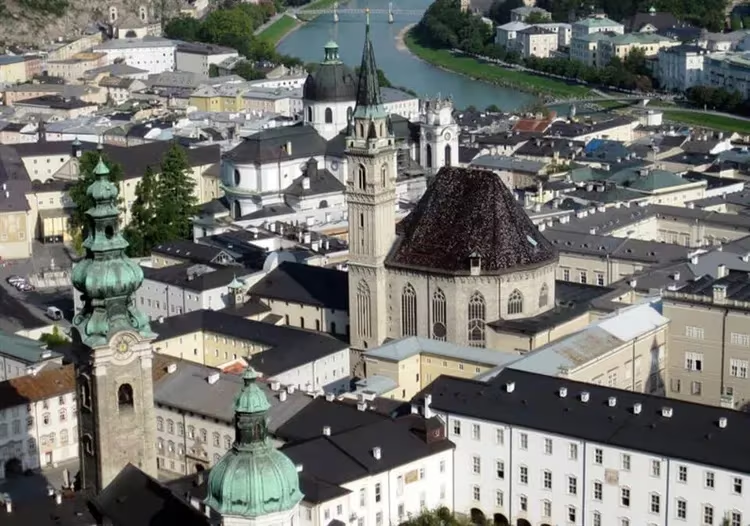
The old church dates back to the 13th century and combines Romanesque and Gothic styles. The statues of the Savior, St. Peter the Apostle and St. Rupert are beautiful. If you look at the ceiling of the temple, you can see that it personifies the sky full of stars. The history of the church is connected with the temple of St. Virgil, which was actually destroyed by order of Frederick Barbarossa at the beginning of the 12th century.
The restoration work was led by the famous architect Hans von Burghause. The 15th-century altar has not survived, but the Virgin Mary with the Child Jesus, the work of Michael Pacher, has survived to this day. The beautiful filigree gratings above the new altar and the frescoes that adorn the temple attract attention. The Franciscan church in its beauty is second only to the cathedral.
Residence of the Archbishops
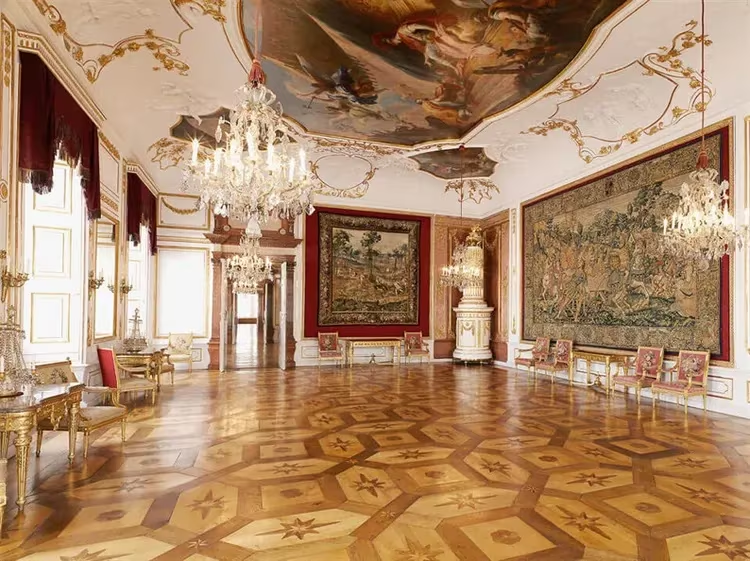
To see the buildings of the Old and New Residences, you need to come to the Residenzplatz square. They were built in the 17th century, when the city was being renovated in the Renaissance style. At one time, a guest house was located in the premises of the New Residence. Initially, the construction was ordered to begin by Archbishop Wolf Dietrich von Reitenau, while the work was completed under his successor Markus Sittikus at the beginning of the 18th century.
The interior design in the Baroque style turned out to be simply luxurious. The ceilings and walls are covered with paintings, there are many stucco decorations and elegant tapestries. Paintings by painters of the 16th-19th centuries are also exhibited here; the gallery was opened in 1923. The most valuable painting is a portrait of a woman painted by Rembrandt. Art critics have come to the conclusion that it depicts the mother of the great artist.
The fountain in front of the residence is very beautiful. It is decorated with a sculptural group – horses and tritons. The other building of the residence houses the Sattler Museum. Here you can see the panorama of the city, made in the first quarter of the 19th century. There is a clock on the building, which appeared here at the end of the 19th century.
Residenzplatz
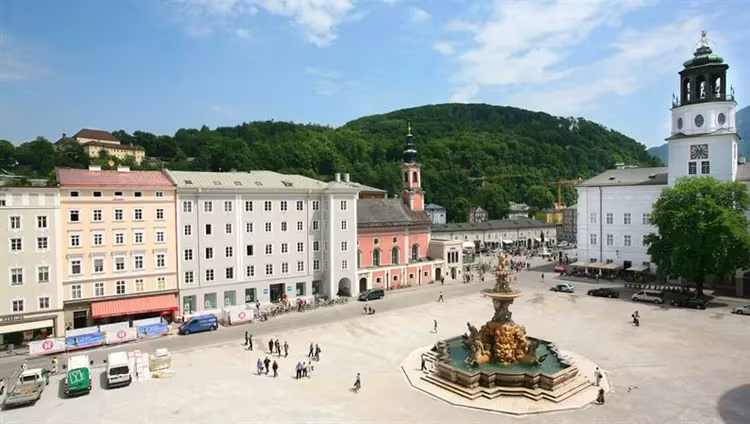
This area is simply not to be missed. After all, it is here that you can imagine what Salzburg looked like in the 16th and 17th centuries. The surrounding buildings have retained their medieval flavor. And if you find yourself here during the summer months, you have the chance to watch the broadcast of the Salzburg Festival. The history of the square is closely connected with the construction of the Old and New residences. A little later, the construction of the cathedral began. At the same time, the houses of noble residents have also been preserved – some of these buildings date back to the beginning of the 16th century. And, of course, the most beautiful fountain in Austria, the work of Tommaso di Garzon, will also arouse your admiration.
Residence Gallery
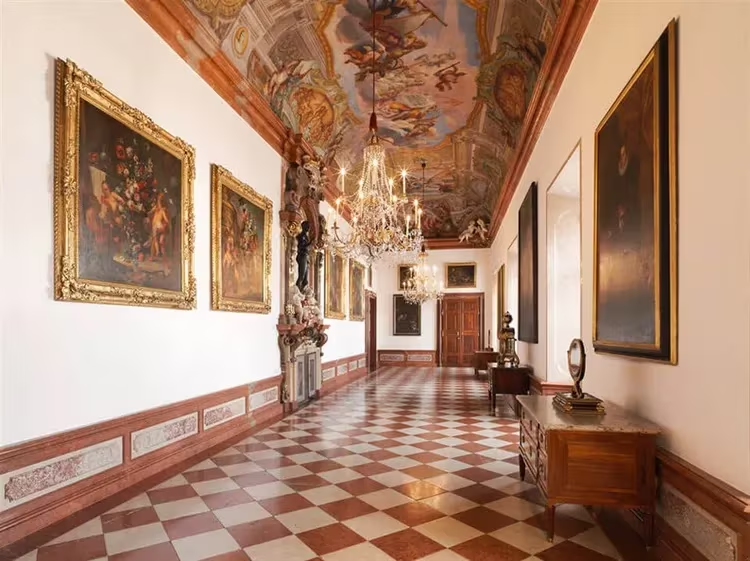
This is one of the best museums in the whole country. Once here, you can see paintings by Rembrandt, Rubens and other great masters: Dutch, Italian, French. It was planned that the gallery will receive the first visitors in 1919, but this was prevented by the First World War, the opening took place 4 years later. At one time, the cultural treasures of Austria were taken out by Napoleon's troops, and the gallery staff began to collect paintings of great artistic value again.
At first, they were even borrowed from other museums and from the owners of private collections to show the public. After the Second World War, the gallery opened in 1952, but here you can still see only old paintings. There is a permanent exhibition and several temporary ones – patrons periodically bring here certain paintings.
Monument to Paul Furst
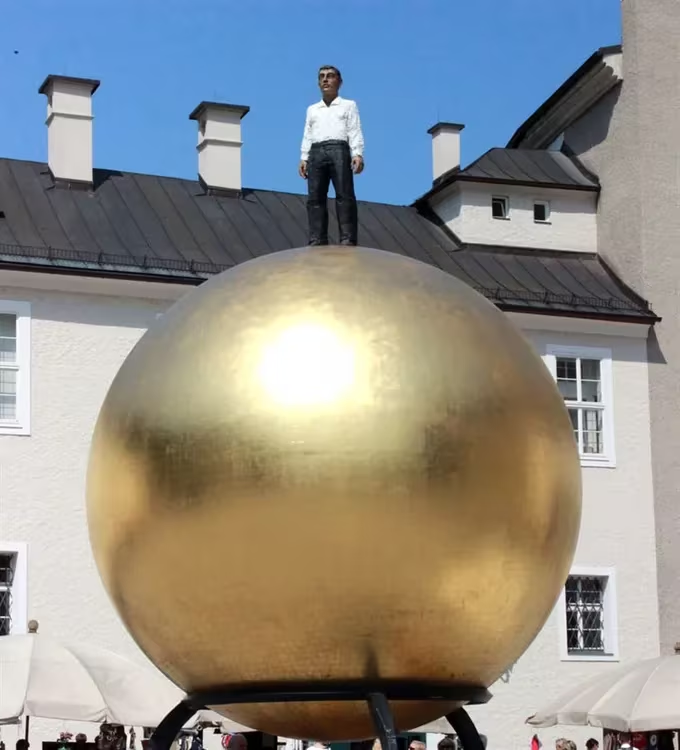
Tourists are sure to take pictures near this unusual monument, another name for which is “Mozartkugel”. It is a large golden ball, at the very top of which stands the confectioner Paul Furst. It was he who came up with an unusual candy, a delicious chocolate ball, and dedicated the delicacy to the great composer – it was just the centenary of his death.
The monument to candy, which fell in love not only with the inhabitants of Austria, but throughout Europe, was erected in the middle of the 20th century on Kapitelplatz square. Near the “Ball of Mozart” the public invariably gathers. Despite the fact that the installation looks extremely modern, it surprisingly organically blended into the overall look of the old square. Paul Furst is depicted standing at full height, and in life size.
Salzburg Cathedral
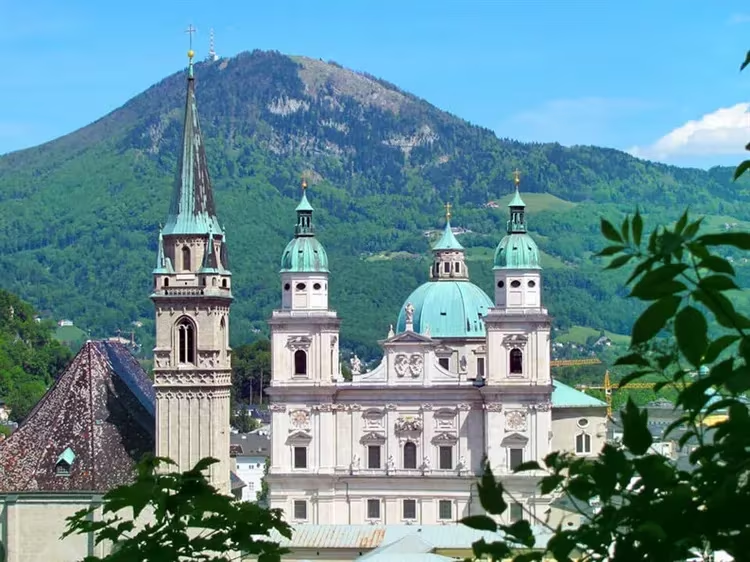
One of the most famous Catholic cathedrals in the world is located where the Residenzplatz and Domplatz squares intersect. He makes an amazing impression. In the 8th century, there was a small church on this site, in 1167 it was destroyed by fire. Only three decades later a new cathedral was erected here – huge and luxurious. But during the Second World War, as a result of a direct bomb hit, the dome and the altar were destroyed. It was possible to restore the appearance of the cathedral by 1959.
By this time, very beautiful bronze gates were also made, on which the dates of consecration are indicated. At the same time, up to 10 thousand worshipers can be in the cathedral. The huge building is made in the Renaissance style. The marble facade is magnificent, the sculptures of the apostles Peter and Paul, saints Virgil and Rupert, the patrons of Salzburg, attract attention.
Inside, you can see luxurious baroque decoration, many frescoes and an old bronze font in which Mozart was baptized. It is worth taking the opportunity to hear organ music, which makes an unforgettable impression. Residents love their cathedral very much and are rightfully proud of it. It seems that here the soul really soars to the sky.
Salzburg Museum
It is here that you can get acquainted with the history of the city most fully. Literally everything is presented here: from archaeological finds to interesting documents acquired today. Multimedia equipment will make excursions especially colorful and memorable. The museum was founded in 1834, and since 2007 it has been located in the New Residence of the Archbishops. On the first floor you can see temporary exhibitions, on the second floor you can learn about the people who glorified the city with their glorious deeds. In addition to documents, portraits, there are many installations.
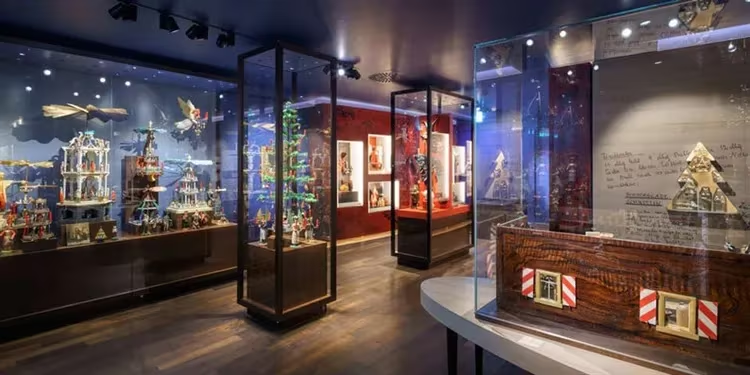
On the third floor, guests have the opportunity to follow how the architecture of the city has changed, how more and more Baroque buildings have become here. It is interesting to observe how a small settlement turned into a real treasury, where many architectural masterpieces are collected. On the fourth floor, archaeological finds and exhibits from the Middle Ages are presented – from primitive stone products to a Gothic altar. You can see ancient tools, weapons, jewelry, coins. The collections of the museum are constantly replenished.
Mozart Square
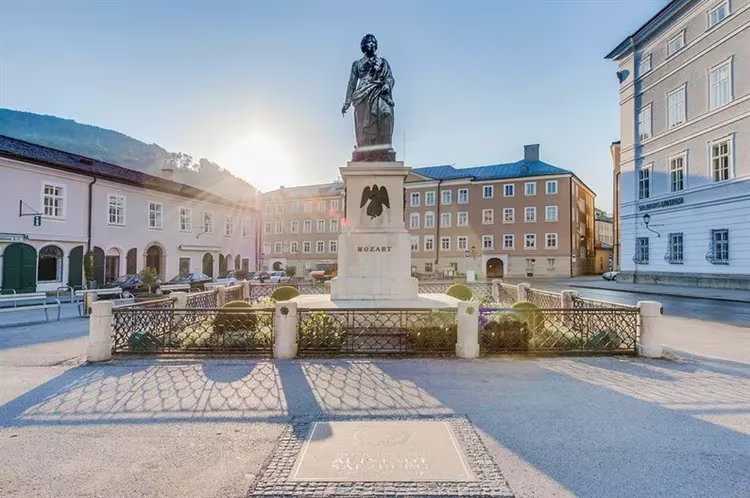
The square bearing the name of the great composer is located in the center of the ancient city, and there are always a lot of people here, especially foreign tourists. Of course, here you can see the statue of Mozart. It is the work of the sculptor Ludwig von Schwanthaler and has been decorating the square since the mid-19th century. The composer is wearing loose clothes with picturesque folds, in his appearance at the same time – grandeur and simplicity. The palace of the archbishops is also located here, and everyone who comes to the square hears the beautiful chime of bells – these are the melodies of Mozart and Haydn. You can also look into the museum, where many wonderful paintings are exhibited.
Mozart House
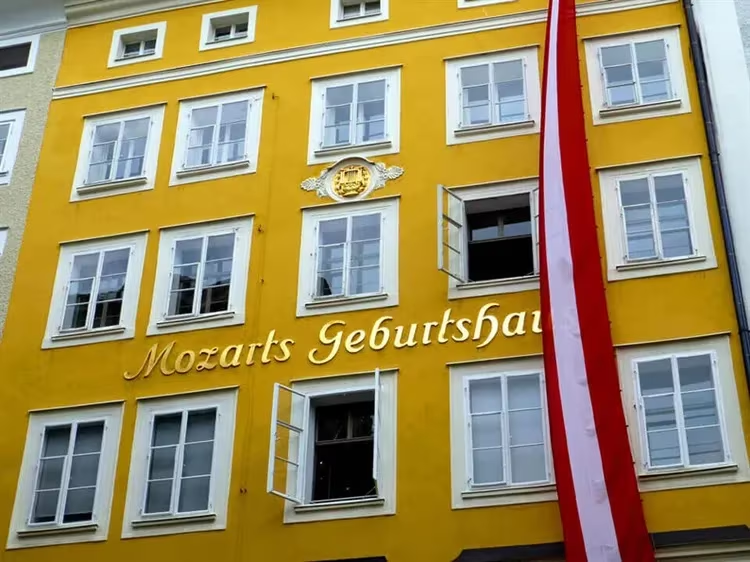
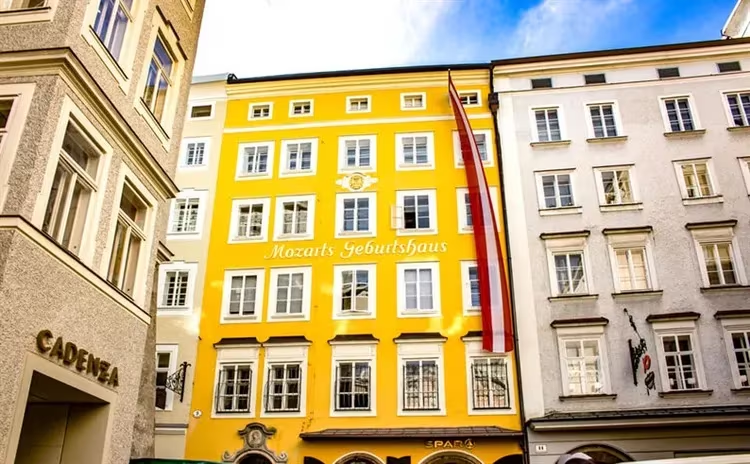
Of course, the grateful residents could not but arrange a museum in house number 9, in the Getreidegasse lane. It was here that Mozart was born in 1756, who later glorified the ancient city. The apartment where the family lived was quite small – a bedroom, a living room, an office. Children were born and died at an early age, of the seven, two survived – Wolfgang and Maria Anna. The museum was opened in 1880.
Here you can see historical rooms, musical instruments, scores, letters, portraits. On the first floor, antique furniture is exhibited, on the second floor there are expositions that replace each other, on the third floor you can find out what the theater meant in the life of Mozart. His operas made an amazing impression on the audience – this is reflected in the dioramas. Perhaps this is the place where it is absolutely impossible not to visit, so be sure to include it in your program.
house of nature
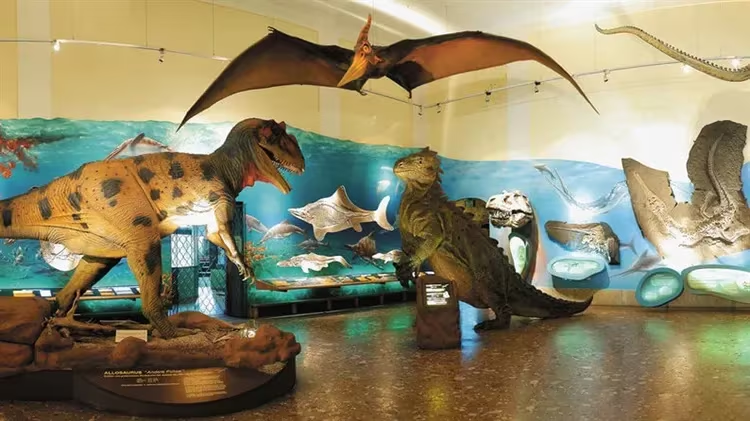
The House of Nature is a real magnet for visitors to the city. Children will especially like it here. Here you can see dinosaurs and other creatures that have long been extinct. There is also an opportunity to get a lot of interesting information about the Universe and even to be the discoverer of other worlds. In the interactive science center, you will be given the chance to conduct various experiments. For example, to develop an electric current or build a bridge.
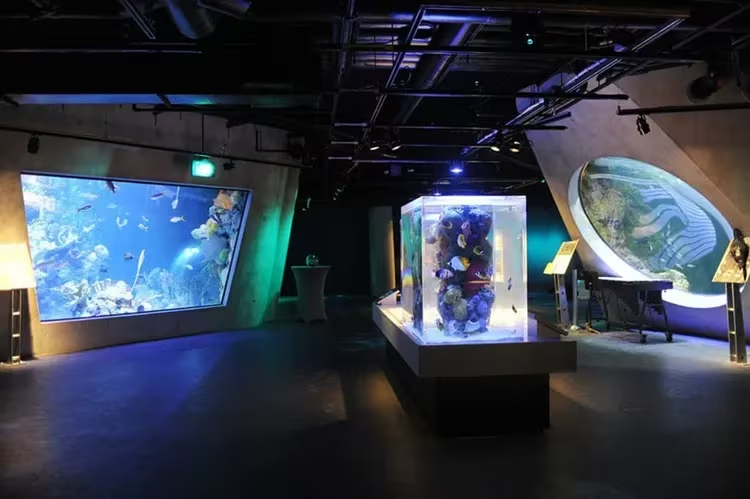
The huge aquarium is unusually beautiful – there are real thickets of corals and numerous tropical fish. And snakes and lizards live in a cozy zoo. The cultures of distant countries are presented in the corresponding halls. There is an interesting exhibition that tells about the functioning of the human body. In a word, here you can get to know our planet and its inhabitants more closely.
Mirabell Palace and Gardens
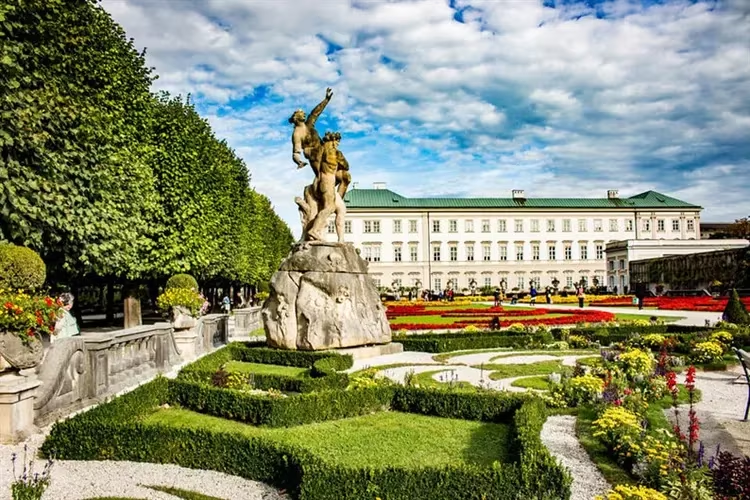
The palace is located near the cathedral. It was built at the beginning of the 17th century by order of Archbishop von Reitenau for his beloved Salome Alt. The beautiful Salome bore the archbishop 15 children. Then the palace went to von Reitenau's successor, Markus Sitticus. It was he who gave the magnificent architectural structure its current name. Since then, the palace has been reconstructed and rebuilt more than once, giving it the features of baroque and neoclassicism.
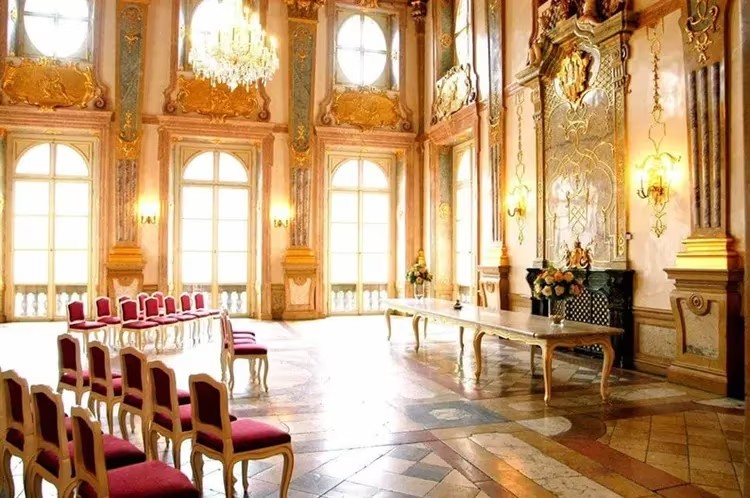
It was in this building that the future king of Greece, Otto of Bavaria, was born. For many years archbishops lived here, at present the magistrate is located here and the burgomaster lives here. Mozart gave concerts in the Marble Hall of the palace, and the sister of Eva Braun (Hitler's girlfriend) got married here. In the 17th century, a garden was laid around the palace, here you can see numerous sculptures of Roman gods, admire the Garden of Dwarfs. Newlyweds always come here to take beautiful photos.
Of course, you won't be able to see all the sights listed above in one day. But a lot can be done if you order, for example, a sightseeing tour. Or you can set off to get acquainted with the city on your own and competently draw up a route, including in the program a tour of the most interesting objects for you, and planning time for lunch and a short rest. Salzburg is a real treasure of Austria, and you will never forget its churches, museums and old squares.