
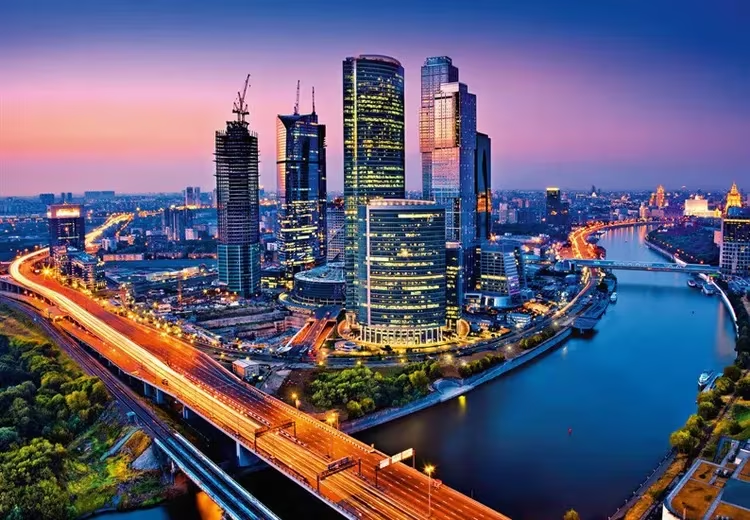
The center of attraction for millions of people, a huge metropolis – the Russian capital Moscow – is hundreds of historical and architectural monuments, museums, theaters of various genres, wonderful parks and reservoirs. There are probably not as many songs written about a single city as about Moscow; not so many poetic lines of love are dedicated, starting from Pushkin and Lermontov.
the Moscow Kremlin
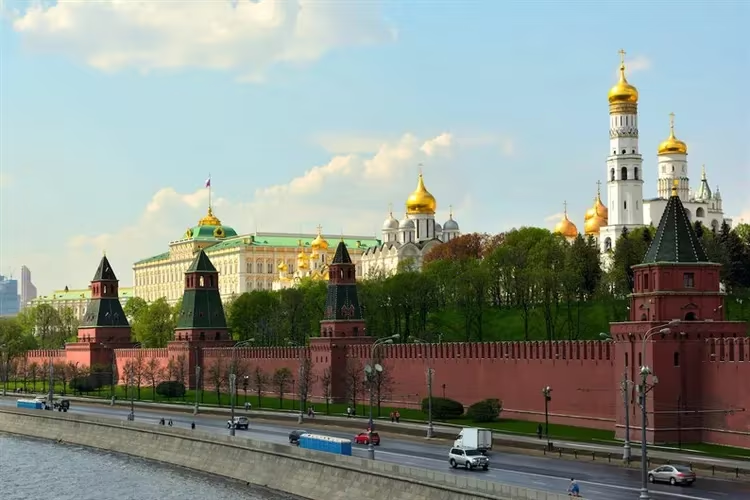
Arose a little later than the first settlements near the Neglinka River – the Moscow Kremlin – the brainchild of Yuri Dolgoruky, Ivan III and other rulers of Russia, who left architectural monuments in memory of themselves. The “heart” of the city, the socio-political, historical, artistic, spiritual and religious center of Moscow and all of Russia is famous for its battlements, 20 towers, amazing cathedrals, white-stone chambers, administrative buildings and palaces.
The magnificent beauty of the Kremlin cathedrals, the richest treasures of the Diamond Fund, the Armory, the luxurious decoration of the Faceted Chamber amaze and delight.
The majestic buildings of the Grand Kremlin Palace, the Senate, the Godunov bell tower are impressive in size and architecture. Historical and artistic objects of Ivanovskaya Square: the monuments of metal casting art Tsar Bell and Tsar Cannon – symbols of the skill and power of the Russian state, unsurpassed examples of Russian weapons.
A unique architectural monument of the era of Peter the Great – the building of the Senate (author M. Kazakov) is an example of the best creation of the famous architect. The entire ensemble of the Moscow Kremlin is included in the UNESCO heritage list as the greatest artistic and architectural complex in the world.
Diamond fund
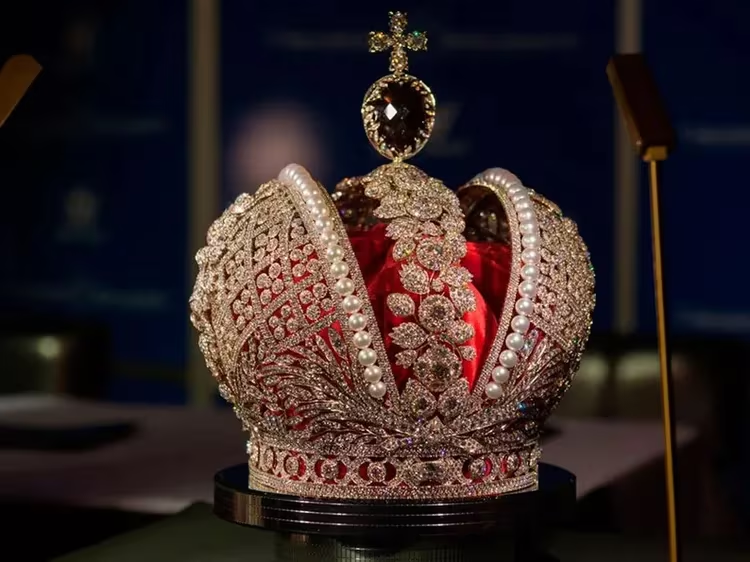
The magnificent building of the Kremlin Armory houses the treasures of the country, collected from the 18th century to the 21st. The progressive Peter I issued a decree on the strict preservation of state values: nuggets of precious metals, precious stones, jewelry, royal symbols, etc.
For them, a special room was allocated in the Winter Palace (Diamond Cabinet), where they were stored and replenished until the start of the First World War. Since 1914, the treasures of the Diamond Fund have been in the Moscow Kremlin.
For the first time, the opportunity to see unique treasures was provided to ordinary citizens of the USSR in 1967 at the exhibition. The shocked visitors saw the dazzling luxury of the presented exhibits.
Now the treasures of the Diamond Fund are located in 2 mega-halls. In the showcases of the 1st hall, jewelry of amazing beauty, magnificent jewelry with precious and semi-precious stones, semi-precious stones are presented; orders of all merit.
In the 2nd showcase – a unique map of the USSR, on which everything is marked with precious stones; giant diamonds, nuggets of gold and platinum of bizarre shapes; exclusive jewelry of modern masters.
Among them are roses of irresistible beauty, made by jewelers Nikolaev and Aleksakhin (1980); diadem “Russian field” in the form of a tiara with 6 spikelets, decorated in the center with a large white sapphire and many other unique products.
In the 2nd hall there are valuables of historical significance: royal crowns, a scepter, orb. The Large and Small Crowns of Emperors are masterpieces of jewelry art, adorned with hundreds of diamonds laid out in intricate patterns; large pearls, ruby.
It is impossible to look away from their radiant beauty. Every day, guests come to the Diamond Fund in an endless stream and leave full of admiration, because such beauty is rarely seen anywhere.
Armouries
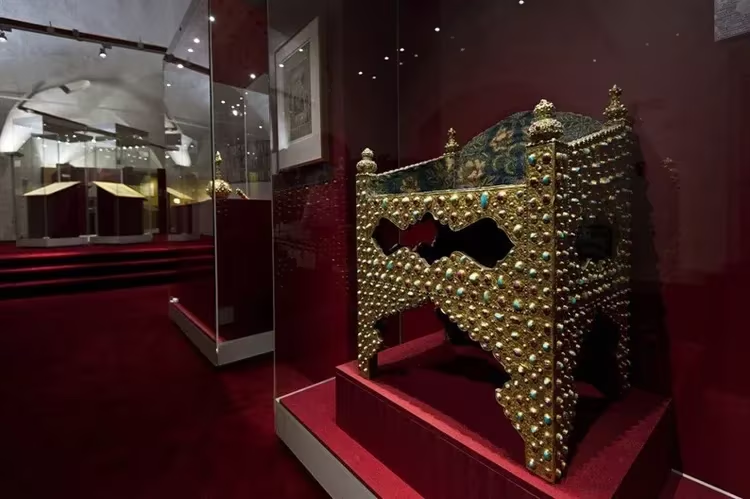
In one of the magnificent buildings of the Grand Kremlin Palace there is a museum of Russian treasures accumulated over the centuries by the royal dynasties. Until 1851, precious relics, all kinds of offerings from foreign embassies, which formed the basis of the museum collection, were in the vestry of the patriarch and the royal treasury.
After the construction of a special building (architect Ton), all the treasures were placed in it and called the Armory, by analogy with the first royal treasury. The expositions of the museum-repository showcase various regalia of state power, royal ceremonial robes, dress for the coronation of empresses, cassocks and chasubles of priests.
Eyes run wide from the abundance of unique products made of gold and silver by Russian craftsmen. The exhibition admires the highly artistic silver exclusive of the masters of Western Europe. The royal traveling carriages are impressive: carriages decorated with gold and precious stones; luxurious phaetons and horse harness; items of ancient weapons.
The entire collection is of great artistic and historical significance and world fame.
St. Basil's Cathedral
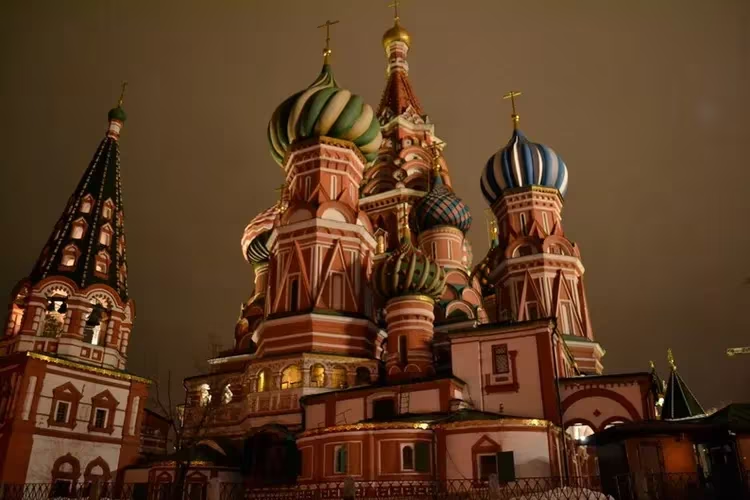
As if a fantastic flower with colorful domes instead of inflorescences, the Intercession Cathedral majestically adorns Red Square. It seems that all the paths and paths will lead to this amazing architectural landmark that appeared on the Russian land in the distant 1565 by decree of Ivan the Terrible.
Ten beautiful churches, standing on the same foundation, crowned with domes in the form of striped tents, make up an elegant temple ensemble. Their thrones were consecrated in honor of the holidays falling on the days of responsible battles for Kazan.
There is no exact opinion about the author of the first building (the main church of the Intercession of the Mother of God). And only numerous legends, such as, for example, about the deeds of St. Basil the Blessed, have survived now.
For the Cathedral in the 16th century, an icon of St. Basil the Blessed was painted, which is considered the most ancient in it. The beauty of the interior decoration of the Temple must be seen and remembered for a long time with great admiration.
Address: Red Square, 2. You can visit it along with an excursion.
Old Arbat
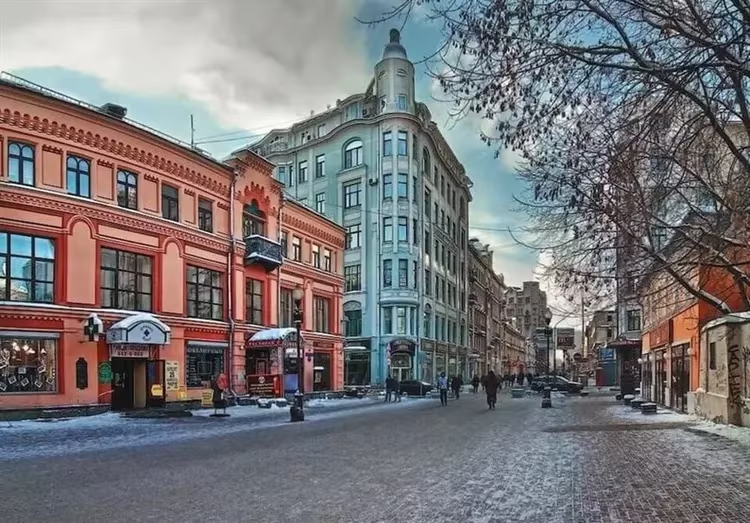
One of the oldest streets in the city is a real legend associated with the names of great personalities of Russia's past. Arbat has become a favorite place for the creative public, just Muscovites and guests of the capital. The famous song of Bulat Okudzhava “Ah, Arbat, my Arbat” has become a kind of hymn to the street beloved by the bard. A. Rybakov dedicated the novel “Children of the Arbat” to her, the unique street is described in other works of Russian classics.
During the Soviet years, the Arbat lost its patriarchal identity, some unique buildings were destroyed, the facades of houses were repainted in the same gray color. Communal apartments were arranged in the former aristocratic mansions.
However, the spirit of Russian history, culture, the special flavor of old Moscow on the Arbat has been preserved: hereditary intellectuals live here, the museum-apartments of Pushkin, Tsvetaeva, Lermontov are located; the famous Vakhtangov Theatre; restaurant-old-timer “Prague”.
Among the modern skyscrapers there are old mansions of unique architecture, with elegant stucco and wonderful sculptures, former tenement houses – the features of the romantic past and the pragmatic present coexist perfectly here.
There are corners on the Arbat that make it related to the Parisian Montmartre: in the garden, separated by a wall, there is a place for artists who paint portraits; all sorts of musicians present their numbers to passers-by.
The Bolshoi Theatre
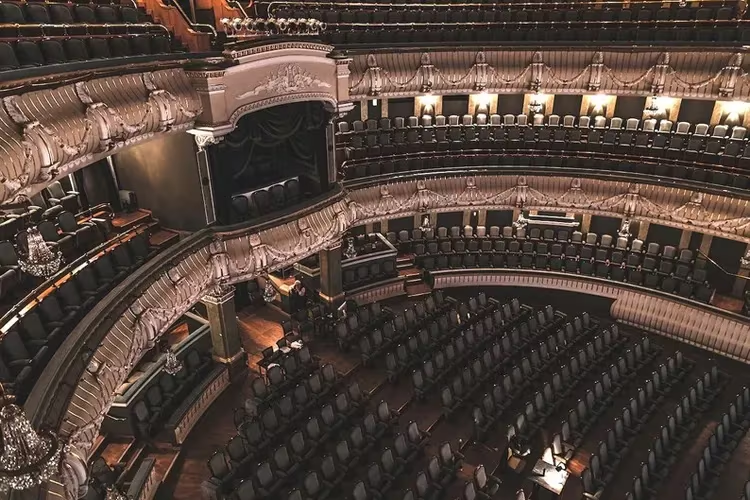
The national pride of Russia, the world famous oldest Bolshoi Theater was founded in 1776 by Prince Urusov with the consent of Catherine II. The history of the theater building is a series of fires (4), after which the theater again and again rose from the ashes.
The current majestic building well known to everyone from the 4th horse was restored in 1857 according to the project of Albert Cavos. The pediment is decorated with the symbolic coat of arms of Russia – a double-headed eagle, the famous bronze quadriga of Apollo by the sculptor Klodt is installed above the portico.
800 new premiere performances based on operas and ballets by Tchaikovsky, Prokofiev, Rachmaninoff, Arensky were created at the Bolshoi. The ballet troupe is considered the best in the world, whose performances are held with incredible success on the most prestigious stages in London, Paris, Rome, Milan, Vienna and other cities of the planet.
Three auditoriums (main stage, Novaya (2002), Beethoven Hall) can simultaneously accommodate almost 4 thousand spectators. The luxurious decoration of the Historical Stage appears in its original form of the 2nd half of the 19th century: gold, red velvet, the famous chandelier of 1863 from 26 thousand crystal pendants, with 120 lamps.
Address: Theater Square, 1
Bunker-42 on Taganka
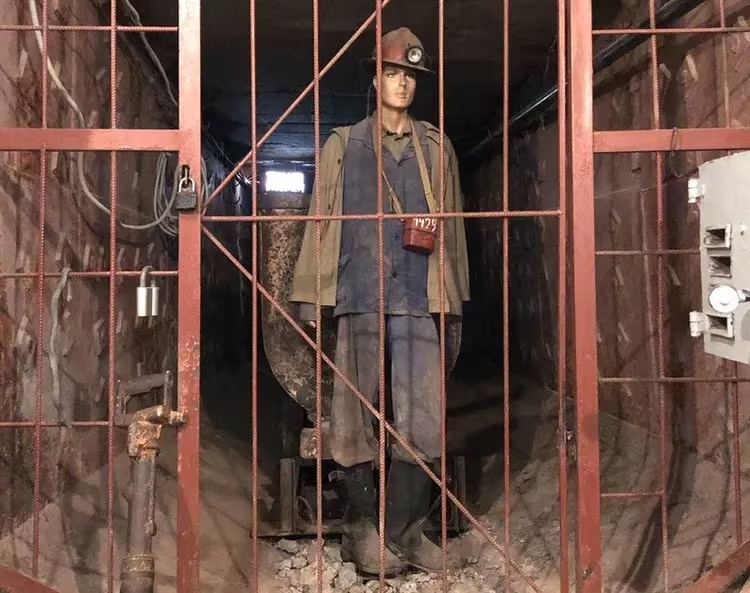
The underground complex, a symbol of protection during the Cold War, was built in the 1950s. Today it is a kind of interesting museum, the space of which impresses with many mysterious corridors and mysterious rooms.
Until the 90s, 20 in bunker-42 was a strictly classified facility that had 2 exits to st. metro station “Kurskaya” and “Taganskaya”, and after declassification (1995) it was sold to a private company.
Having carried out the reconstruction, the new owners organized a museum, whose expositions present a lot of interesting things about the period of the 50-60s of life in the USSR, about the problems of the Cold War, about the danger of nuclear war. Here, visitors are introduced to various types of weapons, means of communication, and engineering systems of the bunker; guided through secret tunnels and halls.
It is noteworthy that at the entrance everyone receives a pass from the USSR Ministry of Defense with a photo in a gas mask. In addition to excursions, the museum organizes presentations and themed games, including computer games. Entrance is allowed to persons over 16 years of age.
Gostiny Dvor
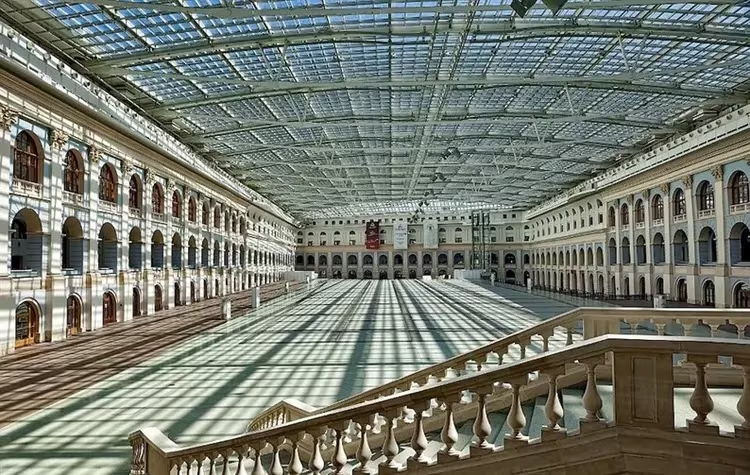
The oldest architectural complex of the 18th century – once the largest shopping center in the world – Gostiny Dvor is located near the Kremlin (150 m) and occupies a whole block of st. Ilyinka, overlooking it with the main facade.
For centuries, it served as the main trading center of Russia, where important trade deals were concluded, sales and fairs were held. Over the years of its existence, some buildings have been rebuilt, elements have changed, new premises have been completed.
Now the total area of Gostiny Dvor is 82,000 sq. m., and the courtyard – 12,000 sq. m. Here is the Archaeological Museum, which presents unique exhibits discovered during excavations.
During the reconstruction, large-scale excavations unearthed the remains of almost 1,000 different structures from different centuries, including a huge pantry with Russian silver coins, thalers, vessels made of precious metals and other valuables.
All kinds of exhibitions, fairs, themed balls, weddings, significant meetings and other celebrations are held in the modern commercial, cultural and historical complex.
Kolomna Palace
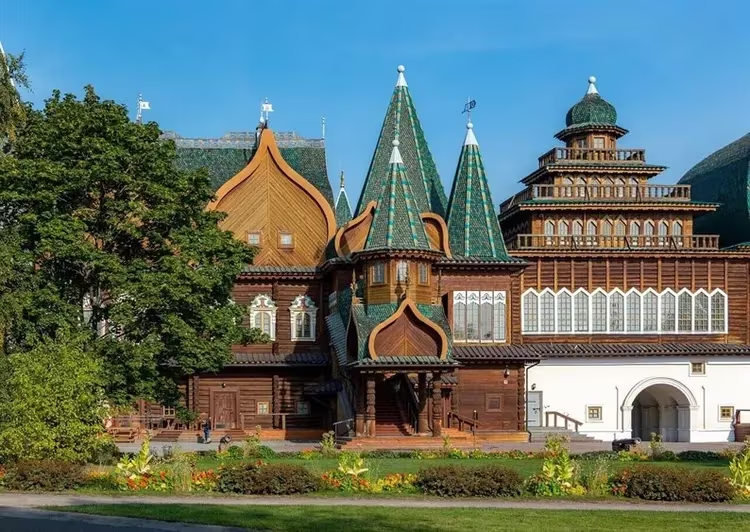
The amazing-looking tower-palace, located in Kolomenskoye near Moscow, is a real architectural masterpiece of wooden architecture in Russia. It was erected as a symbol of the greatness and power of the Russian Tsar Alexei Mikhailovich.
Today, the miracle palace amazes everyone with its extraordinary beauty, the filigree craftsmanship of its creators, carved decorations, chiseled patterned columns, intricate window casings and other uniquely beautiful details.
Looking at the majestic building, you are transported into a fairy tale that suddenly appeared before your eyes – this Terem Palace makes such a strong impression. The interiors of the royal choirs are also impressive: magnificent stained-glass windows, luxurious chandeliers, unique tapestries, icons in expensive frames, highly artistic paintings of walls and ceilings – everything is worthy of admiration.
I remember a copy of the royal throne made of sandalwood, lined with gold and platinum plates and adorned with precious stones, and gilded lions with built-in mechanisms that allow them to move their heads and make growling sounds.
Novodevichy Convent
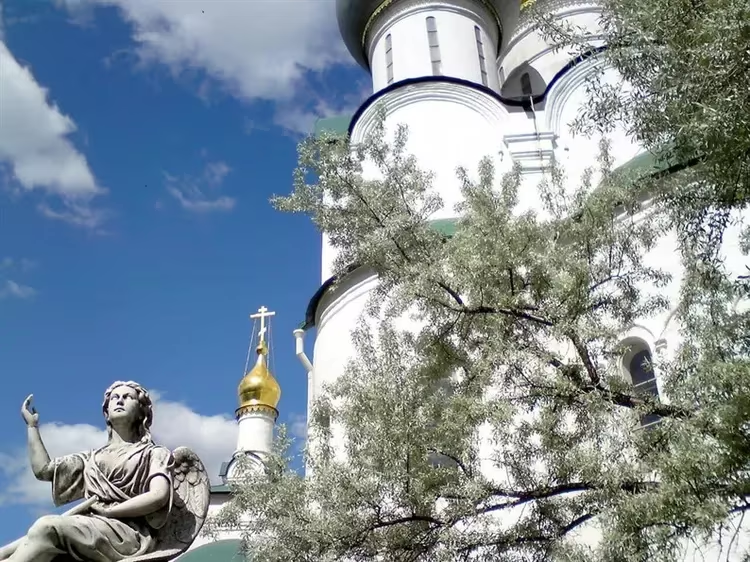
One of the oldest temple complexes, founded in the 16th century by Prince Vasily III, adorns the surroundings near Luzhniki with an unusually picturesque view. The reason for the appearance of the monastery was the vow of the prince – to build a shrine in honor of the victory over the Lithuanians near Smolensk.
Samson's meadow, from which the miraculous icon of Hodegetria was sent to the liberated city, became the springboard for the construction of the Novodevichy Convent. Many representatives of noble families found their shelter in this monastery, including the famous sister of Peter I Sophia.
The central place of the monastery complex is the five-domed Smolensky Cathedral, painted inside with well-preserved unique frescoes of the 16th century, with an iconostasis of the 17th century. is a true masterpiece of architecture. Despite the mixture of architectural styles in the form of temples, the whole ensemble looks very harmonious and beautiful against the background of the dense crowns of the surrounding trees.
A real architectural miracle is the 72-meter six-tiered bell tower, decorated with openwork railings of tiers, stucco architraves, arched vaults of the belfry and a gilded dome with a cross. Here is the cemetery of the same name, where prominent figures of science, art, politics and culture are buried. A visit to these places touches the best spiritual strings, mixed with light sadness.
Address: Novodevichy pr., 1.
Gorky Park
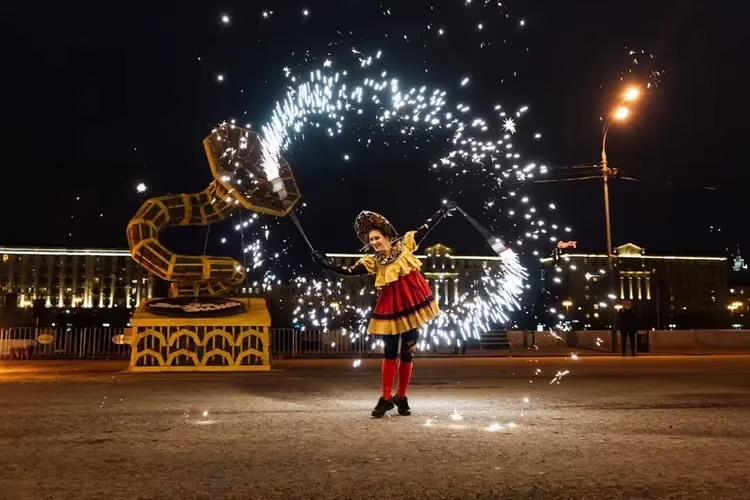
The most popular park, stretching for 7 km along the coast, is becoming more beautiful and comfortable every year. A grandiose reconstruction has transformed the territory of the old park.
Beautifully decorated embankment, descent to the water and the pier; stocked ponds, a wooden beach with comfortable sunbeds and showers, fitness and yoga areas make the park very attractive for all Muscovites.
Bicycles and velomobiles can be rented at rental points, there is free WI-Fi, and free dance lessons are held in the summer season. In the next project, the equipment of basketball courts and the installation of tennis tables.
Address: st. Krymsky Val, 9.
Boring Garden
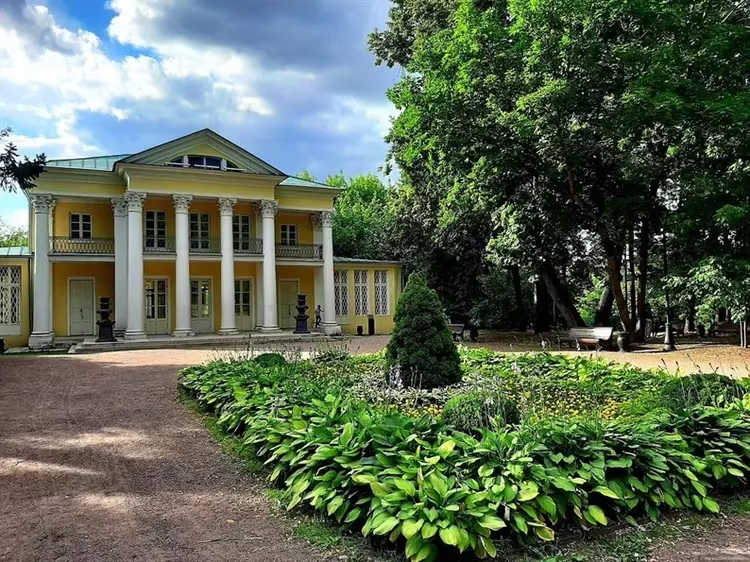
An ancient corner of gardening art, founded on the site of the estate of the princes Trubetskoy and neighboring estates, the Neskuchny Garden still pleases with its beauties. According to history, it was founded by the industrialist P. Demidov in the middle of the 18th century on a site bordering the Trubetskoy estate.
When the entire territory of the estates was bought by the department of Nicholas I, it inherited the name Neskuchny Garden. It has become a favorite vacation spot for residents of the capital; Russian classics and heroes of their works recalled walking here. Beautiful pavilions, landscape delights in the form of original lawns and flower beds, charming gazebos, fountains, and sculptures adorn the richly landscaped area of the garden. The tiled embankment of the Moskva River has been turned into a walking area.
From the former buildings, the Hunting Lodge remained – a true masterpiece of architecture. Today, the TV game “What, where, when” is being filmed here. A large building of the equestrian arena of Count Orlov has been preserved, which houses the exposition of the Mineralogical Museum. Fersman. There is a center for the development of equestrian sports for children. There are table tennis tables on the grounds.
The territory of the Panda Park attractions has been equipped, a mini-zoo with pets has been organized. Free Wi-Fi operates throughout the garden, and a co-working center (collective back office) is open. There is a football stadium, simulators, tennis courts, a chess club, etc.
GUM
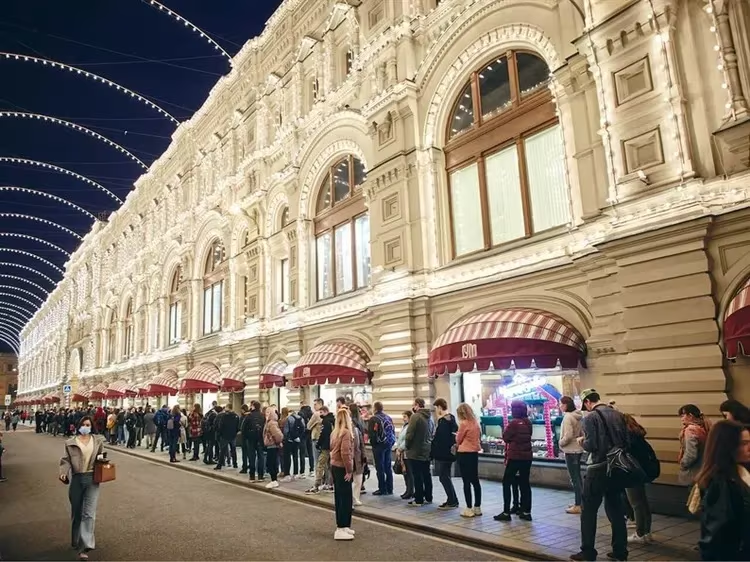
Located within walking distance from the station. metro station “Okhotny Ryad” and “Revolution Square”. The monument of architecture, built in the old Russian style, occupies an entire quarter of Kitay-gorod and successfully fits into the ensemble of Red Square. The facades of the building are made of Tarusa marble, Finnish granite and sandstone.
The unique shopping complex consists of 16 buildings with paved galleries. The feeling of light and space is created by three spacious areas with arched ceilings and a glass ceiling.
There are more than a thousand stores selling brands of famous world brands in GUM. The shopping center is traditionally positioned as a store selling luxury goods.
In addition to boutiques, the building houses a cinema hall, cafes and restaurants, some of which are stylized in the traditions of the Soviet era, and numerous souvenir shops. The unique building attracts not only shoppers, but also connoisseurs of Russian antiquity. Modern evening illumination emphasizes the expressive silhouette of the building.
CUM
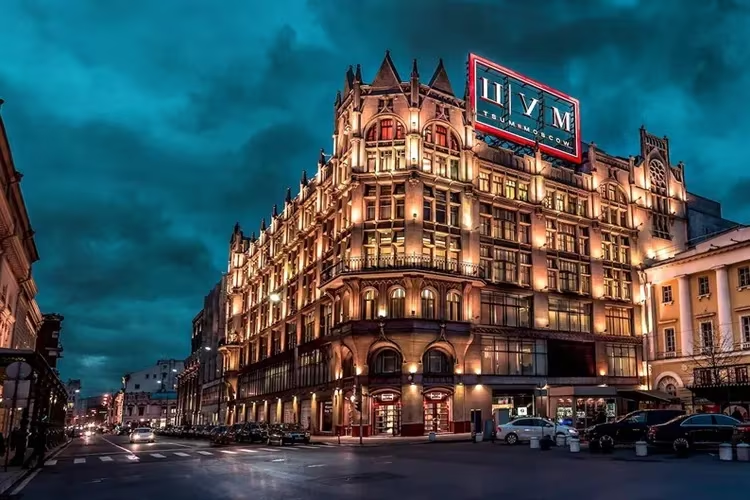
The Central Department Store is located at the intersection of St. Petrovka and Teatralnaya. An impressive seven-story building with a total area of more than 70,000 sq.m. is one of the largest shopping centers in Europe. The complex is made in the Neo-Gothic style with Art Nouveau elements. For the first time in the capital, reinforced concrete structures were used during its construction.
The shopping center offers collections of more than 2,000 popular brands: elite cosmetics and perfumes, furs, expensive watches, modern models of clothes and shoes, and household goods. The building houses a 24-hour grocery store, three cafes, shoe repair, dry cleaning, and underground parking in the basement.
The shopping center offers services for individual tailoring, shopping under the guidance of an experienced stylist. The store hosts annual advertising campaigns – shows of clothing collections from famous fashion designers. In the evenings, the building is decorated with original lighting.
Petrovsky Travel Palace
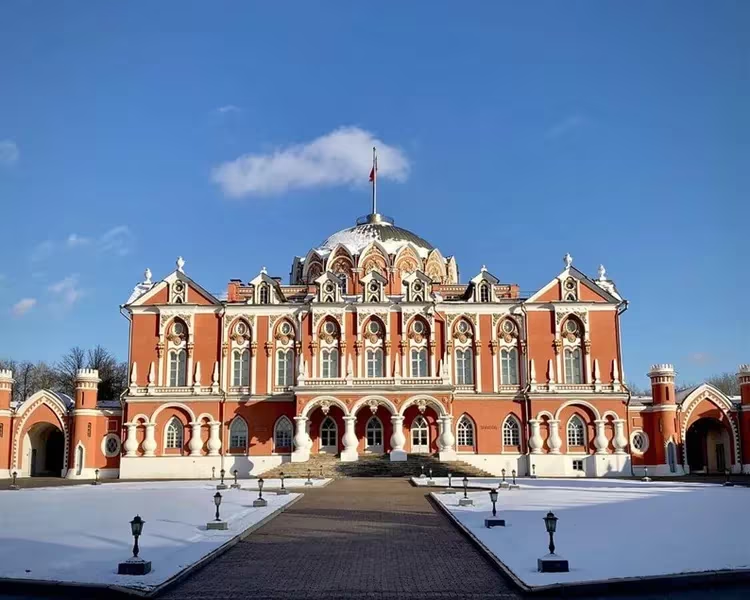
Among the many Moscow palaces, Petrovsky Way is distinguished by its special color, Russian neo-Gothic beauty, captivating everyone with intricate architecture, baroque decorations, a catchy combination of terracotta walls and snow-white design elements.
The unique palace, designed by M. Kazakov, was built at the entrance to Moscow (1795) by order of Empress Catherine as a guest house, where royalty could take a break from traveling from St. Petersburg to Moscow.
After a large-scale reconstruction (2009), all palace buildings shone with their original beauty, delighting guests of the capital and Muscovites. Now the palace is a first-class hotel in the center of the metropolis, part of the Metropol hotel complex.
Excellent service, comfortable rooms, well-equipped halls for holding various social, political and cultural events make the Petrovsky Palace the most popular hotel complex in the capital.
Address: Leningradsky prospekt, 40.
Tretyakov Gallery
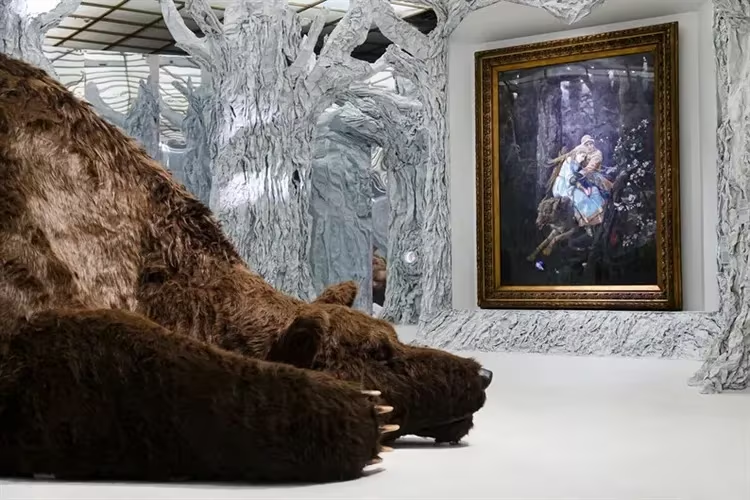
The main art museum of the capital is the brainchild of a Russian patriot, philanthropist and connoisseur of national fine arts, merchant P. I. Tretyakov. Within the walls of the gallery there are picturesque masterpieces of Russian artists and sculptors, which made up the golden fund of the fine arts of Russia.
In total, there are almost 100 thousand works of art, which crowds of people standing in line come to see every day – the magic of the unique exhibits of the gallery is so strong. Now the gallery occupies 3 buildings, in which there are permanent exhibitions, temporary ones are held, and children's creative studios are open.
Every tourist strives by all means to visit the true Temple of Russian Art in order to see the paintings of Serov, Vasnetsov, Bryullov, Repin and many other geniuses of the brush and cutter.
Cathedral of Christ the Savior
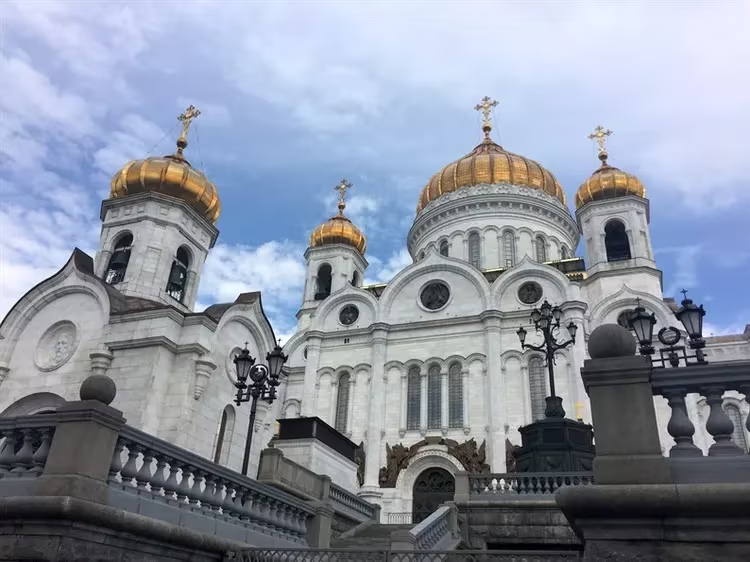
The main Cathedral of Christ the Savior, perhaps, has the most dramatic history of its existence. In fact, this is a monument to Russian soldiers who died in battles with Napoleon (as it was conceived during its construction).
The author A. Vitberg (later dismissed) conceived to build a majestic colossus, which in beauty and scale was to surpass the Roman Cathedral of Peter. In 1881, the Cathedral of Christ the Savior (architect Ton) was opened and consecrated. The fate of the temple is the historical fate of Russia in the late 19th and first half of the 20th centuries, when the foundations of the system collapsed, ideals changed, centuries-old traditions were rejected.
A beautiful shrine, national pride – the temple was barbarously blown up to give way to a new cult – the Palace of Soviets, which was not destined to appear. According to the surviving drawings and sketches, the historical image was resurrected and rebuilt.
The snow-white temple shining with gilded domes, like a saving ship, again receives parishioners who come to honor the blessed memory of Russian soldiers.
Museum-Reserve “Tsaritsyno”
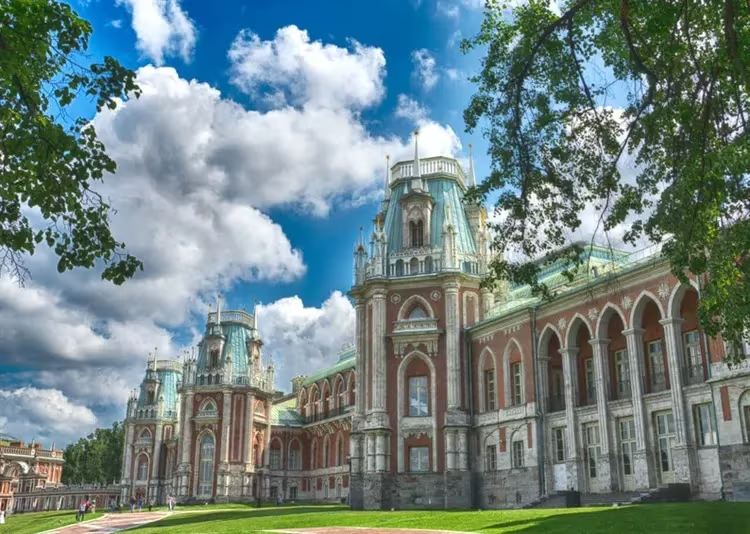
The museum and park complex, located on the site of the former village of Chernaya Gryaz, is now a museum-reserve, in which everything is recreated as it was in the years of Catherine. It was on her initiative that the Tsaritsyno estate was created with 3 palaces, the Bread House, the Grape Gates and the Temple of the Life-Giving Spring icon.
After the reconstruction in 2007, the royal estate acquired a magnificent view, its palaces, lawns and flower beds again shone with their former lush beauty. The original appearance was embellished with a modern light and music fountain.
The Grand Palace, built in the classical style with pseudo-Gothic elements by the architect Kazakov, houses permanent exhibitions, temporary exhibitions, concerts, conferences and seminars.
Jazz and classical music concerts are held in the Small Palace. The Middle Palace, otherwise called the Opera House, resembles in architecture an elegant jewelry box, carved by a virtuoso master.
Now it justifies its name: it hosts opera music concerts. Today Tsaritsyno is a very popular tourist attraction where you can live in a cozy comfortable hotel, admire architectural masterpieces, enjoy cultural spectacles – have a great time.
Business Center Moscow-City
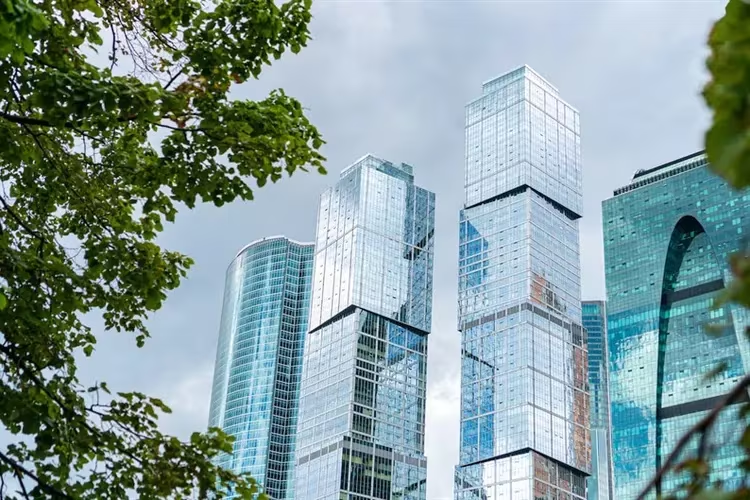
The modern business center consists of 23 high-rise buildings (some of them are under construction). These are not only unique skyscrapers made of glass and concrete, but architectural works created in the spirit of the present. The total area of the high-rise center is 4.5 million sq.m.
Under buildings allotted 60 hectares. The approved skyscraper projects were able to harmoniously combine diverse purposes. Behind the majestic walls, business offices, halls for mass conferences, concerts, high-level residential apartments, restaurants, fitness centers, shopping and entertainment centers function equally successfully.
Sophisticated infrastructure is thought out to the last detail, including underground parking, convenient pedestrian connections, access to any building. Of the unusual skyscrapers, the Mercury City Tower (338.8 m) is recognized as the tallest architectural structure in Europe.
The whole complex received the status of the highest skyscraper among the skyscrapers of European countries. The creator managed to build a unique business center. The business center is located on Presnenskaya embankment. The nearest metro stop is Vystavochnaya station.
Observation deck “Panorama 360”
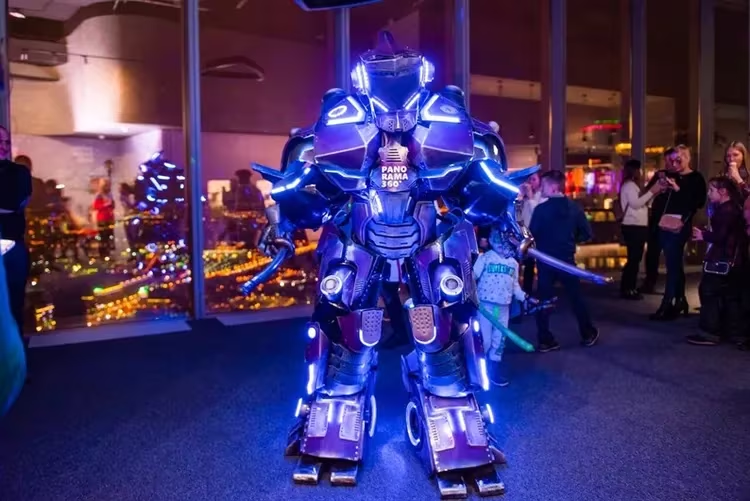
Incredible sensations of bird's eye view await those who visit the observation deck “Panorama 360”. It is located on the 89th floor of the Moscow City skyscraper and is recognized as the highest viewing platform in Europe today. 47 seconds of ascent on a high-speed elevator – and you find yourself in the space of a circular gallery.
Panoramic windows 6 meters high offer stunning views of the capital. The grandiose picture spreading below is amazing. The beauty of urban landscapes makes you freeze with admiration. There is a feeling of space flight, involuntarily imbued with the scale of the grandeur and grandeur of the capital. There is a feeling of gratitude to everyone who took part in the construction of such an amazing facility.
If you want to take a better look at this or that structure, you can rent binoculars. The time spent in Panorama 360 is not limited: there is something to do here. If you are tired of standing, there is an opportunity to sit down and relax on the floor covered with soft carpet. In addition to viewing the surrounding views, other entertainment awaits you.
It is not easy for you to enjoy ice cream from the heart, but you will also learn the secrets of its preparation in the ice cream mini-museum. Here you will see antique accessories for this dessert: spoons, bowls, various ice cream-themed souvenirs. You can taste chocolate products in the chocolate factory-confectionery.
The local restaurant prepares delicious dishes, romantic meetings are held here. Participation in a 3D quest will bring a lot of pleasure. No one has any regrets about the money spent – everything pays off with fantastic impressions from visiting an amazing place.
State Historical Museum
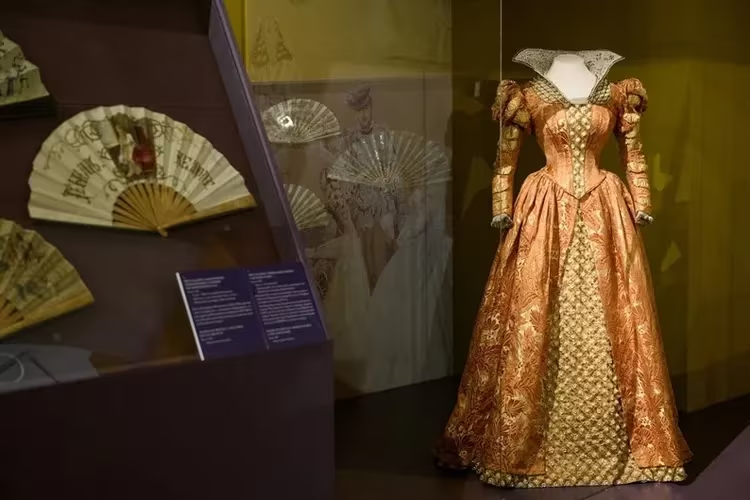
The country's largest collection of works of art, antiquities and unique documents has more than 5 million copies. The exposition presented in the museum contains less than 1% of the collection.
The building, located on Red Square, was built in the traditions of ancient Russian architecture, made of shaped terracotta bricks, in harmony with the buildings of the Kremlin.
The facade is decorated with turrets and kokoshniks, the windows with unique bindings are made in the style of Russian mica windows. The ceremonial vestibule is made of Arrara marble; the genealogical tree of the rulers of Russia is located on the vault. In more than 40 halls of the museum, archaeological finds of various eras are grouped. The interiors of the premises are decorated in the style of the displayed period.
The lettering halls display gold items from different times, from the early Middle Ages to the end of the 20th century. The richest storehouse of antiquities includes several branches with thematic expositions: the Chambers of the Romanovs, the Museum of the Decembrists, the Museum of the Patriotic War of 1812. The complex is visited annually by more than a million tourists. This is a scientific and methodological center where research of historical artifacts is carried out using modern technologies.
Kremlin in Izmailovo
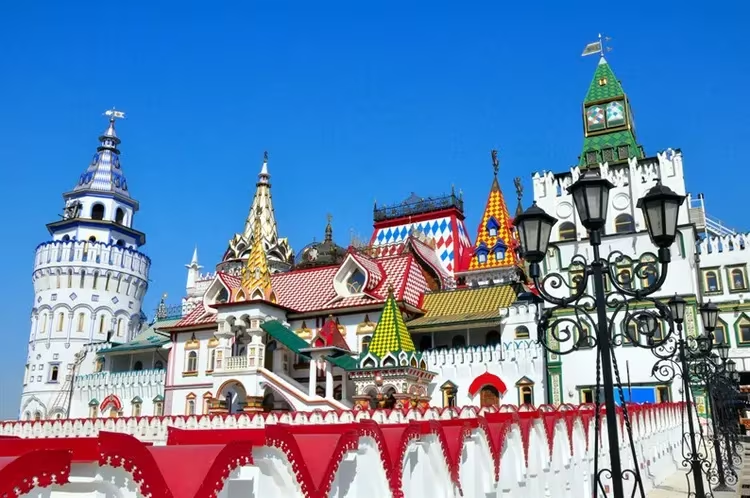
In 2007, on a wasteland (not far from Vernissage and the buildings of the royal residence of Alexei Mikhailovich), an original architectural ensemble appeared, built according to the type of buildings of pre-Petrine Moscow. This is a unique entertainment center for people of all ages.
Concerts, exhibitions, themed holidays for children, festivals, excursions (paid) are held on its territory, introducing participants to the crafts, culture, and traditions of the Russian people. On the squares of the Izmailovsky Kremlin there are 9 interesting museums (for example, museums of marshmallow, chocolate, bread, vodka).
The Kremlin, reminiscent of a fairy-tale fortress, rises above a high hill. Snow-white stone towers are decorated with a multi-colored pattern of tiles, made according to the drawings and technologies of ancient Russia. It is not included in the list of historical monuments of the city, but allows you to enjoy the atmosphere of Tsarist Russia that existed several centuries ago.
Museum-estate “Kuskovo”
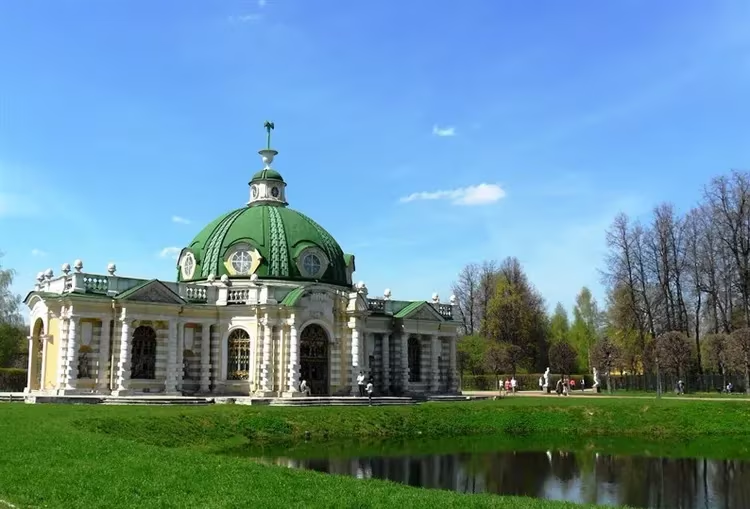
The current state of the famous manor is a popular offer for exploring the monuments of architecture, features of the only French regular park in the city. The system of canals, ponds, cozy places such as the Dutch house, the Chinese pavilion, the tulip garden, the magnificent Grotto, marble sculptures, obelisks allows you to feel the atmosphere of the 18th century.
When ceremonial events were held in the Sheremetyevsky Palace, built according to the requirements of the life of the noble life of Russia. Many elements of decoration, everyday life, works of Russian painting have been preserved in the palace.
Now they have become the property of the Manor Museum. In the exotic building of the Grotto there are pink and green halls, finished with expensive, rare marble, glass, tuff, numerous mirrors, and original stucco. There are no analogues to luxurious decoration in Russia. The oldest building of the manor, the church, built in the Anninsky Baroque style, has been preserved.
Museum of Fine Arts named after A.S. Pushkin
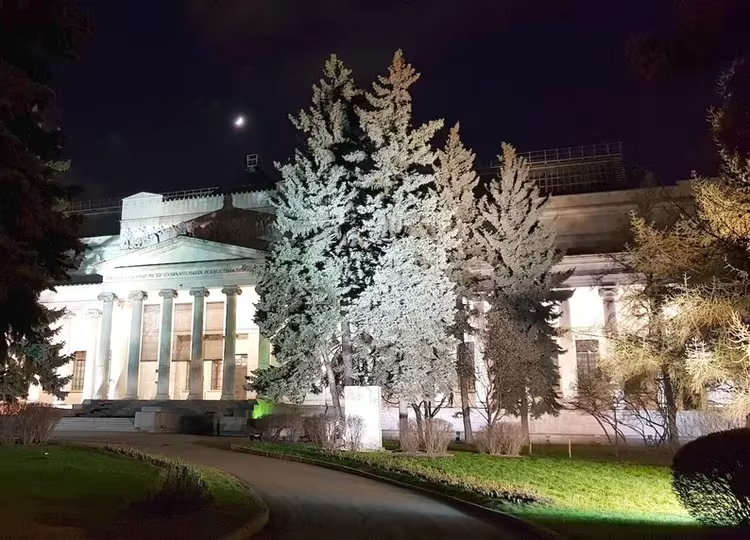
Founded in 1912 by Professor I. Tsvetaev. The building is made in the neoclassical style and looks like an ancient temple with a colonnade – an enlarged copy of the portico of the Erechtheion temple in Athens. The facade is lined with Ural marble. More than 700 thousand objects of art created from the time of the Ancient World to the present day are concentrated here.
The complex includes the Main Building, the European and Asian Art Gallery, and the Department of Private Collections. Branches of the museum – Memorial apartment of S.T. Richter, the Lopukhins' estate, Museion Central Exhibition Center. On the ground floor of the Main Building, collections of Ancient Egypt and Ancient Greece, Byzantine mosaics and icons, creations of the geniuses of the Renaissance, paintings by painters of the 15th-18th centuries are exhibited. The central exposition of the second floor is the Olympic Hall, where life-size copies of outstanding sculptures of antiquity are presented.
Separate rooms are devoted to works of art of Ancient Rome, copies of works by Michelangelo, Rembrandt, Flemish painters – Rubens, Van Dyck. More than 1.3 million tourists visit the exhibition every year. The unique collection allows you to get acquainted with the greatest creations of world culture.
Nikulin Circus on Tsvetnoy Boulevard
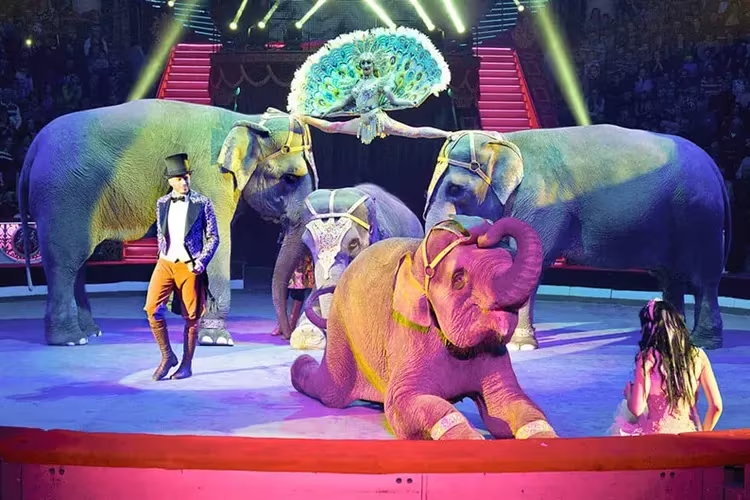
This is a real fairy tale created by outstanding people (artists, jugglers, tightrope walkers, clowns, gymnasts) who came from the remote corners of vast Russia. It was the creative life of the famous Yuri Nikulin (he headed the circus since 1983).
The Moscow Circus is considered the grandiose building of modern Moscow. In honor of the 75th (1977) year anniversary of Nikulin, the circus was named after him. Now the director of the circus is Maxim Nikulin.
The building accommodates about 20,000 visitors, is equipped with comfortable dressing rooms, a spacious lobby, and rooms for keeping animals. Its history began in October 1660 and is associated with the names of the merchant Danilov, Albert Salamonsky.
It started a solemn procession of unique performances for children, New Year trees, festive round dances.
Grand Kremlin Palace
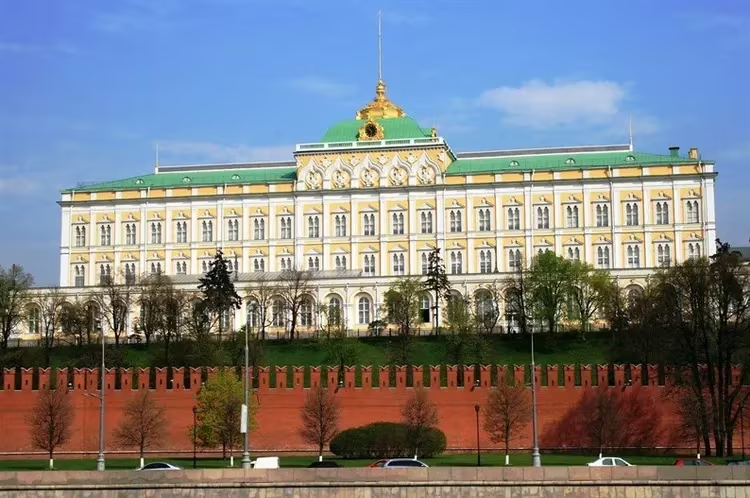
The neoclassical building was built in the first half of the 19th century. for the imperial family. The architectural ensemble includes the Terem Palace, Orthodox churches, the Palace of Facets, and apartments of the Grand Dukes. The complex was conceived as a monument to the valor of Russian soldiers; military symbols are clearly visible in the interior design. When decorating the premises, precious woods, marble, tapestries and draperies with gold and silver threads were used.
The largest front hall is Georgievsky, the walls and ceiling are covered with snow-white ornaments with gilding. The arch rests on 18 pylons, 18 symbols of the largest victories of the Russian army are installed on the columns. The Alexander Hall is made in red, the color of Alexander Nevsky. The throne place has been restored in the St. Andrew's Blue Hall. The main staircase leading to the halls is made of Revel stone with marble columns.
Currently, the Grand Kremlin Palace is the current residence of the President of Russia. The St. George Hall hosts official events, meetings of foreign delegations, awards and prizes ceremonies. Most of the premises of the architectural complex are available for group visits by tourists with excursions.
Address: Kremlin, 1p.
Zoo

The oldest institution in the country, which contains animals, was organized in 1864 on the initiative of the Imperial Russian Society. The first years the zoo was maintained by the royal family. Having survived hard times, the zoo survived thanks to the dedication of Russian scientists and the subsequent decree in 1919 on the nationalization of the Council of People's Commissars.
Currently, the open-air animal museum contains about 8,000 animals, representing 1,000 species of zoological objects. The entire palette of wild fauna is presented in various expositions of the Moscow Zoo. Inhabitants of hot deserts and tropical forests, the Arctic North and the American savannas, the Siberian taiga and polar latitudes coexist peacefully next to each other. The expositions of the zoo are located according to the regions of habitat, species and family.
Elephants, tigers, rhinos, lions, giraffes, polar and brown bears, giraffes inhabit the space of the zoo. The class of birds is also diversely represented here. Pink flamingos, pelicans, penguins, parrots, cranes, storks, swans, ostriches – from small birds to large birds delight visitors with their plumage and voices.
The institution not only takes care of the conditions for keeping pets, but also conducts active educational work through children's clubs, lectures and seminars for students and adults. The Moscow Zoo is a member of the World, European and Eurasian Association of Zoos and Aquariums. During the year, the institution is visited by approximately 3.5 million guests.
Moscow Art Theater A.P. Chekhov
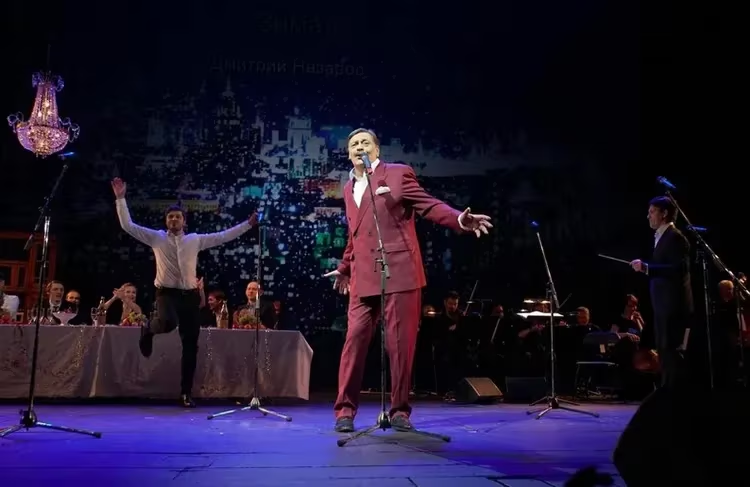
Art Theatre, founded in 1898 on the initiative of V.I. Nemirovich-Danchenko and K.S. Stanislavsky, has always been distinguished by innovative approaches to performing arts. The dramaturgy of A.P. Chekhov, on the stage with great success were: “The Seagull”, “The Cherry Orchard”, “Uncle Vanya”.
In the theater, for the first time, the significance of the director was determined as the author of the performance, interpreting the plot according to his creative vision. During the Patriotic War, in support of the defenders of the Motherland, performances were played on the stage: “Front”, “Officer of the Navy”, “Russian People”.
In the 60s of the twentieth century, the theater was in crisis, O. Efremov, who became the artistic director in those years, managed to find a new creative potential. In subsequent years, many successful performances were staged. In 1987, part of the troupe separated, the word “Academic” was removed from the abbreviation of the name. Since 2000, the Moscow Art Theater. A.P. Chekhov was led by O. Tabakov.
Currently, the artistic director of the theater is S. Zhenovach. The stage troupe includes more than a hundred well-known artists: K. Khabensky, D. Moroz, M. Porechenkov, I. Vernik, A. Kravchenko and many others. Recent theatrical premieres: “Contrabass”, “Husbands and Wives”, “Perfect Marriage”.
Apothecary garden
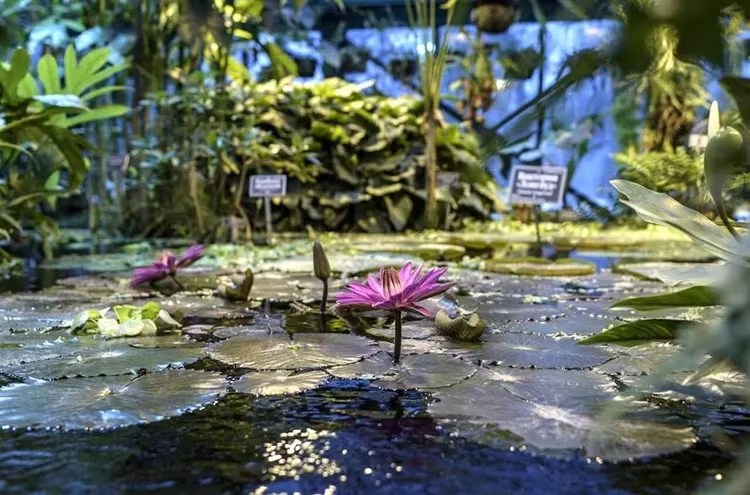
A green oasis in the central part of the city – the legacy of Peter I has already existed for almost 3 centuries. Among the concrete, stone buildings and paving slabs, an amazing picture of colors, richness of flora, greenhouses and exhibitions opens up. Admiring various plantings, you can get acquainted with the history of their origin, biological features and habitat.
Admire the design of the square, a wide range of plants, from the most exotic to the prosaic. The abundance of tulips of different shades and sizes is striking. Moreover, they grow in many places in the park: on lawns, flower beds, under trees, or flaunt right in rotten stumps. The central pond is surrounded by fluffy “clouds” of skumpii with double flowers of mouse hyacinth. It is impossible not to admire the Japanese crimson, whose leaves emit the smell of gingerbread in autumn.
Every year there is a replenishment of the floristic collection of the site. New varieties of trees, shrubs, herbaceous and flower crops appear. The old greenhouses that have been here since pre-revolutionary times are being improved. Above one of them, the old roof was removed and a glass canopy was placed so as not to transplant huge palm trees and pineapple bushes.
Next to the other, new plants were first planted, and then a shelter was erected, expanding the greenhouse area. Today, cork trees, araucaria, rare species of palm trees grow in greenhouses, and orchids bloom. Among the rarities of the dinosaur era are gray walnut and ginkgo biloba. Orchid Festivals, held every winter, allow you to enjoy the beauty of royal flowers. There are many medicinal plants in the Apothecary Garden, with which it began.
Moscow Cathedral Mosque
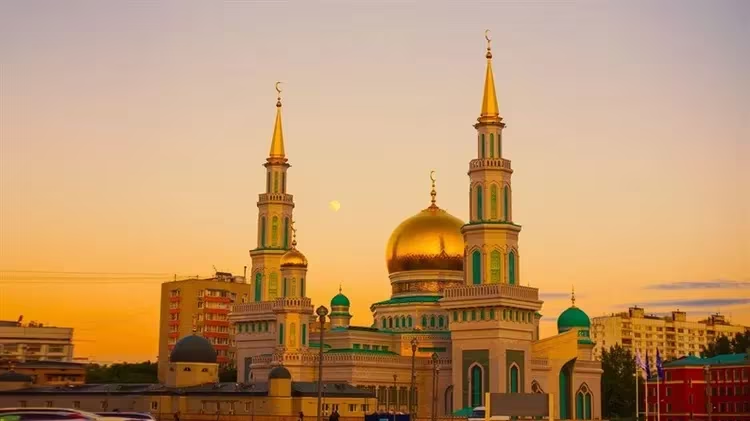
A sample of Tatar religious architecture, opened in 2015 after reconstruction, was erected on the site of an old mosque built at the beginning of the 20th century and not closed during the Soviet years. The six-storey building with a total area of 18,900 sq.m, made in the Byzantine style, is located near the station. Prospekt Mira metro station, next to the Olimpiyskiy sports complex.
Outside, the room, capable of accommodating 10,000 worshipers at the same time, is finished with white Canadian marble. The main dome is covered with gold leaf, the two main slender minarets reach a height of 78 m, smaller domes and turrets are painted turquoise. The building is equipped with 7 elevators for people with disabilities, there are screens for video broadcasting.
The prayer hall is located on the third floor. The women's room has a separate entrance. Inside the mosque, the walls, dome and ceilings are painted with quotations from the Koran in combination with Tatar ornaments. Turkey donated carved doors and a luxurious chandelier to the mosques. The Museum of Islam is located on the second floor of the building.
Museum-Estate Lublino
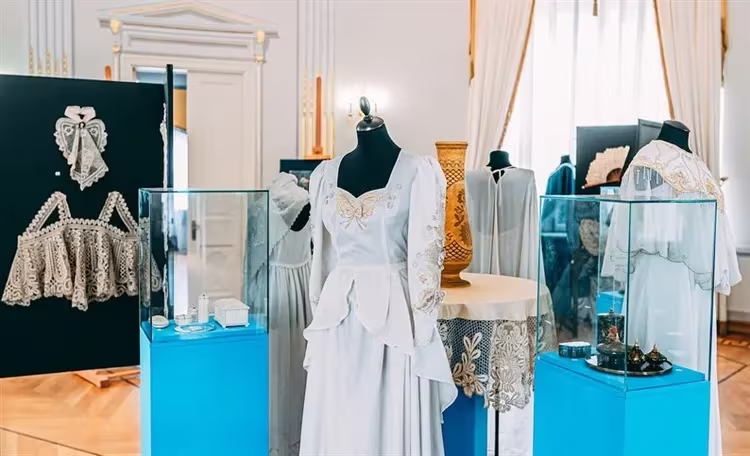
The historical and architectural monument of the 19th century, reflecting the culture, life and traditions of the past, is very popular with residents and guests of the capital. The name of the museum-estate symbolizes the loving attitude of the former owners to their place of residence. It is known that in the 16th century. the estate of Grigory Godunov was located here, changing owners until 1800, until the landowner Durasov became its owner.
He built a magnificent palace with a colonnade, in which solemn receptions and festivities were held, music sounded and theatrical performances were staged. Now the estate and the palace are not just a museum, but a cultural and entertainment center. Here you can not only get acquainted with the lifestyle and life of Russian landowners and nobles, but also become a participant in an interesting event yourself.
A bright event in the Lyublino estate is the celebration of Maslenitsa, in which, in addition to museum staff and actors, visitors take part. Much attention is paid to the younger generation. Children get acquainted with the distinctive features of the architecture of the palace, study the artistic wall paintings on antique subjects.
Children are especially fascinated by theatrical mini-performances, where they transform into different characters. They are given the opportunity to try themselves as artists or sculptors, attending master classes in painting and sculpture. It has become a tradition to hold the solemn marriage of the newlyweds in the main hall of the palace.
Museum “Lights of Moscow”
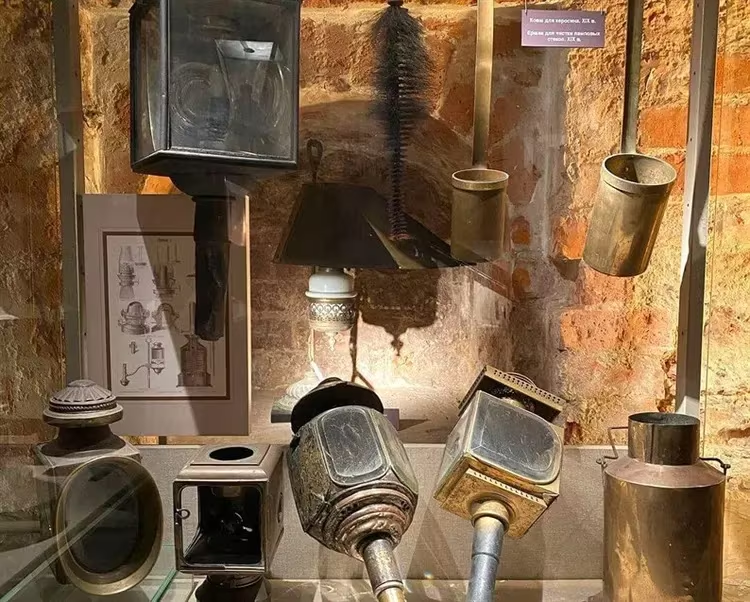
The exposition is located in the building of an architectural monument of the 17th century. – in the ancient white-stone chambers of the Protopopovs, the former residence of the princes Miloslavsky. The collected collection is dedicated to the development of lighting in the capital, supplemented by household items from different eras, paintings, photographs of Muscovites and the night capital.
In four halls, you can see how progress has changed the lighting of the city: from a torch, oil and gas lamps, to modern electronic lamps. All kinds of lighting devices are presented here, including carriage, bicycle and car lights.
In one of the halls you can see the layout of a modern control panel for regulating the lighting of the capital. A whole hall is dedicated to a unique collection of electronic watches. The building has a lighting room-laboratory.
The museum has repeatedly taken leading places in the nominations of one of the most visited places in the capital. Interesting excursions for children and adults are held here, visitors are allowed to touch the exhibits with their hands. Excursions in the form of an investigation-quest are very popular with schoolchildren.
Assumption Cathedral
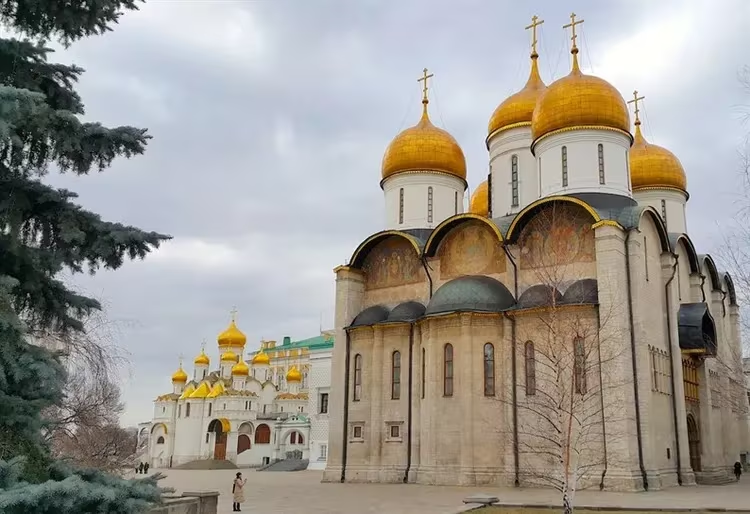
One of the most majestic temples of the Kremlin arose in 1479, during the reign of Prince Ivan III. The famous Italian architect Fioravanti became the author of the project and the construction manager. The temple, which received the status of a cathedral, was consecrated in honor of the day of the Dormition of the Mother of God, which is especially revered by the Russians.
For 600 years, the monumental building with golden domes has been the central object of state and religious functions. Here the sacraments of crowning the kingdom, coronation of emperors were performed. Under its vaults, the clergy were elevated to a higher rank, prayers were held on the eve of military campaigns and in honor of the victories of the Russian army.
The remains of the patriarchs of the church (16-17 centuries) are buried within the walls of the Assumption Cathedral, and the ashes of the wonderworkers of Moscow are kept in shrines made of precious metals. The invaluable artistic heritage of the temple is the wall paintings of outstanding painters, masters of icon painting, brought to Moscow from all over Russia.
When the Assumption Cathedral became a museum in Soviet times, the restorers carefully opened the medieval paintings. Thanks to their actions, today parishioners and tourists have the opportunity to admire the unique works of temple art. Divine services are regularly held in the cathedral.
Nikolskaya street
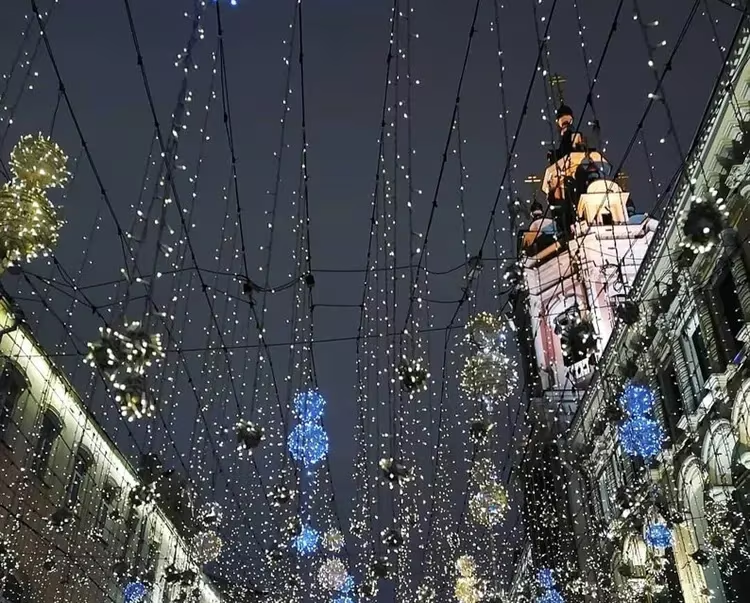
It starts from the walls of the Kremlin and runs to the Lubyanka. It has a rich history, the first mention of it in the annals dates back to 1547. The courts of the boyar nobility have long been located here: the Khovansky, Sheremetev, Vorotynsky. Many temples and monasteries were built – the most significant Cathedral of the Kazan Icon of the Mother of God.
At the end of the XVII century. stone buildings begin to be erected on the street, shopping arcades are being built, which have become a landmark of the city. By the beginning of the 20th century, it was the business center of the capital with offices of large manufacturers, the Moscow Mint, and the unique Slavyansky Bazar restaurant. The events of 1917 caused great damage to architectural monuments located on the street: many churches were demolished, the Resurrection Gates and part of the walls of Kitay-Gorod were destroyed.
In 2013, Nikolskaya Street was declared a pedestrian area of the capital. Historical sights, paved pavement, numerous outdoor cafes, many flower beds and benches have made the street one of the favorite places for Muscovites and city guests to relax.
Walking along Nikolskaya Street, you can take a leisurely look at the Nikolo-Greek Monastery and the Kazan Cathedral, the former chambers of the Khovanskys, the Shevaldyshevskoe Metochion, the famous Ferrein pharmacy, the Tretyakov shopping arcade and other interesting architectural objects.
Russian State Library
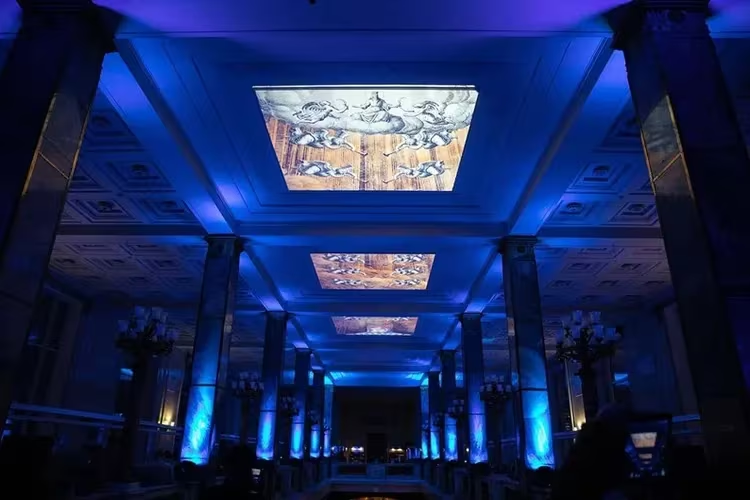
The largest library in Russia has organically blended into the architectural ensemble of the Kremlin, Manezh and Moscow University. The main building consists of 19 tiers with reinforced floors that can withstand the weight of a huge number of printed publications. The interior of the library is impressive: marble columns, high ceilings with stucco and huge chandeliers, massive doors, busts of famous writers around the perimeter of the premises.
The library has a unique collection of domestic and foreign books and documents (46.9 million) in 247 languages of the world. The Pashkov House houses a department of rare manuscripts. The electronic library provides open and limited access resources. 12.6 million Russian and foreign citizens use the services of the book depository annually.
The Russian State Library is a center of methodological and research research; exhibitions, lectures and seminars on various topics are regularly held here. Guided tours of the library's themed rooms for adults and teenagers offer an introduction to the repository of valuable documents of world importance.
Sparrow Hills
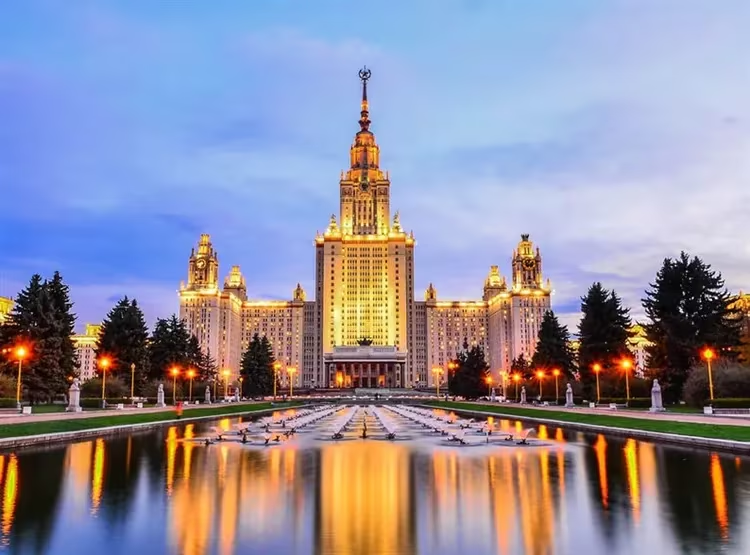
Or Sparrow steeps, where riverbeds, underground springs, springs remind of the ancient sea and the settlements of people who lived in a place that is 150,000,000 years old. The first mirror factory in Russia, where Chaliapin visited.
Unique minerals (for example, sand, which served as blotting paper), ancient churches, estates, castles, beautiful nature surrounded the ancient village of Vorobyovo (the place of residence of the old boyar family of Russia).
Here the first aqueduct of the city was born. From very high hills, strangers and their own soldiers admired the panorama of the city (Napoleon saw Moscow for the first time here).
Now there is still an amazing observation deck here. Architectural buildings covered with legends, which have become familiar, seemed to have been standing here forever. Among them is the building of the main university, the Russian Academy of Sciences.
Interesting excursions are held in the existing nature reserve Vorobyovy Gory. It is considered one of the most beautiful landscape sights of the city.
Dream Island Park
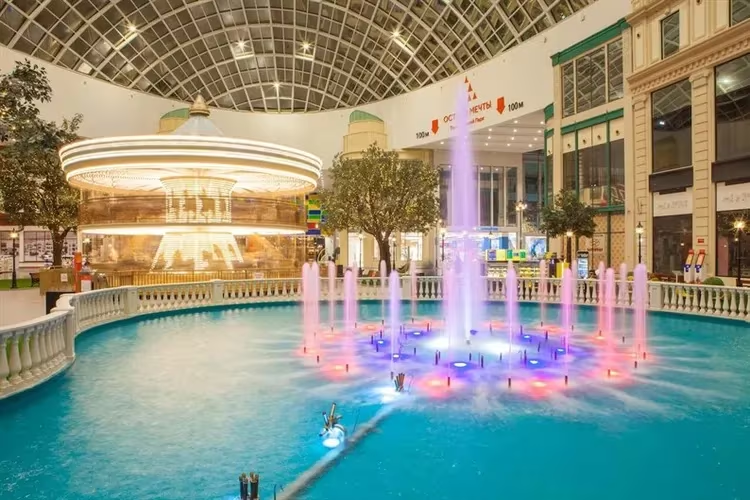
It is located in the Nagatinskaya floodplain on the site of the former 60th Anniversary of October park. The entire covered space of approximately 100 hectares is divided into thematic areas that receive visitors all year round. “Island of Dreams” impresses with its scope, abundance of attractions, shopping establishments and restaurants. Here everyone can find an exciting activity for themselves, have fun, have an interesting time.
The “City Promenade” will help you to get an idea about the architecture of different countries. In this zone, each street represents some foreign city: Barcelona, London, Rome, etc. The central facade of the complex, stylized as a fairy-tale castle, is attractive, in which magical adventures await everyone. 9 thematic zones have been turned into fantasy worlds inhabited by fairy-tale characters and cartoon characters.
There is a “Smurf Village”, “Mowgli in the Land of Dinosaurs”, “The Snow Queen's Castle”, etc. The huge shopping center has many shops, cafes, restaurants. Through its “streets”, decorated with artificial trees and lawns, everyone passes to an amusement park with all kinds of attractions.
In the atrium, decorated with a fountain and figures of lions, there is a ticket office. Currently, work is underway around the complex to design an open landscape park.
VDNH
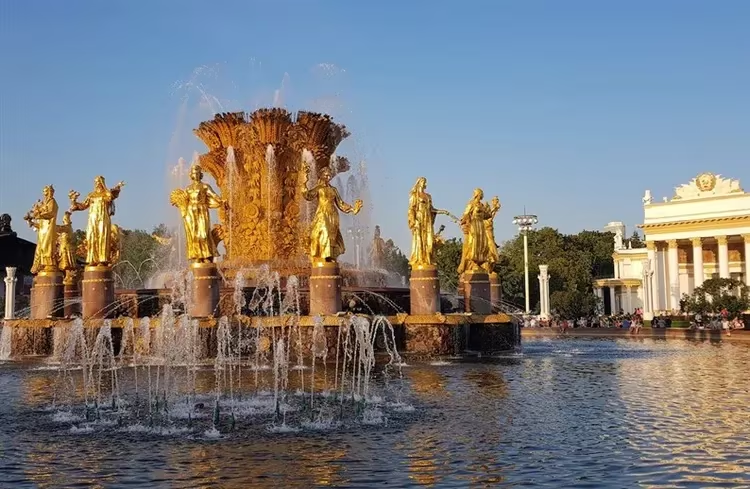
Now it is a large entertainment (with a cognitive bias) architectural complex, located in the north-eastern part. Numerous thematic exhibitions located in interesting pavilions around the territory, conducive to relaxation, festivities, attract tourists.
All 49 buildings are considered architectural monuments of cultural heritage. View pavilions were erected in the period of 1930–1950. Their main task was to demonstrate the achievements of various sectors of the national economy of the republics of the Soviet Union (there are airplanes, satellites, modern computers, a real power plant, you can get acquainted with the achievements of medicine, astronomy, botany, light industry, etc.).
In one pavilion there is the largest aquarium in Russia, in the other you can walk around the house with surprise – a shifter with a roof under your feet. You can imagine yourself as a real cosmonaut, being in an interactive museum located in the layout of the Buran spacecraft.
Address: Prospekt Mira, 121. Admission is free.
Ostankino TV tower
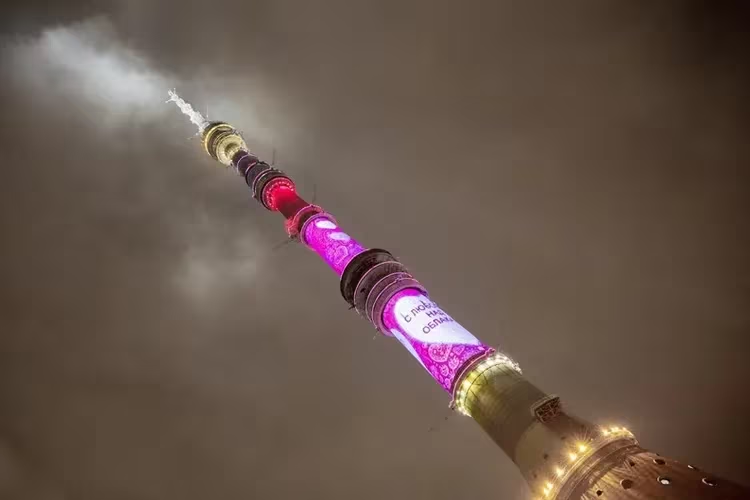
A high-rise building (540 m, 160 m above sea level, weighing 55,000 tons, with a base diameter of 60 m), shrouded in many legends and myths, is known to everyone. It attracts attention, surprise, gives rise to a desire to see what is there at the very top.
If desired, this can be done along with numerous tours of the television and radio broadcasting center. There are daily one-hour tours. Tickets are purchased at the main entrance from Sheremetyevskaya Street. It is easy to get to it by metro (stop “Maryina Roshcha”) or by bus number T13.
When buying a ticket, you must present an identity document. There is an opportunity to sit in the Seventh Heaven restaurant, which opened after a grandiose fire, or admire the view of the city and its environs from high-altitude observation platforms (one is located at an altitude of 327 m near the entrance to the restaurant).
Two sites are closed, one is open. In the premises of the excursion building there is a Concert Hall (752 seats) for concerts, conferences, film screenings, and other events.
Zaryadye Park
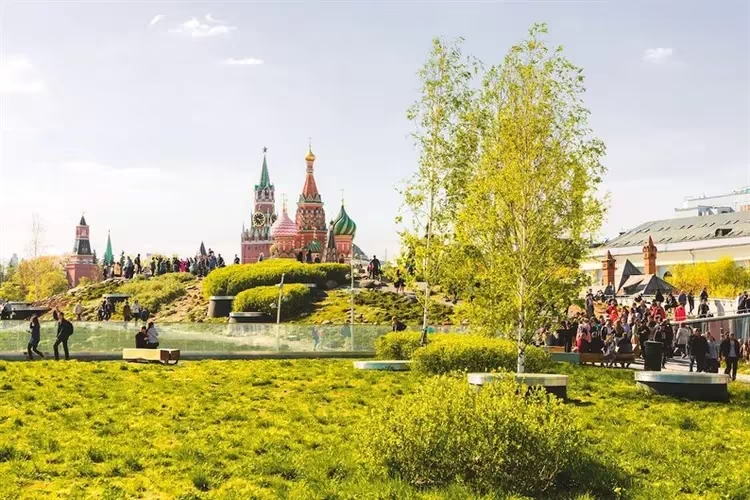
Zaryadye Park is a favorite place for residents to relax, combining the beauty of wildlife and the perfection of modern technologies. They worked on the arrangement of the facility with an area of 10.2 hectares for 2 years, investing 14 billion rubles in it. The costs pay off due to the extraordinary popularity of the park among citizens and tourists. Instead of the bulky building of the Rossiya Hotel, they created the space “Russia in Miniature”, the journey through which is 2 hours.
All natural areas are represented. Forests give way to meadows, steppes, tundra – the geographical latitudes of the vast homeland open before your eyes. At a height of 13 m above the river level, a miracle of engineering thought was built – the Soaring Bridge. It is able to withstand the weight of 240 tons or 4 thousand people at the same time. People walk in the park, organize picnics, visit the Ice Cave.
A huge amphitheater under a glass dome has been created here, from where views of the capital open. The organizers have thought of a year-round operation. In the cold season, covered pavilions are at your service: “Time Machine”, “Reserved Embassy”, Underground Museum. Visitors are surprised by the Florarium glass greenhouse, where flowers, vegetables and strawberries are grown. Luminous fish are bred in the Aquarium – an amazing sight.
Address: st. Varvarka, household 6, building 1
triumphal gate
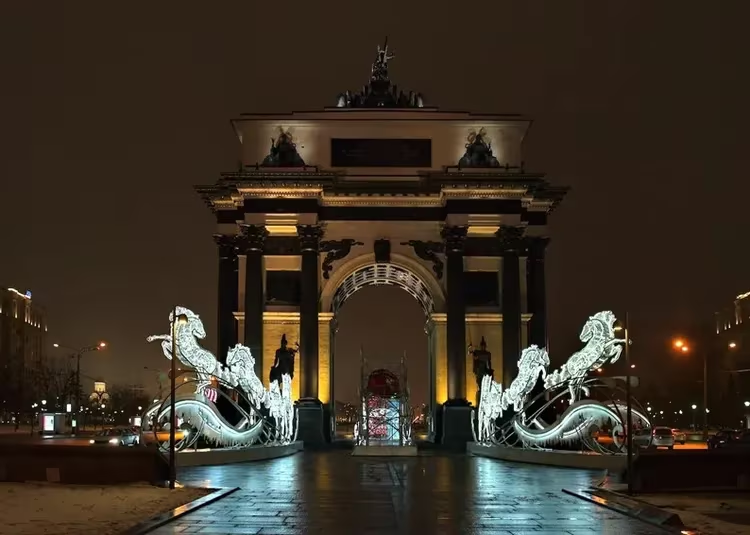
The construction of triumphal gates, arches was carried out in many places on the planet. They always demonstrated the triumph of the people's victory in a particular war and were considered to be monuments of the country's cultural heritage. In the city, such gates first appeared in 1814 in honor of the victory over the French invaders. The original wooden building near Tverskaya Zastava stood until 1826.
In 1834, a stone building appeared instead, which was dismantled two years later and transferred to the Museum of Architecture. Based on the few remaining elements of the arch, a modern building on Kutuzovsky Prospekt was designed and installed.
A single-span arch with two arch-type supports, 12 columns on the front facade looks at the entrance to the city. At the top there is a sculptural composition depicting the winged goddess of Victory on a chariot with six horses.
The perimeter of the arch is decorated with coats of arms, medallions, statues of goddesses, wreaths and scepters in their hands. The main sculptures of the gate are considered to be “The Expulsion of the French” and “Liberated Moscow”. The opening of the gate (arch) took place in 1968.
Address: Kutuzovsky prospect
Main building of Moscow State University
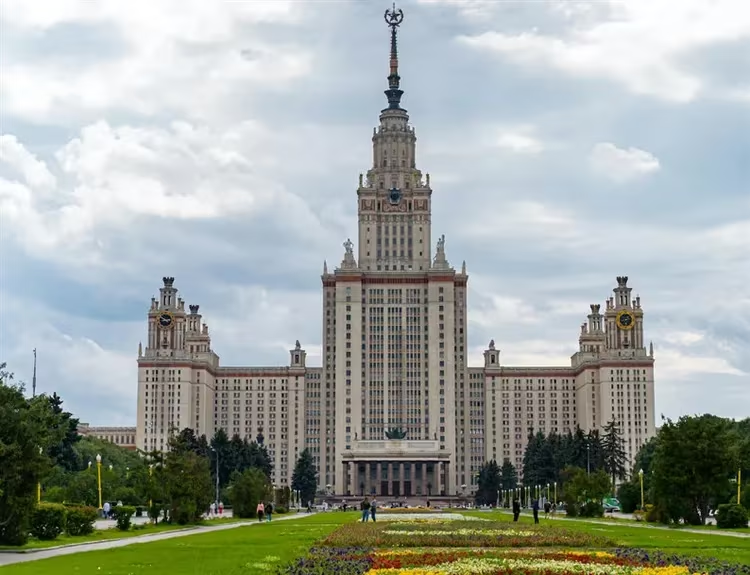
An architectural monument of the Stalinist Empire style, the famous skyscraper on the Lenin Hills is known to the whole world as one of the symbols of the city. The height of the main building of Moscow State University, built in 1949-53, is 240 m with a spire. Until 2003, it was the tallest architectural structure in the capital. The height record was broken by the Triumph Palace housing complex. But this did not detract from the merits of the majestic skyscraper.
On the facades of the side towers there is a unique clock with a dial, the diameter of which is 9 m, and the length of the minute hand is 410 cm. The spire with a 5-pointed star, mounted on a round tower, is an artistic masterpiece. Looking at the monumental building in the Stalinist Empire style, you can imagine what forces were thrown into its construction. In addition to workers and prisoners, students and graduate students, military personnel took part in the construction.
Moscow State University was solemnly opened after Stalin's death, on September 1, 1953. The famous skyscraper, being the main project of the era, is surrounded by a host of myths and legends. There is an opinion that during the construction of the main building of Moscow State University, jasper columns from the Cathedral of Christ the Savior were used. There is a myth about the statue of Stalin, which they wanted to install instead of the spire and buried in the cellars of the building. But legends are easily refuted by real facts. The prestigious university continues to produce various specialists from its audiences.
Address: Leninskie Gory, 1.
MUZEON art park
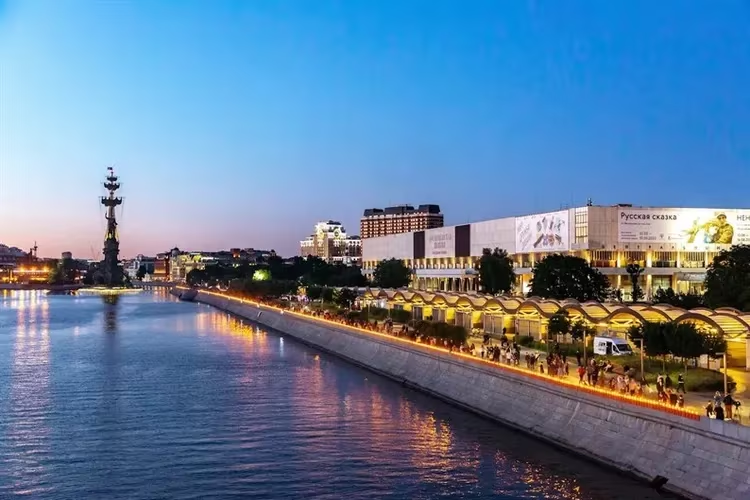
The main purpose of organizing the Open Air Museum was the need to preserve the monuments of the Soviet era. An unfair struggle against them is being waged even now, but the memory and history of the people cannot be destroyed.
An excellent confirmation of this is the collection of monuments that has been formed since 1992 and located in thematic zones corresponding to a specific historical time. Now over 1000 sculptures are installed here. Among them are monuments to Stalin, Lenin, Dzerzhinsky, Gorky, brought from different parts of the city. Many portraits of Heroes of Socialist Labor.
In the MUZEON you can see the famous sculptural compositions “We Demand Peace” by Vera Mukhina, “Stand to the Death” by Vuchetich, “Tank Landing” by Dronov and other works by contemporary artists (“Grandfather Mazai and the Hares”, “Don Quixote”, “Shoes”)
The expositions are constantly supplemented by modern sculptural creations. Often there are symposia, excursions that introduce priceless artifacts of our history.
Address: st. Krymsky Val, 2/58.
Cathedral of the Immaculate Conception of the Virgin Mary
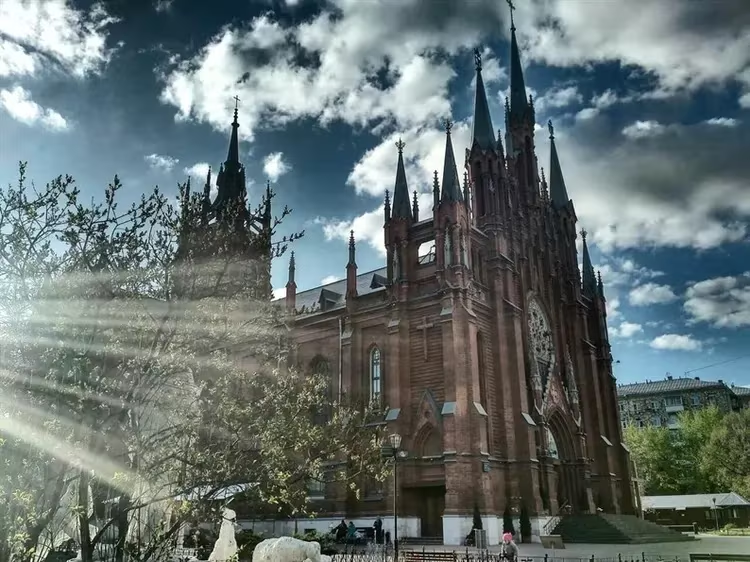
An island of Western European culture and Catholicism – the Cathedral of the Immaculate Conception of the Virgin Mary is located on Malaya Gruzinskaya Street. The building of extraordinary beauty and grace was erected over 10 years (1901-11) away from the historical center. A beautiful monument of neo-Gothic architecture cannot but delight in its appearance.
The author of the project, architect Bogdanovich-Dvorzhetsky, created a masterpiece of cult architecture. In the Soviet years, the church housed a hostel, later a research institute for bridge building. In the era of perestroika (1991), the cathedral again became active, services began to be held in it. After the transfer of the temple of the Virgin Mary to the Catholic parish (1996), it was restored for 3 years, returning the building to its original appearance.
People come here not only for divine services, but also for concerts of organ and symphonic music. There are two organs installed in the church – the wind organ “Kun” and the digital “Rogers”. Famous organists from all over the world play the organs. They perform works by Handel, Bach, Mozart, Vivaldi and others.
Charity concerts of classical, philharmonic and contemporary music are held here. Masses held in the cathedral are heard in different languages: Polish, Russian, Spanish, Korean. A charitable foundation “The Art of Kindness” was organized at the church.
Sokolniki Park”
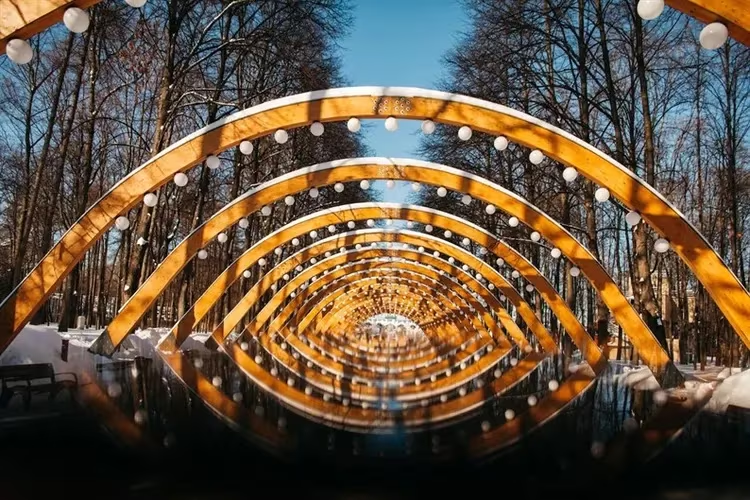
It is already impossible to imagine the city without Sokolniki, a former piece of forest turned into a park. In the Middle Ages, Russian princes were engaged in falconry in this place, which gave the name to the future park. The Moscow elite also preferred to have picnics and holidays here, gradually cultivating the forest area and transforming it into a park.
After the devastation of the civil war, Sokolniki was cleaned, put in order and officially declared a city recreation park in 1931. By the time the 1st International Exhibition of Industrial Goods of the USA (1959) was held in the capital, exhibition pavilions were built in the park. Later, an exhibition center was created here, which still hosts high-level events.
The territory is expanding every year, supplemented by new objects. The park has become a grandiose platform for outdoor activities and entertainment. Many thematic zones, concert halls and clubs, museums, sports facilities make your stay here bright and rich. Incredibly beautiful background of natural nature and man-made beauties of the landscape bring aesthetic pleasure to visitors.
It's wonderful to walk in the Lilac Garden, waltz on the Dance Veranda, learn ballroom dancing in the Rotunda. On the ponds there is a rental of boats, sun loungers. Pleasantly sitting on the benches, admiring the magnificent flowers in the rose garden. Various interest clubs offer their services.
Address: st. Sokolnichesky Val, 1, building 1.