
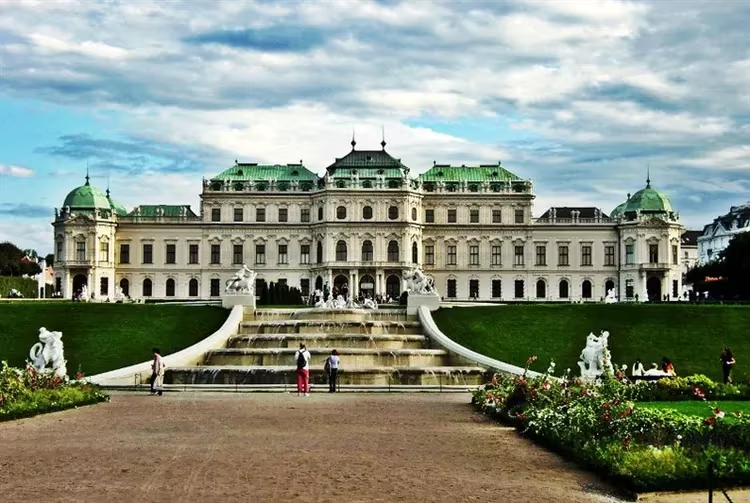
Belvedere Castle in Vienna: photo, description, address, map
Belvedere is a luxurious, snow-white palace ensemble located in Landstrasse, one of the districts of the Austrian capital. It was built by the architect Lucas von Hildebrandt in the distant XVIII century. The palace was built in the spirit of baroque. The hall is loved by travelers and is considered one of the key attractions of Vienna.
The word “belvedere” itself is translated from Italian as “beautiful view” and means a building on a hill. The name fully justifies itself: the palace is located on a hillside, from where, indeed, an amazing view of Vienna and St. Stephen's Church opens.
History of the castle
The palace complex began to be built in 1714 by order of Prince E. Savoy (1663–1736). Eugene was born in the capital of France, was the greatest commander of his time and a great connoisseur of art. In 1683, under the leadership of this man, the Turkish army was defeated and Vienna was liberated from the siege. This was the first great victory that glorified the Prince of Savoy.
Due to the fact that Eugene had no heirs, after his death, Anna Victoria acquired all the property. A few years later, the castle was bought by Empress Maria Theresa. After that, the palace remained in the possession of the Habsburg dynasty for a long time.
Speaking of the palace ensemble, it is quite often called a masterpiece of the Baroque era. The castle consists of 2 buildings – the Lower and Upper Belvedere. The buildings are placed opposite each other and separated by a garden. The construction of the first ended in 1716, the second – in 1722.
It was here in the Upper part that the declaration of independence was signed, which ended the occupation of Austria in 1955. Somewhat earlier, in 1941, the Vienna Agreement on the accession of Yugoslavia to the Berlin International Treaty of 1940 was signed within its walls.
Lower Belvedere
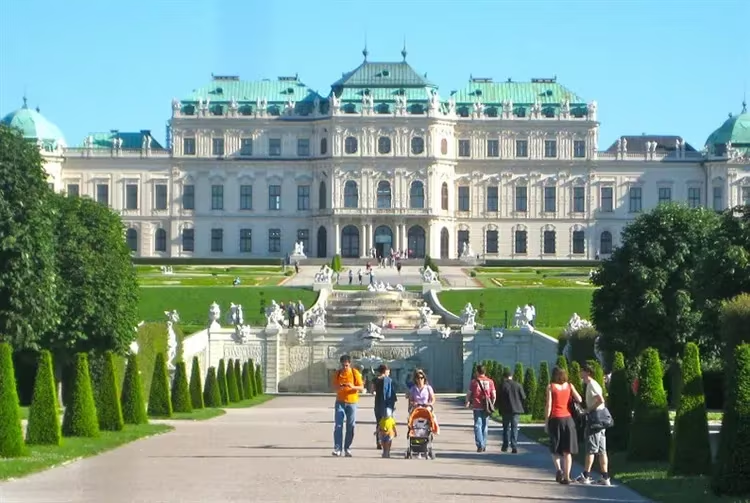
Was a living space. It was in this place that the bedchamber of the prince was located. In addition, the royal family that fled the French Revolution once hid in this building.
In the palace you can see a dazzling marble hall, decorated with frescoes by the Italian painter M. Altomonte. Also in the building are: a marble gallery, gold and grotesque halls, several bedchambers and many more different rooms. It also housed a greenhouse and a former front stable. At one time, 12 of the best horses were located in it.
Upper Belvedere
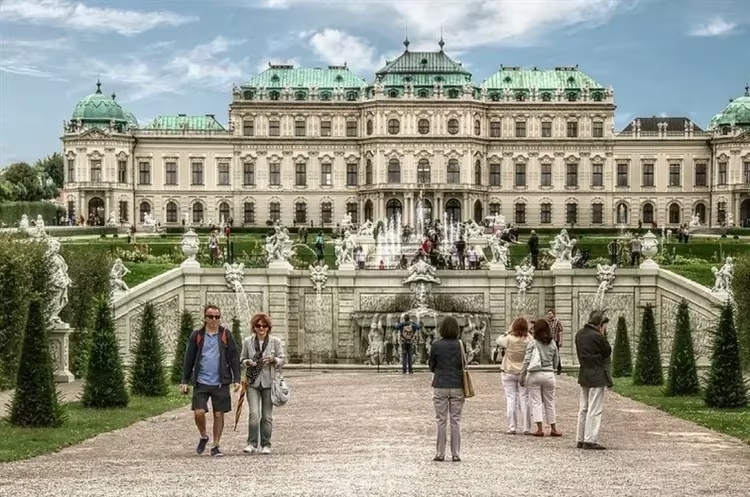
Eugene made the decision to build this palace a year after the completion of the construction of the first building. The Upper Belvedere acted as a representative residence and was a source of great pride for its owner. It was here that all solemn and official receptions were held, pressing issues were resolved.
In 1776, Maria Theresa, who at that time owned the complex of Belvedere palaces, decided to transfer to this building a series of paintings that belonged to her family. The son of Joseph II helped the Empress in this. Already in 1781, a public museum was opened among the first in the Upper Belvedere. However, in 1891 the collection was moved to the Kunsthistorisches Museum, which opened in 1889.
Garden
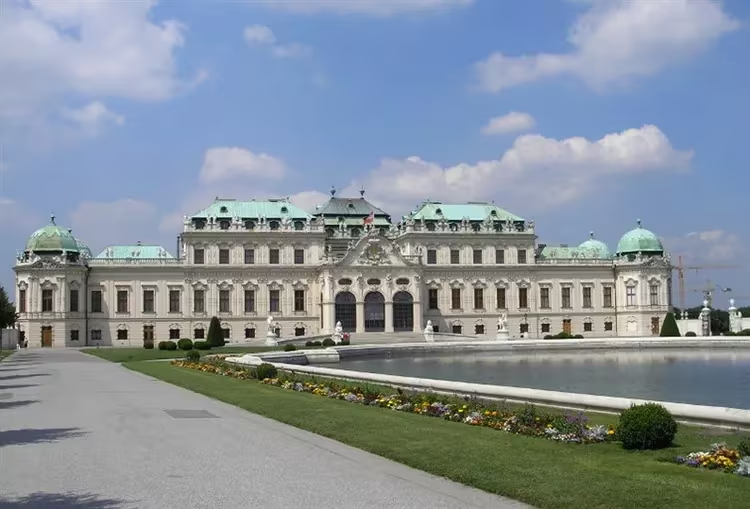
Between the two palaces, which are part of a single complex, even in the time of E. Savoysky (1803), on the advice of Archduke Johann, a park was laid out. It was of fabulous beauty, and the first in Europe, an alpine garden. It was designed by the architect from Bavaria D. Girard.
The project was developed in accordance with the concept of the stereometry model of France. The architect placed in the park: cascades, hedges, trees, fountains and sculptures.
The palace complex in our time
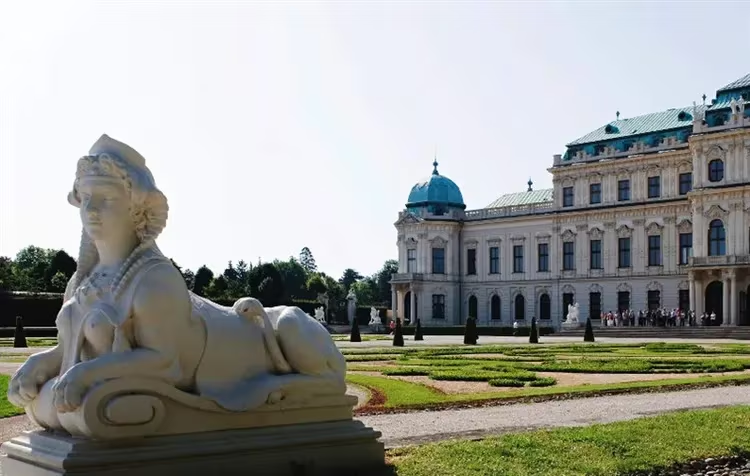
Today, the Belvedere houses the Austrian National Gallery. The collection of Austrian art is colossal. The collection includes exhibits from the Middle Ages to the present.
Since 1903, a gallery with the unambiguous name “Modern Gallery” has been located in the Lower Belvedere. The stable and greenhouse of this building are also reserved for painting. Here, the old furnishings have been preserved and, of course, there is the opportunity to admire the numerous halls with skillful design.
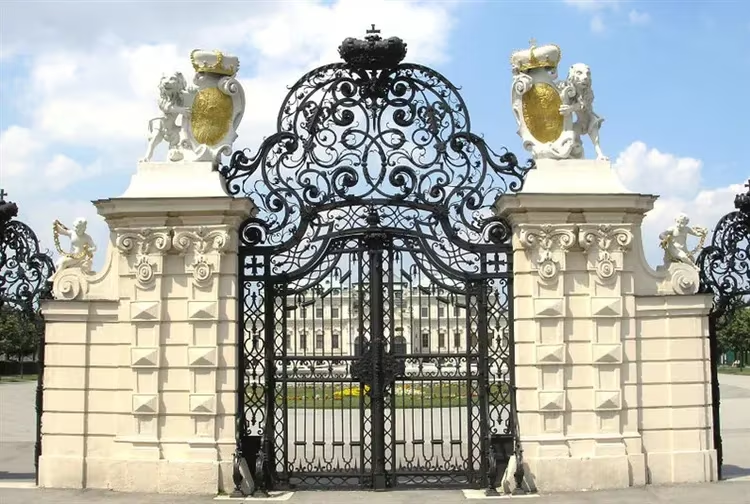
The Upper Belvedere contains the best art and sculpture works of the 19th-20th centuries: Schiele, Klimt, Fendi, Amerling, Kokoschka and many others.
Unfortunately, the original appearance of the garden has not been preserved. However, this does not make it less interesting for modern tourists. In the garden today there are over 4 thousand different representatives of the alpine flora. The best time to visit the Belvedere to enjoy the alpine garden is in spring and summer. During this period, many plants bloom, creating a unique pattern on the lawns.
Address: Vienna, Prinz Eugen Str. 27 Closest metro station: Taubstummengasse.