
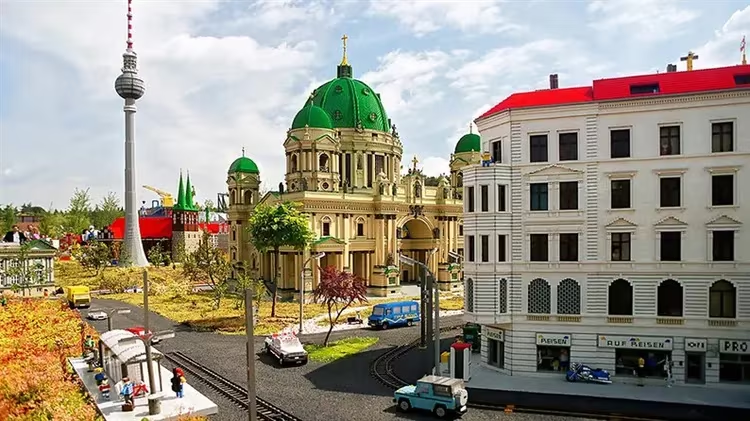
Sightseeing in Berlin – 40 most interesting places
Berlin is the heart of modern Europe. This city is equally loved by young people for its dynamism, courage, endless development and love for experiments, and by older people who value order and respect for the past. Berlin has a lot of trendy clubs, art galleries for every taste, palaces, provocative performances, monuments of antiquity and a very recent dramatic past. The sights of Berlin do not end with Unter den Linden alone. In each of the 12 districts of the city there is something to see and where to relax.
Berlin Wall
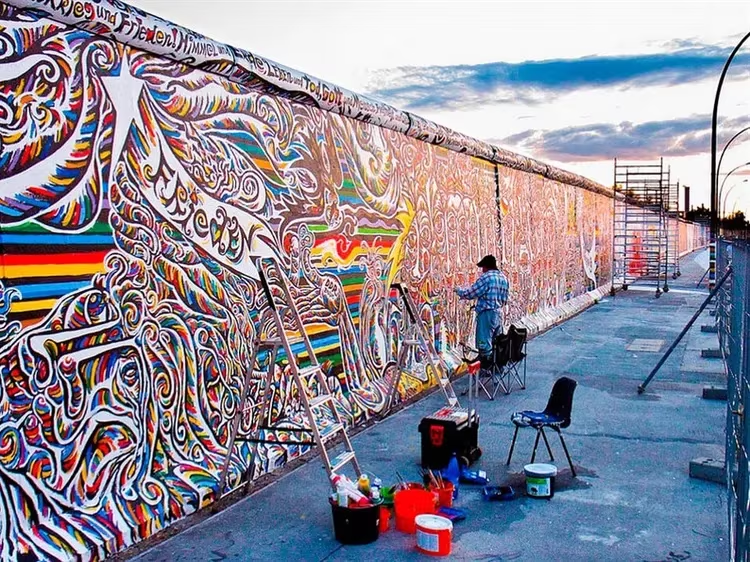
If the Great Wall of China performed a protective function from an external enemy, then the Berlin Wall, unlike it, became an insurmountable barrier between people of the same nationality, many of whom were even close relatives. In the history of the country, it will forever remain a symbol of the separation of the fraternal people due to political differences on the basis of the social system. But despite this barrier and politics, people still wanted to meet and unite.
It is already reliably known that about 50,000 East Germans traveled to West Germany to work for higher wages. West Germans, on the other hand, went to Berlin to shop at lower prices due to the difference in exchange rates. Apart from the wall and the economy, the people were divided by different ideologies, on the one hand, communist, on the other, capitalist.
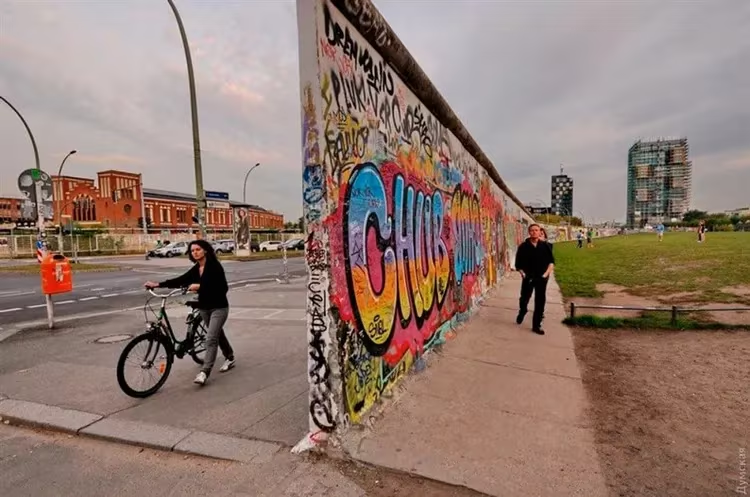
The length of the wall at the time of its destruction was 155 km, part of it was equipped with an electric or sound alarm. Throughout the length there were observation towers, bunkers; 11 thousand guards were involved. Now that the wall has fallen, it has become even clearer to what an absurdity politics and class contradictions can bring. Modern rulers should remember the Berlin Wall, which German Chancellor Willy Brandt called the “wall of shame”.
🏨 🚕 Individual transfer from the airport to the hotel and more
Now, on the site of an absurd structure, a memorial monument-complex “Berlin Wall” has been built for the edification of posterity, occupying 4 hectares of area. 28 million euros were spent on its construction. The memorial includes the “Window of Memory”, dedicated to the dead Germans who jumped from the windows of the houses of East Germany onto the stone pavement of Bernauer Strasse, which already belongs to the FRG. This includes the restored Church of Reconciliation.
Zoo
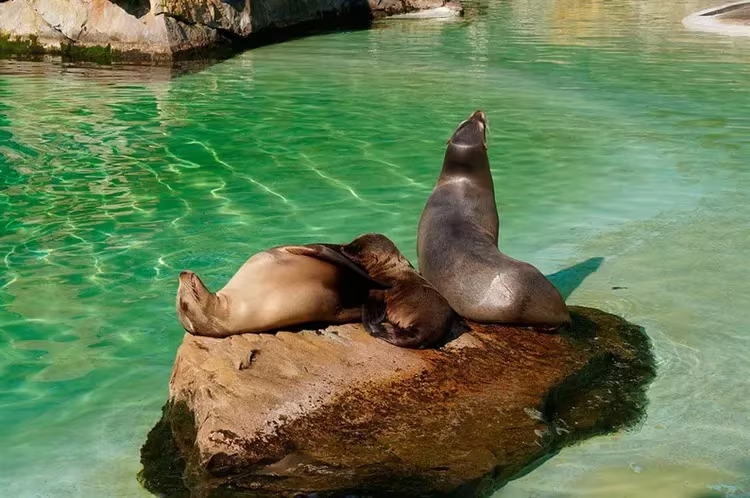
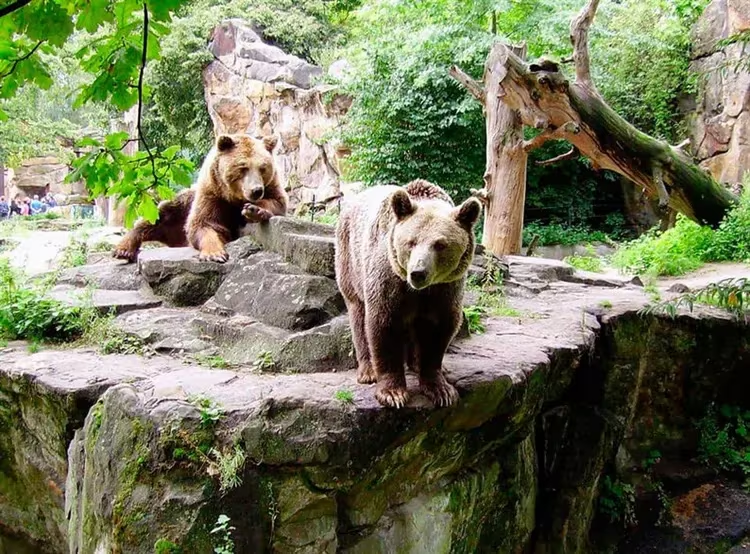
Berlin Zoo, located in the central area of the city of Tiergarten, is famous for the huge variety of species of its inhabitants (there are 1600 of them). The zoo was organized on the initiative of Liechtenstein, a zoologist with the support of King Frederick, who did not want to lag behind other European countries that already have similar establishments. Crowds of citizens and tourists enjoy looking at the exotic design of the pavilions “House of Antelopes”, “House of Ostriches”, “House of Elephants” and other equally interesting objects. It is impossible to pass by the central fence of the zoo indifferently: the exclusive Elefantentor gates will not allow you to do this – their design is so interesting.
The massive columns of the entrance are decorated in the form of sculptures of sitting elephants, on the backs of which an arch rests, based on elaborate columns. The roof of the arch resembles the curved body of a crocodile, the resemblance to which is emphasized by the green ribbed surface of the roof-scales. The unusual appearance of the gate has made it a unique attraction in Berlin.
Animals, like everything around, look clean, well-groomed and cheerful. In the enclosures and pavilions where they live, there is no unpleasant smell and order reigns. Especially for children, staying here is the highest pleasure to observe the habits of monkeys, feed rabbits, kids in the home corner. Children simply squeal with delight, communicating with animals, and parents at such moments are happy that they were able to bring their children here.
Brandenburg Gate
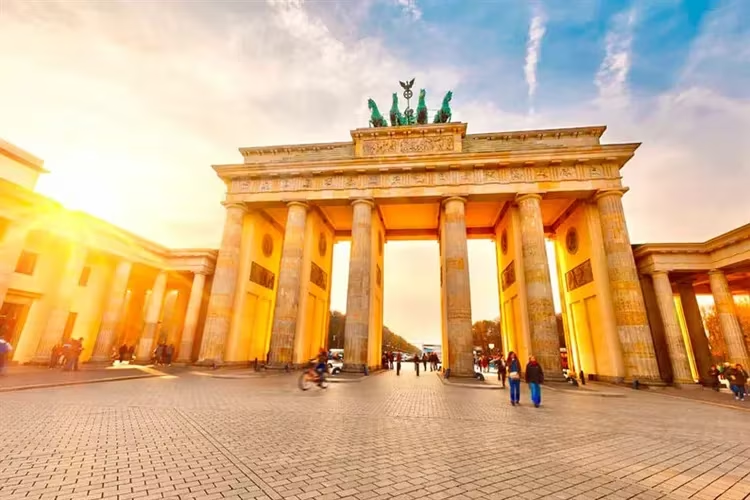
This majestic building in the style of classicism is the only surviving gate of Berlin, a kind of symbol of the connection of times. They were erected at the end of the 18th century and were called the “Gate of Peace” and are now a famous historical monument throughout Germany, a symbol of the country's reunification. The author of the project, Langhans, took the design of the main entrances (propylaea) in the Acropolis of Athens as the basis for his development in order to give the monumental structure an ancient majesty.
Six wall-columns of the central facade are crowned with a portico with a chariot (quadriga) drawn by four bronze horses located on it. They are ruled by Victoria – the goddess of Victory with an olive wreath on her head. During the reign of Napoleon, the quadriga was removed and sent to Paris. They returned it to its original place after the overthrow of the emperor (1814), instead of an olive wreath on his head, he placed an iron cross in his hands as a saving symbol of return.
Noticeable damage to the gate occurred during the war (1945). The Quadriga suffered almost complete destruction and had to be rebuilt, which was done very meticulously. But this is not the last restoration: the Berlin Wall, erected in 1961, separated the gates, and when it was destroyed (1989), the chariot was again damaged. For a year and a half, the restorers worked on the restoration of the divine chariot and put it on the gate in August 91. Both day and night, the Brandenburg Gate is a magnificent sight, being a real architectural masterpiece.
Pergamon Museum
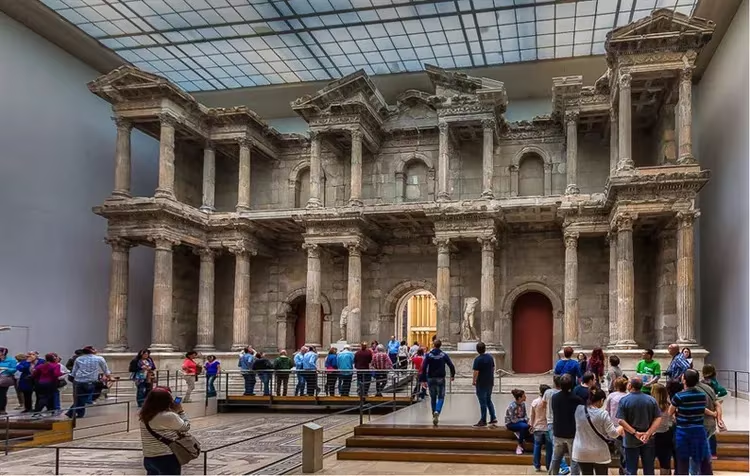
The unique museum was born and named after the discovery by German archaeologists in 1878 of an ancient building of antiquity – the Pergamon Altar. Pergamum is an ancient city located on the territory of modern Turkey. The altar is an independent building, impressive in its size: the width of the marble staircase is 20 m, the length of the frieze is 120 m, and the height is 2 m. It was located in the city acropolis. After transporting the find to Berlin, it turned out that there was no place to place it, because there was no building suitable for its spaciousness.
In order to preserve the priceless relic, the far-sighted government financed the construction of a huge building-pavilion on the banks of the Spree (now Museum Island), which was destined to become a unique museum of ancient architectural monuments.
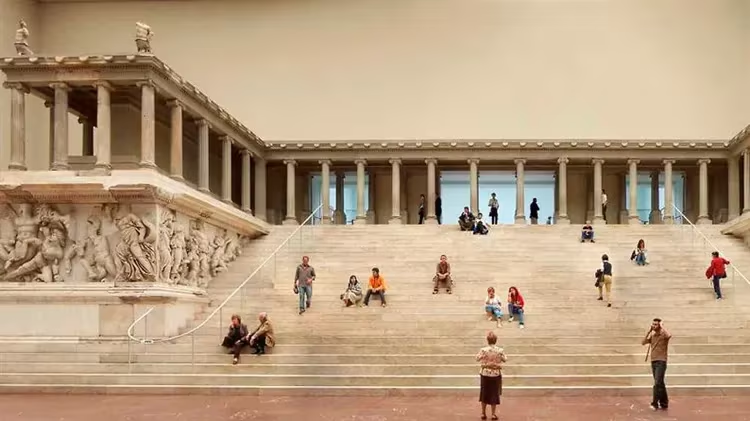
The beginning of the unique collection was the Pergamon altar, which became a true gem of the museum. This greatest creation of the ancient masters delights everyone with a long chain of expressive high reliefs depicting the struggle of the ancient Greek gods with mythological heroes. Looking at the sculptures, you come to the conclusion that brilliant creators have existed in all eras and times. It is a pity that not all of their names are known. Now the monumental masterpieces of ancient architecture serve as attractive spectacular objects for thousands of visitors.
The famous Ishtar Gate (the goddess of fertility and carnal love) found its place here, serving as the main, 7th entrance to the inner city of Babylon. The Road of Processions of Marduk (fragment) is also from there – white limestone slabs, on the edges of which the words of Nebuchadnezzar are carved, glorifying the temple of Marduk. Three expositions of the museum reflect the fine arts of Greece and Rome, Asia Minor and Islamic states – works of art for 6000 years.
Berlin WelcomeCard: transport, discounts and guide – €19.90
Hop-on hop-off bus tour for 24 or 48 hours – from €22
TV tower speed ticket – €21.50
Priority entry: Berlin TV tower with window seat – 23.50 €
Coffee at the Käfer restaurant on the roof of the Reichstag – 19.90 €
Ticket to the Panoramapunkt observation deck – 7.50 €
Berlin museum pass: 3-day pass to 30+ museums – 29 €
Greater Tiergarten Park
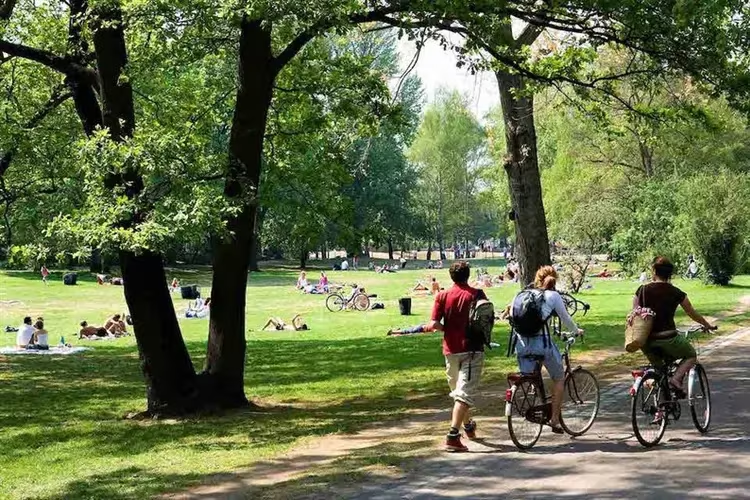
This park was laid out in the 16th century as a royal hunting ground, and later converted into a landscape park. Since then, it has become a favorite place of the townspeople. A beautiful lake, ponds, shady alleys for walking, numerous cafes along the banks of ponds and lakes – there is everything here to take a break from the bustle of the city. Thanks to a large number of provocative sculptures, the Tiergarten has recently also become a center of informal art.
And here are some of the main Berlin attractions and simply the most important places in the German capital – the Reichstag, the Victory Column, Bellevue Palace. One of the most unusual buildings is the building that was erected in 1957 for the opening of the International Building Exhibition. Now it houses the House of World Cultures, but the people call this building the “Pregnant Oyster”.
In the center of the pond in front of the Oyster there is a statue of the English sculptor G. Moore “Butterfly”. The House of Culture often hosts concerts and international exhibitions. Near the 42-meter tower of the Berlin carillon. It has 68 bells, which are driven by computer or manually. It is the largest musical instrument in Europe.
Victory Column
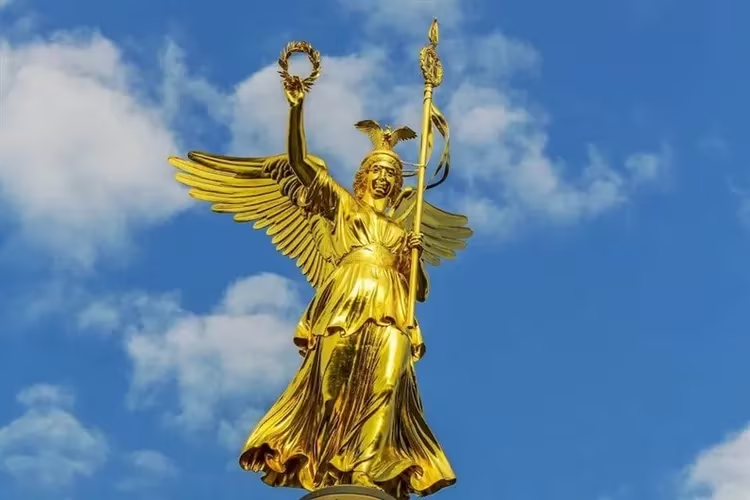
In the Tiergarten there is another majestic monument – the Victory Column, popularly referred to as the Golden Elsa. It was installed in 1873 as a sign of victory in the Austro-Prussian, Franco-Prussian and Danish wars. The top of the column was decorated with a sculpture of the goddess of Victory – Victoria. The height of the column, together with the statue, was 51 m. At first, it was located on the Royal Square in front of the Reichstag building. But later, in 1939, it was moved to its current location – the square that bears the name of the Big Star in the Tiergarten. At the same time, another section was added to it, and the height of the column was almost 67 m.
In 1987, the statue on the top was covered with gold, and then it got its popular name.
After the unification of the country, the Column became a monument, which is protected by the state. In addition, it is also an excellent observation deck. To climb up, you need to overcome 285 steps inside the column. In addition to the observation deck, there is a historical museum inside the column.
The column is open to the public all year round.
In the warm season – from 01.04 to 31.10 – on weekdays from 9:30 to 18:30, on weekends from 9:30 to 19:00. An adult ticket costs 3 euros, a child ticket costs 2-50 euros.
Reichstag
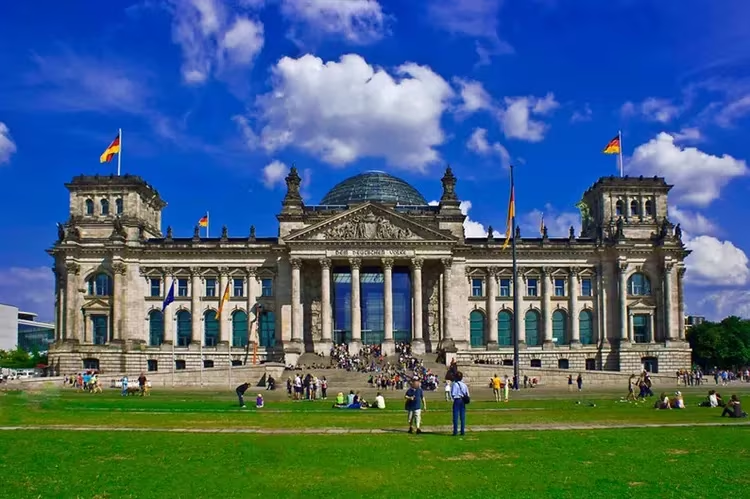
The name of this administrative building of the German capital is known throughout the world as a symbol of the defeated Nazi Germany, over which in May 1945 the flag of the USSR was hoisted. This fact, first of all, makes this current parliamentary building the most visited object in Germany. The Reichstag arose as a result of long-term construction (10 years), during which those who laid the first stone in the foundation of the future foundation, who made the project, passed away. The Reichstag, created for the meetings of the German parliament, was supposed to symbolize the power of the Kaiser's empire.
Having undergone repeated destruction, the building was revived again and again, and now the parliament of the united Germany still sits in it. Those wishing to get into the legendary building are required to pre-register on the website of the institution. Here you can see the interiors, resurrecting the historical past, climb into the glass dome on the roof and see the panorama of Berlin, stunning in its beauty and grandeur.
Spandau Citadel
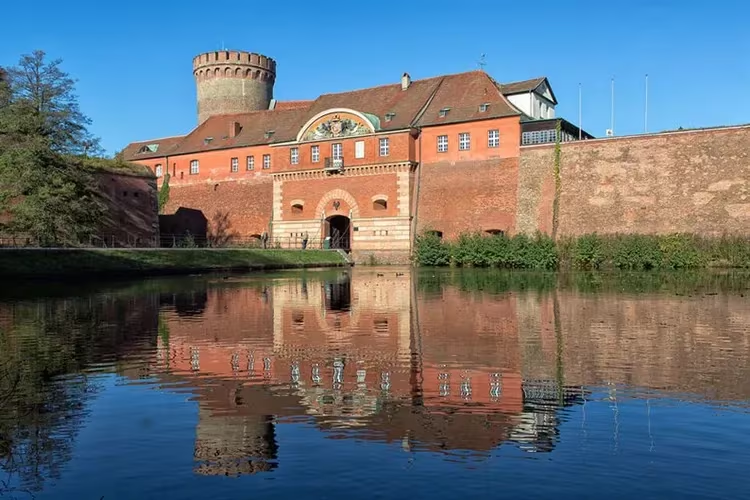
Gone into oblivion, the gloomy structure of the Spandau prison for war criminals became known to the world when Nazi minions of Hitler were placed in it after the Nuremberg Trials. And at the beginning of the 20th century, those who fought against the developing fascism were kept here. A concentration camp was later built for them in Prussia. Ironically, after the defeat in the war, the prisoners and their guards changed places: 7 war criminals were serving their sentences in Spandau.
After the death of Hess, who was sentenced to life imprisonment, in 1987, the infamous prison building was literally wiped off the face of the earth, burying construction debris in the waters of the North Sea. Now on the site of Spandau there are shops and shopping centers. The archives of the prison have not yet been fully declassified, so its story has not ended.
Alexanderplatz
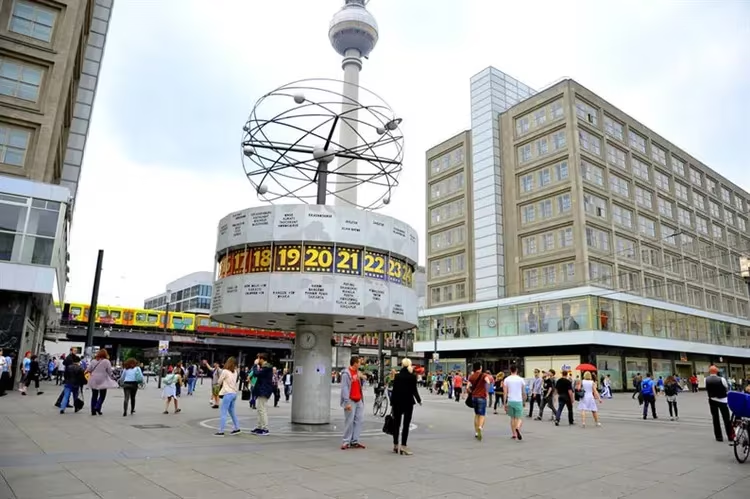
One of the most beautiful squares in Berlin was built in honor of the visit of the Russian Tsar Alexander I. Therefore, the locals simply call it Alex. On the square is the railway station of the same name, from where trains and electric trains depart to different regions (lands) of Germany. The metro station of the same name, which opened back in 1913, is also located here, so Alexanderplatz is never empty: about 360 thousand people pass through it every day. During the era of the Weimar Republic, the square was a place of bohemian entertainment, described by Döblin in the novel and shown in the film adaptation by director Fassbinder.
During the years of socialism, a high-rise hotel (123 floors) and a unique TV tower (368 m), which was included in the list of the tallest buildings in the world, were built on Alexanderplatz. Of interest is the Red Town Hall, where the city hall of Berlin is located. The voluminous building with a clock tower on the roof looks very imposing and majestic.
The interior design of the halls corresponds to the appearance of the Town Hall: there are beautiful paintings and other works of art presented as a gift to the city hall by famous world figures. Noteworthy is the Fountain of Neptune – a true sculptural and landscape masterpiece, created as a gift from the townspeople to Kaiser Wilhelm.
Opera
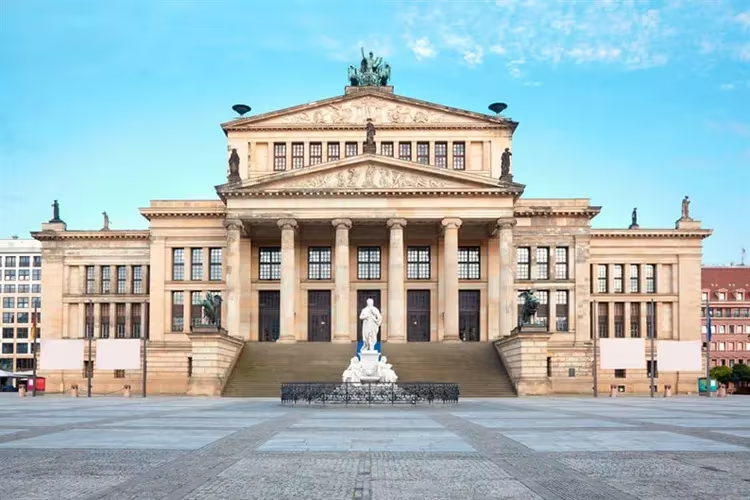
This is one of the three opera houses in Germany, founded in 1742, has seen the most famous performers on its stage. Among them were the great Caruso, F.I. Chaliapin, Maria Callas and other unsurpassed vocal masters. Great musicians and composers Strauss, Mendelssohn, Beethoven played here. And now the famous artists of the world consider it an honor to perform here: Anna Netrebko, Denis Matsuev, Maria Guleghina and other world stars of classical art.
Even during the years of separation of the state and citizens, the theater remained common to all, serving as a link between peoples. The theater building did not work only during the war because of the destruction, after a grandiose reconstruction, it again began to receive the best troupes of world theaters and symphony orchestras. The building of the Berlin Opera is externally an example of classical architecture, with a luxuriously decorated stage, stalls and boxes.
TV tower
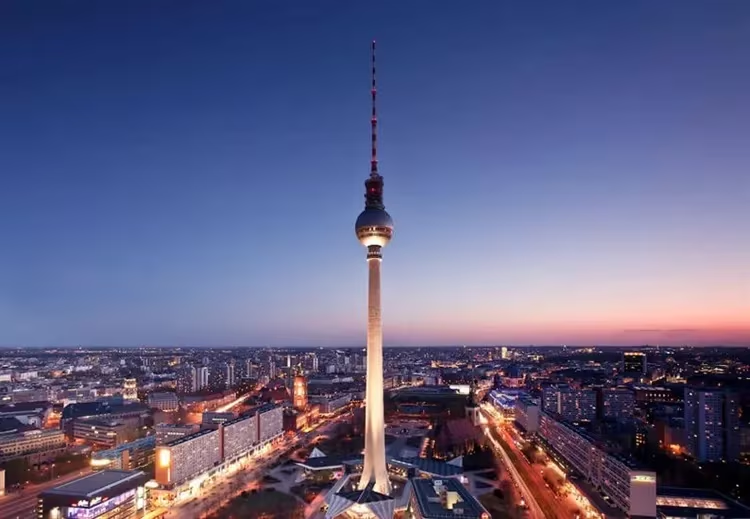
The unique tower is one of the tallest buildings in Germany and the fourth in Europe. The tower is also famous for its design, which does not allow the 118-meter antenna to deviate to the side by no more than 80 cm, even with very strong winds. Thousands of tourists strive to get into this architectural wonder in order to view the picturesque panorama of the city from the observation deck. Alexanderplatz became the site of the future TV tower, the construction of which began in August 1964 according to the design of two architects Dieter, Frank and designer Henselmann.
The project can be called innovative by the standards of that time. The construction was carried out with the involvement of Swedish and Dutch companies that manufacture elevators, cables, air conditioning systems and glass. The hull of the tower was erected using the sliding formwork of reinforced concrete. A steel protective frame of a spherical shape, assembled at the bottom, was installed by an assembly crane in separate fragments.
By the way, this crane remained at the top of the tower shaft with the boom lowered, in contrast to the crane that installed the antenna fragments, which was dismantled into parts and lowered down. 200 million German marks were spent on the construction (which exceeded the planned costs by 6 times).
Cathedral
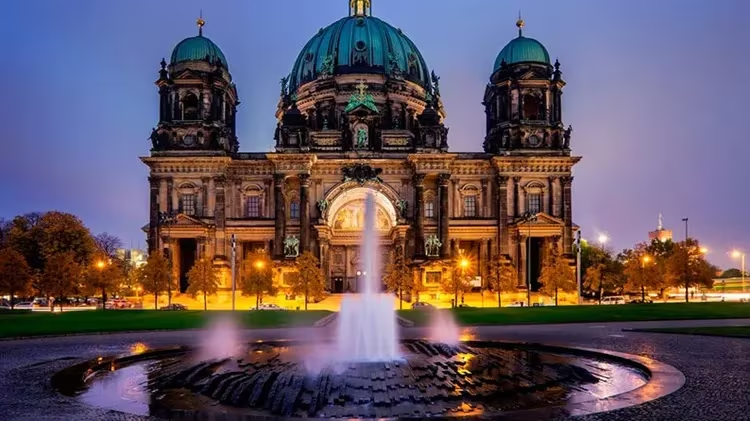
Berlin Cathedral – the largest Protestant church in Germany – is located on the museum island, where all the guests of Berlin come. The beauty and grandeur of the cathedral leaves no one indifferent; thousands of tourists visit the church every day. You can admire the exterior decorations of the facade endlessly: elegantly executed sculptures, stucco patterns, picturesque green domes against the gray background of the walls create a rich picture, not traditional for a Protestant Gothic church.
The interiors of the cathedral are also luxuriously and expressively decorated, where bright stained-glass windows side by side with magnificent paintings depicting biblical scenes. The pulpit for sermons is decorated with amazingly beautiful wooden carvings. Marble columns, steps of a wide staircase leading to the throne, reinforce the impression of majestic splendor.
Parishioners can climb to the observation deck under the dome to take in the surroundings. Before the war, the height of the cathedral was 114 m, after the reconstruction in 1993 it dropped to 98 m. The cathedral is famous for its organ by the famous master Sauer, the tomb of the Hohenzollern family dynasty. The area in front of the cathedral is decorated with beautiful lawns surrounding a picturesque fountain. The entrance to the temple is paid, the ticket costs 5 euros.
Bisdorf
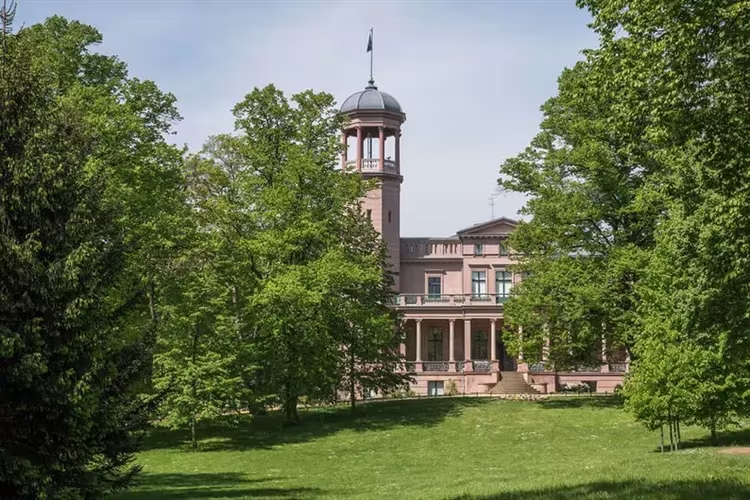
This name is first mentioned in medieval documents as the designation of a small village in the vicinity of Berlin. At the beginning of the 20th century, Bisdorf, among other settlements, became part of the new district of Lichtenberg, which became part of Berlin. In 1927, the authorities of the capital bought out all the historical buildings of Bisdorf, among which was the palace of the same name, which is a significant historical and architectural monument. After the enlargement of the districts, Bisdorf became part of the solid district of Marzahn-Hellensdorf.
Bisdorf's interesting objects: the local old church, the Theater near the Park, the park itself – attract the attention of tourists with their cute patriarchy, successfully combined with avant-garde modernity. The most spectacular monument of architecture is Bisdorf Palace, the personification of the connection of times in connection with its history. Despite the fact that the building was erected in the 19th century, in style and architecture it looks like a building of the Italian Renaissance.
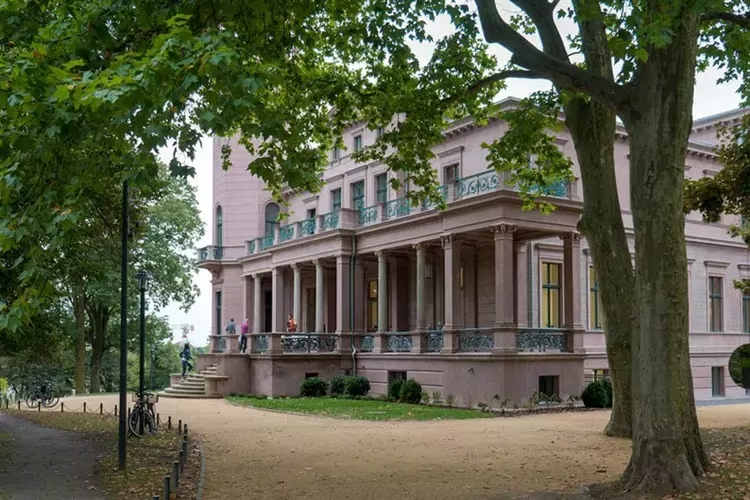
The palace was built as a private villa, the owners of which for 5 decades were the merchant Buntzingsloven, the Siemens family of founders and other famous families of Germany. After several years of neglect, the Palace was carefully restored and now serves as the exhibition center of Berlin. Outwardly, a rather modest building does not look like a luxurious palace, but it contains interesting elements and original architectural solutions in its architecture.
The central facade of the palace is decorated with rectangular columns connected at the bottom with an openwork parapet; the round corner turret enhances the impression of lightness and airiness of the building. The unique charm of the palace is complemented by a wonderful park, designed on the principle of the Gardens of Babylon on several levels, with lovely green lawns, picturesque trees and shrubs. A bust of Wilhelm Siemens, the founder of the garden, is installed in the alley of the park.
hamburg train station
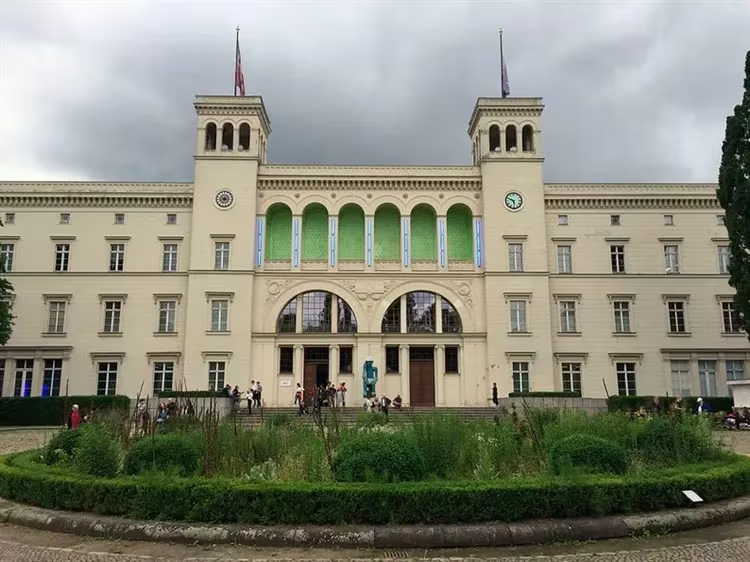
By coincidence, the Hamburg station, having lost its direct purpose as a transport hub at the end of the 19th century, turned into the Museum of Modern Art, as Berliners and guests of the city know it now. The first exhibits in it were art objects donated to Berlin by a private collector E. Marx. For them, part of the station premises was restored (1989) and adapted for a museum. And already in 1996, the entire building of the station became the Museum of Modern Art, the grand opening of which took place with a large gathering of people.
Today, the museum exhibits works of art by contemporary artists, sculptors, photographers and other representatives of contemporary art. Here are canvases and sculptures by German postmodern artists Beuys and Kiefer; the Americans of Liechtenstein, Twombly and Warhol; English avant-garde artist Long. Temporary exhibitions of art works of young talents are organized here, a bookstore is open, a restaurant operates, festivals, competitions and conferences are held. The former Hamburg railway station is very popular with Berliners and tourists.
Bellevue Palace
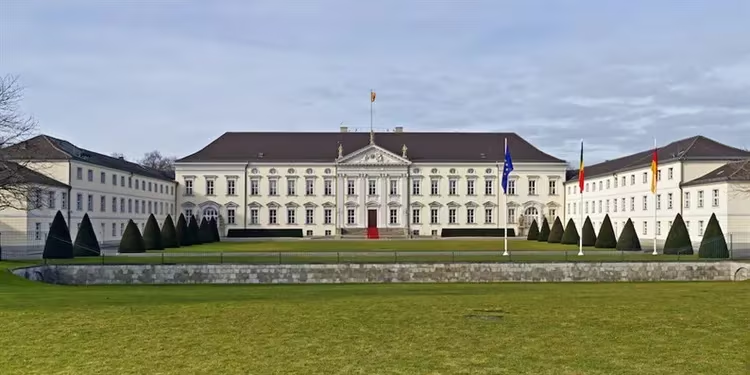
The palace was built in 1786 for Prince August Ferdinand. This was his summer residence. The most important guests were received here, including Napoleon, Schiller and Humboldt. In the 19th century, an art gallery was set up here, and the park was made public. After World War I, the building was nationalized. Exhibitions were organized there, and in 1935 a museum of national applied arts was opened. After the war, only the outer walls remained of the palace building.
In the 1950s, it was rebuilt, and the ministries of the federal lands were located here. A large-scale restoration of the palace was carried out in the late 80s of the last century and in the early 2000s. Now the Bellevue Palace is the residence of the President. And in the annex, which was built in the late 30s for the guests of the Third Reich, the presidential office is located.
You can get there by metro – to Hansaplatz station or by train S3, S5, S7, S75 to Tiergarten station.
Charlotteburg
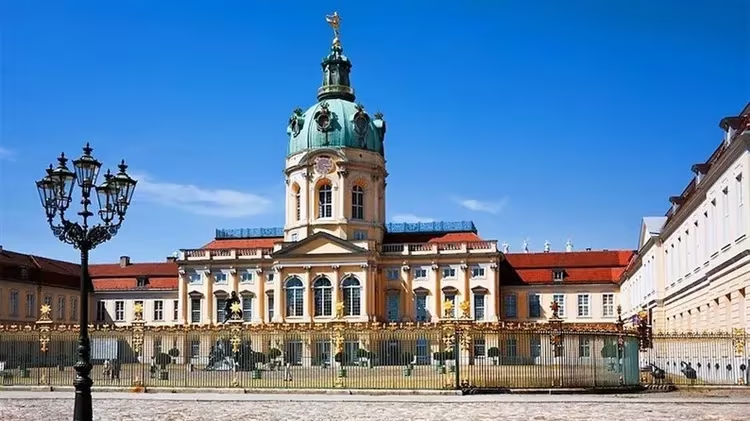
The chic baroque palace, built at the end of the 17th century for the wife of Frederick I, Sophia Charlotte of Hanover, was called Lutzenburg, but after the death of Sophia Charlotte, it was renamed in her honor. It was the favorite summer residence of the kings of Prussia with a beautiful landscaped park. After the war, only ruins remained of the palace, and the German government even decided to completely destroy Charlottenburg, but the then director stood up for him – simply by settling in a ruined castle.
The palace was restored for several decades, and today it is one of the most favorite places for tourists and Berliners. Here you can look not only at the restored royal interiors, but also see a collection of paintings, old German and Chinese porcelain. The palace park with alpine slides, grottoes, ponds and green lawns is also very popular.
From November to March, it is open to visitors from Tuesday to Sunday from 10:00 to 16:30, and from April to October – until 17:30. Monday is a day off. The castle is closed on holidays 24-25 December. Ticket price: adults – 12 euros, and children – 8 euros. Photography without a flash is allowed in the palace. Its cost is 3 euros.
Köpenick Palace
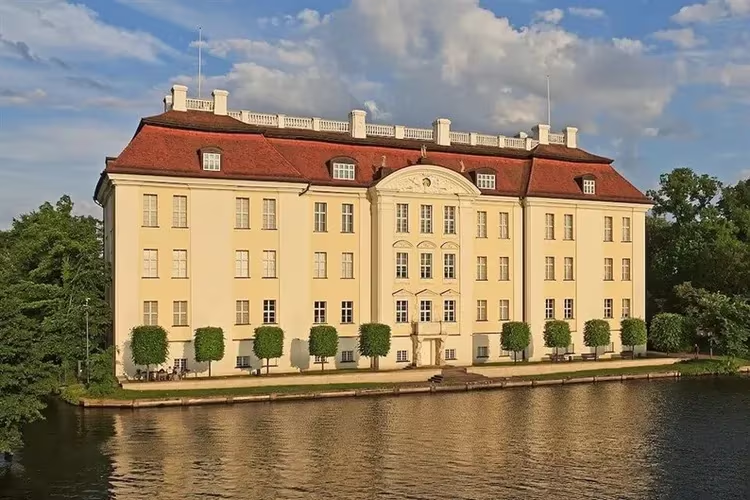
Even in very ancient times, a Slavic fortress was built on the island where the Köpenick Palace now stands. Later, a hunting castle arose in its place, and then King Gustav II settled here. Friedrich III of Brandenburg reconstructed the castle in the second half of the 17th century and at the same time the Northern Pavilion was added to the palace, a palace church and an outbuilding appeared.
When Frederick was declared king of Prussia, he made Köpenick his residence. Since then, and almost until the end of the last century, the castle remained in its original form. In 1963, the Museum of Art opened here. Now it is part of the Prussian Cultural Heritage Foundation, protected by the state and is a monument of art and architecture.
Here are exhibits found during the archaeological excavations of the area, works of applied art, collections of porcelain and jewelry, pieces of palace furniture from different eras. Exhibitions and concerts are held in the castle, and the Köpenick Summer festival is held annually, it attracts guests from all over Brandenburg.
The palace is open to the public daily, except Monday, from 10:00 to 18:00, December 24-25 is a weekend, and on January 1 from 12:00 to 18:00.
red town hall
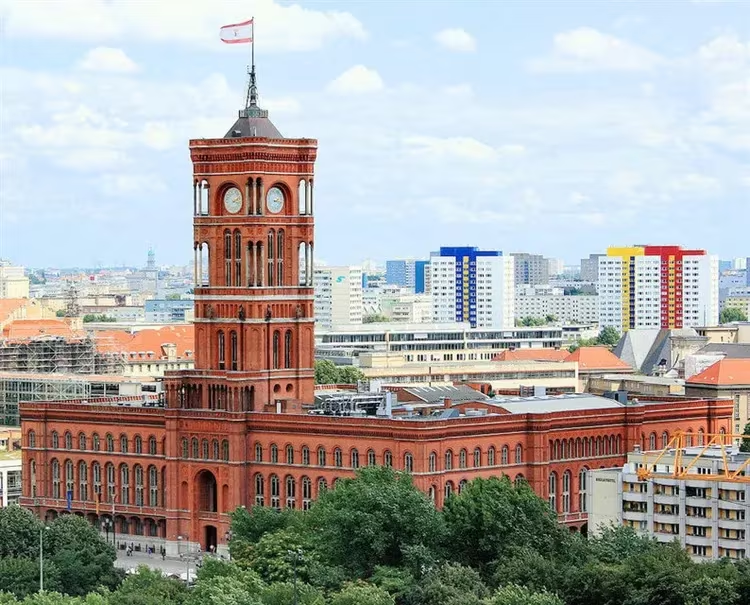
In the 19th century, the former building of the city hall no longer contained the overgrown magistrate and, moreover, was noticeably dilapidated. In its place, in 1869, a new neo-Renaissance building with a 74-meter Gothic tower was built. Until 1945, the city council sat in the town hall, but during the bombing of Berlin, it was almost completely destroyed. It was restored until 1956, and the magistrate of East Berlin was located here.
After the fall of the Berlin Wall, this building was handed over to the city senate and the mayor of the city. Tourists can see the hall of columns in the town hall, where receptions and exhibitions are now held. On the third floor there is a gallery of portraits of famous Berliners. Meetings of the magistrate are held in the halls on this floor. You can get into the town hall building on weekdays from 9 am to 6 pm. Sometimes, due to important political events, visits are limited.
Department store KaDeWe
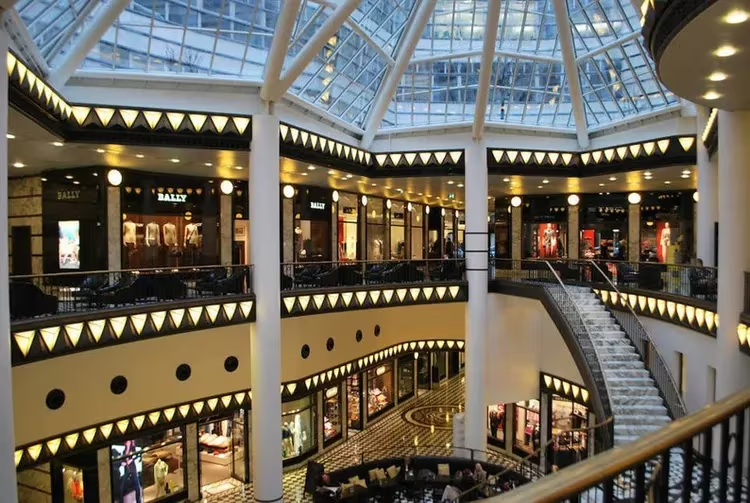
By the beginning of the last century, Abraham Adolf Jandorf already had several shops in which he briskly traded goods for ordinary workers. However, after visiting chic London and New York department stores, he had the idea to open a similar one in the German capital. To do this, he invited the best European architects, artists, managers, and the shopping center that opened in 1907 on the western outskirts of Berlin managed to impress even the most sophisticated regulars of London and American department stores.
“Allow yourself everything!” has been the motto of KaDeWe for more than 100 years. Each visitor to the store felt chosen. At their service – seven floors, 13 elevators, crystal, electric lamps and decoration from expensive woods and goods of excellent quality. In addition to the trading departments, there was a tea room, a post office and a bank, a hairdresser's, a photographic studio and a grocery store that offered the best products from around the world.
And today all world trade marks are concentrated here. On the ground floor there are boutiques of leading fashion brands. On the second – goods for men, and the next two floors are completely devoted to goods for beautiful ladies. In the department store you can buy almost everything – from goods for newborns and souvenirs to large household and office equipment. But its main attraction is still the grocery floor.
Delicacies and the most common products are presented in a very wide range. There is also a cafe where, at your request, they can prepare a dish from freshly purchased products. The department store is open every day except Sunday. From Monday to Thursday from 10:00 to 20:00, on Friday – until 21:00, and on Saturday from 09:30 to 20:00.
Potsdamer Platz
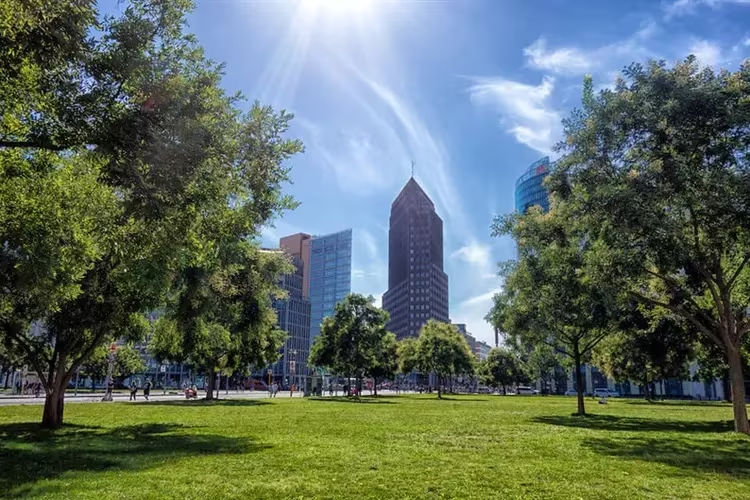
Once this square stood at the intersection of roads and served as a crossing between the eastern and western parts of the city. It was built back in the 18th century. Later, a railway station appeared here, and at the beginning of the last century, a metro. It was a very busy part of the city. Business facilities developed rapidly here, especially in the entertainment sector. Almost the first shopping and entertainment center Potsdam House appeared on Potsdamer Platz – there were offices of industrialists, a theater, several cafes and shops.
It was a busy place, and the first traffic light in Europe was also installed here. During the war, the area was almost completely destroyed, and life on it stopped for many years. Only after the unification of Germany began its revival. Now it is one of the busiest corners of the German capital. The remains of the Berlin Wall, modern office centers, Zvezda Boulevard, cinemas hosting world cinema stars, the huge business and shopping and entertainment Sony Center and the famous 25-story Kohlhoff Tower have been preserved here.
Жандарменмаркт
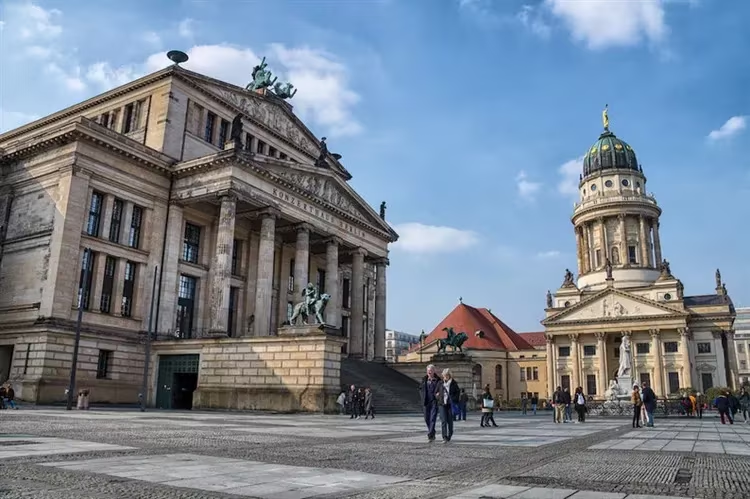
This square was built in the 17th century, when the Huguenots mostly settled on it. The square itself was basically a market and was even called at first Lindenmarkt – Lime Market. The square received its current name only in 1799, when barracks for cavalry gendarmes were built on its territory.
Later, however, they were demolished and between the two churches – German and French – the building of the French comedy theater was erected, and then the National Theater, which later burned down. Now in its place stands the building of the Concert Hall, which was built back in the 1820s and opened with the premiere of the opera The Magic Shooter.
During the war, the area was badly damaged, and then changed its name to Academy Square. The historical name was returned to her after the unification of Germany, in 1991. Today people come to the square not only to admire the architectural and historical monuments. There are many cozy small cafes and restaurants, numerous shops and benches where you can relax, chat and just watch the bustling life around.
french cathedral
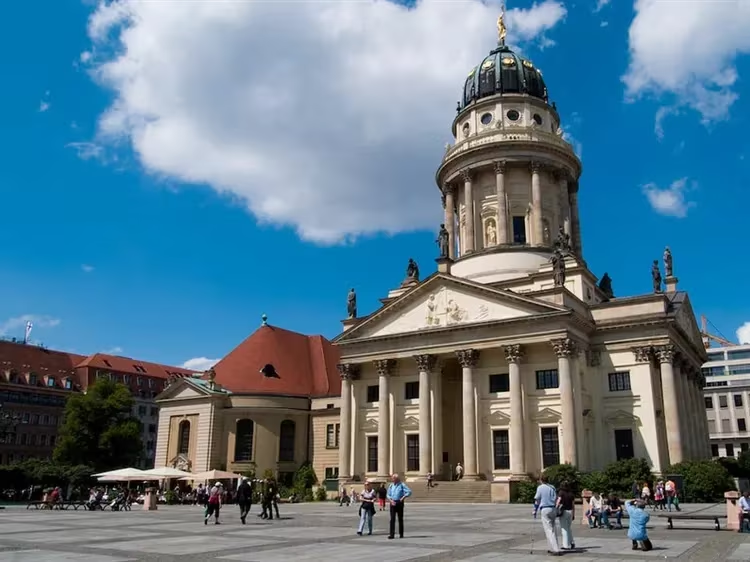
One of the most beautiful buildings in the German capital stands on Gendarmenmarkt Square. This is the French Cathedral, which was built at the beginning of the 18th century by the Huguenots. It was then simply called the Church of Friedrichstadt, after the name of the city in which it was located. But later, Firdrichstadt was annexed to Berlin, and the name of the church changed. By the end of the century, the church was rebuilt, adding a dome and a tower to it. After that, the church began to resemble the German Cathedral standing right there, on the Gendarmenmakrt.
In the next century, an organ appeared in the church, hymns began to be played, the church was decorated from the inside, changing its former asceticism. The restoration of the temple after the war took place only in the 80s of the last century, and in 2006 the facade of the building was completely restored. Unlike the German Cathedral, this temple is active.
The cathedral has an observation deck: from November to February it is open from 10 am to 6 pm, and from March to October – until 7 pm every day. An adult ticket costs 3 euros, and for children under 14 years old – 1 euro. The Museum of the History of the Huguenots also operates here. Its visit will cost 2 euros, it is open daily, except Monday, from 12 pm to 5 pm.
Madame Tussauds museum
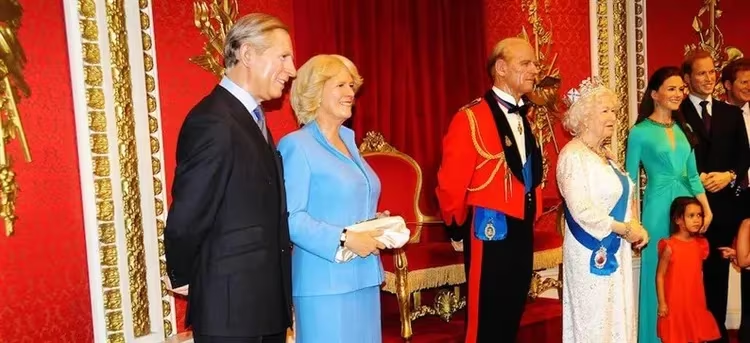
In 2008, the 12th branch of the world famous wax museum Madame Tussauds opened in Berlin. It is located on the boulevard Unter den Linden. Show business stars and public figures – from Otto von Bismarck, Marlene Dietrich to Angelina Jolie – are all who have left their mark on the history of mankind over the past centuries. There is also the figure of Adolf Hitler. But the Führer is depicted as pitiful and helpless—the way he is said to have looked before committing suicide.
The museum has a separate room where you can see how wax sculptures are made.
The museum is open daily from 10 am to 7 pm. The only day off of the year falls on Christmas Day, December 25th. An adult ticket costs 20.95 euros, children under 15 years old – 15.95 euros. Online tickets are 10% cheaper. You can also save money when buying a family ticket (for two adults and two children), it costs 61.32 euros.
museum island
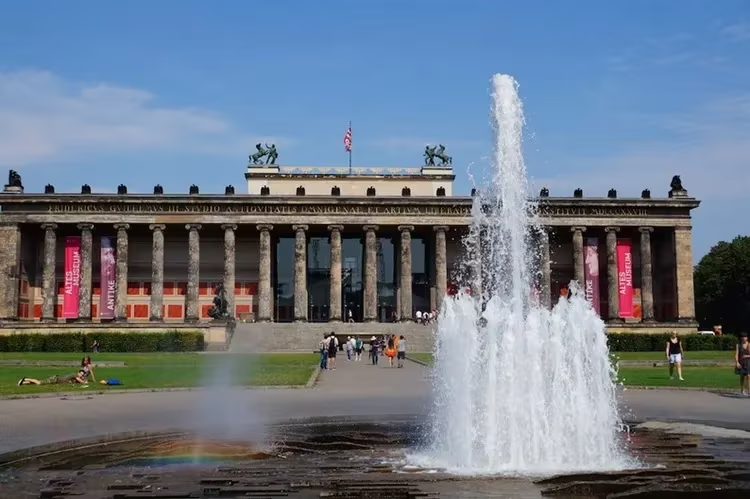
The ensemble of 5 museums has been formed on the island of Spreeinsel for more than 100 years. It is included in the UNESCO World Heritage List. It presents the history of mankind for 6 centuries. The complex includes the Pergamon Museum, the Bose Museum, the Old and New Museums and the Old National Gallery. The modern name was assigned to him in the 70s of the last century. And the very history of the emergence of the Museum Island began in 1797, with the idea of opening a museum of the history and art of antiquity.
The museum itself was opened only in 1830 – now it is the Old Museum. In 1859, the New appeared. It is dedicated to ancient architecture, the era of the primitive system and the history of Egypt. In 1856 the Old National Gallery opened. This is the largest collection of paintings from the frescoes of the Kazarians to the paintings of the French Impressionists. The Bose Museum and the Pergamon Museum appeared already in the 20th century. The Bose Museum contains the best examples of Byzantine art, as well as the German and Italian Middle Ages and the Renaissance.
In the Pergamon Museum you can see ancient art. There are also two collections dedicated to the history and culture of the East, the Western Asian and Islamic museums. It will take more than one day to see all the treasures of the Museum Island. It can be reached on foot from the Brandenburg Gate or by metro and tram M1, M4, M5.
Topography of terror
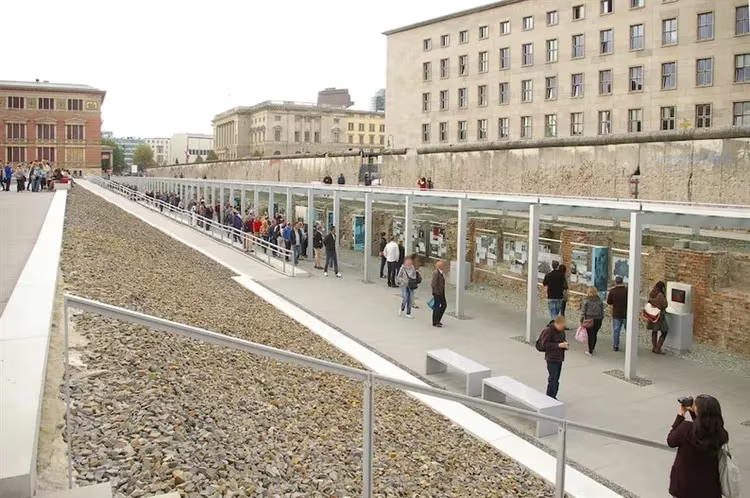
During the Third Reich, Prince Albert Palace was the headquarters of the Gestapo. It was demolished in 1949, and a new building was built on this site at the end of the last century, in which the Topography of Terror museum was opened. To consider the exposure, you need strong nerves. Almost all the exhibits are literally permeated with the blood and pain of millions of prisoners of concentration camps tortured by the Nazis and civilians in Europe. Here you can learn about how fascism was born in Germany and how the Nazis came to power in the country.
The museum contains photographs that show evidence of the crimes of the Gestapo, members of the SD and SS, documents in which you can find out information about the prisoners of concentration camps and labor camps, which at that time were organized throughout Europe. In the surviving cellars of the palace, torture instruments are displayed, and in the courtyard there are dilapidated barracks where the prisoners of the GBI-Lager 75/76 camp were kept. It's not easy to look at all this, but sometimes it’s worth reminding yourself of these difficult years in order to prevent this from happening again in the future.
The museum is open daily from 10 am to 8 pm. Weekends only on 24 and 31 December and 1 January. Free admission.
Memorial to the victims of the Holocaust
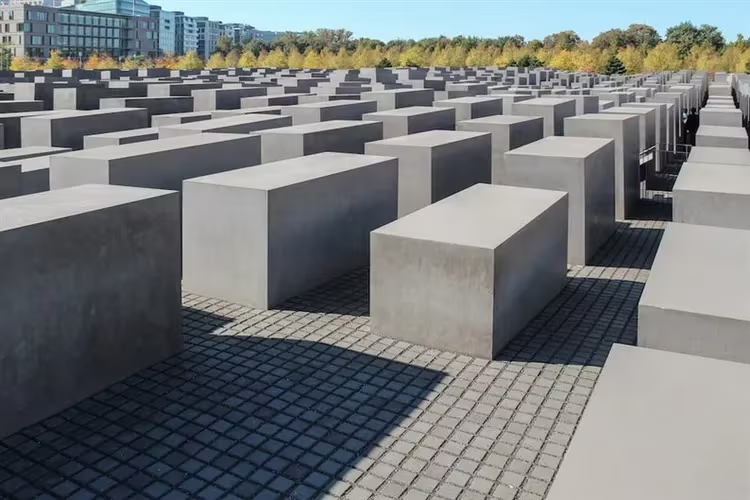
Not far from the Brandenburg Gate, in one of the most fashionable quarters of Berlin, where wealthy people live and offices of the largest companies are located, there is one of the most controversial monuments to the victims of the last won. Designed by Peter Eiseman, the Holocaust Memorial is a green field with gray concrete blocks. There are exactly 2271 of them. Along the edges they are quite low, but gradually grow, become higher, denser and form only narrow corridors through which a patch of sky and trees in the distance are visible.
The person who is here experiences an inexplicable feeling of growing anxiety and panic. These sensations intensify as you progress through the labyrinth. The posts are covered with a special composition, thanks to which dirt and paint do not linger on them. Any graffiti caused by vandals is immediately washed away by rain. At the very end of the concrete labyrinth is an information center. Here you can find out the fate of the Jews who disappeared during the war. The center has a small museum that contains documents, diaries and photographs of families held in the Berlin ghetto.
The center is open daily from 10 am to 7 pm, and the memorial itself is open around the clock. You can order an audio guide, including in Russian. Its cost is 4 euros.
NeueWache Memorial
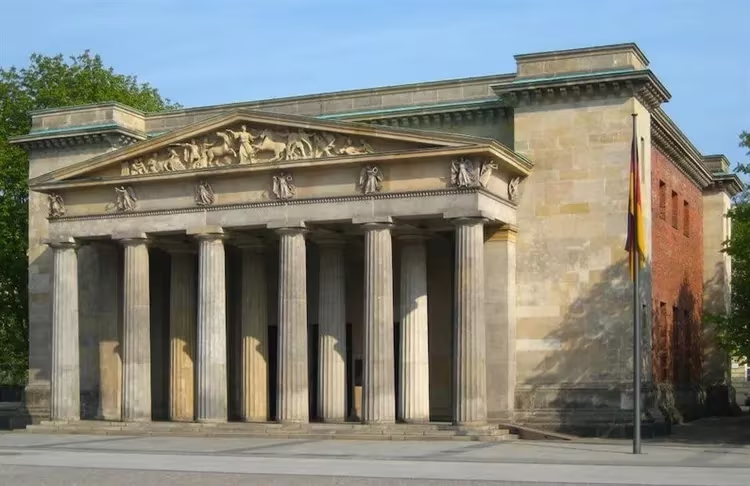
At the very beginning of Unter den Linden there is a building in the classical German style. Strict Doric columns support a pediment with a bas-relief depicting a battle. In the center is the goddess Nike with her hand raised up, deciding who will get the victory this time. This building is not a museum, but a monument to soldiers – victims of wars and terror. The people call it “NeueWache” – “new watch”. It was erected in 1816. It was a memorial to the soldiers who died in the war with Napoleon. The monument was rebuilt twice – after the First and Second World Wars.
Inside there are granite slabs, under which the remains of an unknown resistance fighter and an unnamed prisoner of a concentration camp lie, and in the center of the room there is a sculpture “Pieta”. This is an inconsolable mother holding the body of her dead son in her arms. There is no roof over her, and rain pours on the head of the inconsolable mother, she is covered with snow. This is a symbol of endless sorrows and misfortunes that fall on the whole people during any war.
Kaiser Wilhelm Memorial Church
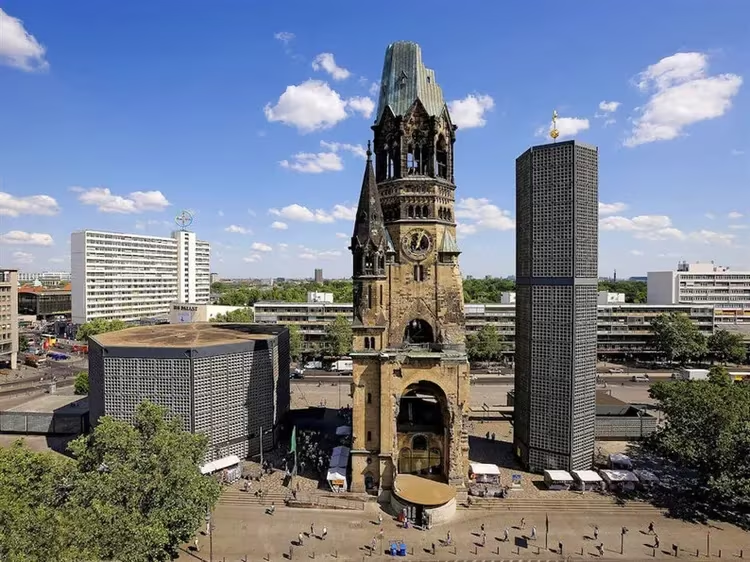
In the 19th century, a church was erected in Berlin in memory of the first Kaiser Wilhelm with a tower 113 m high. It was the highest church in the German capital. During the war, almost the entire church was destroyed, except for one of the towers. It was decided not to restore or demolish the temple, but to leave it in such a dilapidated form as a warning and a reminder of the war.
The Berliners nicknamed him “empty tooth”. And in the 60s, two modern buildings were erected next to it: a church and a bell tower. The church has eight sides, the walls are tiled, and the light penetrating the glass is reflected in an unusual blue color. The huge figure of Christ, whose height is 4 and a half meters, seems to hover above the altar. The temple has excellent acoustics, and organ concerts are often held here on Sundays.
And in place of the nave of the old church, there is now a six-sided bell tower. Every hour, its bells play a melody, the author of which is the grandson of the Kaiser, Prince Luis Ferdinand.
In the surviving tower, or rather in its basement, there is now a memorial. It tells about the history of the church, the remaining fragments of reliefs and mosaics, church utensils, and a sculpture of Christ are stored here. This complex is a symbol of West Berlin. Before Christmas, a Christmas tree is set up in the square in front of the church and a fair is held. Here you can buy souvenirs, try real German sausages and mulled wine, feel the approach of happy holidays.
The church is open every day from 9 am to 7 pm, and the memorial hall is open from Monday to Saturday from 10 am to 4 pm.
Church of St. Nicholas
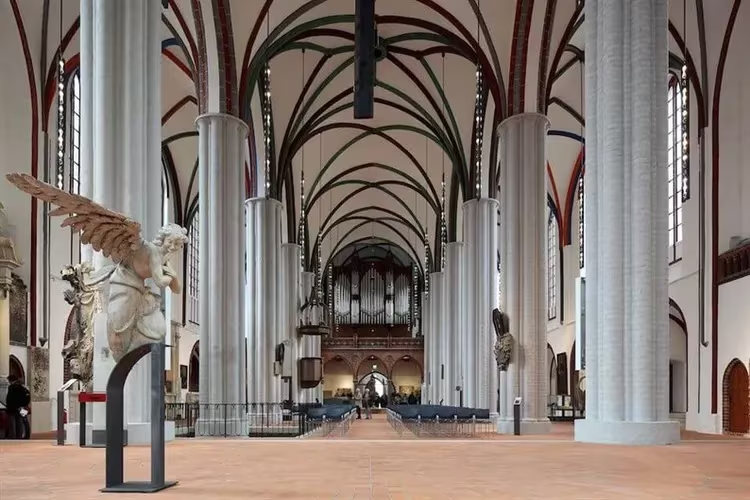
The Church of St. Nicholas in 2010 celebrated its 800th anniversary, although it was mentioned in documents dating back to 1200. This basilica is older than the city itself. Now it no longer fulfills its spiritual functions, but has become a branch of the Brandenburg Museum. The last service was held in it in 1938, and during the war the church was almost completely destroyed.
Throughout its long history, the temple was rebuilt several times, and in its appearance one can find Gothic, neo-Gothic features and later eras. After the war, the church was restored. At the same time, chimes with an additional bell were added to the bell tower. After the restoration, the basilica began to work as a museum. The exhibits tell about the history of the church and about the people whose fate was connected with it.
If you go down the stairs, you can find yourself at the level of medieval Berlin. Beyer's crypt can also be seen here. Sometimes the temple hosts concerts of classical music, including organ music. The doors of the museum are open every day from 10:00 to 18:00. An adult ticket costs 6 euros, and a child ticket costs 4 euros. Every first Wednesday of the month you can visit the basilica for free.
Church of St. Mary
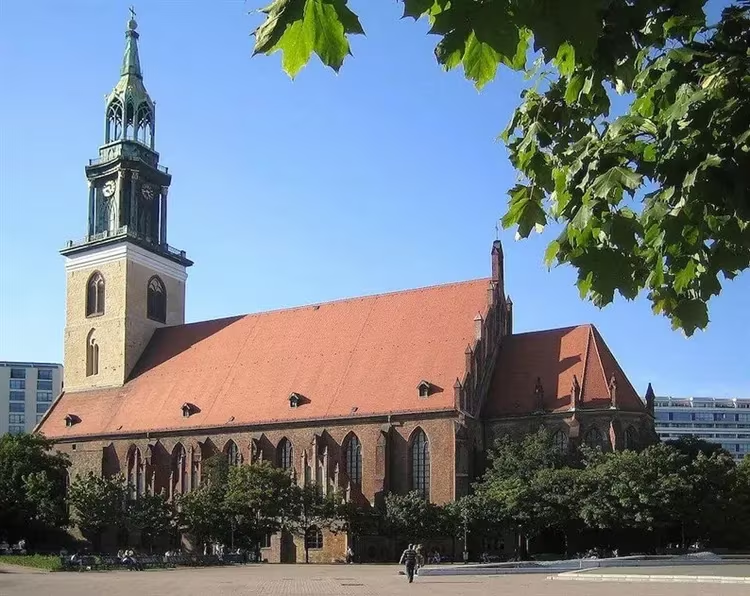
Of all the existing churches in Berlin, the Church of St. Mary is the oldest. It is located in the very center of the city. Next to it is the TV tower, built in 1960. The first mention of the church dates back to 1292. Its tower burned several times and was restored in the 17th century, which is why traces of other eras, such as baroque, are noticeable in the architecture. And in 1789-90, after another restructuring, it acquired a neo-Gothic look.
In the church of St. Mary, services continued after the war. The area around it was completely reconstructed, surrounding the church with modern buildings. Now only the Basilica of St. Mary and the Red Town Hall remind of the ancient past. Inside the church is interesting for its decoration and the same mixture of styles of its design. The old fresco “Dance of Death”, depicting the plague in Berlin in the Middle Ages, has been preserved.
True, the colors faded almost everywhere, and a reproduction of it was placed next to the fresco. The organ standing in the temple was once played by J.-S. Bach. From the very first day of the existence of the church, it has had its own choir. And today, every Sunday service is accompanied by organ music and hymns performed by the church choir, giving all visitors an extraordinary feeling of harmony and unity with God. The temple is open on Mondays, Wednesdays and Fridays from 10 am to 2 pm, and on Thursday from 2 pm to 6 pm.
New Synagogue
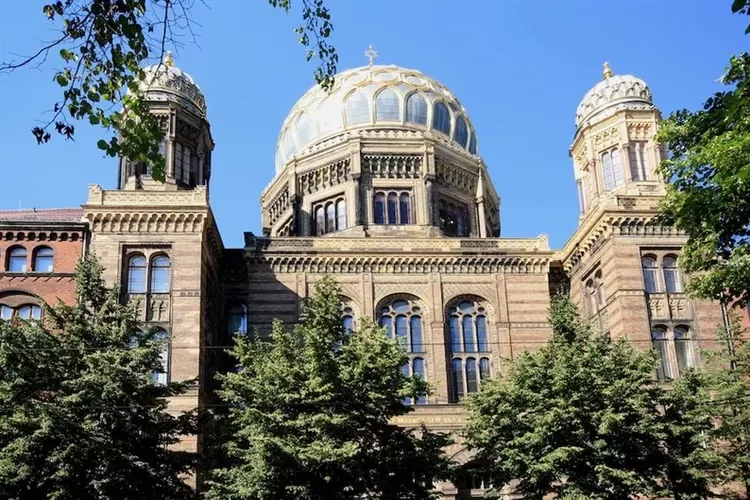
The capital of Germany has always been a cosmopolitan city. Due to the large influx of the Jewish population in the second half of the 19th century, there was a need to build a new synagogue that could accommodate all the parishioners. The new synagogue opened on September 5, 1866. Its architects, F. Stüler and E. Knoblauch, used the style of Spanish synagogues in the design of the facade: oriental ornaments, multi-colored and glazed bricks, hipped domes.
It was the largest synagogue in Germany. Not only worship services were held here, but lectures were also given and concerts were held. In 1930, for example, Albert Einstein himself participated in a violin concert held here. During the Jewish pogrom in November 1938, the synagogue was on fire, but after it was restored, and services continued in it. It closed only in 1940.
After the war, only the facade remained from it, and the government of the GDR, which included this area of Berlin, decided not to restore the building. Only after the unification of Germany, the synagogue was restored. Today, services are held here and a museum operates. Entrance costs 7 euros for adults and 4.5 euros for children.
Checkpoint Charlie
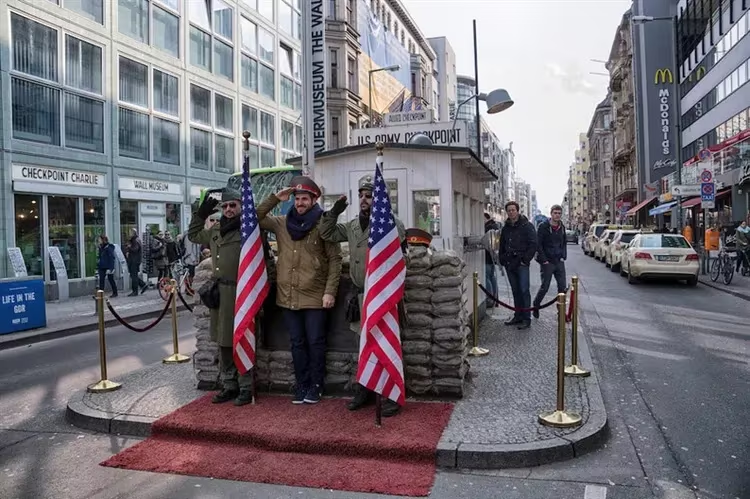
The checkpoint on Friedrichstrasse was once one of the points through which East Berliners could get to its western side. But only senior officials, diplomats and foreign citizens could use it, in particular, through this item – US citizens. Today, in memory of those years, there is a border booth lined with sandbags and illuminated by searchlights. Checkpoint “C”, or “Charlie”, as the townspeople called this checkpoint, today is a symbol of the Cold War.
Next to the booth, several cobblestones show where the border ran, and there is a poster flanked by American and Soviet soldiers representing two irreconcilable ideologies. Not far from this place is the famous cafe “Adler“. There were meetings of dissidents and spies with journalists.
The Berlin Wall Museum is also housed in a house near the border checkpoint and tells about the cost of freedom for people in the recent past. You can get here by metro – this is the Kochstrasse station on the U6 line.
Balloon DieWelt
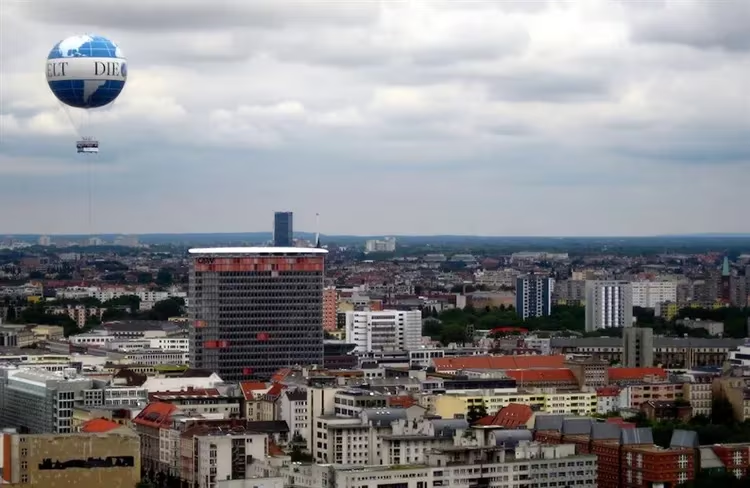
Not far from the Brandenburg Gate, the balloon Die Welt soars in the sky above the city. The white-blue balloon in good weather is perfectly visible from all corners of the city. This original advertisement of the most influential Berlin newspaper has long become a symbol of the German capital. The ball goes “in flight” every 15 minutes. Its basket can accommodate up to 30 people. It is securely connected to the ground with a metal cable. Rising to a height of 150 m, you can see not only the historical center, but also see the original modern districts of the city.
In the warm season, the balloon accepts passengers from 10 am to 10 pm, from November to March – from 11:00 to 18:00. A ticket costs 25 euros for adults, students, schoolchildren and the disabled – 20 euros, children under 10 years old – 12 euros.
Treptow Park
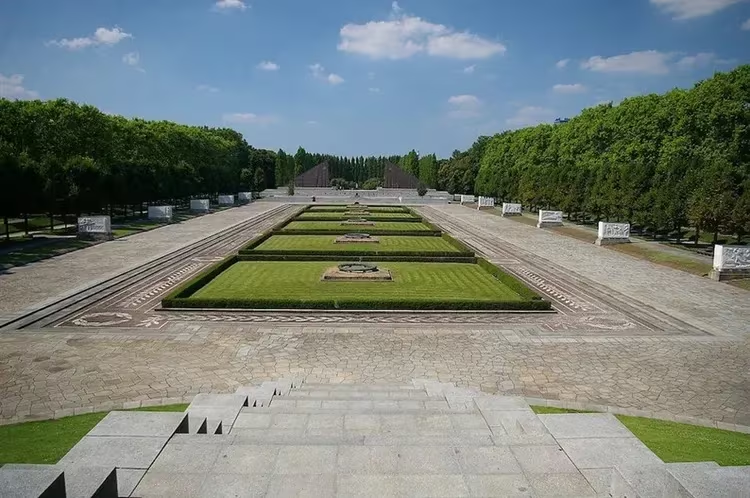
Probably everyone in our country knows the name of this Berlin park. Even those who have never planned a trip to Berlin. After all, one of the largest memorial complexes to Soviet soldiers – the liberators of Berlin is located here. Initially, this green area on the River Spree was planned as a place for recreation and entertainment for the townspeople. However, after the war, the purpose of this park changed slightly.
The memorial opens with a sculpture of a grieving mother, from which an alley of birches leads through a symbolic gate with half-mast banners to sarcophagi and an 8-meter statue of a liberator soldier. There is a small museum in its base, where lists are kept with the names of all the dead soldiers buried in the mass graves of Treptow Park. On May 8 and 9, Berliners and tourists who came to commemorate the soldiers gather in the park.
But besides the memorial, the park also has places for family recreation. There are fountains, water rides, a large rose garden and a sunflower meadow. The Archenhold Observatory has the longest telescope in Europe. It is open from Wednesday to Sunday from 2 pm to 4:30 pm. Admission is free, but excursions are paid – 6 euros for adults and 3 euros for children. A family ticket for 2 adults and 3 children will cost 15 euros. Entrance to the park is free, it is open every day around the clock.
Botanical Garden
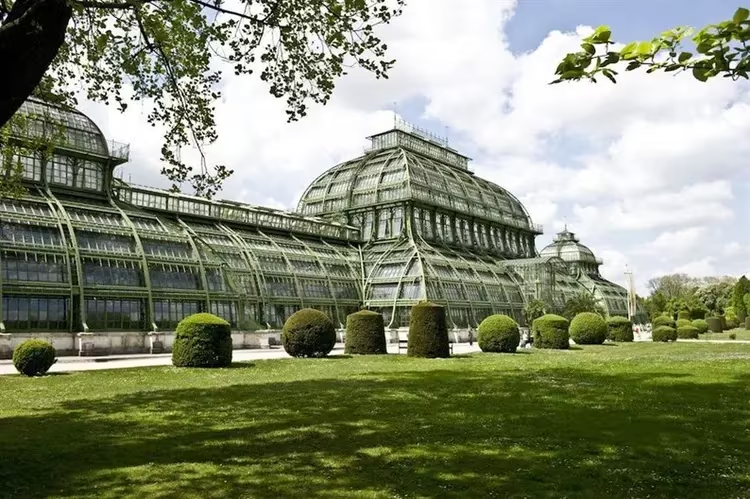
The Berlin Botanical Garden is one of the three most important botanical gardens in the world. It began with apothecary gardens in 1679 and was then called “Kurfüstengarten”. Today it is 430 thousand square meters. m of meadows, forest glades, flower beds, lakes, pavilions and lawns with unique plants from different natural areas. 15 rooms represent a variety of climatic zones and plants that grow in them. Here you can see unique ferns, exotic orchids, predator plants.
The flora of Australia, the Canary Islands, Angola, Mexico, the Caucasus Mountains and the Alps – you will go on a real journey around the world. Each zone is decorated in accordance with natural features.
The garden has many seating areas with benches, small gazebos and balconies. The garden is open daily, but in November, December and January – from 9 am to 4 pm, in February – until 5 pm, in March and October – until 6 pm, in April, August and September – until 8 pm, and in May, June and July – until 21:00. The only day off – on the eve of Christmas – December 24th.
Boulevard Unter den Linden
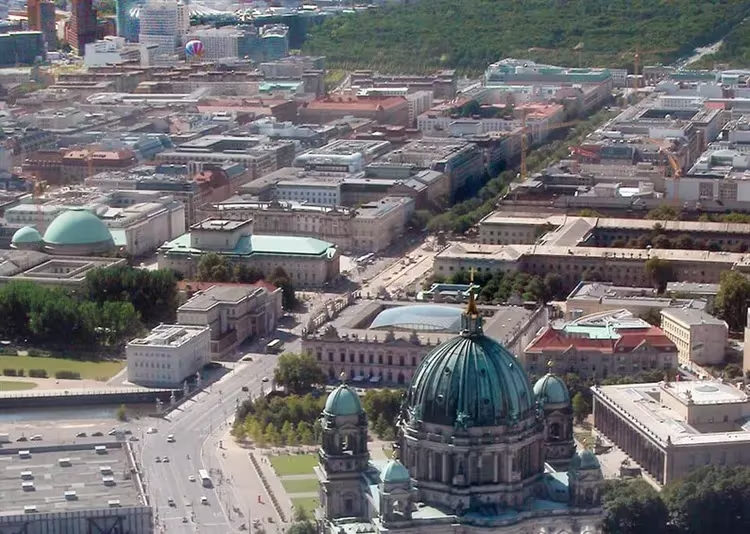
The most famous street in Berlin starts from the Palace Square and stretches to the Brandenburg Gate. Its length is 1390 m, and its width in some places reaches 60 m. It got its name in honor of two rows of lindens, which were planted in 1647 by order of Friedrich Wilhelm. From here began the road leading from the palace to its hunting grounds.
Gradually, wealthy citizens and noble families began to build mansions along the road. With the growth of the city, the Unter den Linden boulevard turned into the main street of the city. Theaters were opened here, palaces and government buildings were built. Today, the main sights of the city are concentrated on it: the Arsenal with the German Historical Museum, the Neue Wache, the palace ensemble, including the palaces of the crown prince and princess.
In 1743, the famous Berlin Opera opened here. Today, the great Daniel Barenboim has been its artistic director for many years. Strings of cozy cafes and restaurants stretch along the entire street, but the Einstein is still considered the most famous and the favorite place of Russian Berliners is a small cafe near the Opera House.
Tropical Island Water Park
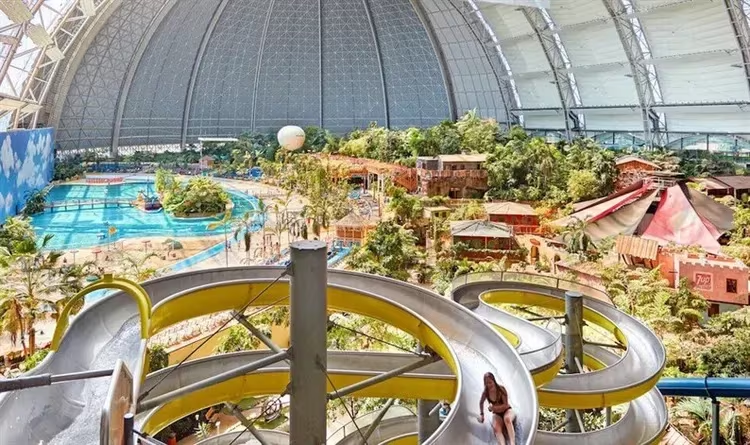
In the very heart of Europe, you can suddenly find yourself in the center of a real tropical paradise and for several hours be transported from a noisy metropolis to the jungle or to the shores of the southern oceans. The Tropical Island water park is truly the very best… Here is the most extensive bath and spa complex in Europe, the highest water slide in the country, and the largest artificial beach in Europe. The entire park is divided into zones. You can find yourself in the “Flower World” among exotic plants, animals and birds, get into the jungle or on a sandy beach, the length of which is 200 m.
A culinary journey into the world of exotic dishes awaits you in the Tropical Village, and attractions for the whole family are concentrated in the Amazonia. The depth of all pools does not exceed 135 cm, so that families with children can use them. In addition, the water park has a special area for spa treatments with a bath complex and a fitness center. The catering zone has 12 establishments – from fast food to expensive restaurants offering an exotic menu. At the water park there are even hotels for those who want to spend more than one day here.
Aquarium AquaDom
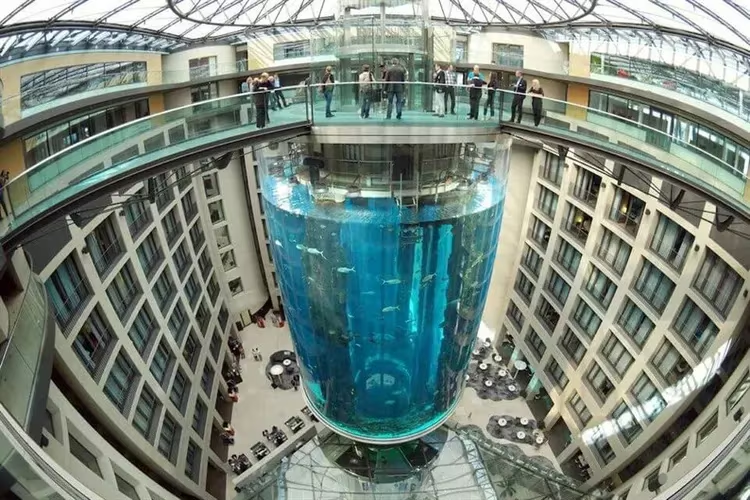
The world's largest cylindrical saltwater aquarium is called the AquaDom and is located in the lobby of the Radisson Blue Hotel. Its height is 25 m and its width is 11 m. These are underwater caves and grottoes, coral reefs, where sharks, mussels, seahorses, rays, lobsters and other representatives of the marine fauna live. In total, there are about 1,500 fish of 97 different species in the aquarium, and they are all from a wide variety of water zones.
You can look at the unique aquarium daily from 10 am to 7 pm. December 24 is a day off. On December 31, it is open from 10:00 to 17:00, and on January 1, from 1:00 to 17:00.
Olympic Stadium
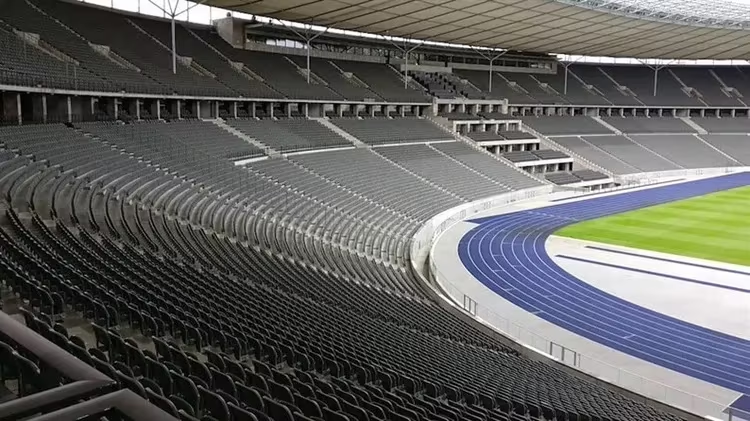
The Olympic Stadium was built for the 1916 games. Designed by Otto March. But the games did not take place due to the outbreak of the First World War two years earlier. Berlin was next chosen to host the 1936 Olympic Games. The Nazi government thoroughly prepared for their implementation. They were supposed to demonstrate the power of the fascist state.
The stadium was reconstructed by Otto March's son, Werner. The building was rebuilt in accordance with classical antique traditions. This emphasized that the Third Reich was the direct heir to the Holy Roman Empire. The stadium could accommodate 110 thousand spectators. Separately, a tribune for Hitler was built. In front of the stadium was the May meadow, where parades and sports reviews were held. The stadium opened on August 1, 1936, the ceremony was broadcast by 20 television screens located in Berlin.
After the war, the stadium became the home of the Greta football club. For the 2006 FIFA World Cup, it was completely reconstructed and modernized. Now it is the largest sports ground in Germany, it can accommodate 74.5 thousand spectators. Major competitions are held here, including the final of the World Cup in 2006.
Grunwald Forest
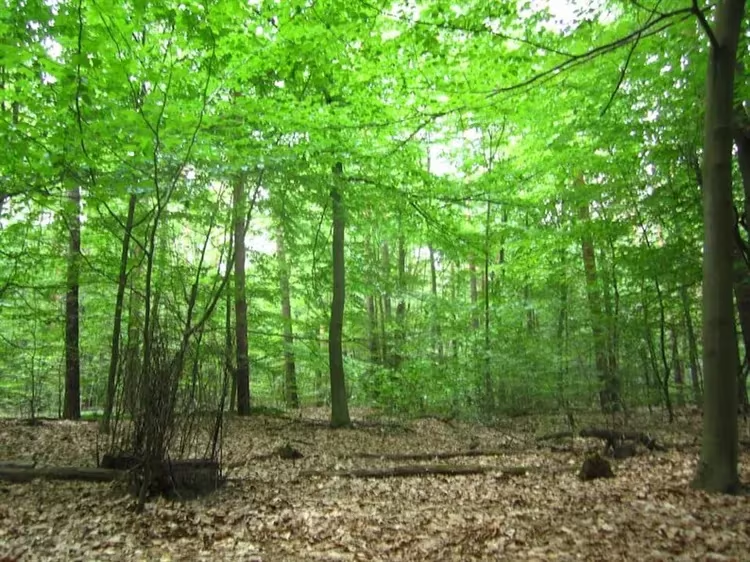
Grunwald – the former suburb of Berlin, was once built up with country villas of rich and noble people. At the beginning of the last century, representatives of the authorities liked to relax here, and today you can admire the beautiful architecture of the mansions, enjoy the silence and walk through the parks of some villas that are free to visit. However, most Berliners do not aspire here for this, but go to the Grunwald Forest.
This is a large forest and park recreation area in the southwest of the city. It is pleasant to wander along the shady alleys on foot or ride a bicycle, listen to the birds, relax by the numerous ponds. On the shores of Lake Wannsee there is a beach area with sun loungers, umbrellas, cafes. This is a favorite vacation spot for Berliners. Without leaving the city, you can take a break from the noise of the metropolis – here you will find the transparent expanse of the lake, warm, clean sand, silence and birdsong.