
Fountain of the four rivers in Rome – history, photo, description, how to get there, map
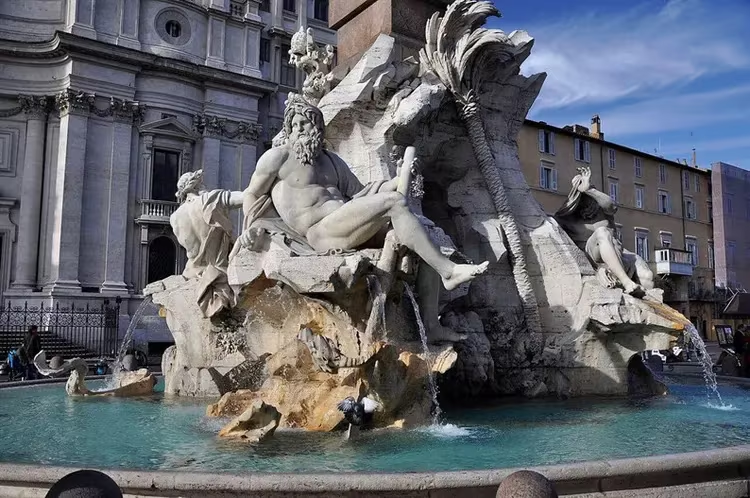
The basis for the development of urban planning in Rome was a skillful combination of baroque architecture of buildings with fountains in the form of exquisite sculptural works. In the center of Piazza Navona, where a sports stadium stood during the heyday of the Roman Empire, one of the most majestic and beautiful fountains in Rome is located. The creation of the famous sculpture of Gian Lorenzo Bernini was erected in the middle of the 17th century.
Construction history
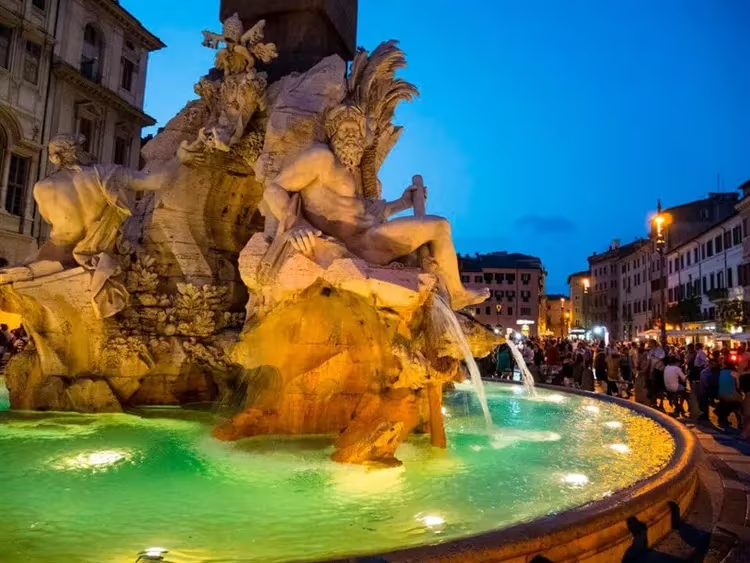
In 1644, Innocent X became the head of the Papal State. Being a descendant of the noble Pamphili family, Innocent was an adherent of luxurious monumental buildings. On the square, which would later be called Navona, at the initiative of the Pope, the erection of the family residence of the pontiff, the basilica and the most beautiful palazzo began. Innocent X considered this quarter as a courtyard in front of his mansion. Therefore, special attention was paid to the decoration and ennoblement of this territory.
The Pope decided to install a huge Egyptian obelisk with a majestic fountain on the square. This composition was supposed to symbolize the triumph of the Catholic Church over paganism, and also to exalt Innocent X even more. Many architects sought to offer their projects, but none of them corresponded to the papal plan. The famous master of that era Gian Lorenzo Bernini participated in the competition. Initially, the high priest categorically refused the services of the architect due to the fact that he was patronized by the previous pope Urban VIII, with whom Innocent X had previously had tense relations.
Legend has it that when the Pope was walking around the square, the cunning Bernini laid out sketches of the planned fountain of rivers on his way. The drawings struck Innocent X with their perfection. According to the plan, the sculpture masters were supposed to personify the missionary activities of the Catholic Church throughout the Earth. The idea of the architect interested the Pope in that the fountain visually proclaims the high priest as the ruler of the whole world. The brilliant architect was immediately given the honor of leading the construction of the Four Rivers Fountain.
The ambitious project involved large financial costs, so Innocent X introduced unpopular taxes on bread, meat and salt for citizens. This angered the Romans. Bernini worked with a large group of his students. The end of the construction of the fountain took place in 1651. The artists filled the images of the sculptures with life-giving energy and strength. The sculpture still impresses and delights numerous crowds of tourists. The pool with sculptures and an obelisk is located opposite the Basilica of Saint Agnese, the architect of which was Francesco Borromini, Bernini's sworn enemy.
There are several funny stories associated with the fountain of the four rivers. According to rumors, the figures of the fountain seem to demonstrate their contempt for the creation of Borromini. One of the figures has its back to the church, and the head of the other sculpture is covered with a cape so as not to see the temple. The third statue with a raised hand allegedly depicts fright from what he saw the basilica.
Another story tells that Bernini made a mistake in the construction of the fountain, as a result of which water did not enter the container. Borromini figured out the reason why the fountain did not work. He looked forward to the failure of his competitor. However, at the grand opening of the monumental structure, water nevertheless filled the sculptural work. Bernini managed to correct the shortcomings thanks to the tips received from the maid Borromini, who secretly stole the correct calculations of the owner.
Description of the Fountain of the Four Rivers in Rome
The main concept of the fountain is the embodiment of Catholicism on the four continents of the world (by the time the building was erected, Australia was an unknown land for Europeans). The fountain is a large travertine rock from which jets of water gush. At the corners of the stone slab sit expressive, giant muscular human figures made of marble. They embody in allegorical form the famous large rivers of the 17th century. These are the Nile, Ganges, Danube and Rio dela Plata.
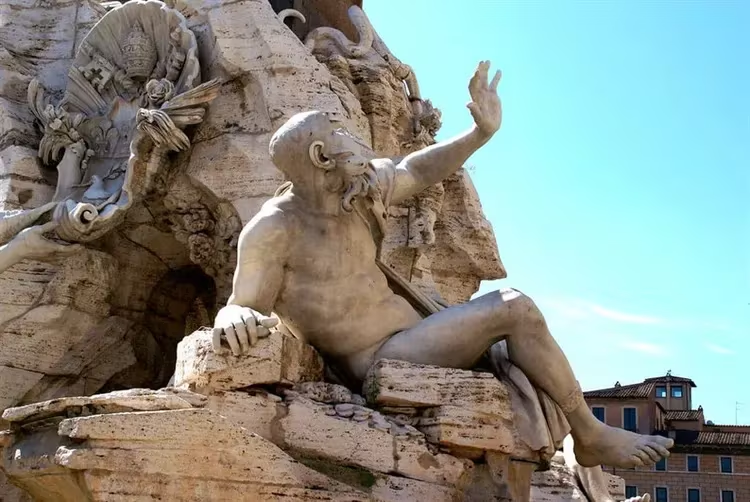
The sculptures are surrounded by figures of animals and plants corresponding to the continents represented. The lipped savage, sitting next to the snake and the crocodile, rests his elbow on countless treasures in the form of silver coins. This image characterizes the natural wealth of the South American river Rio dela Plata. The figure, near which you can see a lion and a palm tree, symbolizes the Nile. It is noteworthy that at that time the origins of the African river were still unexplored. Therefore, the face of the sculpture is symbolically covered with cloth.
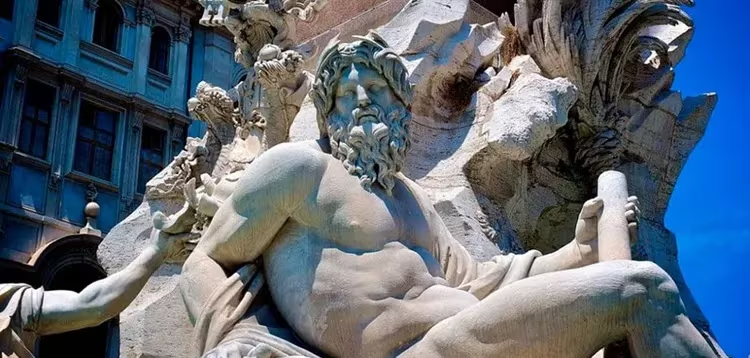
The river Ganges is represented by a man with an oar around which a dragon is entwined. The figure demonstrates the rapid development of shipping navigation in the South Asian region. The marble giant, turned to face the relief scroll with the coat of arms of the Pope on top of the rock, personifies the Danube River. Thus, the authority of Christianity in the world is confirmed. At the base of the rock, you can see a horse jumping out onto the flowering European plain.
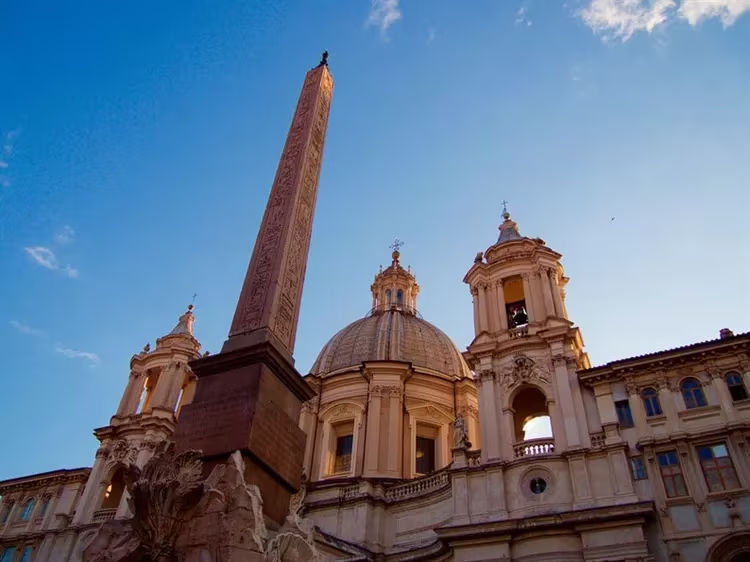
In the center of the pool there is a sixteen-meter granite obelisk, the pyramidal top of which is decorated with the image of the coat of arms of Innocent X – a dove with an olive branch. The pylon is considered one of the ancient monuments of Rome. It was specially brought from Egypt to decorate a sports stadium under Emperor Maxentius in 309. Chariot races were held around the monument. Later, the obelisk broke into several parts. For a long time it was among the ruins of the ancient Roman region. In 1649, at the initiative of Innocent X, the monument was restored and literally assembled piece by piece.
Where is it located and how to get there
Bernini's masterpiece is located in the center of Piazza Navona. The nearest metro station (Barberini) is located far from the fountain. Therefore, you can get to the sights by bus. There are many routes going there.