
🚗 Lisbon – Porto: 10 must-visit places along the way
There are about 350 km between the southern and northern capitals of Portugal. This distance can be covered in three and a half hours along one of the toll highways: A1 or A8 with a transition to A17. But if you, like me, like to stop at interesting places along the route, this article is for you!
Bacalhôa Buddha Eden
Quite an atypical place for Portugal. The idea of creating the park belonged to the Portuguese investor and philanthropist Jose Berardo. He was greatly affected by the situation with the destruction of giant Buddhas in Afghanistan. As a result, in the early 2000s he decided to create a “garden of peace”, where there would be a place for all religions and any kind of creativity.
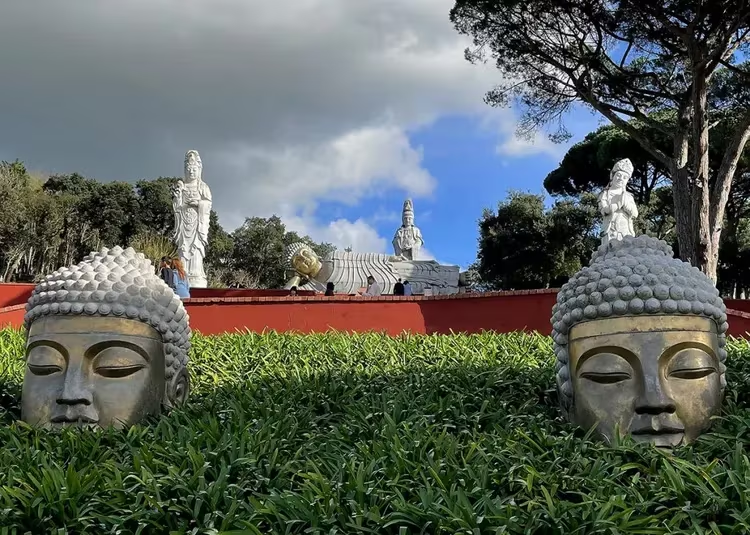
Buddha's Eden is considered the largest oriental garden in Europe, and its exhibition is constantly increasing. On 35 hectares you will see references to the art of the East and Africa, as well as modern sculptures. And all this is surrounded by nature: palm trees, bamboo groves, ponds and flower beds.
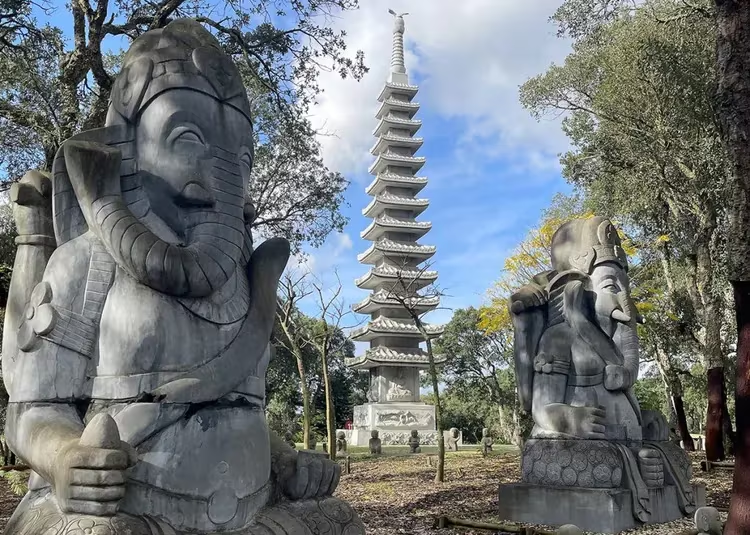
The place is fantastic – calm and creative. It took me about two hours to walk around the entire garden. At the entrance you can take the tourist train – a ticket costs 6 euros – and take a journey through the picturesque park, stopping at the main points.
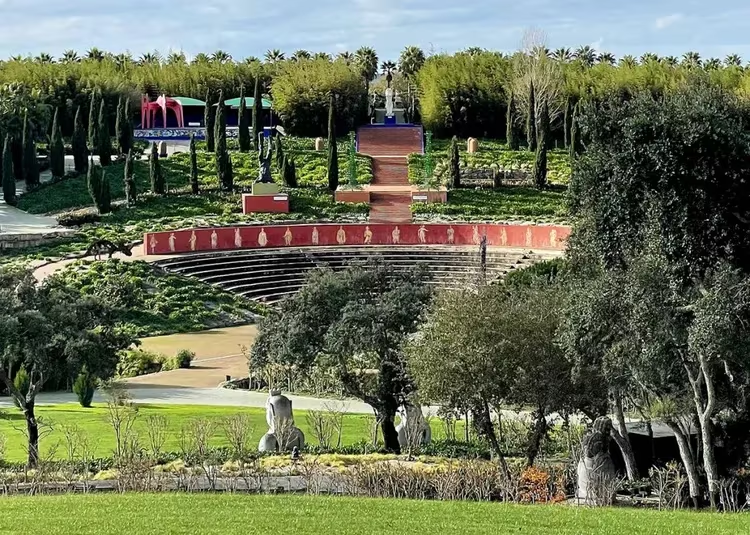
There is a restaurant and cafe on site. A visit to Bacalhôa Buddha Eden will cost 6 euros. This “Garden of Eden” is located 75 km from Lisbon.
Óbidos
Drive another 10 km and you will find yourself in a medieval Portuguese town. The car must be left behind the fortress wall at Porta da Vila. The territory of the village is small – you can explore it in a couple of hours and quickly return to the parking lot from any point.
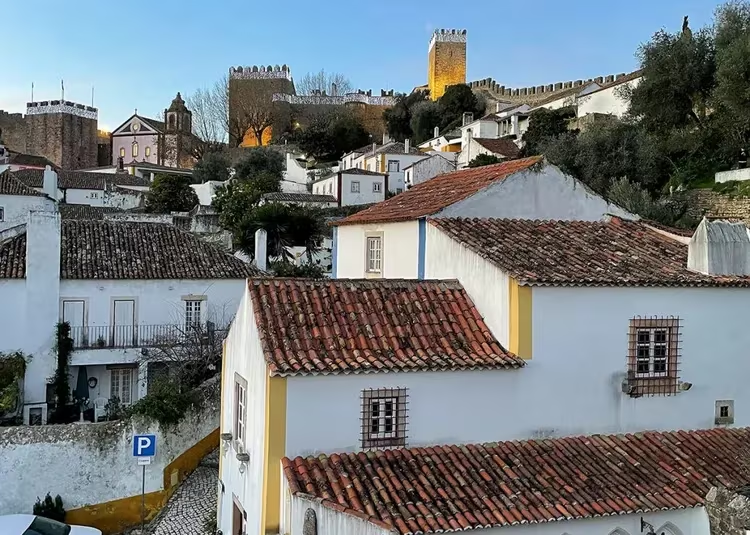
King Dinis gave Obidos Castle to Princess Isabella on their wedding day. For the next 500 years the city was part of the dowry of the Portuguese queens.
The fortress walls bordering the settlement were built in the 12th-14th centuries. Any tourist can walk along their perimeter, which is 1565 meters. From above, the whole city is in full view: a labyrinth of streets, beautiful churches, cute houses and authentic courtyards where ordinary life goes on. In the evening, from the fortress you can see the sun setting behind the horizon and the lights in the city coming on.
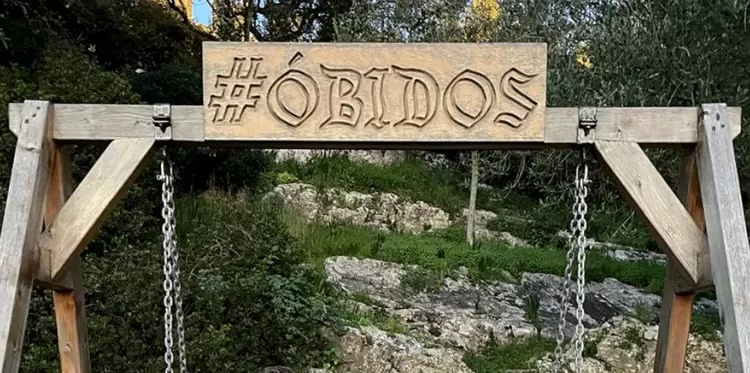
Don't miss the swing (Baloiço Óbidos), which also offers a cool view of the city.
Be sure to have a glass of ginja, a Portuguese cherry liqueur. It was in Obidos that they came up with the idea of serving the drink in small chocolate glasses.

In the spring, the city hosts the International Chocolate Festival, in the summer – the Medieval Bazaar, and in the winter – the Christmas Market. It is interesting to walk around the ancient city even when there are no mass celebrations.
Monastery of Batalha
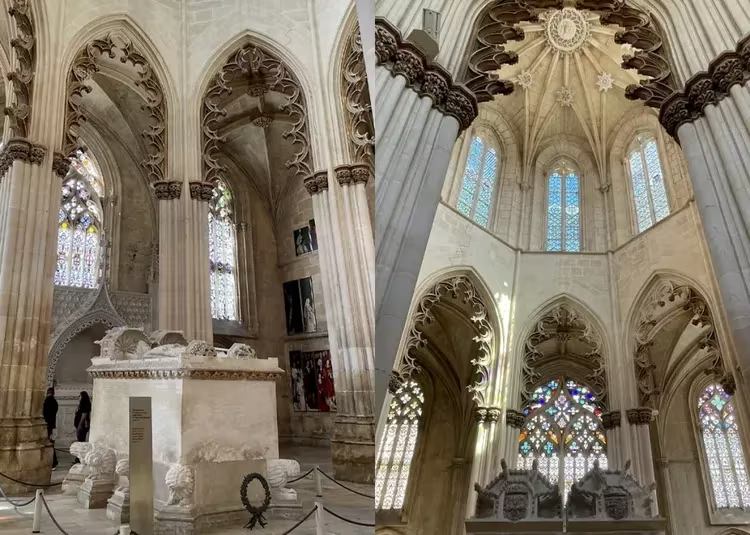
On the way to Porto, 140 km from Lisbon, there is another pearl of Portugal – the monastery of Santa Maria da Vitória na Batalha.
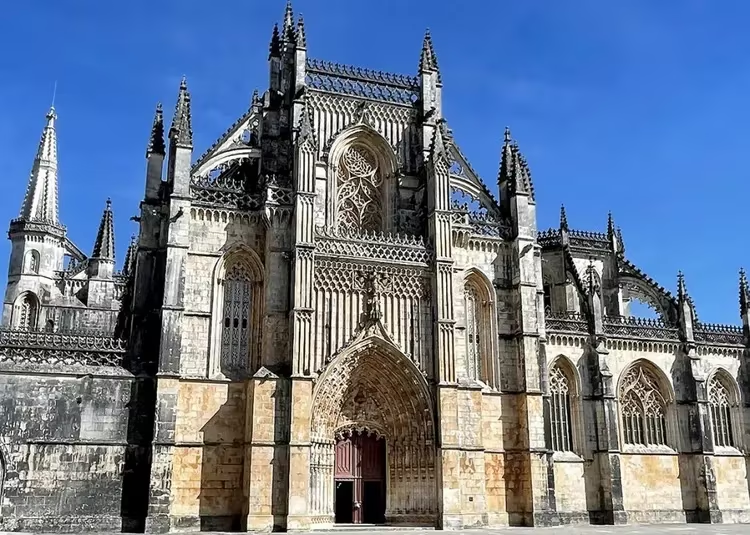
Two kilometers from its location, an important battle took place at the end of the 14th century, in which João I was able to defend the independence of his kingdom. As a token of gratitude to the Virgin Mary, whose protection he asked, the monarch decided to build this cathedral.
The next six Portuguese rulers continued João's work. But the work on the temple was never completed. King Manuel I at the beginning of the 16th century decided to switch to the construction of the Jerónimos Monastery. Therefore, one of the chapels of the Batal temple has no roof.
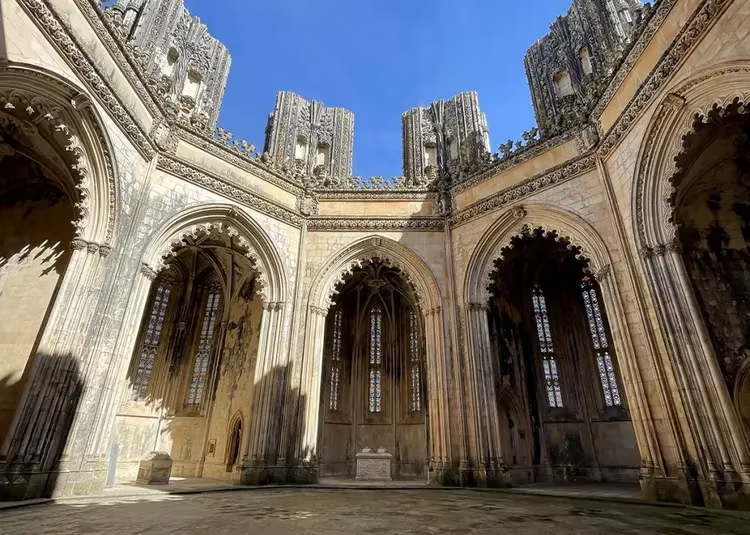
You can't take your eyes off the Gothic cathedral. From different sides it opens up to new things. The wealth of details, lace stucco, huge medieval stained glass windows – dizzying!
The main cathedral can be seen for free. But to visit the courtyards, chapels and tombs of the Portuguese kings you need to pay 6 euros. I planned the visit for an hour, but I ended up hanging out in the temple for a long time – it is very beautiful.
Leiria
The city of Leiria is 10 km from Batalha. This is a municipal center with a long historical past and an active creative present. It so cleverly interweaves modernity with antiquity – I was very impressed!
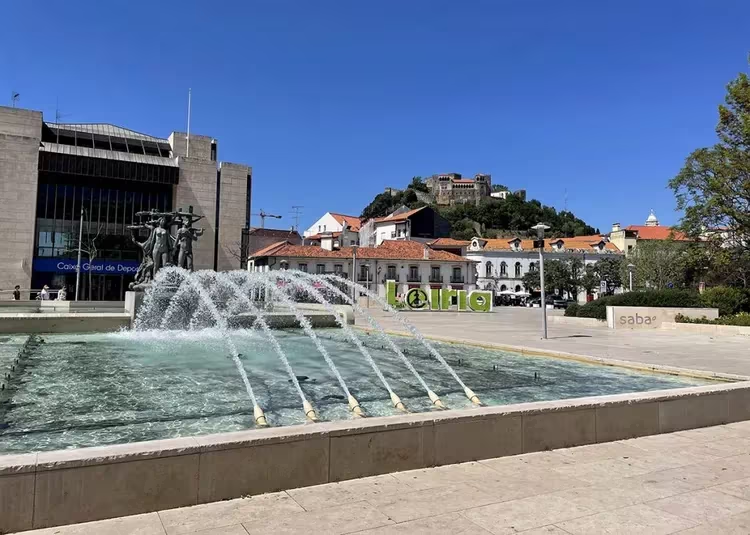
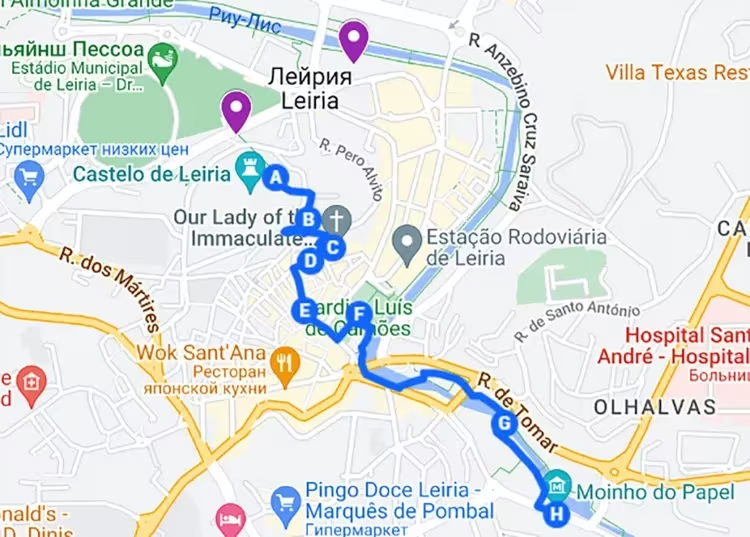
The city is quite large by Portuguese standards – and there are many interesting places in it. That's why I've put together a two-kilometer walking route for you.
I recommend leaving your car in the parking lot near the main market. Not far from it there is an elevator that will take you to the castle hill. All marks are on the map. Enjoy exploring the city! And by the way, even during this period you can find last-minute tours.
A. Castelo de Leiria
The first king of Portugal, Afonso Henriques, conquered this territory in the 12th century, and then began to build a castle on the mountain. Two centuries later, King Dinis built his residence into the fortress walls. A little later they decided to create a temple nearby.
Little, however, has survived from those times. But what remains is the large loggia of the former palace, which offers a breathtaking view of the city and its surroundings. Sitting down on a stone bench, you can endlessly look into the distance.
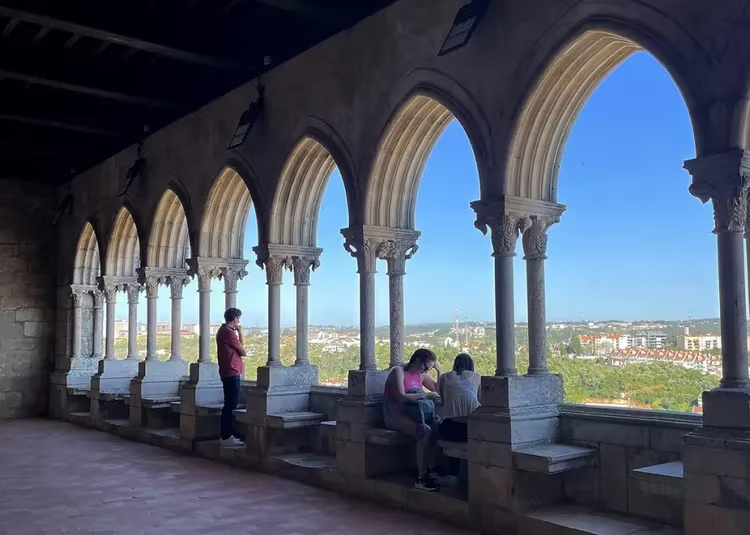
Entrance to the castle grounds costs a little more than 2 euros.
V. Torre Sineira
“A bell tower without a cathedral, a cathedral without a bell tower, a Right Street that is not right at all, and a river flowing uphill,” there is a humorous rhyme about Leiria.
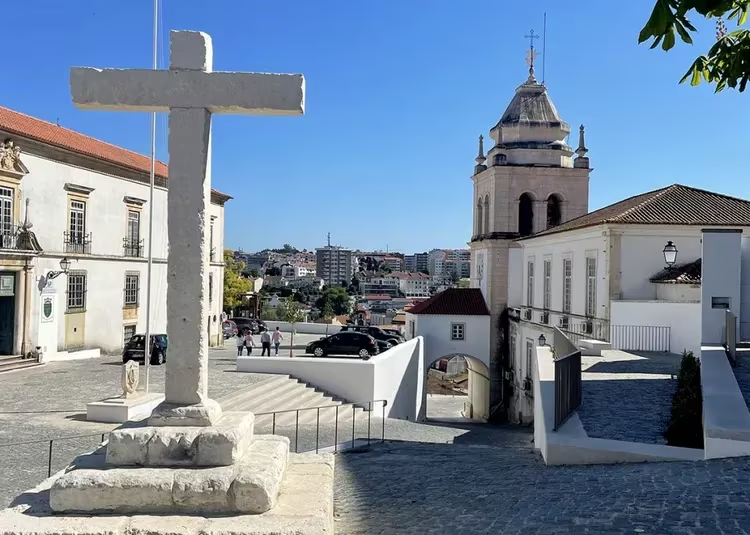
So, in front of you is a bell tower, which is separated from the temple. They built this belfry just above the cathedral, because from here the ringing reaches even the most remote parts of the city.
The bell tower was erected at the end of the 18th century. The first floor of the tower was used as a prison, and now there is a police office here.
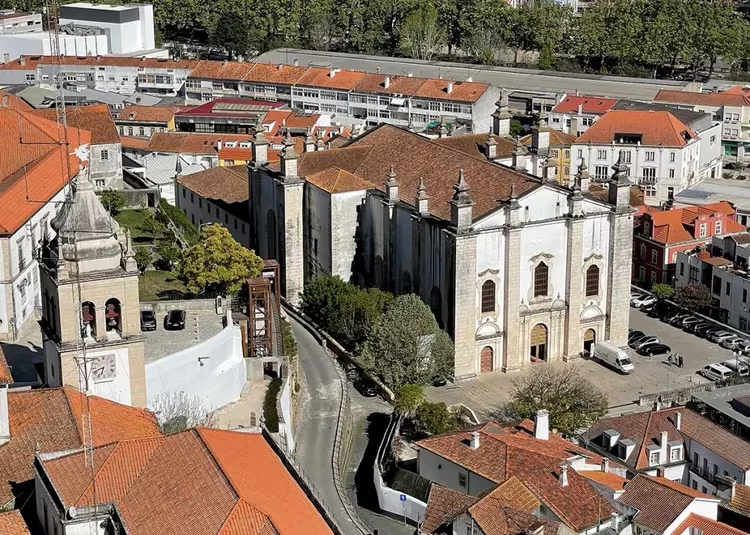
C. Leiria Cathedral (Sé Catedral de Leiria)
This temple was built in the 16th century, because the churches that were in the city before could no longer accommodate all the parishioners. The architecture of the cathedral mixed Baroque and Renaissance.
But the temple has not survived to this day in its original form. First, it had to be restored after a large-scale Portuguese earthquake in 1755, and half a century later it was badly damaged by the French.
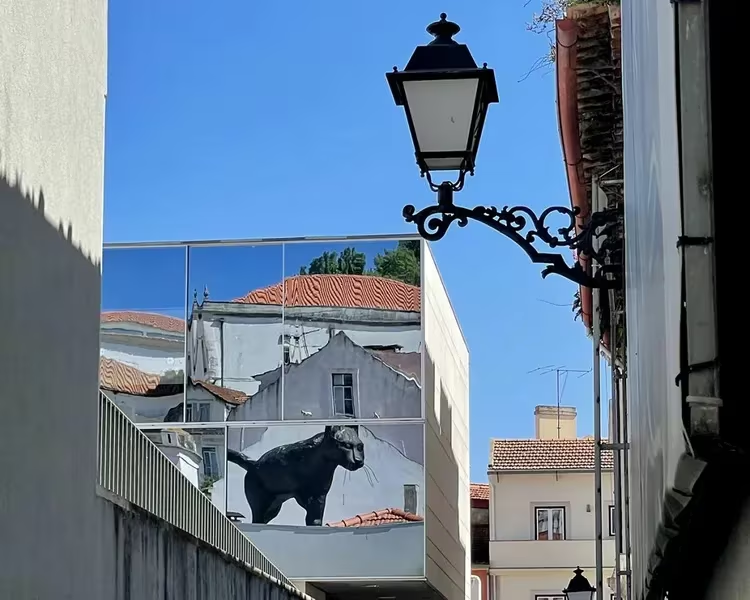
D. Cat on the roof
I have not seen this monument in other guidebooks. I noticed a cat on the roof, wandering aimlessly through the narrow streets of the old city. By the way, try to find the mustachioed one while viewing the city from the castle loggia.
A huge black cat was installed on the roof of an association for people over 50 who are interested in art and literature. Portuguese pensioners don’t like to languish at home, but go to hobby groups—not a boring old age, I support it.
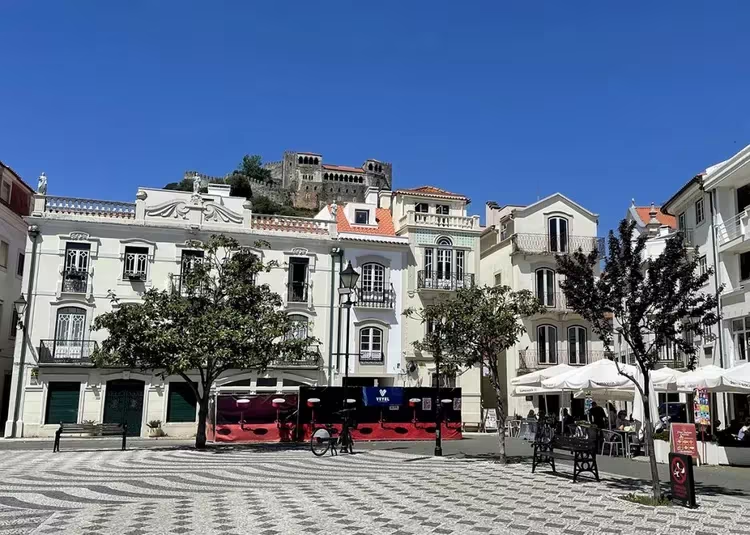
E. Praça Rodrigues Lobo
Since the Middle Ages, fairs have been held in this square. The Portuguese poet, born in Leiria, Rodrigues Lobo, liked to come here. The parade ground was named after him.
Now the prasa is the main square of the city. The sidewalk on it is lined with Portuguese cobblestones. In the buildings adjacent to the square there are many cafes and restaurants, shops and tattoo parlors. I told you that Leiria is getting younger.
F. Jardim Luís de Camões
Before you walk through the garden, go to the fountain. This makes for some great photos with a view of the castle. But even from the park itself, the castelo is clearly visible.
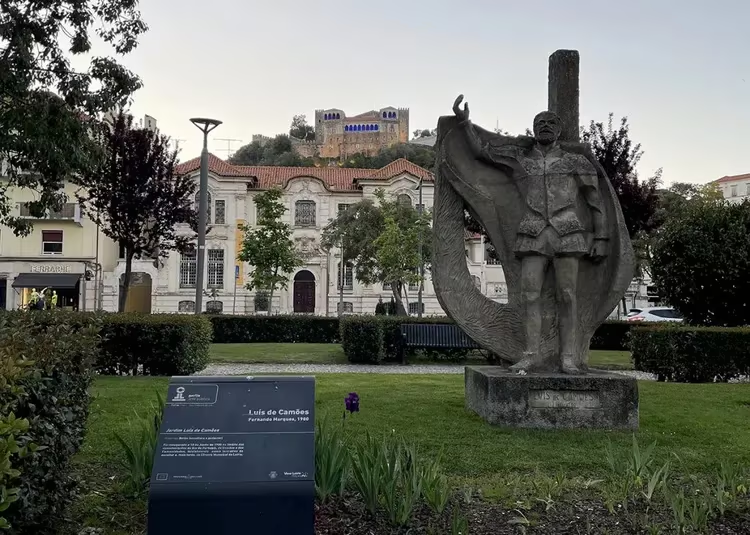
The green square has many benches and fountains, a cafe and a public toilet. The garden is located on the banks of the Lys River.
G. Ponte Bar
There is a pedestrian and bicycle path along the embankment, there are recreation areas, and murals can be seen on nearby buildings.
There are many pedestrian bridges across the river. The most striking of them is the Bar Bridge. Next time I'll come here with coffee and pasta. I recommend that you do the same.

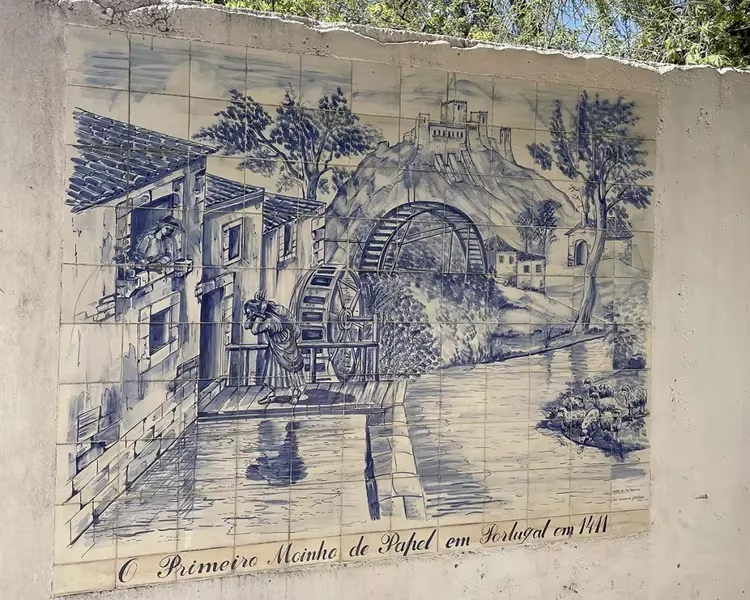
H. Moinho do Papel
Leiria is home to the first Portuguese paper mill. It was built in the 15th century. She worked on hydraulic energy. The appearance of their own paper encouraged the Portuguese to acquire the first typewriter and publish the first printed book.
The factory is still used today, but as a mill. You can even buy flour ground on old equipment. Admission to all rooms is free. The exhibition will introduce you to the history of paper production and the process of making flour. Now you can return to the car and move on.
Coimbra
Halfway to Porto is one of the most famous Portuguese cities – Coimbra. The municipal center has an ancient history, but has a young and active energy. It is called the “city of students”, because the oldest university in the country is based here and every seventh resident is a student.
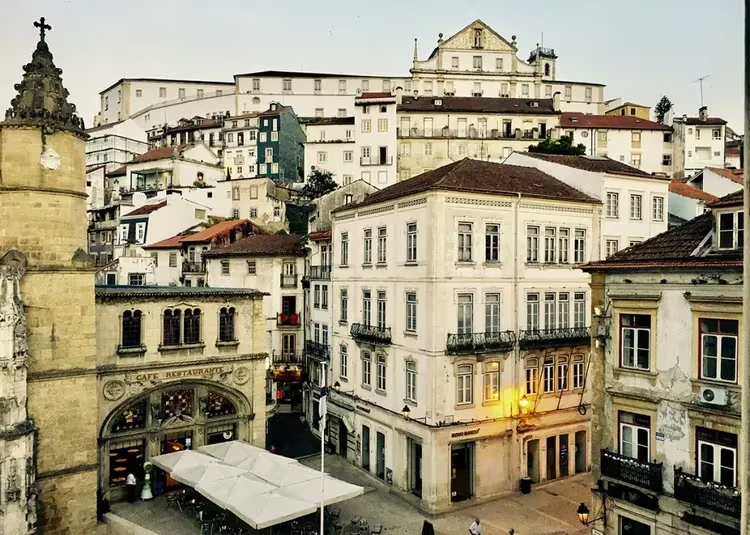
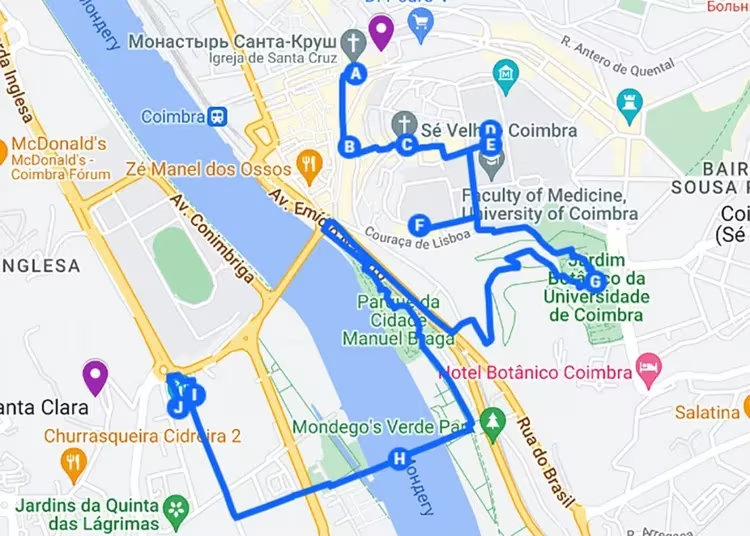
In order to see the main attractions of this fairly large city, you have to walk about 5 km.
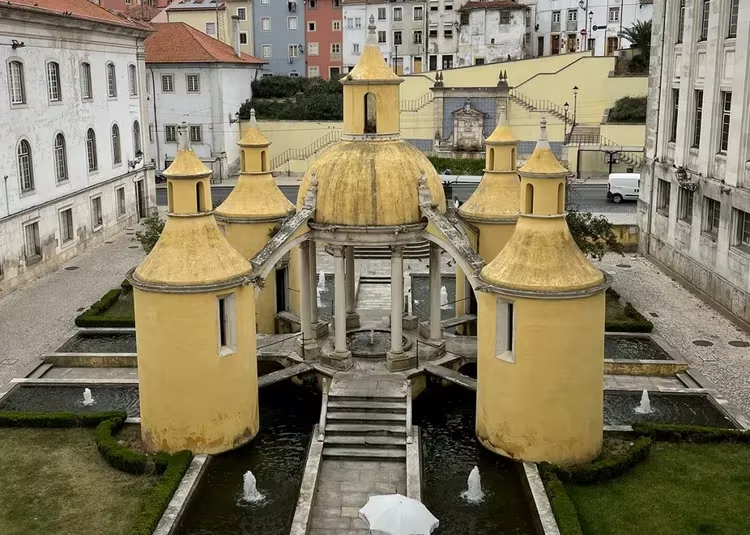
Jardim da Manga
The main attractions of the city: the university and its library. But in order not to walk in circles around the center, I recommend starting the route near this garden (there is a mark on the map). Nearby is the municipal market (Mercado Municipal). You can usually find where to leave your car there.
The bright yellow building surrounded by fountains will become your landmark. The square on which it is located used to be a monastery courtyard. But for some reason now Jardim da Manga is located behind the wall of the monastery.
A. Igreja de Santa Cruz
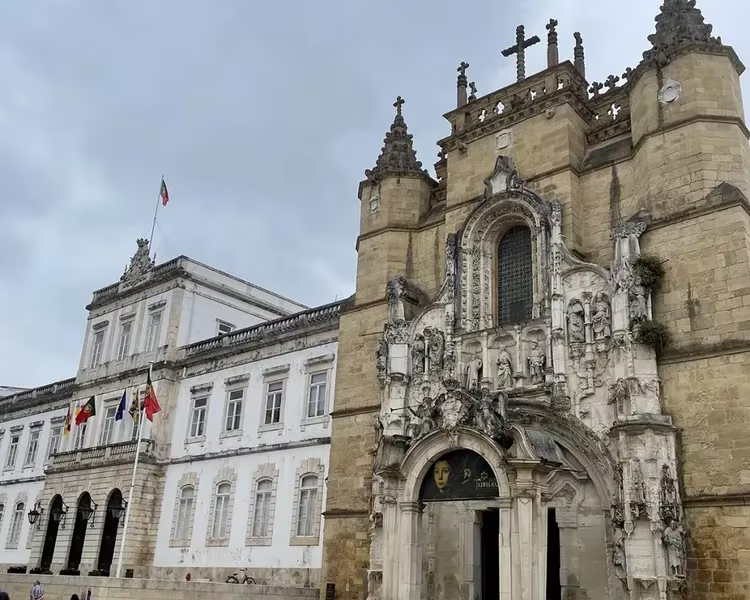
The Monastery of the Holy Cross dates back to the 12th century and is closely connected with the emergence of the Portuguese kingdom. As a result, this place became a pantheon for the first monarch and his successor.
Little remains of the Romanesque appearance of the temple. During the reign of Manuel I, the monastery was reconstructed – the craftsmen of that time added the king’s favorite frills to the façade. Entrance to the cathedral costs 3 euros.
B. Barbican Gate and Arco de Almedina
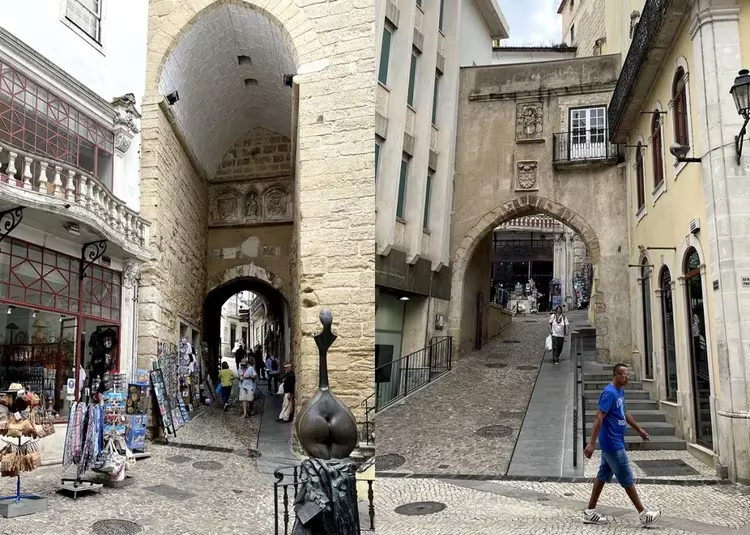
On the way to the next ancient temple you will pass through the Barbican Gate and the Almedina Arch. These medieval portals, designed in Moorish style, were part of the city wall.
Ten years ago, a sculpture dedicated to the Portuguese guitar was installed in the square between the two gates. The fado genre originated in Lisbon, and its student version appeared in Coimbra – when, like in your student years, sing about love!
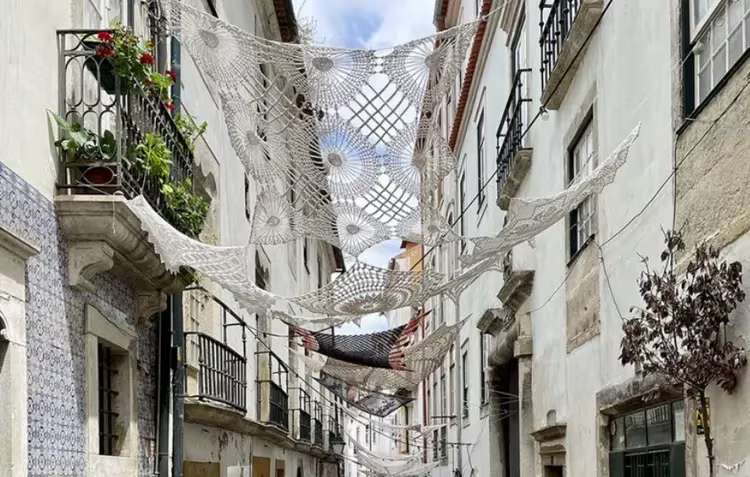
Please note: in front of the gate there will be a cozy street with knitted scarves stretched between the houses.
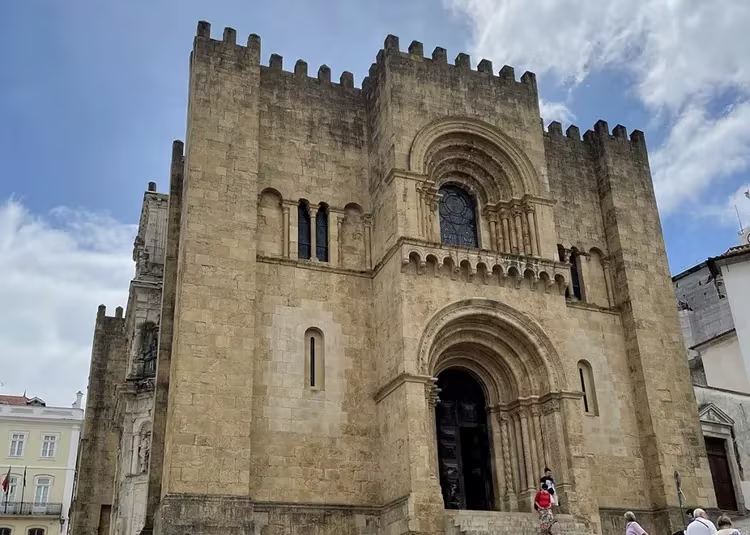
S. Sé Velha
This is the old Cathedral of Coimbra. It, like Santa Cruz, was built in the 12th century, but unlike the previous temple, it was able to retain most of its Romanesque features.
Externally, the church resembles a fortress. In the Middle Ages it was precisely used for defensive purposes. To enter the temple and look into the courtyards, you need to pay 2 euros.
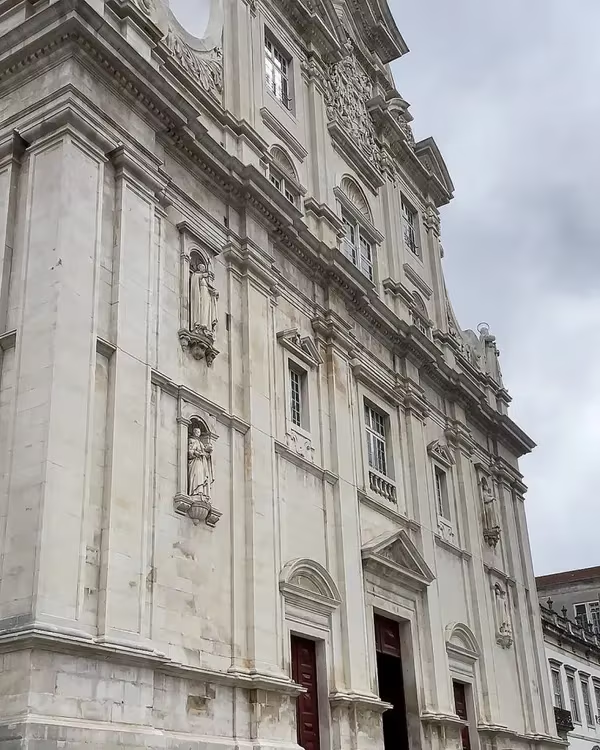
D. Se Nova
And this is the New Cathedral. It was built in the 16th century – then it was really new, because it was 400 years younger than its predecessor. The architecture of the temple is based on Baroque and Mannerism. The altar is decorated with gilding. Two organs hang above it. Within the walls of the cathedral there is a museum of religious artifacts. Entrance here costs 1 euro.
I would like to draw your attention: if you go around the cathedral on the right, you will see a ticket office where you can buy a ticket to the university library. Come here right away so you don't have to come back later. Opposite the ticket office is the Science Museum (Museu da Ciência da Universidade de Coimbra) – be sure to check it out after purchasing your ticket, it will be included in the price.
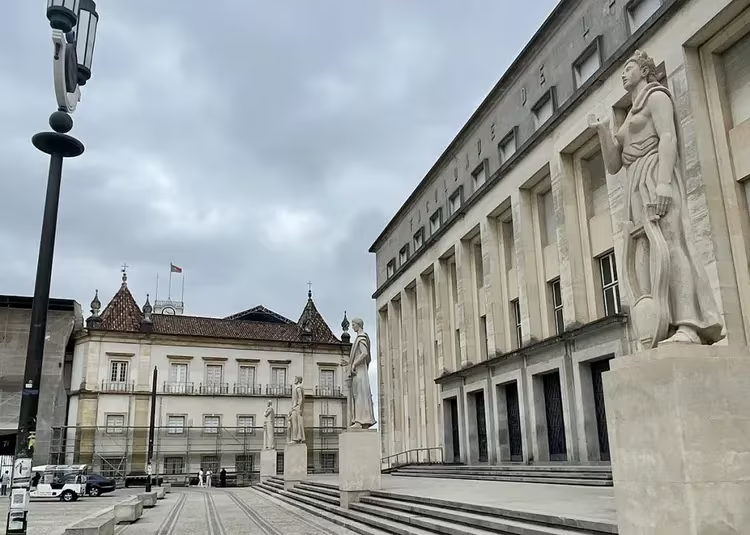
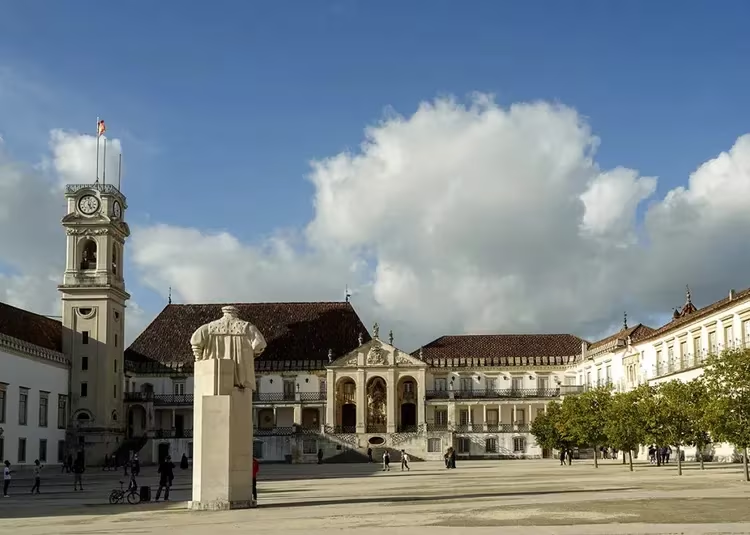
E. Universidade de Coimbra
Actually, you are already at the main university of Coimbra, the oldest university in Portugal and one of the very first in the world. The educational institution was founded at the end of the 13th century, but the university finally moved to Coimbra only in the middle of the 16th.
The university consists of eight faculties, the buildings of which occupy the upper part of the hill. The university has its own chapel; its bell used to signal the beginning and end of classes.
The students here look like they come from Hogwarts: they wear black robes, ribbons on their uniforms, instead of a colored hood and tie, and they tell you which house the guys study in.
F. Joanina Library
Frescoes on the walls and ceiling, gilding on the shelves and 300 thousand ancient publications. You are not allowed to take photographs in the Juanin Library, which makes it feel even more like you have entered the holy of holies. King João V decided to build this temple of books in the 18th century. The library bears his name.
Imagine, bats live here – they save rare publications from insects that are dangerous to their pages.
Entrance: 13.50 euros. A visit to the library takes place strictly according to the time specified on the ticket. Before or after, with this ticket you can visit the Chapel of San Miguel and enter the university building, which used to be a royal palace.
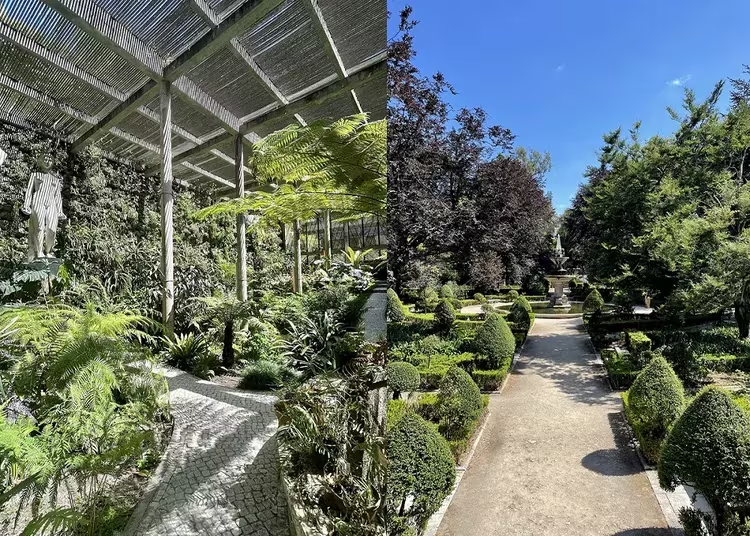
G. Jardim Botânico da Universidade
The university botanical garden was also founded in the 18th century. Plants from all over the world are collected on 13 hectares. Previously, the park was used by students for educational purposes, but now entry is open to everyone.
The garden area is very beautiful and quiet. A great place to relax in the heat.
H. Ponte Pedro e Inês
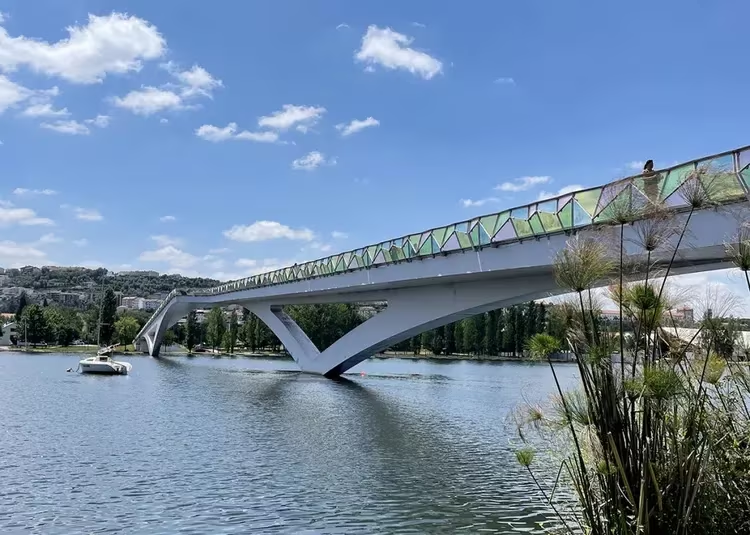
Now it's time to go down the hill. There is a Green Park (Verde do Mondego) near the Mondego River. Walk along it, heading towards the Pedro i Inês Bridge.
The pedestrian bridge was opened in 2006. An interesting shape, multi-colored glass in the fence – a noticeable modern accent in the surrounding restrained landscape.
I. Santa Clara-a-Velha
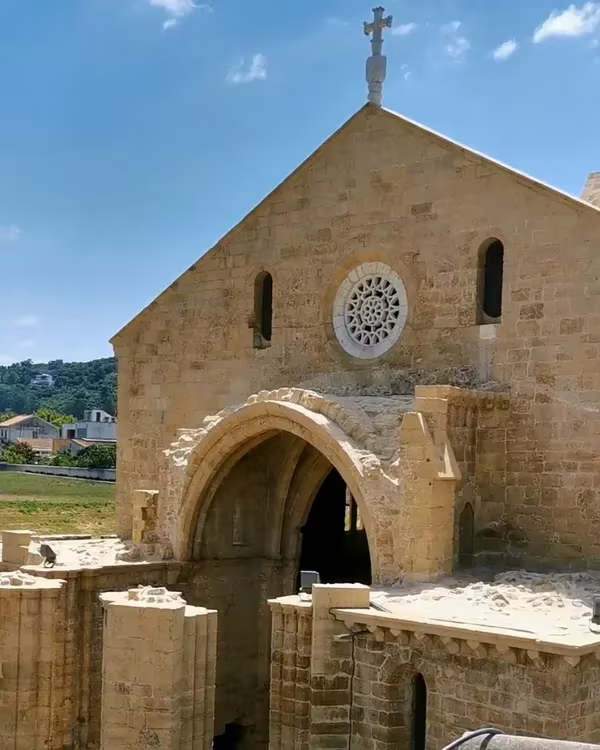
On the left bank of the Mondego stands the monastery of Santa Clara a Vella. It was built in the 14th century. The temple has been empty since the 17th century. This is because it is very close to the river and is periodically subject to floods. The monks moved higher – you can see the Santa Clara a Nova Cathedral on the hill (I left a mark for you on the route map).
The ruins of the old Gothic monastery are well preserved, although they are still flooded. This place is often used for concerts and other events. It offers a cool view of University Hill.
G. Portugal dos Pequenitos
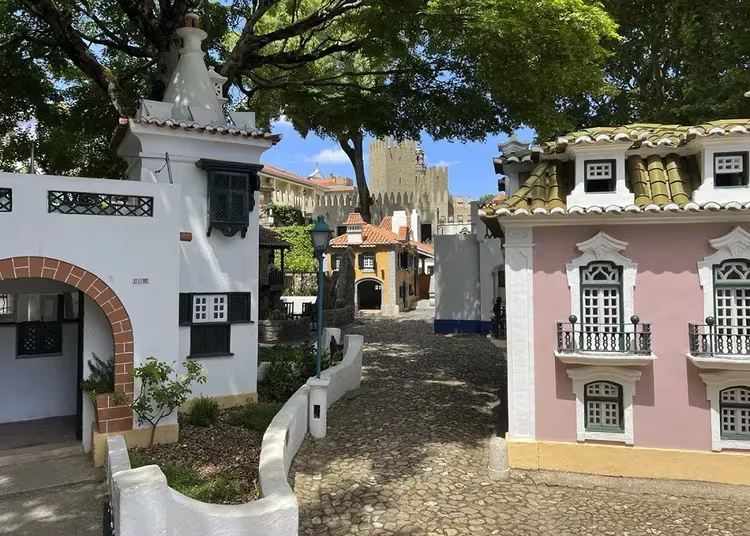
Our last location is the ” Portugal in Miniature” museum. This open-air exhibition was created in the middle of the last century and includes three parts: former Portuguese colonies, landmarks of the country and authentic village houses.
A full ticket costs 14 euros. Children will really like this place, but adults will also find it interesting. You can not only inspect the mini-buildings from the outside, but also look inside.
If your trip allows you to explore all the locations that I described in this article: set aside one day for the Buddha Garden and Obidos, the second for the Batalha Monastery and Leiria, the third for Coimbra. I’ll tell you separately about the city of Aveiro, which is located 70 km from Porto – this will be another must-see on your route.