
🏛️ Petra: guide to the ancient city of Jordan
There is no destination in Jordan more desirable than Petra. Why Jordan – Petra overshadows any attraction in the Middle East, except perhaps the great pyramids of Egypt. Petra was included in the list of seven new wonders of the world, emphasizing the grandiose plan of its creators and the no less grandiose implementation of the plan. We will tell you further what you need to know when going deep into the Jordanian desert in search of the lost city.
A man-made phenomenon in a harsh environment
How and why did this unique city appear in the middle of a waterless desert? The first settlement was located at the intersection of trade routes from East to West 10 thousand years ago. Trade began to bring enormous wealth to the tribes living here.
The specie and hard work of local residents contributed to the emergence in the 1st century AD of a monumental city, the most unusual of its era. At first, only tombs were carved out of the rocks, but then the stone began to take on the shape of dwellings, temples and real palaces. And the 60-meter rocks were not only a building material, but also a natural defensive line. The city turned into the capital of the Nabataean kingdom, and then into a Roman province.
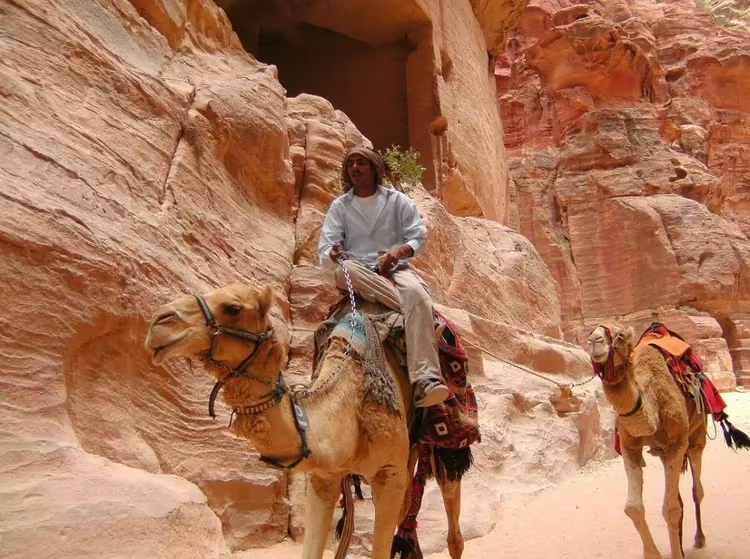
Surprisingly, such beauty has experienced thousands of years of oblivion. The inhabitants abandoned Petra, which was destroyed by an earthquake in the 4th century. It was rediscovered by the Swiss traveler Johann Burckhardt only in 1812. To do this, he disguised himself as a Bedouin and entered the city incognito. Since then, Petra began to return to the minds, hearts, and later, photo cards of travelers.
Road to Petra
In modern times, to get to Petra, you don’t need to do Burckhardt’s trick and dress up as Bedouins. But the path to the city is still not easy. You can use an organized tour, a regular bus or a rented car.
Tour
Many agencies organize tours to Petra from Amman or the resort of Aqaba. The most popular are one-day tours, the cost of which from Tartu starts from $170 from Amman and from $135 from Aqaba. The price of the tour usually includes a ticket to the rock city, so the cost is quite reasonable.
It is possible that you will decide to discover the wonders of desert urban planning from Israel. Tours are also organized from there: from Eilat from $220, from Jerusalem and Tel Aviv from $300.
Bus
If you prefer to travel independently, you will have to be attentive and patient. Bus service in the country is not very developed and is seasoned with vicissitudes of fate. Buses are not so easy to find due to the use of Arabic script, and it is not so easy to ask the driver due to the locals’ lack of knowledge of English.
The most reliable carrier is JETT. On its website you can purchase a ticket for 10 dinars ($14) from Amman. The schedule is very convenient: you will be in Petra at 09:30 and until 17:00, when the return flight starts. There are daily flights from Aqaba. The cost is a little more expensive – 15 dinars ($21).
When using buses, it will be useful to know that not all companies take you to Petra itself. Rock City is an open-air museum with no inhabitants. A few kilometers away is the city of Wadi Musa. For locals, Wadi Musa is Petra and vice versa. And some buses go exactly there.
Rent a Car
Car rental services are developed in Jordan. If you plan to actively move around the country, then it is advisable to rent a car. You can use the Kayak aggregator to search for suitable transport and compare prices. When renting for several days, the price is usually between $25-30 per day.
It is worth sensibly assessing your ability to integrate into the local automotive community. Jordanians drive recklessly; traffic rules here are interpreted in their own way.
Tickets to the complex
Petra is still the most expensive museum I have ever visited. Jordanians soberly understand what attracts tourists to their country, and exploit their main attraction to the fullest. An adult one-day ticket will cost 50 dinars ($70). If you arrived in Jordan and went to Petra on the first day, then you will be charged 90 dinars ($126). In this case, it is better to actually take advantage of an organized tour with the ticket price included. This will be more economical.
Another way to avoid exorbitant entry fees is to purchase a Jordan Pass. It costs from 70 to 80 dinars ($98-112) depending on the number of days in Petra. The benefit is that by purchasing a Jordan Pass you immediately get rid of visa fees and entrance fees to 40 major tourist locations in Jordan.
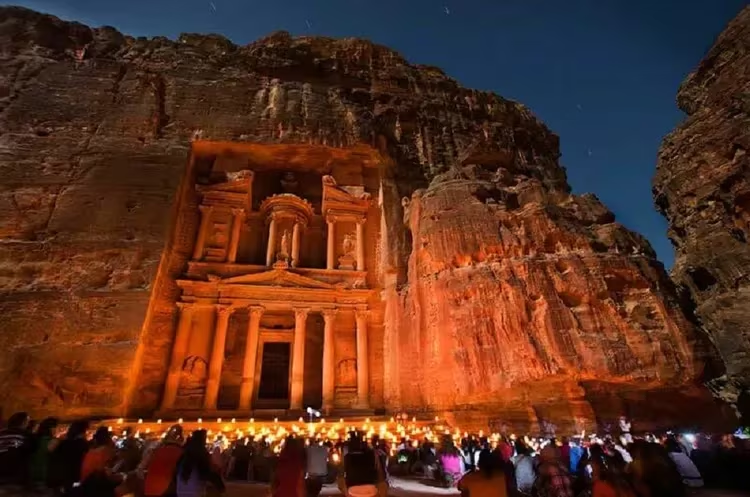
Night walks are organized in Petra every Monday, Tuesday and Thursday from 20:30 to 22:30. This amazing show of the illuminated city costs 17 dinars ($24) in addition to the purchased ticket.
Children under 12 years old enter the complex free of charge.
Lifehacks
The most important challenge in Petra is thirst. She's a relentless pursuer, so fill your backpack with cold water bottles. It won't stay cold for long, but it won't be any liquid. You can also buy water from the locals, but it will be expensive: 1-2 dinars ($1.4–2.8) per bottle, which will barely last for an hour.
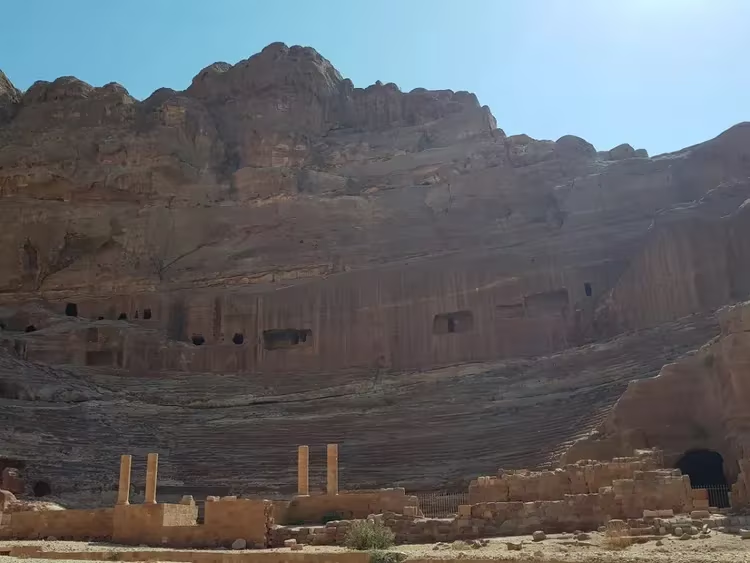
Petra has several trails of varying degrees of difficulty. The most complete and interesting route involves climbing the rocks along a staircase of 800 steps. And going down the slope will not be easy. Make sure you wear comfortable shoes.
If, while saving your legs, you forgot about your head, which is susceptible to sunstroke, the issue can be resolved on the spot. For a few dinars they will sell you a shemagh, a national scarf used to cover the head. At the same time there will be a souvenir to take home.
Do not be lazy to bargain when entering into business relations with locals. This applies to the purchase of absolutely all services and goods. But don’t abuse it: this is the only source of income for the Bedouins trading in Petra.
The issue of safety requires special attention. The trails are well equipped, but nevertheless there are plenty of dangerous places. Especially if you have children with you. I also recommend watching your step and not sitting anywhere: there are poisonous snakes in the complex.
What to see
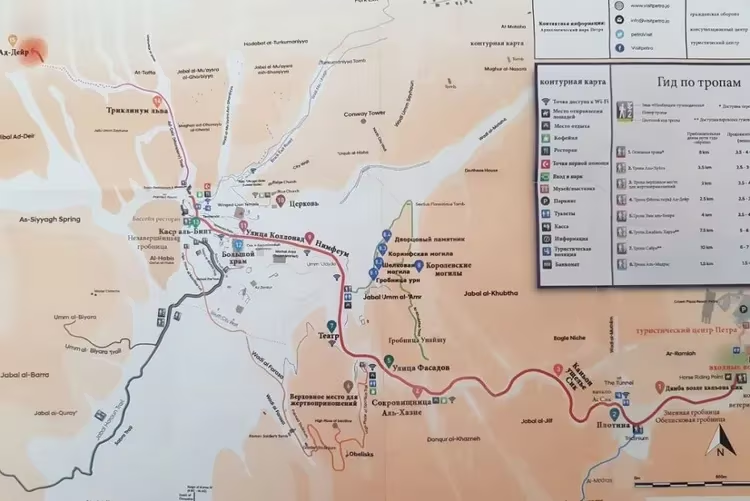
The word “Petra” itself means “stone” from ancient Greek. Petra is also called the “rose-red city”. It is easy to guess that the nickname was given because of the color of the rocks, which became at the same time the foundation, walls and ceiling for the buildings carved into them. Every meter of this city is the fruit of titanic efforts and a work of art. The huge museum exhibit, however, consists of several important details that are worth combining into an itinerary.
Dam
One of the first places you will pass after passing the Visit center. Or you can ride a horse, which the Jordanians helpfully offer (you should negotiate the price before you get on the horse). The dam reflects the architectural genius of the Nabateans: they cut an 88-meter tunnel to drain flash floods (yes, there are such things in the desert!)
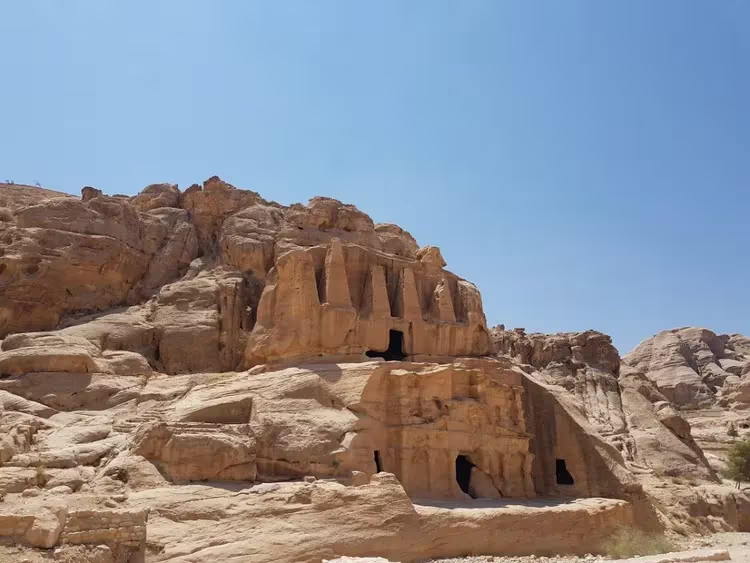
The Nabataeans skillfully handled the most valuable resource of the desert – water. They organized an entire hydraulic system using terracotta pipes and gutters in the rocks. There were about 200 reservoirs throughout the city that stored rainwater. The pipes also collected water from all sources within a radius of 25 kilometers.
Canyon Siq
Jordan Grand Canyon, view from below – this was my impression after the first steps in the Siq gorge. Nature itself took care of the reliable shelter of Petra, which begins immediately behind this narrow kilometer-long passage.
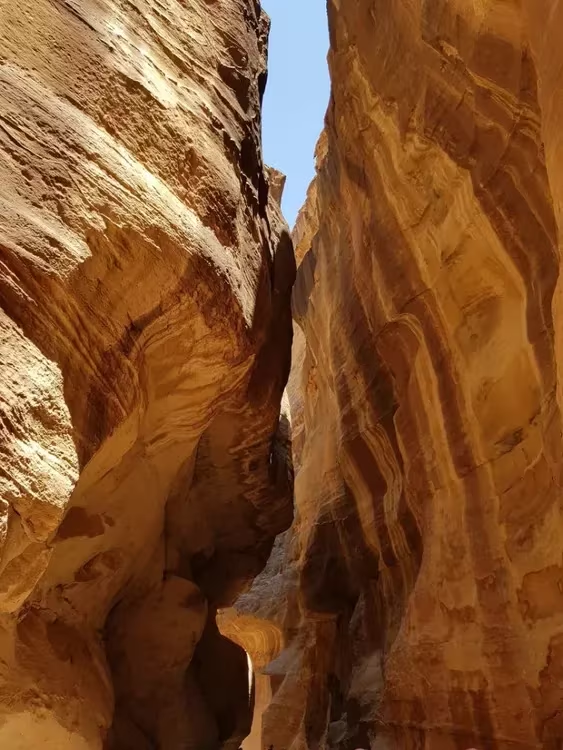
The overhanging rocks inspire anyone passing by with both a feeling of their own insignificance and admiration for the former inhabitants.
Al-Khazneh
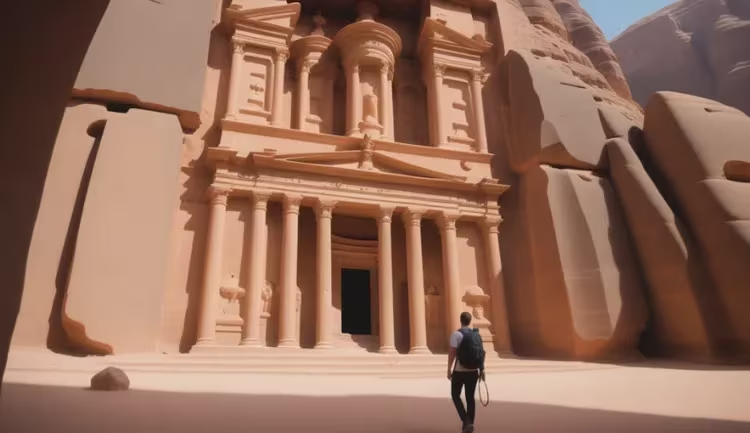
Reminds me of the word “treasury”, doesn’t it? That’s right, before us is the treasury and the most famous landmark of Petra. We know her, first of all, thanks to the film “Indiana Jones and the Last Crusade”. According to the scriptwriters, this was the entrance to the Grail Temple. It’s not a bad idea; during the marches to the Holy Sepulcher, Petra really was a ghost town.
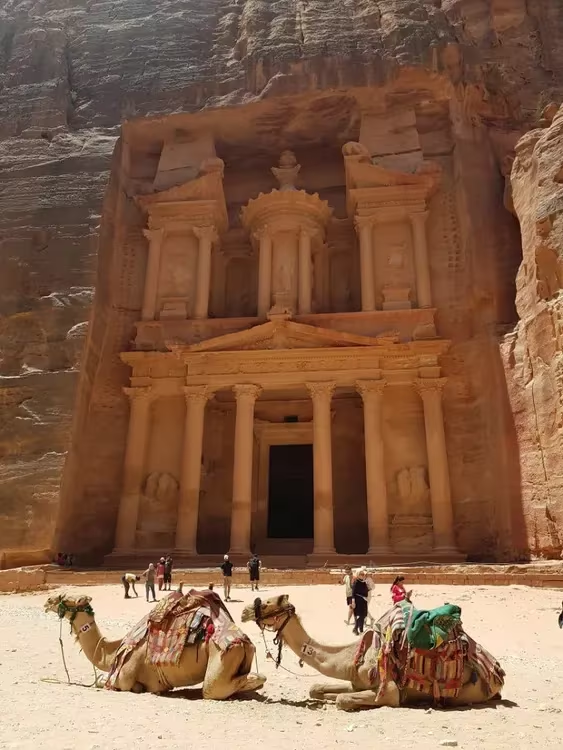
Al-Khazneh is called a temple, a mausoleum, “the treasury of the pharaoh,” but no one knows the exact purpose of the building. According to local legend, untold riches are indeed hidden under the funeral urn inside the building. Maybe that's why the entrance inside is closed?
Let us be content with surveying the external charms of Al-Khazneh. The 40-meter facade, carved into the rock, will not add wealth, but will become the most precious memory from a visit to Jordan.
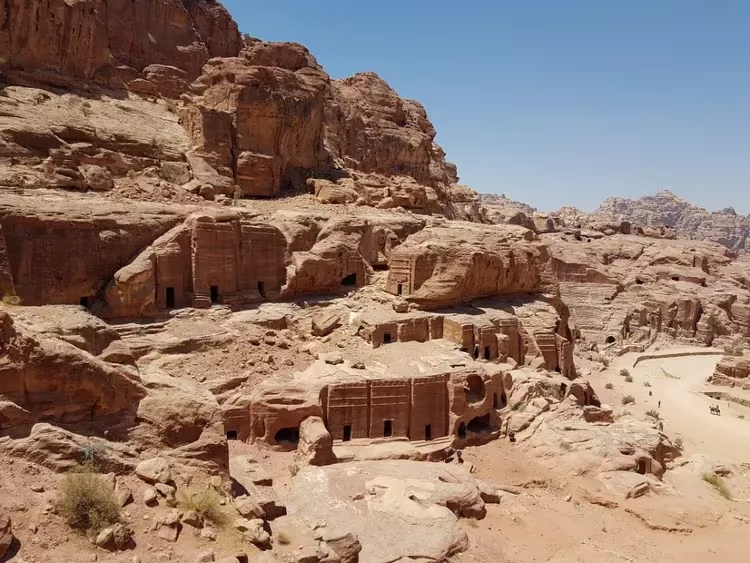
High place for sacrifices
For those who want to get the most powerful impressions from visiting Petra, I recommend turning from Al-Khazneh to the stairs to the Supreme Place of Sacrifice. It is truly “supreme”. On the way there I counted more than 800 steps, but each of them was worth the effort. From here you have the most gorgeous views of the rock city.
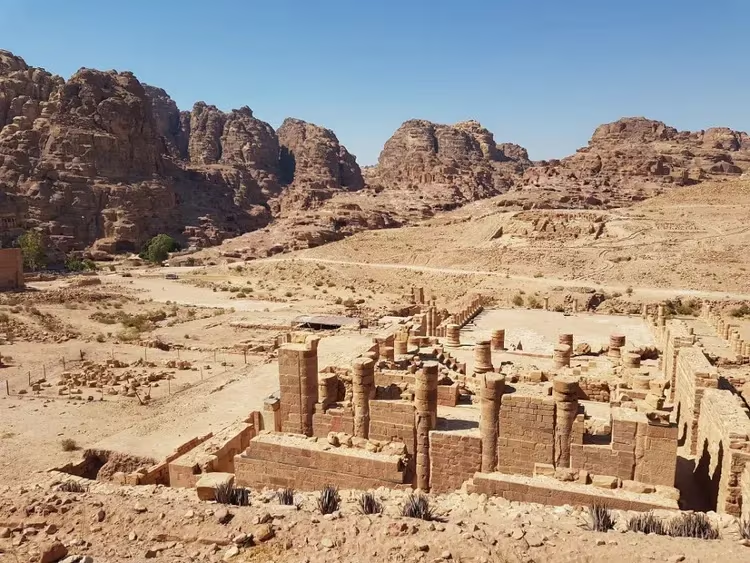
Tombs and Great Temple
On the way from the top you will find many tombs of varying degrees of preservation. And a bonus for patience will be access to the main archaeological monument of the city, the Great Temple. You can walk through the huge excavations for hours, delving into the peculiarities of the cult of the ancients.
Ad-Deir
The third most popular place in Petra after Al Khazneh and Siqa. But the most inaccessible and remote. I hope that your physical strength is enough to get there. And spiritual strength – to express all the delight from the 50-meter-high monastery.
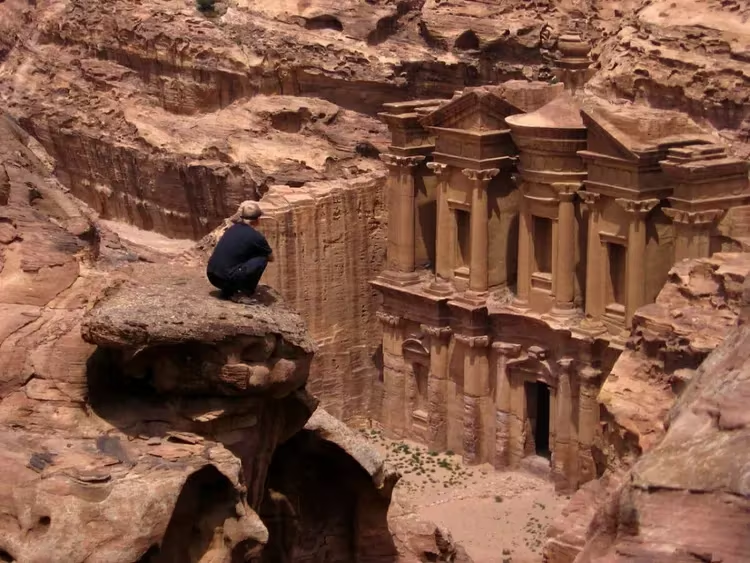
Ad-Deir is a building that has evolved from a Nabataean tomb to a Byzantine monastery.
Colonnade Street and Nymphaeum
On the way back from Ad-Deir, before reaching Al-Khazneh, you will find yourself on the main shopping street of the city. Nowadays it is called Colonnade Street because of the row of columns located here.
Nearby is a public fountain, the Nymphaeum. Alas, the flags no longer delight travelers with the life-giving stream. But you can relax in the shade of a pistachio tree. Its age is more than 450 years!
Royal Tombs
If the walk before seemed too easy, before reaching the Theater, turn onto the Al Khubta trail. It will lead to another prominent landmark of Petra – the Royal Tombs.
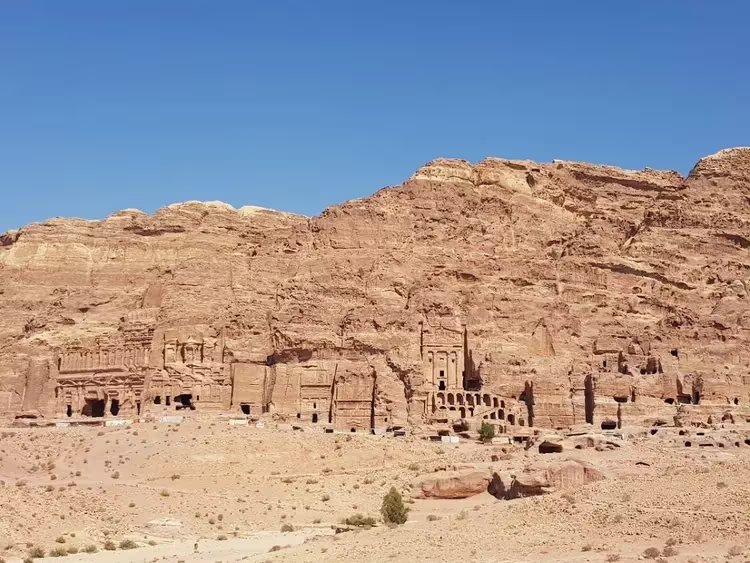
The tombs are easily recognized by their four magnificent rock facades. The first of them belongs to the huge Urn Tomb, which served as funeral chambers in ancient times. But the most memorable will be the Silk Grave, notable for its whimsical swirls of colors.
After Petra, the expression “heart of stone” loses all meaning. After all, sometimes a stone can convey endless love.