
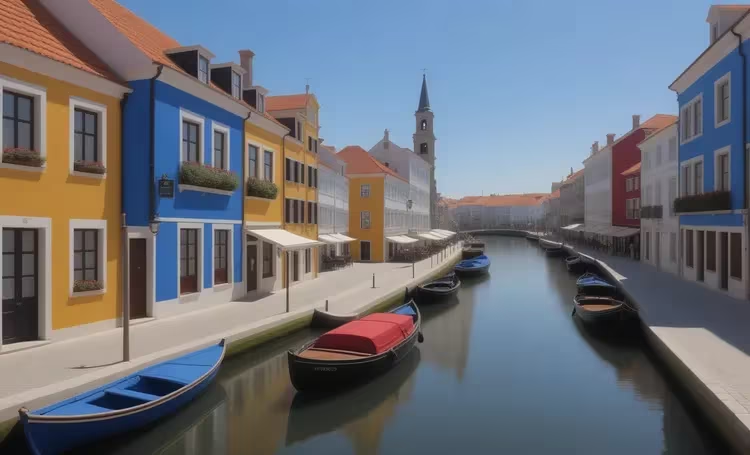
🇵🇹 Aveiro: the Venice of Portugal
I consider Aveiro the most romantic place in Portugal. Canals and bright boats, houses with openwork stucco and azulejo tiles, the proximity of the ocean and restaurants with fresh seafood – the ideal location for a date!
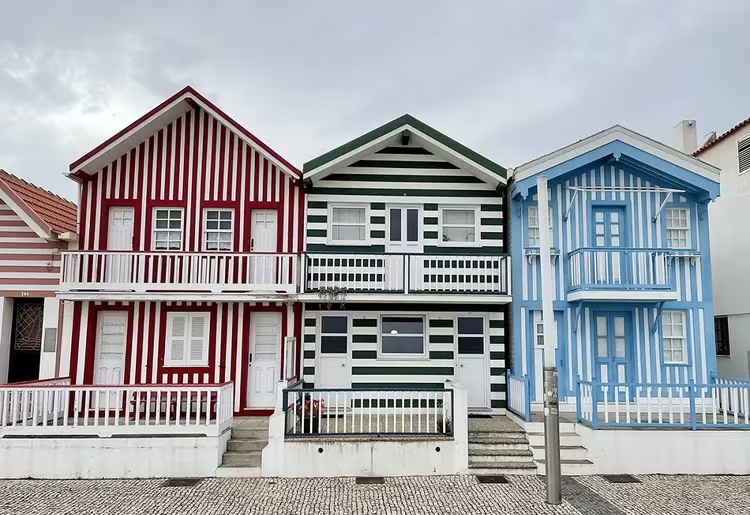
The municipal center is located next to beautiful sandy beaches. Near one of them there is a colorful village with striped houses. I really like these places. I hope you will fall in love with them and want to see them with your own eyes.
Aveiro
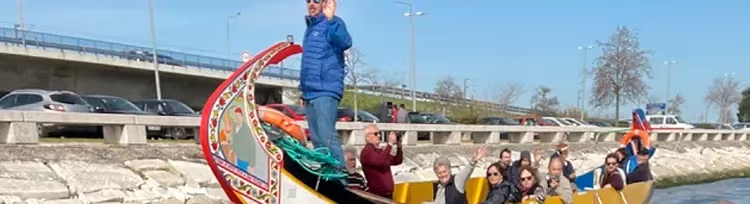
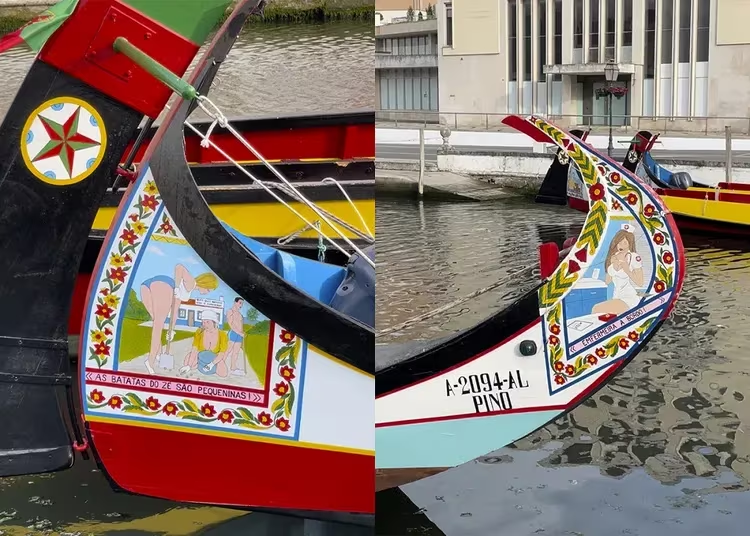
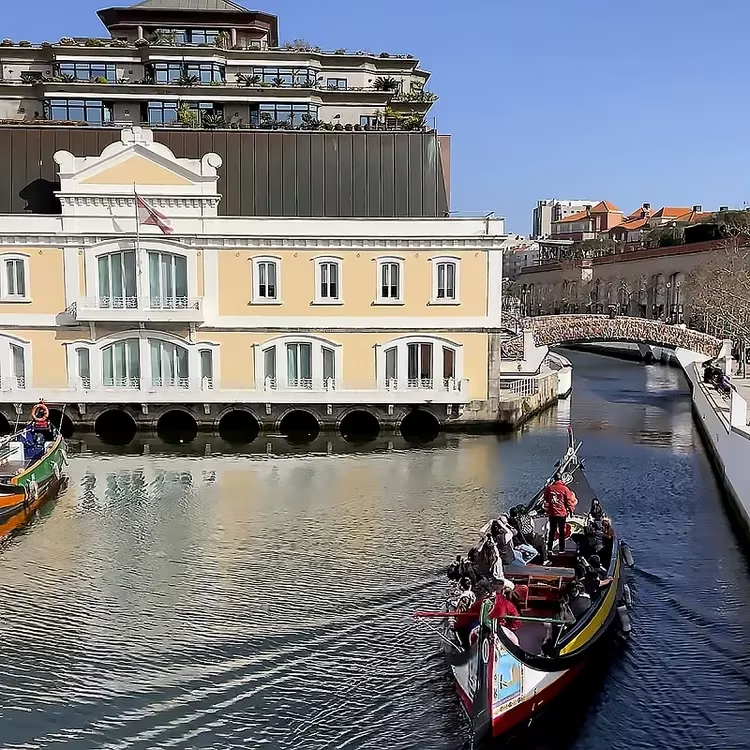
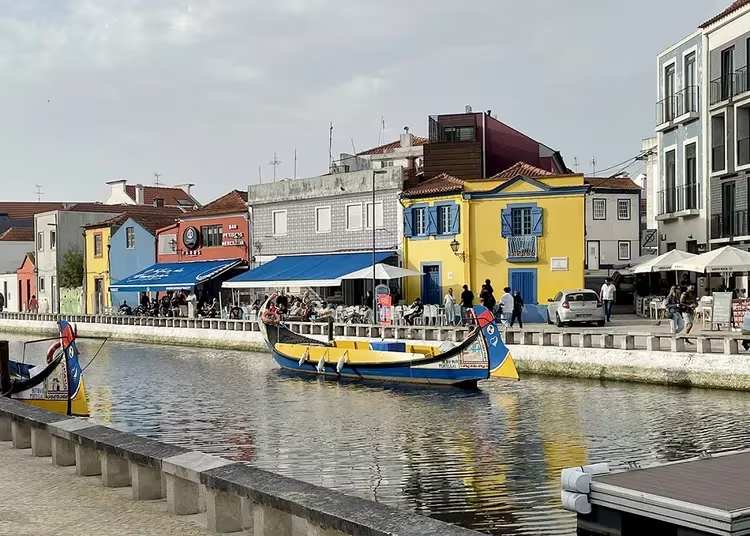
Aveiro is called Porto Gaul's Venice. Several canals run through the city center, along which interestingly shaped boats, called moliseiras, float. Previously, these vessels were used to collect seaweed, but now they are used by tourists.
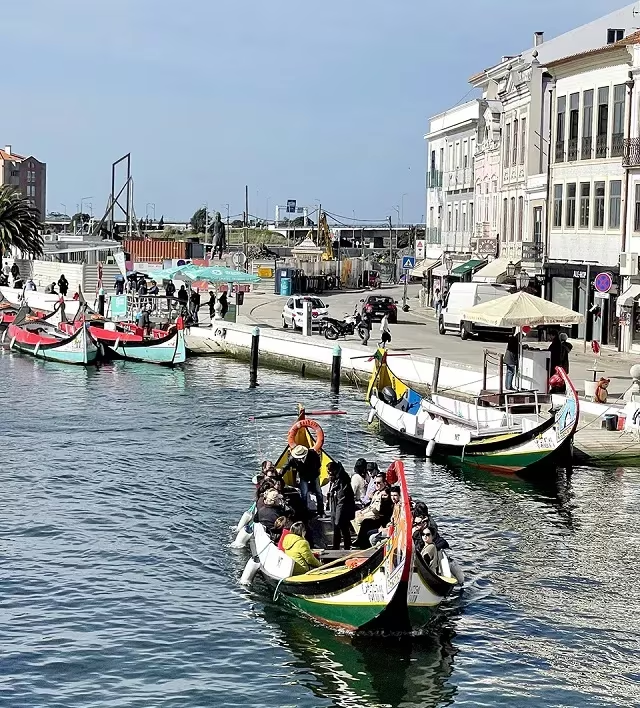
Pay attention to the designs on the noses – they are erotic in nature. Moliseirs are run by funny guys. For 13 euros, they will not only take you through the canals, but will tell you a lot of cool stories.
It is quite convenient to get to Aveiro from both capitals – trains and buses go here. The route from Porto to Portuguese Venice is only 70 km, from Lisbon – 250 km.
I haven’t found any detailed guides for Aveiro online. I don’t know why many people write that there is nothing special to see in the city. To prove you wrong and show you the beauty of this place, I have prepared a walking route of almost 4 km.
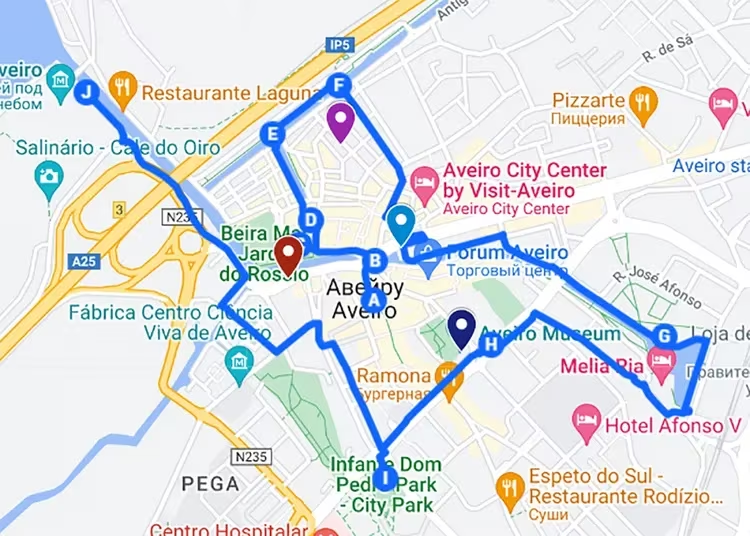
A. Republic Square (Praça da República)
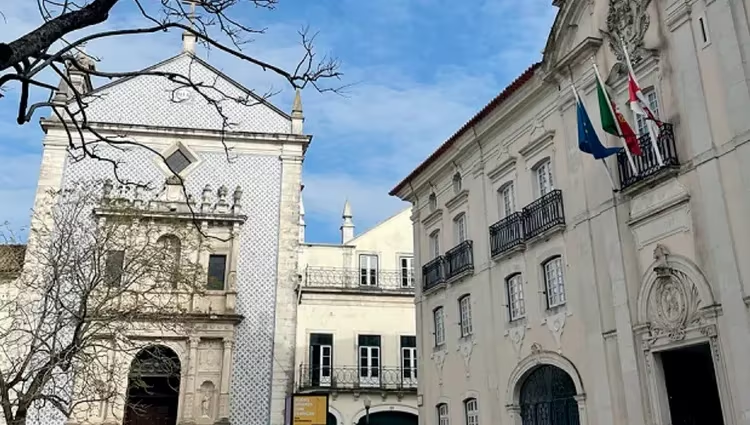
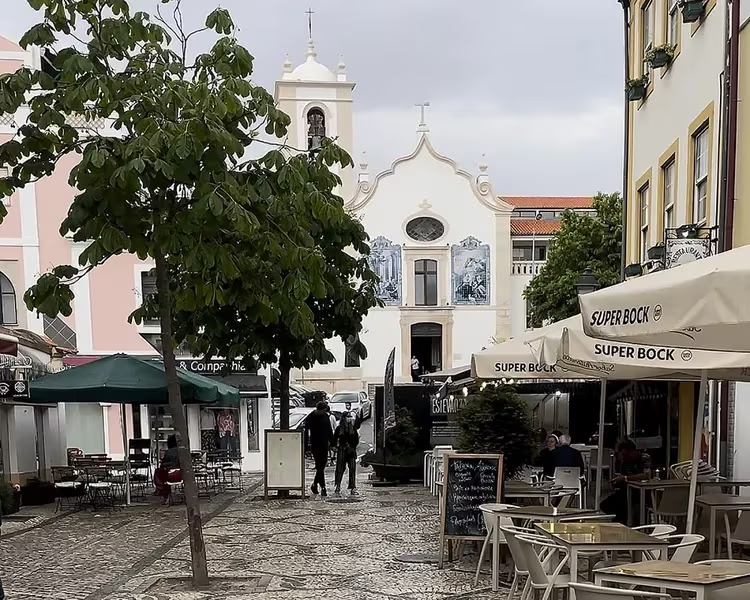
Let's start our walk from the square where the Aveiro City Hall is located. The city administration is located in the 18th century town hall. Next to it is the Church of Mercy, built in the 17th century. Its façade is entirely covered with azulejos.
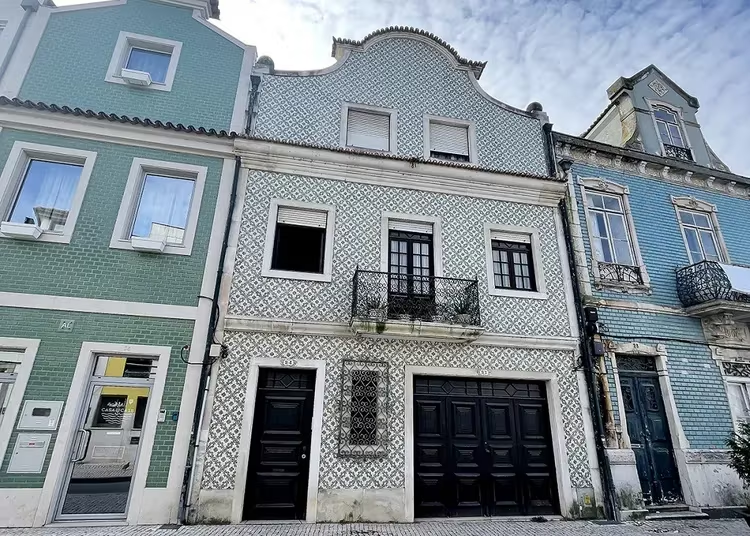
Please note that many houses near the square, and throughout the city, have these Portuguese tiles. It not only serves as decoration, but also protects the walls from dampness and mold, which are not so easy to deal with in the local humidity.
B. General Humberto Delgado Square
This square serves as a roundabout, which was built here instead of two separate bridges. On the fence there are four bronze statues in traditional local clothes.
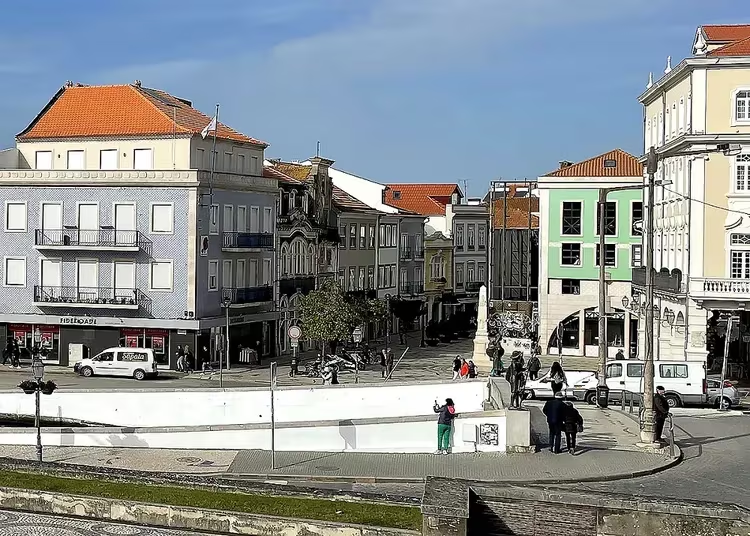
The beige building with arched stilts was built in the 15th century as a tidal mill. Later it was converted into an auxiliary workshop of a porcelain factory. And in the 20th century, the house became the residence of the captain of the port of Aveiro (Edifício Antiga Capitania) – this name has stuck to it to this day. The building now houses a gallery with temporary exhibitions. I marked this location on the map.
C. Museum of Art Nouveau (Museu de Arte Nova)
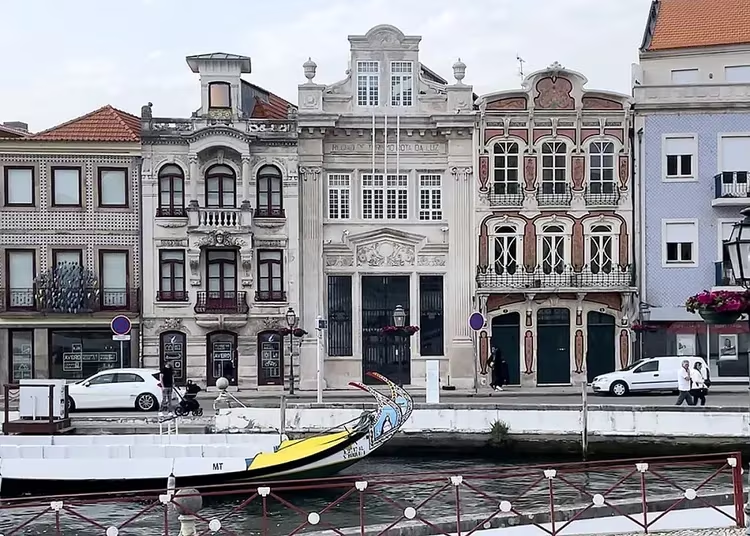
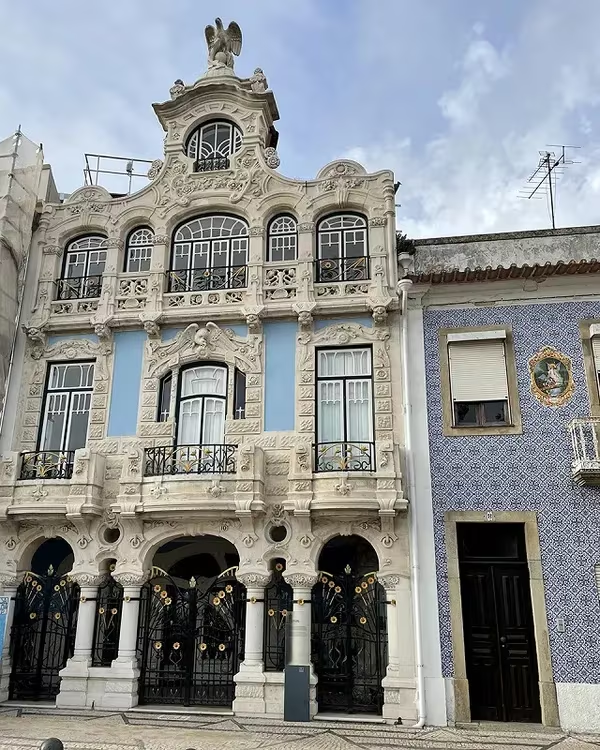
Aveiro, of course, can only conditionally be called the “second Venice”. He does not at all strive to imitate Italy. The architecture of the city is originally Portuguese. With a twist – houses in the Art Nouveau style. Rich colors, curved lines, floral motifs, forged elements – these facades give Aveiro additional charm.
The bright blue building, dating from the turn of the 19th and 20th centuries, houses the Art Nouveau Museum. Fragments of the Art Nouveau style have been preserved in the interior of his rooms. This house once belonged to a wealthy pharmacist who was involved in the production of coffee and cocoa.
The ground floor of the building now houses a cozy tea room. In the evenings it turns into a bar with live music.
D. Fishing Square (Praça do Peixe)
Praça do Peixe was the main landing site for fish and sea salt in the early 20th century. There was also a large fish market here. Recently, the city authorities decided to move the sale of seafood to the Manuel Firmin market – it is also located in the center. And turn Mercado do Peixe into a recreation area with restaurants and a stage. The embankment near the market is full of locals and tourists in the evenings.
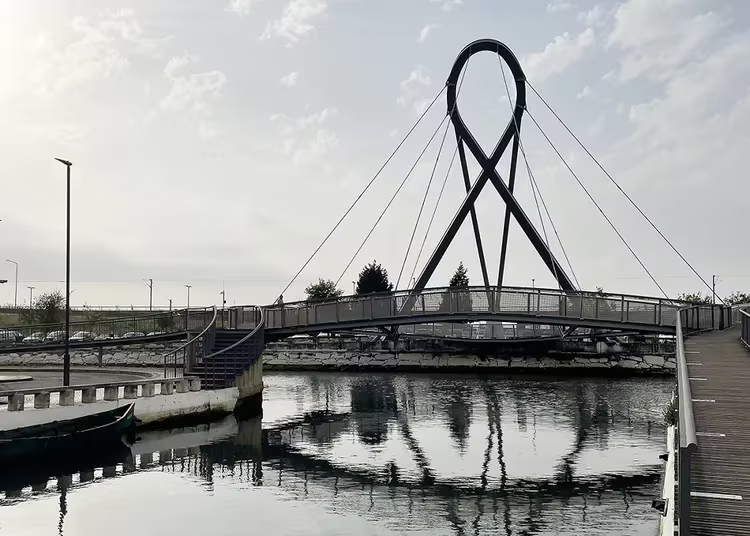
E. Botirões Bridge (Ponte dos Botirões)
The circular pedestrian bridge over the Botirois and San Roque canals opened in 2006. The steel structure is supported by a mast and rests on three edges. Like any suspension bridge, it sways a little when you walk. A piece of modernity against the backdrop of typical Portuguese architecture.
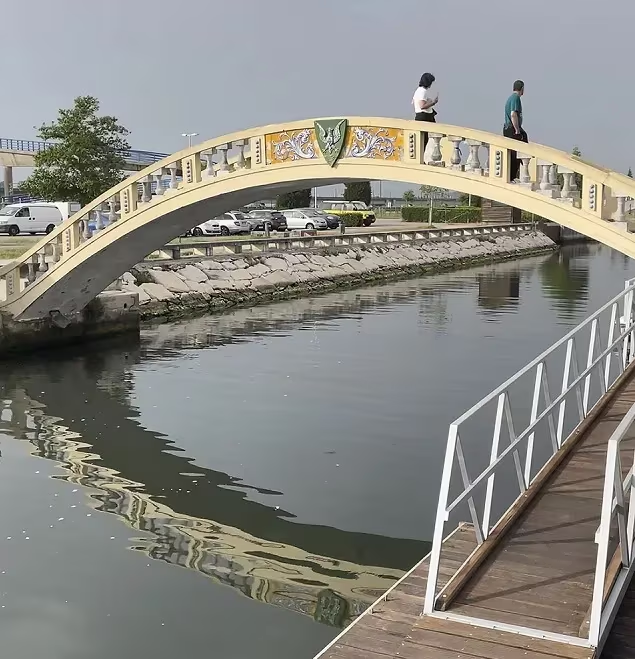
F. Carcavelos Bridge (Ponte dos Carcavelos).
Until the mid-20th century, there was another bridge here, although it bore the same name. The wooden structure collapsed along with the people who had perched on it to watch an event. Workers crossed this bridge from the city to the salt mines, so a new structure had to be built here. The bridge turned out to be quite steep – instead of a path there were steps on it.
- Lisbon in two days: a thoughtful route and important life hacks
- What is worth seeing in the vicinity of Lisbon?
- What to see on the road from Lisbon to Porto?
Now free time! I suggest you wander aimlessly through the streets of the old city. Admire the houses, look into the temples that you will meet along the way, go to the souvenir shops, pay attention to the sidewalks paved with Portuguese cobblestones.
And be sure to try the most famous local dessert – Ovos moles. I marked a confectionery on the map where they have been producing this sweet by hand according to the original recipe for over a hundred years. But you can find this delicacy in any other cafe in Aveira.
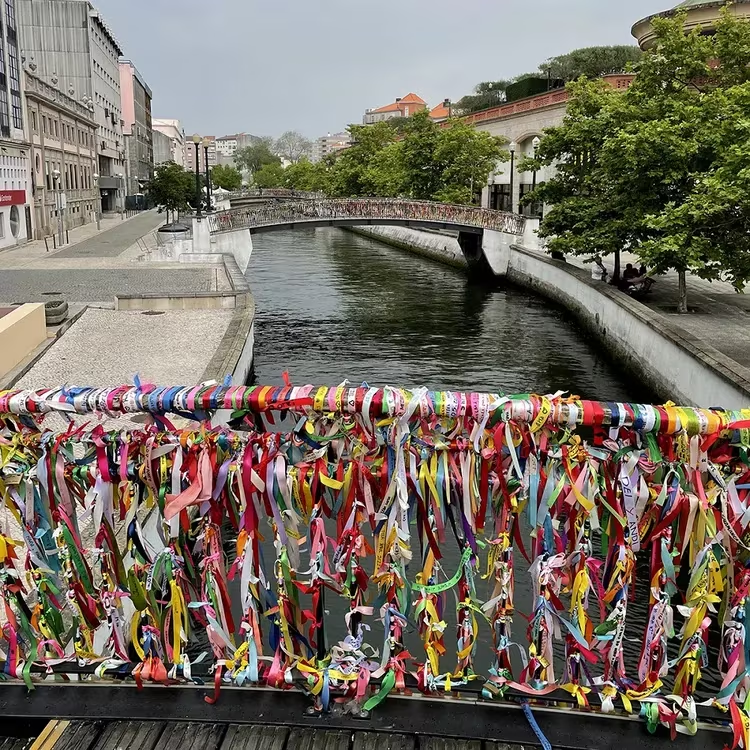
And now from the Gallery of the Old Captain's Corps (Galeria Edifício Antiga Capitania) – let me remind you, this mark is on the map – I suggest you take a walk along the Canal do Cojo. To see the bridges with colorful ribbons up close.
These fabric strips symbolize bonds of friendship or love. Initially, locks were hung here. To avoid damaging the bridge, this tradition was abandoned. Then the students began tying their ties to the fences as a sign of strong friendship. Over time, ties were replaced with multi-colored ribbons. There are boxes on the embankment where you can take a ribbon, leave a coin for it, write a message on it and tie it on one of the bridges.
G. Monument to Ovo Mole (Monumento ao Ovo Mole)
At the end of the canal you will see a monument to the traditional sweet of Aveiro – the “soft egg”. The yellow center is filled with egg yolks and sugar. White shells are a rice paper shell. Looks impressive. How does it taste? I wonder if you'll like ovush molesh.
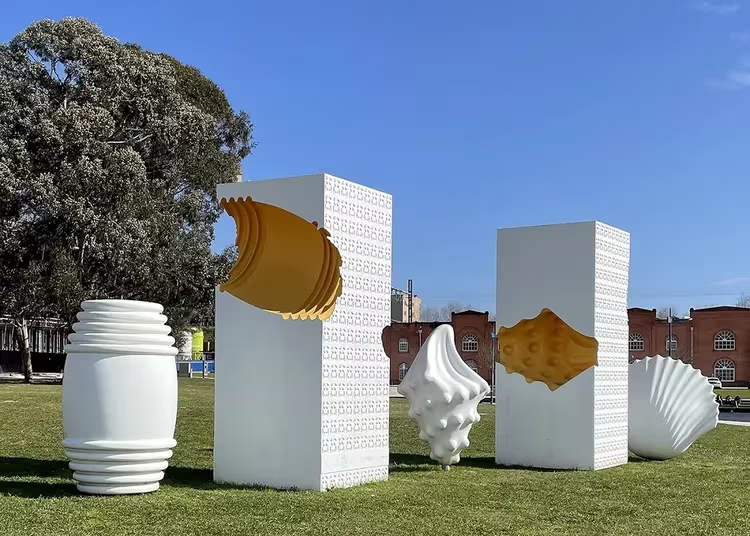
The huge red brick building you come across is a former ceramic factory. It was built at the beginning of the 20th century. At the end of the 60s, the plant was moved to another location, and the building was given over to city services, exhibitions and conference halls.
H. Aveiro Cathedral (Sé Catedral de Aveiro)
This church is called Nossa Senhora da Misericordia. It was erected back in the 15th century. Initially, there was a monastery nearby, but when it was turned into barracks, a fire broke out. The cathedral itself has partially survived. Take a look inside. There is a huge modern organ there. And the skylights are shaped like eggs.
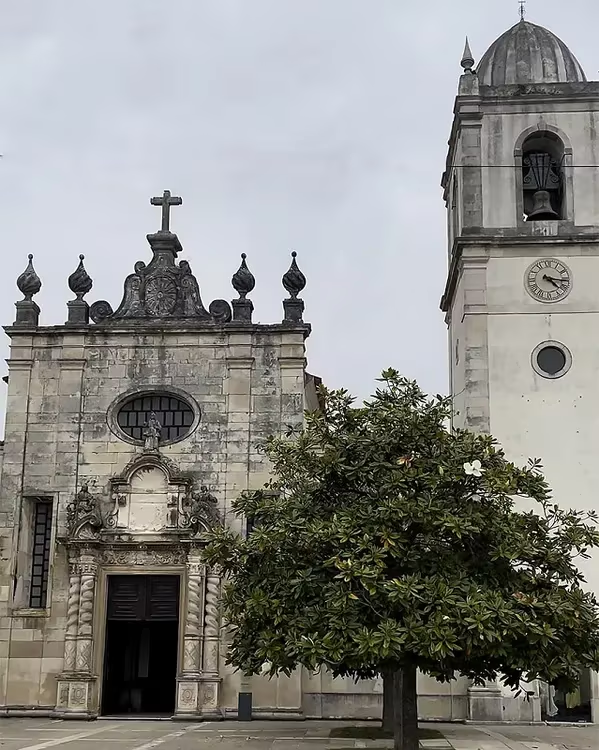
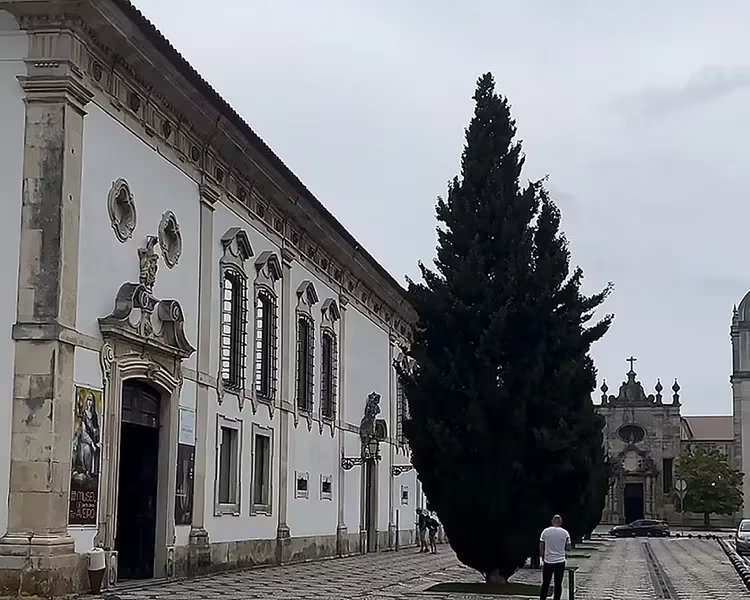
Next to the cathedral is the City Museum of Aveiro. Previously, the monastery of Jesus was located in this building (by the way, the ova mole was invented there). Now it houses a collection of paintings and antique furniture, ceramics and sculptures from the Baroque era.
There is a temple adjacent to the museum. Its decoration uses a huge amount of carved wood. In one of the chapels there is a mausoleum of Princess Saint Joan. It is considered a masterpiece of the 17th century because it is inlaid with Italian marble mosaics.
I. Park Dom Pedro Infante
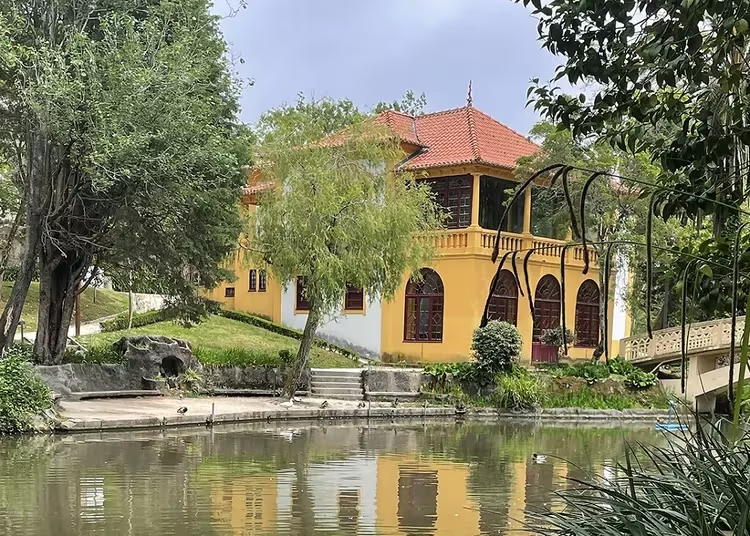
I would like to show you a cozy park area in the city center. Here you can hide from the scorching sun, have a picnic, and relax in peace and beauty. The public garden in this place was built in the 19th century, which is why there are so many ancient trees in it.
J. Troncalhada Marine Eco-Museum (Ecomuseum Marinha da Troncalhada)
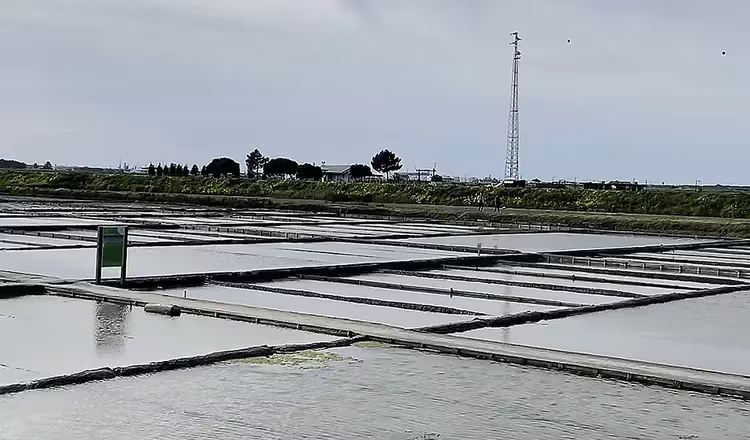
Do you still have strength left? If so, I suggest taking a walk to the salt mines. This part of the 1.5 km route can take you through the streets of the city or St. Anthony's Park – whichever you prefer.
The Troncallada Ecomuseum is located in the open air and demonstrates the traditional method of evaporating salt naturally – with the help of the sun. Sea salt was once the local gold. She made the port of Aveiro the richest in Europe.
There is a beach 10 km from the city center. If you don’t have a car, you can get to Playa da Barra (Praia da Barra) or, for example, to Costa Nova (Costa Nova) by bus e. The red mark on the map is the stop from where it departs.
Praia da Barra
Barra beach starts from the pier of the port of Aveiro. Here stands the tallest lighthouse in Portugal – its dome rises 66 meters above the ground. Farol da Barra was built in the mid-18th century and is still in use today. If you come here on Wednesday afternoon, you will be able to look inside the lighthouse on a first-come, first-served basis.
As for the beach itself, there is a long spit of sand dunes leading from the port. Along the shore there are wooden decks with benches. There are several bars nearby.
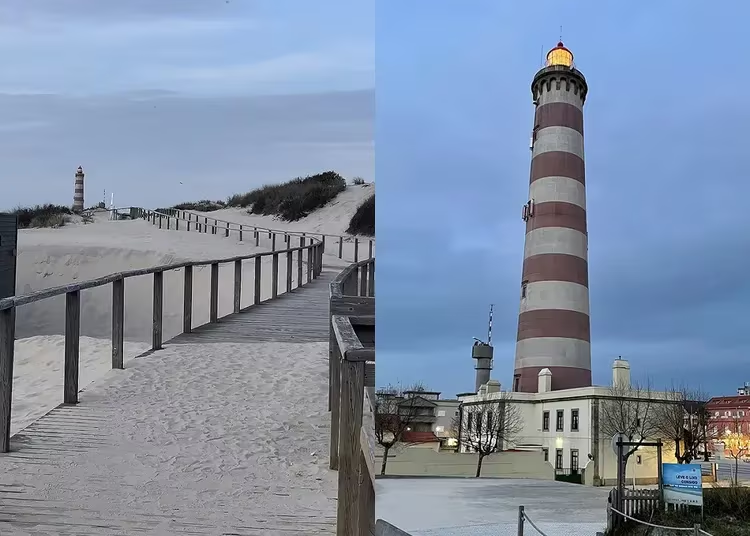
The weather in these places is often windy, so people come here to practice kiting, surfing, bodyboarding, sailing and sport fishing.
Costa Nova
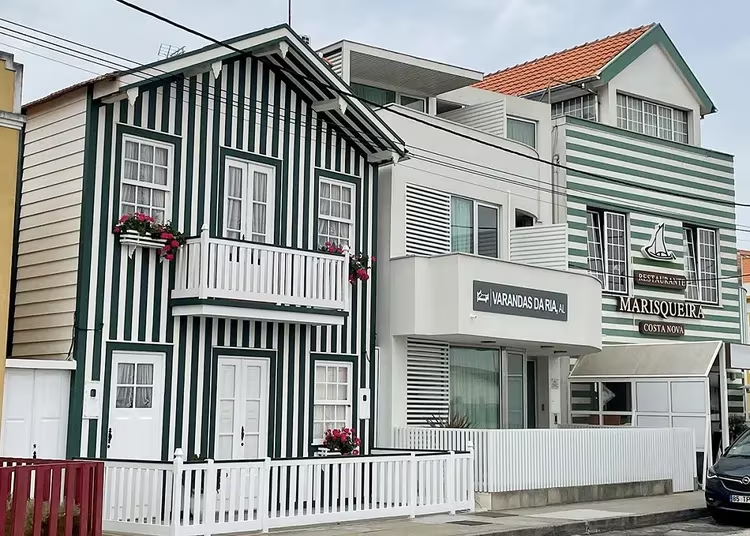
Literally two kilometers along the coast and you will find yourself in an incredibly bright village. Multi-colored houses with white stripes are lined up in several rows. Walking around Costa Nova, you want to take photos without stopping.
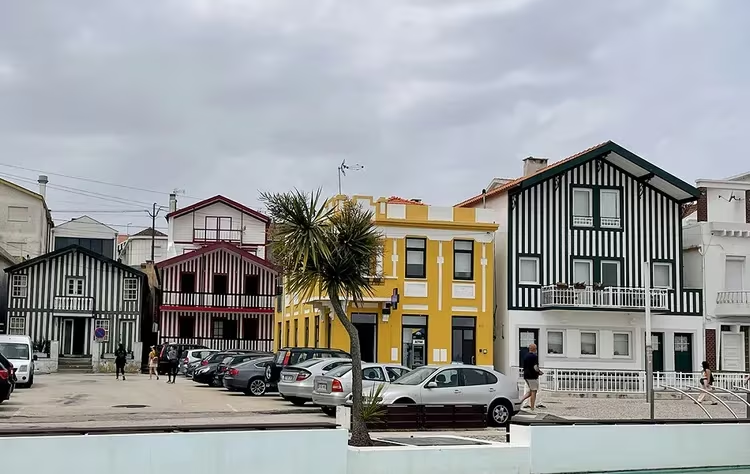
How did such a village appear? In the 18th century, fishermen began building wooden sheds near the ocean to store their equipment. To be able to see their hangar from the water, they painted it a bright color, different from its neighbors.
Over time, Costo Nova was chosen by the wealthy Portuguese. They bought and refurbished fishermen's houses and built new ones. The idea of painting buildings in bright colors turned out to be to the liking of the rich. Current residents are required to maintain their homes in this condition.
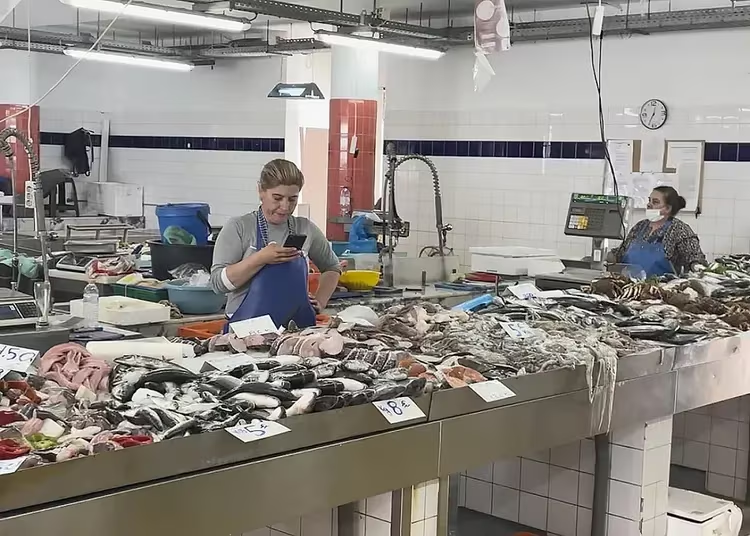
The fish market in Costa Nova is considered one of the best. Fresh fish and seafood caught in local waters are sold here. There are many restaurants in the village where you can taste them ready-made.
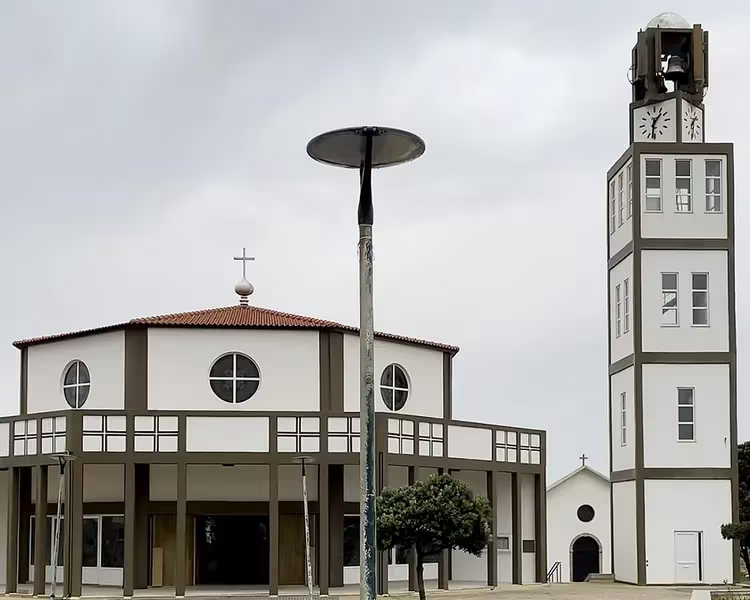
There are two churches near the beach: a small chapel from the 19th century and a spacious modern church, opened in 2000.
Praia de Mira
20 km from Costa Nova there is another interesting village that has become a resort. Previously, it was called Paleros de Mira – in honor of the typical fishermen's houses: wooden, on legs. You can see them at the local ethnographic museum.
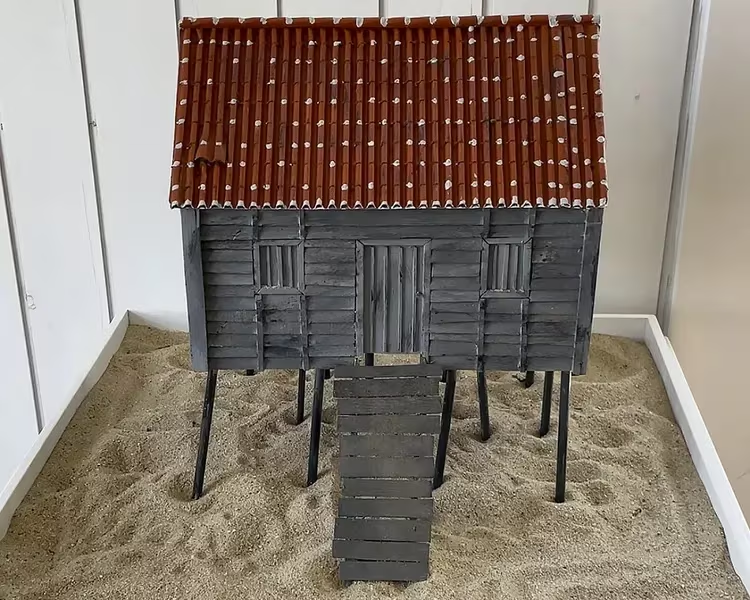
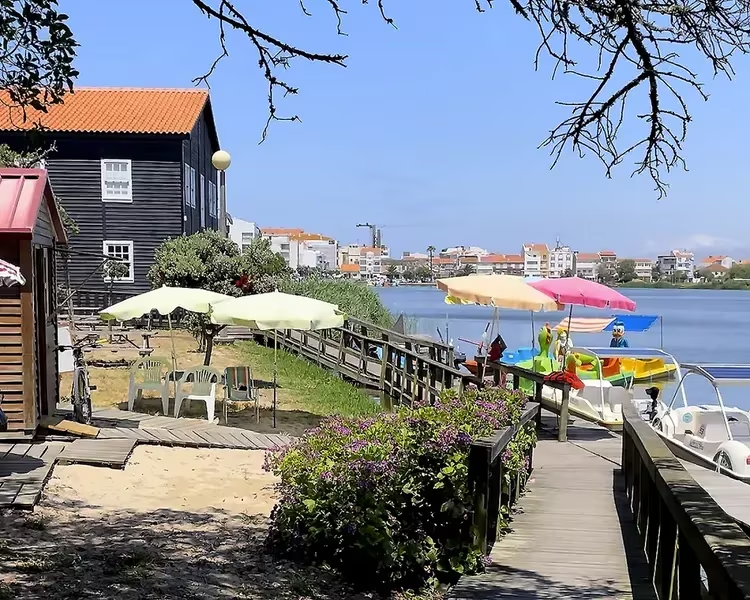
The museum is located near the Barrinha reservoir. This natural freshwater lake is a rarity in such close proximity to the ocean. There is a walking route along the embankment that introduces you to the local flora and fauna.
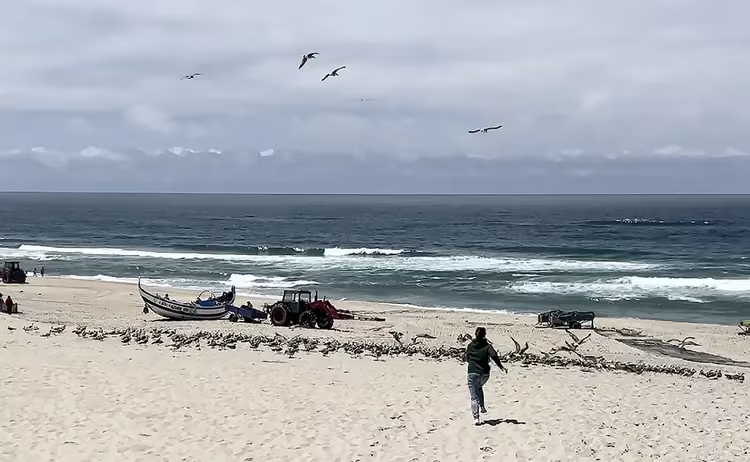
On Praia de Mira beach you can see traditional fishing using crescent-shaped boats. They used to be pulled out of the ocean by bulls, but now by tractors. Flocks of seagulls flock to the fishing sites to get small fish left after cleaning the nets on the shore.
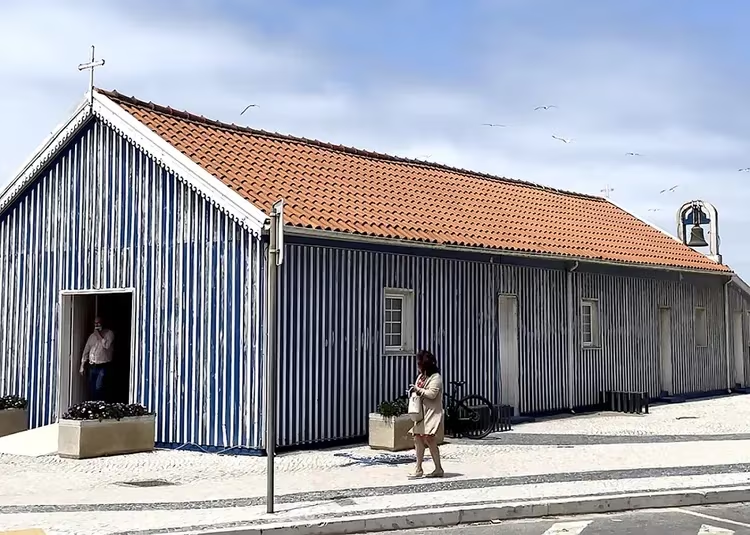
There is a small 19th century chapel by the ocean. In this simple temple with nautical decor, fishermen and their families seek protection from the dangers of the water.
Ask any questions about Portugal in the comments or on my Instagram – button in the profile description.