
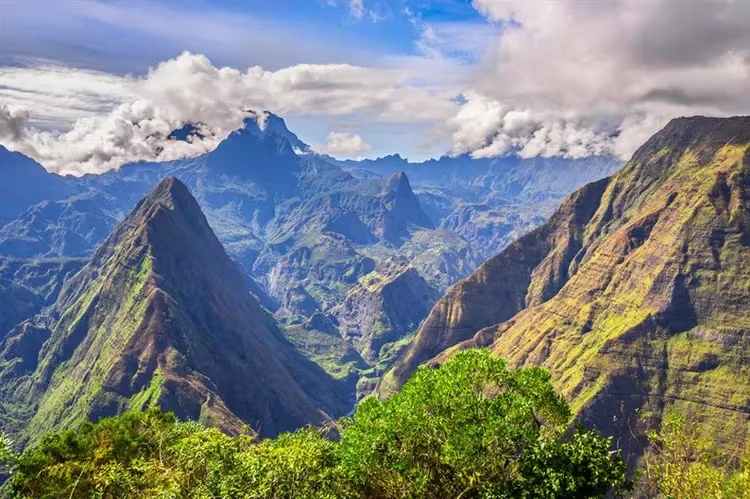
Probably, for many it will be a discovery that one of the regions of France is located almost in the center of the Indian Ocean and is a volcanic island. It can be called an earthly paradise among the boundless ocean: everything here is picturesque, unusual and mysterious. Once here, once again you can marvel at the truly supernatural forces of Nature, which created this wonderful island of extinct and active volcanoes.
Where is
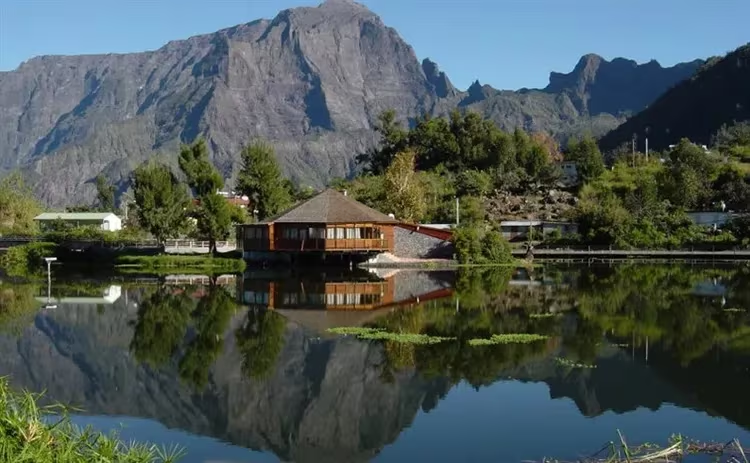
Reunion, located in East Africa, is the westernmost of the Mascarene Islands and covers an area of 2152 sq. km. The discovery of a unique island belongs to the Portuguese navigator Pedro di Mascarenhas, who landed here on February 9, 1513, on the day of Saint Apollonia. The island was named after her at first, and when the French took possession of it, it became known as Reunion de Patriot.
Its entire territory is covered with extinct and active volcanoes, the cooled lava of which actually formed Reunion.
One fifth of the territory is made up of solidified lava masses; the central territory is occupied by numerous circuses – ring mountains enclosing circular plateaus, many of which are covered with fertile soil. It has a multiethnic population that grows sugar cane and other tropical crops.
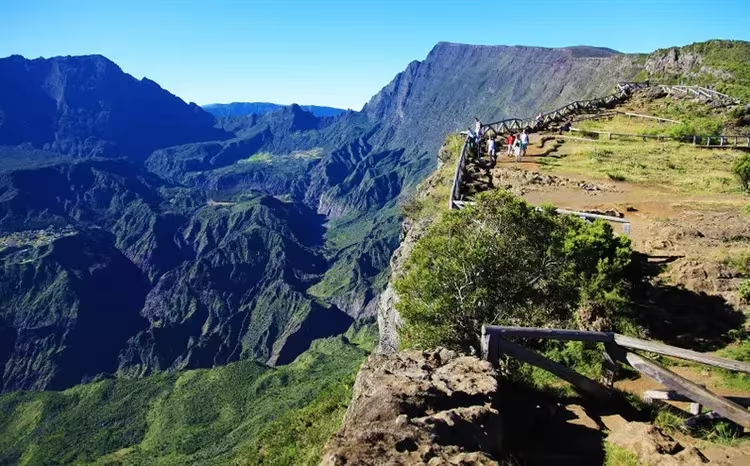
The west of Reunion is decorated with primeval relic forests, among which they make clearings for coffee, cane and banana plantations. The southeast is occupied by basalt plateaus, on which there is no volcanic soil. The southwest is represented by a savanna with a lush grassy cover, alternating with a rare undergrowth. Tropical forests, picturesque meadow grasses and flowers grow on the flat tops of the island mountains.
Tourist routes of Reunion
Volcano watching is the main form of tourism in Réunion. Thousands of people who want to see with their own eyes a powerful natural element – an eruption of the deep bowels of the Earth – come to the island every year. They examine extinct volcanoes and traces of their eruptions, marveling at the scale and strength of the once molten, fire-breathing masses.
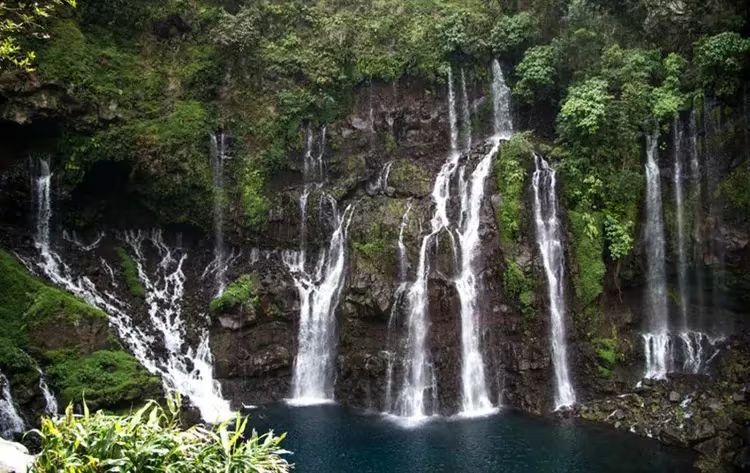
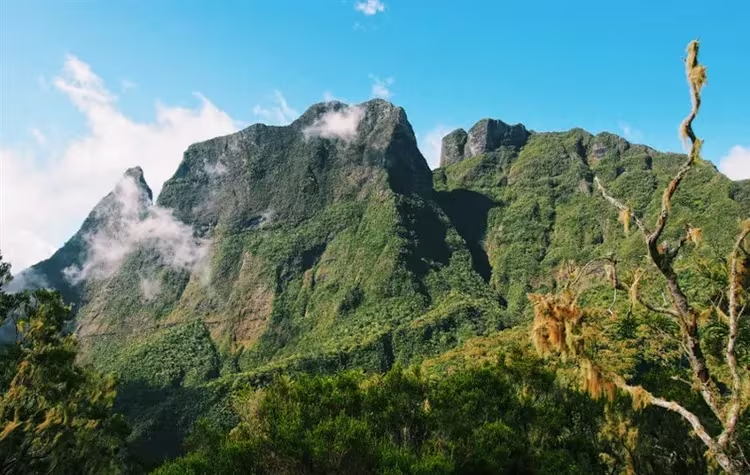
Piton des Neiges – the highest peak of an extinct volcano – is located in the northwestern part of the island and is considered the highest point in the Indian Ocean (3069 m.). A huge volcano, which has lost its activity for more than 20,000 years, is badly destroyed. It is surrounded by three majestic mountain amphitheaters with the circuses of Silao, Mafat and Salazi. To the top of Piton de Nezhe, 3 tourist routes of the 2nd class of complexity were laid: through Salazi, Silao and Plaine de Kafr.
Tour to the volcano – what could be more interesting?
Accompanied by guides, tourists of all routes after a long day's climb meet in a hotel stylized as a mountain hut. Here they organize an overnight stay, and before sunrise in the early morning they reach the top in order to admire the rising star from it. Having examined the surroundings of the giant, tourists go down the same routes. The ascent from Cialos takes 6.5 hours; from Plaine de Kafra – 8 hours; from Mafat – 9. Most choose a two-day hike, it requires less physical effort and allows even untrained people to overcome 3 km. height. A one-day ascent, which takes 10-12 hours, is also organized, for which physically strong tourists accustomed to mountain travel risk.
The routes lead through La Roche Ecrit National Park, its lush tropical greenery; through the mountain peak of the same name, from where, as in the palm of your hand, you can see the surroundings with circuses and craters; motley panorama of the capital Saint-Denis. During the ascent, you can see the craters Salazi, de Mafat, Silao; admire the Cascade de Bras Rouge waterfall, taste the water of local thermal springs.
Python de la Furnace volcano
Piton de la Fournaise, an active shield-type volcano with a height of 2631 m, is now a cirque-shaped depression with a diameter of approximately 8 km. Translated from French, its name sounds like “The top of the furnace”, which is very consistent with the frequent eruptions of red-hot lava, pouring in a wide strip from the mouth of the volcano. Since the 17th century, over 150 eruptions of liquid lava have been recorded, the most recent occurred in May 2015. The image of an active volcano as the main symbol of the island is placed on the unofficial flag of Reunion.
Those who do not risk climbing to the Fourneza crater on foot can view the volcano from below, from different points of the foot. Thrill-seekers can see an active lava eruption from a height, flying around the crater in a helicopter, when a red river of hot magma flows down before their eyes. During the period of activity, it is forbidden to approach the volcano at a distance of 10 km, so you can observe the fiery lava only from a distance.
The rest of the time, hiking trails are organized to the crater, following which you can see the amazing beauty and uniqueness of the natural attractions of these places. Here you can marvel at the view of relic forests, the highest waterfall in the world – Trou de Fer, unique in its width, the gorge of the same name (they descend into it only on a rope). The path to the top runs through the national reserve Beluv, located at an altitude of 1.5 km. The cleanest air makes you dizzy, outlandish trees and shrubs surround hiking trails and bridges. Cozy mini-hotels hospitably offer a place to spend the night with a delicious dinner and a comfortable bed.
A visit to the island of volcanoes is a journey into the world of exotic landscapes, majestic mountains, the mysteries of the mysterious forces of the planet.
There are many interesting places in France, such as the Marquessac Gardens.