
Triumphal Arch of Constantine in Rome – history, photo, description, how to get there, map
Rome is considered the cradle of Western civilization. The city is full of unique monuments and buildings that characterize the culture and history of the ancient Roman Empire. A complex state transition from a republic to an empire, internal confrontations between oligarchic communities, endless military campaigns – all these reviews of the past are reflected in architectural masterpieces. Monumental buildings are an integral continuation of the policy of ancient Rome. Triumphal arches were built in honor of the merits of the emperors. The bas-reliefs and columns of buildings personified the victories and military power of the state.
Construction history
In the III century, the Roman Empire was tormented by the invasions of the ancient Germanic tribes. The internal political turmoil that prevailed at that time did not add stability to this confrontation. The state consisted of several provinces, in which the governors ruled with their troops. Each of them strove to become an emperor. In such a difficult situation, a leader appeared who managed to unite the country. It was Constantine, who later became the Great.
Constantine received an excellent military education. His father Constantius Chlorus led the Western Roman Empire. Before the young man, prospects opened up in achieving a lofty goal. The young commander successfully fought against the barbarians on the banks of the Rhine. Konstantin established himself as a brave and gifted strategist, which contributed to the acquisition of authority among the military. After the death of his father, the army proclaimed Constantine the pretender to the imperial throne. To gain full power, it was necessary to defeat the internal enemy.
In 306 Rome was ruled by the usurper Maxentius, who is a militant pagan. Any decision he made, guided by the fortune-telling of the priests on the sheep's entrails. Constantine, having enlisted the support of other co-rulers of the provinces of Rome, outlaws the tyrant Maxentius and prepares a military campaign against the capital. The commander with his army approaches the Tiber River, which was considered the only obstacle on the road to Rome.
There he is met by Maxentius with an army many times larger than the army of Constantine. In 312, a fierce battle began on the banks of the river, during which Maxentius was defeated. During a shameful flight, the usurper drowned in the waters of the Tiber. Constantine becomes sole ruler of the Western Roman Empire.
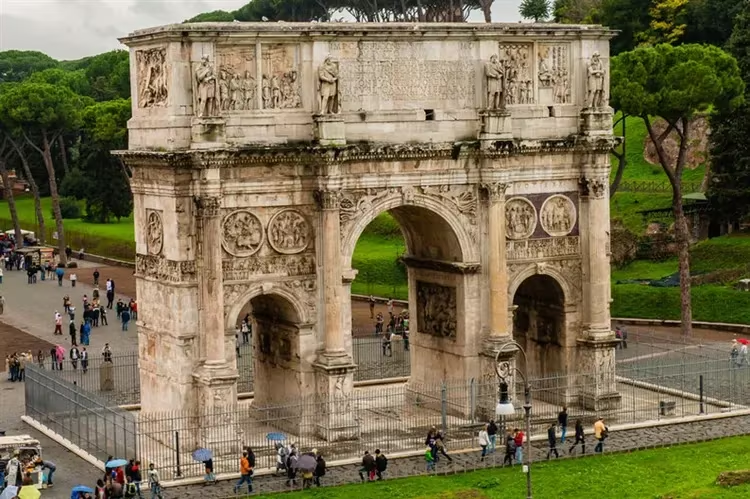
In 315, by decision of the Roman Senate, a triumphal arch was erected, symbolizing Constantine's victory over the tyrant. The architectural structure was built and decorated with fragments taken from other ancient monuments of the city. This was the special political plan of Constantine. The idea of assembling decorative elements of different times into a single ensemble was to consolidate society after the civil war. Bas-reliefs and panels depicting the events and exploits of the previous rulers of Rome were taken.
It is worth highlighting one important aspect related to the spiritual values of Emperor Constantine. There are no symbols of Christianity on the triumphal arch. On the contrary, the bas-reliefs of the arch describe scenes of pagan sacrificial rites. There is evidence that during the climactic battle against Maxentius, the monograms of the cross of Jesus were depicted on the shields of the soldiers of Constantine's army.
The future emperor believed that with the Christian banner he would be lucky. During the erection of the arch, Constantine behaved like a cautious diplomat. In order to prevent a split in society, he decided to unite it later with a single religious movement – Christianity.
Description
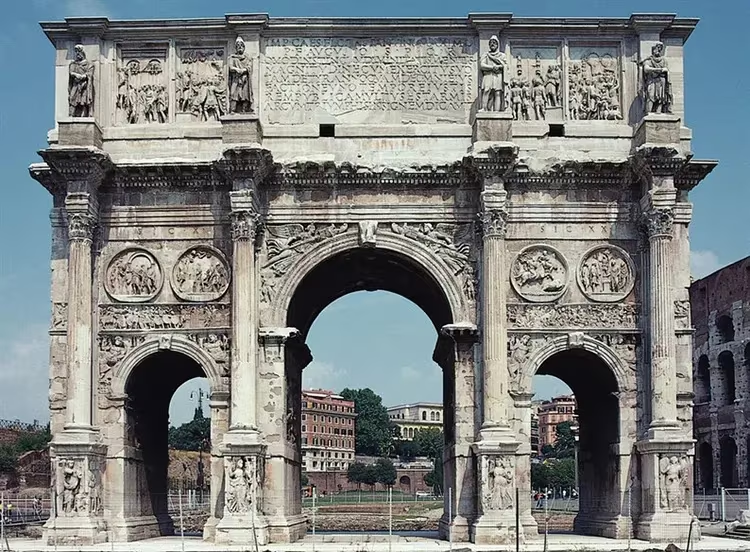
The triumphal arch has three spans. The main part of the monument was erected from marble blocks. The building is over 20 meters high and 25 meters wide. The architectural structure is framed by eight marble columns, four on each side. Sculptural compositions are also installed here. The bases of the pilasters are decorated with images of Roman soldiers, captive barbarians and the goddess of victory, Victoria.
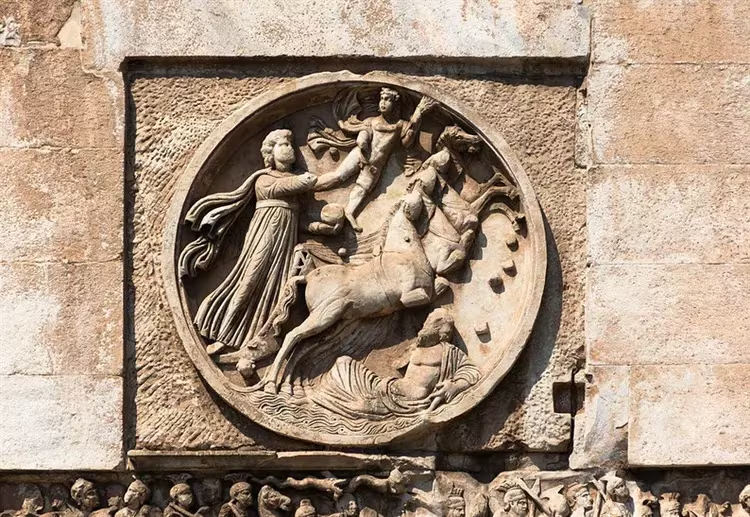
The second tier of the arch is represented by eight large tondos framed with red stone (porphyry). The images represent different episodes from the life of Emperor Hadrian. Each medallion individually is a scene of hunting and sacrifice to the gods. The relief compositions depict the emperor's departure for hunting with his retinue. One of his companions holds the horse by the bridle, the other leads the dog on a leash. Participants of the roundup are fighting with a bear, a wild boar and a lion.
On other medallions, hunters can be seen bringing gifts to the forest god Silvanus, as well as Apollo, Hercules and Diana. Tondo have nothing to do with military victories, but their placement on the arch symbolizes the success of the emperor in all areas of his activity.
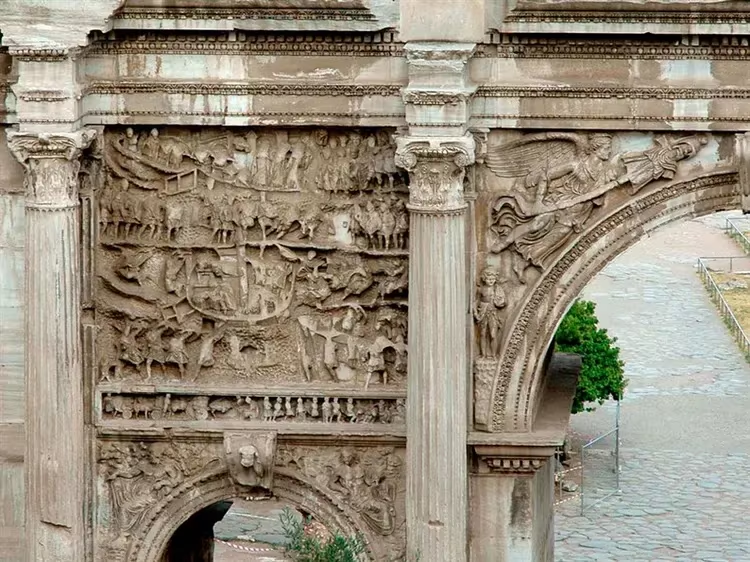
Along the entire middle part of the arch, there is a sculptural frieze characterizing the military exploits of Constantine. This composition is rather primitive, unlike other bas-reliefs. There is no clarity and proportionality of the lines of the sculptures. These scenes are more ideological than artistic accuracy. The commander goes on a campaign with his army, besieges cities, fights victoriously with Maxentius and then enters Rome. On the other side of the arch, the emperor is depicted distributing money to the people.
Decoration of the attic
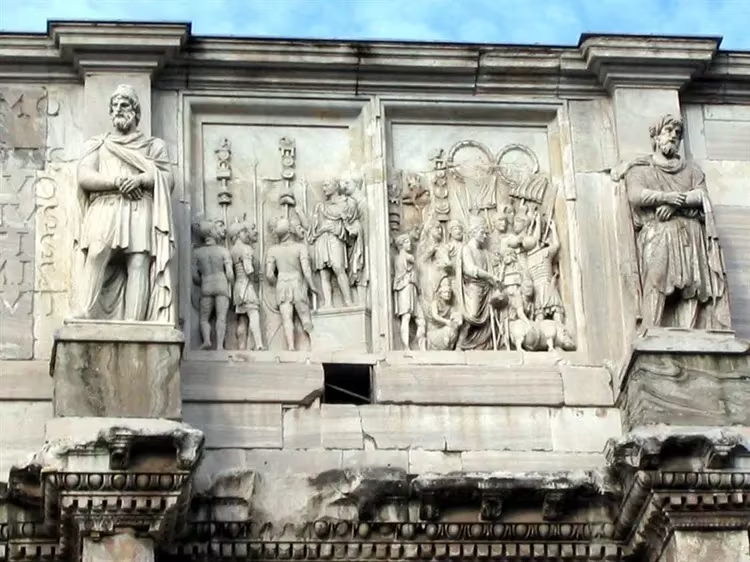
The upper level of the arch is considered a true masterpiece of ancient Roman art. Stand-alone statues at the top of the columns attract attention. These are the figures of enemies conquered by Emperor Trajan. The sculptures are dressed in long trousers, cloaks and pointed hats, which testify to the images of barbarians. After all, the Romans wore only togas. Representatives of the ancient tribes are shown in defeated poses: their heads are lowered, their hands are folded together. Bas-reliefs are installed between the statues, reflecting the attack of the Roman cavalry and the onslaught of the legion on the barbarians.
The attic of the northern part of the arch is represented by several scenes describing the political situation in the Roman state under Emperor Aurelius. The sculptures depict military actions against the Sarmatians in 169. The figures are executed with scrupulous accuracy of small details. The emperor is dressed in different attire: a short tunic, a mantle, or a marching cloak. Soldiers are depicted in armor, helmets with shields and weapons. The bas-relief describes the scene of the ruler addressing the army with an inspiring speech.
The composition that tells about the interrogation of a captured German leader is impressive. Nearby are informative sculptures demonstrating the triumphant return of Marcus Aurelius to Rome after a military campaign, the distribution of money to the people and the rite of purification through sacrifice. The central part of the attic is decorated with an inscription expressing gratitude to Constantine for the liberation of Rome from tyranny and oppression.
Where is it located and how to get there
The triumphal arch of Constantine is located in the center of Rome near the Colosseum and the Roman Forum. Tourists can use the metro services by reaching the Colosseo station. The arch can be reached by public transport. Quite a lot of bus routes run to the sights.