
Tyn Church or Temple of the Virgin Mary in front of Tyn in Prague – history, photo, description, how to get there, map
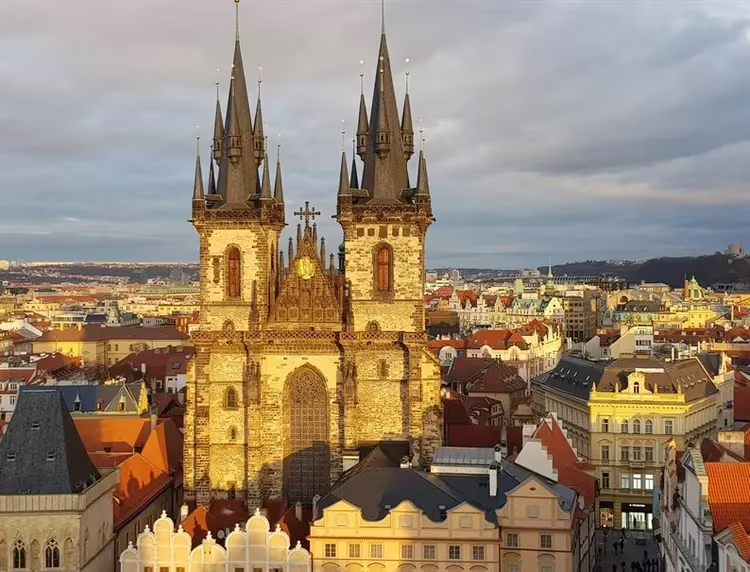
Prague amazes tourists with the beauty and monumentality of its architectural masterpieces that have preserved the spirit of the Middle Ages. Against this background, Gothic churches stand out, embodying the cultural and historical heritage of the Czech Republic. In the eastern part of the Old Town Square rises one of the symbols of the city – the Tyn Church. The two ornate spiers of the basilica, flanked by small houses with colorful roof tiles, dominate Prague‘s Old Town.
Construction history
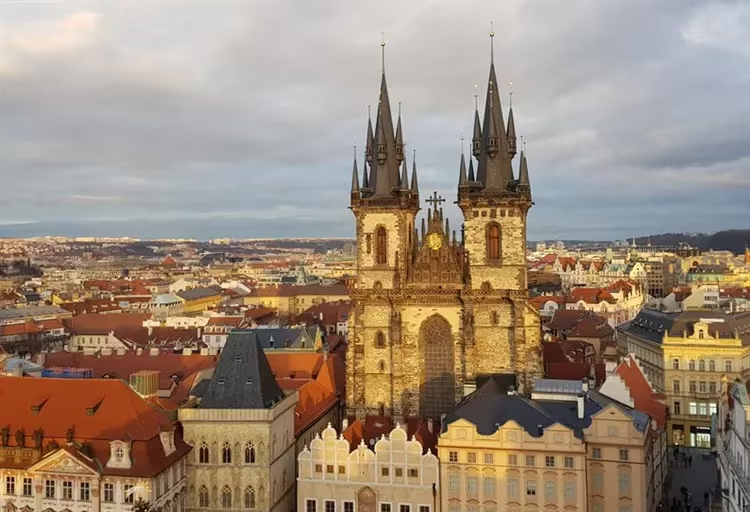
The old town of Prague, where the basilica is located, has been a merchant district for centuries. Since 1100, a market was organized in the quarter, next to which they built a fenced inn with a tavern, called Tyn. Foreign merchants stopped here with their numerous goods. Having paid customs duties, foreigners provided trade caravans to local merchants, since in Prague it was forbidden to engage in commercial activities for overseas entrepreneurs. On the territory of the courtyard there was everything necessary for the arrived strangers – warehouses, stables, a hotel, a hospital and a small basilica, which later became the temple of the Virgin Mary. At the turn of the 13th-14th centuries, the parish Romanesque church for foreigners was replaced by a new Gothic cathedral.
The building was significantly expanded and lengthened. The basilica was transformed into a polygonal apse with three naves, and the top of the rooms was decorated with a vaulted ceiling. The building was crowned with one western tower, where the bell was placed. The builders and architects of the temple were the masters who built St. Vitus Cathedral. The church acquired the gothic pomp inherent in Czech architecture of that period. The final completion of the construction of the temple was delayed due to internal church strife.
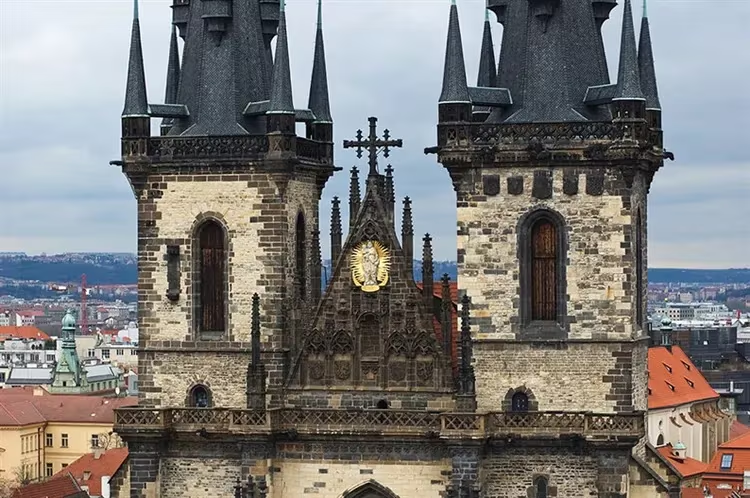
At the beginning of the 15th century, the basilica became the center of political and religious change in the Czech kingdom. The church comes under the control of the Hussites, who form a new reform movement. They denied the authority of Catholicism. The Latin cross that crowned the tower of the basilica was replaced by a huge golden bowl (the symbol of the Hussite church), and a statue of George Podebrad, who was the king of the Czech Republic, was also installed. In 1511, the southern tower was erected and the western facade of the temple was built.
In 1620, the Jesuits defeated the Hussites, which was reflected in the external and internal appearance of the basilica. A sculpture of the Virgin Mary appeared between the two spires. The interior of the temple was decorated with unique works of art dedicated to religious themes. The altars were framed with gold and marble.
During the 19th-20th centuries, the Tyn Church was repeatedly subjected to fires caused by lightning strikes. The facade and decoration of the halls of the basilica were reconstructed, after which the main nave became lower. Particularly affected, the northern spire, portals and roof regained their original appearance.
Description
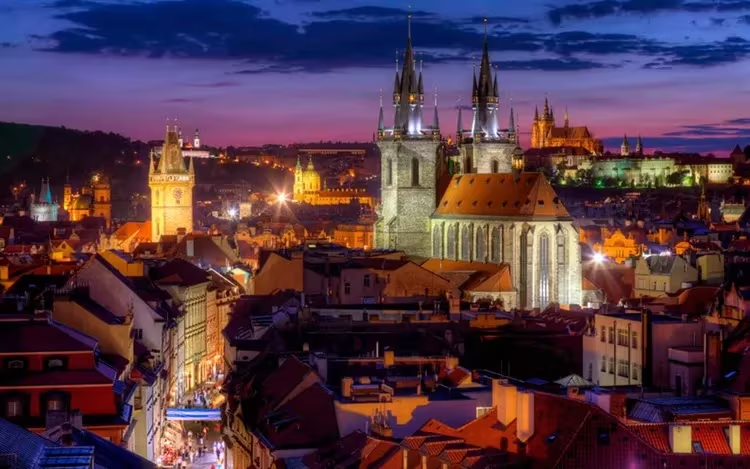
The Church of the Virgin Mary is a three-nave Gothic basilica with polygonal altar extensions (apses). The unplastered stone facade is decorated with long lancet windows with bars, four portals, and the roof is covered with red tiles. The northern entrance to the basilica deserves special attention, decorated by the architect Peter Parlerge at the end of the 14th century.
The portal, which is an open porch, is framed by an arcade with a central bas-relief. It depicts the passions of Christ – coronation with a crown of thorns, scourging and crucifixion. The building is crowned with two eighty-meter towers with lancet window openings, balustrades and pointed spiers. Between them is an intricate pediment with small turrets and a gilded sculpture of the Virgin Mary.
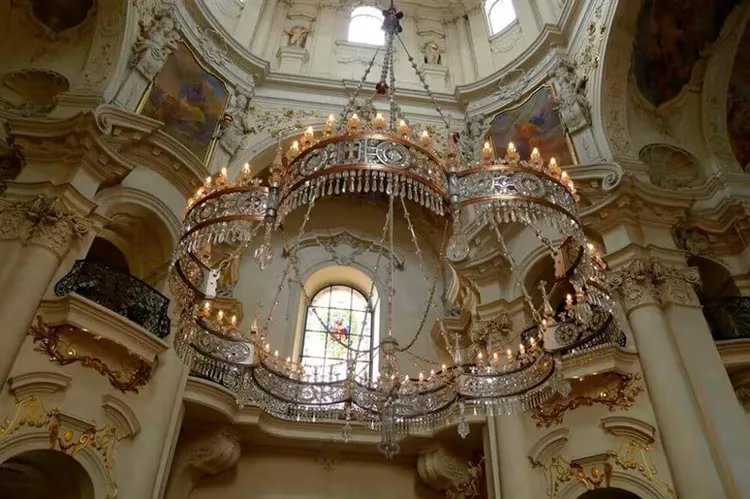
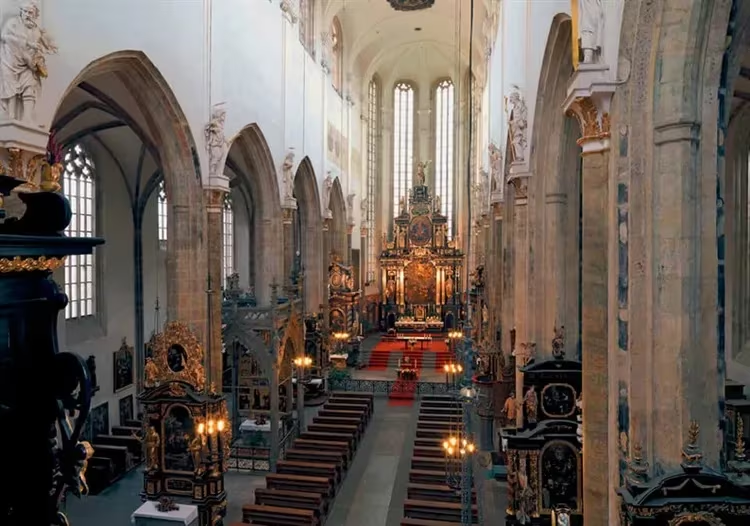
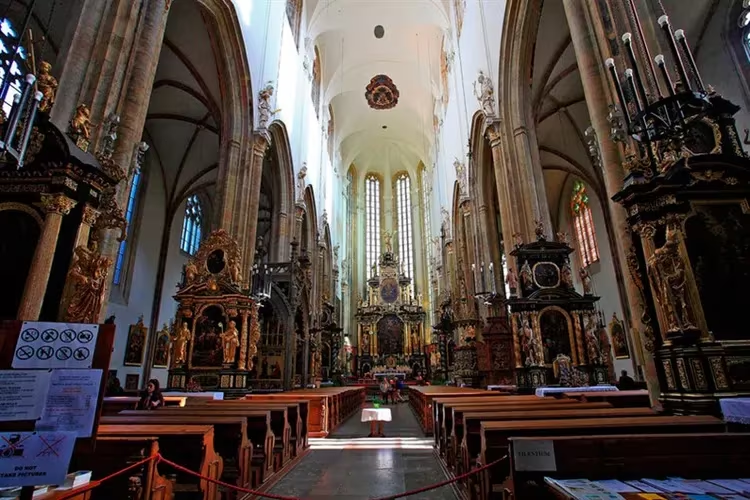
The interior of the church perfectly combines Baroque pomp with Gothic strict canopies, a pulpit, sculptures and frescoes. The halls of the temple are divided by arches with pilasters. The ceiling is topped with ribbed vaults. The basilica consists of 19 wooden carved altars with statues of Jesus, the Virgin Mary and Czech saints. The sculptures impress with painstaking detailing of bodies and faces. The paintings of the famous Prague artist Karel Shkreta are hung in the temple. The pearl of the basilica is considered to be an ancient organ made by German craftsmen in 1673 and restored at the beginning of the 21st century.
In the church you can see two large paintings hanging opposite each other. These are the works of the Italian artist Girolamo Romanino, created in the 16th century – “The Adoration of the Shepherds” and “The Apparitions of Our Lady”.
The tin font made in 1414 is considered to be an outstanding work of decorative art in the Tyn Church. It has the shape of an inverted bell and stands on a tripod imitating the paws of a lion. The bowl is decorated with relief images of the apostles. The relic is used to this day to perform the rites of baptism of newborns.
Interesting facts and legends
In the time of the Hussites, a golden bowl towered between the towers, which attracted the storks. The birds made a nest in it, where they kept toads and worms. Living creatures regularly fell on the heads of the citizens of Prague, who were horrified by what was happening. The Hussites refused to take off their valuable church attribute. All this remained so until the return of Catholicism. The golden chalice has been melted down. From it they created a sculpture of the Virgin Mary, which adorns the basilica to this day.
The roof of the temple was built from logs, which were originally intended for the construction of a knight's arena. It was planned to hold celebrations on the occasion of the wedding of the young king Ladislaus Postum on the Old Town Square. On the eve of the festivities, the monarch died unexpectedly. The tree for the lists was used in the construction of the roof of the Tyn Church.
The basilica is the tomb of about 60 famous and nameless people. These are bishops, military, nobles, scientists. The most famous person whose ashes lie behind the gothic stone pulpit of the temple is the astronomer Tycho Brahe. He developed methods for tracking stars and calculating the trajectories of planets.
During the period of German occupation, the bell was removed from the north tower of the cathedral, which was suspended in the Middle Ages. The new bronze bell, weighing more than 900 kilograms, was installed only at the end of the 20th century.
Where is it located and how to get there
Tyn Church is located on the Old Town Square, which is the historical district of Prague. The basilica is currently a functioning Roman Catholic church, so the religious feelings of the parishioners must be respected. Tourists visit the temple from 10:00 to 13:00 and from 15:00 to 17:00. The cathedral is closed on Mondays. It is advisable to come after lunch, as weddings, worship and baptism ceremonies are held here in the morning. The entrance is free. Tourists can make voluntary donations for the needs of the basilica.
Getting to the Cathedral of the Virgin Mary is convenient by metro. Staromestska station is located 500 meters from the church. You can also get there by tram routes No. 2, No. 4, No. 17 and buses No. 194 and No. 207. All stops are located near the Old Town Square. The two Gothic towers of the Tyn Church serve as an excellent landmark.