
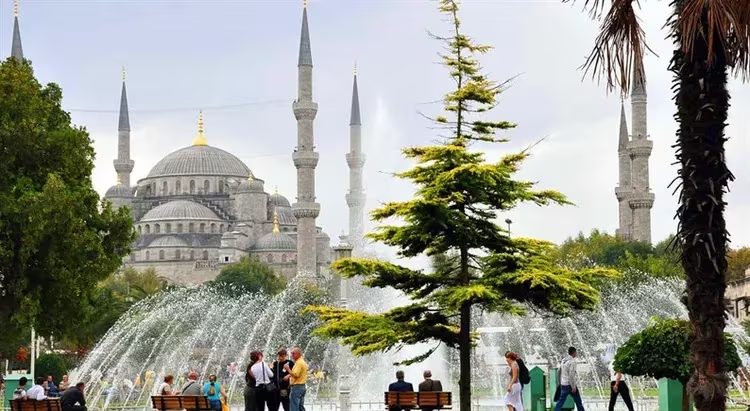
Sultanahmet in Istanbul – what to see, photo, description, map
The Sultanahmet district in Istanbul is a must-visit for all tourists who are tired of a beach holiday and want to get additional impressions. This place is the heart of Turkey. Here, objects of Muslim and Christian cultures are concentrated on a small area. And visiting them is quite simple: everything is located compactly, you can just move from one attraction to another and admire while you have enough strength. And if you rent a hotel room nearby, then you can explore for several days, slowly. And there are no problems with a snack: there are cafes and restaurants with oriental and European cuisine around the area.
Story
It is impossible to imagine that a place located on the most important trade route did not attract the powers that be. The Greeks, brave sailors and skilled traders, in the 7th century BC. founded a small colony on the site of the modern center of Istanbul. They named her Byzantium. Subsequently, in 330, Emperor Constantine founded a city on the site of the settlement, called New Rome.
According to the plan of the king, Constantinople should be not only the economic center of the empire, but also a stronghold of Christianity. Many temples were built in the city, local residents and merchants carried out trading operations, and then praised God. It was during the heyday of the Roman Empire that the St. Sophia Cathedral and the Church of St. Irene were built. But the state was weakening, and the Ottoman Empire was gaining strength nearby. It is not surprising that the Turks made attempts to capture Constantinople.
They succeeded in 1453. The city began to be called Istanbul, and most of the Christian monuments were destroyed or adapted for economic or religious needs. Today's Istanbul is not the capital of Turkey, and its borders have long gone beyond the former Byzantium. But it is from this area that tourists begin their acquaintance with the city and the country.
sights
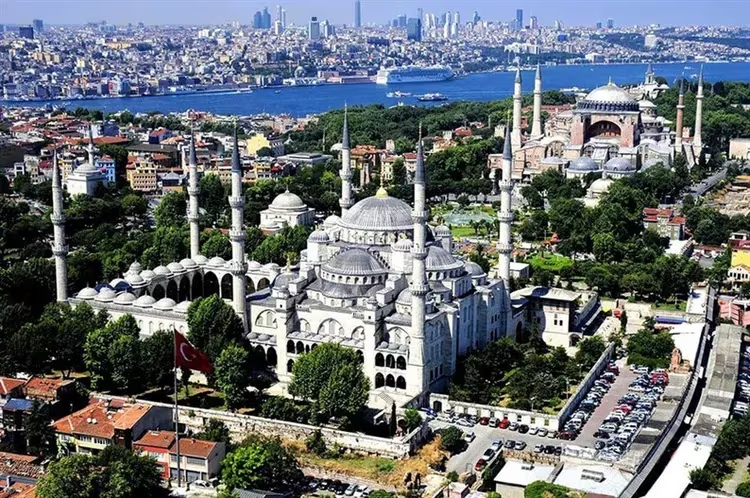
It is noteworthy that the entire Sultanahmet area is listed in the UNESCO Catalog as a World Heritage Site. On a small area there are monuments of early Christianity and the Ottoman Empire. You can move from object to object on foot: it does not tire you. It is even better to choose a hotel or apartment in the historical center: then the inspection can be done slowly, within a few days.
Saint Sophie Cathedral
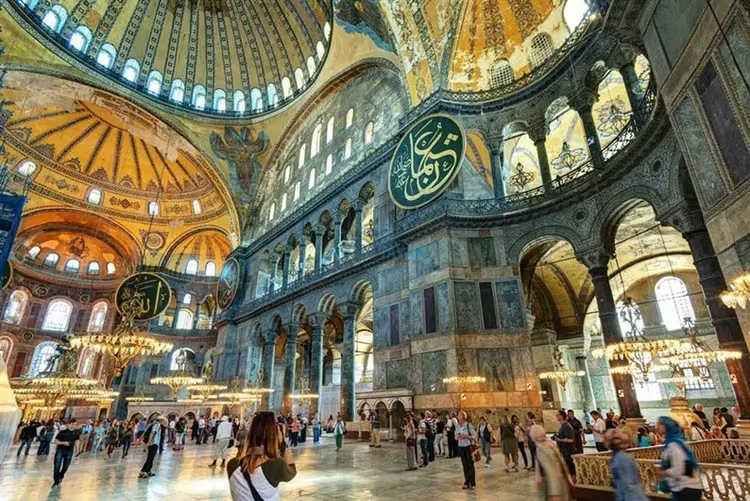
The place where Hagia Sophia is now located is the oldest in Istanbul. First, there were shopping arcades on this site, then a wooden Christian church (also Hagia Sophia), then (after a bloody riot, when the old church was burned) – the new Hagia Sophia. It was ordered to be built by Emperor Justinian. And Sofia was built with funds from the budget. The construction was colossal: the ruler wished that the temple was a stronghold of Christianity not only in the capital, but throughout the state.
Therefore, to exalt the building, others were shamelessly plundered: the temple of Artemis in Ephesus, the temple of the Sun in Rome. 1204 was an unlucky year for Sofia. The city was captured and plundered by the crusaders, who went to liberate the Holy Sepulcher. Instead, they took to Europe all the relics of fellow believers. By the way, scientists believe that 90% of the artifacts in the temples of the Old World were taken out of Constantinople.
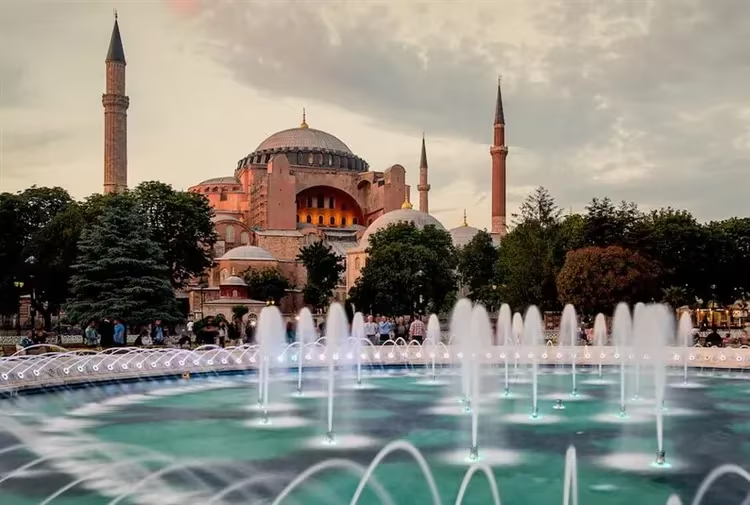
In 1453, Mehmed the Conqueror captured and robbed the cathedral. By his order, the Christian temple was converted into a mosque. Muslim services have been going on for 500 years. But 1939 brought Sofia a second birth. Ataturk ordered that Hagia Sophia be converted into a museum. The cathedral was restored and opened to tourists. But work on the restoration of the interiors is still ongoing.
Obelisk of Theodosius
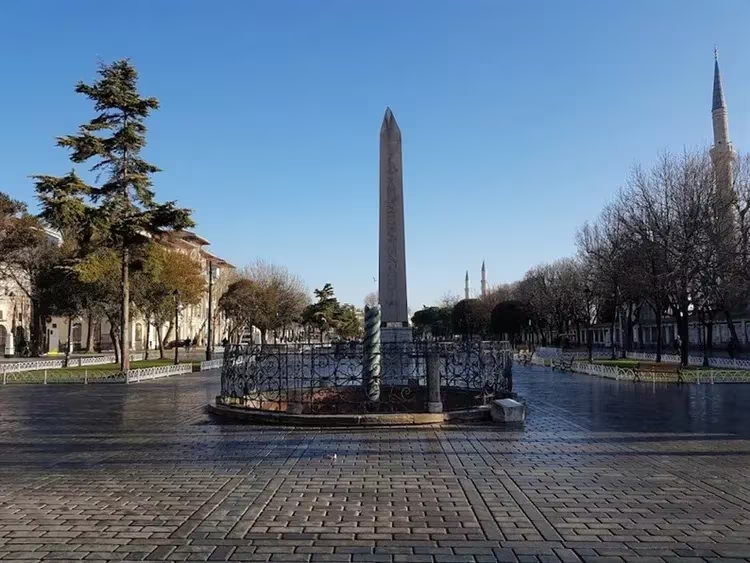
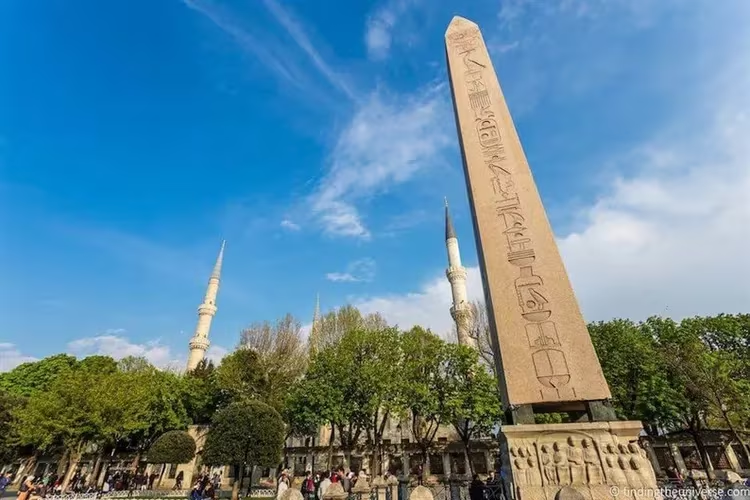
This attraction appeared in Constantinople under the emperor Julian the Apostate. And Emperor Constantine ordered to bring the stele to the city from Egypt. But even his son failed to deliver the column. She was abandoned in Alexandria. Julian, having learned that the obelisk lies in Alexandria, like a forgotten thing, and people began to worship him as an idol, ordered him to be immediately delivered to Constantinople, and his statue was erected in Alexandria.
The order was carried out, and a granite stela with carved hieroglyphs adorned the back of the hippodrome. Some historians claim that there were also other obelisks, smaller ones, but neither themselves nor any traces were found. These stelae were also located on the hippodrome. The masters of Constantinople did not master the art of lifting heavy columns and putting them “on their heels”, so a pedestal was made of marble with bronze supports.
By the way, the marble base is 2000 years younger than the stele, but it has survived somewhat worse. For some time, the obelisk served as a fountain, for which it was supplemented with bowls in which water accumulated. But today it has been restored and appears before tourists in the form in which it stood at the hippodrome.
snake column
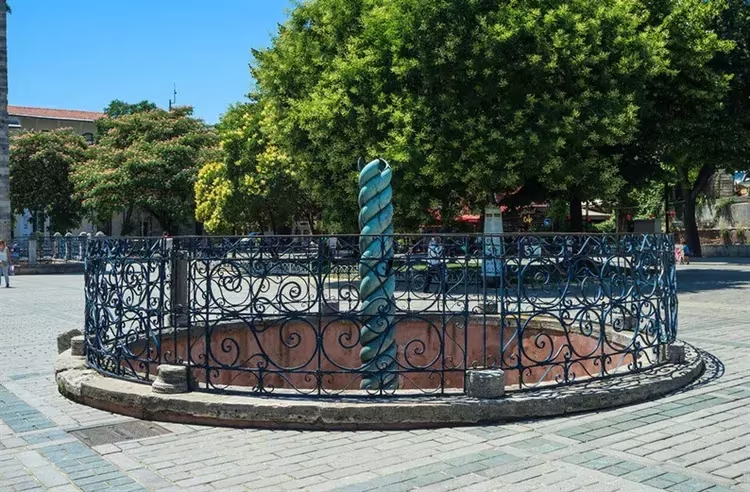
This column served as the basis for the golden altar and was located at Delphi. And it represented three snakes coiled into a bundle, whose heads diverged at the top in order to serve as a stand for the bowl. The Greeks made it in 478 BC. by the method of hollow casting from the remains of the weapons of the Persians defeated by them. And in 326, by order of Emperor Constantine, the column was transported to the new capital of Byzantium and installed at the hippodrome. But originally it was located on the other side of the Egyptian obelisk. And its size was different: more than 8 m.
The townspeople considered the monument to be mystical: after its installation, all the snakes in the area disappeared. Another legend claims that Mehmed the Conqueror decided to drive all the reptiles out of the captured city. To do this, he cut down the top of the column, after which the reptiles disappeared (along with part of the structure, of course). Subsequently, part of one of the heads was discovered by archaeologists. Now you can look at it in the archaeological museum of Istanbul. And the second head was taken to England, but this data has not been officially confirmed.
Today, the column impresses tourists with its appearance: inscriptions are engraved on the bodies of snakes. The base of the structure is located at a depth of 1 m: it is hidden by the cultural layer.
Obelisk of Constantine
This structure was supposedly ordered by Emperor Constantine to replace the expected Egyptian obelisk. The column is limestone slabs held together with mortar. Time has damaged this statue: part of the masonry has crumbled. Emperor Constantine Porphyrogenitus in the 10th century ordered the restoration of the building. Sheets of copper were attached to it with images of battle scenes and images of animals. The top was crowned with a ball or a statue (now this cannot be established).
During the capture of Constantinople by the Crusaders, all the bronze parts of the obelisk were taken away with them. And the Ottomans continued to destroy the monument: they climbed on it to show their prowess. And the plates with Christian inscriptions were also removed. Today, the monument is in poor condition, but the Istanbul administration is trying to find investors for restoration.
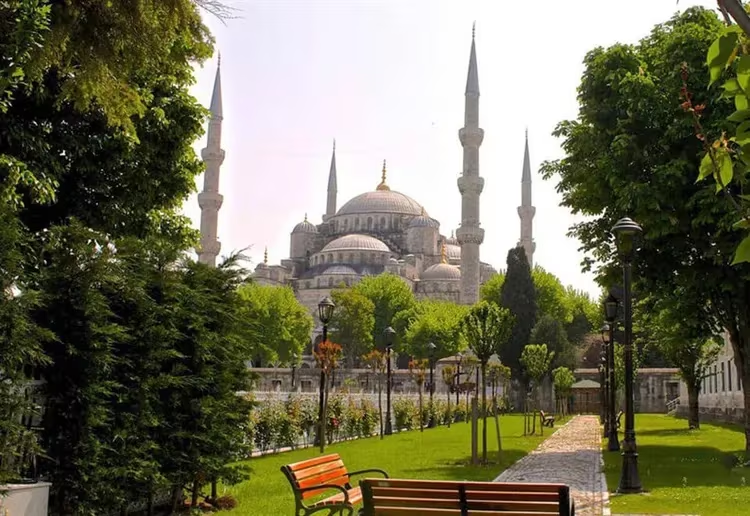
Blue Mosque
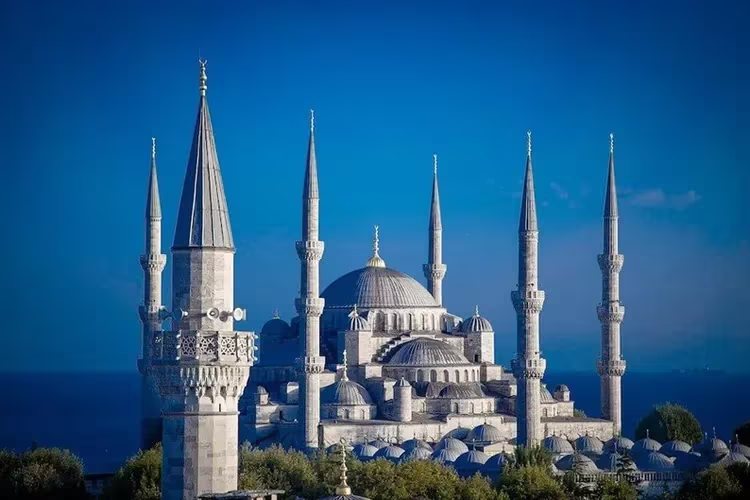
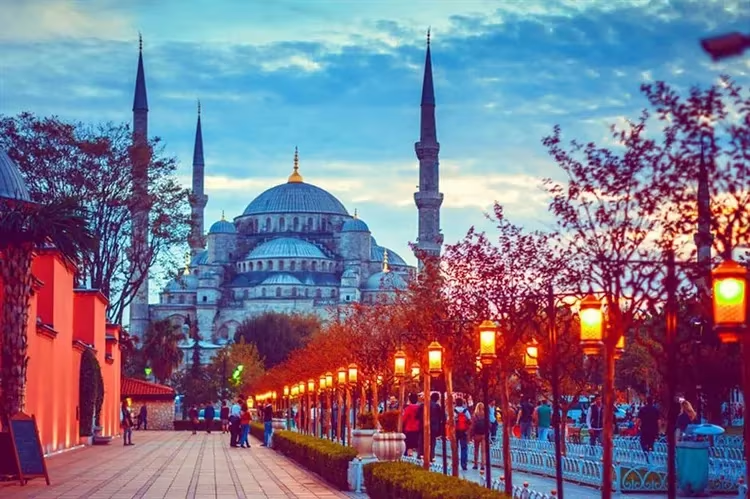
This building was the life work of Sultan Ahmed. He decided that by building a mosque, he would be able to defeat the infidels. Work began in 1609, and ended in 1616. In order to fulfill all the plans, the Sultan invited famous masters. For fine work they were called jewelers. Ahmed allocated funds from his own reserves: this is how he wanted to call on the mercy of heaven. Unfortunately, Ahmed could only look at the idea embodied in stone for a year. Then he died of typhus.
And people were left with a masterpiece that hides several mysteries and contradictions:
- Sultanahmet is too reminiscent of Hagia Sophia. It seems that the mosque is a reflection of a Christian temple. Only the lines are a little softer.
- The mosque has 6 minarets, although at that time it was allowed to build temples with no more than 4 minarets. today it is impossible to establish whether Ahmed wanted to completely repeat the number of minarets of the “Forbidden Mosque” in Mecca, or whether the architect simply made a mistake. But today the masterpiece pleases people with 6 domes.
The interiors of the Blue Mosque impress with richness and a special light that does not irritate the eyes and at the same time brightly illuminates the luxurious decoration. No visitor leaves here disappointed.
Bazaar of Arasta
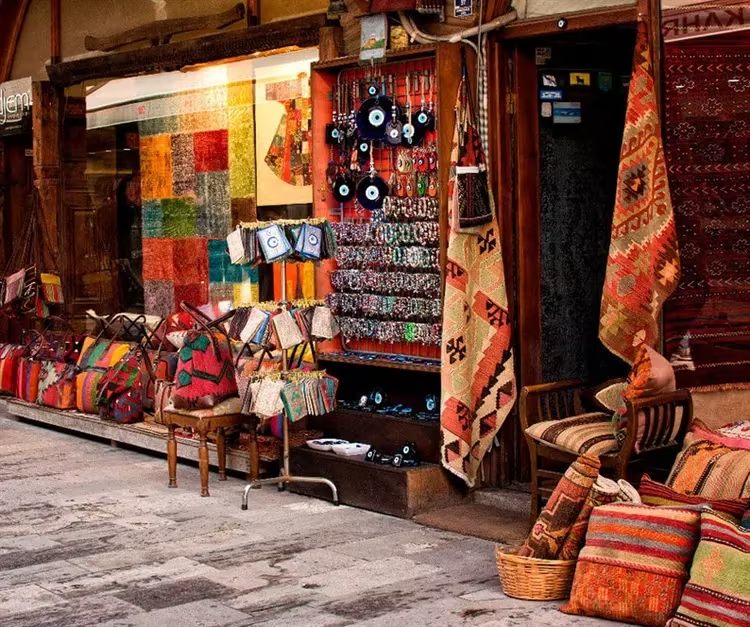
For those who want to completely immerse themselves in the atmosphere of Turkey, feel the local spirit, there is no better place than Arasta Bazaar. This is not a market in the traditional sense. Here they do not grab guests by the hands, imposing leather jackets or other consumer goods. Arasta is an open-air museum, the exhibits of which are for sale. There is no language barrier: the owners of small pavilions will always invite a neighbor who speaks Russian, German, English or Spanish. And they will treat the potential buyer with excellent tea. By the way, by bargaining, you can reduce the price by 2 or even 3 times.
And you can buy a lot here:
- Carpets. All of them are hand-woven and highly valued. The most popular of the Hereke or Bunyang provinces.
- Jewelry. Jewelery made of gold, silver with inlay of their precious or semi-precious stones is on sale.
- Metal utensils with colored enamel coating, indescribable beauty and strength.
- Jewelry with colored enamel inserts.
It is impossible to enumerate all the goods that are sold in Arast. You can spend the whole day here. And impressions (even if there are no purchases) will last for a long time.
Fountain of Sultan Ahmed III
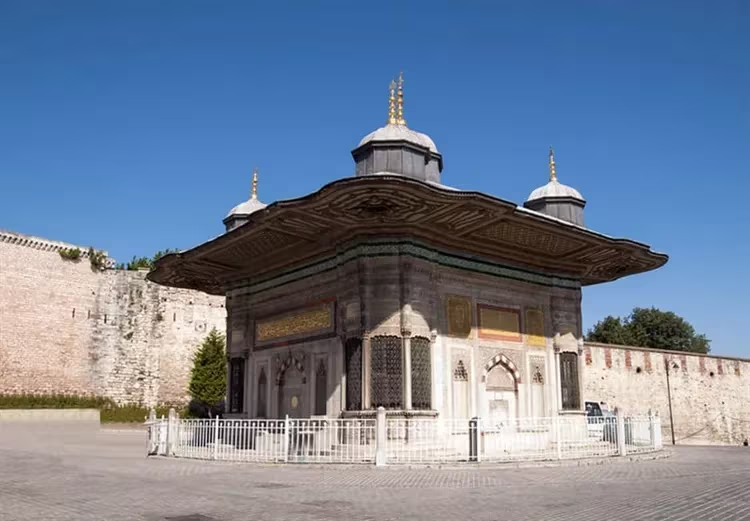
Initially, this fountain was located directly in the coastal part: on Uksudar Square. Sultan Ahmed in 1728 ordered the construction of a structure so that every weary traveler who crossed the Bosphorus could quench their thirst with cool fresh water. But the inscriptions covering the slabs of the fountain call on all who have tasted the life-giving moisture to pray for the one who built the marvelous reservoir.
The building is made in the form of a palace facade. The slabs are decorated with carvings, and taps are built into the walls. From which cool water flows slowly. But after a while the fountain was moved to the gates of the Topkapi Palace. Here you can see it today, and dip your hand in cool jets to feel eternity.
Carpet Museum
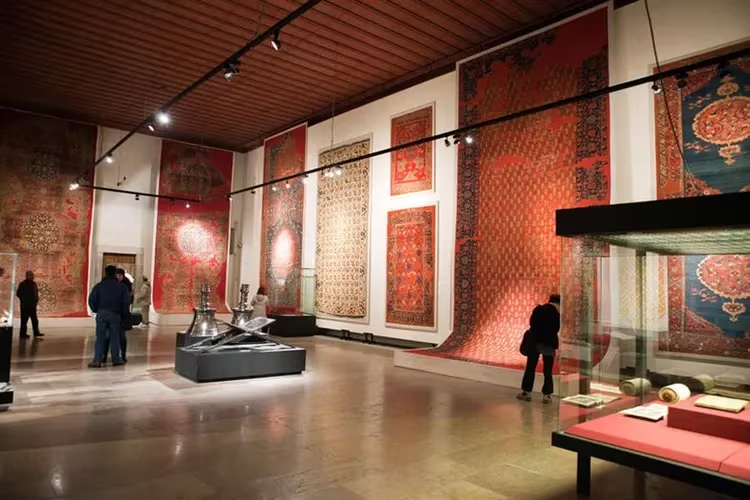
What is the East without carpets? And in the very heart of Istanbul there is a center where unique exhibits are presented. In 1979, the newly opened pavilion was located in the premises of the Blue Mosque. But when the number of artifacts became significant, the complex moved to another room. Now it is located near Hagia Sophia. Now there are all conditions for the preservation of unique items: devices maintain the specified temperature and humidity.
And here you can see exhibits from different periods:
- Early Ottoman era. This part exhibits carpets used by the Seljuks.
- Middle Ottoman era. Tourists are invited to get acquainted with items woven in Anatolia.
- The last period of the Ottomans. The gallery offers to admire huge carpets and small prayer rugs.
In total, the center has a collection of more than 2,000 items. All of them have been restored and are in good condition.
Topkapi Palace
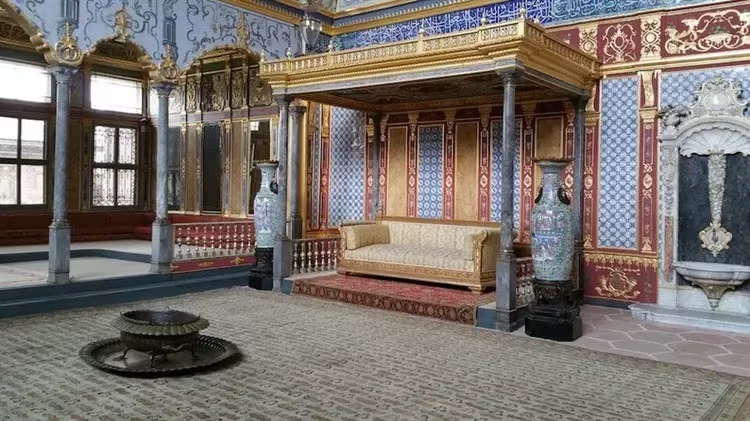
The life of the Ottoman Empire was concentrated here for several centuries: the Sultan made all the most important decisions in the Topkapi Palace. Money was minted on the territory, a court was held and a divan sat, a harem was located. The complex had storage facilities for grain and other products, guard rooms, an armory, a treasury, and even an underground passage designed for the immediate evacuation of residents. A equipped ship was constantly on duty in the bay, ready to sail.
But the palace fell into disrepair when the Sultan's residence was moved to Dolmabahce. At the beginning of the 20th century, the complex was restored and turned into a museum. In 1924 he received the first visitors. Today the center has a unique collection of artifacts, which any tourist can see. True, for a comprehensive examination of one day will not be enough.
Church of St. Irene
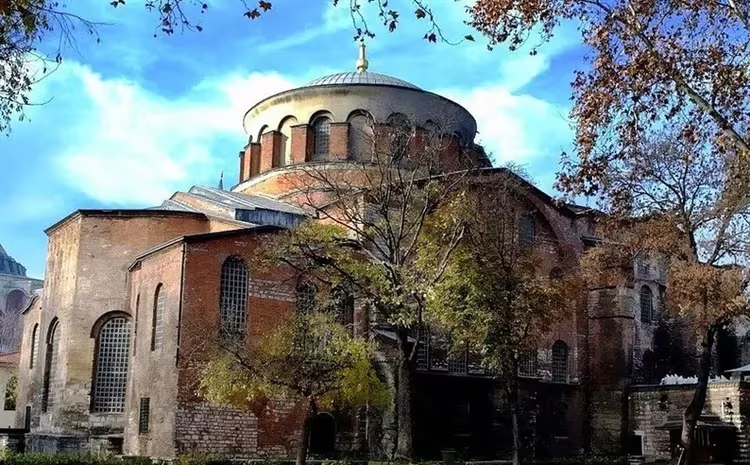
Some historians claim that the church of Hagia Irene is older than Hagia Sophia. It was built by order of Emperor Constantine on the site of the temple where sacrifices were made to Aphrodite. And before Hagia Sophia was rebuilt, it was Aya Irina that was the main temple of the capital. Here was the residence of the Patriarch.
The Church of Peace has been destroyed and reborn more than once:
- It burned during the Nika uprising. It was restored by Emperor Justinian.
- The church was destroyed by an earthquake. It was then that unique mosaics perished.
- 1453 turned Aya Irina into a mosque. She has been rebuilt.
- Since 1869, the building was attached to the Archaeological Museum.
Today the Peace Church is the Temple of Art. Concerts and music festivals are held here. Tourists note that the acoustics in the halls are exceptional. But guests can see some of the mosaics from the time of Emperor Constantine and admire the architecture of the building.
Archaeological Museum
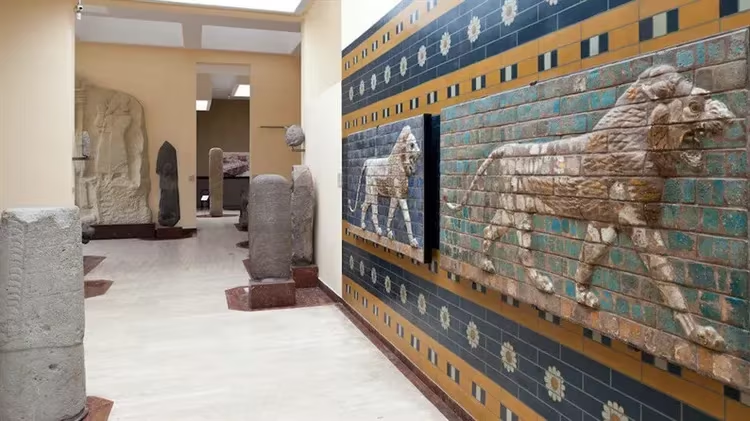
The exposition has more than 1,000,000 artifacts. And the center was formed at the end of the 19th century as a result of the colossal work carried out by the artist and archaeologist Osman Hamdi-Bey. He advocated a ban on the export of cultural heritage outside the country. The complex began to be built in 1881 and received its first visitors in 1891.
And finally the exposition was formed more than 20 years later. The number of artifacts grew, and in 1935 another building was built for the center. Today the Archaeological Museum is the most visited place in Istanbul. This is facilitated by a convenient location: the center is opposite the Topkapi Palace. After walking around the park and examining the chambers of the Ottomans, you can go to the museum and immerse yourself in the times of the pharaohs, and then explore the priceless treasures of civilization.
Gulhane Park
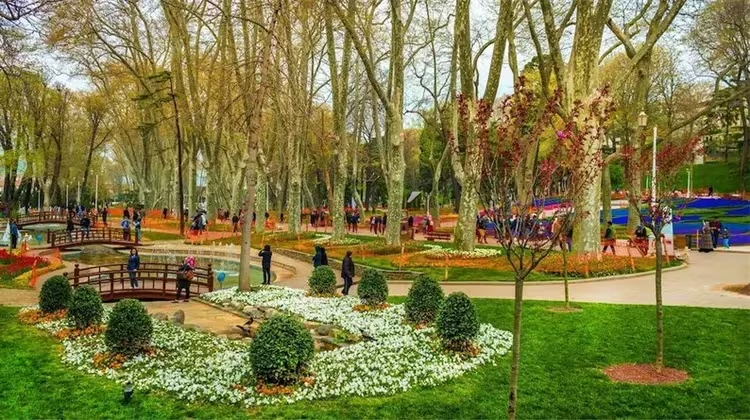
Once the House of Roses was part of the Topkapi Palace. The Sultan and his courtiers walked in this flowering garden. The entrance to outsiders was closed. Cozy pavilions and secluded pavilions were built in the House of Roses for Vladyka's rest. And flowers were planted everywhere. But at the end of the 19th century, the park became a public place. Unfortunately, this led to dilapidated buildings and general desolation. The destruction was completed by a fire in 1863. Unique arbors and pavilions perished in the fire.
But at the end of the twentieth century, the park received a second birth: the territory was cleared, the plantings were restored. Benches are placed along the paths, where it is pleasant to relax in the heat. And flowers delight guests throughout the year: tulips are replaced by roses, roses – forget-me-nots. You can enter the oldest park in Istanbul through 3 gates, and admission is free. This is a marvelous place for tourists tired after the cultural program.
Parade Pavilion
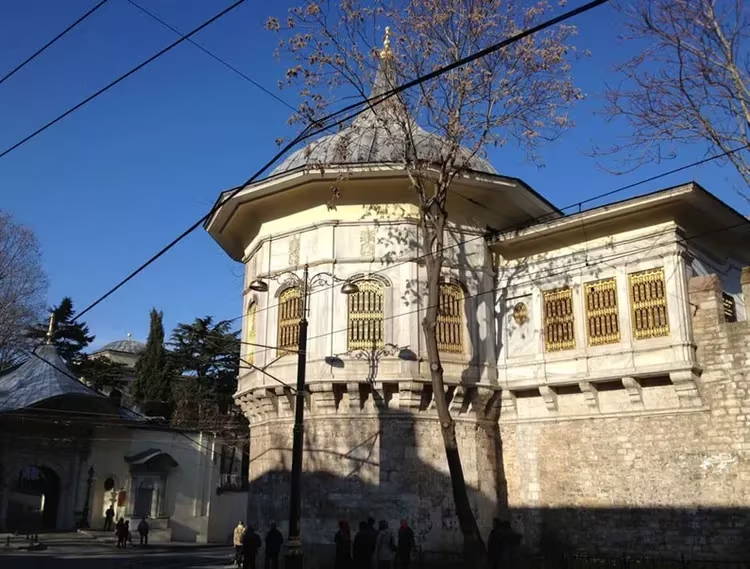
Sultans loved to observe the life of their subjects. But they themselves at the same time preferred to remain hidden from prying eyes. To implement this idea, the Parade Pavilion was built. It was erected right on the fortress wall, which separated the Gulhane Garden from the city. The construction is quite modest: after all, its purpose is not a manifestation of the nobility and power of the ruler. The Sultan with his retinue was conveniently located on the second floor. Through the windows there was a view of the city street, and the roof protected the observers from rain and hot sun.
From this pavilion the bishops watched the processions:
And the crazy Ibrahim the Mad liked to shoot the townspeople with a crossbow. Like the rest of the Topkapi Palace, the Parade Pavilion fell into disrepair after the transfer of the residence to Dolmabahce. Today the center has been restored. On the second floor, in the former chambers of the sultans, there is a library. And on the first floor there is a cozy cafe, where disputes of local artists sometimes take place.
Church of Saints Sergius and Bacchus – Small Hagia Sophia
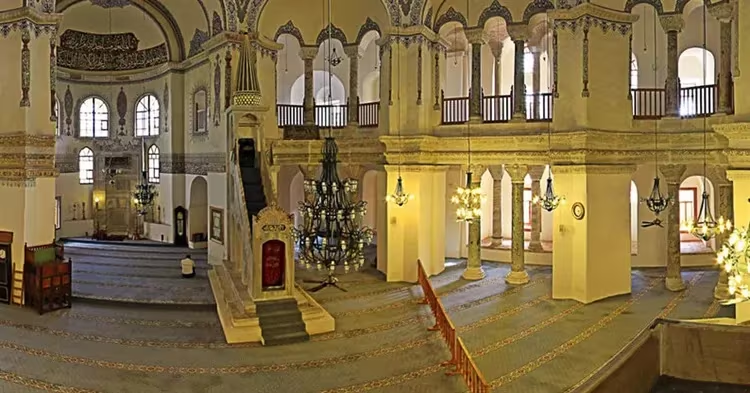
Some researchers believe that Hagia Sophia and the Church of Saints Sergius and Bacchus were built by the same architects: the cathedrals are so similar.
And the history of the small Hagia Sophia is unusual:
- The initiator of the creation of the church was Emperor Justinian. He especially honored Saints Sergius and Bacchus, soldiers who were martyred for refusing to worship idols.
- The Ottomans captured Constantinople in 1453, but the Church of Saints Sergius and Bacchus was not closed: it worked for 50 years. And only at the beginning of the 16th century it was converted into a mosque. The building was supplemented with a minaret, a madrasah. Unique mosaics painted over. The mosque became known as the small Hagia Sophia.
- The mosque has been restored several times. Large-scale restructuring touched the building in the middle of the twentieth century.
Unfortunately, today the interiors of the small Hagia Sophia do not resemble the church of Saints Sergius and Bacchus. But tourists can appreciate the similarity of the architectural elements of Hagia Sophia and the current mosque, admire the building.
Mosque Sokollu
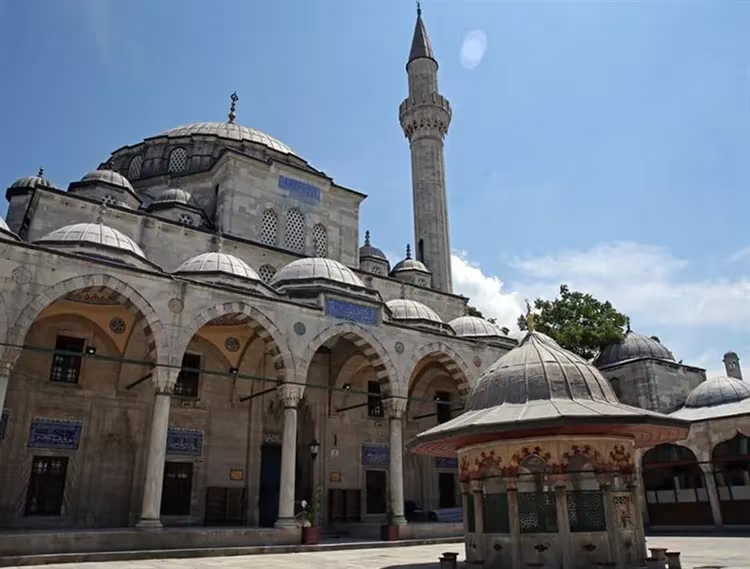
This mosque was ordered to be built by the Ottoman nobleman Sokollu Mehmed Pasha. At the end of his life, he effectively ruled the empire. It is noteworthy that at the birth of a child, they were baptized in the temple and gave him the name Bayko. But later he was forced to be converted to Islam. The boy graduated from the madrasah with excellent marks and was able to make an excellent career. Mehmed Pasha was a versatile educated person: he personally supervised the construction. As a result, a whole complex was erected: the Sokollu mosque, a madrasah, a fountain for ritual ablutions before prayer, a house for dervishes.
The interiors are modest and majestic at the same time: priceless tiles engraved with tulips and chrysanthemums, flowers sacred to Muslims. There is a relic in the mosque: particles of the Kaabba stone. One of the oldest mosques in Turkey still operates today. It can be viewed not only from the outside, but also from the inside. At the same time, it is important to follow the rules so as not to offend the feelings of believers.
Popular restaurants and cafes
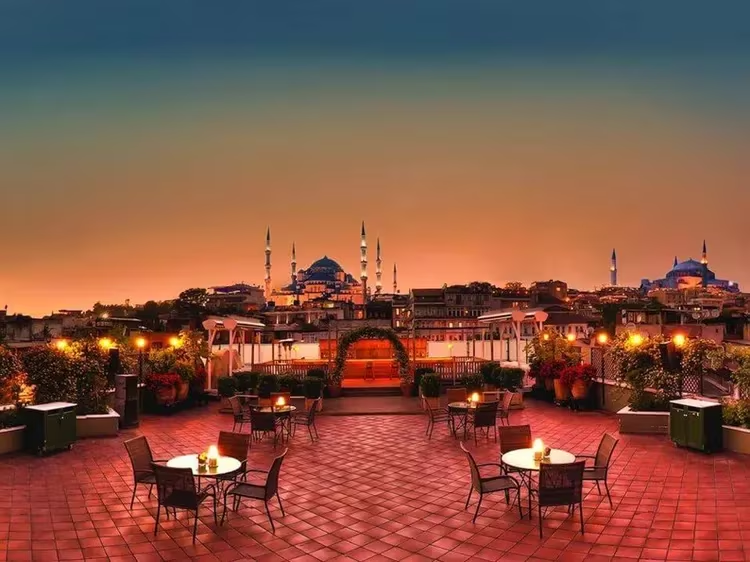
Well, it is impossible to stay hungry in the historical center of Istanbul! At every step there are various points for a snack or a serious lunch. Tourists recommend several restaurants:
- Sirkeci Restaurant offers to enjoy the oriental. European or Mediterranean cuisine. The service is friendly, there is no language barrier. The restaurant is very cozy.
- Istanbul Anatolian Cuisine is an ideal place for those guests who decide to appreciate the Turkish cuisine menu. They also serve excellent barbecue and fresh seafood. The restaurant is very cozy, you don't want to leave.
- Istanbul Kebab Cafe & Restaurant specializes in Middle Eastern and Turkish cuisine. But guests are offered to enjoy well-executed European and Mediterranean dishes.
In addition, there are many points located on the street in the quarter, where you can have a bite to eat literally on the go.
Which hotel to choose
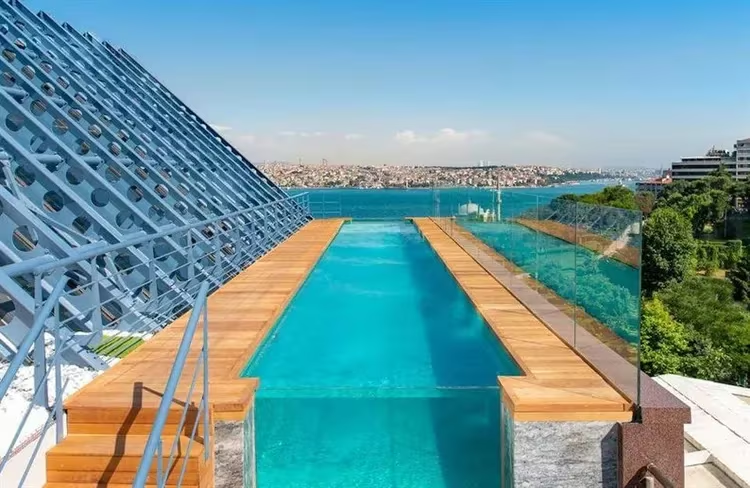
Guests recommend several options for staying in Fatih:
- Kalyon Hotel Istanbul has 4*. A very good combination of price-quality categories. Nice to have breakfast included. They are hearty and tasty, but they do not differ in variety. The hotel is very clean and the rooms are cleaned daily. Main + – location. From the windows you can see the Sea of Marmara and the historical center.
- Armada Istanbul Old City Hotel is also marked 4 *. This is a quiet place for families. From the windows you can see the Blue Mosque and Hagia Sophia. Breakfasts are included in the price, they are tasty and varied. The hotel is an easy walk from Topkapi Palace in less than 10 minutes.
- Hotel Ipekyolu is located a 5-minute walk from Topkapi Palace. Great view of the sights. Delicious breakfasts, like not only adults, but also children. Internet access is provided free of charge. Very clean and quiet.
- Armada Apartment is a place for those who want to save money. The hotel is located 700 meters from the Sultanahmet area, in the Fatih district. Breakfast included, free Wi-Fi. Daily housekeeping, multilingual staff.
Hotel reservations should be made in advance. And these options are for those who love a beautiful view from the window.
Where is it located and how to get there
Sultanahmet is located in the urban district of Fatih. It is practically in the center of Istanbul. The place occupies part of the land between the Bosphorus and the Sea of Marmara.
There are several ways to get to the Sultanahmet area from Ataturk International Airport:
- By taxi. There is a parking lot next to the terminal exit. The fare is paid according to the scheme: landing price + payment for the trip according to the meter to the place. This is a comfortable, but rather expensive way.
- By bus. Tourist buses HAVABÜS run from Ataturk Airport. You should get to the stop enikapi Sahil, and then walk about 1.5 km on foot. You can use the city bus: it will be cheaper.
- Metro. The entrance to the subway is located near the exit from the Ataturk Airport terminal. You should get to Zeytinburnu station. And then transfer to the T1 tram and get to the Sultanahmet stop.
Забронируйте индивидуальный трансфер от аэропорта до вашего отеля за 2 463 RUB
For convenience, when moving on foot, it is recommended to use a mobile navigator.