
What to see in Karlovy Vary in 1 day on your own – route, photo, description
What to see in Karlovy Vary in 1 day on their own, tourists with limited time are interested. And is it possible to see anything at all: after all, the town accepts people who have arrived for balneological procedures. Meanwhile, Carlsbad is an interesting place where all of Europe rested in the 18th and 19th centuries. And the city authorities sought to make the stay of guests unforgettable. Healing springs are decorated with graceful galleries, where it is pleasant not only to drink a sip or two of mineral water, but also to relax in the shade. And sometimes listen to music. The colonnades (with rare exceptions) are available throughout the day. History buffs will appreciate the old buildings built by the famous residents of Carlsbad. It is important that the sights are located compactly: moving from one to another, you can see them in a short time.
Viewpoint “Three Crosses”
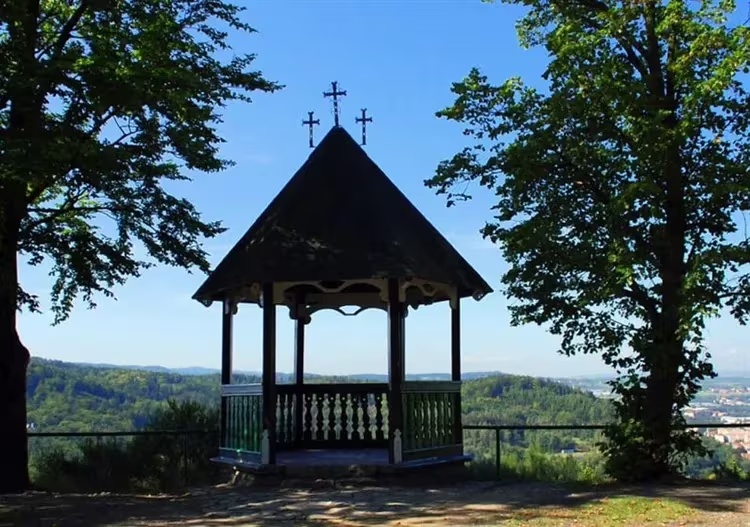
This place offers a great view of the city. And the road to the top of the hill is extremely picturesque: it passes through the forest. It is especially pleasant to climb to the viewpoint at dawn: there are few tourists, it is quiet and deserted around. And the city, painted by the first rays of the sun, is remembered for a long time. Three crosses got their name because of the wooden crosses standing at the very top of the hill. But why they appeared here, there is no consensus.
Some historians claim that this is a symbol of the return of the city and its environs to the Catholic faith. Others believe that this is an image of Golgotha. Locals say that the crosses are a reminder of the tragic death of three brothers. At the beginning of the 20th century, it was planned to build a luxurious hotel on a picturesque hill. And it was supposed to connect with the city with the help of a cable car.
Work began in 1912, but in 1914 it stopped due to the First World War. From this period, there were blocks to which the cables of the cable car were to be attached. During the hostilities, an observation post was built on the hill. And at the beginning of the 2000s, a gazebo was erected on a concrete foundation. She stood for 3 years, and was destroyed. Now a new gazebo, designed by architect Stros, flaunts at this place.
Book a private transfer from the airport to your hotel for 1 900 RUB
Observation tower “Diana”
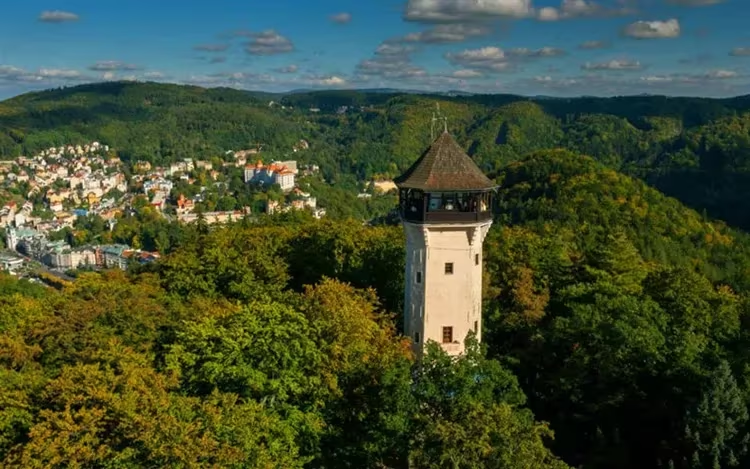
If a tourist wants to see not only the city, but also its surroundings in a circle of 70 km, he should climb the Diana Tower. A wonderful panorama of the Ohře and Tepla valleys opens from here. In sunny weather, you can see far from the site. And this point was equipped in 1804 by local residents: Drumm and Shter. They were the first to assess the possibilities of the top of the hill, cleared the road, put up several benches for tourists. A little more than 100 years later, a funicular was launched on the hill for the convenience of climbing. The arrangement and decoration of the viewpoint was continued by a local construction company erecting a hunting lodge with a stone wall. You could climb up the wall and look around. The center opened in 1914.
The tower has changed its name several times:
To climb to the platform, you will have to overcome 150 steps made of wood. But all the work pays off with an excellent panorama of the surroundings. Nearby is a restaurant with national cuisine, in summer you can ride a pony.
Observation deck “Deer Jump”
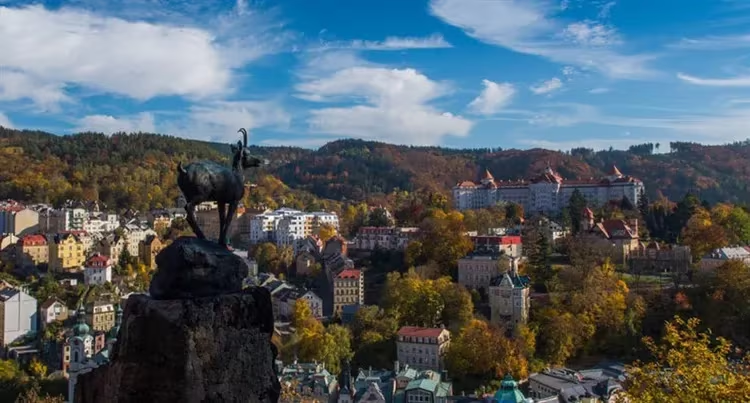
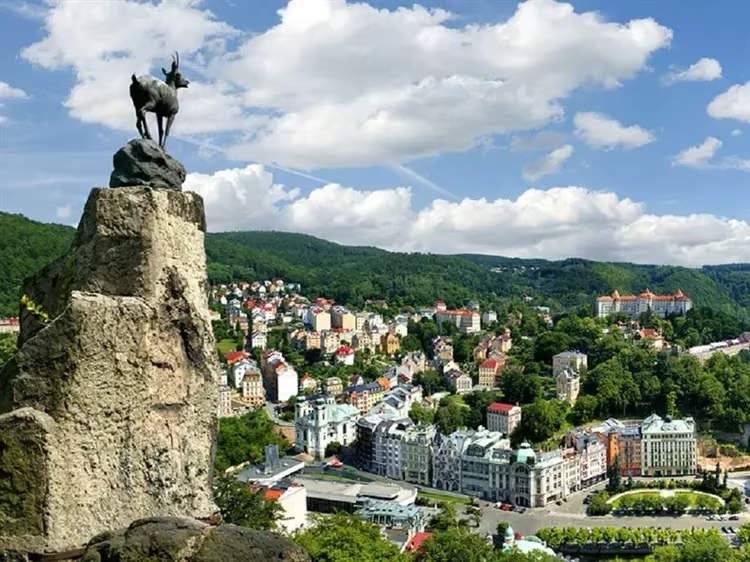
The cliff is decorated with a statue of a chamois, although during the hunting of King Charles 4, a deer was galloping along the steeps. The first to draw attention to the discrepancy (there are chamois in the local forests, which easily climb the rocks) was Baron von Lutzow. He ordered a sculpture of a zinc ungulate to be erected on the hill. The sculpture was created by August Kiss. The city council was indignant and tried to remove the chamois, but it was too late to take action: the sculpture became popular.
She stood for 130 years until she was barbarously destroyed. But in place of the monument made of zinc, a copy made of bronze was installed. The project was carried out by the sculptor Kotek. A gazebo was built on the ridge itself for the convenience of exploring the surroundings. It was made with the money of the industrialist Mayer from Vienna. The pavilion has been preserved and bears the name of the founder: Mayer's glory.
Mlynskaya colonnade
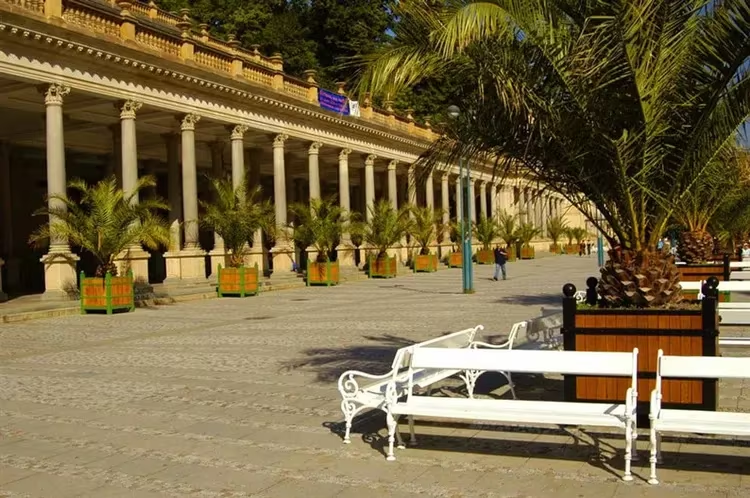
Today it is the most popular place in the city. Tourists gather here all the time. And this is not surprising: the airy structure rests on 124 graceful columns. It is always cool inside, so guests take refuge here from the summer heat. And excellent acoustics contribute to holding concerts in the colonnade. For this, a special orchestra pit has been arranged. But there was a time when the townspeople were outraged by the appearance of the colonnade, they considered it spoiling the appearance of Karlovy Vary.
They spoke negatively about it, some even demanded that such an ugly building be demolished. But tourists appreciated the unusual building: here you can listen to music for free (there are no walls that completely cover the interior space), wait out the heat. Inside there are as many as 5 sources of mineral water, drinking water from which is offered around the clock.
It is noteworthy that all sources are located compactly, you can inspect them in a short time:
- The rock spring has been known for a long time: horses were bathed in warm healing water. Then the key was taken out of the rock, the territory was cleared of silt and dirt.
- Libushi. He was named after the virtuous princess, whose descendants became kings.
- Prince Wenceslas. In former times, the famous local salt was evaporated from its water. Now there are as many as 2 in the Vaclav Gallery.
- Mlynsky. Since the 16th century, healing water has been sold in the city's pharmacies.
- Mermaid. Once was the most popular and was called New.
The water in all springs is hot: its temperature is above 50 degrees Celsius.
garden colonnade
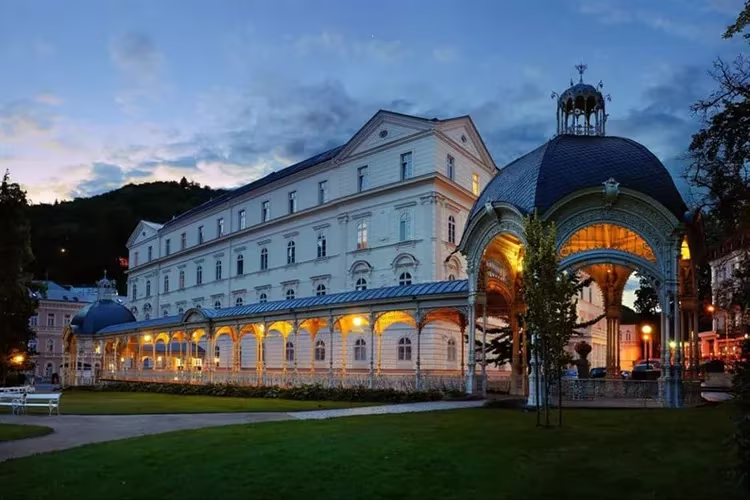
This openwork gallery is sure to be visited by all guests of the city. She is in the gardens, and her appearance is associated with the veneration of Antonin Dvorak by Karlovy Vary. A bust of the composer is installed on the territory of the city garden. And nearby, the city authorities built a concert venue. The authors of the project were architects from Vienna Gelmer and Felner. But after a short time, the building was dismantled, leaving only a part. It was she who later became part of the colonnade.
In the colonnade, as many as 3 sources come to the surface:
Surprisingly: in the Garden Colonnade, the water is cooler than in other places, and it tastes better.
Market Colonnade
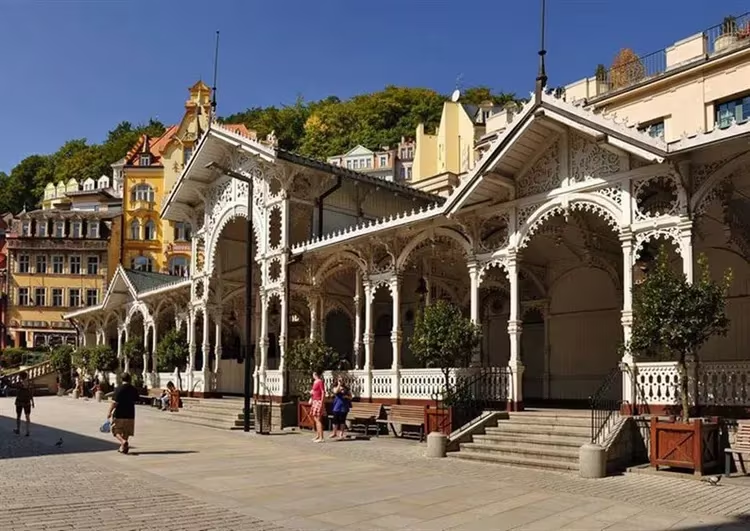
The most permanent thing in life is temporary. The market colonnade was built by the city authorities to preserve the purity of the unique mineral springs: Market and Karl 4. The city authorities ordered the project from the famous Austrians: Helmer and Felner. The architects used Swiss motifs: the pavilion turned out to be a copy of the Alpine pavilions. Surprisingly, the bizarre structure organically complemented the urban development. It was assumed that the wooden pavilion would stand for several years, and then it would be demolished or replaced with a permanent one. But the openwork gallery was so fond of the townspeople and tourists that they decided to leave it. Today the building has its original appearance.
Guests can taste water from 3 springs:
The market pavilion is open to all visitors.
castle colonnade
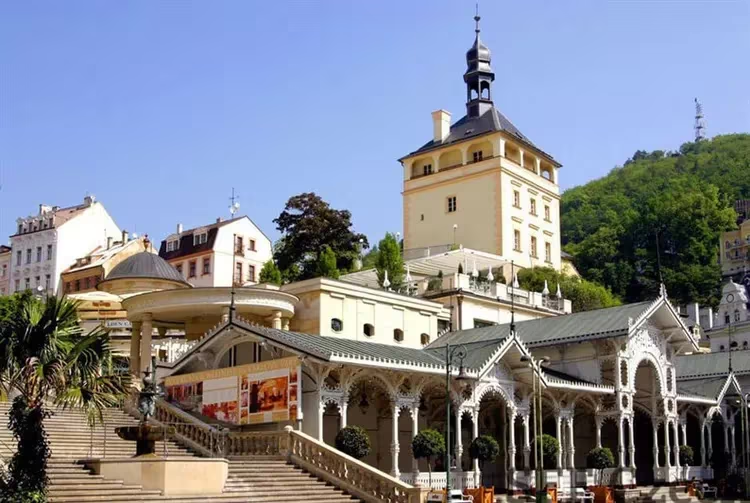
This is the youngest gallery in the region: it was built at the beginning of the 20th century. The city ordered the project, and Johann Oman, an architect from Vienna, executed it. He decided that it would be best to build a building in the Art Nouveau style: the most popular at the time. Until now, it attracts guests with lightness and grace. Architectural historians do not remain indifferent to this building.
The keys of the pavilion are located above all others in the city: the outflowing water has unique properties. The local clinic is extremely popular with guests of Karlovy Vary. And the place itself is amazingly picturesque: it is located on exposed rocks. The gallery is decorated with a bas-relief by Wenzel Heida, The Spirit of the Springs. The architect used the mineral argonite.
But today only those who are treated in the Zamkovy Lazne sanatorium can drink water from the springs of the gallery: the administration of the center has banned tourists from entering the territory. You can see the Oman Pavilion from the side of the Market Square. And one of the local keys has been brought to the Market Gallery: the Lower Castle Key.
Geyser colonnade
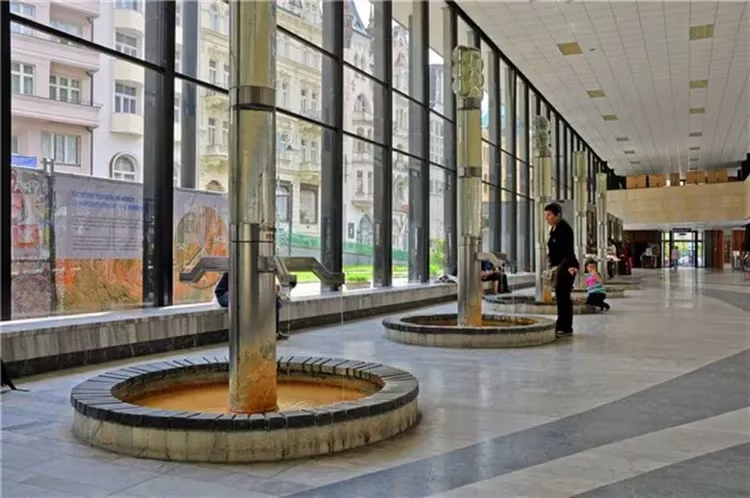
The Geyser spring is one of the symbols of the city. The mineral water deposit was discovered in the 16th century. Its power made it possible to build the first health resorts. And the modern gallery was built only in 1975. Tourists are impressed by the stream of boiling water, soaring up as much as 12 meters. This landmark and the main vases are inside a gray concrete building with huge glass windows. And on the square, to attract visitors, a small fountain was organized, from which a low hot jet beats.
The temperature of the water in the Geyser is close to the boiling point, and the mineralization is quite high, therefore, for the convenience of consumption, already diluted ordinary mineral water is supplied to the vases. The temperature in different fountains ranges from 30 to 50 degrees Celsius. The degree of mineralization is sufficient for medicinal purposes.
The geyser is a powerful source. Pipes were laid from it to all the sanatoriums of the city. The liquid flowing through them is used for medical and cosmetic procedures. Geyser is also a supplier of raw materials for the production of the famous salt. Guests wishing to view the Geyser should note that the gallery is only open from 6 am to 7 pm in winter and from 6 am to 6 pm in summer.
Motorcycle Museum
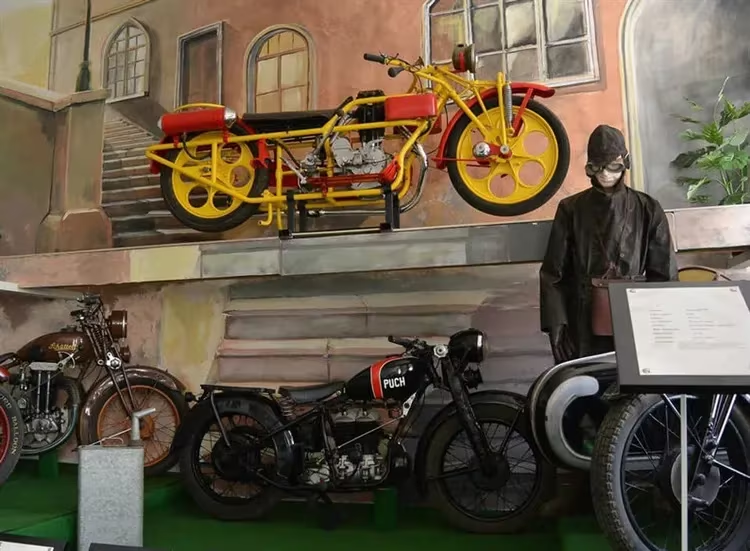
To visit the exposition, you will have to drive a little: the center is located in the village of Bečov nad Teplou. Visitors will see fifty restored motorcycles. Bike fans will get acquainted with original spare parts that are no longer produced by factories, and accessories. The owners of the exhibition are proud that they used original parts when restoring old models.
Architecture lovers will love the building that houses the motorcycle exhibition: it was built in the 13th century. Nearby is a toy museum, an exhibition of knives and firearms. And the very walk through the quiet village will be a pleasure: the narrow streets are imbued with the spirit of antiquity. The houses are clean and well maintained, there is even a castle.
Arbor Alois Klein
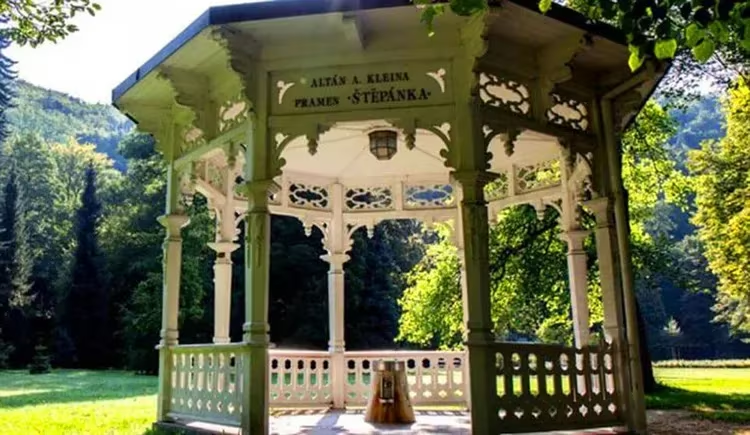
In the 18th century, a sour spring was hammered into the territory that is now occupied by the Richmond Hotel. It was fenced off and named after the Archduchess: Shtepanka. Water began to be used in medical procedures. But in the twentieth century, the key stopped beating. He was searched until 1993. In 1997, the vase was surrounded by a wooden gazebo. The architect Vondracek turned to the tradition of Alpine architecture: the building turned out to be light and airy. And the gazebo was named after the first owner of Richmond: Kline (Klein).
The gazebo stands in a picturesque park where centuries-old trees grow. The air is saturated with phytoncides. The walk to the source is pleasant and rewarding. And you can drink sour mineral water at any time of the day, but it is important to remember: Stepanka does not have a certificate of registration of a natural healing resource.
Butterfly house
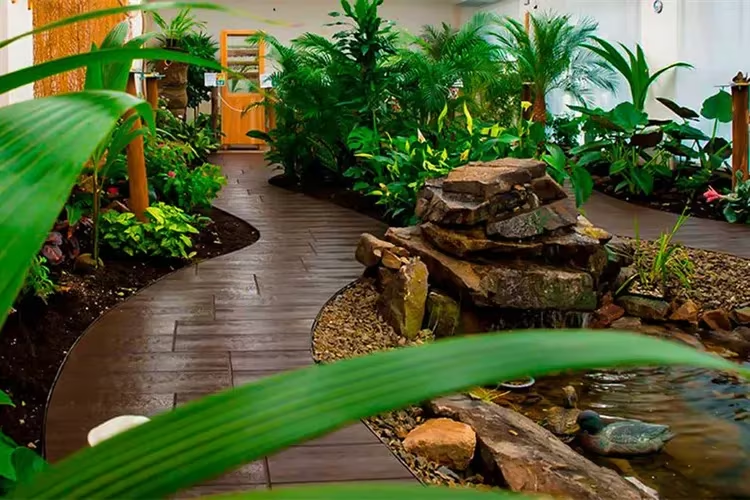
If the weather suddenly deteriorates, you can spend time with benefit in the Butterfly House. Here, on the territory of an artificially arranged rainforest, insects from all parts of the world are presented. Visitors are immediately taken to the flying area, which occupies as much as 100 square meters. Motley beauties, whose wingspan reaches 20 cm, feel at ease in it. Sometimes they sit on the shoulders or arms of tourists. Photography and filming is allowed in the center.
A separate area is reserved for the incubator: butterflies hatch from pupae in it. It's a breathtaking sight. Along the path there are information boards with a description of the habits of the inhabitants of the pavilion. If you're lucky, you can witness a romantic wedding ceremony. Some lovers come to Karlovy Vary specifically for this. Souvenirs are sold at the reception. The house is open every day from 10 a.m. to 5 p.m. (up to 7 p.m. in high season). The administration of the center informs you in advance about the change in the work schedule.
Church of St. Mary Magdalene
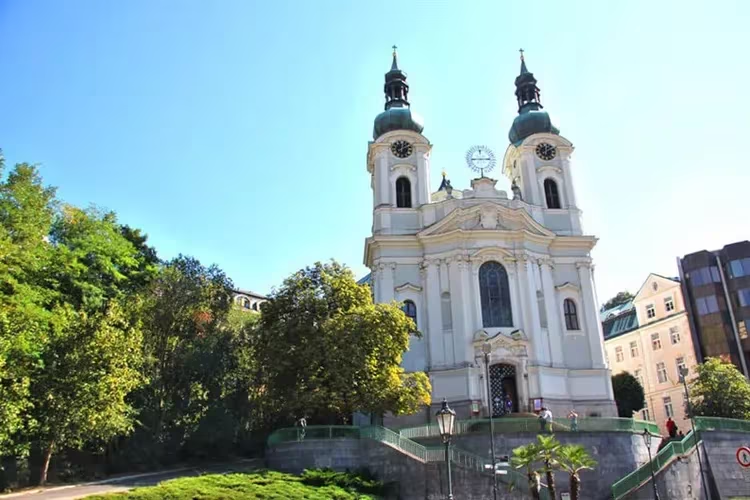
The church is conveniently located: not far from the Geyser. The gallery is still visible from the steps. The modern temple is a fairly new building. And the first, founded by the order of knights, arose here in the 14th century. In the 16th century, the building was rebuilt, taking into account the increased number of parishioners. But the church stood for a little over 100 years and died in a fire. In the 18th century, the townspeople again had to erect a completely new building on the old ashes. The work was complicated by the presence of a powerful source of mineral water nearby.
But everything ended happily: after 3 years, they celebrated the first mass. And today the Church of St. Mary Magdalene is striking in its splendor. Inside, the architects used the technique of woodcarving. Wooden painting is also presented. The ashes of the deceased, who rested in the old cemetery, were transferred to the crypt. Tourists are allowed to enter here. You can see the interior of the cathedral at any time. During the visit, it is required to respect the feelings of believers. Organ concerts are held in the cathedral. The schedule of events is posted on the information board of the temple.
Orthodox Church of St. Peter and Paul
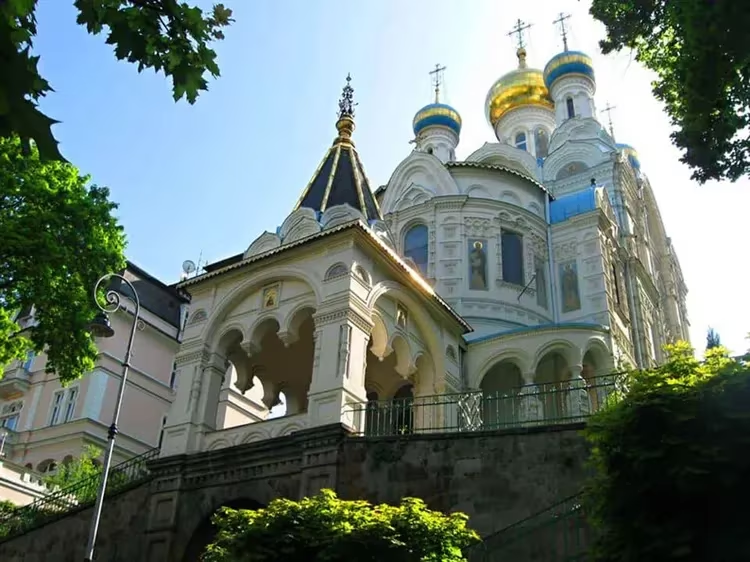
This temple is interesting because it was built for Orthodox Russians who came to the Carlsbad resort. The initiator was the Grand Duchess Elena Pavlovna, she also organized the initial fundraising. Donations were made by Shuvalov, Vorontsov, Koshelev. The city council allocated a place for development: a site on Schlossberga street. The project was ordered from the famous Russian architect Konstantin Ukhtomsky. But the collected money was not enough to start work, so the Carlsbad authorities allowed the construction of an Anglican church on the allocated site.
The Orthodox community was offered to buy part of the Grand Hotel Pupp. A house church was set up in several rooms. But the community grew, so they soon returned to the project of Konstantin Ukhtomsky. By this time, the board of trustees, chaired by the Russian finance minister, had raised enough funds to erect their own building. The work was carried out for 4 years: the consecration took place at the end of the 19th century. Under the new temple, the Turgenev Foundation was formed, then the Russian House.
In 1914, the rector of the temple was arrested, and only the intervention of King Alphonse saved him from execution. And after the October Revolution, the servants of the Russian Orthodox Church, who fled from the Bolsheviks, settled in the priest's house. Today, tourists can admire the quaint architecture of the cathedral. The motifs of Russian architecture of the 16th century are recognizable in it. And inside the walls are decorated with magnificent frescoes depicting Basil the Great, John Chrysostom. The faces of locally revered saints are also recognized: Vladislav and Lyudmila.
Anglican Church of St. Luke
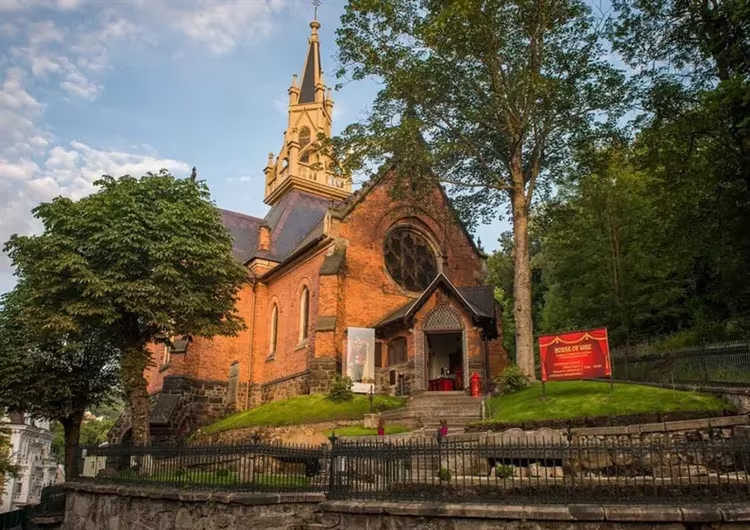
The cathedral is located in the very center of the resort town: on the slope of the Castle Hill. The church is easily recognizable by its unplastered red walls, which emphasize the origin of the building. Karlsbad was visited by the inhabitants of Foggy Albion for rest and treatment. They spent several months at the resort, so a church had to be built. The already existing temple was small and could not accommodate all the parishioners, so it was demolished.
The new cathedral was designed by Carlsbad architect Josef Slovak. The work was carried out for a short time: about 2 years. The consecration of the temple took place at the end of the 19th century. Services in the cathedral were held until the beginning of the 20th century. Then the building was restored. By decision of the owner (Methodist Church), worship services ceased. But you can still see the interiors of the building: in the church of St. Luke there is an exposition of wax figures.
Visitors will not only see Madame Tussauds London's unique exhibition of historical characters, but also appreciate the building's original vaults, ceiling carvings and original 19th-century colored stained glass windows.
City theater
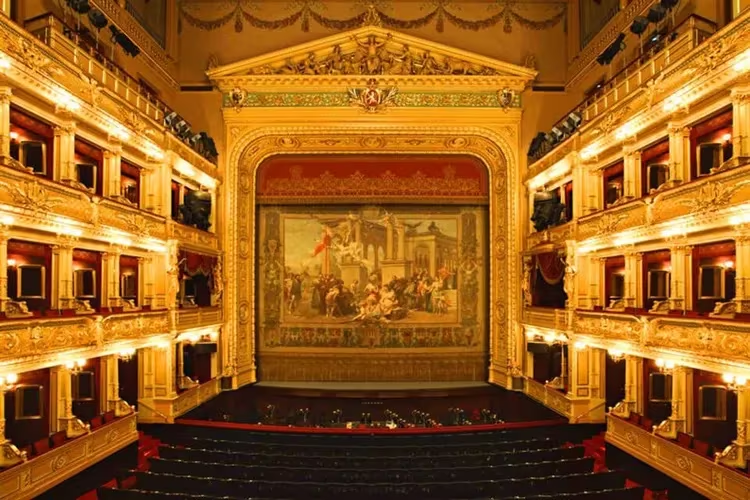
Already at the beginning of the 18th century, the authorities of Carlsbad thought about organizing leisure activities for vacationers. And for the entertainment of the aristocrats, she built a theater out of wood. But a big fire completely destroyed the building. Therefore, it was decided to build a permanent stone theater. The project was commissioned by the Vienna architectural office of Helmer and Felner. The works of architects demonstrated the ability to link buildings with existing buildings and landscape.
And today, tourists can appreciate the success of the builders: the city theater is the pearl of Karlovy Vary. The interiors of the building are impressive: there is hardly a curtain of paintings anywhere else. It consists of 8 paintings by artists. And the poet is depicted on the curtain surrounded by muses. Each of the girls inspires him to a special kind of creativity. The curtain was designed by the brothers Klimt and Franz Match.
And the Klimt sisters served as models for the muses. The same artists painted the ceiling and walls of the auditorium. Separately, it should be said about the engineers: all the novelties of the 19th century were used in the hall. The acoustics turned out great. Today, the interiors (including the curtain) have been completely restored. And you can admire the wonderful design of the auditorium during the performance, which takes place regularly in the theater.
Villa Lützow
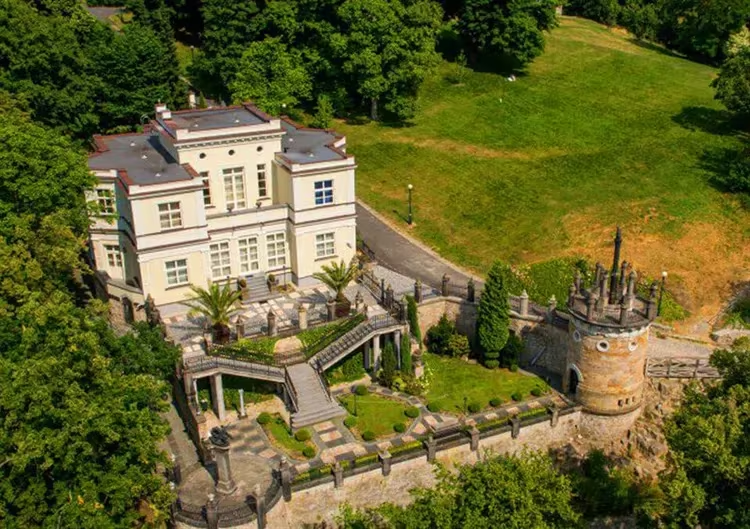
Baron von Lützow visited Karlsbad for the first time as a rather elderly man: he was 50 years old. The goal is usual: treatment on the waters. But von Lützow liked the city so much that he decided to settle here permanently. The rich man liked to settle down in comfort: for a day from the sale of property in his homeland, he built a luxurious villa. The park is especially noteworthy: terraces, promenades, pavilions and pavilions were intricately combined here. On the territory there are also sculptures of animals: a bull, a cat, a deer, dogs and a horse.
Particularly noteworthy is the image of a cat. Von Lützow was in constant confrontation with the city council. The caustic baron commented on the strange (in his opinion) decisions of the administration. After the statue of King Charles 4 was installed in the central park, a cat appeared on the territory of the villa, sitting on a huge pedestal with its back to the city council building. I must say that the sculpture of the monarch in the park stood on a powerful pillar.
The irreverent cat with its posture said to the townspeople:
Unfortunately, today it is unlikely that you will be able to walk along the paths of the villa and see the legendary cat: the new owners have closed access to tourists to the territory. But you can look at part of the park from behind the fence from the street.
castle tower
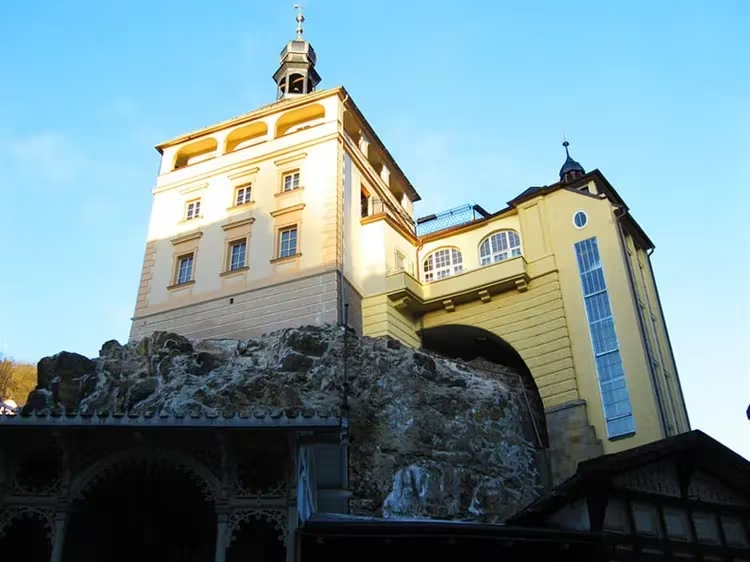
The tower is located in the historical center of the resort: a wonderful view of the Castle and Market colonnades opens from here, and the famous Geyser is within easy reach. This is a fairly new building. It was erected to replace the old one left from the castle of King Charles 4. In place of the hunting lodge in the forest, the monarch ordered the construction of a castle. But in 1604 a strong fire completely destroyed the building. One tower remained intact. But the preferences of the townspeople changed, the Baroque style came into fashion.
The surviving tower was demolished, and a new one was erected on its foundation. A tradition immediately arose: to greet eminent visitors to the town with fanfares resounding from the Castle Tower. Some especially respected persons are greeted this way even today. The tower houses an excellent restaurant with national Czech cuisine. It serves excellent meat cooked according to old recipes and local cheese. It's nice that the prices in the institution are quite affordable.
Orthodox chapel of St. Nicholas
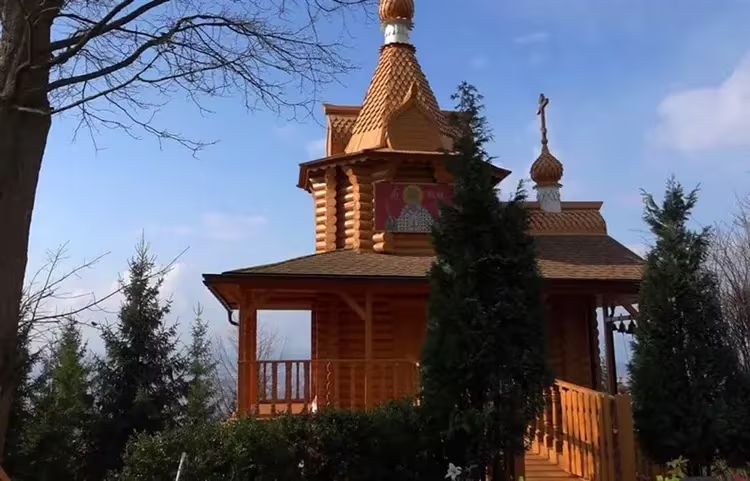
A native of Russia, Nikolai Stepanov, built the chapel of St. Nicholas with his own money. The project reflects the traditions of Russian wooden architecture. The chapel was assembled on the spot (in Russia), then the log house was numbered and sent to Karlovy Vary. A reassembly took place on Doubskaya Gora. In November 2000, Archbishop Christopher consecrated the chapel. But the services did not last long: today the chapel is closed for believers. But Doubskaya Mountain offers beautiful views of the surroundings, and the wooden openwork building organically blends into the local landscape. Tourists still come here.
Jan Becher Museum
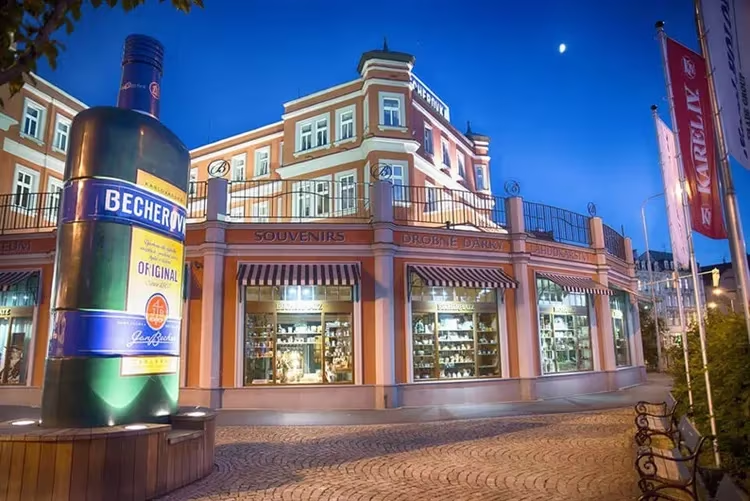
Patients from all over Europe came to Karlsbad for healing with the help of healing waters. And everything in the city was done to ensure that the treatment was successful, and the rest was remembered for a long time. And when a tincture of herbs for alcohol began to be sold in the Becher pharmacy, this did not surprise anyone.
But the guests of the resort appreciated the wonderful taste, and the healing drug became popular in all countries. The name of the drink was named after the author: Becherovka. More than 200 years have passed since that time, and everyone still likes the liquor: every tourist brings a bottle of branded Becherovka as a keepsake.
The popularity of the drink prompted the successors of Jan Becher to create a museum. Presented here:
Visitors will be shown the cellars where wonderful liquor is made, they will also tell how Jan Becher came up with the recipe. Demonstrate linen bags with secret ingredients. Most components are assembled locally, but some must be imported. But no one will ever make the secret recipe public: the trademark owners carefully guard it.
Incredibly, several people know the exact list and number of elements. And the event ends with a tasting of the amazing Becherovka. You can buy a drink as a keepsake for yourself and as a gift to friends in the company store located nearby. You can visit the museum daily from 9 am to 5 pm.
Moser Glass Museum
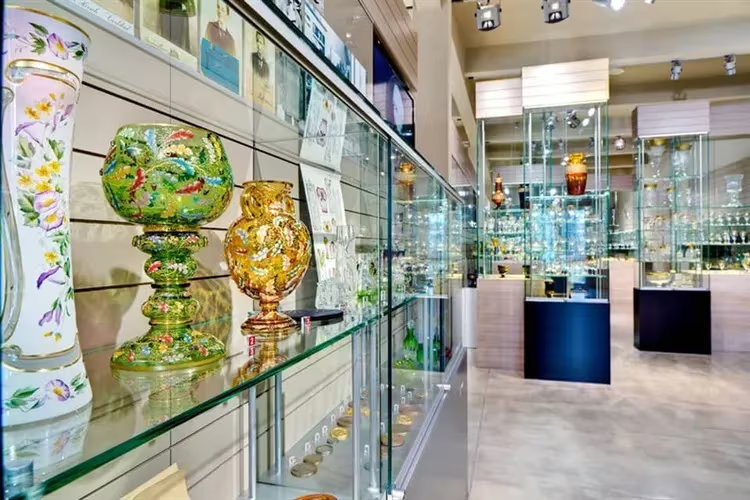
150 years ago in Europe, every royal court had tableware produced at the Ludwig Moser factory. And despite the high price, noble families tried to acquire beautiful and fashionable sets of the famous manufacturer. Today, Moser products are popular. Tourists who come to Karlovy Vary seek not only to buy a souvenir of colored glass as a keepsake or as a gift, but also to visit the exposition.
Exhibition visitors will see:
In total, more than 1000 items of storage are exhibited in the halls of the plant. But that's not all.
Guests can visit the glassblowing workshop, where they will be introduced to:
But the final stage of production (the final design of products) remains behind the scenes. But visitors have the opportunity to visit the company's product store, which is also very interesting. Here you can not only buy your favorite glass product, but also engrave it at will. Tired and hungry sightseers will be happy to dine at the Moser signature cafe, from the terrace of which in the summer an amazing panorama of the Ludwig Moser Square opens up.
An unusual fountain is built on it, which is surrounded by crystal figures produced at the Moser factory. The museum is open to the public during the week from 9 am to 5 pm. But excursions to the glassblowing shop are made from 9 am to half past two in the afternoon. The shop and cafe stop working at 6 pm.