
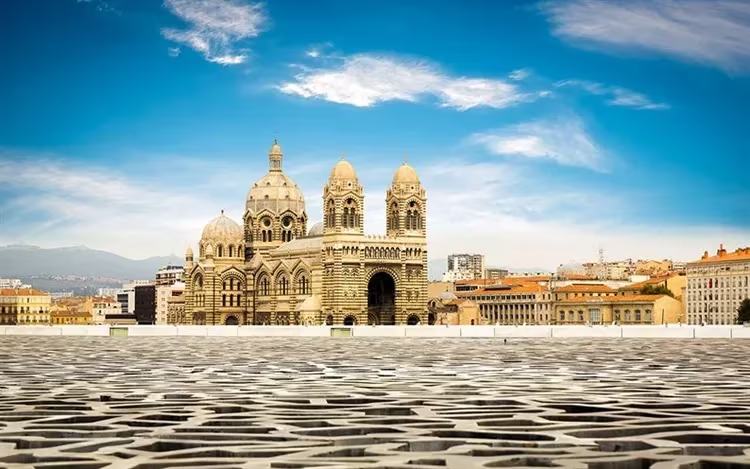
Sights of Marseille – 30 most interesting places
Among the ancient cities of France, Marseille has a special tourist attraction – a city with a rich history dating back more than 2.5 thousand years. Its amazing atmosphere, created by powerful forts built during the time of the Sun King Louis XIV, the sophistication of Baroque palaces and the amazing nature of the surroundings, leave an indelible impression on your stay in the city. The sights of Marseille are a unique cultural heritage of the past centuries, preserved on the city streets, collected in museums and modern amazing buildings. In addition to the cultural treasures, the charm of Marseille's picturesque bays and unforgettable holidays on the amazing beaches of the Frioul Islands await tourists. Let's take a short tour of the places that it would be unforgivable to miss a tourist.
Chateau d'If
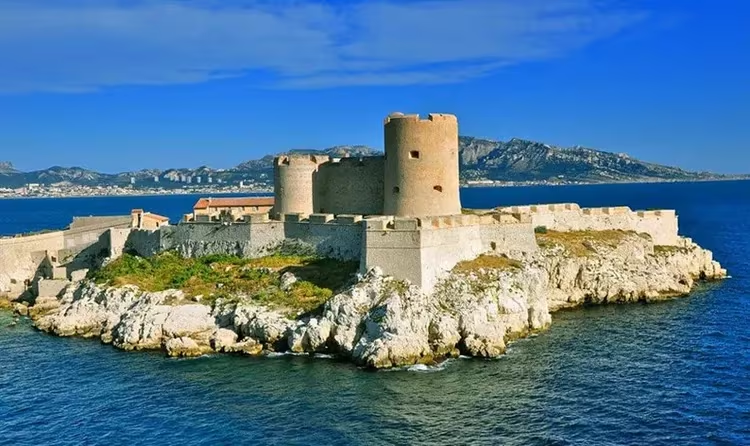
The mysterious Chateau d'If, familiar to us from the descriptions of Alexandre Dumas in the novel The Count of Monte Cristo is a formidable fortress that has become Marseille's calling card and an attraction for tourists. Built for defensive purposes from enemy attacks from the sea in the first half of the 16th century, it gained the terrifying fame of prison dungeons in Europe. The use of the castle as a prison began in 1580 at the direction of King Francis I.
During its prison history, which lasted until 1880, its dungeons became the place of detention of the Huguenots, the leaders of the Paris Commune, politicians and especially dangerous criminals. Remoteness from the coast and the danger of coastal sea currents excluded the possibility of escaping from an impregnable fortress. For a fee, wealthy prisoners were allowed to socialize and walk on the platform of the main tower, while the poor languished in the lower cells, which did not let in air and light.
In 1890, the Chateau d'If was opened to tourists, who are shown on the 1st floor the chamber of Edmond Dantes and the lasso of Abbé Faria in it. On the 2nd floor, they are taken to the Iron Mask cell. After the tour, you can relax in the island cafe with amazing views of the city. You can get to the castle by boat, departing from the Old Port in 20 minutes in summer and in 1.5 hours in winter from morning to 17.00.
Забронируйте индивидуальный трансфер от аэропорта до вашего отеля за 6 895 RUB
Abbey Saint Victor
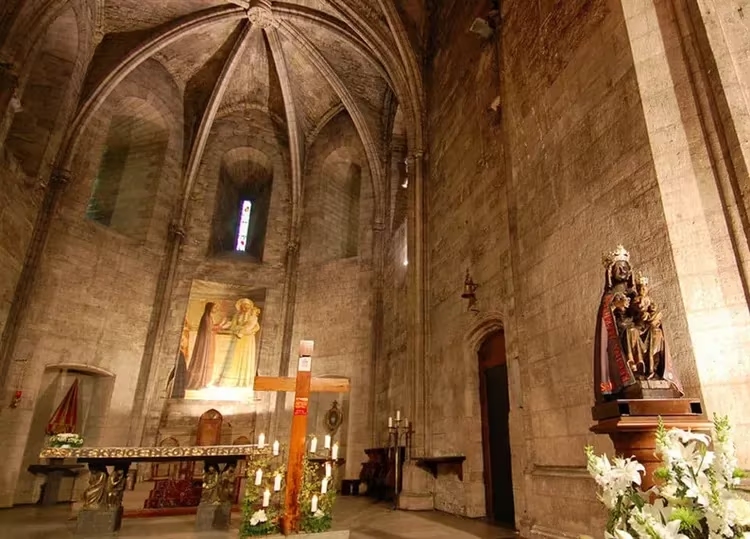
The southern cradle of Christianity in France is called the ancient monastic cloister Saint-Victor Abbey, founded by the Monk Cassian at the beginning of the 5th century. The abbey was built on the site where the martyr Saint Victor of Marseilles, who died for the Christian faith, was buried. Over the centuries, the monastery was destroyed and rebuilt more than once, serving the faith of Christ until the French Revolution, after which it fell into decay.
Becoming a historical monument in 1840, it was partially restored 120 years later. On its territory you can see the remaining large battlement and visit the upper church with a crypt, the entrance to which is located opposite the bay of the Old Port through the Izran tower. Entering the temple, you will see a rare sarcophagus made of Carrara marble. Looking at church relics, visitors admire the white marble altar of the 5th century and the statue of St. Victor. In the underground crypt there is a collection of marble sarcophagi of the 4th – the first half of the 5th centuries and the tombs of bishops.
The main church relic is also preserved here – a priceless statuette of the Black Madonna, which leaves the crypt only for the celebration of the Presentation of the Lord. The church and the script are open daily from 9.00 to 19.00. Masses in the Abbey of Saint-Victor are held on weekdays at 6.30 and at 9.00, on Sunday – at 9 and 11 o'clock to the divine sounds of the organ of the mid-19th century. Get to the Abbey of Saint-Victor by bus. From the Old Port No. 82 and 83, from the Cathedral of Notre Dame de la Garde goes No. 60.
Panier District
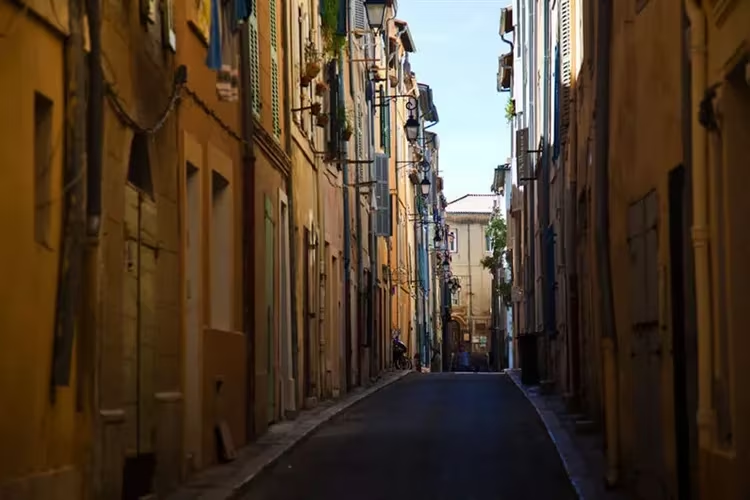
Panier is the most picturesque and authentic quarter of the Old Town, populated mostly by people from third countries. The history of the quarter, which is called in the old way Massala, goes back to 600 BC, when the Greeks founded it on this place near the port. Today, the area can be compared to an open-air museum, the narrow streets of which are built up with picturesque buildings of the 16th-17th centuries. Passing through here, you will want to stop near the white and pink Vieille Charité Mercy Refuge, built of stone in the Baroque style. Today, it houses the exposition of the Museum of African and Egyptian Art with numerous artifacts.
The 300-year-old Hotel De Cabre is notable for its combination of Gothic style with architectural details of the Renaissance. It is impossible to pass by the Diamond House with a facade decorated with stones cut in the form of diamonds. Its premises are given to the Museum of Old Marseille. In addition to these sights, ordinary old painted houses, small art galleries and cozy cafes are of interest, among which you should definitely relax in the historical 13 Corners bar, which is over 200 years old.
Canebière street
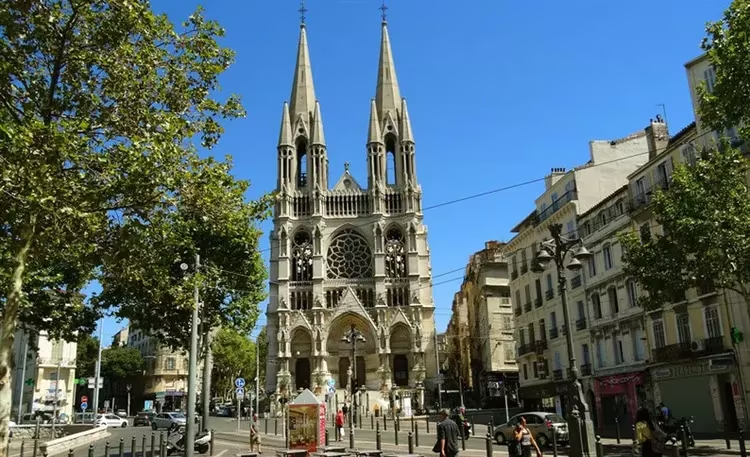
Walking along the main street Canebière (La Canebière), which stretches for 1 kilometer from the Old Port to the Church of St. Paul, you can see a number of striking sights. Let's start our acquaintance with the street from the famous Mercure Beauvau hotel, where composer Frederic Chopin and writer George Sand stayed. Nearby is the building of the former luxury hotel Louvre et de la Paix (Hôtel du Louvre et de la Paix) with a facade decorated with four caryatids symbolizing the four continents – Europe, Asia, America, Africa.
It remains to admire the main attraction of Canebière Street – the Church of St. Paul with Gothic spiers rising 69 meters to the sky. The foundation of the church dates back to 1888. Its interior is amazing with stained-glass windows depicting biblical scenes and saints of Provence, a carved wooden pulpit. Particular attention is drawn to the altar, made of marble with onyx, colored enamel, gilded bronze and lapis lazuli.
You can get to the street by metro, getting off at one of 3 stations: from one end – Vieus Port (Old Port), from the other – Canebière (Canebière), and in the center – Noailles (Noal).
Купить билеты на автобус до Ниццы за 69,00 ₽
Купить билеты на автобус до Канн за 299,00 ₽
Купить билеты на автобус до Тулона за 69,00 ₽
Borelli Park
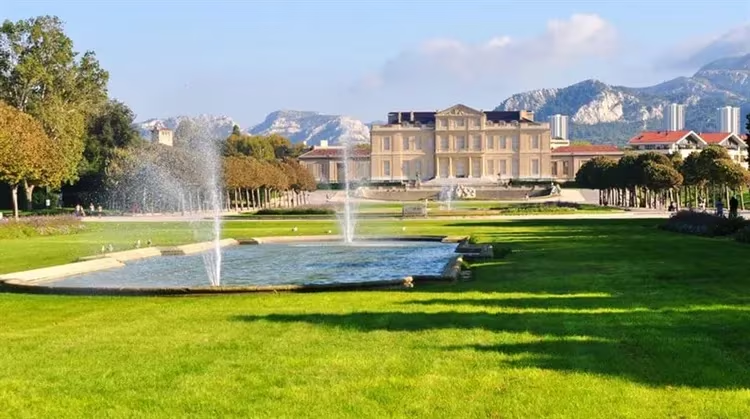
Borely Park – named after its founder, Joseph Borely, who belonged to one of the city's noble families. It was founded in the 18th century, and in the middle of the 19th century it became a public and favorite vacation spot for citizens. There are several thematic gardens on its territory, created according to French and English examples of landscape and park design. Walking through the park, visitors enjoy views of the herb garden, vine garden, Mediterranean, Japanese and Chinese gardens. Recently, the park has been supplemented with a botanical garden that delights with a bright palette of exotic plant species.
Here you will see many sculptures and a miniature copy of the Notre-Dame-de-la-Garde church, made from real plants. Picturesque waterfalls, ponds with waterfowl and otters, peacocks walking on the lawns color the amazing landscape. The Boreli Castle, built in the 18th century, also serves as a decoration of the park. Today it houses 2 museums: Decorative Arts and Archaeological. The park is located near the Prado beach, so after relaxing under the canopy of trees, you can swim in the sea. You can visit this picturesque corner of nature from 6.00 to 21.00. Free admission.
Museum of Fine Arts
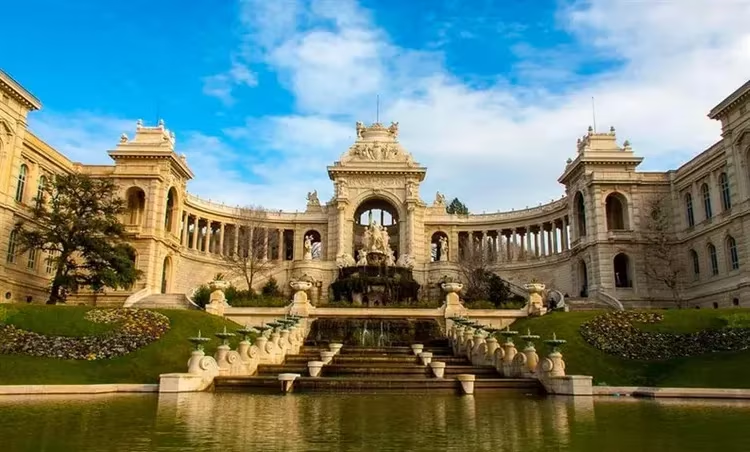
The Museum of Fine Arts is located in the east wing of the Longchamp Palace, which was built in 1839-1869. On the way to the palace, visitors can't help but be amazed by the wonderful view of the cascading fountain “Castle of Water”, recognized as one of the most beautiful fountains in the world. The museum's collection was created in 1801-1804 from works of art expropriated from the bourgeois during the French Revolution.
The collection of paintings, drawings and sculptures by one of the outstanding masters of baroque art, Pierre Puget, who lived in the city for many years, became a special pride of the museum. A significant part of the collection is devoted to French painting and is represented by the famous seascapes of Claude Vernet, paintings by Jean Millet, Gustave Courbet, masters of painting from Provence.
The next section shows Italian painting of the 16th-18th centuries with rare paintings by Tiepolo, Vasari, Perugino and other painters. The paintings of Antonio Pereda and José de Ribeira introduce the golden age of Spanish painting. From Flemish painting, art works of outstanding masters – Rubens, Jan Brueghel the Younger, Frans Snyders are exhibited here. The collection of the museum is complemented by several sculptures, among which is the famous work of Auguste Rodin, donated by the author. You can watch the unique collection: Tuesday – Sunday from 10.00 to 18.00.
Museum of European and Mediterranean Civilizations
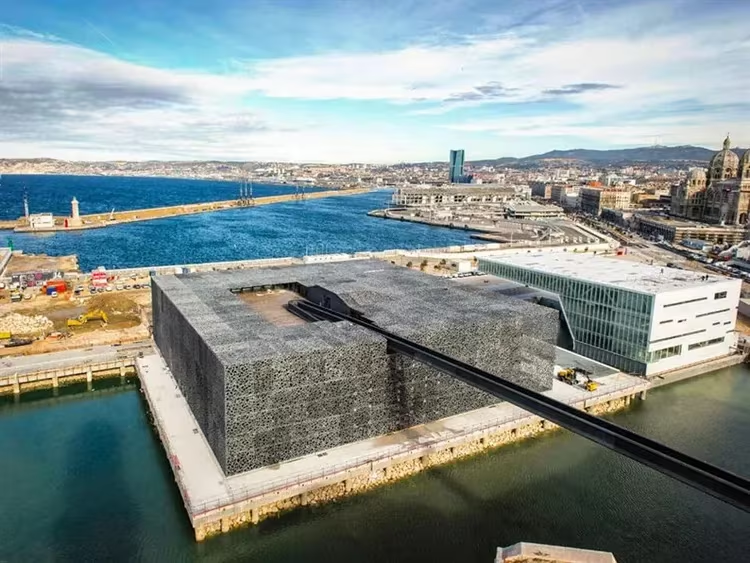
The Museum of Civilizations of Europe and the Mediterranean began its work in 2013, when Marseille was designated the European Capital of Culture. Especially for him, a modernist-style building was built, representing two parallelepipeds built into one another. The inner box of the building, where the museum halls are located, is supported by 308 fiber-reinforced concrete columns. The outer parallelepiped is an openwork concrete shell that protects the exhibits from the sun's rays.
Only one part of the glass wall remained open under the canopy of an openwork concrete shell. Between the inner and outer wall from the first floor there is a ramp leading to the roof, connected to Fort Saint-Jean by a 115-meter bridge hanging over the sea. The expositions of the museum are represented by paintings, a collection of coins, household items, appliances, furniture and documents that tell about the peoples of the Mediterranean, from the time of the conquests of the Roman Empire to the present.
There are also provocative exhibits. One of them depicts a pregnant man, the other a statue of Aphrodite made of aluminum and sequins. There are no analogues of this museum in the world. You can visit it every day except Tuesday in the summer from 11.00 to 19.00, in winter until 18.00.
Cathedral of Sainte Marie Major
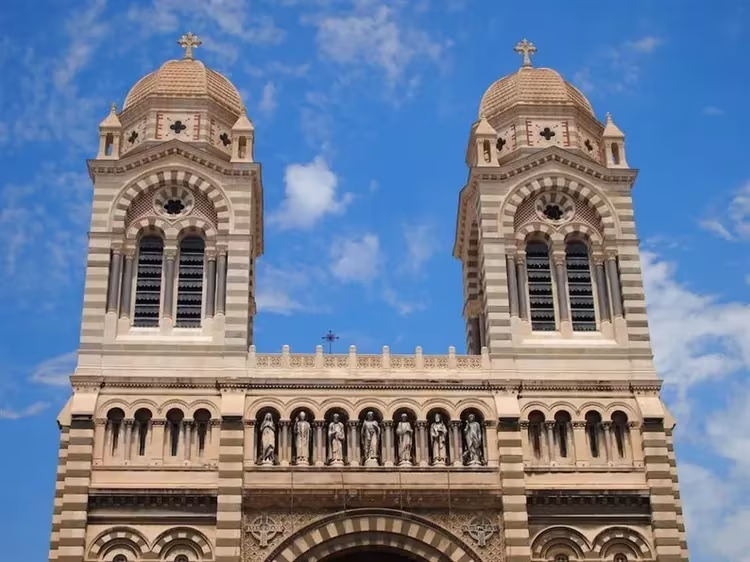
An architectural masterpiece, built in the second half of the 19th century for 40 years by three architects in turn. Each of the architects contributed to the architecture of the church building. Therefore, elements of Romanesque and Gothic architecture were woven into the traditional Byzantine style with round domes and elegant balustrades. The cathedral was conceived of impressive size: 142 meters long, with the height of each tower and dome 60-70 meters, with a capacity of at least 3 thousand parishioners.
Valuable materials were not spared for the construction – marble from Cararra and onyx brought from Africa, so the cathedral attracts attention with the striped decoration of the walls of the facades, alternating white marble with green. The interior design of the temple is also unique, the walls of which are also made in 2 colors: from beige and reddish marble. At the entrance to the cathedral, the beauty of the massive altar with a dome and columns, located in the center, attracts the eye.
In general, the interior perfectly combines Venetian mosaics with numerous sculptures of saints and bas-reliefs, admiring the skillful technique of execution. Stained-glass windows, frescoes and bronze decor create a special atmosphere of the church. The temple is open: Tuesday – Thursday from 9.00 to 12.00 and from 14.30 to 17.30, and from Friday to Sunday from 14.30 to 18.00. Directions – to the metro station Colbert.
Museum of Natural History
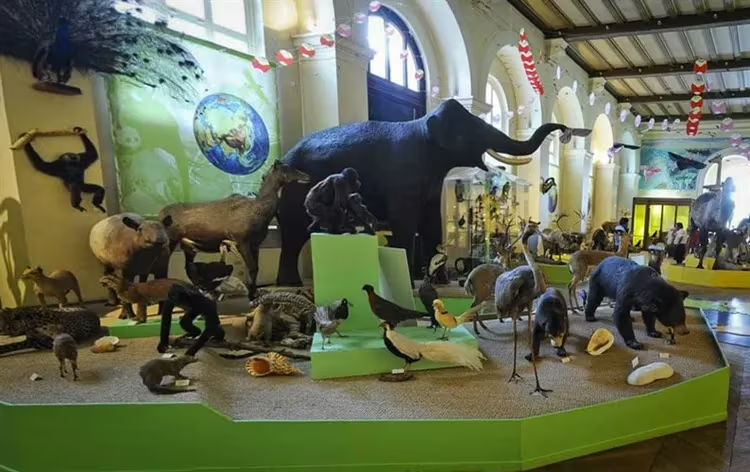
The Natural History Museum is located in the right wing of the Longchamp Palace. Its foundation falls on 1819, therefore, the age of the museum has already exceeded 200 years. Museum expositions are located in 6 natural science sections: paleontology, botany, zoology, mineralogy, human evolution, flora and fauna of Provence. The paleontological collection contains more than 4 thousand specimens of extinct representatives of the animal world.
The collection of the botanical section of the Mediterranean, consisting of herbaria, seeds and plants, has about 200 thousand exhibits. The next section is the zoological section, which occupies several halls and is represented by 12 thousand species of the world and Mediterranean fauna. The collection of mineralogy demonstrates the types of soils found on our planet, the types of native substances represented by gold, salt, and ore.
Particularly attractive in this section is a rich collection of stones, including precious ones. One of the expositions introduces the finds discovered during archaeological excavations, clearly traces the evolution of man. Of great interest in the museum is the collection of various sea shells – one of the largest in the world. You can get to Longchamp Palace by metro, getting off at Longchamp station. The museum is open daily from 10.00 to 18.00, except Mondays.
Orange Velodrome Stadium
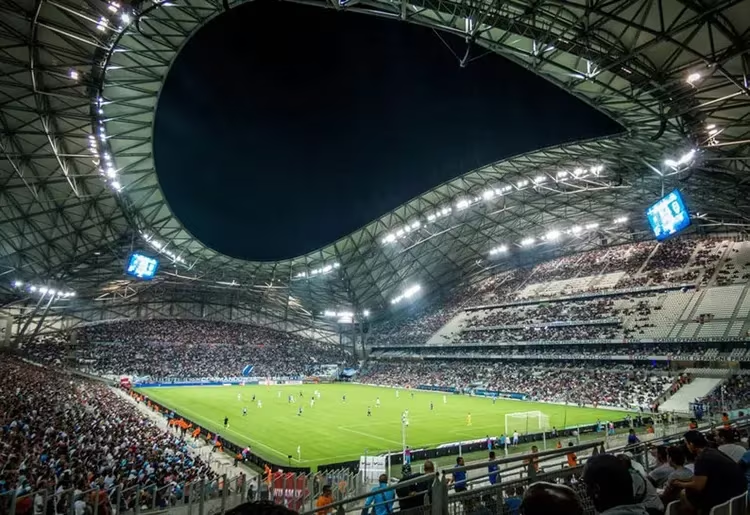
Fans of sports competitions can go to the popular Velodrome stadium, located near the center. It was erected in the 30s of the last century and is famous for holding the football championships of the world and Europe. Despite the name, the stadium does not have a cycle track, which was dismantled in 1984 for the European Championships in order to expand the arena. After reconstruction, the stadium began to accommodate more than 40 thousand fans. Today, the arena has been given to the famous Marseille club Olympique for training and home games. Despite the rich history of the stadium, the citizens criticize its weak acoustics and the lack of a canopy over the stands. The easiest way to get to the stadium is by metro to the Rond-Point du Prado station.
Notre Dame de la Garde
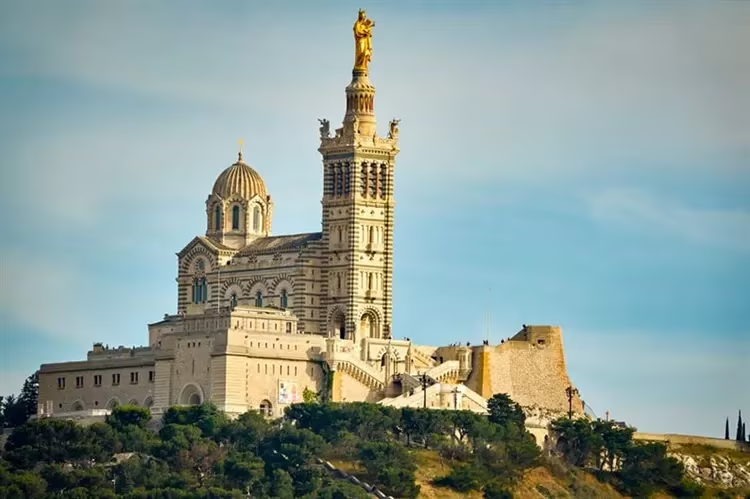
Towering on top of a 150-meter hill, the Basilica of Notre-Dame-de-la-Garde, with its bell tower, completed by an 11-meter gilded sculptural figure of Our Lady, rushes to heaven. The church, built in neo-Byzantine architecture on the site of an ancient fortress, is revered by Marseilles as the heavenly patroness of the city. The first church building stood here from the beginning of the 13th century. The new building of the basilica was built at the beginning of the 15th century, and a fortress was erected around it 100 years later.
At the end of the 18th century, due to looting, the church fell into disrepair, and a prison for noble persons was created in the fortress, which was visited by the Duke of Orleans and the Duchess Louise de Bourbon. The basilica was revived by the Catholic Church at the beginning of the 19th century. Inside, it is divided into an upper church and a lower church – the script. The upper room is decorated with mosaics depicting the Assumption of the Virgin and mosaic panels consisting of Venetian color fragments. The floor covering is amazing with Roman-style patterns.
The interior of the church features a white marble altar and a row of columns combining white marble with red. In the crypt, attention is drawn to 2 marble statues of the 19th century – Bishop Marseille de Mazeno and Pope Pius IX. Behind the main altar is an 18th-century sculpture depicting the Virgin Mary. The basilica is open from October to March – from 7.00 to 18.15, and in other months the visit is extended by 1 hour.
Marseille History Museum
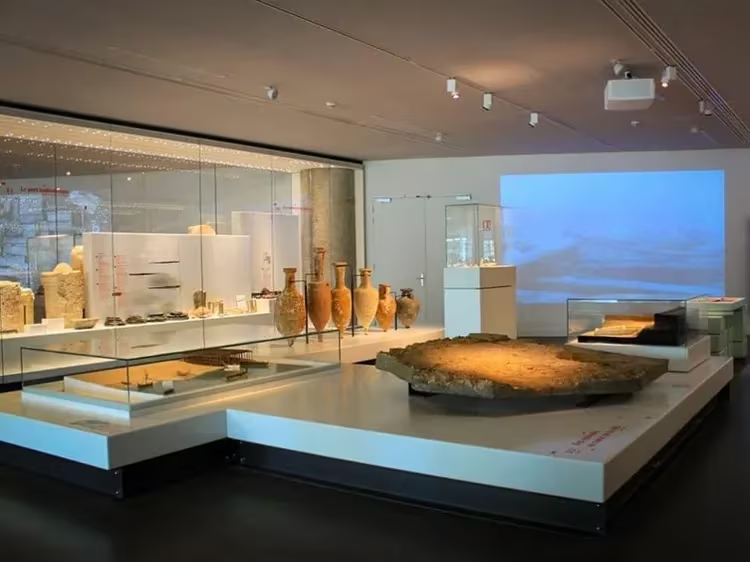
Accidental ancient finds discovered in the center on the site of the construction of a shopping center served as the creation of the Museum of the History of Marseille. As a result, a museum complex was formed. One part of it placed exhibits in the museum building, and the other part is an open-air gallery called the “Garden of Ruins”. The history of the port city is traced in 13 museum sections, starting from its foundation in the 6th century BC and until the middle of the 20th century.
A variety of life objects show the periods of urban history: Greek, Roman, early Christian, Middle Ages. Interesting expositions highlighting the entry of Marseille into France, the monarchy, the Great Revolution and two world wars of the 20th century. Historical periods are represented by fragments of buildings, sculptures, objects of labor and everyday life, clothing and jewelry.
An impressive collection of shipwrecks in the Mediterranean Sea. The oldest exhibit is over 2.5 thousand years old. Going to the “Garden of Ruins”, you will walk among architectural rarities dating back to the 6th-2nd centuries BC. The museum, open to the public daily from 10.00 to 18.00, except Mondays, can be reached by Metro Colbert and Vieux-Port Hotel de Ville. On Sundays admission is free.
Longchamp Palace
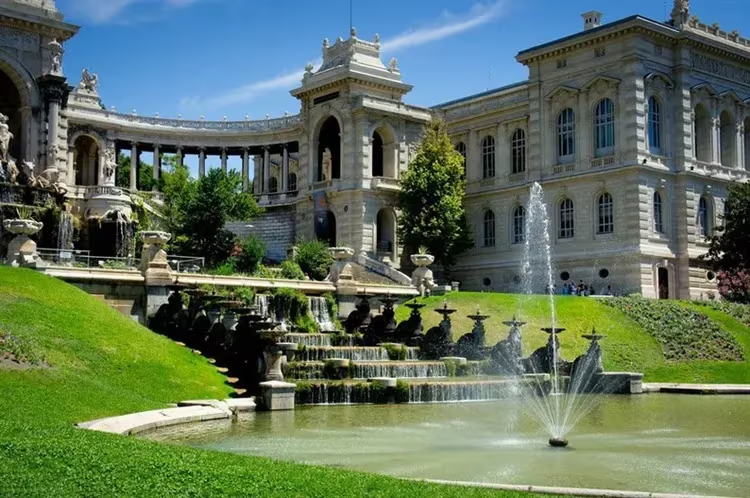
The Longchamp Palace complex is a luxurious architectural ensemble consisting of a sculptural fountain group, a two-winged palace with a remarkable triumphal arch facade and a symmetrical Corinthian colonnade. In front of the palace, in all its beauty and luxury, the cascading fountain “Chateau d'Eau” appears, with a symbolic group of sculptures. The composition is represented by four bulls driven by a woman who personifies the Duran River.
Near it you will see two beautiful ladies, next to which are children with ears of corn and grapes. From the fountain, the water flow is directed to the middle pool, from where water enters 12 fountains in the form of bowls lined up along the steps. Behind the fountain, a grotto-shaped arch attracts the eye, on which birds, nymphs and flowers are visible.
The arched vault is decorated with the coat of arms of Marseille, surrounded by two mermaids. The symmetrical wings of the palace with rich interior decoration are occupied by the Museum of Natural History and the Museum of Fine Arts. At night, the Palace enchants with a magical view created by the illumination. Opposite the palace there is a luxurious French park with an observatory and a botanical garden with centuries-old elms, plane trees, oaks and numerous sculptures along the alleys. It is convenient to get to the palace by metro to the Cinq Avenues Longchamp station.
Fort Saint Nicholas
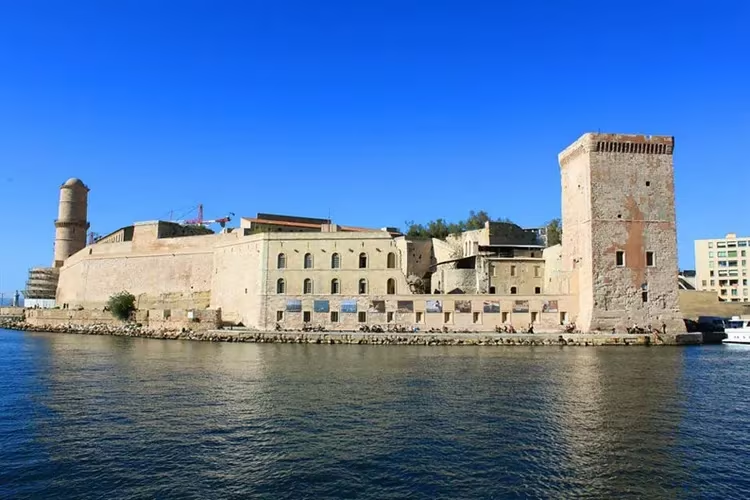
The fortress, which received the name of Fort Saint-Nicolas, was built in the 17th century by order of King Louis XIV in 4 years in order to intimidate the Marseilles who were raising uprisings. The walls of the fort were built of pink-colored stone brought from Couronne, and the cannons were sent to the city. Previously, on the site of a stone citadel, there was a 13th-century chapel belonging to the Abbey of Saint-Victor.
In the 14th century, the chapel was given the role of a chain tower. A chain was attached to the wall, blocking the way to the port water area for unfriendly ships. During the French Revolution, the fort was partially destroyed by the townspeople, after which patches of gray stone appeared in its wall. From the first half of the 19th century until the end of World War II, there was a prison in the fortress.
With the beginning of the construction of the boulevard to the palace of Faro, the citadel had to be cut into two parts. Since the last century, the fort has acquired the status of a historical monument. Only one part of it is open to tourists. The center of the fortress, occupied by the Foreign Legion, is closed to the public. On the territory of the fort, the building of the old mill was turned into a memorial dedicated to the victims of wars. Opening hours from 9.00 to 18.00, entrance through the east gate.
Calanques National Park
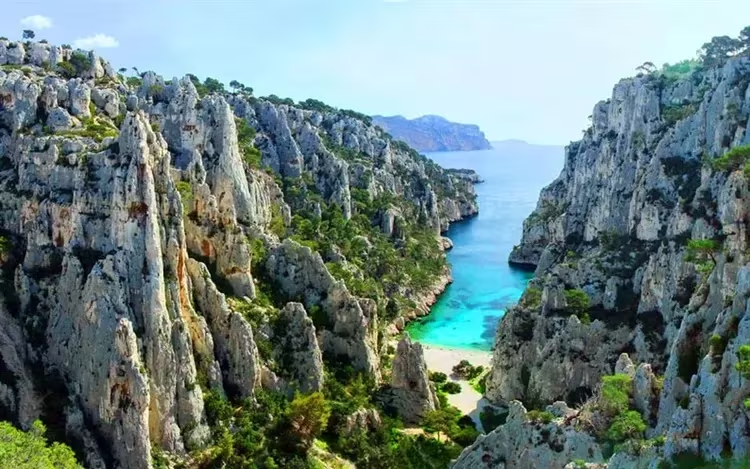
The coastline from Marseille to the town of Cassis was cut by nature with small picturesque bays, called in French – calanques. The delightful beauty of this stretch of coast served as the basis for the creation of the Calanque National Park, protected by the state. For excursions, the park is divided into 3 sections.
You can visit the first two groups of calanques of the National Park on your own by bus, car or boat. Buses leave from Piazza Castellane.
Coffin-Labadier Museum
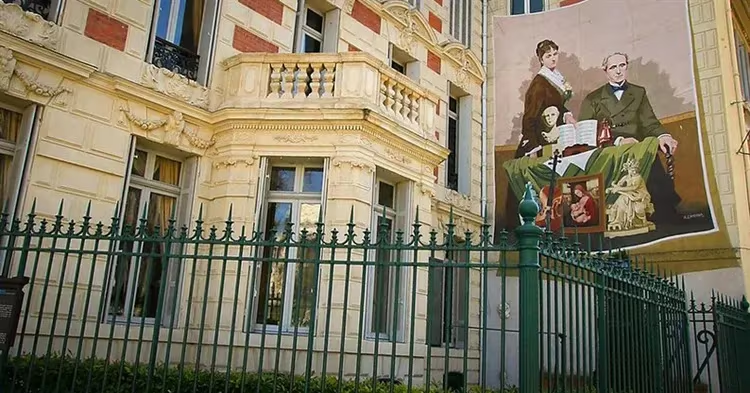
The Grobet-Labadié Museum is named after the Grobet-Labadié spouses, who donated their art collection to Marseillais along with a 19th-century mansion. The museum exposition includes living rooms of the house with rare antique furniture, objects of cultural value and paintings. Walking along the first floor of the museum, you will see a reception room with paintings, a salon with an old harpsichord, a boudoir and a dining room furnished with furniture from the 17th-18th centuries. Here you will admire the rare collection of porcelain.
On the second floor, visit the early art room, which is a collection of decorative items, furniture, European and Asian paintings of the XIV-XVI centuries. Entering the cabinet of rarities, you will see a lot of items that were considered funny by the owners.
The most interesting collection is exhibited on the 3rd floor. There is an impressive collection of locks and keys dating back to the 14th century. The reception hall is amazing with an exhibition of rare 15th century carpets and a collection of sculptures. The highlight of the museum was the music room of the owner Louis Grabe, who collected the rarest collection of intricately decorated and painted musical instruments from different countries of the 17th-19th centuries. The museum welcomes visitors daily from 10.00 to 18.00, except Mondays, travel to Cinq Avenues Longchamp metro station.
The old almshouse of the Vielle Charité
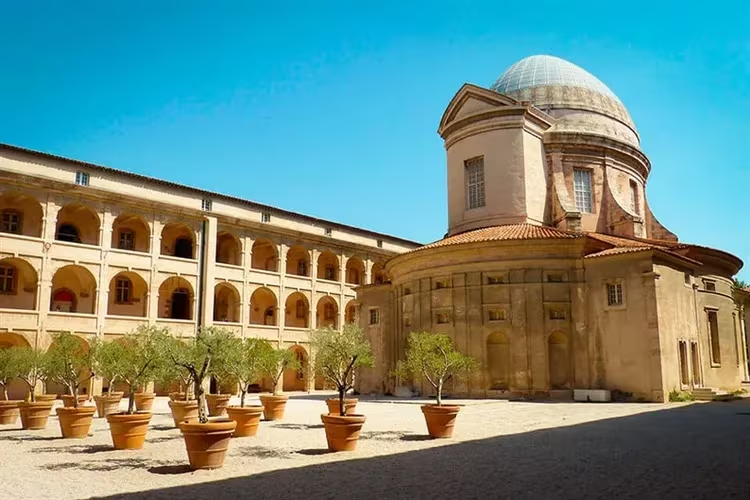
The Vielle Charité, formerly an almshouse building, is located in the center of the historical district of Panier, near the Cathedral. It was built in the style of Baroque architecture in the first half of the 17th century. In 1707, a church was erected near the almshouse. The material for the construction of the Vielle Charité was white and pink Couronne stone.
The building of impressive dimensions in the form of a rectangle 112 by 96 meters has 4 buildings, without windows on the outer facade. Each building consists of 3 floors with arcade galleries on each floor overlooking the courtyard, in the center of which stands the church, built in the Italian Baroque style, crowned with an oval dome.
On the pediment of the church facade is an allegorical figure of Mercy surrounded by pelicans with chicks welcoming poor children. The entrance to the church is decorated with 4 Corinthian columns. The almshouse accepted the first beggars and wretched in 1641. Now it houses 2 museums: archeology and art of Africa and Oceania. The closest metro to Vielle Charité is Colbert Hôtel de Région. You can visit museums from 10:00 to 18:00 from Tuesday to Sunday.
old port
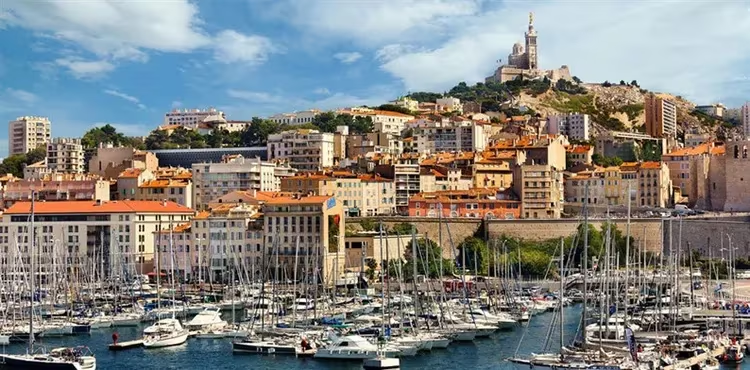
The old port served as the basis for the foundation of Marseille by the Greeks – the Phocians, who moored to the local coast 6 centuries BC. The original name of the settlement was Massalia. In the 5th century, the Abbey of San Victor appeared here. Already from the 10th-13th centuries, moorings for ships, warehouses and shipyards where military ships were built were equipped on the coast of Lasidon Bay. Workers settled near the shipyard. In the 13th century, Fort St. John was built to protect the population.
From the 15th to the 18th centuries, the building of rich mansions and secular buildings began here, which are now included in the list of Marseille attractions. Before the construction of a new port in the 19th century, the centuries-old pier was the city's sea gate. Today, the territory of the Old Port is chosen by yachtsmen and seafood merchants.
People come here to admire the yachts, take an exciting sea excursion on a boat, seeing the city panorama from the sea, or sail to the mysterious If castle. The fish market on the Belgian Embankment impresses with a diverse assortment of Mediterranean Sea gifts, and you can enjoy their taste in any portside fish restaurant.
Norman Foster mirror awning
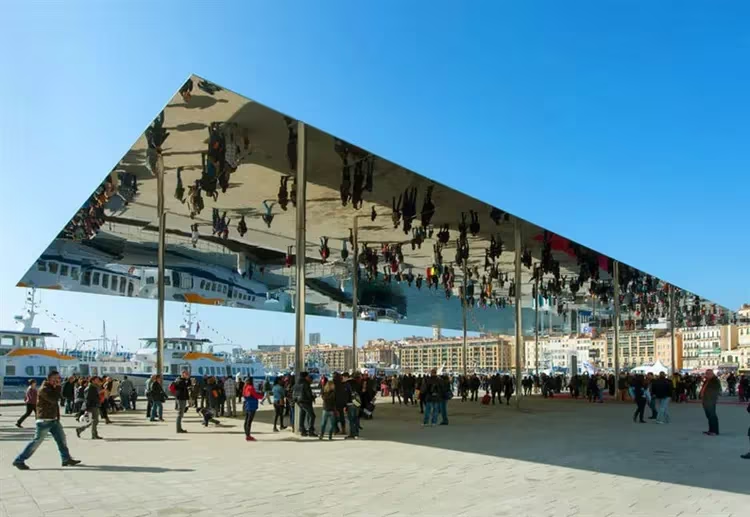
In 2013, the central embankment of the city was replenished with a modern attraction – Norman Foster's Mirror Tent for various thematic events. It was built in the form of a canopy measuring 46×22 meters, made of polished steel. The construction is supported by inconspicuous thin columns. The mirror surface of the tent, reflecting the surroundings of the Old Port, has transformed the embankment. The well-known French designer Michel Devigne worked on the landscape design of the tent area, created by architect Norman Foster.
He laid out the surface under the canopy with a light granite coating on the same level, which made the structure visually lighter and more airy. Tourists liked looking at themselves in the mirror sky so much that the city authorities had to make the embankment pedestrian because of their influx. The pavilion not only served to improve the space around the harbor, but also became used for various events and fairs.
Residential unit Le Corbusier
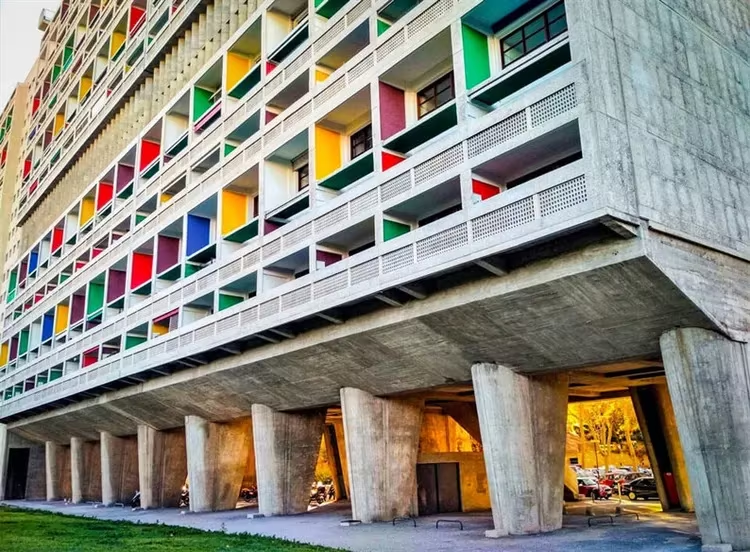
The Marseille project “Residential Unit”, which is a “city within a city”, was developed by the architect Le Corbusier. The embodiment of the idea was a residential complex on Boulevard Michel, built in 1952 for 1,600 people and 337 apartments. All apartments are equipped with a balcony protected by sun screens to provide through ventilation.
One of the most important innovations of the “residential unit” was the placement of apartments in ordinary and two-level residential compartments. The apartments, located on 18 floors, stretched along each side of the building. The house is notable for five corridors of “inner streets”. Along the middle street, called the trade street, residents get to shops and service establishments. Without leaving their homes, residents were able to relax on the roof in the garden, run on the treadmill, work out in the gym, swim in the pool and leave the kids in the kindergarten.
Reinforced concrete was used to build the Residential Unit. The grandiose volume of the house is supported by massive columns, which serve to create a square for relaxation and meetings under the building.
To look at the “residential unit” you need to take bus No. 22, 521, B1 and get off at the Le Corbusier stop
Tourist train Petit Train
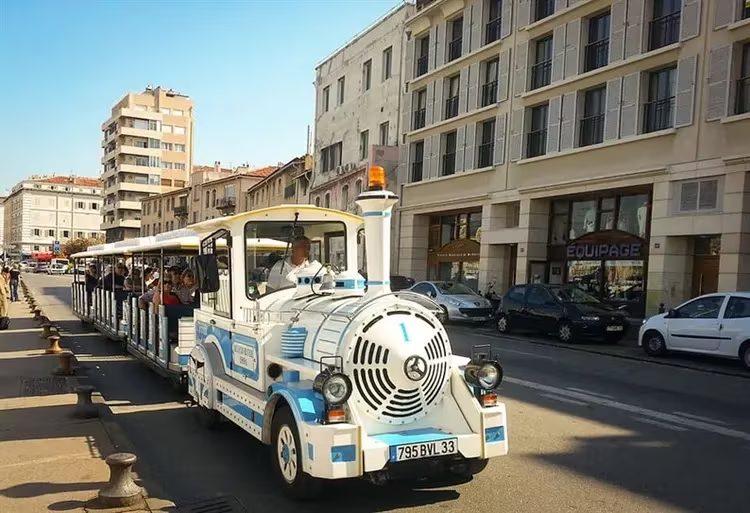
The first acquaintance with the city is best made on the tourist mini train Petit Train, departing from the Old Port area opposite the town hall. Two routes are open from April 1 to December 31, while the third one operates during the summer. The first route takes you on a tour of the Old City, passing by the Cabret mansion, which houses the luxurious “Hotel de Cabre”, the Dieu Hotel, the Saint Laurent Church and the majestic Major Cathedral.
The train will make a stop near the old almshouse Vieille Charité. At this stop, passengers get acquainted with the authentic Pannier quarter, touching with old streets with colorful houses, squares – Lenche and Moulins. The main destination of the second mini-train tour is the Church of Notre-Dame-de-la-Garde. Before it, the train passes along the coast of the city, where the fort, Faro Palace, and the Abbey of St. Victor appear before the eyes of tourists.
Stopping near the high hill on which the Notre Dame church rises, tourists inspect the temple. The third route is open in the summer to the Friuli Islands. The Petit Train passes along the sea coast, where tourists have time to look at the old Caroline hospital, St Esteve beach, located near the Ratonneau fortress, the panorama of the Chateau d'If and the Marseille bay. On the way back, the mini train stops for half an hour to visit the Basilica of Notre Dame de la Garde.
Catalan beach
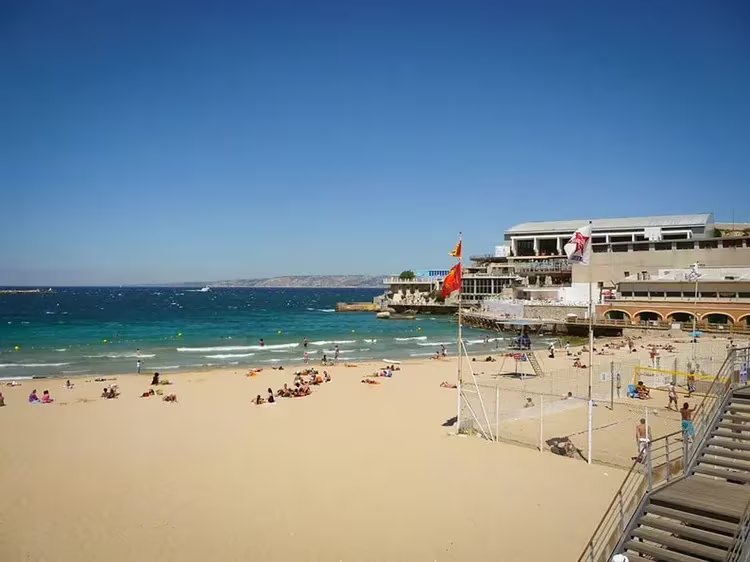
Playa de Catalan is located near the city center and a 15-minute walk from the Old Port. Although it is not particularly beautiful, it is convenient for rest of tired tourists from sightseeing and townspeople. The beach is covered with fine sand, so no special shoes are needed here. The coast is shallow, there are no stones and sharp dips under water. There is a slight wave on the sea surface, but there are no big waves.
A breath of light breeze creates an atmosphere of freshness, smoothing out the summer heat. Due to the proximity of the port, the water in the beach is not perfectly clean. The highlight of the beach is a section with anatomically shaped stones, where you can comfortably sunbathe and take a picturesque selfie. Boulders are scattered among the sand and do not interfere with the passage. The popularity of the beach was ensured by its numerous volleyball courts, which gather fans of this game. On Catalana you will not see sunbeds and umbrellas, everyone comes with their own towel and spreads where they find a place. In the evening, young people like to have picnics here, relax in coastal bars and nightclubs.
Prado beach
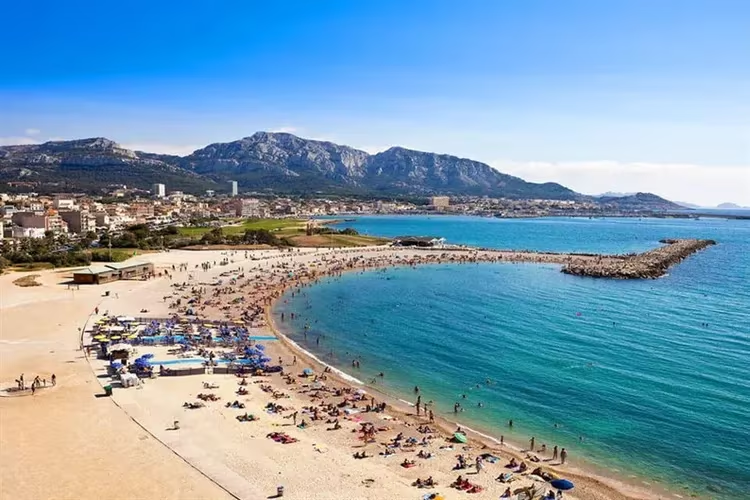
Du Prado Beach consists of a whole complex of artificially created beaches that stretch along the sea coast of the city. Prado is a large seaside park spread over 26 hectares, created by an embankment from the remains of rock obtained during the construction of the metro. Of the 3.5 kilometers of the total length of the complex, 2 kilometers are occupied by beaches. On the remaining area of the coastline, parks were laid, sports grounds and piers were equipped. The most suitable beaches for swimming are Roucas Blanc, Bonneveine, Vieille Chapelle and Borely.
Several beach areas, where there is a wave, are reserved for water sports: windsurfing, kiting, water skiing, diving. There are centers for amateur sailing in boats and canoes and other water sports. Along the coast there are many beach volleyball courts and lawns for fans to play football. The beaches are equipped with the necessary infrastructure: parking, changing rooms, showers. Toilets and equipment rentals. There are many cafes and restaurants nearby. You can get to the beaches of the Prado by bus number 19 leaves from the “Rond Point du Prado” or bus number 83 from the Old Port.
Observatory
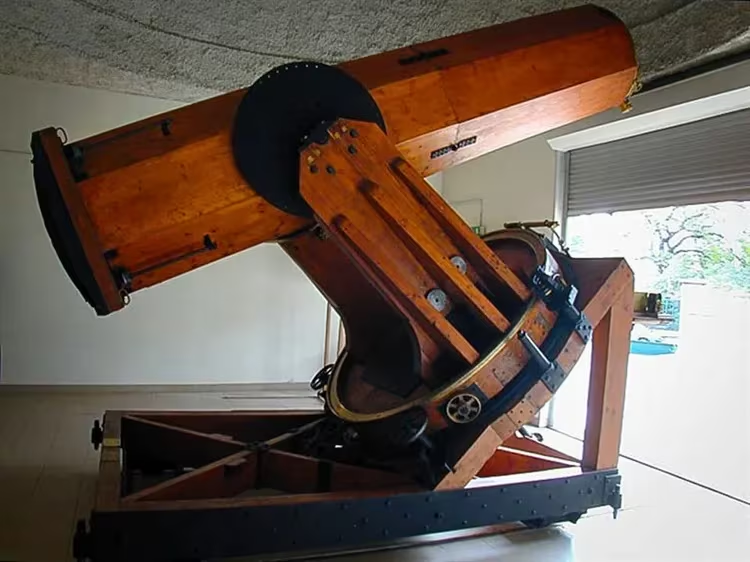
The Marseille Observatory is a professional astronomical complex that combines the laboratory of astrophysics, the observatory of Haute Provence, the laboratory of stellar and world interference, the Gassendi department. The first observations in the Marseille observatory date back to 1702, when it was founded by the Jesuits. In the second half of the 18th century, the observatory received the status of the Royal Navy Observatory, where two experienced astronomers began to work.
At this time, the observatory was replenished with a powerful 6-foot telescope for those times. During its existence, the observatory has undergone changes, without changing the field of activity, conducted scientific observations and searches for asteroids. Its employees own a number of discoveries. You can make an excursion to the observatory, where you will see many unique ancient and modern instruments for studying the Universe. It is located in the Bouches-du-Rhone area. You can visit the observatory with a guided tour.
Faro Palace
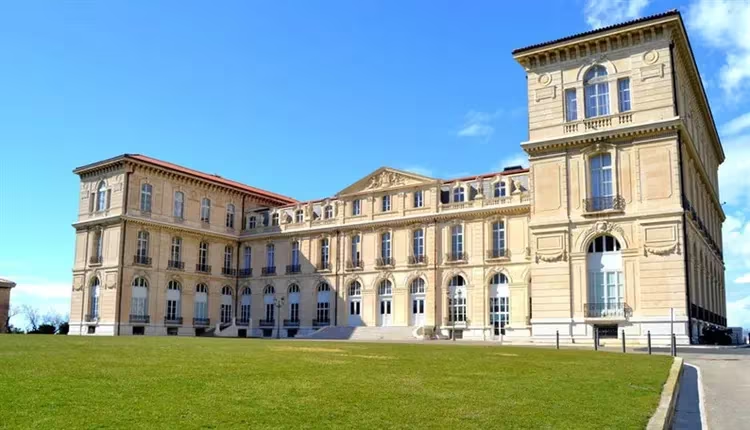
The palace of Faro, paved with pink stone, shines with its beauty on the site of a high hill of the cape of the same name near the sea. It is supported by the rocks of the steep coast. The building of the Palace was built for Louis Napoleon in the second half of the 19th century. The decoration of the palace facade is skillful stucco, small elegant balconies and false columns. The window openings of the building are rounded, and flower beds and shrubs are located on both sides of the front staircase. From the windows of the three-story palace offers stunning views of Marseille and the Chateau d'If.
The building consisted of 500 rooms decorated in the Empire and Neoclassical styles. At the beginning of the 20th century, two wings were added to the palace building, violating its architectural style. The palace is surrounded by a picturesque landscape park with several observation platforms, from where it is pleasant to admire the colorful panorama of the city. Sitting in the terrace restaurant, it will be a pleasure to admire the seascape of the harbor. The palace is especially magnificent in the evening illumination, which gives it fabulous features. You can get to it by metro, getting off at Vieux-Port station, then take bus number 83.
Augustinian church
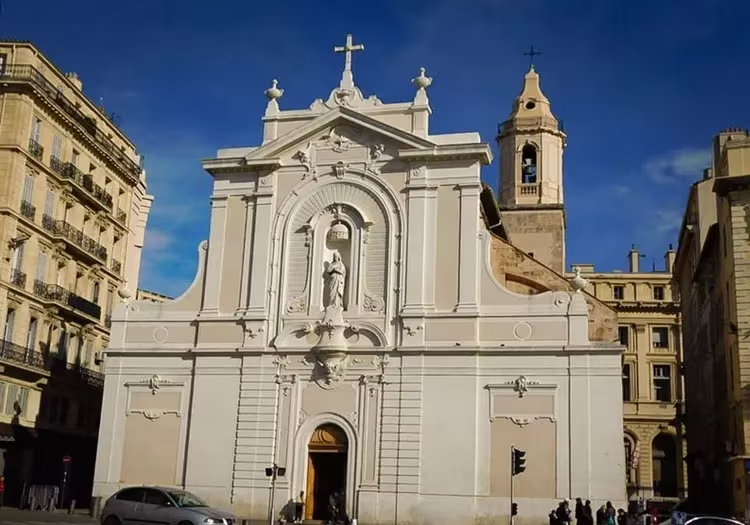
The snow-white facade of the Catholic Church of Saint-Ferrol, belonging to the Augustinian order, adorns the Belgian embankment in the Old Port. Its building was erected for more than 100 years (1447-1588). The church has several chapels built by different guilds of craftsmen in honor of their patrons. The snow-white facade and the octagonal bell tower, made in the neoclassical style, which appear before contemporaries, were erected at the beginning of the 19th century.
In a niche below the pediment, the parishioners are greeted by the statue of the Immaculate Conception, made by the sculptor Coulange. Above the portal at the entrance is a statue of Jesus Christ. If you look at the other walls of the facade, you will see the features of past eras – Baroque and Romanesque styles. The inner space of the temple has three naves, erected during the baroque fashion. In the side naves there are 6 chapels, where the remains of noble families and clergy are buried.
In the interior of the temple, the central place is given to the altar of St. Peter and the pulpit of the 17th century, decorated with wooden sculptures. Among the church relics, you will see the remains of a tomb with an altar, the reliquary of St. Louis of Anjou, a gilded wooden bust of St. Ferrol of the 18th century, and a baptismal cup with a high relief of an angel inside. The Augustinian Church is open daily from 9.00 to 18.00, admission is free.
Fort Saint John
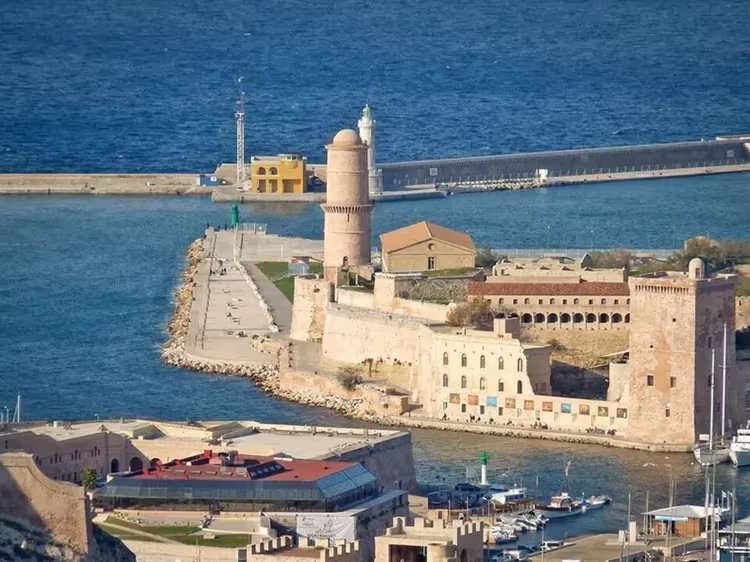
Initially, from the 12th century, on the site of the modern Fort of St. John, built in 1860 during the reign of Louis XIV, there was a fortress of the Crusader Knights. The main purpose of building a new fortress was to intimidate the inhabitants after the city uprising. To do this, the muzzle of cannons from the fortress were directed towards the city. After the French Revolution, the fortress was a prison where noble prisoners were kept.
During the Second World War, ammunition depots were located here, and when an explosion occurred in one of the depots, part of the fortress was badly damaged. Today, on the territory of the fortress, the ancient Rene tower and the old lighthouse, the ruins of the old barracks are of interest. The chapel of St. John, who is considered the patron saint of the fortress, and a monument to prisoners who died in Nazi camps, also remained here.
Since its restoration in 2013, Fort Saint John has housed two sections of the Museum of Mediterranean History: “Mediterranean Gallery” and “Rest Time”. With a new museum building built nearby, the fort is connected by suspension bridges. You can see the fort and the museum exposition every day except Tuesday in summer from 11.00 to 19.00, in winter until 18.00.
Ile du Frioul
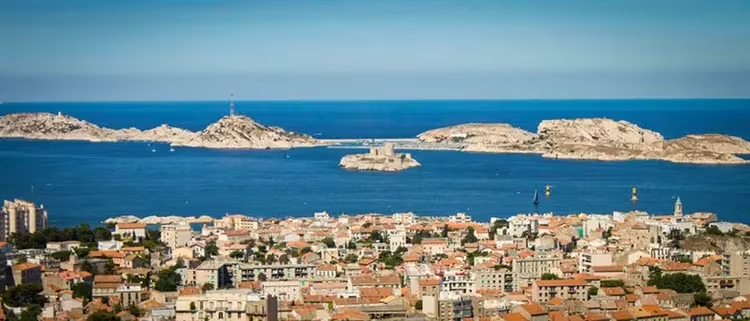
The Île du Frioul archipelago consists of 2 large islands: northern Ratonneau and southern Pomegues, as well as 2 small islands, one of which is the famous If. The larger islands are connected by a bridge. Behind it lies a harbor with moorings for ships and a series of residential buildings. The Ratonneau and Pomegues Islands have the status of protected areas belonging to the Calanque National Park. On their territory, on a stone landscape, 350 species of vegetation grow, many different birds live, there is a mysterious cave with wall inscriptions made by the inhabitants of the Paleolithic era.
Most of the bays on the islands are suitable for swimming. The coast of Ratonneau Island is popular with the ancient fort and the well-equipped public beach of St. Esteve. There are all the necessary amenities for a pleasant stay: showers, toilets, lifeguards work. The beach is connected to the harbor by a road with running tourist trains. The best observation deck is located in the north of the archipelago – Cap de Croix. There are special trails for walking. On the southern island of de Pomegues, the remaining fragments of a medieval fortress are of interest to tourists.
Exchange Palace
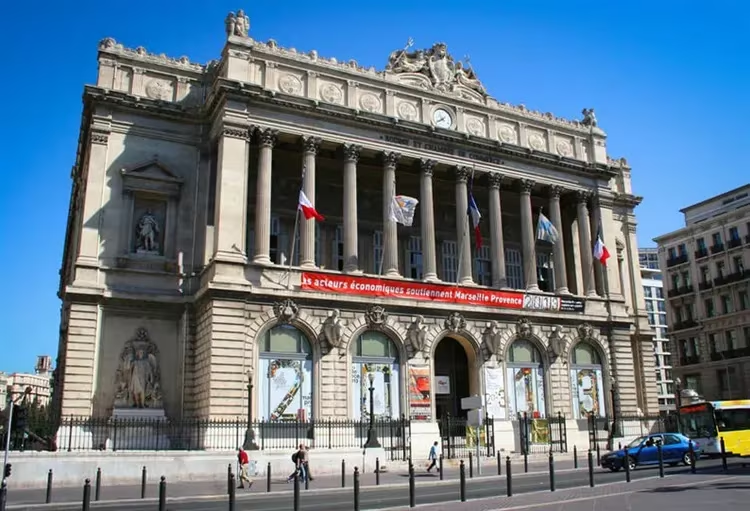
The monumental building of the Exchange Palace with a facade bordered by powerful Corinthian columns was erected in 1860 for the city Chamber of Commerce. The neoclassical palace on the main facade of the 2nd floor is surrounded by porticoes of 10 columns, under which there are 5 massive doors in the form of arches, bordered by stone. The roof of the building was crowned with the coat of arms of the city and bas-reliefs.
On the pediment there is a clock by a famous French master. Glancing at the side portals, you will see Corinthian pilasters and sculptures of sailors, symbols of trade and shipping. In the design of the large hall of the exchange, which can accommodate up to 2.5 thousand people, black and white marble prevails. A relief panel serves as a decor on the ceiling vault.
Along the perimeter of the hall there are covered galleries serving as offices of stockbrokers. Today, in addition to brokerage houses, the Exchange Palace houses shops, as well as cultural institutions – the Museum of Maritime Trade, a public library, various thematic exhibitions are often organized. Shops are open from Monday to Saturday from 10.00 to 19.30, travel to the Palace of the Exchange to Vieux-Port Hotel de Ville metro station.
Garden Vestizh
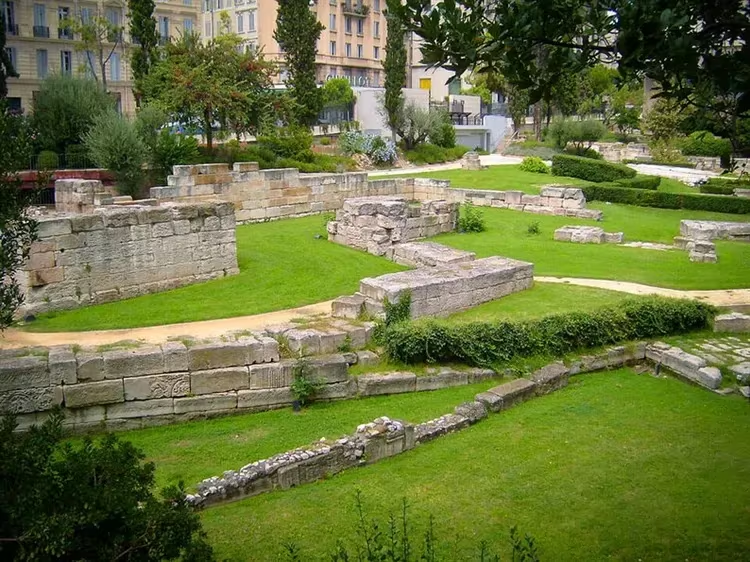
Among the high-rise buildings, the Jardin de Vestige garden, called the Garden of Ruins, looks like a striking contrast. It has the status of a National Park, created around the ruins of Massalia – the cradle of the city, which arose 2.6 thousand years ago BC and was destroyed by the soldiers of Gaius Julius Caesar in the 1st century BC for disobedience.
The city was reborn 6 centuries after the destruction as Marseille. Ancient ruins were discovered during the construction of the Central Exchange. Visitors to the Garden of Ruins will walk along paths created in the distant Roman era, former docks turned into green lawns. In the hewn stones laid out in the garden, one can see holes made by ancient builders for laying walls. In the distant antiquity, the inspection of the foundations of residential buildings, the ruins of fortress walls and defensive towers in the 4th-1st centuries BC, which served to protect the city, transfers.
The effect of the presence in the Roman era is enhanced by antique funerary urns and slabs, ancient boats standing in the open air. To replenish your knowledge of the history of Massalia, you can visit the Museum of the History of Marseille, located near the Garden. You can get to the Vestige Garden by metro, reaching the Vieux-Port station (line 1) or Noailles, Jules Guesde (line 2). All days except Sunday the park is open for visits from 9.00 to 18.30.