🏕️ 15 tips for preparing for a hike
In recent years, active tours have been gaining popularity – these are ready-made tours for those who want to hike or climb a mountain. Such trips involve covering various distances on foot. If the tourist is experienced, then he can cope with any load. But if you are a beginner, then even 15 kilometers can become a difficult road. Some even set themselves the goal of overcoming such unique routes as the Camino de Santiago. We have collected important tips to bring you closer to this goal.
Walking Basics
Walking is not only good for people, but also for the planet. What does our Earth have to do with it? It’s simple: walking is a cheap movement that does not require special equipment. You can walk anywhere, unless there are legal restrictions, at any time, with very little impact on the environment.
If walking replaces sports, then remember: the stronger you are, the longer distances you will cover. Work on yourself every day. A simple morning exercise and stretching will help free your muscles from their nighttime stiffness.
Find yourself a “walking buddy” to meet for a walk, coffee and chat. Reap the benefits not only for your physical health, but also for your mental health. This is also a great way to strengthen family or friendship ties, as well as choose a travel companion for your travels.
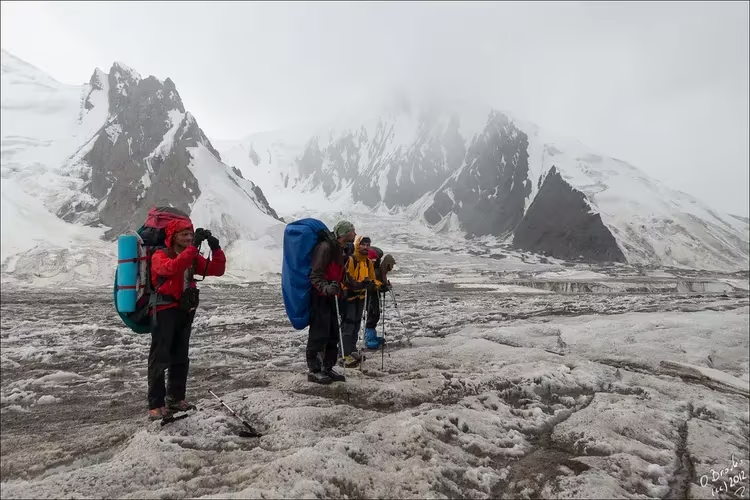
But we won’t be completely honest if we don’t say that you also need to be able to walk correctly. Your weight should be distributed evenly – this means walking straight, without pulling your shoulders back or forward. If you walk hunched over, your movements will be constrained, as will your breathing. In an upright position, you will receive more oxygen, and there will be much less stress on your back and legs.
Day walks
Daytime walks are the most popular method for exercise and also help clear your head. You can choose one convenient route, or you can walk along a new one each time, exploring your area. Why not start traveling today?
These walks are ideal for those making last minute decisions. Go for a walk with friends or go on a picnic. And if you decide to go somewhere outside the city, don’t forget to use a map for navigation and get a GPS tracker, which will be very useful.
Walking in winter
It happens that the best walks happen in winter, when the sky is blue and the sun is bright, but there is frost. However, do not forget that in winter the daylight hours are shorter: the sun rises later and darkness comes earlier.
Check the weather forecast in advance. See if you plan on snow or rain and what kind of wind it is outside. A light breeze will not have a critical effect, but a stormy one will bring a lot of trouble. If you find yourself on any slope in such a wind, you can literally be blown away.
And when going on winter walks, don’t forget to take water with you. Replenishing fluid in the body is an important point even in winter.
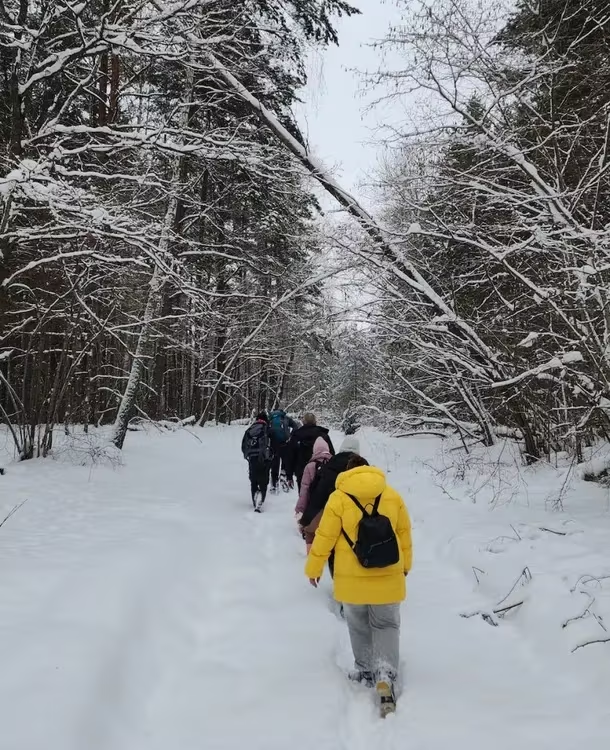
If during your walk you come across a location where it’s uncomfortable and you don’t feel safe, then go back or look for a workaround.
When walking on roads, always choose the side that allows you and the driver to see each other as far as possible, even if you have to cross the road several times. It is better to be noticed in advance than to end up in a ditch.
Walk in areas with open access only. This means that if you stumble upon a closed area, then reject the idea of getting there in the bud. And once again we remind you about GPS trackers.
Walk abroad
If you are ready to go camping even abroad, then remember a few simple rules. It's best to store important contact information in multiple versions: online and in physical form. Upload scans of documents to the cloud, and physical ones can be laminated so that they are not damaged.
Collect information such as contacts of travel companies, health and travel insurance data, if applicable, as well as contacts of the local consulate. It's a good idea to find out your local emergency numbers.
Don't carry all your important documents and money in one place. Distribute them so that you always have a reserve if something gets lost. Therefore, it is better to make several physical copies.
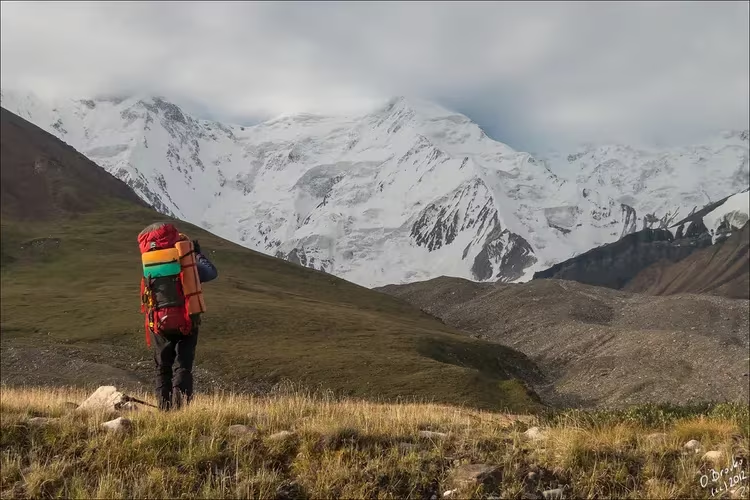
If you use a guidebook, then copy the necessary pages and take only them on your hike, and keep the complete book at hand in an electronic version.
Overcoming long routes, such as the Camino de Santiago, where the passage can stretch over months, often affects different seasons. Therefore, you need to plan in advance what you need to take with you.
For example , summer equipment is not very suitable for use in winter or at high altitudes. This means you may have to think about refill stations. Post offices in local cities are suitable for this, so you can get the necessary items and send excess cargo home without delaying your trip.
Take trekking shoes into the airplane cabin. If your gear gets lost in your luggage, comfortable boots will remain. Experienced tourists say that equipment can be bought at the starting point, but boots need to be selected and worn long before the trip.