
7 best sights of Mui Ne (Vietnam) – photo with names, description of what to see in Mui Ne
On the coast of the South China Sea in Vietnam is the popular resort of Mui Ne. Once on the site of this resort area there was a small fishing village of the same name. Later, the sea coast with its sandy beaches and favorable warm climate began to attract beach lovers here. As a result, hotels for vacationers appeared in Mui Ne, which subsequently formed a whole chain along the seashore and almost adjacent to the city of Phan Thiet. The rapidly developing Vietnamese resort today attracts tourists not only with the opportunity to soak up the warm sea and lie on the sandy shore. Mui Ne has a number of attractions that may interest any vacationer. Among such significant places that are definitely worth a visit in the first place, one can name a huge statue of a reclining Buddha.
Reclining Buddha
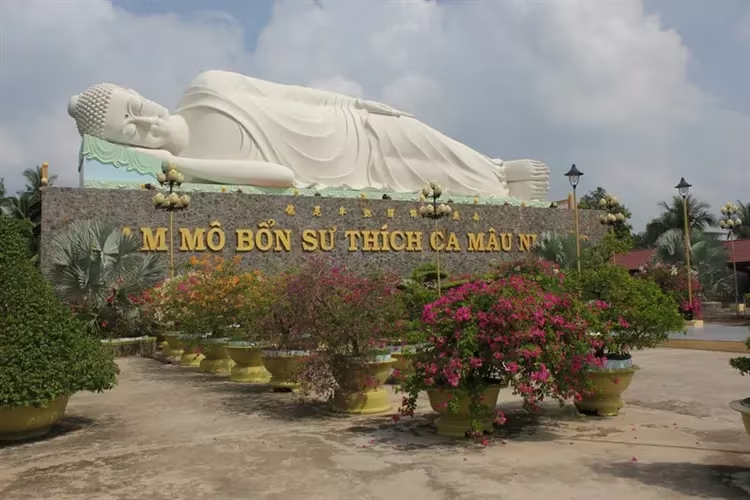
This huge 49 meter statue, famous throughout the world, is the largest among similar statues in Vietnam. Many call this sculpture the Buddha who passes into nirvana. To get to this unusual sculpture, you need to climb the 700-meter peak of Mount Taku, which is located south of the city of Phan Thiet at a distance of 28 km. The whole statue is painted white, symbolizing the purity of the Buddha's thoughts. There is a belief that in order to fulfill a cherished desire, it is necessary to climb the sacred mountain Taku and hold the Buddha by the elbow.
Then it will certainly come true. In addition to the Buddha statue, on this hill there is a sacred Pagoda – a Buddhist religious building visited by pilgrims to perform their traditional religious rites. The construction of the Pagoda, begun in 1960, continues to this day. This Buddhist building is allowed to be visited by tourists, who, together with pilgrims, can make donations for the construction of the temple.
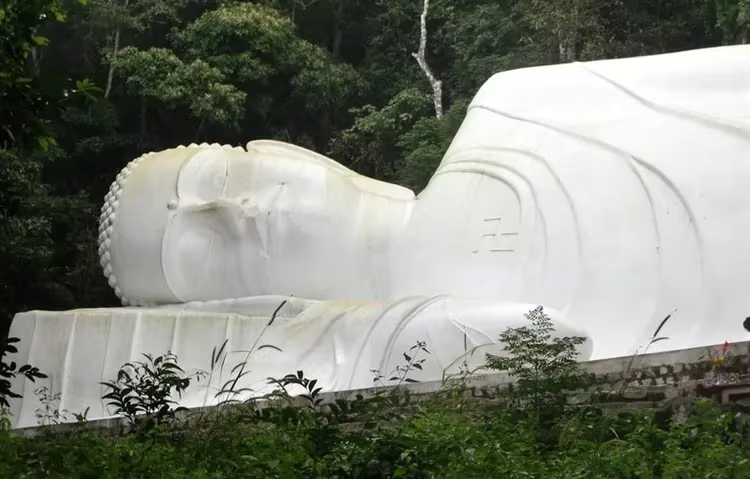
The sacred place on the mountain has been ennobled and equipped. Here you can take a rest on one of the stone benches, and stone tables can be used to attract wild monkeys by spreading treats there for these jungle dwellers. Until recently, the sacred mountain was climbed only along a narrow path that ran through the jungle. Since 2002, a funicular has been operating here, and tourists, along with pilgrims, can climb to the top of Taku in a few minutes.
Poshanu Cham Towers
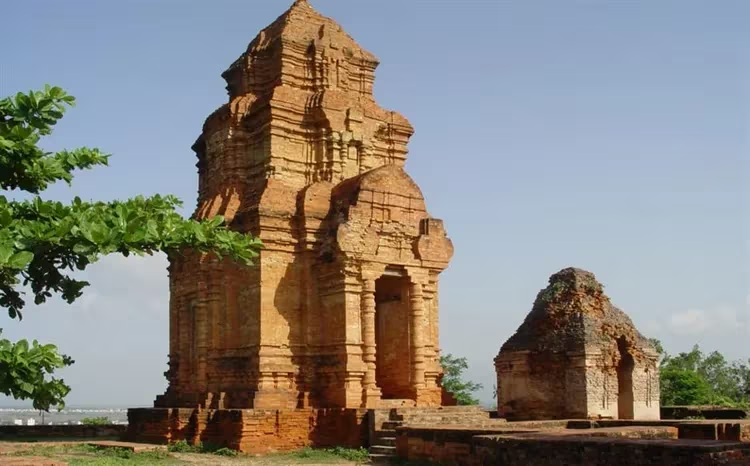
Among the places of worship visited by pilgrims and tourists in Mui Ne, Poshanu Cham Towers occupy a special place. And this is not accidental, since the Cham towers are the surviving part of the former huge temple complex built in the 7th century. This temple was built in honor of Lord Shiva. Time did not spare this building, leaving to descendants only three towers, symbolizing Hindu places of worship, including temples: Princess Poshanu, suns and cows. Despite the antiquity of the buildings, the temples are regularly visited by parishioners. Near the existing temples, there is a well-groomed area with lawns and a garden, along which not only church servants and parishioners, but also tourists can walk. Everywhere on the territory of the temple complex there are benches made of stone, where you can relax and admire the surrounding views.
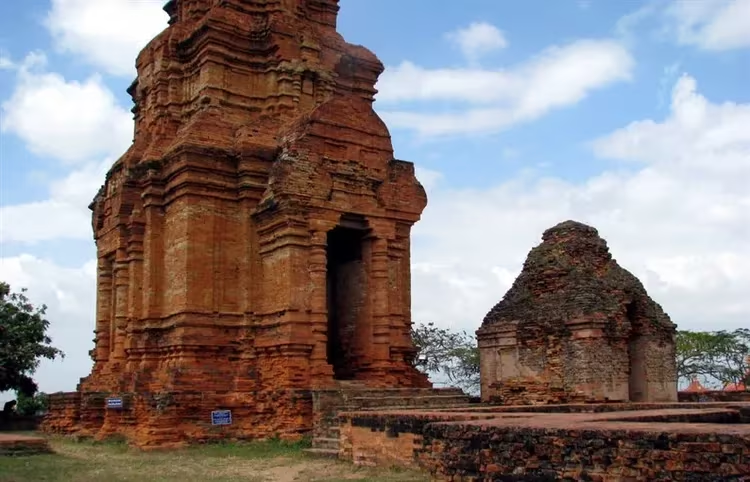
The ancient towers have been restored from time to time, as a result of which the outer red brick masonry has been replaced in almost all places, but inside the tower buildings have retained their original appearance. In the dimly lit temple, the aroma of incense and the reverent atmosphere of a holy place for Hindus are constantly felt. This feeling of holiness and antiquity intensifies in the twilight after sunset, when the towers are illuminated with multi-colored lights and look spectacular against the dark southern night.
Binh Chau Mud Bath
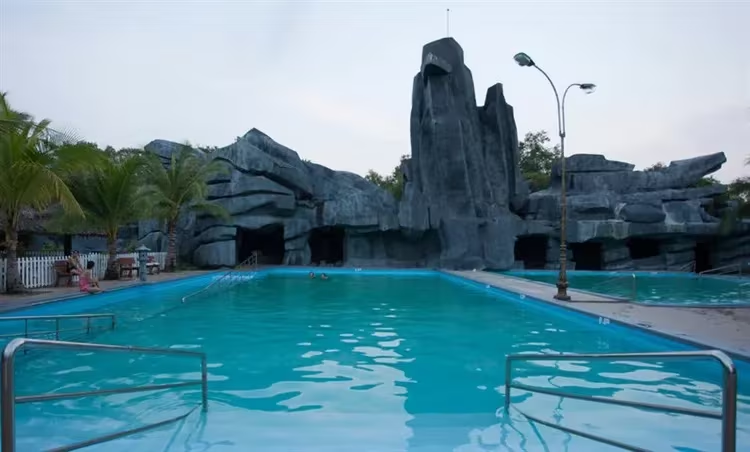
In addition to ancient and modern religious buildings, it is worth visiting the Binh Chau mud bath. Despite the fact that this popular mud bath is located 113 km from Mui Ne, its healing properties attract tourists and visitors from almost all over South Vietnam. Based on the use of healing mud, a famous spa center has been created here, where you can not only relax, taking care of your own body and skin, but also treat your joints, nervous system and other vital organs. Interestingly, after applying healing mud to the skin, it becomes elastic and silky.
Naturally, in a couple of days it is impossible to achieve immediate results of mud treatment. However, it is quite possible to enjoy mud procedures and bathing in hot mineral water. Moreover, all the conditions for this are created here. A well-groomed tropical park, a network of restaurants and hotels create a favorable atmosphere for relaxation in this water resort. Many local mineral springs have a temperature ranging from 18 to 80 degrees, and each of the visitors to the resort chooses independently in the water at what temperature he should take a healing bath. Naturally, too hot water is not suitable for bathing, but it has also been used here. Water, close in temperature to boiling water, is enclosed in containers resembling eggs in shape. Therefore, tourists are offered to boil ordinary chicken eggs here as an entertainment.
Dalat
Dalat City is another unique place that should be given attention. The city is located at an altitude of 1.5 thousand meters above sea level. The features of its favorable climatic conditions were once studied by the French scientist A. Yersin, who devoted a significant part of his life to Vietnam. The surroundings of Dalat are covered with evergreen coniferous forests, among which there are many picturesque lakes and waterfalls. All this creates conditions for the formation of a mountain resort town. The healing air of the mountains is always warmed up to a comfortable temperature, which does not fall below +20 degrees throughout the year. Therefore, Dalat is also called the city of eternal spring. To get to it, you need to overcome a serpentine mountain road, moving along which you can enthusiastically observe the stunning landscapes.
The attention of everyone who comes to Dalat for the first time is attracted by an unusual building with the intriguing name “Crazy house”. Perhaps the building is named so because you can find everything at once in it: a hotel, a cafe and an art gallery. In addition, an unusual house continues to be built, and its architecture has a rather peculiar style. If desired, each visitor of the hotel can spend the night in any of the original rooms, each of which displays a particular animal and is even named after him. Here you can stay in the room of a giraffe, or a kangaroo, a bear or any other animal. In addition, Dalat is famous for its amazingly delicious candied fruits, fresh strawberries, which are harvested here throughout the year, as well as local wine and coffee.
Fairy Stream
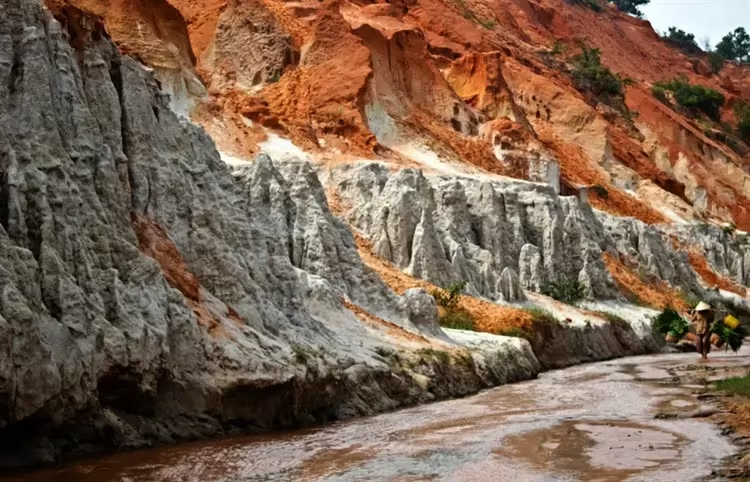
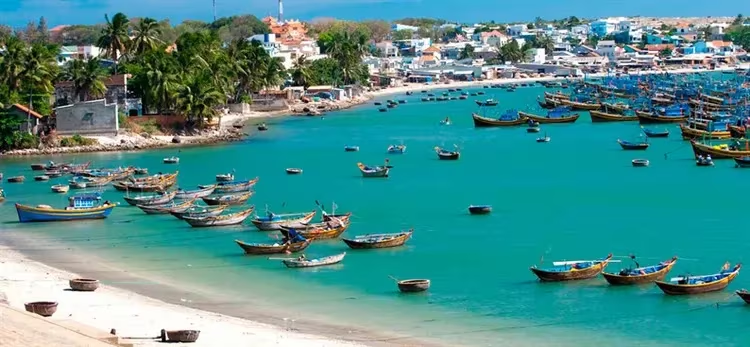
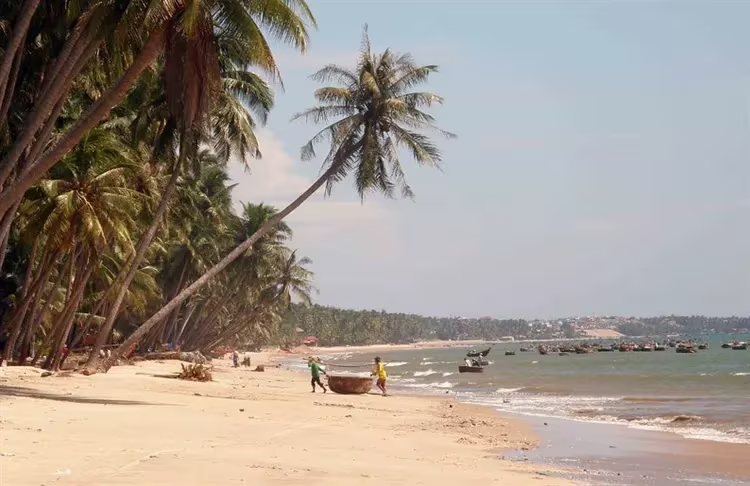
Within Mui Ne there are attractions that are also worth seeing with your own eyes. This is a fishing village and Fairy Stream. The real fishing village can be easily reached by passing the hotel area. The embankment near the village is littered with local fishmongers, and brightly colored fishing boats in the sea look like toys from afar. When dusk falls, lights are lit on each of the boats, and the entire expanse of water seems to be a night sky strewn with bright twinkling stars.
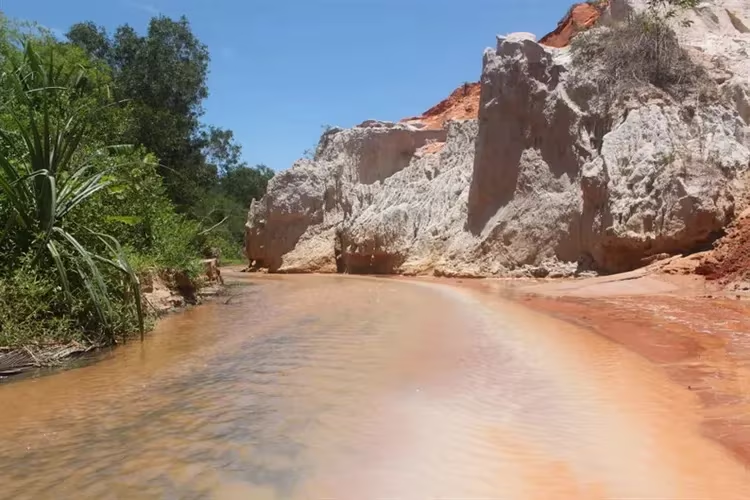
Heading towards the Fairy Stream, you can visit a small enclosure. Here, tourists will be offered to taste cane juice, as well as unusual entertainment – riding ostriches. The stream flows out of a small waterfall and flows into a shallow stream, along the bottom of which you can even walk on foot. The high banks of the river are impregnable rocks and sandy hills. In some places, you can climb the ledges of the canyon and walk along the rocky shore, admiring the bamboo groves and palm trees.
Kega Lighthouse
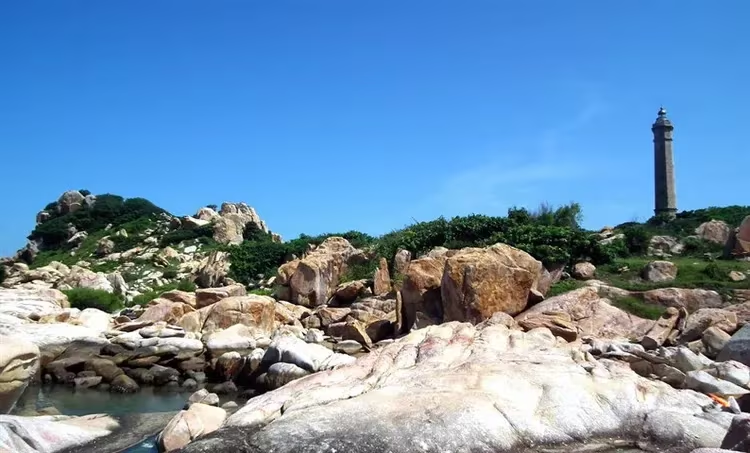
In the vicinity of Mui Ne, the Kega Lighthouse, which has been operating since 1899, is another unique attraction. For the construction of the lighthouse, all the necessary materials were delivered directly from France. Built during French colonization, it rises 65 meters above sea level. Therefore, in order to climb to its observation platform, it is necessary to overcome as many as 183 steps, moving along a spiral staircase.
Sailors passing by ships can still navigate by the Kega lighthouse, which is visible in clear weather from a distance of 10 km. The lighthouse towers over a cape dotted with huge boulders, among which hundred-year-old frangipani trees amaze everyone who happened to visit this area with their fragrant white flowers.
White and red dunes
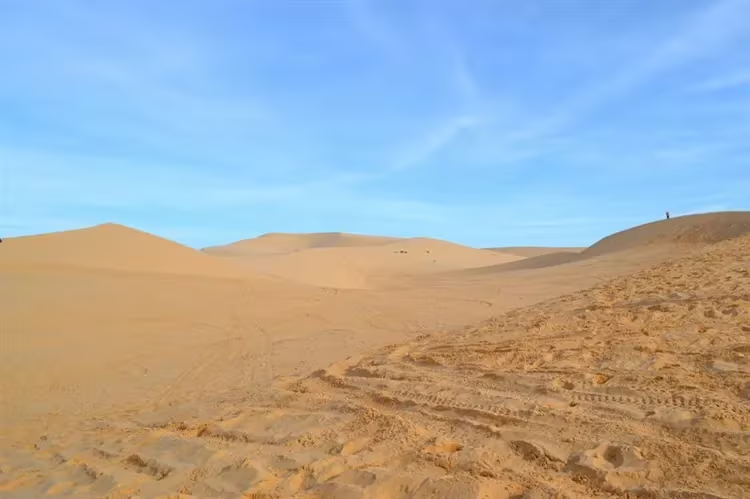
The white and red dunes located near Mui Ne attract tourists and, first of all, children who use the red dunes for skiing. White dunes are of interest to vacationers not only for their unusual beauty and similarity with the landscapes of the Sahara desert. Among the creamy heaps of sand there is a lake of lotuses. It is definitely worth seeing how these flowers, revered in Vietnam, slowly bloom towards the rays of the rising sun. For the sake of this unforgettable spectacle, you can sacrifice a sweet dream at dawn and come to admire the rose petals opening towards the new day.