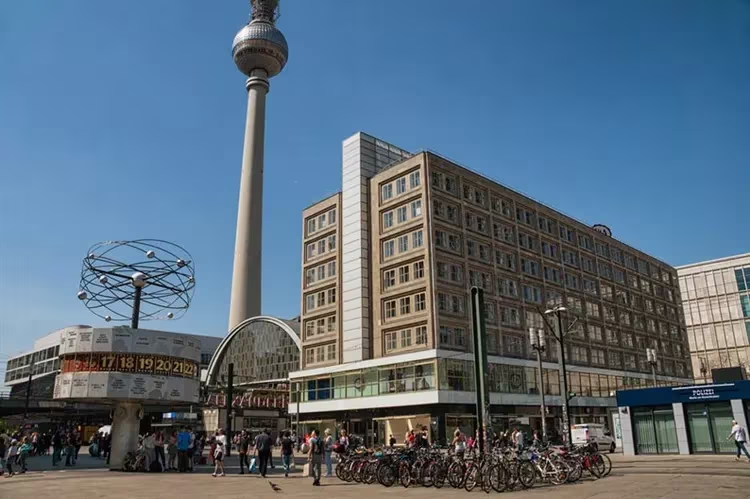
For centuries, the history and destinies of Russia and Germany have intertwined in an amazing way. A striking example of this is Alexanderplatz in Berlin – the most extraordinary square in the city, named after the Emperor of All Russia Alexander I. Here, in the eastern center of the capital of Germany, monuments of the past, the faceless architecture of the GDR and modern buildings have merged.
Story
“Alex” (this is how the townspeople succinctly call one of the most popular squares of the main German metropolis) goes back to the 13th century. At that time, this place was outside of Berlin, protected by a fortress wall. Here, at the eastern Oderberg Gate, trade routes leading from the Hanseatic cities on the Baltic Sea connected.
And the cattle market, and the place of executions
In 1272, a hospital for lepers and the chapel of St. George adjoining it appeared on the territory of today's Alexanderplatz. In addition, the fortress wall hid the place of execution from the eyes of the inhabitants of the capital. Between 1391 and 1448 there were at least two public executions a year. The Thirty Years' War reduced the population of Berlin, many houses were burned and destroyed.
To improve the defense, Friedrich Wilhelm decides to build a new ring of the fortress. The area in front of the Oderberg Gate (now called Georgentor) becomes part of the city. For a small fee, the Great Elector sells plots of land, and residential buildings and manufactories appear on the square. The cattle fair, which existed until 1681, is being converted into a Sunday market.
In 1701, Georgentor was renamed Königstor (King's Gate), and the place in front of them was renamed Thor Platz (Torplatz). In 1800, about 700 families already lived in this area, whose members are artisans, retired soldiers, workers and merchants. The southern part of the square is used for parades, while in the north trade continues to go uphill.
Torplatz becomes Alexander Square
On October 25, 1805, the Russian Tsar Alexander I arrives in Berlin. The purpose of the monarch's visit is to obtain the support of Prussia in the war against Napoleon. The solemn meeting of the heads of the two powers took place on Torplatz. As a result of the negotiations, an agreement was signed on joint actions within the framework of the anti-French coalition. To commemorate the union, Frederick William III issues a decree according to which Thorplatz receives the name of a distinguished guest and is henceforth called Alexanderplatz.
Alexanderplatz in the 20th century and today
The beginning of the last century was the time of prosperity of the square. Large department stores, office buildings and well-developed transport links have made Alexanderplatz an important part of the German capital. In 1936, about 35,000 vehicles crossed this place daily. The eastern center of the city met the end of World War II in ruins.
By 1958, the territory that became part of the GDR was cleared of the remains of destroyed structures and turned into a pedestrian zone. A global reconstruction began in 1966. At the end of the town planning works, the Alexanderplatz area amounted to 80,000 m2. After the fall of the Berlin Wall, new residential and commercial buildings were erected on Alex. Tram lines reappeared. In the near future, according to the plans of the architect Hans Koolhoff, 11 skyscrapers will decorate the main square of East Berlin.
sights
Today Alex is one of the busiest and most visited places in the German capital. Along with the station, parking lots, office buildings, shopping centers and hotels, famous city sights are located here.
World time clock
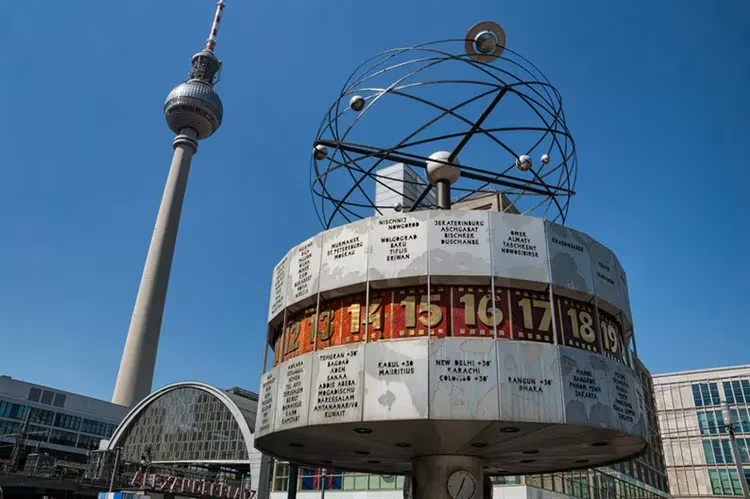
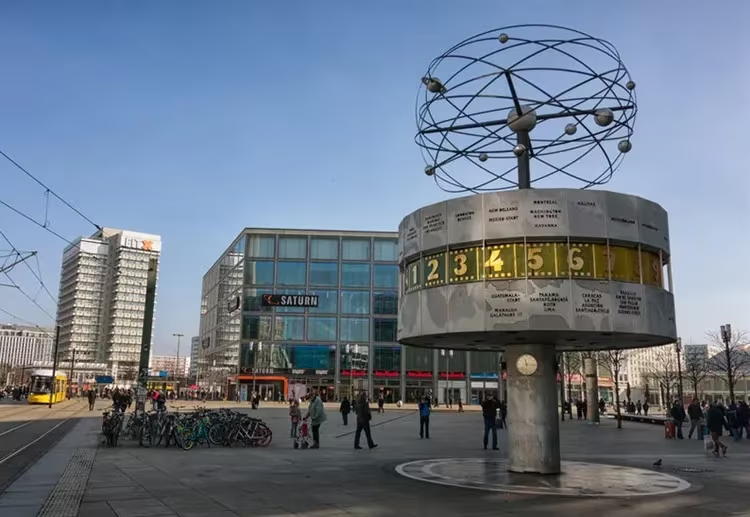
The huge chronometer, designed by industrial designer Erich John, appeared in 1969. The full name of the ten-meter building “Universal Time Urania” comes from the fact that during the demolition of the ruins of Alexanderplatz, workers discovered the Urania column (the prototype of modern weather stations). This discovery formed the basis for the idea of an unusual clock system.
On the mosaic laid out on asphalt, which has the shape of a wind rose, there is a column 2.70 m high and 1.50 m in diameter. A rotating cylinder is attached to it, which is a polygon with 24 faces. Each of them symbolizes the time zone of the planet. The aluminum plates show the names of cities and schematic outlines of countries. An abstract model of the solar system circles above the clock.
Friendship Fountain
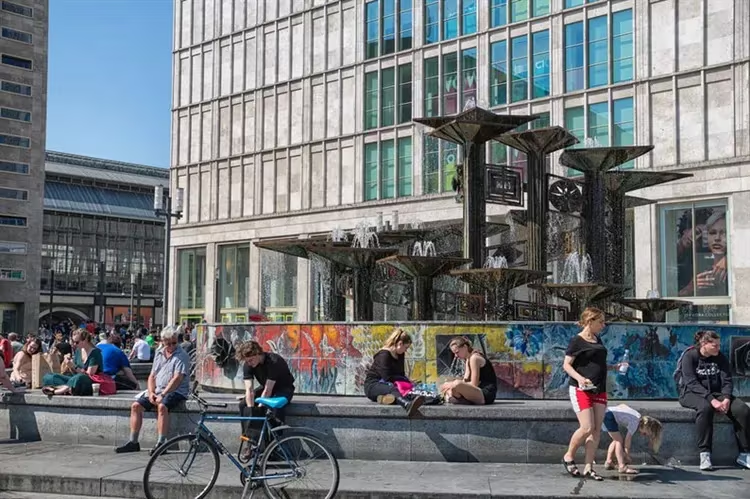
In front of the Galeria Kaufhof department store, the streams of the Friendship of Peoples fountain, created in 1969, soar into the sky. Water entering the highest part of the copper structure flows down a cascade of 17 diamond-shaped bowls into a two-level pool. Iridescent splashes are reflected in the glass crystals that lavishly decorate the spiral design. For the abundance of ceramics, enamel and multi-colored ornaments, the six-meter fountain received the nickname “Prostitute's Brooch”.
Berlin TV tower
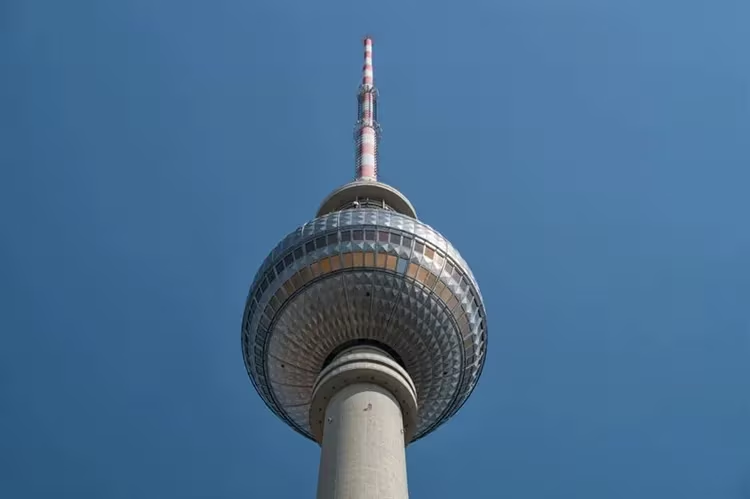
The main observation deck of the capital is visible from anywhere in the city. The TV tower (Berliner Fernsehturm) was opened on October 3, 1969 – shortly before the celebration of the twentieth anniversary of the German Democratic Republic. In the eyes of Chairman of the State Council Walter Ulbricht, the building, built in four years, became the embodiment of the superiority of the socialist system.
The height of the reinforced concrete structure is 368 m. The middle steel part with a diameter of 32 m is made in the form of a ball. The rays of the sun falling on it create a pattern resembling a cross. Residents of East Berlin called this optical effect the revenge of the Pope on the atheistic GDR.
Today Berliner Fernsehturm is an architectural symbol of the German metropolis. At an altitude of 207 meters there is a restaurant slowly rotating around its axis, a floor below – a panoramic platform. Two high-speed elevators bring hundreds of tourists here every day. The ticket price is 15.50 euros. A VIP visit (no waiting in line) will cost you 19.50 euros.
Church of St. Mary
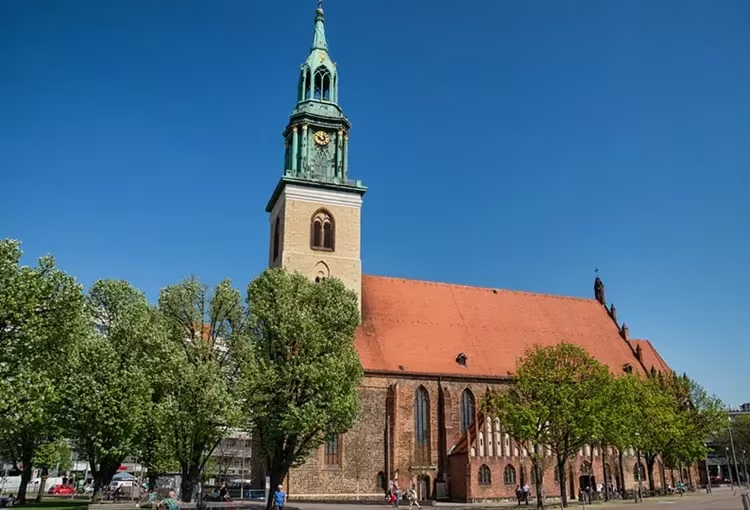
Next to the TV tower is the oldest church in Berlin – the Marienkirche. The date of construction of the evangelical church is shrouded in mists of time. According to historical records, in 1294 the parish, built on a brick and cobblestone foundation, already existed. The neo-Gothic look with neoclassical and baroque elements was acquired by the building at the end of the 18th century thanks to Karl Gotthard Langgans, the architect of the Brandenburg Gate. The last reconstruction dates back to 1970.
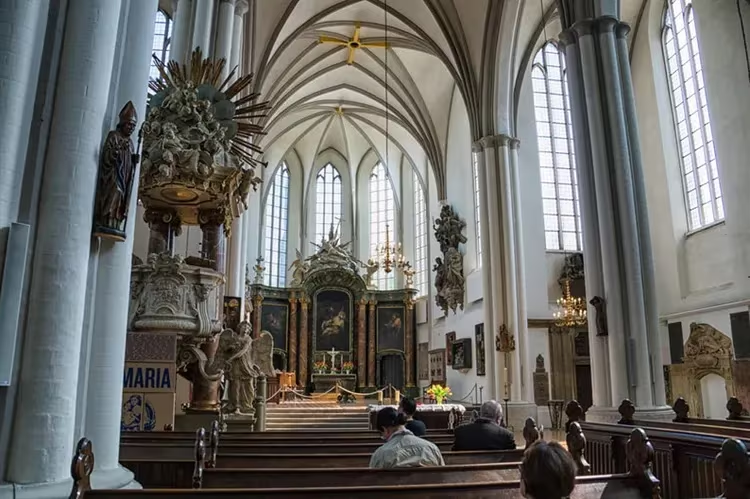
The interior of the church is designed in the Gothic style. The most significant details of the interior are the magnificent pulpit by Andreas Schlüter (1702) and the organ behind which Johann Sebastian Bach led the fugues. The main attraction of the tower hall is a partially preserved panel – the fresco “Dance of Death”, which appeared after the plague that swept the city in 1484. The temple is open for visits from 10:00 to 16:00 (from January to March) and from 10:00 to 18:00 (from April to December).
red town hall
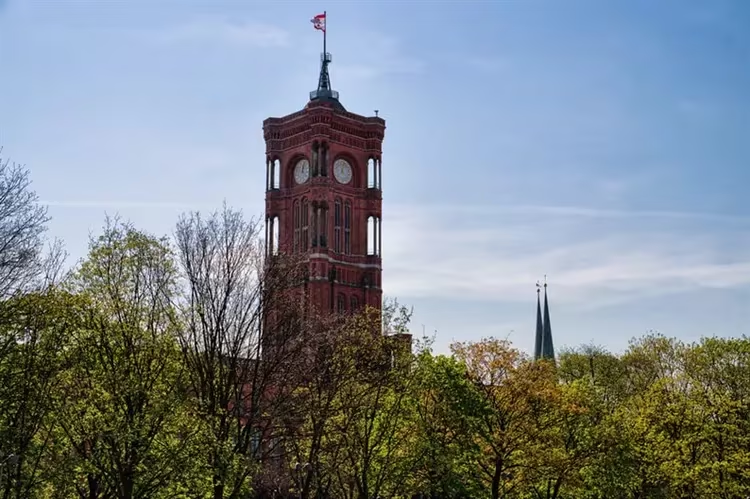
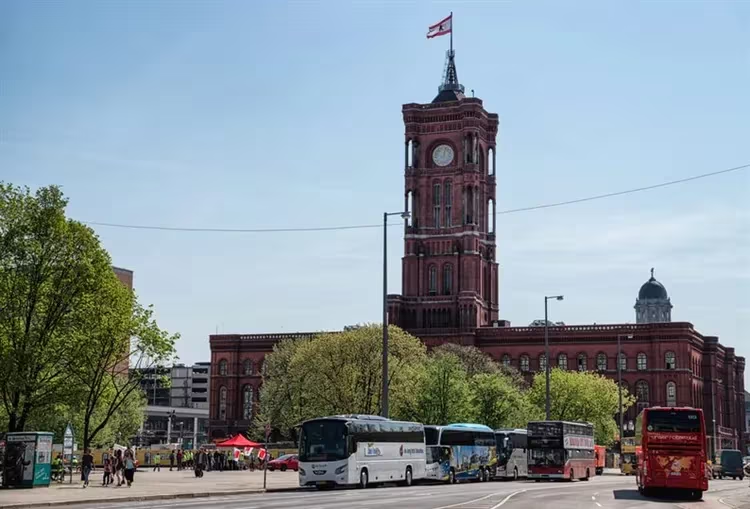
The three-story, 100-meter-long red-brick building, topped by an 84-meter clock tower and a flagpole, is one of the popular attractions of the metropolis. The Neo-Renaissance building appeared on Alexanderplatz in 1861. As conceived by the architect Herman Wesemann, the monumental building was supposed to embody the self-esteem of the inhabitants of the capital.
After the reconstruction in 1958, the Rotes Rathaus was the seat of the city council of East Berlin, and since 1991 the mayor and senate of the united Berlin. From Monday to Friday from 9:00 to 18:00, those who wish can visit the foyer, the main, armorial and column halls.
Fountain “Neptune”
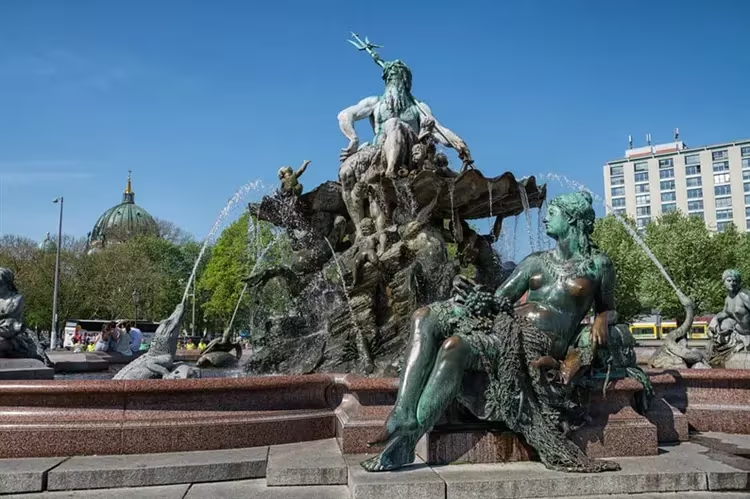
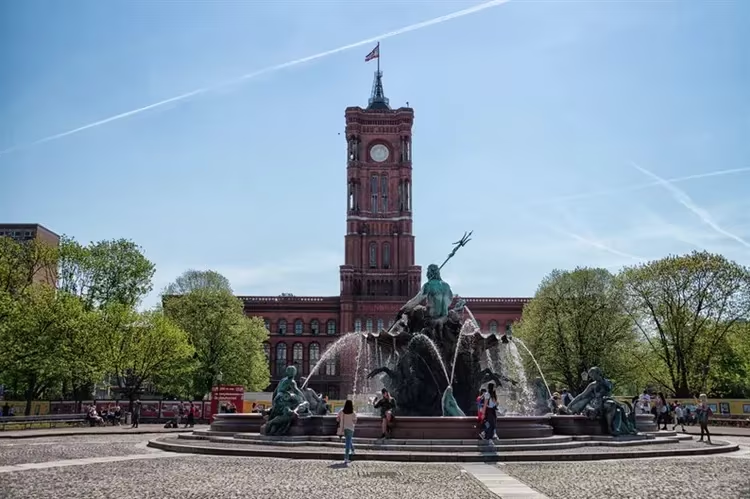
Between the Red Town Hall and the Church of St. Mary, a magnificent monument of neo-baroque architecture, the Neptune Fountain, gives coolness. The idea of its construction belonged to Friedrich Schinkel. However, the Prussian architect did not manage to carry out his project. The sculptor Reinhold Begas undertook the construction of the bronze structure. The opening of the masterpiece took place on November 1, 1891. After the Second World War, the fountain was dismantled, and in 1969 it was installed in a new place.
Half-naked charms, symbolizing the main rivers of Prussia: the Elbe, the Rhine, the Vistula and the Oder, sit languidly on the side of red granite. A sink is installed on a three-level foundation. In its center rises the bearded king of the oceans, holding a massive trident in his left hand. The lord of the water element is surrounded by playing babies, crocodiles, crayfish, snakes, turtles and sea chimeras.
The shops
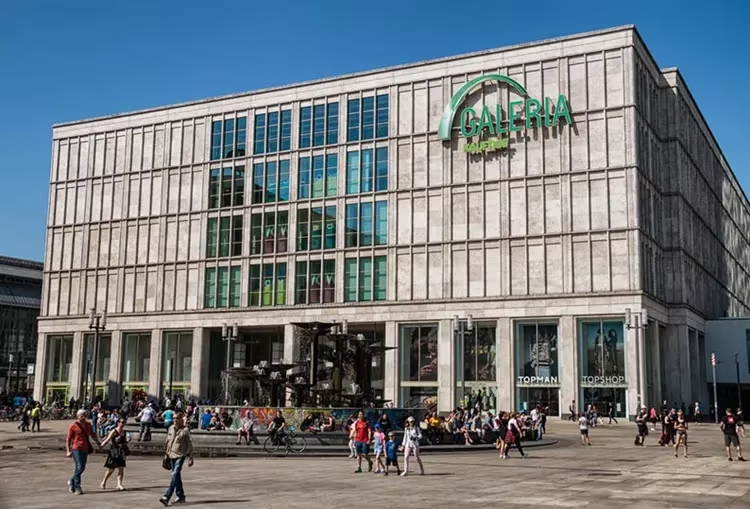
The territory of Alexanderplatz was chosen not only by tourists, but also by fans of shopping from all over the world. Here, both small shops and huge shopping centers coexist. Opposite Urania Watch is Saturn, the largest home appliances and electronics retailer in Germany. Near the station is one of the oldest department stores in the city – Gallery Kaufhof (Galeria Kaufhof), which first met customers at the beginning of the 20th century.
On an area of 35,000 m2, visitors can freely walk around the well-organized world of fashion, perfumery, cosmetics, jewelry, watches, household and sporting goods. The famous gourmet store Galeria-Gourmet is located on the ground floor. Friendliness, customer orientation and comprehensive services are part of the concept of the trading house.

If you are convinced that exclusive brand items are worth a fortune, then you are wrong. At the TK Maxx outlet you can buy a jacket by Karl Lagerfeld for 80 euros or shoes by Joop! for 60. On three floors, buyers will find men's, women's, children‘s clothing and footwear, sporting goods, cosmetics, perfumes, leather goods, glasses, household items and kitchen utensils. Prices for all goods are reduced by 20-75%.
Where is it located and how to get there
The main square of the eastern part of Berlin is one of the central transport hubs of the city. Here is the railway station of the same name and connects the routes of regional trains, electric trains, metro, buses and trams.
- S-Bahn. Trains S3, 5, 7, 9 to the station
- U Bahn. Metro lines U2, 5, 8 to
- Bus routes TXL, 100, 200, M48 to the stop Alexanderplatz/Memhardstr., 248 – to Alexanderplatz/Grunerstr.
- Trams M2, 4, 5, 6 to the stop Alexanderplatz/Dircksenstr.
- Car: navigator coordinates 52° 31′ 18.905″ N 13° 24′ 47.574″ E. There are three underground parking lots within walking distance from the square:
And of course, you can get to Alexanderplatz by an alternative taxi – a cycle rickshaw. The driver of an exotic vehicle will take you to Alex with a breeze, tell you about the sights along the way and introduce you to interesting and useful lifehacks.